
The head of the American Booksellers Association, Allison Hill, frequently encounters people who offer condolences when they discover her profession.
“It’s all so funny,” she says. “When I tell them I run the trade association for independent stores, they’ll say, ‘It’s just so sad that they’re disappearing.’ I don’t think they’re really keeping track, or they just know about a store that closed or heard about one closing.”
While popular culture continues to portray bookstore closures as inevitable – even referenced in “The Devil Wears Prada 2” where a character mourns that bookstores are “getting downsized and consolidated” – the reality shows a different story. The downturn actually concluded years ago, with recent data from the American Booksellers Association revealing independent bookstore growth at levels not witnessed this century.
ABA membership increased by more than 500 in the past year, reaching 3,417 members operating 3,783 locations. This represents nearly three times the membership from ten years ago and marks the highest participation since the late 1990s. New establishments include diverse formats – traditional shops like Hey Books! in San Diego, traveling operations like the Wandering Quills Bookshop in Westerville, Ohio, and temporary locations like Banyan Books in St. Petersburg, Florida.
Numerous new members capitalize on the current popularity of romance, fantasy and romantasy genres, such as the Spicy Librarian in Denver or the Flutter Romance Bookstore in Austin, Texas, which describes itself as a place “Where butterflies begin. And every story ends in happily-ever-after.”
Independent bookselling attracts idealists rather than profit-seekers, drawing young people with purpose, retirees seeking new adventures, and mid-career professionals wanting change. “I think people want to realign their lives with their values,” Hill explains.
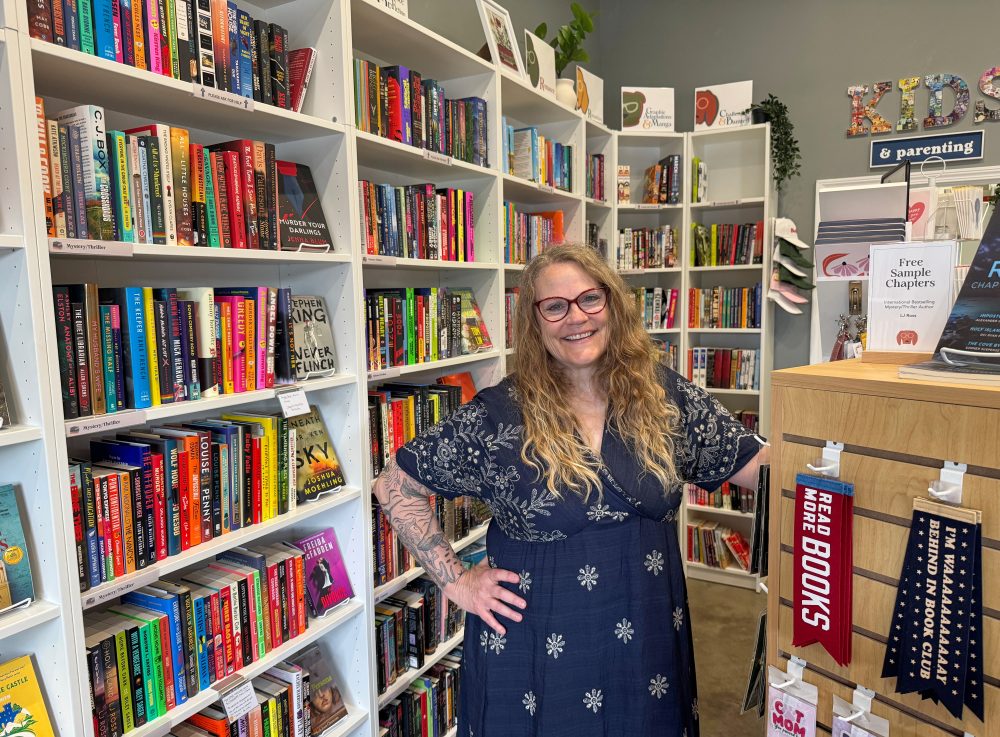
Kelley Hartnett, a 55-year-old marketing consultant and copywriter from Wentzville, Missouri, fulfilled her longtime dream of operating a bookstore despite her husband’s worries about competing with Amazon. She launched Double Dog Bookshop in 2025 as a mobile operation, traveling in a converted cargo trailer with two Australian Cattle Dog mutts, before establishing a permanent downtown location.
“For me, Double Dog is about maybe 50% books and 50% community,” says Hartnett, who seeks larger space to accommodate customers who want to gather and “just be.”
“People are craving connection, especially in-person connection,” she said. “People are over the internet and virtual meetings and algorithms. They’re not the same as having a human to human connection. It feels really healing.”
While Hill can laugh about misconceptions regarding bookselling’s demise, she acknowledges the industry remains “precarious” despite its health. Operating expenses remain elevated, and budget reductions affecting schools and libraries reduce their purchases from local establishments.
Independent operators also express concerns about Barnes & Noble, a former rival that once appeared threatened itself.
The chain store giant dominated sales during the 1980s and 1990s, widely blamed for forcing hundreds or possibly thousands of independent stores to close. However, Amazon overtook Barnes & Noble by the 2010s, forcing the chain to close locations rather than expand and struggle to find buyers before Elliott Management Corp. acquired it in 2019.
Under CEO James Daunt’s direction, Barnes & Noble has resumed expansion, adding over 100 locations in the past two years. In Chicago, the owner of decade-old Volume Books attributed her closure to a new Barnes & Noble, while Hill noted that “even a small decrease in sales can make or break a bookstore’s year in an industry with paper-thin margins.”
Daunt rejects suggestions that he targets independent sellers, claiming such behavior isn’t in his “DNA.”
“I’m an independent seller myself,” he says, referencing his founding of Daunt Books in London. He mentions customers who patronize both his store and British chain Waterstones, where he also serves as managing director. “I never thought of the market as finite.”
The owners of The Book Loft Oak Park, another Chicago-area establishment that opened last summer, admit some anxiety about an upcoming nearby Barnes & Noble. However, Heather Nelson and Sophie Schauer Eldred hope the stores will complement each other.
“We’re hoping people whose curiosity is piqued by the new Barnes and Noble will walk down the street,” Schauer Eldred said, “and pop into our bookstore.”