VATICAN CITY – Sarah Mullally, the newly appointed Archbishop of Canterbury and first woman to hold the position, conducted her inaugural international trip Monday with a significant meeting at the Vatican with Pope Leo XIV.
The groundbreaking visit began with a private meeting in the Pope’s library, followed by shared prayers in the Urban VIII Chapel within the Apostolic palace, according to Vatican officials.
Mullally’s appointment as the spiritual leader of the Church of England and millions of Anglicans worldwide has created divisions within the Anglican Communion. Her four-day religious journey to Rome has included stops at major papal basilicas, where she offered prayers at the burial sites of Saints Peter and Paul and conducted meetings with senior Vatican leadership.
According to Lambeth Palace, the visit seeks “to strengthen Anglican–Roman Catholic relations through prayer, personal encounter, and formal theological dialogue. It aims to deepen bonds of communion, affirm a shared witness, and encourage ongoing collaboration at both global and local levels.”
The Anglican Church broke away from Roman Catholic authority in 1534 after Pope Clement VII denied King Henry VIII’s request for a marriage annulment. While formal discussions between the denominations resumed in the 1960s, significant theological disagreements persist, particularly regarding women’s ordination – a practice the Catholic Church prohibits.
The Anglican Church began ordaining female priests in 1994, consecrated its first female bishop in 2015, and now has installed Mullally as its first female archbishop.
However, her historic appointment has deepened existing rifts within the Anglican Communion’s 100 million members across 165 nations, who remain divided on women’s roles and LGBTQ+ issues. While many in England and Western nations celebrated her selection as shattering religious barriers, conservative opposition has emerged from African churches.
The Global Anglican Future Conference, representing the communion’s largest and most rapidly expanding African congregations, has strongly opposed Mullally’s appointment and threatened complete separation. Similarly, the Anglican Church in North America, which split from more progressive U.S. and Canadian Episcopal churches, has endorsed the Gafcon position against her leadership.
Pope Leo XIV and Mullally have previously corresponded, with the Pope offering congratulations on her installation while acknowledging the “challenging” circumstances and persistent divisions between their churches.
“We also know that the ecumenical journey has not always been smooth,” Leo wrote. “Despite much progress, our immediate predecessors, Pope Francis and Archbishop Justin Welby, acknowledged frankly that new circumstances have presented new disagreements among us.”
Despite these challenges, Leo committed to continuing interfaith dialogue. In October, he hosted King Charles III and Queen Camilla at the Vatican, where they participated in prayers within the Sistine Chapel. Charles serves as the ceremonial head of the Church of England.
The October 25 gathering marked the first occasion since the Reformation that leaders of both Christian denominations had prayed together in the same location.
This year commemorates the 60th anniversary of the initial formal ecumenical agreement between Anglican and Roman Catholic Churches, established in 1966 at St. Paul’s Outside the Walls basilica by Archbishop Michael Ramsey and Pope Paul VI.
Mullally has publicly supported Leo’s peace initiatives, particularly after the American-born pontiff faced criticism from President Donald Trump regarding his calls for peace in Iran.
NEW TAIPEI CITY, Taiwan — A Taiwan court delivered a 10-year prison sentence Monday to a former Tokyo Electron worker in a significant case involving stolen trade secrets from Taiwan’s premier semiconductor manufacturer TSMC.
The Japanese equipment company also received a hefty fine of 150 million new Taiwan dollars (approximately $5 million), while four additional defendants were given prison terms of up to six years.
The severe penalties handed down under Taiwan’s national security legislation highlight the island nation’s determination to safeguard its cutting-edge technology and semiconductor manufacturing capabilities, which serve as cornerstones of its export-driven economy during the current artificial intelligence surge.
Taiwan Semiconductor Manufacturing Corp., commonly known as TSMC, ranks among the globe’s most valuable corporations and serves major clients including Nvidia and Apple.
Judge Chang Ming-huang of Taiwan’s Intellectual Property and Commercial Court explained that defendant Chen Li-ming, who previously worked at TSMC before joining Tokyo Electron’s Taiwan division, allegedly exploited his connections with former TSMC coworkers to unlawfully obtain and gather the semiconductor company’s proprietary information.
According to court findings, Chen captured photographs, made copies, and distributed these materials to assist Tokyo Electron in enhancing its technology and strengthening its proposals as a TSMC vendor.
While Chen’s primary goal was to “improve his personal work performance,” Judge Chang noted, his actions threatened Taiwan’s competitive edge and the economic stability of its semiconductor sector.
TSMC has not yet responded to Monday’s court decision.
Taiwanese prosecutors brought charges against Chen and his co-defendants in August for allegedly stealing trade secrets. Tokyo Electron acknowledged at that time that it had terminated an employee connected to the investigation, though the company stated its internal review had not verified evidence of confidential information being compromised.
In a Monday statement, the Japanese corporation said it regards “the court’s finding with the utmost seriousness” and plans to enhance its “information management systems and other relevant measures.” However, the company emphasized that neither the court nor its own investigation discovered any institutional participation by Tokyo Electron in the alleged misconduct.
SINGAPORE – Financial institutions in Singapore are collaborating with their industry trade group to track cybersecurity risks emerging from advanced artificial intelligence systems, according to a statement released Monday by the Association of Banks in Singapore.
The organization’s director, Ong-Ang Ai Boon, explained that the ABS is partnering with its member institutions to track developing threats, exchange intelligence information, and work together on creating strategies to reduce risks.
Singapore’s banking sector has also strengthened its surveillance and emergency response systems to allow quicker identification, isolation, and resolution of security threats, according to the statement provided to Reuters.
The initiative follows global concerns among financial companies about cybersecurity vulnerabilities created by Anthropic’s advanced AI system called Mythos, which represents the company’s most sophisticated artificial intelligence technology yet developed.
Anthropic introduced Mythos earlier this month as a tool specifically built for defensive cybersecurity operations, but the company has restricted its availability due to worries about how it might be misused.
Financial oversight agencies across Asia announced last week they were implementing protective measures to handle possible risks and are closely watching these technological developments.
The Association of Banks in Singapore operates as a nonprofit organization representing Singapore’s commercial and investment banking sector, with membership including more than 100 domestic and international banks, financial institutions, and representative offices based in the country.
Stock prices for One 97 Communications, the Indian company behind popular digital payment platform Paytm, recovered Monday afternoon following an initial steep decline after regulators stripped its banking partner of its operating license.
The shares dropped as much as 8.4% during early trading in the company’s steepest single-day decline in over three months, but rallied back to close just 1.5% down by midday as investor confidence returned.
India’s central banking authority announced Friday it was revoking the operating license for Paytm Payments Bank, stating that “the general character of the management of the bank is prejudicial to the interest of depositors as also the public interest.”
One 97 Communications owns a 49% share in the payments bank, while Paytm founder Vijay Shekhar Sharma controls the remaining 51% stake.
Payment banking licenses permit companies to accept small customer deposits and process money transfers, though they cannot issue loans like traditional banks.
Financial experts at Emkay Capital downplayed concerns about the license revocation’s impact on Paytm’s main business operations. “We do not see any financial or operational impact on Paytm, as all commercial agreements with PPBL were terminated and the equity investment was fully impaired by March 2024,” the analysts stated.
“While the tone of the order is severe, Paytm is legally ring-fenced,” they added.
Banking regulators had previously restricted Paytm Payments Bank’s activities in January 2024, prohibiting the institution from taking new deposits after citing violations of compliance standards related to customer verification procedures, fund management, and technology systems.
The banking unit’s operations have significantly decreased since those restrictions took effect.
However, analysts at BofA Global Research cautioned about potential future complications. “While the current business of Paytm isn’t impacted by the ban, we see risks that in the future it may become harder for Paytm to obtain any potential licenses from RBI,” they noted.
On Saturday, One 97’s board of directors voted to dissolve the payments bank entirely, stating they anticipate no negative financial consequences from the license cancellation since the two companies have operated independently for the past two years.
The parent company has already written off its investment in the banking subsidiary.
Tech giant Google will establish its inaugural artificial intelligence campus in Seoul, South Korea, according to a presidential policy adviser who announced the partnership on Monday.
The collaboration was formalized during a meeting between South Korean President Lee Jae Myung and Google DeepMind CEO Demis Hassabis in Seoul. Presidential adviser Kim Yong-beom confirmed that the Science Ministry and Google signed a memorandum of understanding to move forward with the groundbreaking facility.
This marks the first AI campus of its kind that Google has committed to building anywhere in the world, Kim noted. The facility is designed to strengthen ties between Google’s technical teams and South Korea’s engineering community and startup ecosystem.
During negotiations, South Korean officials asked Google to station a minimum of 10 engineers from its U.S. headquarters at the new Seoul campus. Hassabis indicated he would review this request, according to Kim’s statement.
The Google DeepMind leader expressed enthusiasm about the educational opportunities the partnership would create. “To help with training up the next generation in these amazing technologies through internships at our AI hub and other training programmes,” Hassabis said of his hopes for the collaboration.
Hassabis also outlined plans to strengthen Google’s relationships with major Korean corporations, including Samsung, SK Hynix, Hyundai’s Boston Dynamics division, and LG. He said DeepMind aims to “instigate new joint projects” with these industry leaders.
The Google executive praised South Korea’s technological infrastructure, calling it a “great industrial base” that excels in crucial AI development areas spanning from semiconductor manufacturing to robotics innovation.
During their discussion, President Lee and Hassabis explored AI’s future trajectory and its potential effects on society. Lee specifically brought up concerns about employment displacement due to AI advancement, suggesting the need for basic income protections for workers who might lose jobs to automation.
Hassabis reflected on South Korea’s significance in AI history, referencing the landmark 2014 match between DeepMind’s AlphaGo system and Korean Go champion Lee Sedol. He described that historic competition as marking “the beginning of the modern AI era” and spurring numerous technological breakthroughs, including DeepMind’s protein-folding research through the AlphaFold system.
BEIJING – Chinese government regulators have intervened to stop an overseas company from buying out a domestic artificial intelligence firm called Manus, according to an announcement Monday from the National Development and Reform Commission.
The state planning agency has directed all parties involved in the proposed deal to immediately terminate the acquisition process.
The move represents China’s continued efforts to maintain control over strategic technology companies within its borders, particularly in the rapidly growing artificial intelligence sector.
JAKARTA – Law enforcement officials in Indonesia deployed tear gas and water cannons against demonstrators in Papua province on Monday after approximately 800 people gathered to demand the removal of military forces from their region, according to local police authorities.
The demonstrations were sparked by a military operation conducted earlier this month that reportedly killed 15 individuals, including women and children, according to police spokesperson Cahyo Sukarnito.
The military action targeted armed independence fighters who have been seeking to separate the resource-abundant Papua region from Indonesian control since 1969, when a United Nations-supervised referendum placed the territory under Indonesian authority after more than 60 years of Dutch colonial administration.
Indonesia’s human rights monitoring organization confirmed the fatalities last week and urged government officials to reassess military activities in the area. Military officials have not yet acknowledged the reported deaths.
Protesters assembled at three separate sites in Jayapura, the provincial capital, before converging in the downtown area, Sukarnito explained. The demonstrators demanded government withdrawal of military personnel from Papua’s six provinces and an end to decades of regional violence.
“The deaths during recent military operations had sparked local anger,” Sukarnito told Reuters, acknowledging the connection between the casualties and the protest movement.
Violence erupted when demonstrators hurled rocks at law enforcement officers, prompting authorities to use crowd control measures. Five police officers sustained injuries during the confrontation, though no protester injuries were reported, according to Sukarnito.
Video footage from Tribun Papua, a local news outlet, captured police officers wearing protective equipment and carrying batons as they advanced toward the crowd.
After the initial violence subsided, the demonstrations resumed without further incident. Several regional legislators arrived at the scene to engage with protesters and hear their concerns directly.
The Papua region houses Grasberg, the world’s second-largest gold and copper mining operation, which operates under joint ownership between the Indonesian government and American mining corporation Freeport.
Students who worked with Cole Allen in Southern California are describing the man accused of opening fire at Saturday’s White House Correspondents’ Association dinner as exceptionally intelligent.
Allen has been identified as the gunman responsible for the shooting that disrupted the high-profile media event over the weekend. Despite the serious charges he now faces, those who knew him through his mentoring work paint a picture of someone with notable academic abilities.
Former mentees characterized Allen as “very smart” when reflecting on their interactions with him in Southern California, where he had been involved in educational guidance activities.
National Public Radio host Steve Inskeep conducted an interview with A.T. Smith, who previously held the position of deputy director at the Secret Service, discussing a shooting incident that took place during the White House Correspondents’ Association dinner.
Smith, drawing from his extensive background in presidential security operations, provided analysis and perspective on the security breach that occurred at the high-profile media event.
The nation’s highest court is weighing whether a controversial law enforcement tool violates Americans’ constitutional rights.
So-called ‘geofence’ warrants give investigators the ability to access massive location databases maintained by major technology companies. Officers use this information to identify individuals who may have been present in the vicinity of criminal activity.
The legal challenge centers on whether this investigative method infringes upon Fourth Amendment protections against unreasonable searches and seizures.
Law enforcement agencies argue the warrants are essential for solving crimes in the digital age, while privacy advocates contend the practice casts too wide a net and potentially implicates innocent people.
The Supreme Court’s decision could significantly impact how police conduct investigations involving location data from smartphones and other connected devices.
Britain’s monarch King Charles III has arrived in the United States for a significant official state visit during a period of heightened diplomatic challenges between the two longtime allies.
The royal visit takes place as relationships across the Atlantic Ocean face strain due to escalating tensions surrounding the conflict with Iran and continuing repercussions from the Epstein affair that continue to impact diplomatic circles.
This marks a notable diplomatic moment as the British sovereign conducts formal state business in America while both nations navigate complex international issues that have tested their traditionally strong partnership.
Can a royal diplomatic mission help mend frayed ties between two of the world’s closest allies? That’s the question being explored as King Charles prepares for a high-profile meeting with the American president.
The potential for the monarch’s visit to ease diplomatic strains between the United States and Britain is being examined by foreign policy experts. NPR turned to veteran diplomat Philip Reeker for his analysis of whether this royal engagement could help smooth over recent tensions in the special relationship between the two nations.
The timing of the King’s diplomatic outreach comes as both countries navigate complex international challenges that have tested their traditional partnership.
Listen to the Morning Delmarva Farm Report Update — April 27, 2026
DELMARVA — Maryland’s poultry industry is moving forward again after state environmental regulators released their updated chicken farm permit 2 days ago, ending a nearly 10-month delay.
The Maryland Department of the Environment published its 2025 general discharge permit for concentrated animal feeding operations, with the new rules taking effect May 8. According to the Delmarva Chicken Association, the holdup stalled an estimated $30 million in business investment by builders, realtors, lenders, equipment manufacturers and farmers looking to replace older chicken houses.
The association says it will be reviewing the final permit line by line to detail any important changes Maryland’s family farmers raising broiler chickens need to know about.
Markets
Corn at Laurel Grain Company is bringing $5.10 a bushel for May delivery. Soybeans are $11.27 for May.
On the Chicago Board of Trade this morning, December corn futures are trading around $4.88. November soybeans are near $10.60.
Forecast
A beautiful spring day is shaping up with sunny skies and a high near 64 degrees with light east winds 5 to 10 miles per hour. Conditions are perfect for field work.
Tonight stays mostly clear with a low around 45 degrees. Tuesday looks sunny again with highs near 62 degrees before rain chances return Wednesday.
This article is based on the Delmarva Farm Report Update Morning Edition, April 27, 2026. Hosted by Tom Bradley.
One MobiKwik Systems announced Monday that the MobiKwik Group has secured regulatory approval from India’s Reserve Bank for a non-banking financial company license.
The announcement came from the company’s Bengaluru headquarters on April 27, marking a significant regulatory milestone for the Indian digital payment platform.
The financial markets have shown little excitement over DeepSeek’s latest artificial intelligence breakthrough, marking a stark difference from the Chinese company’s dramatic impact on global tech stocks just one year ago.
When the Hangzhou-based firm unveiled its V4 model on Friday, investors barely took notice – a far cry from the massive selloff that occurred when DeepSeek first introduced its cost-effective AI systems that required significantly less computing power than American competitors.
Last year’s launch of DeepSeek-V3 and R1 created what industry experts called a “black swan” moment, forcing investors worldwide to reconsider their assumptions about artificial intelligence development costs and China’s technological capabilities despite U.S. semiconductor restrictions.
However, the calm response to V4 demonstrates how rapidly market expectations have evolved. Companies and investors have now become familiar with efficient, budget-friendly AI models created under limited computing resources, eliminating the shock factor.
“This announcement followed a rather predictable path,” explained Lian Jye Su, chief analyst at Omdia, who noted that improvements in model design and efficiency have become commonplace throughout the industry and research community.
Performance data confirms this assessment. Artificial Analysis reports that while DeepSeek-V4 Pro represents a substantial upgrade from earlier versions, it ranks alongside other top open-source models rather than clearly outperforming them, with rivals like Kimi and Qwen closing the performance gap.
This situation differs dramatically from last year, when DeepSeek seemed to surge past its Chinese competitors, leading to widespread adoption domestically and amplifying its international influence.
Industry observers attribute the previous market disruption to several converging elements: inflated valuations of American technology companies, assumptions that a small group of firms would maintain market control, and the sudden appearance of an obscure Chinese startup delivering surprisingly powerful results.
These circumstances no longer exist in today’s market environment.
“The expectation that new players will emerge is now baked into valuations,” Su noted, explaining that markets have developed more realistic perspectives about both AI’s potential and its limitations.
Meanwhile, competition within China has grown fiercer, with numerous companies launching increasingly sophisticated models, diminishing DeepSeek’s competitive advantage.
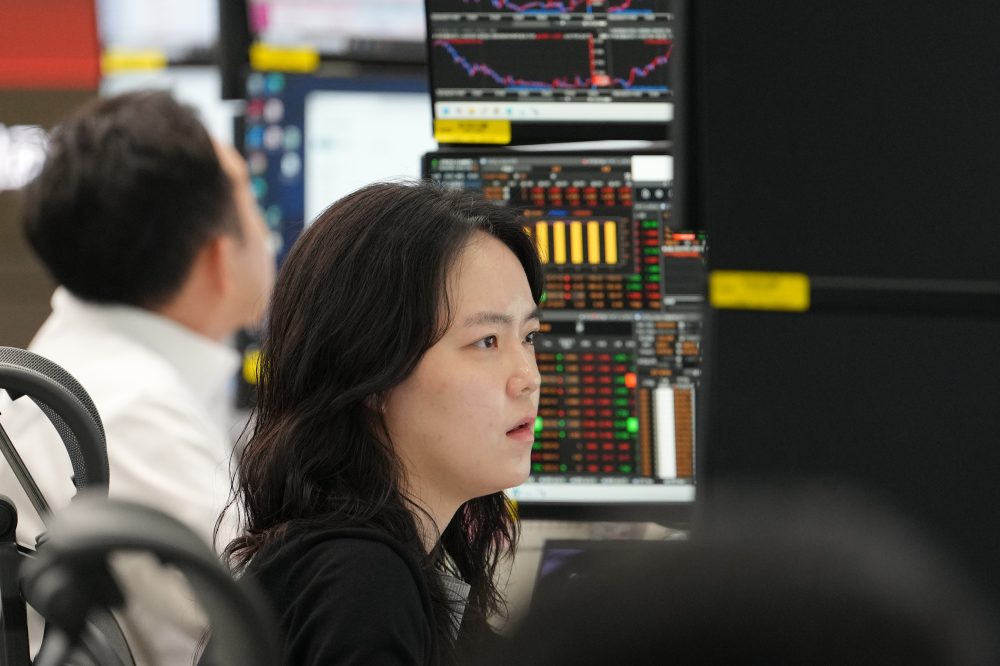
On Monday, stock exchanges in South Korea and Taiwan reached record levels, supported by widespread confidence in AI-related investments.
Alfredo Montufar-Helu from Ankura China Advisors believes V4’s importance extends beyond market reactions to the broader technological competition between the United States and China.
He highlighted DeepSeek’s optimization of V4 for Huawei processors, as stricter American export restrictions aim to prevent Chinese companies from accessing advanced U.S. semiconductors essential for AI development.
“The ‘wow factor’ was last year – that’s already priced in,” he explained. “What matters now is whether China can continue advancing on AI development, and potentially do so with its own chips – the geopolitical implications would be significant.”
Shipyards across South Korea and China are experiencing a surge in new contracts for liquefied natural gas tankers, marking a significant recovery following last year’s downturn in orders, according to industry experts and market analysts.
This upward trend in vessel construction comes even as the ongoing conflict with Iran creates uncertainty about shipping routes and demand in the near term.
Maritime consulting firms Poten & Partners and Drewry report that 35 new liquefied natural gas carrier contracts were signed during the first three months of this year. This represents a dramatic improvement compared to the entire previous year, when only 37 such vessels were ordered globally. The peak year was 2022, which saw a record 171 orders placed.
Each of these specialized tankers carries a price tag between $250 million and $260 million, with construction timelines extending beyond three years.
Pratiksha Negi, who leads LNG shipping analysis at Drewry, points to several factors driving this demand surge. “Upcoming LNG production in the U.S., Africa, Canada and Argentina will generate tanker demand, along with a push towards fuel efficiency and accelerated vessel demolitions,” she explained, noting that older steam turbine and diesel-electric carriers are being retired.
The worldwide fleet of LNG carriers currently includes more than 700 vessels, which transport over 400 million tons of liquefied natural gas annually.
Fraser Carson, a principal analyst specializing in global LNG at Wood Mackenzie, highlighted the scale of upcoming production increases. Last year saw approval for 72 million tons per year of new LNG capacity globally, while more than 120 million tons per year of additional U.S. supply is expected to enter the market within the next three to four years.
“The growth of U.S. LNG and flexible LNG supply creates trading patterns that require more shipping,” Carson noted. American LNG typically sells on terms that allow buyers flexibility in destinations, enabling route changes during voyages that can keep vessels occupied for extended periods.
Jotaro Tamura, chief executive of Japan’s Mitsui O.S.K. Lines, which operates the world’s largest LNG carrier fleet with 107 vessels, anticipates that expanding U.S. production will continue driving tanker orders. His company aims to expand its fleet to approximately 150 vessels by 2035.
The retirement of older, steam-powered carriers has accelerated significantly since 2022, reaching a record 15 vessels last year due to poor operating economics and stricter environmental regulations, Drewry’s data indicates.
Uma Dutt, vice president for LNG operations at Anglo-Eastern ship management, explains that proposed emission reduction standards from the International Maritime Organization are also spurring demand for new construction. “The industry is switching to dual-fuel vessels that can run on LNG,” she said.
However, the Iran conflict presents conflicting implications for LNG shipping markets. While supply disruptions are pushing Asian buyers toward Atlantic basin suppliers, increasing voyage distances, the war has also disrupted flows through the Strait of Hormuz and taken 12.8 million tons per year of Qatari capacity offline for three to five years.
This could reduce shipping demand and pressure freight rates at a time when Carson describes an “avalanche” of new vessel supply approaching the market.
Qatar, which operates more than 100 LNG carriers, plans to add 70-80 new vessels over the next three to four years, while the UAE’s ADNOC expects to double its fleet to 18 ships within 36 months.
“Most of these new build vessels were earmarked to serve under-construction LNG projects that are now facing delays,” Carson explained. “The longer those delays persist, the more likely it is that these ships are offered to the market on sublet arrangements – softening rates considerably.”
Industry forecasts from Poten & Partners and Drewry anticipate a record 90-100 LNG carrier deliveries this year, up from 79 in the previous year.
Drewry’s Negi noted that seven of nine carriers originally scheduled for delivery this year but now postponed to 2027-28 are connected to QatarEnergy projects.
Irwin Yeo, a senior LNG analyst at Poten & Partners, suggests some companies may postpone major new construction orders due to war-related uncertainties. “Market uncertainty and rising shipbuilding costs, including labour and raw materials amid the current Middle East crisis could deter some from placing orders,” he said.
NEW DELHI – Prime Minister Narendra Modi’s ruling party has bolstered its strength in India’s parliament after seven opposition legislators switched allegiances on Monday, according to official parliamentary records. The move could help the government advance its legislative agenda more smoothly.
The seven lawmakers who changed parties all belonged to the Aam Aadmi Party (AAP), which is headed by Arvind Kejriwal, one of Modi’s most vocal political opponents. AAP currently controls Punjab state and previously held power in Delhi, the nation’s capital territory.
Following these defections, AAP now holds only three seats in the Rajya Sabha, India’s upper legislative chamber. Meanwhile, Modi’s Bharatiya Janata Party has increased its membership to 113, putting it just 10 seats away from controlling a simple majority in the 245-seat body. The broader National Democratic Alliance, led by Modi, now commands approximately 140 seats in what is also called the Council of States.
Members of the Rajya Sabha serve six-year terms and are chosen by elected officials from state and territorial legislatures through a proportional representation voting system. Modi’s coalition currently governs 19 of India’s 28 states plus two of the three federal territories that have their own legislatures.
Among those who switched parties are former cricket star Harbhajan Singh and Raghav Chadha, who effectively led the group of defectors. Chadha had gained public recognition by advocating for middle-class issues, including challenging expensive food prices at airports.
Chadha criticized his former party, claiming it was controlled by “corrupt and compromised” individuals. In response, AAP officials accused the defectors of acting purely out of political opportunism.
Six of the seven former AAP legislators were originally elected from Punjab, where state elections are scheduled for next year and where Modi’s party has never secured an outright majority independently. Multiple AAP leaders, including Kejriwal himself, are currently facing legal proceedings related to corruption charges.
In February, a New Delhi court chose not to move forward with prosecution against Kejriwal and other party members in one corruption case, which AAP maintains is politically driven. The case has since been appealed to a higher court.
Stock prices for the German athletic footwear company Adidas increased by 1.2% on Monday following a historic achievement at the London Marathon. Kenyan runner Sabastian Sawe made sports history by becoming the first male athlete to complete an official marathon race in less than two hours while wearing Adidas running shoes.
The remarkable athletic accomplishment appears to have positively impacted investor confidence in the sportswear brand, with shares experiencing an uptick in Monday trading.
Britain’s King Charles and Queen Camilla touched down in America on Monday for a historic four-day royal visit that has been overshadowed by recent violence and growing tensions between the longtime allies.
This state visit represents the most significant and high-stakes trip of Charles’s time as monarch, commemorating 250 years since America declared independence from Britain. It’s the first time a British royal has visited the United States in two decades.
The carefully planned itinerary includes a private audience with President Donald Trump, who has openly expressed his admiration for the royal family, along with a congressional address and an elegant White House state dinner.
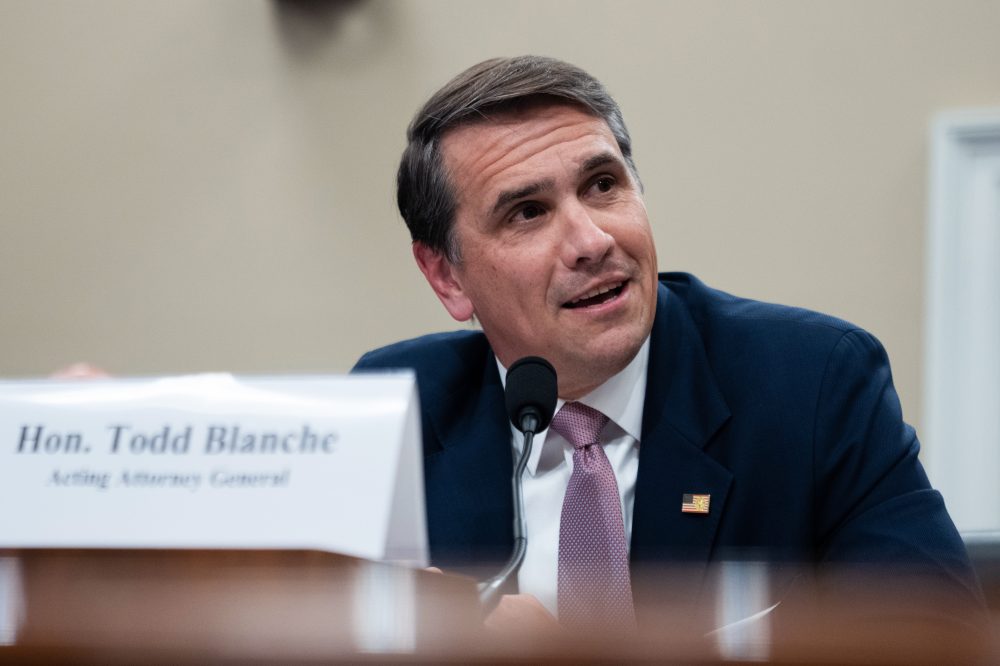
However, the visit has been complicated by recent events, including a shooting incident at Saturday’s White House Correspondents’ Association dinner in Washington. According to the acting U.S. attorney general, the president and his administration officials were believed to be the intended targets of the attack.
Additionally, diplomatic relations have been strained over disagreements regarding the U.S.-Israeli military action against Iran, with Trump expressing frustration over Britain’s reluctance to support the campaign.
Despite these challenges, Buckingham Palace confirmed the royal tour would proceed as scheduled after security consultations between British and American officials.
“The king and queen are most grateful to all those who have worked at pace to ensure this remains the case and are looking forward to the visit getting underway tomorrow,” a palace spokesperson said on Sunday.
Upon arrival in Washington, the royal couple will enjoy private tea with Trump, who frequently refers to Charles as a “great man,” and First Lady Melania Trump.
The 77-year-old monarch, who continues receiving cancer treatment, will make history the following day by addressing Congress – only the second British sovereign ever to do so.
The royal tour will then move to New York City, where they’ll pay respects to victims of the September 11, 2001 terrorist attacks ahead of the 25th anniversary. Queen Camilla will also participate in celebrations marking 100 years of Winnie the Pooh children’s literature.
The visit concludes in Virginia, where King Charles will meet with environmental conservation groups, reflecting his decades-long commitment to environmental causes.
British Prime Minister Keir Starmer’s administration hopes this royal visit will strengthen the “special relationship” between the nations, which has reached its lowest point since the 1956 Suez Crisis.
Britain’s U.S. Ambassador Christian Turner emphasized that the visit would highlight the shared heritage, sacrifices, and values connecting both countries, noting their approach would follow the traditional British motto: “Keep calm, carry on.”
While Trump has recently softened his criticism of Britain’s Iran policy stance, tensions persist after a leaked Pentagon document suggested America might reconsider its support for Britain’s Falkland Islands claims as retaliation for insufficient cooperation.
The Jeffrey Epstein controversy will not be addressed during this visit. Palace sources confirmed the royals cannot meet with Epstein victims who requested such meetings, citing concerns about interfering with ongoing criminal investigations.
King Charles’s brother, Andrew Mountbatten-Windsor, continues facing police scrutiny over his connections to the deceased American sex offender. The former Prince Andrew has consistently denied any misconduct.
NAIROBI, Kenya (AP) — Brenda Obare remembers when cooking dinner meant simply turning a knob to ignite the blue flame on her gas stove before evening arrived.
Today, that stove sits unused while she hunkers down beside a charcoal burner outside her metal-roofed dwelling in Kibera, one of Africa’s most expansive informal communities in Kenya’s capital. She works to kindle a smoky blaze for her family’s meals. Cooking gas has become prohibitively costly and frequently unavailable, while charcoal remains accessible.
“We don’t have many options,” she said. “You use what you can afford.”
Her experience reflects a growing trend resulting from energy supply disruptions linked to the Iran war. While governments had encouraged adoption of cleaner fuels like LPG for health and environmental benefits, escalating prices are eroding those achievements.
The consequences extend far beyond fuel stations, reaching into homes, woodlands, and animal habitats. Throughout Africa and South Asia, officials have invested years attempting to transition households from burning charcoal and wood to cleaner alternatives like liquefied petroleum gas.
This initiative stemmed from health concerns regarding air pollution, which claimed 2.9 million lives in 2021 according to World Health Organization data. Environmental protection also motivated the effort, as firewood and charcoal consumption intensifies pressure on forests and wildlife areas. Harvesting trees more rapidly than natural regeneration occurs accelerates forest loss.
As increasing numbers venture into forests seeking fuel, human-wildlife encounters multiply. Simultaneously, economic strain can increase poaching and bushmeat harvesting, raising disease transmission risks from animals to humans. Declining tourism reduces conservation funding, while elevated fuel expenses hamper field team operations and rapid response when wild animals enter populated areas.
“The longer this debacle runs, the harder it is going to hit conservation,” said Mayukh Chatterjee, the International Union Conservation for Nature’s co-chair for its conflict and co-existence specialist group.
Paula Kahumbu, a wildlife conservationist and CEO of Nairobi-based WildlifeDirect, explained that when LPG, kerosene or electricity become unaffordable or unreliable, many households switch to firewood and charcoal due to easier access in cash-strapped communities, despite environmental damage.
“The first conservation risk from an energy shock in Africa is not abstract. It is household fuel switching,” she said.
Growing biomass fuel demand also damages watersheds and wildlife habitats as people venture deeper into previously untouched regions, intensifying ecosystem pressure and threatening dependent species.
Specialists worry that climbing diesel costs and increased fertilizer expenses will also damage agricultural productivity, decreasing harvests and worsening food insecurity.
“The crisis is impacting more than forests,” Kahumbu said.
Charcoal, produced through slow wood burning in kilns, ranks among sub-Saharan Africa’s most common cooking fuels and represents a primary deforestation cause. Demand is increasing among customers in Nairobi’s low-income areas, reports charcoal vendor Munyao Kitheka.
India experiences a comparable transition as the world’s second-largest LNG importer, with approximately 60% of supplies originating from the Gulf region, according to S&P Global data.
Rama, a social worker using only one name, devoted years encouraging waste-collecting families in Bhalswa, an impoverished New Delhi suburb, to embrace LPG. However, with daily incomes under $3, many cannot afford expensive LPG cylinders and are returning to wood-burning stoves or relocating to villages where wood is more accessible.
“Things are very, very bad,” she said.
This transition burdens women and girls more heavily, as they spend hours daily searching for fuel, reducing time available for employment or education, explained Neha Saigal, a consultant with environmental and social justice startup Asar Social Impact Advisors.
“Years of work went into making LPG aspirational. But a global issue like this can reverse some of those gains,” she said.
Chester Zoo’s Chatterjee noted that decreasing habitat pressure through reduced fuelwood consumption has been fundamental to Asian conservation efforts. He referenced an elephant conservation program in India’s northeastern Assam state where restaurants had decreased wood usage, but cautioned these improvements could dissolve as households return from LPG, which derives from oil or natural gas refining.
“That all risks going back to square one,” he said.
Specialists caution that the Iran conflict and subsequent fuel disruptions could strain funding and interrupt field operations, impeding global conservation efforts.
Airlines are eliminating African routes, potentially affecting tourism as rising fuel prices increase travel expenses. Aviation route disruptions through Middle Eastern connections complicate access to certain destinations.
Even minor visitor decreases can significantly impact countries depending on wildlife tourism to finance protected areas.
Tourism generates approximately 14% of GDP in nations like Kenya and Tanzania, where it supports park management, anti-poaching operations, and community conservation programs.
“Less tourism means less income for conservation initiatives, fewer rangers and more opportunistic poaching,” Kahumbu said, noting that rising food and fuel costs could also drive more people toward bushmeat as affordable protein, increasing wildlife population pressure.
Additionally, conservation work in isolated areas requires extensive regular travel, often by motorcycle or other vehicles. Higher fuel prices can disrupt this mobility.
Chatterjee emphasized that during South Asian wildlife-human conflicts, rapid forest staff and conservation team deployment is essential for securing areas, managing crowds, and safely guiding or tranquilizing animals before situations worsen.
Delays heighten injury or death risks for both sides, and fuel shortages can extend response times.
African governments possess options to minimize impact, though action has frequently lagged. Kahumbu advocated protecting households from returning to polluting fuels through targeted subsidies, stronger local supply networks, and supporting local energy sources including biogas, solar, and geothermal power.
“Treat conservation as essential infrastructure during economic shocks,” she said.
OMDURMAN, Sudan — Dr. Jamal Eltaeb faced impossible decisions every day for three years. Which patients had the best chance of survival? Should he perform surgery without proper medication if it could save a life? How could he secure fuel to power the hospital generators?
While Sudan’s civil war erupted around his medical facility, the orthopedic surgeon made one unwavering choice: continue treating patients.
Eltaeb directed Al Nao hospital in Omdurman, located near Sudan’s capital Khartoum, as military forces and paramilitary groups battled for territorial control. When fighting intensified and wounded patients flooded the facility, many of his medical colleagues abandoned their posts out of fear.
The quiet-mannered surgeon remained at his post despite multiple bombing attacks on the hospital and dwindling medical resources.
“I weighed the options of staying here, and taking care of your patients and helping other people that need you as a skilled surgeon, rather than choose your own safety,” he explained during an Associated Press interview.
Eltaeb represents one of many Sudanese citizens who stepped up to assist their communities while international attention focused on conflicts in Ukraine and the Middle East. He witnessed firsthand the casualties behind estimates showing tens of thousands have perished, experiencing what it means when the United Nations declares the nation’s healthcare system approaching total failure.
Close to 40% of Sudan’s medical facilities have ceased operations. Armed groups have converted many hospitals into military bases or stripped them of equipment. Sudan’s military has regained control of the capital, leaving Al Nao among the few operational healthcare centers in the region.
During a tour of the medical complex, the 54-year-old physician pointed out to AP reporters evidence of the most challenging period of his career.
He indicated a damaged window where shrapnel killed a patient’s family member. In the courtyard stood the final remaining tent from dozens erected during intense fighting to handle mass casualties.
“We were working everywhere, in tents, outside, on the floor, doing everything to save patients’ lives,” Eltaeb recalled.
His dedication earned Eltaeb the $1 million Aurora Prize for Awakening Humanity, recognizing people who endanger themselves to rescue others. He donated portions of the award to medical and humanitarian organizations worldwide.
Hospital staff described Al Nao before the conflict as a peaceful facility where nearly 100 beds often remained vacant. When violence erupted in Khartoum and the paramilitary Rapid Support Forces seized large portions of the city, injured civilians rushed to the hospital.
Eltaeb’s original hospital closed soon after fighting began in April 2023, prompting his transfer to Al Nao. Most personnel had evacuated by July, leaving him as the facility’s leader.
He worked alongside a small group of employees and volunteers to maintain hospital operations. Power outages lasted weeks while the facility depended on military fuel deliveries for generators. Critical medications including antibiotics and pain relievers became unavailable.
The hospital suffered its first attack in August, one month after Eltaeb assumed leadership.
“From that moment, we knew that we are a target … And from that time, they didn’t stop targeting us,” he stated. The RSF subsequently bombed the hospital three additional times.
Normal life had collapsed. The father of three worked from his office, distributing candy to a continuous flow of patients and staff seeking his guidance.
Medical choices became agonizing. During one devastating day in late 2024, he and his team rushed to treat more than 100 wounded individuals after an explosion struck a local marketplace. Eight patients died.
“You choose … as if you can choose who is going to live and who is going to die,” he said.
The situation deteriorated further when Eltaeb had to determine whether to amputate children’s limbs without complete anesthesia because they were losing blood rapidly and couldn’t be moved to the operating room in time.
Using only local numbing medication, he amputated an arm and leg from a 9-year-old boy and removed his 11-year-old sister’s leg.
He keeps photographs of these procedures on his mobile phone, trying to help others understand horrors that few can comprehend.
The hospital depended on volunteers to maintain supply chains. They posted needs on social media platforms, and pharmacists provided keys to their shuttered stores, allowing volunteers to collect medicines and equipment without charge.
Volunteer Nazar Mohamed spent months traveling throughout Omdurman, frequently on bicycle, transporting supplies while explosions thundered nearby.
Additional donations arrived from international organizations and individuals. Sudanese physicians living overseas offered remote consultation on managing mass casualties and operating with limited antibiotics or anesthesia.
Remaining hospital workers improvised solutions, constructing beds and crutches from wood and using clothing instead of medical gauze for emergency splints.
Combat has moved away from the Khartoum region. Some financially strained organizations that previously supported Eltaeb’s hospital now direct aid to areas with greater needs.
He estimates current funding will cover salaries and generator operations until June, but the hospital requires approximately $40,000 monthly to maintain full functionality.
Although several nations have promised assistance for Sudan’s reconstruction efforts, concerns exist that conflict with Iran might redirect attention and resources, particularly from Gulf states that pledged recovery support.
Medical facilities that sustained heavier damage than Al Nao remain destroyed and require significantly more resources.
Across the city, Dr. Osman Ismail Osman, who directs Al Shaabi hospital, described the several hundred thousand dollars provided by the government as insufficient.
The RSF occupied his hospital during the war. Damaged medical equipment worth millions of dollars lies in dusty piles, surrounded by concrete debris and twisted metal bed frames.
Plans to reopen the severely damaged hospital for emergency referrals within weeks appear ambitious, but medical professionals like Eltaeb have developed skills for tackling seemingly impossible tasks.
“I believe I did my best as a doctor as a Sudanese,” the surgeon concluded.
Tehran has put forward a new diplomatic proposal to lift its restrictions on the strategically vital Strait of Hormuz shipping corridor while requesting Washington end its economic sanctions against the Islamic Republic, according to two regional officials familiar with the negotiations who spoke anonymously Monday.
The Iranian offer, delivered through Pakistani intermediaries, notably sidesteps any commitments regarding Tehran’s nuclear activities – a key sticking point that makes the proposal unlikely to gain traction with President Trump’s administration, which has made dismantling Iran’s atomic capabilities a cornerstone of any comprehensive settlement.
“We have all the cards. If they want to talk, they can come to us, or they can call us,” Trump told Fox News Channel on Sunday.
The Axios news organization was first to report on Iran’s diplomatic overture.
Iranian Foreign Minister Abbas Araghchi touched down in St. Petersburg Monday morning for scheduled discussions with Russian President Vladimir Putin, Iran’s state-run IRNA news agency reported. His recent diplomatic tour included stops in Pakistan and Oman, which controls the southern shore of the disputed waterway alongside Iran.
Araghchi’s Russian visit unfolds amid continued tensions between Tehran and Washington over the critical Strait of Hormuz, despite an existing ceasefire that has failed to resolve underlying disputes or stabilize global energy markets.
“It is a good opportunity for us to consult with our Russian friends about the developments that have occurred in relation to the war during this period and what is happening now,” Araghchi stated in a video interview released by IRNA.
Pakistani officials have been working to restart stalled diplomatic communications between Iran and the United States, with negotiations initially planned for Islamabad over the weekend. However, President Trump indicated the discussions might proceed via telephone rather than in-person meetings.
Araghchi attributed delays in the negotiation process to America’s stance, saying it was Washington’s approach that “caused the negotiations to be delayed.”
“The previous one, despite the progress that had been made, could not achieve its goals,” he stated, criticizing what he characterized as Washington’s “excessive demands.”
Trump has expressed uncertainty about Iran’s current leadership structure and suggested that internal confusion within the country’s theocratic government complicates reaching any meaningful agreement.
The White House announced last week it would send envoys Steve Witkoff and Jared Kushner to Islamabad to build on previous face-to-face discussions held earlier this month. However, after Araghchi departed the Pakistani capital Saturday, Trump canceled the diplomatic mission citing insufficient progress with Iranian officials.
“If they want, we can talk but we’re not sending people,” Trump stated to Fox News on Sunday. He had posted earlier on social media: “All they have to do is call!!!”
Araghchi subsequently returned to Islamabad and also traveled to Oman’s capital Muscat before departing for Russia. He conducted phone conversations with officials from Qatar and Saudi Arabia on Sunday.
The ongoing standoff centers on the Strait of Hormuz, the narrow Persian Gulf passage through which approximately one-fifth of global oil and natural gas typically flows, as Iran has limited vessel movement while the U.S. maintains its embargo of Iranian ports.
Brent crude futures, the international benchmark, traded around $107 per barrel Monday, a significant increase from $72 per barrel before the conflict erupted.
Energy prices have climbed consistently since hostilities began, with numerous oil tankers stranded in the Persian Gulf, unable to safely navigate through the strait to reach international markets.
The economic impact continues expanding two months into the conflict as worldwide shipments of oil, liquefied natural gas, fertilizers and other essential commodities face disruption from the near-total closure of this strategic waterway.
Iran is seeking Oman’s backing for a system to collect transit fees from ships using the strait, according to a regional official who requested anonymity due to lack of authorization to discuss the matter publicly.
Oman’s position on this proposal remains unclear.
The official, who participates in mediation efforts, also indicated Iran demands the lifting of U.S. sanctions before engaging in fresh negotiations, while Pakistani mediators work to narrow substantial differences between both nations.
Trump last week extended indefinitely the ceasefire agreement reached between the U.S. and Iran on April 7, which has largely stopped combat that commenced with combined U.S.-Israeli military strikes on Iran February 28. However, a lasting resolution remains out of reach in the conflict that has claimed thousands of lives and disrupted the global economy.
Prior to Saturday’s developments, Iran’s Foreign Ministry stated any discussions would be conducted indirectly through Pakistani representatives, demonstrating Tehran’s caution following previous rounds of indirect negotiations that concluded with military strikes by the U.S. and Israel.
Both nations continue issuing military warnings. Iran’s joint military command cautioned Saturday that “if the U.S. continues its aggressive military actions, including naval blockades, banditry, and piracy” it will encounter a “strong response.”
Trump ordered military forces last week to “shoot and kill” small vessels potentially deploying mines in the shipping channel.
Trump informed reporters Saturday that within ten minutes of canceling Witkoff and Kushner’s Islamabad trip, Iran submitted a “much better” proposal.
He declined to provide specifics but emphasized that among his conditions is that Iran “will not have a nuclear weapon.” Iran’s enriched uranium stockpile has remained central to ongoing tensions. Tehran currently possesses 440 kilograms (970 pounds) of uranium enriched to 60% purity, requiring only a brief technical process to reach weapons-grade concentration, according to U.N. nuclear monitoring officials.
Since fighting commenced, casualties include at least 3,375 people in Iran and at least 2,509 in Lebanon, where Israel-Hezbollah combat resumed two days after the Iran conflict started. Additional fatalities include 23 in Israel and over a dozen in Gulf Arab nations. Military losses encompass 15 Israeli soldiers in Lebanon, 13 U.S. service members in the region, and six U.N. peacekeepers in southern Lebanon.
A separate ceasefire between Israel and the Iranian-supported Lebanese militant organization Hezbollah has been extended for three weeks. Hezbollah has remained outside the Washington-facilitated diplomatic process.
OAKLAND, Calif. — Two of Silicon Valley’s most powerful figures are preparing for a legal battle that could determine the future direction of artificial intelligence technology.
Tesla CEO Elon Musk and OpenAI chief executive Sam Altman will square off in federal court beginning Monday, when jury selection starts for a case centered on accusations of broken promises, deception, and corporate greed that destroyed their former partnership in AI development.
At the heart of the dispute is OpenAI’s transformation from its 2015 origins as a nonprofit organization largely backed by Musk’s funding into today’s profit-focused enterprise worth $852 billion that created ChatGPT.
The case’s resolution could significantly influence who controls AI advancement — technology that many worry could eliminate jobs and potentially threaten human existence.
These concerns drive Musk’s lawsuit, filed in August 2024, which will be heard by a jury and U.S. District Judge Yvonne Gonzalez Rogers in Oakland, California. As the world’s wealthiest individual, Musk argues these risks justify his legal action.
In his civil complaint, Musk accuses Altman and his second-in-command Greg Brockman of betraying him by abandoning the San Francisco-based company’s original charitable mission to responsibly oversee revolutionary technology. Instead, he claims they secretly pivoted toward profit-making operations.
OpenAI dismisses Musk’s claims as baseless resentment designed to harm its rapid expansion while promoting Musk’s competing venture, xAI, which he established in 2023.
Between December 2015 and May 2017, Musk contributed approximately $38 million to OpenAI and originally demanded over $100 billion in compensation.
However, potential damages have decreased substantially following several unfavorable pre-trial decisions. Musk no longer pursues personal compensation and now requests unspecified funds to support OpenAI’s charitable division. The payment would come mainly from OpenAI’s commercial operations and Microsoft, which became the company’s largest investor after Musk withdrew his support.
Musk’s legal action also demands Altman’s removal from OpenAI’s board of directors. The funding cutoff created a bitter rift between the former partners. Musk claims he responded to misleading behavior that OpenAI’s board recognized when they dismissed Altman as CEO in 2023, though he regained his position days later.
The trial presents potential dangers for Musk, who was recently found liable by another jury for misleading investors during his $44 billion Twitter acquisition in 2022. Any harmful revelations about Musk’s business methods could prove especially damaging as his aerospace company SpaceX prepares for a summer initial public offering that might make him the world’s first trillionaire.
Regardless of the outcome, the proceedings promise compelling drama featuring opposing testimony from two of technology’s most influential and controversial personalities — 54-year-old Musk and 41-year-old Altman.
“Part of this is about whether a jury believes the people who will testify and whether they are credible,” Gonzalez Rogers explained during an earlier court session while justifying why the case deserved a trial. The judge will render the final verdict, with the jury providing advisory input.
Musk, whose wealth totals roughly $780 billion, has earned recognition as an innovator for his roles developing digital payment pioneer PayPal, electric vehicle manufacturer Tesla, and aerospace company SpaceX. However, he has also faced criticism for his social media posts, unfulfilled Tesla autonomous driving promises, and his cost-cutting position in President Donald Trump’s recent administration.
Some of Musk’s unpredictable conduct has been linked to claims of psychedelic drug use, though Gonzalez Rogers ruled that ketamine use cannot be discussed during the trial. The judge will permit questions about Musk’s participation in Nevada’s 2017 Burning Man festival, an unconventional event associated with widespread drug consumption. The court will also allow inquiries about Musk’s relationship with former OpenAI board member Shivon Zilis, who is the mother of several of his children.
Altman, who currently possesses approximately $3 billion in wealth, remained relatively unknown until ChatGPT’s debut in late 2022. The technological surge sparked by that conversational AI tool has led some observers to compare Altman to J. Robert Oppenheimer, the 20th-century nuclear weapons developer.
While Altman initially received praise as an innovator, he now faces criticism due to concerns about AI’s potential risks. This month, the New Yorker magazine published an article portraying him as an unethical leader. Shortly afterward, authorities arrested a 20-year-old man on attempted murder charges for hurling a Molotov cocktail at Altman’s San Francisco residence, apparently motivated by fears about AI’s impact on society.
The contrasting testimonies from Altman and Musk are anticipated to reveal insights into the reasoning behind the AI competition and the deterioration of their friendship. Their alliance began in 2015 when they committed to developing AI more responsibly and safely than profit-focused companies led by Google founders Larry Page and Sergey Brin and Facebook creator Mark Zuckerberg, according to pre-trial evidence.
The bitter breakdown between the two entrepreneurs was documented in a February 2023 email conversation that emerged during pre-trial proceedings.
After telling Musk “you’re my hero,” Altman wrote: “I am tremendously thankful for everything you’ve done to help —I don’t think OpenAI would have happened without you — and it really (expletive) hurts when you publicly attack OpenAI.”
Musk replied: “I hear you and it is certainly not my intention to be hurtful, for which I apologize, but the fate of civilization is at stake.”
A young Spanish tennis player captured the attention of home fans Sunday when 19-year-old wildcard Rafael Jodar took down Brazilian rising star Joao Fonseca in a thrilling three-set match, 7-6 (4), 4-6, 6-1, at the Madrid Open.
Just two days earlier, Jodar had claimed his first victory over a top-10 ranked player by defeating Australia’s Alex de Minaur.
Fonseca, who is also 19 and ranked 27th in the Madrid tournament, recovered from losing a tight first-set tiebreak to break Jodar’s serve early in the second set and push the match to a third set. However, the Spanish newcomer dominated the final set, recording 11 winners compared to just one for his Brazilian opponent to secure his spot in the fourth round.
“A very tough match,” Jodar said. “Joao is always a very tough player, so these matches are decided by very small details and various small points. I think I did a great job in those points, trying to play my game.”
Jodar’s next opponent will be Czech player Vit Kopriva, who has no current ranking and advanced when 22nd-seeded Frenchman Arthur Rinderknech withdrew due to a calf injury after two sets. Kopriva had taken the opening set 6-4 but lost the second 6-3 before Rinderknech retired from the match.
The Spanish player is taking time to savor Sunday’s breakthrough performance.
“I’m very, very happy with my level,” Jodar said. “I’ll just try to recover well and think about the next match.”
In other action, Italy’s top-seeded Jannik Sinner dominated Danish qualifier Elmer Moller with a commanding 6-2, 6-3 win to reach the fourth round. The victory extended Sinner’s remarkable winning streak to 24 straight matches at ATP 1000-level tournaments. Sinner committed only 10 unforced errors against the powerful-hitting Moller.
“I tried to stay calm and serve well in important moments,” Sinner said after the match. “I think that was the key today. There was not a lot of rhythm, so I tried to stay quite compact. Let’s see what’s coming in the next round.”
Sinner will face 19th-seeded Cameron Norrie of Britain on Tuesday, after Norrie narrowly defeated Argentina’s Thiago Tirante 7-5, 7-6 (5). The upcoming match will mark the first meeting between Sinner and the left-handed Norrie.
Sunday also saw other higher-seeded players advance without major upsets. Italy’s sixth-seeded Lorenzo Musetti outlasted 29th-seeded Tallon Griekspoor from the Netherlands, 6-4, 7-5. Czech Republic’s 11th-seeded Jiri Lehecka defeated Alex Michelsen, 6-4, 6-2. France’s 21st-seeded Arthur Fils knocked out Emilio Nava, 7-6 (2), 6-3. And 25th-seeded Argentine Tomas Martin Etchevarry came from behind to stop Croatia’s Dino Prizmic with a 2-6, 6-4, 6-3 comeback victory.
Mike Tomlin has broken his silence about departing Pittsburgh, explaining that both he and the Steelers organization needed a change after nearly two decades together.
The 54-year-old coach, who never posted a losing season during his tenure, spoke with NBC Sunday night in his first public comments since leaving the team in January. Tomlin acknowledged that the franchise’s playoff struggles – they haven’t won a postseason game since 2016 – played a role in his difficult choice to step away.
“You know, it’s probably not an overnight decision,” Tomlin explained. “It’s probably not something that I could articulate or share with people. There’s a loneliness with leadership.”
“I just thought it was a good time for me personally and by that, I mean, just where I am in life and I thought it was a good time for the organization, to be quite honest with you. We didn’t have success in the playoffs in recent years and there’s just some veteran players there, man, guys like Cam Heyward and T.J. Watt and (Chris) Boswell, man, that I thought that just were worthy of the excitement and the optimism of new leadership.”
NBC officially confirmed Sunday that Tomlin will become an analyst on “Football Night in America,” which precedes the network’s Sunday evening NFL broadcasts.
“I just thought it would be a great way to stay connected to the game and the awesome people in it, players, coaches, executives,” Tomlin shared about his new role. “and excited about doing that on Sunday night and traveling to different venues and getting that feel for the environment and lastly, I just thought it would be awesome to share insight with fellow football lovers.”
“I love to talk football and so that’s just an exciting component for me. I got to admit, though, there’s going to be some anxiety about stepping into a new space, but good anxiety, it’s good to be uncomfortable with the growth associated with that. I’m fired up about it.”
Pittsburgh finished 10-7 this past season before suffering a crushing 30-6 wild-card defeat to Houston on January 12th. The organization subsequently hired Pittsburgh native Mike McCarthy as Tomlin’s replacement in late January.
During his remarkable run with the Steelers, Tomlin captured Super Bowl XLIII with a thrilling 27-23 win over Arizona in February 2009. The team also reached Super Bowl XLV two years later, falling 31-25 to Aaron Rodgers and Green Bay.
Tomlin compiled a 193-114-2 record in Pittsburgh, matching Hall of Famer Chuck Noll for most regular-season victories in franchise history and ranking ninth all-time in the NFL. Noll led the Steelers from 1969-91, with Bill Cowher coaching from 1992-2007 before Tomlin took over.
Regarding Rodgers, who worked with both McCarthy in Green Bay and Tomlin this past season, the former coach predicted the 42-year-old quarterback will return for his 22nd NFL campaign despite uncertainty about his future plans.
“Man, if you got a gun to my head, I’d say it’s AR,” Tomlin said. “I just think, Aaron, I just think being around him for the 12 months that I’m around him, he’s got a love affair with the game of football and not only the game, but the process, the informal moments, the development of younger guys, the interaction with teammates. I think he has an addiction to that, and there’s only one way to feed it. And certainly he is still capable and in really good shape. And so I think at the end of the day, he’ll play football.”
The Colorado Avalanche closed out their playoff series against the Los Angeles Kings with a commanding 5-1 win on Sunday, completing a four-game sweep in the Western Conference first round. Nathan MacKinnon led the charge with two goals and an assist in the decisive victory.
MacKinnon, who topped the NHL with 53 goals during the regular season, finally found the back of the net in his first postseason goals of the year. The Avalanche also received scoring from Cale Makar, Nicolas Roy, and Devon Toews, while Gabriel Landeskog contributed two assists. Goaltender Scott Wedgewood turned away 24 shots to secure the win that sends Colorado to face either Dallas or Minnesota in the next round.
Los Angeles managed just one goal from Joel Edmundson, assisted by Adrian Kempe and Alex Laferriere. Kings goalie Anton Forsberg made 27 saves on 31 shots before being pulled with 5:48 left in the game. MacKinnon capped the scoring just 20 seconds after the empty-net situation began.
The defeat brought an emotional end to the career of Kings captain Anze Kopitar, who had previously announced his intention to retire following this season. As the final minutes ticked away, Los Angeles fans showed their appreciation for Kopitar with chants, honoring his two decades with the franchise that included two Stanley Cup championships.
In other playoff action, Anaheim moved within one win of advancing by defeating Edmonton 4-3 in overtime. Ryan Poehling netted the game-winner for the Ducks, who now lead their series 3-1. Cutter Gauthier, Mikael Granlund, and Jeffery Viel also scored for Anaheim, while Connor McDavid recorded two assists for Edmonton in his 100th career playoff game.
Tampa Bay evened their series with Montreal at 2-2 after a 3-2 comeback victory. Brandon Hagel scored twice, including the winner with 4:53 remaining, as the Lightning overcame a two-goal deficit. Meanwhile, Buffalo took control of their series against Boston with a dominant 6-1 victory, building a 3-1 series lead behind a four-goal first period explosion.
LONDON – Authorities in Britain announced Monday that they have detained a 37-year-old individual as part of their ongoing investigation into multiple incidents targeting Jewish facilities across northwest London.
The arrest marks the latest development in a month-long investigation that has now resulted in 26 individuals being taken into custody. Counter-terrorism units have been leading the probe into various incidents including arson attacks and other criminal acts directed at Jewish-affiliated locations throughout the area.
“He was arrested on suspicion of preparing terrorist acts and has been taken to a London police station for questioning,” the police said in a statement.
Seasonal thunderstorms sweeping through Bangladesh have claimed the lives of at least 14 people due to lightning strikes, according to government officials who reported the casualties on Monday.
The fatalities occurred across multiple districts as sudden weather systems brought torrential rainfall and dangerous electrical activity to the region.
Agricultural workers laboring in open farmland and construction crews working in exposed locations made up the majority of those killed, according to local government representatives. Emergency responders transported several additional victims to area medical facilities, with some patients listed in serious condition.
The South Asian nation experiences hundreds of lightning-related deaths annually, prompting officials to officially classify these electrical storms as natural disasters in 2016. That designation came after May of that year saw over 200 lightning fatalities, including 82 deaths occurring within a 24-hour period.
Environmental specialists attribute the increasing number of deadly lightning incidents to widespread forest clearing, which has eliminated many towering trees that historically served as natural lightning rods, protecting people below.
These tragic electrical storm deaths typically spike during the pre-monsoon period from April through June, when climbing temperatures and moisture levels create volatile atmospheric conditions throughout the country.
Chinese artificial intelligence company DeepSeek announced significant price cuts for its latest technology model, providing developers with substantial savings through early May.
The company revealed it will offer a 75% price reduction on its recently launched AI model, DeepSeek-V4-Pro, with the discount available until May 5th. Additionally, DeepSeek announced it will reduce costs for input cache hits throughout its complete API product line to just one-tenth of the previous pricing, according to a company announcement on social media platform X.
The tech startup unveiled a preview of its eagerly awaited V4 model on Friday, which has been specifically designed to work with Huawei’s semiconductor technology.
The V4 system is available in two different configurations: the Pro version, which offers enhanced capabilities at a higher cost, and the Flash option, which provides a more streamlined and budget-friendly alternative.
DeepSeek claims its Pro version surpasses other open-source models in global knowledge testing, with only Google’s proprietary Gemini-Pro-3.1 achieving better performance results.
The Chinese technology company states that its V4 models are especially designed for AI agent applications, which can handle more sophisticated operations compared to standard chatbots but demand increased computational resources.
Swiss pharmaceutical giant Novartis announced Monday that European regulators have granted approval for Rhapsido, a new oral medication targeting chronic spontaneous urticaria (CSU), a condition that causes persistent hives.
The European Commission’s approval on April 27 marks a significant milestone for patients suffering from this chronic skin disorder. According to the pharmaceutical company, this represents a breakthrough in treatment options.
“Rhapsido is the first oral targeted treatment approved for CSU, offering a unique approach to CSU treatment in a pill taken twice daily without any lab monitoring required,” the company said in a statement.
The new medication provides patients with a convenient treatment option that doesn’t require regular laboratory testing, potentially improving quality of life for those dealing with chronic hives symptoms.
HAVANA (AP) — Cuba’s senior citizens find themselves shouldering a disproportionate share of hardship as the nation’s economic troubles intensify, particularly following an oil embargo enacted by former U.S. President Donald Trump that has accelerated difficulties since early this year.
The island nation already possessed one of Latin America’s most aged demographics even before recent setbacks, the result of extended lifespans combined with declining birth rates.
Statistics from Cuba’s National Bureau reveal that by 2024’s conclusion, approximately 26% of the population had reached 60 years or beyond, nearly double the 14.2% regional average documented by the Economic Commission for Latin America and the Caribbean.
Numerous seniors are former government employees surviving on inadequate retirement benefits, confronting reductions in historically subsidized necessities while experiencing growing isolation as Cuba’s youth continue departing the country. Migration has reduced the nation’s population by close to 1.5 million people over the last five years.
These elderly Cubans were in their youth when Fidel Castro marched into Havana. Today, during their golden years, they face another era of deprivation that challenges the limits of pension payments, government rations, and individual endurance. The effects appear throughout everyday existence: Senior citizens navigate streets in solitude, queue extensively for bread and rice, and rely more heavily on religious organizations and certain government facilities for basic nutrition.
The Church of the Holy Spirit in Old Havana exemplifies such support, welcoming approximately 50 elderly community members three times weekly for simple hot meals featuring ground meat, rice, red beans, and crackers with mayonnaise. For many attendees, these gatherings provide far more than sustenance, offering structure, comfort, and companionship during extended periods marked by shortages, power failures, and isolation.
Mercedes Lopez Rey, a retired engineer, regularly attended the church meals three times each week until her passing, as deteriorating circumstances made everyday survival increasingly challenging. Lopez also collected food portions for her friend Julia Barcelo, who battled breast cancer and couldn’t leave home.
Carmen Casado represents another frequent participant—an 84-year-old former chemical engineer who relies on these meals because her monthly pension of 2,000 Cuban pesos equals roughly $4 using the unofficial exchange rate many Cubans utilize. Without children or financial support from overseas relatives, she lives by herself in the upper levels of a crumbling 19th-century structure, typical of many Havana buildings showing signs of age and insufficient maintenance. Even facing poverty and isolation, she maintains confidence in her government while attributing the nation’s struggles to the United States.
Monte Coleman, the tenacious linebacker who secured three Super Bowl victories with Washington and went on to coach at the University of Arkansas-Pine Bluff, has passed away at the age of 68.
Both the University of Arkansas-Pine Bluff and the Washington Commanders confirmed Coleman’s death on Sunday. Officials have not released information regarding the cause of his passing.
Coleman’s football career was marked by his fierce playing style and championship success during his time with the Washington franchise. Following his playing days, he transitioned into coaching, taking his expertise to Arkansas-Pine Bluff where he continued to contribute to the sport.
HOUSTON — Los Angeles Lakers center Deandre Ayton found himself heading to the locker room early during Sunday night’s playoff matchup with the Houston Rockets after officials determined he made excessive contact with an opponent’s face.
The incident occurred with approximately 5½ minutes remaining in the third quarter when Ayton struck Rockets player Alperen Sengun in the face using his elbow and forearm as Sengun moved toward the basket with possession of the ball. Officials initially called a standard foul but decided to review the play.
Following the review, referees upgraded the call to a flagrant foul 2, which carries an automatic ejection. The official making the announcement described the contact as “unnecessary and excessive.”
At the time of Ayton’s removal from the game, the Lakers were trailing 76-57, despite holding a commanding 3-0 advantage in the playoff series. Ayton had been performing well for Los Angeles, recording a team-high 19 points along with 10 rebounds before his early departure from the contest.
Fresh entertainment content is arriving on streaming platforms this week, featuring everything from star-studded adaptations to new music releases and animated adventures.
Leading the lineup is director Emerald Fennell’s contemporary interpretation of Emily Brontë’s classic ‘Wuthering Heights,’ premiering on HBO Max May 1st. The film stars Margot Robbie and Jacob Elordi as Catherine and Heathcliff in a stylized version that allows the passionate characters to act on their desires. According to Associated Press reviews, the production offers “myriad pleasures to be had in the bold, absurd pageantry and devilish scheming. Yet for all the big swings, Fennell’s ‘Wuthering Heights’ amounts to something oddly shallow and blunt: garish and stylized fan fiction with the scope and budget of an old-school Hollywood epic.”
Netflix debuts the animated feature ‘Swapped’ on Friday, May 1st, featuring Oscar winner Michael B. Jordan as the voice of a small forest animal who exchanges bodies with his enemy, a magnificent bird voiced by Juno Temple. Directed by ‘Tangled’ creator Nathan Greno, the cast also includes Cedric the Entertainer and Tracy Morgan in what’s described as a body-switching comedy similar to ‘Freaky Friday.’
Anime enthusiasts can catch ‘Chainsaw Man — The Movie: Reze Arc’ on Crunchyroll Thursday. Director Tatsuya Yoshihara helms this R-rated film based on Tatsuki Fujimoto’s manga about a young man killed by the Yakuza who returns with the power to transform body parts into chainsaws for fighting demons, while also featuring romantic elements.
The Criterion Channel exclusively presents ‘Conbody vs Everybody’ starting Friday, May 1st. This five-part documentary series from acclaimed director Debra Granik (‘Winter’s Bone,’ ‘Leave No Trace’) follows Coss Marte’s eight-year journey building a New York fitness center that hires formerly imprisoned individuals.
Hulu streams the thriller ‘Hallow Road’ beginning Saturday, May 2nd, starring Rosamund Pike and Matthew Rhys as parents racing to assist their daughter following a nighttime accident. Reviews describe it as “an effectively minimalistic thriller that leaves much room for interpretation and debate.”
Country music star Kacey Musgraves drops her seventh studio album ‘Middle of Nowhere’ on Friday, May 1st, featuring the lead single ‘Dry Spell’ and Texas-inspired tracks including ‘Uncertain, TX’ with Willie Nelson, which she previewed at Coachella.
Belfast hip-hop group Kneecap releases their new album ‘FENIAN’ Friday, May 1st, named after 19th-century Irish independence fighters. The politically outspoken trio, known for their BAFTA-winning biographical film and support of Palestinian causes, opens the record with ‘Éire go Deo,’ advocating for Irish language preservation.
Influential indie band American Football, pioneers of the ‘twinkly’ Midwest emo guitar sound, unveils ‘LP4’ featuring ‘No Feeling’ with Grammy-winning Turnstile’s Brendan Yates, showcasing their signature complex time signatures and intricate fingerpicking style.
Tori Amos presents the concept album ‘In Times of Dragons’ on Friday, May 1st, a 17-song political allegory where she portrays an alternate version of herself fleeing a dangerous billionaire spouse, joined by her backing group the ‘Gasoline Girls.’
Television offerings include The Roku Channel’s ‘This First House’ launching Monday, following young homebuyers guided by renovation experts Zack and Camille Dettmore in a spinoff of PBS’s ‘This Old House.’
Prime Video premieres the Spanish-language series adaptation of Isabel Allende’s novel ‘The House of the Spirits’ on Wednesday, chronicling a multigenerational Latin family with a cast including Alfonso Herrera, Dolores Fonzi, and Nicole Wallace, executive produced by Allende and Eva Longoria.
Apple TV introduces the horror comedy ‘Widow’s Bay’ Wednesday, featuring Matthew Rhys as a mayor attempting to develop his eerie coastal town into a tourist destination despite locals’ beliefs about supernatural inhabitants.
HGTV’s ‘Zillow Gone Wild’ returns for a new season Saturday, May 2nd on HBO Max, with host Jack McBrayer touring unusual properties found on real estate websites.
Gaming releases include Sony’s ‘Saros’ for PlayStation 5 Thursday, set on the shape-shifting planet Carcosa where players battle hostile creatures with advanced weaponry and energy shields. Developer Housemarque calls it ‘bullet ballet, evolved.’
Space exploration game ‘Aphelion’ launches Tuesday on PlayStation 5, Xbox X/S, and PC, placing players as separated astronauts on frozen planet Persephone who must reunite while avoiding dangerous life forms. French studio Don’t Nod worked with the European Space Agency for realistic near-future space travel depiction.
HAVANA — At the Church of the Holy Spirit in Old Havana’s historic district, approximately 50 senior citizens recently gathered for their regular communal meal, sharing ground beef, rice, red beans and crackers with mayonnaise, followed by traditional Cuban coffee.
Before eating, the group recited together: “May the Lord bless from his height, the meal our belly will take with delight,” a prayer they repeat three times weekly in the church’s dining area.
Carmen Casado, an 84-year-old former chemical engineer, never misses these gatherings. Her government retirement check totals 2,000 Cuban pesos monthly — worth approximately $4 when exchanged at the unofficial rates locals rely on daily. Living by herself without children or family support from overseas, she depends heavily on these church dinners.
The meals provide crucial nutrition beyond the limited government rations of bread, rice and beans available at state-operated stores known as bodegas, according to Casado.
“This is a lifeline for us retirees with small pensions,” Casado explained quickly. “What we get from the bodegas alone is not enough.”
Cuba’s aging population faces particularly harsh consequences from the nation’s devastating economic downturn, which has intensified significantly this year after oil restrictions implemented under former U.S. President Donald Trump’s administration.
The majority of these seniors worked in government positions — educators, medical professionals, nurses, technicians, maintenance workers, attorneys — and now receive monthly pensions typically under $10. They must cope with reduced subsidized goods that sustained them for decades, plus isolation as younger generations leave the country.
These individuals witnessed Fidel Castro’s arrival in Havana during their youth and experienced every major historical moment on the island, from the Bay of Pigs attack to the historic 2016 handshake between U.S. President Barack Obama and Raúl Castro.
Today, their dedication to the revolution faces its greatest challenge yet, compelling them to hawk tobacco products on sidewalks, wait in lengthy bread lines, and depend on free food from religious organizations and government facilities.
Following her meal, Casado made the four-block journey to her residence, where she continues managing daily tasks independently. She occupies the upper two levels of a deteriorating 19th-century structure typical of many crumbling buildings throughout the capital city.
Born in 1942, Casado came of age during Castro’s revolutionary victory. Her lifetime encompasses the island’s most pivotal events, including the 1962 Cuban Missile Crisis and the economic hardship known as the Special Period after Soviet support ended. She also experienced the prosperous 1970s and 1980s when Soviet assistance funded the economy and Cuba’s socialist system appeared promising.
“This is our life; we were born and raised here,” she reflected.
Before the current economic collapse intensified and recent emigration waves began five years ago, Cuba already ranked among Latin America’s nations with the most elderly residents, driven by extended lifespans and declining birth rates.
Data from Cuba’s National Bureau of Statistics shows nearly 26% of the population reached age 60 or above by late 2024. This figure represents almost double the regional average of 14.2% for the same period, based on information from the Economic Commission for Latin America and the Caribbean (CEPAL).
Over the past five years, Cuba’s population has decreased by nearly 1.5 million people, mainly through emigration. The island’s resident population has dropped from 11.1 million to just 9.7 million currently.
The crisis’s effects and youth exodus are immediately apparent throughout the streets. Elderly residents walk alone — some searching through garbage, others queuing extensively for bread and rice distributed through ration books, the basic subsidized food system the government provides to all Cubans.
The elderly population’s situation has become so dire that authorities recently permitted private business owners to establish elder care services and residential homes, representing a major shift from the island’s traditional complete state oversight model.
Casado maintains she remains fortunate compared to others. She stays mentally alert without physical limitations — not even requiring a walking stick — and handles all personal needs independently. Her sole medication consists of half a blood pressure pill, which remains accessible at government pharmacies “so far.”
Despite experiencing poverty and isolation, she maintains confidence in the government and attributes the nation’s problems to the United States.
“We’re doing everything we can here to move the country forward,” she stated. “But the thing is, we have a very powerful enemy, and he’s right there, right on our doorstep.”
NEW DELHI (AP) — Indian Captain Rahul Dhar and his maritime crew have spent roughly two months trapped aboard their oil tanker in the Persian Gulf waters, witnessing drone strikes and missile explosions as the critical Strait of Hormuz shipping passage remains blocked due to the continuing Iran conflict.
While the crew maintains their daily operations, Dhar reports that psychological stress is becoming evident among his team members.
Although a fragile truce between America and Iran has provided “a careful sense of hope” for those aboard, no definitive conclusion to the hostilities appears imminent. “Day to day, we try to keep things normal with open conversations and small team activities that help lift everyone’s spirits,” Dhar explained.
During their maritime watches, the crew witnessed multiple drone flights and missile defense actions both in their immediate vicinity and across the water’s horizon. “Those moments were difficult and created real tension for the crew,” Dhar shared with The Associated Press.
“None of us expected the warlike situation,” he explained, emphasizing how dependable internet access has enabled communication with their families back home. “Those calls and messages really keep us grounded and give us strength.”
Approximately 20,000 maritime workers across hundreds of commercial vessels, including petroleum tankers and freight ships, remain trapped in Gulf waters, prevented from navigating through the Strait of Hormuz. Under normal circumstances, roughly one-fifth of global oil and liquefied natural gas shipments pass through this critical waterway.
Maritime tracking data from Lloyd’s List Intelligence shows approximately 80 ships successfully crossed the strait during the April 13-19 period, a dramatic decrease from the typical 130 or more daily crossings before hostilities began. Multiple vessels have suffered attacks since the conflict started, with United Nations reports confirming at least 10 seafarer deaths.
Despite President Donald Trump’s recent decision to extend the ceasefire without time limits, American forces continue blocking Iranian ports. Iran responded by attacking ships in the strait and capturing two vessels.
“Seafarers are the backbone of global trade, yet we are often the most affected by regional geopolitical conflicts,” stated Captain ArunKumar Rajendran, who has also remained stranded with his tanker crew for approximately eight weeks.
Manoj Kumar Yadav from the Forward Seamen’s Union of India reported thousands of Indian sailors aboard the trapped vessels, experiencing prolonged periods of terror and isolation while anchored near Iranian harbors including Bandar Abbas and Khorramshahr. Explosive incidents sometimes occurred within mere hundreds of meters of their positions.
“They were watching blasts from their decks,” he reported, noting his organization receives constant emergency calls from crews and their relatives. “Many of them were on board a ship for the first time, and you can imagine what mental state they have gone through.”
As one of the world’s primary sources of maritime workers, India has over 20,000 citizens employed on international vessels throughout the region, with many beyond the scope of organized rescue operations. India’s shipping ministry announced last week that no fewer than 2,680 sailors had been evacuated since fighting commenced.
Yadav described how numerous sailors faced severe shortages of food and fresh water, with certain ships implementing strict rationing protocols. Family communication from India remained intermittent due to internet interruptions and signal interference. When connections were available, sailors frequently paid expensive roaming fees for brief conversations, he noted.
Families of the stranded sailors express mounting concern, demanding their relatives’ safe evacuation.
Mohamed Arrachedi, the International Transport Workers’ Federation’s Middle East network coordinator, reported receiving hundreds of assistance requests earlier this month, including food supply needs from maritime workers.
Reza Muhammad Saleh, an Indonesian chief officer on a Greek-owned cargo vessel stranded off Oman for over a month, described a drone explosion near the port shortly after their March 3 arrival. At least two additional incidents followed, requiring multiple crew evacuations to protective shelters, though no injuries occurred.
“The biggest problem is the uncertainty. We don’t know when Hormuz will be open again,” Saleh informed the AP.
The ship carrying 24 crew members from Indonesia, Arab nations, India and Ethiopia normally hauls iron ore between Gulf states, crossing Hormuz one or two times monthly. Current operations require written Iranian authorization. “No company wants to take the risk without it,” he explained.
Despite experience in conflict areas, the crew has been shaken by missile attacks and GPS interference that forced manual navigation methods, he said.
“Sometimes we think it’s safe, then suddenly it’s not. Today we’re safe. Tomorrow, nobody knows,” he stated.
Fleet Management Limited maintains regular communication multiple times daily with dozens of stranded ships carrying more than 400 maritime workers, according to CEO Captain Rajalingam Subramaniam.
Regular inventory monitoring ensures food supply management, with pickup arrangements organized to guarantee availability by relocating vessels to accessible points for obtaining fresh and preserved provisions, he explained.
Limited crew rotations continue, though in reduced numbers. “Who wants to go on the ship?” Subramaniam questioned. “The inbound crew has the right to refuse and we respect (that).”
Most trapped mariners have remained in Gulf waters since hostilities began. “(For) mariners who did not sign up to be in warlike area, they also (need) to be respected so that they do not become the unintended collateral,” he stated.
Among vessels attempting Strait of Hormuz crossings during the ceasefire, several faced gunfire while others retreated. Ships under Fleet Management supervision avoided crossing attempts, Subramaniam confirmed.
Hapag-Lloyd, Germany’s largest shipping corporation, has approximately 150 sailors stranded near the strait aboard six vessels. “These are difficult days and weeks,” company spokesman Nils Haupt told the AP earlier this month. He confirmed Hapag-Lloyd maintains daily contact with captains and crews.
“We’ve been able to rotate some of them (crew) in the meantime, but you can easily imagine that after such a long time, monotony naturally sets in on board,” he noted.
The International Maritime Organization, the United Nations’ shipping authority, along with other organizations have requested a protected passage for commercial vessels through the strait. Most ships remain unable to transit, despite Iran’s claims that the strait was accessible to vessels it considered non-threatening and its demands to collect transit fees.
Reports indicate Iran deployed mines throughout the waterway, prompting Trump to announce last week that American forces were removing Iranian mines and would “shoot and kill” boats placing mines in the region. Given increased mine and attack risks, “there is no safe transit anywhere in the Strait of Hormuz,” declared IMO Secretary-General Arsenio Dominguez.
Recent years have seen multiple crises leaving many seafarers stranded at sea, including the COVID-19 pandemic, Russia’s Ukraine invasion and Houthi rebel attacks on Red Sea shipping. Subramaniam expressed concern that even after the Iran conflict ends, fewer individuals will accept maritime positions during an existing shortage of experienced seafarers.
When Josephine Timperman started college two years ago, she was confident about her academic path. The 20-year-old Miami University student chose business analytics as her major, believing the specialized technical skills would give her a competitive advantage when entering the workforce.
However, the rapid advancement of artificial intelligence technology has forced her to reconsider that strategy. The fundamental abilities she was developing in areas like statistical analysis and programming are increasingly being handled by automated systems. “Everyone has a fear that entry-level jobs will be taken by AI,” said the Ohio university student.
Just weeks ago, Timperman made the decision to change her major to marketing. Her revised approach focuses on developing critical thinking abilities and people skills — capabilities where humans maintain a competitive advantage over machines.
“You don’t just want to be able to code. You want to be able to have a conversation, form relationships and be able to think critically, because at the end of the day, that’s the thing that AI can’t replace,” Timperman explained. She plans to keep analytics as a secondary focus and pursue advanced study in the field through a master’s program.
Current university students describe choosing an “AI-proof” academic concentration as aiming at a constantly shifting target, as they prepare for employment opportunities that may look completely different upon graduation.
This uncertainty is driving widespread academic changes. The Institute of Politics at Harvard Kennedy School found in a 2025 survey that approximately 70% of college students view artificial intelligence as a danger to their career prospects. Recent Gallup research shows American workers are growing more worried about technological displacement.
The anxiety appears strongest among students in technology and technical training programs, where learners must balance gaining AI expertise while fearing replacement by these same systems. A Quinnipiac survey revealed most Americans believe AI education is “very” or “somewhat” essential for college students, while Gallup workplace data shows technology sectors are adopting AI at accelerated rates. Students in healthcare and natural sciences may face less disruption from AI changes, according to Gallup findings.
“We see students all the time change majors. That’s not new or different. But it’s usually for a ton of different reasons,” explained Courtney Brown, a vice president at education nonprofit Lumina, which works to expand post-secondary education access. “The fact that so many students say it’s because of AI — that is startling.”
Recent Gallup polling of Generation Z individuals aged 14 to 29 reveals growing doubt and anxiety about artificial intelligence. While half of Gen Z adults use AI at least weekly and teenagers report even higher usage rates, many in this demographic recognize negative aspects of the technology and express concern about AI’s effects on mental capabilities and employment prospects. Nearly half — 48% — of Gen Z workers believe AI workplace risks exceed potential advantages.
A significant challenge for college students is the lack of guidance from traditional sources. Academic advisors, faculty members, and parents cannot provide clear direction in this unprecedented situation. “Students are having to navigate this on their own, without a GPS,” Brown noted.
This confusion was apparent during a recent Stanford University gathering where leaders from major universities discussed higher education’s future. Participants addressed concerns about the AI transformation affecting student learning and forcing educational methodology changes.
“We need to think really hard about what students need to learn to be successful in the job market in 10, 20, 30 years,” stated Brown University President Christina Paxson.
“And none of us know. We don’t know the answer to that,” Paxson continued. “I think it’s communication, it’s critical thought. The fundamentals of a liberal education are probably more important than learning how to code in Java right now.”
Computer science graduate Ben Aybar, 22, completed his University of Chicago degree last spring and submitted applications for approximately 50 positions, primarily in software development, without receiving any interviews. He shifted to pursuing a master’s degree in computer science while taking on part-time AI consulting work for businesses.
“People who know how to use AI will be very valuable,” Aybar observed, noting emerging positions requiring AI expertise, especially for individuals who can communicate technical complexities in accessible language. “Being able to talk to people and interact with people in a very human way I think is more valuable than ever.”
At the University of Virginia, data science student Ava Lawless questions whether her chosen field remains viable but struggles to find definitive guidance. While some advisors suggest data scientists will remain secure because they develop AI systems, she continues encountering discouraging employment reports suggesting otherwise.
“It makes me feel a bit hopeless for the future,” Lawless shared. “What if by the time I graduate there’s not even a job market for this anymore?”
She is contemplating switching to studio art, currently her minor field of study.
“I’m at a point where I’m thinking if I can’t get a job being a data scientist, I might as well pursue art,” she said. “Because if I’m going to be unemployed, I might as well do something I love.”
WASHINGTON — More than 250 years after American colonists broke away from British rule under King George III, his royal successor King Charles III arrives in the nation’s capital Monday facing diplomatic challenges and heightened security concerns.
A weekend shooting incident at a Washington event where President Donald Trump was present prompted last-minute security adjustments for the monarch’s four-day official visit, designed to commemorate America’s upcoming 250th birthday and strengthen the historic U.S.-UK alliance.
Royal officials at Buckingham Palace expressed that the king “is greatly relieved to hear that the president, first lady and all guests have been unharmed.” Following security assessments, palace representatives confirmed the diplomatic mission “will proceed as planned.”
Political tensions between the British government and the Trump administration over Middle East policy had already complicated the royal visit before the security concerns arose.
Trump has recently criticized Prime Minister Keir Starmer for refusing to support American military operations against Iran, telling reporters the British leader is “not Winston Churchill” — referencing the wartime prime minister who first described the U.S.-UK bond as a “special relationship.”
These disagreements reflect broader friction between Trump and NATO partners, whom he has labeled “cowards” and “useless” for declining to participate in Iranian military action. Leaked Pentagon communications have suggested America might reconsider backing Britain’s claim to the Falkland Islands in the South Atlantic, territories that sparked a 1982 conflict between Britain and Argentina.
Despite political differences, Trump maintains the diplomatic disputes won’t impact the royal visit. Charles “has nothing to do with that,” Trump stated in March, referring to NATO matters.
The president has consistently praised Charles in personal terms, calling the monarch his “friend” and describing him as a “great guy.”
Trump also frequently highlights his “amazing” September visit to Britain with first lady Melania Trump for an unprecedented second state visit. Starmer personally delivered the king’s invitation during an Oval Office meeting just five weeks after the Republican president resumed office, in a clear diplomatic outreach effort.
During the Trumps’ British visit, the royal family organized elaborate ceremonies featuring red-uniformed guards, military bands, and an elegant banquet at Windsor Castle.
“President Trump has always had great respect for King Charles, and their relationship was further strengthened by the president’s historic visit to the United Kingdom last year,” White House spokesperson Anna Kelly told The Associated Press. “The president looks forward to a special visit by Their Majesties, which will include a beautiful state dinner and multiple events throughout the week.”
When asked by the BBC whether the king’s visit could help restore trans-Atlantic relations, Trump responded positively.
“He’s fantastic. He’s a fantastic man. Absolutely the answer is yes,” the president declared.
Kristofer Allerfeldt, a University of Exeter professor who studies American history, believes both governments have distinct goals for this diplomatic encounter.
According to Allerfeldt, Charles aims at “reinforcing long-term ties, showcasing the monarchy’s soft power and reminding the world that Britain still carries diplomatic weight.”
Trump’s focus centers more on “a media event,” emphasizing the visual impact of what resembles a meeting between “two gilded monarchs.”
British politicians express concern about potential embarrassing moments during the visit. Trump’s recent public criticism of Pope Leo XIV has intensified these worries.
Ed Davey, who leads the centrist Liberal Democrats opposition party, described Trump as “a dangerous and corrupt gangster” earlier this month and urged the government to cancel the royal trip.
“I really fear for what Trump might say or do while our king is forced to stand by his side,” Davey told the House of Commons. “We cannot put His Majesty in that position.”
Starmer defended the diplomatic mission, arguing “the monarchy, through the bonds that it builds, is often able to reach through the decades” and strengthen vital relationships.
Adding complexity to the visit is ongoing controversy surrounding the king’s brother, Andrew Mountbatten-Windsor, who lost his Prince Andrew title and public duties while facing police investigation regarding his association with Jeffrey Epstein. He maintains his innocence of any wrongdoing.
Epstein survivors have requested meetings with the king and other sexual abuse victims, though such encounters appear unlikely.
While Charles has traveled to America 19 times previously, this marks his inaugural state visit as monarch since ascending the throne in 2022. His late mother, Queen Elizabeth II, completed four official state visits to America.
The 77-year-old king, who received an undisclosed cancer diagnosis in early 2024, will spend four days in America alongside Queen Camilla.
Washington activities include private tea with the Trumps, a garden reception, and a formal White House state dinner. The president and king will also hold private discussions.
The royal couple plans to visit New York’s September 11 memorial and participate in Virginia’s 250th anniversary “block party,” where Charles will meet with Indigenous leaders working on environmental conservation — a cause particularly important to the environmentally-focused monarch.
Three hundred years after British monarchs relinquished actual governing authority, royalty continues serving as diplomatic symbols, used by elected officials to enhance international relationships and communicate national priorities.
A significant moment will occur when the king addresses the U.S. Congress on Tuesday. This represents only the second occasion, following Queen Elizabeth II in 1991, that a British monarch has spoken to both legislative chambers.
Elizabeth promoted democratic values during her congressional address, spoke against the concept that “power grows from the barrel of a gun” and celebrated the “rich ethnic and cultural diversity of both our societies.”
The king’s preferred issues, including environmental protection and interfaith cooperation, contrast with Trump’s positions. While unlikely to emphasize disagreements, Allerfeldt suggested the monarch might subtly convey messages through his congressional remarks.
“He does have an unorthodox way of looking at the world, and I think maybe he can actually have something valid to say when he addresses Congress,” Allerfeldt observed.
As the U.S. Supreme Court considers arguments regarding the Trump administration’s decision to eliminate deportation protections for Haitians and Syrians, immigrants from more than a dozen additional nations are closely monitoring the proceedings, particularly an estimated 200,000 individuals from El Salvador.
Numerous Salvadorans have established lives in the United States for a quarter-century through Temporary Protected Status, a program that permits eligible individuals already in the country to remain with employment authorization in periods lasting up to 18 months, provided the Homeland Security secretary determines return conditions remain dangerous. During her tenure, President Donald Trump’s former secretary, Kristi Noem, terminated TPS for all 12 nations that required renewal under her oversight.
Wednesday’s court proceedings will examine whether the administration appropriately evaluated circumstances in Haiti and Syria when terminating TPS and whether it demonstrated bias against non-white immigrants. These determinations impacted approximately 350,000 Haitians and 6,000 Syrians.
El Salvador’s leader, Nayib Bukele, holds a unique position as a U.S. partner among the heads of state from the 17 nations receiving TPS designation when Trump assumed office, encompassing 1.3 million individuals—a number that more than doubled during Joe Biden’s administration. Continuing TPS would maintain a steady flow of money transfers that individuals send to relatives in their home countries, though few expect Trump to provide assistance when renewal comes due September 9.
José Urías, who established a family, became father to two American children and created a company responsible for constructing over 150 homes throughout the Boston region, expressed he maintains optimism.
“It’s not guaranteed, but it’s not impossible either,” he stated during a conversation from his Boston residence.
Salvadorans holding TPS have maintained legal residence and employment in the United States since 2001 at minimum, when two devastating earthquakes struck the Central American nation and resulted in special designation. The overwhelming majority have children who were born on U.S. soil.
Numerous individuals have experienced job loss and worry about detention, family separation from their American relatives, and removal to a nation they hardly recognize.
“Our life is based here, I have lived more of my life here than in El Salvador,” stated Urías, 47. “It’s like living out your American Dream, and then suddenly — just like that — being told your time is up, as if to say, ‘We don’t need you anymore,’ and having someone try to cut away everything you’ve built.”
Following his border crossing from Mexico in 1994, he performed various jobs including furniture delivery, dishwashing, and restaurant cooking before launching his construction enterprise approximately 18 years ago.
Initially he began renovating homes, then progressed to constructing and marketing them. He provides employment for three individuals at a company that markets houses and collaborates with seven contractors who employ dozens of workers.
Urías wed a fellow Salvadoran TPS recipient. They share two sons living at home—a 19-year-old Babson College sophomore in Boston and a 13-year-old.
Two among his 13 siblings were born in the U.S. while the remaining family members possess permanent legal status along with his parents. The entire family resides in the U.S., and he explained that his two American sons will remain in the U.S. because it represents their homeland and where they will discover opportunities, regardless of whether the parents lose their TPS protections.
“You feel a sense of fulfillment, because I’ve been able to attain so many things I never imagined,” Urías stated in Spanish. “Obviously through struggle and sacrifice, and by adapting to the lifestyle here — to the local culture and the language.”
Congress established TPS in 1990 to halt deportations to nations experiencing natural disasters or civil unrest. When Trump entered office, Venezuelans represented the largest beneficiary group, followed by Haitians and Salvadorans.
Trump has terminated TPS for approximately 1 million individuals from nations including Venezuela, Honduras, Nicaragua and Afghanistan.
Trump and El Salvador’s Bukele share a militarized strategy for combating transnational organized crime and strong language regarding national security and law enforcement.
Secretary of State Marco Rubio traveled to El Salvador during his inaugural official trip, negotiating an agreement with Bukele for El Salvador to receive deportees of any nationality. Barely one month afterward, the U.S. transported hundreds of Venezuelans to a notorious maximum-security facility in El Salvador.
El Salvador has transformed from among the world’s most dangerous locations to one of the Americas’ safest nations since Bukele authorized mass detentions in 2022. During April 2025, the State Department elevated El Salvador’s travel advisory to its highest category, referencing decreased violent crimes and homicides.
During 2019, throughout the initial Trump presidency, Bukele requested Trump to continue TPS. It persisted due to pending litigation.
“We cannot rely solely on friendly relations,” stated José Palma, a Salvadoran TPS recipient and national coordinator at the National TPS Alliance, an advocacy organization that has challenged TPS termination for multiple countries in federal courts. “Nothing can be guaranteed with this administration in the United States at this moment.”
Bukele has not publicly sought TPS extension, despite the potential economic impact of its termination. Salvadorans in the U.S. transmitted $9.9 billion in remittances to El Salvador last year, accounting for 24% of the nation’s gross domestic product, according to El Salvador’s central bank.
“I don’t think that the fact that Bukele has really delivered on Trump’s priorities necessarily means that Trump will respond to TPS extension requests,” stated Rebecca Bill-Chavez, chief executive officer of the Washington-based think tank Inter-American Dialogue. “I don’t think there is any guarantee.”
Lorena Zepeda, 58, entered through the Mexican border in 1991, three years after her mother departed their homeland seeking U.S. employment that would enable her to send money to her six children. The sole employment Zepeda could secure in El Salvador involved sweeping school floors, prompting her to follow her mother’s example and reunite with her in Los Angeles.
She obtained her initial position cooking at a school and subsequently worked hotel front desk positions, elderly care, and currently serves as an organizer at the Central American Resource Center (CARECEN), among the largest immigrant-rights organizations in the U.S.
She married a Salvadoran TPS recipient who obtained green card status in February 2025. They have two children residing in their home—a 22-year-old son and college graduate and a 20-year-old daughter pursuing teacher education.
Zepeda, who has transmitted $200 to $400 monthly to sisters in El Salvador for over three decades, remains the sole family member without permanent U.S. status. She continues pursuing permanent residency, though the process has encountered delays because her asylum request was rejected and she faces a 1999 deportation order.
Should TPS conclude, she would be the only family member facing deportation risk. She indicated that neither of her children wishes to relocate to El Salvador.
“I feel quite sad,” Zepeda stated in Spanish. “Sadly, we know that I am not protected, but I have faith in God.”
Virginia’s highest court will examine arguments Monday regarding a GOP legal challenge to a newly approved congressional redistricting plan that voters endorsed last week, potentially delivering Democrats four extra seats in the U.S. House.
The Republican lawsuit argues that the Democrat-controlled General Assembly broke procedural rules when they put the constitutional amendment on the ballot to allow redistricting in the middle of the decade. Should the justices determine that legislators violated proper procedures, they might nullify the amendment and make last week’s statewide electoral decision void.
These Virginia court hearings represent another development in a nationwide redistricting fight between the two major parties as they compete for control in November’s election, which will decide if Republicans keep their slim House majority.
Former President Donald Trump encouraged Texas Republicans to redraw their districts for partisan gain last year, hoping to secure multiple House seats. This action triggered comparable efforts across the nation, culminating in Virginia voters endorsing their state’s revised map last week.
Florida comes next, where Republican Governor Ron DeSantis has put congressional redistricting on the schedule for a special legislative session starting Tuesday with the GOP-controlled state legislature.
During a Sunday appearance, Trump expressed support for Florida’s redistricting effort while condemning Virginia’s Democratic-backed amendment.
“It’s a very bad thing for our country. Very, very bad,” he told Fox News Channel’s “The Sunday Briefing.”
The partisan redistricting battle has resulted in roughly equal gains so far. Republican strategists believe they might capture up to nine additional seats through redrawn districts in Texas, Missouri, North Carolina and Ohio. Democratic analysts estimate they could secure as many as 10 extra seats through revised maps in California, Utah and Virginia. However, court battles continue in both Virginia and Missouri.
Virginia’s current House delegation includes six Democrats and five Republicans who won election from districts created by judicial order after a bipartisan redistricting commission couldn’t reach consensus following the 2020 census. The recently approved districts, which barely passed with voter support last Tuesday, might improve Democratic prospects in 10 congressional races.
The state Supreme Court must decide whether these districts should be thrown out due to flawed legislative procedures.
Since Virginia’s redistricting commission was created through a voter-approved constitutional change, legislators needed to propose another constitutional amendment to handle redistricting themselves. This process demanded approval of a resolution during two different legislative sessions, with a state election occurring between them, before placing the amendment before voters.
In January, Judge Jack Hurley Jr. of rural Tazewell County in southwestern Virginia determined that lawmakers didn’t follow proper procedures when adding the redistricting amendment to last fall’s special session. The Circuit Court judge also found that legislators failed to approve the amendment initially before voters began casting ballots in last year’s general election, and that the state didn’t publish the amendment three months before the election as legally mandated. Based on these findings, he declared the amendment invalid and void.
Virginia’s Supreme Court suspended Hurley’s ruling and permitted the redistricting vote to move forward before scheduling arguments on the matter. Republicans have initiated at least two more legal challenges that are also moving through the court system.
Energy markets saw gains Monday as tensions persisted between the United States and Iran in the critical Strait of Hormuz waterway, even with a ceasefire in place. Pakistani officials are attempting to restart diplomatic discussions between the two nations.
Iran’s top diplomat Abbas Araghchi traveled to Russia Monday for discussions with President Vladimir Putin, continuing a diplomatic tour that has included two visits to Pakistan and a stop in Oman, which borders the strait alongside Iran.
According to a regional official familiar with the mediation process, Pakistani-led negotiators are attempting to resolve major disagreements between Washington and Tehran. The official requested anonymity as they lacked authorization to speak publicly about the diplomatic efforts.
President Donald Trump called off plans to send senior officials to Islamabad over the weekend for planned negotiations after Iran demanded the United States lift its naval blockade of Iranian ports as a precondition for renewed discussions.
The U.S. military’s Central Command reported Monday morning that 38 vessels have been redirected during the ongoing blockade operations.
The conflict has resulted in significant casualties, with at least 3,375 fatalities in Iran and a minimum of 2,509 deaths in Lebanon, where Israel-Hezbollah hostilities resumed shortly after the Iran conflict began.
Additional casualties include 23 deaths in Israel and more than a dozen in Gulf Arab nations. Military losses include 15 Israeli soldiers in Lebanon, 13 American service members in the region, and six United Nations peacekeepers in southern Lebanon.
During his Moscow visit, Foreign Minister Araghchi described the trip as a chance to align strategies with Russian leadership following the conflicts with Israel and the United States.
Speaking in a recorded interview released by Iran’s state-operated IRNA news agency, Araghchi commented: “It is a good opportunity for us to consult with our Russian friends about the developments that have occurred in relation to the war during this period and what is happening now.”
The Iranian foreign minister attributed the delay in Islamabad negotiations to America’s stance, stating it was America’s approach that “caused the negotiations to be delayed.”
“The previous one, despite the progress that had been made, could not achieve its goals,” Araghchi said, criticizing what he termed Washington’s “excessive demands.”
Trump has raised questions about Iran’s current leadership structure, suggesting that internal confusion within the country’s religious government system complicates reaching any agreement.
The Iranian diplomat touched down in St. Petersburg Monday for his scheduled meeting with Russian President Putin, as reported by the state-run IRNA news agency.
Araghchi’s current diplomatic mission has included two separate visits to Islamabad and a stop in Muscat, Oman, as negotiations with the United States remain at an impasse over the Iran conflict.
NEW YORK — Federal investigators are examining a troubling pattern of potentially illegal betting activity on prediction markets, including cases where military personnel wagered on classified operations and elected officials bet on their own campaigns.
Recent arrests highlight growing concerns about whether these online betting platforms serve as legitimate venues for political and news-related wagering, or have become havens for insider trading schemes.
State regulators are threatening strict oversight or outright prohibition of what they consider unlawful gambling enterprises. The controversy could affect the Trump family’s business interests, as they plan to launch their own prediction marketplace.
The fairness of these betting platforms varies significantly depending on which service users choose. Each operates under different internal guidelines and regulations, though recent scandals indicate the entire sector is experiencing significant challenges that have caught regulators’ attention.
A major concern is the anonymity surrounding successful bettors, making it impossible for outsiders to determine whether winners are using privileged information. This opacity has sparked calls for federal intervention.
“There has been very much a laissez-faire” approach to overseeing this sector, explained Richard Warr, a finance professor at NC State University. “Regulation always takes time to catch up.”
Two major companies dominate this market but employ vastly different business models.
Polymarket conducts most operations outside American borders and projects an unrestrained image. The Biden administration previously prohibited the company from operating domestically due to regulatory non-compliance.
The platform accepts cryptocurrency payments and permits users to maintain pseudonymous accounts. While critics argue this setup attracts individuals with insider knowledge, industry analysts point out that Polymarket should still identify such users through account verification procedures.
Kalshi has operated as a federally regulated exchange since 2020. The company mandates customer identification and maintains complete records of user identities, though it protects this information from other participants. Operating within U.S. borders means following “Know Your Customer” protocols to prevent money laundering and other criminal activities.
In competing for market share, Kalshi positions itself as the ethical alternative.
“Not all prediction markets are the same,” stated Kalshi spokesperson Elisabeth Diana when criticism intensified following suspicious ceasefire-related betting. She continued, “We support Congress and regulators taking action to police insider trading.”
The most recent insider trading allegations emerged this week following the detention of an army special operations member accused of exploiting classified information for Polymarket bets regarding former Venezuelan leader Nicolas Maduro’s potential capture.
Polymarket stressed that it had notified federal investigators about suspicious activity on the soldier’s account, though customer reactions to this disclosure remain unclear. “We flagged this, referred it, and cooperated throughout the process,” Polymarket CEO Shayne Coplan wrote on X. “This happens constantly behind the scenes, despite what many are led to believe.”
Kalshi responded differently, revealing that the same soldier — Gannon Ken Van Dyke, who earned $400,000 from his trades — had previously attempted similar betting on their platform but was rejected during screening.
“Unlike competitors whose trading activity is mostly offshore and unregulated, we ban and police insider trading and don’t allow war markets,” a Kalshi representative told the AP.
Earlier this year, Israeli officials detained two soldiers for allegedly using classified information about their nation’s operations against Iran for betting purposes.
On Wednesday, Kalshi disclosed that three federal candidates had wagered on their own electoral contests. The politicians, including one Senate candidate from Virginia and two House hopefuls from Texas and Minnesota, received fines and five-year platform bans.
The sector is working rapidly to address these issues.
Last month, Kalshi announced prohibitions preventing political candidates from betting on their campaigns and preemptively blocking sports professionals from wagering on contracts related to their athletic involvement.
Polymarket recently updated its terms to explicitly forbid users from trading on contracts where they might possess confidential information or could affect event outcomes.
Federal officials maintain that the Commodity Futures Trading Commission holds oversight authority, arguing prediction markets fall outside state gambling regulations. They contend the CFTC already supervises financial derivatives that banks sell to corporations for risk management, making these betting contracts similar instruments.
Several states strongly reject this reasoning.
“Gambling by another name is still gambling,” declared New York Attorney General Letitia James after filing lawsuits against newcomers Coinbase and Gemini for allegedly running illegal gambling operations. “It is not exempt from regulation.”
In large states like California and Texas, where users circumvent sports betting prohibitions through these markets, opposition to CFTC support has been particularly intense.
“I don’t remember the CFTC having authority over the ‘derivative market’ of LeBron James rebounds,” Utah’s Republican Governor Spencer Cox responded to a social media post from CFTC chairman Michael Selig in February. Cox promised to utilize “every resource” to block these markets from his state.
Congressional leaders are also demanding stricter oversight.
Bipartisan lawmakers are pushing for enhanced supervision of betting on warfare, assassinations, terrorist incidents, and death-related events. While federal law already empowers the CFTC to prohibit certain event contracts, some legislators want complete bans.
“There is no justification for gambling on lives,” Democratic Senator Adam Schiff stated last month, noting that war-related betting could alert American adversaries and create national security vulnerabilities.
The Trump family’s financial interests could benefit from industry expansion, creating another potential conflict during this administration.
Donald Trump Jr. holds a stake in Polymarket through his venture capital partnership and serves as an advisor to both Polymarket and Kalshi. The Trump organization behind Truth Social is developing its own prediction platform called Truth Predict.
Regarding the president’s own position, his regulatory intentions remain unclear, though he has expressed growing skepticism.
“I was never much in favor, and I don’t like it conceptually, but it is what it is,” he commented Thursday about online betting. “Now, I think that I’m not happy with any of that stuff.”
ANKARA, April 27 – Turkish President Tayyip Erdogan reached out to U.S. President Donald Trump by telephone following a shooting incident that occurred at the White House Correspondents’ Association dinner, according to an announcement from the Turkish presidency late Sunday.
The Turkish presidency released a statement on X saying that “Erdogan said he saw the incident as a heinous act against democracy and press freedom.”
Before the phone conversation took place, Erdogan had already issued a public condemnation of the shooting through a post on X, where he expressed relief that both President Trump and First Lady Melania Trump remained safe and uninjured during the incident.
A volunteer firefighter whose family home was destroyed in Japan’s catastrophic 2011 tsunami now finds himself defending that same community against a raging wildfire that has burned for six consecutive days.
Ryota Haga, currently 31 years old with a wife and young child, was a high school student when Japan’s most powerful earthquake on record generated a devastating tsunami that demolished his family’s residence in the peaceful northeastern community of Otsuchi in March 2011.
The massive wildfire has consumed more than 1,600 hectares of forestland as of Monday morning, prompting deployment of approximately 1,400 firefighters and multiple Self-Defense Force units to combat the flames.
“It’s been 15 years since the (Great East Japan) Earthquake, and our lives were finally beginning to settle down,” Haga said at the end of another draining day battling the blaze on Sunday.
“We can’t let people lose what is precious to them all over again. The fire is spreading and our exhaustion is at a limit, but it’s our hometown. We will protect it at all costs, even if it feels like we’re running on empty.”
The coastal community of Otsuchi suffered among the worst devastation during the 2011 disaster, when tsunami waves reaching approximately 10 meters in height crashed through the small fishing village. The catastrophe claimed nearly 1,300 local residents—roughly one-tenth of the town’s entire population—including the mayor.
According to Haga, the current fire represents the largest blaze he has ever encountered. Despite scattered rainfall predicted for Monday, officials have not yet gained control over the wildfire.
Although Japan experiences fewer major wildfires compared to other global regions, climate change has led to more frequent blazes, particularly during early spring months preceding the humid rainy season when conditions remain hot, dry, and windy. On Sunday, another wildfire ignited in Fukushima, also located in Japan’s northeastern territory.
Beyond the immediate crisis, Haga expresses concern about the severe shortage of firefighters as Japan’s population continues declining and aging. His fire brigade currently operates below official staffing requirements established by authorities.
“If a forest fire breaks out when I’m in my 50s or 60s, and I’m the one gasping for breath while trying to fight it, I don’t think we’ll be able to stop it,” he said.
Despite these challenges, Haga maintains optimism that the firefighters’ unwavering commitment to protecting their community will inspire others.
“The next generation might be inspired to join the volunteer fire brigade.”
South Korean automaker Kia has implemented significant price reductions across European markets this year as the company works to stay competitive against increasingly aggressive Chinese vehicle manufacturers, according to company leadership.
Kia CEO Song Ho-sung revealed during the company’s recent Investor Day presentation that the automaker has successfully narrowed the pricing difference between its vehicles and Chinese competitors in Europe. The gap has shrunk from a previous 20-25% to the current 15-20%, varying by specific markets.
This pricing strategy has helped Kia, which ranks third globally in vehicle sales alongside partner Hyundai Motor, maintain revenue growth even as the broader automotive market experiences declining sales, Song explained.
European markets have emerged as a critical competitive arena where established automakers face mounting pressure from Chinese electric vehicle companies like BYD, which are aggressively expanding internationally as domestic Chinese sales weaken and U.S. market access remains limited.
The impact of Chinese expansion is evident in recent sales figures. BYD registered nearly 150% growth in European car registrations during March, significantly outpacing the overall market’s 11% increase and the 6% growth achieved by Kia and Hyundai combined.
This surge in Chinese vehicle sales has compelled competing manufacturers to implement discount programs and develop more budget-friendly vehicle options to maintain market position.
Song indicated that Kia’s strong financial position would enable the company to sustain its competitive pricing approach against Chinese rivals. However, the strategy has come at a cost – Kia reported decreased quarterly profits on Friday, partially attributed to the European sales incentives implemented to counter Chinese competition.
During an earnings conference call, company representatives acknowledged the challenge: “Chinese companies launched an aggressive push with low-priced EV models, and in some European countries their market share has been rising much faster than we had anticipated.”
Looking ahead, Song predicts that China’s automotive industry restructuring will occur sooner than many expect, as Beijing redirects its strategic priorities from automotive manufacturing toward emerging sectors like artificial intelligence and robotics.
The Chinese government signaled in October its intention to reduce electric vehicle subsidies after years of support that created a boom resulting in significant oversupply in the world’s largest automotive market – a key factor driving Chinese manufacturers’ international expansion efforts.
“Since they would no longer be able to receive support from the Chinese government, Chinese automakers lack the firepower needed to push forward further,” Song told investors. “It appears the time for restructuring may be approaching. Until then, we should continue pursuing a growth strategy, leveraging our … war chest.”
Hyundai Motor CEO Jose Munoz echoed similar sentiments about Chinese competitors last week, emphasizing his company’s capacity for profitable growth.
“We are not able to grow at the same pace as they’ve been growing all together, but we’ve been able to grow to be very profitable,” Munoz stated. “We do it all by ourselves. So we only get our own support.”
Supporting Song’s predictions about Chinese market challenges, automotive sales in China dropped 18% during the first quarter compared to the previous year, with forecasts suggesting continued flat or declining performance in the near future.
Former Malaysian Prime Minister Najib Razak has abandoned his legal challenge seeking to complete his prison sentence from home, according to Malaysian media outlet The Edge, which cited court documents on Monday.
The former leader was convicted on multiple corruption charges stemming from his involvement in the massive 1MDB financial scandal that cost the country billions.
Najib has been incarcerated since August 2022, serving a six-year term after being found guilty of corruption and money laundering charges. This represents just one of multiple criminal cases tied to allegations that billions were siphoned from 1Malaysia Development Berhad, a government investment fund he created in 2009 during his time as prime minister.
The former prime minister pursued home confinement after Malaysia’s pardons board, led by the country’s previous monarch, reduced his sentence by half in 2024.
Najib maintains that the pardons board’s ruling included a supplementary directive from the king permitting him to complete his sentence under house arrest, which he claims government officials have disregarded.
The Kuala Lumpur High Court rejected Najib’s house arrest request on December 22, prompting him to file an appeal.
Court documents show Najib has now dropped that appeal without the option to submit a new one, with the Court of Appeal confirming the withdrawal, The Edge reported Monday. The withdrawal was documented in correspondence from Najib’s legal team and the court dated April 3 and April 6.
Neither Najib’s attorneys nor the Attorney General’s office responded to requests for comment from Reuters.
This latest legal defeat compounds Najib’s troubles following his December conviction on additional charges that resulted in a 15-year prison term and a $2.8 billion fine for abuse of power and money laundering in the largest 1MDB-related trial to date.
Investigators from Malaysia and the United States determined that criminals stole at least $4.5 billion from the 1MDB government fund, with over $1 billion allegedly flowing into accounts connected to Najib.
Throughout the proceedings, Najib has maintained his innocence while expressing regret for his mismanagement of the scandal.
North Korea has established a memorial museum in Pyongyang dedicated to its soldiers who perished while fighting alongside Russian forces in the Ukraine conflict, as leaders from both nations pledge to deepen their military partnership.
The ceremonial opening took place Sunday in the North Korean capital, commemorating the first anniversary of concluded operations in Russia’s Kursk border area. North Korean leader Kim Jong Un participated in the dedication alongside prominent Russian delegates, including State Duma Speaker Vyacheslav Volodin and Defense Minister Andrei Beloussov, according to the Korean Central News Agency’s Monday report.
Back in April 2025, both nations confirmed their forces had collaborated to counter Ukrainian military advances into the Kursk region. While neither country has revealed exact deployment numbers, South Korean intelligence agencies believe approximately 15,000 North Korean soldiers were sent, with roughly 2,000 casualties.
The ceremony featured Kim personally placing soil over one fallen soldier’s remains and presenting floral tributes to others already interred in the facility. All three leaders signed the museum’s guest registry following the memorial service.
In his address, Kim declared that the fallen North Korean troops would forever represent “a symbol of the North Korean people’s heroism” and continue supporting “a victorious march by the Korean and Russian people.” He commended both militaries for defeating what he characterized as Western “hegemonic plot and military adventurism” led by the United States in the Russian-Ukraine theater.
During a private meeting with Beloussov, Kim pledged North Korea’s complete backing of Russian efforts to protect its national sovereignty and security priorities. Russian state media Tass reported that Beloussov informed Kim of Russia’s readiness to finalize a bilateral military cooperation agreement covering 2027-2031.
Russian President Vladimir Putin contributed a letter read aloud by Volodin during the ceremony, stating the museum “will undoubtedly be a clear symbol of the friendship and solidarity” between both nations. Putin expressed confidence that the countries would continue strengthening their comprehensive strategic alliance, KCNA reported.
Following Russia’s Ukraine invasion, Kim has prioritized Moscow relationships by providing military personnel and conventional weaponry. North Korea reportedly received economic and additional support in exchange. South Korean, American, and allied officials express concern that Russia might share advanced technologies that could boost North Korea’s nuclear and missile capabilities.
Military analysts note that North Korean forces initially became vulnerable targets for drone and artillery strikes due to limited combat experience and unfamiliarity with local geography. However, Ukrainian military and intelligence assessments indicate the North Koreans gained valuable battlefield knowledge and played crucial roles in Russia’s strategy of deploying massive troop numbers in the Kursk campaign.
Delaware State University’s softball team delivered a dominant performance against the University of Maryland Eastern Shore, claiming a decisive 3-1 victory while controlling the game from start to finish.
The Hornets established their advantage early and maintained their lead throughout the contest, never allowing UMES to gain the upper hand during the conference matchup.
This victory demonstrates Delaware State’s strong performance this season as they continue to build momentum in their conference play. The team’s ability to maintain control against a divisional rival showcases their competitive strength in the region.
The win adds another important victory to Delaware State’s record as they work toward their postseason goals. Both teams represent universities from the Delmarva Peninsula region, making this matchup particularly significant for local softball fans.
Taiwan’s defense chief dismissed concerns Monday about Beijing’s latest economic penalties targeting European defense contractors, stating the sanctions won’t interfere with the island’s weapons acquisition efforts.
On Friday, China’s Commerce Ministry prohibited exports of dual-use materials to seven European firms that have sold military equipment to Taiwan, adding these companies to Beijing’s export restriction registry. This represents an uncommon instance of China imposing Taiwan-related penalties specifically on European businesses.
The self-governing island, which Beijing claims as part of its territory, primarily obtains its military hardware from the United States. European nations have avoided selling major defense systems like combat aircraft to Taiwan for approximately thirty years, concerned about provoking Beijing’s anger.
During parliamentary questioning, Taiwan Defense Minister Wellington Koo noted that China has implemented similar measures previously.
“However, I think such an action, as I understand it, does not affect our ability to continue sourcing goods through relevant diversified channels,” he stated, declining to provide additional details.
Although numerous nations, particularly in Europe, remain cautious about defense partnerships with Taiwan due to potential Chinese retaliation, Taipei has gained increased support from certain Central and Eastern European regions, especially following Russia’s 2022 invasion of Ukraine.
Czech companies comprise four of the seven businesses included on China’s new sanctions roster.
Beijing has consistently imposed penalties on prominent American defense contractors for Taiwan weapons sales, most recently in December after the U.S. announced an $11 billion arms package for the island.
Regarding potential Japanese weapons purchases after Tokyo recently eliminated restrictions on international arms exports, Koo explained that weapon recipients must be nations with signed defense equipment and technology transfer agreements with Japan, which Taiwan lacks.
When questioned about future possibilities, Koo replied: “In the future, no possibility can be ruled out. I think I can only say that at present, no transfer agreement exists.”
While nations like the Philippines praised Japan’s policy change, China expressed significant concerns.
Japanese-Chinese relations have deteriorated since Japanese Prime Minister Sanae Takaichi stated in November that a Chinese assault on Taiwan threatening Japan’s security could prompt military action.
LANCASTER, Pa. — Former Major League Baseball Cy Young Award recipient Trevor Bauer delivered a stellar no-hit performance Sunday while pitching for the Atlantic League’s Long Island Ducks in their matchup against the Lancaster Stormers.
The 35-year-old right-handed pitcher completed seven innings of work, surrendering only a single walk while fanning seven batters on 84 total pitches, with 54 finding the strike zone. Bauer (1-0) set down the first 15 batters in order before issuing his lone free pass to Kevin Watson Jr. with one out in the sixth inning.
After the walk, Bauer regained his composure and dispatched the final five hitters he encountered, securing the third no-hitter in franchise history for the Ducks, who cruised to a 13-0 victory.
The performance comes as Bauer works to resurrect his major league career following a 194-game suspension for violations of MLB’s policies regarding domestic violence, sexual assault and child abuse. While criminal charges were never filed against him, civil lawsuits related to the allegations were resolved through settlements.
The Los Angeles Dodgers cut ties with Bauer in January 2023. Since then, he has played internationally, spending time with Yokohama in Japan during 2023 and 2025, while also competing for Diablos Rojos in Mexico’s professional league in 2024, where he earned pitcher of the year honors.
During his most recent stint in Japan last season, Bauer compiled a 4-10 record with a 4.41 earned run average while pitching for Yokohama.
Three individuals were killed Sunday when U.S. military forces targeted a vessel suspected of drug trafficking in the eastern Pacific Ocean, U.S. Southern Command announced through social media.
This operation represents the most recent action in an ongoing military campaign against suspected narcotics smuggling boats throughout Latin American waters, which commenced in early September. The overall death toll from these operations has reached at least 186 people, with additional strikes occurring in Caribbean waters.
Military officials have yet to present proof that any of the targeted vessels actually contained illegal drugs.
Following Sunday’s operation, Southern Command shared footage on X displaying a fast-moving vessel before an explosion engulfed it in flames. The command reiterated earlier statements claiming they had engaged suspected drug smugglers operating along established trafficking corridors.
These military operations began during a significant U.S. military buildup in the region and occurred several months before January’s operation that resulted in the capture of former Venezuelan President Nicolás Maduro. He was subsequently transported to New York to face narcotics trafficking allegations and has entered a not guilty plea.
President Donald Trump has characterized the U.S. as being in “armed conflict” with Latin American cartels and has defended these strikes as essential measures to prevent drug shipments from reaching American shores.
However, legal experts have raised concerns about whether these vessel attacks comply with international law.
Former Michigan Congressman Donald W. Riegle has passed away at the age of 88, his family announced Sunday.
Riegle suffered cardiac arrest Friday at his San Diego residence, where he had been living, according to a statement from his relatives.
“The cornerstone of our family, Don was a kind, loving, courageous leader who taught us to stand up for justice, economic opportunity, and fairness for everyone,” the statement said.
The longtime legislator served Michigan in Congress for almost three decades, working alongside seven different presidents during his tenure. His family noted his dedication to advocating for workers’ rights and his leadership role in Senate efforts to block NAFTA, the trade agreement that eliminated numerous manufacturing jobs throughout Michigan. He also championed economic growth initiatives and healthcare coverage expansion in his home state.
Born in Flint, Michigan, Riegle won his first House seat in 1966 as a 28-year-old Republican candidate. During his time in the House, he opposed President Nixon’s Vietnam War strategies and eventually switched his party affiliation to Democrat in 1973. He successfully ran for Senate three years later and remained in that chamber until stepping down in 1994.
While leading the Senate Banking Committee, Riegle advocated for major changes to savings and loan industry regulations. He also played a key role in securing medical care for veterans suffering from Gulf War syndrome following the 1991 Persian Gulf conflict.
His career faced scrutiny during the Keating Five scandal in 1990, when Riegle and four Senate colleagues underwent Ethics Committee investigations regarding alleged pressure on federal regulators to favor savings and loan executive Charles Keating, who had donated to their campaigns. The committee cleared Riegle of any legal violations or rule violations but concluded his actions appeared inappropriate.
Following his Senate career, Riegle joined public relations company APCO Worldwide as chairman of government relations in 2001.
During his later years, he enjoyed time with grandchildren and extended family between residences in Michigan and California, his family reported. His spouse of 48 years, Lori Hansen Riegle, was present when he died, the statement noted.
Plans for memorial services have not yet been announced.
Multiple media sources reported Sunday that the New York Yankees plan to promote outfielder Jasson Dominguez from their Triple-A affiliate.
The 23-year-old player from the Dominican Republic had significant playing time with New York during the 2025 season and showed promise in Spring Training before being sent down to the minors on March 20.
During his 2025 campaign, Dominguez posted a .257 batting average with a .331 on-base percentage and .388 slugging percentage across 429 plate appearances. His season totals included 47 RBIs, 10 home runs, and 23 stolen bases.
In his recent stint with Triple-A Scranton/Wilkes-Barre this spring, Dominguez performed well across 22 games, recording 13 RBIs and three home runs while maintaining a .306 batting average.
The Yankees created a roster spot after sending right-handed pitcher Luis Gil down to Triple-A on Sunday. Dominguez may also serve as a replacement for outfielder Giancarlo Stanton, who is currently sidelined with a calf injury.
Reports indicate Dominguez will be added to the active roster in time for Monday’s away game against the Texas Rangers.
Monte Coleman, a linebacker who captured three Super Bowl titles during his 16-year career with Washington’s NFL franchise, passed away Sunday at the age of 68.
Neither the Washington Commanders nor Arkansas Pine Bluff University disclosed the cause of Coleman’s death. Coleman served as head football coach at his alma mater from 2008 through 2017, compiling a 40-71 record. Under his leadership, the Golden Lions claimed the Southwestern Athletic Conference championship in 2012 and earned the Boxtorow HBCU Division I coaches’ national title that same year.
“Coach Coleman represented everything we strive for at UAPB — excellence, integrity, and a relentless commitment to developing our student-athletes,” stated UAPB athletic director Chris Robinson. “His legacy is not only written in championships and honors, but in the lives he changed every single day.”
Coleman made history as the first player ever selected from Central Arkansas when Washington chose him in the 11th round of the 1979 NFL Draft, which featured 12 rounds at that time.
Throughout his career spanning from 1979 to 1994, Coleman appeared in 215 regular-season contests with 62 starts, accumulating 1,002 tackles (999 unassisted), 49.5 quarterback sacks, 17 interceptions with three returned for scores, 13 forced fumbles, and 14 fumble recoveries.
His playoff experience included 21 games with five starts, where he registered five tackles, 4.5 sacks, and two picks.
Washington captured Super Bowl victories in 1982, 1987, and 1991, while also reaching the championship game in 1983.
“Monte Coleman was one of the greatest players in Washington history,” declared Commanders owner Josh Harris. “He was one of the pillars of our championship defenses having played for all three Super Bowl-winning teams. His durability and leadership set the standard for what it meant to suit up for the Burgundy & Gold.”
Coleman holds the second-highest marks in franchise history for total games played and solo tackles, while ranking sixth in sacks.
The Arkansas Sports Hall of Fame welcomed Coleman in 1998, and Washington honored him with induction into their Ring of Fame in 2015.
“That was one of the greatest accolades I’ve ever received,” Coleman reflected on his Washington recognition. “To be listed among those players, I will always cherish that. That means a whole lot to me.”
Coleman leaves behind his wife Yvette, his partner of 43 years, and five children: Jasmine, Kyndall, Kyle, Corey, and Londie.
Nelly Korda claimed her third major championship Sunday at the Chevron Championship in Houston, dominating from start to finish while recapturing the world’s top ranking in women’s golf.
The 27-year-old golfer controlled the tournament from beginning to end, carding a final-round 70 at Memorial Park Golf Course to secure a commanding five-stroke victory. Korda began with back-to-back rounds of 65 to build a substantial lead heading into the weekend, then closed out the championship at 18-under 270.
“That was a hard weekend. Honestly, having that big of a lead, it’s not easy,” Korda explained. “It was definitely one of the hardest things I’ve had to do mentally.
“But I have an amazing support system, amazing family right behind me, amazing caddie that’s on the bag, and just happy to get it done.”
China’s Ruoning Yin finished with a 69 while Thailand’s Patty Tavatanakit carded a 70, both ending in a deadlock for second place at 13-under par.
This marks Korda’s third major championship victory, joining her 2021 Women’s PGA Championship triumph and now her second Chevron title in three years. The achievement places her alongside notable contemporaries including New Zealand’s Lydia Ko, Australia’s Minjee Lee, Sweden’s Anna Nordqvist, South Korea’s In-gee Chun, and Hall of Fame legend Nancy Lopez.
The victory also allowed Korda to reclaim the top position in the Rolex Rankings from Thailand’s Jeeno Thitikul, who failed to make the cut in Houston. Korda had held the second spot since last August’s Women’s Open.
Her early-season performance has been exceptional, recording two wins and three runner-up finishes across five tournaments. This hot streak mirrors her remarkable 2024 campaign when she captured six titles by mid-May and seven overall.
“I can’t compare. Every year is so different,” Korda reflected. “I would say the only the thing that’s similar is like when do you get into like a zone like this, you’re kind of in your own little bubble, and that’s what I was feeling in 2024. I was in my own little bubble.
“But as for the way that I am mentally — was mentally in 2024 versus what I am mentally right now, they’re almost two different people as well.”
Following her victory, Korda honored tradition by jumping into a specially constructed 4-foot pond at Memorial Park. This custom originated when the tournament was previously held at Rancho Mirage, where champions would leap into water near the 18th green.
“So refreshing,” Korda commented. “Yeah, it was so hot this weekend in Houston. … And, yeah, I mean, if I’m hoisting the trophy then I’m jumping in. I’m going to keep the tradition alive. Everyone is going to have their own opinion. My opinion is if you kill a tradition it’s going to be gone forever.”
Korda entered the final day with a five-shot advantage and immediately extended her lead with birdies on the opening and third holes. She maintained steady play with consistent pars until a bogey on the 12th hole, which she quickly answered with consecutive birdies to seal the championship.
Tavatanakit, who previously won one major title, stayed closest to Korda throughout most of the week and began Sunday in sole possession of second place.
She managed three birdies in her opening six holes Sunday before struggling on the back nine, recording a bogey on the eighth hole and making pars the remainder of the round.
“To be honest, I feel like I didn’t have my A-game at all, but I just managed myself really well,” Tavatanakit admitted. “Just kept grinding out there. Made really nice up and downs all week, which is great. At the same time, I really wish I had my iron game a little bit better.”
Yin also fell short of adding another major championship to her collection.
“I live in Texas so I just assume I have good vibes here,” Yin said. “So, yeah, I mean, I think this course suits me well, and I think if I can hit a little bit longer it would be great. But overall I think I’m just really proud of this week.”
China’s Yan Liu shot 67 and South Korea’s Ina Yoon posted 68 to share fourth place at 12-under par. South Korea’s Hyo Joo Kim, who has claimed two victories this season, finished well back in sixth at 7-under following a final-round 69, as few competitors reached double digits under par at this first-time major championship venue.
The United States dollar strengthened during Monday morning trading as diplomatic efforts to resolve the ongoing Middle East conflict encountered significant obstacles, dampening investor sentiment and pushing the Japanese yen close to a critical threshold ahead of this week’s Bank of Japan policy announcement.
Over the weekend, President Donald Trump called off a planned diplomatic mission to Islamabad, stating that Iran must initiate contact if it wishes to pursue negotiations to conclude their conflict that has now stretched into its second month. This development has left the strategically important Strait of Hormuz shipping channel effectively blocked.
Energy markets responded immediately to the news, with Brent crude oil futures climbing approximately 2% to reach $107.49 per barrel, while US West Texas Intermediate rose $1.77 to $96.17 per barrel during early Monday trading.
Currency markets reflected the heightened uncertainty, with the euro declining 0.14% to $1.1706 and the British pound falling 0.12% to $1.35155. The dollar index, which tracks the greenback’s performance against six major currencies, reached 98.623.
During March, the dollar initially surged due to safe-haven demand when hostilities began, but subsequently lost most of those gains as peace negotiations appeared promising earlier this month. The currency has stabilized recently as US-Iran diplomatic efforts have stalled.
Kyle Rodda, a senior financial analyst at Capital.com, expressed skepticism about market optimism. “I have been surprised that the markets are so confident, perhaps even blase, about progress in talks and the prospect of a peace deal,” Rodda observed, emphasizing that markets are currently positioned for peaceful resolution.
“The peace might not hold and if it doesn’t the markets will have to re-price quite violently,” he warned.
While a temporary ceasefire has halted major combat operations in the conflict that commenced with US-Israeli military action against Iran on February 28, negotiators have yet to establish terms for a permanent resolution, maintaining investor anxiety.
The ongoing conflict has driven energy costs higher, intensified inflationary pressures, and created uncertainty around global economic growth projections. The Strait of Hormuz, which typically handles one-fifth of worldwide oil and gas transportation, remains a critical concern, with analysts warning that prolonged closure increases risks to the global economy.
Shane Oliver, chief economist and head of investment strategy at AMP in Sydney, cautioned about broader economic implications. “While a bout of mild stagflation is baked in, the clock is now ticking on whether this turns into a more severe bout like that seen in the 1970s,” Oliver stated.
This week brings multiple central bank policy meetings as investors seek guidance on how the conflict affects inflation expectations and interest rate policies. The Bank of Japan is anticipated to maintain current interest rates during Tuesday’s meeting while potentially indicating readiness to increase rates as early as June.
Sources familiar with BOJ deliberations told Reuters that unlike previous instances when elevated US tariffs prompted a pause in rate increases, the central bank plans to emphasize its commitment to continued rate hikes as energy price shocks threaten to trigger widespread inflation.
The Japanese yen weakened to 159.51 against the US dollar, approaching the significant 160 threshold that market participants believe could trigger currency market intervention by Japanese authorities.
Since early March, the yen has remained within the 159 range as investors evaluate how oil price volatility affects energy-dependent Japan and the Bank of Japan’s monetary tightening plans.
Gregor Hirt, global chief investment officer for multi-asset strategies at Allianz Global Investors, suggested that resuming rate increases depends on geopolitical stability. He noted that if tensions diminish and Strait of Hormuz navigation resumes, rate hikes will likely return by summer.
“However, investors should not expect aggressive signalling at the April meeting. Instead, the BOJ will likely favour a strategy of incremental guidance to preserve optionality under uncertainty,” Hirt explained.
The Federal Reserve, European Central Bank, and Bank of England are all expected to maintain current interest rates this week, with financial markets focused on policymakers’ assessments of the conflict’s economic consequences and future monetary policy direction.
The National Basketball Association has imposed significant financial penalties on two star players following a heated confrontation during Saturday’s playoff game between Denver and Minnesota.
Denver’s Nikola Jokic received a $50,000 fine while Minnesota’s Julius Randle was hit with a $35,000 penalty for their involvement in the late-game incident that marred the Timberwolves’ 112-96 victory.
NBA executive vice president and head of basketball operations James Jones announced the disciplinary action on Sunday, just one day after Minnesota secured a commanding 3-1 advantage in their first-round playoff matchup.
The trouble began when Minnesota’s Jaden McDaniels scored an easy basket in the game’s closing moments with the outcome already determined. Jokic sprinted across the court from the far end to push McDaniels, which triggered the confrontation between both squads.
The league determined that Randle warranted punishment because he “escalated the incident by forcefully inserting himself into the scrum” when he shoved Denver’s Bruce Brown. Officials assessed technical fouls to both Jokic and Randle and ejected them before the final buzzer sounded.
Tensions have been running high between these Western Conference opponents throughout their playoff series. Minnesota previously knocked Denver out of postseason contention two seasons ago.
The series continues Monday night in Denver for Game 5.
Drivers traveling on Route 13 northbound will need to find alternate routes to reach South Street as construction crews have temporarily blocked the left turn lane.
The Delaware Department of Transportation announced the closure, which will stay in place until 7 a.m. Motorists should plan for possible delays and consider using different routes during the overnight construction period.
DelDOT has not provided additional details about the nature of the construction work or whether similar closures are planned for the coming days.
Delaware Department of Transportation crews have temporarily shut down the left turn lane from Willow Grove Road onto southbound Route 13 for construction activities.
The lane closure will remain in place until 7 a.m., according to DelDOT’s traffic incident reporting system.
Drivers planning to travel this route during the overnight hours should expect delays and consider alternate routes to avoid the construction zone.
The family members of a suspected Colorado attacker have been freed from immigration custody following almost 12 months of detention, according to court records.
Hayam El Gamal and her five children were ordered released by a Texas judge this past Thursday. However, their legal representatives report that Immigration and Customs Enforcement officials took the family back into custody just 48 hours after their court-ordered release and attempted to proceed with deportation proceedings.
The family had been held at immigration detention facilities for nearly a full year in connection with the Colorado attack case. The judge’s decision to grant their release came after extended legal proceedings regarding their immigration status.
Defense attorneys for the family are now challenging ICE’s decision to re-arrest El Gamal and her children following the court order for their freedom. The case highlights ongoing tensions between judicial orders and federal immigration enforcement actions.
The circumstances surrounding the original Colorado attack and the family’s subsequent detention continue to develop as legal proceedings move forward in both criminal and immigration courts.
Major League Baseball delivered spectacular entertainment in Mexico’s capital city this weekend, as the Arizona Diamondbacks claimed a 12-7 victory over the San Diego Padres on Sunday, evening their international series at one game apiece.
The action unfolded at Estadio Alfredo Harp Helu, where enthusiastic crowds enjoyed banda music, colorful alebrije displays, and specialty concessions during the high-energy weekend that demonstrated MLB’s successful expansion into international markets.
This marks the third time baseball’s premier league has brought games to Mexico City, continuing the World Tour initiative that began in 2023.
Dedicated fans made lengthy journeys to witness the games, including Jacinto Perez and Jose Rodriguez, two Padres supporters from San Diego who wore traditional lucha libre masks while cheering for their team.
“My first game was in ’81. My cousin took me and since then I’ve been a die-hard fan,” Rodriguez explained. Perez added, “Wherever they go, we’ll follow them,” with both expressing interest in attending future Padres games in Japan.
Another notable attendee was “El Yorch,” a San Diego fan with Tijuana family connections who regularly attends Mexico City sporting events and plans to return for this year’s NFL game.
All three supporters rejected safety concerns about traveling to Mexico for the games.
“Please avoid believing everything the newspapers said, yes the country has had some difficult moments this year, but nothing compares to this experience, to the people here and the ambient,” El Yorch stated.
Perez, identifying as Mexican, expressed unwavering commitment to visiting. “I will never lose the desire to come to my homeland. I will always come, no matter what anyone says. As long as you stay on the right path, nothing will happen.”
The weekend featured exceptional baseball action across both contests.
San Diego dominated Saturday’s opener, mounting a comeback from a four-run deficit to secure a 6-4 victory. The Padres scored four runs during the seventh inning before Ty France delivered the decisive blow with his second homer in the ninth.
Sunday’s finale swung Arizona’s direction despite Manny Machado’s two home runs for San Diego. Tim Tawa’s career-first grand slam sparked a decisive six-run seventh inning rally that propelled the Diamondbacks to victory.
MLB Commissioner Rob Manfred emphasized the league’s commitment to international market development, highlighting Mexico’s importance in baseball’s worldwide growth strategy.
Following the series split, San Diego holds second place in the National League West standings, trailing the Los Angeles Dodgers by one game, while Arizona sits in third position.
A major Japanese semiconductor equipment manufacturer has severed its relationship with a senior executive following revelations about his financial connections to Chinese rival companies, according to a Monday report from the Financial Times.
Tokyo Electron ended its association with longtime executive Jay Chen after the company learned of his involvement with investment funds that support emerging Chinese competitors in the chip equipment industry, sources familiar with the situation told the Financial Times.
The development highlights growing tensions in the global semiconductor industry as companies navigate complex relationships amid increasing competition between Japanese and Chinese firms in the critical chip manufacturing sector.
Reuters has not been able to independently confirm the Financial Times report at this time.
Drivers using Route 13 should expect delays through Monday morning as construction work forces the closure of left lanes in both directions.
According to DelDOT, the left lanes on Route 13 northbound and southbound will remain shut down between Voshell Mill Road and Shamrock Avenue until 7 a.m. Monday.
Motorists are advised to use alternate routes or allow extra travel time when passing through the construction zone during the lane restrictions.
Motorists traveling along Salem Church Road are experiencing intermittent lane restrictions that will remain in effect until 5 AM, according to DelDOT traffic reports.
The affected stretch runs from Old Baltimore Pike to Gender Road, where drivers should anticipate potential delays and plan alternate routes if possible during the overnight hours.
DelDOT has not specified the reason for the lane closures, but advises drivers to exercise caution when traveling through the work zone area.
The restrictions are expected to be lifted by 5 AM, allowing normal traffic flow to resume during morning rush hour.
VIRGINIA BEACH, Va. – Salisbury University’s men’s tennis squad came up just short in a tight contest on Sunday, dropping a 4-3 decision to Virginia Wesleyan University at the Everett Tennis Center.
The Sea Gulls experienced another heartbreaking narrow loss against the Marlins in what proved to be a closely contested match throughout the afternoon.
The defeat continues a pattern of tight losses for the Salisbury men’s tennis program this season.
VIRGINIA BEACH, Va. – Salisbury University’s women’s tennis squad wrapped up their regular season on a winning note Sunday, defeating Virginia Wesleyan University’s Marlins 5-2 at the Everett Tennis Center.
The victory allowed the Sea Gulls to reach their 10th win of the season, continuing an impressive streak of double-digit win seasons that now extends to five consecutive years.
Sunday’s match served as the final regular season competition for Salisbury as they prepare for postseason play. The team’s consistent performance over recent seasons demonstrates the program’s sustained excellence under current leadership.
An Indian pharmaceutical company announced Sunday it will purchase a major American drug manufacturer in a massive cash transaction worth nearly $12 billion.
Sun Pharmaceutical Industries revealed plans to buy Organon & Co for approximately $11.75 billion in an all-cash acquisition, according to a joint announcement from both companies released over the weekend.
The transaction represents one of the largest pharmaceutical industry deals in recent months, with the Indian company set to take complete ownership of the U.S.-based drugmaker through the cash purchase.
HOUSTON — The Houston Rockets will once again be without superstar Kevin Durant for Sunday night’s crucial Game 4 matchup against the Los Angeles Lakers, as the team fights to stay alive in their first-round Western Conference playoff series.
Durant will be sidelined due to a sprained left ankle injury he sustained during Friday’s heartbreaking Game 3, where Houston surrendered a six-point advantage in the final 30 seconds of regulation before falling 112-108 in overtime, putting them on the brink of elimination at 0-3.
The veteran forward has now been absent for three of the four games in this playoff series, having also missed the series opener due to a bruised right knee. Durant made his return in Game 2, contributing 23 points over 41 minutes in the team’s 101-94 defeat, but suffered the ankle injury in the closing moments of that contest.
These recent injury setbacks come as a surprise given that the 37-year-old veteran logged 2,840 minutes during the regular season, ranking him second league-wide in total playing time.
Durant joined the Rockets this season following a trade from the Phoenix Suns and currently stands as the NBA’s fifth all-time leading scorer in league history.
Philadelphia 76ers center Joel Embiid returned to action Sunday, taking his place in the starting five for the crucial Game 4 matchup against the Boston Celtics in their Eastern Conference first-round playoff battle.
The star big man had been absent from the court since April 6, when he underwent emergency surgery to remove his appendix while the team was traveling in Texas. Team officials had marked him as doubtful for Game 3, where he remained on the sidelines, and initially carried the same designation into Game 4 before elevating his status to questionable roughly an hour prior to game time.
Team officials have not disclosed how many minutes Embiid might see or what limitations may be placed on his playing time during his return.
The former league Most Valuable Player, who has earned five All-NBA team selections, managed to appear in just 38 regular season contests this year due to various health issues. During those appearances, he posted averages of 26.9 points per game along with 7.7 rebounds, 3.9 assists and 1.2 blocks.
The Celtics currently hold a 2-1 advantage in the playoff series.
RIO DE JANEIRO – A construction worker lost his life Sunday while preparing the stage for Colombian superstar Shakira’s upcoming free concert in Rio de Janeiro, according to local fire department officials.
The worker became caught in lifting equipment during the stage construction process and sustained fatal crushing injuries to his legs, fire department officials reported based on eyewitness statements.
The pop star is scheduled to take the stage Saturday in what has become one of Rio’s signature entertainment events, drawing millions of visitors to witness world-renowned artists perform complimentary shows on the famous Copacabana beach.
Former Vanderbilt quarterback Diego Pavia will participate in the Baltimore Ravens’ rookie minicamp next weekend after receiving an invitation, according to ESPN reports on Sunday.
The Ravens are bringing in quarterbacks for their rookie camp since they lack eligible players on their current roster and didn’t draft any signal-callers in the recently completed NFL Draft. Baltimore is also reportedly inviting University of Connecticut quarterback Joe Fagnano to participate in the camp.
Currently, the Ravens have veteran quarterbacks Lamar Jackson and Tyler Huntley on their active roster.
Despite finishing as Heisman Trophy runner-up, Pavia was not selected during the seven-round NFL Draft. He becomes the first Heisman runner-up to go undrafted since Iowa’s Brad Banks in 2003.
Additionally, Pavia marks the first Heisman finalist since Northern Illinois quarterback Jordan Lynch in 2014 to be overlooked entirely in the draft.
Throughout his college career at New Mexico State (2022-23) and Vanderbilt (2024-25), Pavia threw for 10,255 yards with 88 touchdowns and 27 interceptions. In his final season, he completed 70.6% of his throws for 3,539 yards and 29 touchdowns while throwing just eight interceptions.
Pavia secured his place in Vanderbilt history by leading the Commodores to a stunning victory over top-ranked Alabama during the 2024 season, marking the program’s first win against a Top 5 opponent.
NFL evaluators expressed concerns about Pavia’s 5-foot-10 height and questioned whether his arm strength meets professional standards.
WASHINGTON – Federal law enforcement agencies are conducting a comprehensive review of security protocols following a shooting incident that occurred near Saturday night’s White House Correspondents’ Association dinner, where President Donald Trump and other high-ranking officials were in attendance.
According to five sources including former Secret Service personnel and senior federal officials who spoke with Reuters, agents successfully executed their protective strategy by preventing the armed suspect from reaching the Washington Hilton’s basement area where the president was scheduled to deliver remarks.
However, the incident has exposed potential security weaknesses, particularly given that dinner attendees could hear gunshots fired at a Secret Service agent. This concern comes despite enhanced security measures already implemented following two previous assassination attempts on Trump during his 2024 campaign.
The Secret Service has not yet responded to requests for comment regarding the incident.
Former law enforcement officials suggest the primary takeaway from Saturday’s events is the need to establish larger protective zones around the president during major public gatherings, even if such measures create inconvenience for the public.
Several federal officials pointed out that security perimeters at Trump’s campaign rallies typically extend much further than what was implemented Saturday evening.
While attendees were required to pass through metal detection equipment before entering the ballroom, only a valid ticket was needed to access the hotel property. According to someone directly involved in event planning, multiple individuals attempted entry using outdated tickets from the previous year.
The alleged gunman, identified as a California resident, reportedly bypassed basic security measures by registering as a hotel guest several days before the event, then rushed past security personnel while carrying multiple weapons.
Bill Gage, a former six-year veteran of the Secret Service Counter Assault Team who currently serves as executive protection director for SafeHaven Security Group, anticipates that post-incident analysis will emphasize extending metal detector placement to create expanded outer security zones.
“The Secret Service is going to have to find a way to better secure large hotels that may inconvenience the hotel goers and the hotel,” Gage stated.
Gage also emphasized the need for improved coordination when evacuating other administration officials.
Multiple law enforcement agencies, including the U.S. Marshals and Diplomatic Security Service, removed attendees following the shooting, demonstrating how the complicated network of agencies responsible for protecting various VIPs can result in apparently uncoordinated emergency responses.
Analysis of video and audio evidence by Reuters shows that while Trump was removed from the stage within 30 seconds of the final gunshot, Health and Human Services Secretary Robert F. Kennedy Jr. required at least 100 seconds to exit the venue, while Secretary of State Marco Rubio and Pentagon chief Pete Hegseth needed approximately 150 seconds to leave.
Don Mihalek, a former senior Secret Service agent with experience securing previous correspondents’ dinners at the Washington Hilton, acknowledged the ongoing security challenges posed by the expansive facility.
“I’m sure the service is going to go back and re-look at the set-up there, and probably push out the perimeter some more now, because of what happened,” Mihalek explained.
During an unscheduled press conference Saturday night, Trump characterized the Washington Hilton as “not a particularly secure building.”
The incident recalls the first assassination attempt against Trump at a Butler, Pennsylvania campaign rally in July 2024, where law enforcement faced criticism for inadequate security perimeter establishment that allowed a gunman clear sight lines to the then-candidate, resulting in an ear injury.
The suspected shooter expressed criticism of the event’s security measures in a written statement first published by the New York Post.
“Like, I expected security cameras at every bend, bugged hotel rooms, armed agents every 10 feet, metal detectors out the wazoo,” the California man wrote. “What I got (who knows, maybe they’re pranking me!) is nothing.”
Conservative commentators and officials, including acting Attorney General Todd Blanche, used social media platforms to argue that the incident demonstrates the necessity of proceeding with a proposed White House ballroom construction project.
A federal judge halted the ballroom construction in late March, ruling the project illegal without congressional authorization, though a federal appeals court subsequently suspended that order.
One federal official indicated expectations for a comprehensive security review covering both the president and his cabinet members, with potential procedural changes. A second official noted that cabinet member security had already been enhanced when the Iran conflict began in February.
President Donald Trump appeared before reporters Saturday evening with his formal attire still immaculate, speaking just one hour following what authorities describe as the most recent assassination attempt against him.
“When you’re impactful, they go after you,” Trump declared to an audience of Washington’s most prominent journalists.
Most attendees remained in their evening wear from the White House Correspondents’ Association dinner, an event that ended suddenly when an armed individual breached security barriers outside the venue, carrying several weapons.
“When you’re not impactful,” Trump continued, “they leave you alone.”
The president’s comments following an incident that sent approximately 2,600 attendees scrambling for cover while Secret Service agents evacuated Trump and other officials highlighted his tendency to reshape events into narratives portraying himself as an resilient leader who overcomes adversity while advancing his political agenda.
During this particular address, Trump promoted his disputed White House ballroom construction project, claiming it would provide better security than the Washington Hilton, the site where President Ronald Reagan survived an assassination attempt in 1981.
Acting Attorney General Todd Blanche announced via social media Sunday that the Justice Department would petition a court to dismiss litigation that has halted the ballroom’s development. Montana Republican Senator Tim Sheehy and Florida Republican Representative Randy Fine both indicated plans to propose legislation supporting Trump’s construction authorization, mirroring the president’s own messaging.
“We need the ballroom. That’s why Secret Service, that’s why the military are demanding it,” Trump stated Saturday evening, though he provided no documentation of such requests from security agencies.
Trump, currently experiencing his presidency’s lowest approval numbers amid an unpopular U.S.-Israeli conflict with Iran, has previously capitalized on similar dangerous situations.
During a July 2024 campaign event in Butler, Pennsylvania, a gunman wounded Trump with a high-powered rifle, bloodying his ear. His characteristic defiant response — shouting “Fight! Fight! Fight!” while raising his fist as agents escorted him away — created memorable imagery that energized his successful return to the presidency.
Another attack occurred in September 2024 when an armed individual positioned himself near Trump’s Florida golf course before law enforcement engaged and arrested the suspect.
“No one can turn danger into a political asset better than this president,” a White House official told Reuters, requesting anonymity when discussing Trump’s mindset.
Trump revealed he had planned to deliver harsh criticism of journalists during Saturday’s dinner speech. The president, who frequently labels media outlets as “fake news” and “the enemy of the people,” intended to confront reporters directly at his first presidential appearance at the event, known in Washington circles as the “nerd prom.”
“I was all set to really rip it,” he informed reporters during the White House briefing.
Those plans were disrupted by a California resident who officials say traveled across the country by train, registered at the Hilton before the dinner, then attempted to rush security toward the ballroom while armed with a shotgun, pistol, and knives. Law enforcement fired upon the suspect before subduing him. Reports indicate he had distributed a written statement expressing intentions to harm Trump and other administration members.
Following the dinner’s abrupt conclusion, Trump’s initial White House remarks struck a unifying tone.
“In light of this evening’s events, I ask that all Americans recommit with their hearts and resolve our differences peacefully,” the president said. Previously, he has supported and eventually pardoned individuals who stormed the U.S. Capitol on January 6, 2021, attempting to reverse Trump’s election defeat to Joe Biden.
Saturday night, Trump quickly shifted focus back to himself, ranking his presidency among America’s greatest. He drew comparisons to Abraham Lincoln and told reporters that his substantial import tax increases and military investments made him a greater target.
“We’ve changed this country, and there are a lot of people that are not happy about that,” Trump explained.
He emphasized the White House’s need for his proposed $400 million ballroom, for which he independently authorized demolition of the East Wing. Trump describes the planned facility as featuring enhanced security bunkers, “drone-proof” roofing, and bulletproof materials. With seating for 650 guests, it would lack sufficient space for events matching the White House Correspondents’ Association dinner’s scale.
Trump continued advocating Sunday morning through social media, writing, “This event would never have happened with the Militarily Top Secret Ballroom currently under construction at the White House. … Nothing should be allowed to interfere with its construction.”
Subsequently, he expressed hopes the attack would persuade Democrats to abandon immigration enforcement oversight demands and approve additional Department of Homeland Security funding. He connected the assassination attempt to what he characterized as successful operations against Venezuelan and Iranian leadership.
Saturday’s attack, he argued, validated his administration’s accomplishments.
Drivers traveling along Route 13 should expect periodic lane restrictions between Hyetts Corner Road and American Legion Boulevard, according to the Delaware Department of Transportation.
The intermittent closures are scheduled to remain in effect until 5:30 AM, potentially affecting early morning commuters and overnight travelers in the area.
Motorists are advised to plan for possible delays and consider alternate routes if necessary during the closure period.
BEIJING – Following President Donald Trump’s October meeting with Chinese President Xi Jinping, which Trump described as a “12 out of 10” success, the White House announced that China would “effectively eliminate” restrictions on rare earth exports and stop retaliating against American businesses.
However, while Beijing has avoided openly criticizing Trump regarding the Iran conflict and expressed interest in positive diplomatic relations, Chinese officials have quietly developed an expanded arsenal of economic pressure tactics directed at Washington.
Following the October summit, China has implemented legislation targeting foreign companies that relocate their supply chains from China, strengthened rare earth licensing requirements, prohibited foreign artificial intelligence chips in government-funded data centers, blocked American and Israeli cybersecurity software from Chinese businesses, and is considering restrictions on solar manufacturing equipment exports to America.
According to experts, this strategy represents more than simple retaliation, with China leveraging the trade ceasefire to develop economic influence mechanisms that were previously Washington’s exclusive territory, ahead of a planned Xi-Trump summit scheduled for mid-May.
“The hope on the Chinese side is for a longer lasting, more broadly rooted truce, but it’s very much that ‘if you want peace, prepare for war’ logic,” stated Joe Mazur, a geopolitics analyst at Beijing-based consultancy Trivium China.
The current truce, which expires in November 2026, emerged partly from Beijing’s threats to limit rare earth exports to America last year. These restrictions created shortages throughout American automotive supply chains within weeks, analysts noted, helping bring Trump to negotiations with Xi in Busan, South Korea.
Rather than remaining passive since then, China has established multiple potential retaliatory options that could counter efforts to move production offshore or impose restrictions on its raw material imports, measures Beijing considers essential for protecting its interests.
This April, Premier Li Qiang approved two unprecedented regulations providing authorities extensive new authority to investigate foreign companies, governments, and individuals accused of discriminating against China’s industrial and supply chains, while enforcing what Beijing terms “unjustified extraterritorial jurisdiction” against Chinese organizations. Officials may refuse entry, expel, and confiscate assets of violators.
The Iranian conflict intensified China’s emphasis on new economic measures, particularly after U.S. Treasury Secretary Scott Bessent threatened sanctions in mid-April against purchasers of Iranian oil exports, with China buying 80% of such exports.
Yuyuan Tantian, a social media platform connected to state broadcaster CCTV, characterized the new regulations explicitly as legal countermeasures, posting two days following Bessent’s warning: “In the past, our countermeasures were largely concentrated in the trade domain. But today’s international friction is comprehensive, and those tools are no longer sufficient.”
The supply chain and extraterritorial interference regulations became effective immediately without opportunity for business input, according to Michael Hart, president of the American Chamber of Commerce in China.
“Companies now face an asymmetry: China can reduce purchases from foreign firms with little consequence, while a foreign company that cuts its dependence on China risks investigation,” Hart explained.
China’s Ministry of Commerce and Ministry of Foreign Affairs did not respond immediately to comment requests.
Washington has implemented its own pressure tactics, initiating trade investigations into excessive industrial capacity and forced labor usage in China during March, alongside export restrictions on semiconductors and chipmaking equipment that have hindered China’s advanced chip production capabilities.
“It’s because of export controls that China doesn’t have access to some of the most advanced semiconductor manufacturing equipment in the world,” noted Chim Lee, industrial policy analyst at the Economist Intelligence Unit.
This leverage competition has also affected negotiations for China to purchase tens of billions of dollars in Boeing aircraft. Beijing seeks the planes and spare parts, while Washington requires Chinese shipments of the rare earth yttrium for jet engine manufacturing, according to U.S. government and company officials familiar with the discussions.
Beijing has countered American actions with increasing regulatory measures. Since late 2025, it has mandated chipmakers use minimum 50% domestically produced equipment when expanding capacity, prohibited specific American and Israeli cybersecurity software, and required state-funded data centers to replace foreign AI chips – promoting domestic alternatives while excluding American suppliers from the Chinese market.
China’s implementation of extraterritorial export controls could “disrupt global supply chains on an unprecedented scale, leading to both economic and non-economic damage,” the European Chamber in China stated in an April report on China’s export controls.
As America works to decrease dependence on Chinese critical minerals, China is rapidly identifying new pressure points. Officials have conducted preliminary discussions with solar panel equipment manufacturers regarding limiting exports of advanced technology to America.
“There’s going to be more effort on the Chinese side to identify where those choke points are,” Trivium China’s Mazur said. “They’re going to keep throwing things at the wall to see what sticks.”
A portion of Masseys Church Road remains impassable after fallen trees and downed electrical wires created hazardous conditions for drivers.
Delaware Department of Transportation officials report the roadway is blocked between Black Diamond Road and Blackbird Forest Road while crews work to clear the debris and restore safe travel conditions.
Motorists are advised to seek alternate routes while cleanup efforts continue in the area.
PHILADELPHIA — In a stunning turn of events, Philadelphia 76ers superstar Joel Embiid took the court Sunday evening as a starter for Game 4 against the Boston Celtics, barely two and a half weeks following his appendix removal surgery.
The Wells Fargo Center erupted when Embiid’s name was announced during pregame introductions, as fans welcomed back their franchise player who hadn’t competed since April 6. The former MVP wasted no time making his presence felt, converting two free throws for Philadelphia’s opening points before delivering a thunderous two-handed dunk and accounting for the team’s first eight points.
Embiid’s status remained uncertain throughout the day, initially listed as doubtful before being upgraded to questionable roughly 90 minutes prior to game time. Team officials gave him medical clearance approximately 40 minutes before tipoff, with the 32-year-old center sporting a protective wrap around his torso.
During the 2024-25 campaign, Embiid posted averages of 26.9 points and 7.7 rebounds despite appearing in just 19 contests. His last full season came in 2022-23, when he participated in at least 40 games while averaging a career-high 33.1 points en route to MVP recognition.
The big man underwent emergency appendix surgery in Houston on April 9 after developing appendicitis symptoms overnight, forcing him to miss Philadelphia’s play-in victory over Orlando and the series’ opening three games.
Head coach Nick Nurse acknowledged pregame uncertainty regarding Embiid’s playing time and effectiveness, though the 2023 MVP’s presence clearly provided an emotional boost for a Philadelphia squad that entered as 7½-point home underdogs despite trailing the series 2-1.
Boston dominated the series opener with a 32-point blowout victory, but Philadelphia bounced back with a shocking 111-97 road triumph in Game 2. Game 3 saw Tyrese Maxey pour in 31 points to give the 76ers a fourth-quarter advantage before Jayson Tatum and Jaylen Brown rallied the Celtics to a 108-100 win.
Sunday’s starting five featured Embiid alongside Maxey, rookie sensation VJ Edgecombe, Paul George, and Kelly Oubre Jr.
Embiid’s absence from the play-in tournament and early playoff rounds continues a troubling pattern of postseason injuries that have plagued his career.
Last year’s playoffs saw him battle through Bell’s palsy, a condition causing facial paralysis. He famously wore sunglasses during a press conference after scoring 50 points against New York in Game 3, explaining he was experiencing blurred vision and dry eyes.
The 2023 postseason cost him games in two different series due to a sprained right knee injury.
Perhaps most devastating was 2022, when Philadelphia won 51 regular season games under Doc Rivers and appeared poised for a championship run. Those hopes were derailed when Embiid sustained a right orbital fracture, concussion, and torn thumb ligament after taking an inadvertent hit to the face from Toronto’s Pascal Siakam. His two-game absence in the second round against Miami proved costly, as Philadelphia lost both contests and the series 4-2.
Previous playoff campaigns have also been interrupted by injuries, including a torn meniscus in 2021 and various ailments in 2019 and 2018 that forced him to miss multiple games.
WASHINGTON — The Trump administration is leveraging Saturday’s shooting incident at the White House Correspondents’ Dinner as ammunition in their fight to move forward with a controversial $400 million ballroom construction project at the White House.
Acting Attorney General Todd Blanche took to social media Sunday, declaring “It’s time to build the ballroom” while sharing correspondence that gave historic preservation advocates an ultimatum to abandon their legal challenge by Monday at 9 a.m.
Assistant Attorney General Brett Shumate penned the letter to the National Trust for Historic Preservation, which has been fighting the construction in court. Shumate threatened that if the organization refuses to withdraw its lawsuit, the government will petition a judge to dismiss the case based on Saturday’s security incident.
The letter described the Washington Hilton, where Saturday’s media dinner took place, as “demonstrably unsafe” for presidential events, citing the venue’s size as creating “extraordinary security challenges for the Secret Service.”
According to Shumate’s correspondence, the proposed White House ballroom “will ensure the safety and security of the President for decades to come and prevent future assassination attempts on the President at the Washington Hilton.”
Elliot Carter, who speaks for the National Trust for Historic Preservation, indicated Sunday that the organization would examine the letter with their attorneys before responding.
The historic preservation organization filed their legal challenge in December, just one week after the White House completed tearing down the East Wing to clear space for Trump’s ballroom project, designed to accommodate 999 guests. While Trump claims private donors are funding the project, taxpayer money is covering bunker construction and security enhancements.
Saturday evening’s dinner drew 2,300 attendees to the Hilton, one of the few Washington venues capable of hosting such a large gathering. The event features tightly packed round tables with limited space for movement. The dinner operates independently of the White House, organized by the White House Correspondents’ Association, a journalist organization.
Trump has consistently promoted his ballroom project at various events over recent months, frequently referencing the ongoing lawsuit or expressing his vision for the new space. During Saturday night’s news conference with formally dressed reporters who had rushed from the Hilton to the White House, Trump advocated for enhanced security measures and cited the incident as justification for his ballroom proposal.
Following the shooting, Trump, Blanche, and various administration allies have seized the moment to advocate for the project through social media and television appearances. Ohio Representative Jim Jordan expressed complete agreement with Trump regarding the massive White House construction, stating on Fox News that it “obviously would be much safer location for these type of events.”
South Carolina Senator Lindsey Graham posted on social media Sunday morning, supporting Trump’s position that the White House ballroom represents “a national security necessity” that would provide the Secret Service with “immense control over the security environment of future events with a very hardened facility.”
Some Democratic lawmakers have also voiced support. Pennsylvania Senator John Fetterman, who was present at Saturday’s dinner, posted on social media that the proposed White House venue should host “events exactly like these.” Speaking on CNN Sunday, Fetterman described attendees and Americans as being in a “vulnerable” situation during Saturday’s gathering, partly because numerous officials in the presidential succession line were present and could have been injured.
When asked whether the incident might generate increased support for the White House project, Fetterman replied, “I certainly hope so.”
Historical records show that even the White House grounds have experienced security breaches over the past century, despite being largely closed to public access.
Multiple documented cases exist of individuals climbing security barriers surrounding the White House. In 2014, a troubled Army veteran armed with a knife jumped the perimeter fence and ran into the White House, reaching the East Room before proceeding down a State Floor corridor deep inside the residence.
A Department of Homeland Security investigation into that incident identified inadequate training, poor personnel decisions, and communication breakdowns as contributing factors to the security failure, which ultimately resulted in the Secret Service director’s resignation.
In 1994, a pilot perished when he crashed a stolen small aircraft onto the South Lawn, striking a tree and damaging a first-floor section of the building. Additionally, in 2009, uninvited guests Tareq and Michaele Salahi infiltrated a state dinner, bypassing security checkpoints and meeting President Barack Obama in an incident that triggered security reviews.
Legal proceedings have continued since December while construction work progresses, though recent complications have emerged.
Trump demolished the East Wing last fall to make room for the extensive ballroom in that location. The National Trust for Historic Preservation’s lawsuit contends that Trump exceeded his authority by proceeding with the project without securing proper approval from essential federal agencies and Congress.
Earlier this month, a federal appeals court permitted Trump to continue building the $400 million project, issuing their decision one day after a lower court judge maintained restrictions on above-ground construction and set a June 5 hearing date for case review. U.S. District Judge Richard Leon’s order prohibited above-ground work on the 90,000-square-foot ballroom addition while permitting only underground construction of bunker facilities and other “national security facilities” at the location.
During a Fox News appearance Sunday, Trump predicted that his project would reach completion by the end of his current presidential term.
“In the year ’28 you’re going to have something, you’re going to have a ballroom, the top of the line, security,” Trump stated. “You’re not going to have problems.”
SALISBURY, Md. – Salisbury University’s softball squad delivered an impressive performance during Saturday’s Senior Day celebration, completing a doubleheader sweep against York College of Pennsylvania at Margie Knight Sea Gull Softball Stadium.
The Sea Gulls dominated both contests, improving their season record to 22-12 with decisive victories over the visiting Spartans, who fell to 19-14 on the season.
In the opening game, Salisbury overwhelmed York with a 15-3 victory that concluded after just five innings of play. The Sea Gulls maintained their momentum in the second matchup, securing a 12-4 triumph that also ended early due to the mercy rule.
The doubleheader sweep provided a perfect backdrop for the team’s Senior Day festivities, as the Sea Gulls honored their graduating players with dominant performances on their home field.
During its ongoing trade ceasefire with Washington, Beijing has systematically strengthened its economic defense mechanisms and expanded its ability to impose retaliatory measures, according to a detailed timeline of policy changes.
The temporary trade agreement between Chinese President Xi Jinping and U.S. President Donald Trump was established in Busan, South Korea, last October to reduce tensions in the ongoing trade conflict. This delicate arrangement is scheduled to end in November 2026.
Since the ceasefire began, China has implemented numerous strategic policy changes:
On April 15, 2026, Chinese government representatives initiated discussions with solar panel equipment manufacturers about potentially restricting exports of cutting-edge technology to America. Beijing controls production of over 80% of global solar panel components.
April 13 saw China’s State Council introduce fresh regulations that authorize response measures against foreign nations engaging in what it terms “unlawful extraterritorial jurisdiction.”
According to state-controlled Xinhua news agency, these new rules could target nations that impose secondary sanctions or enforce export controls with extraterritorial effects, such as de minimis threshold enforcement.
On April 7, the State Council rolled out additional regulations focused on industrial and supply chain protection, giving authorities power to investigate and respond to foreign governments, corporations, or international bodies that “adopt discriminatory measures” against Chinese industrial and supply networks.
February 24 marked an escalation in Beijing’s dispute with Tokyo, as China’s commerce ministry banned exports of dual-use materials to 20 Japanese organizations accused of supporting Japan’s military operations, including essential rare earth elements used in automotive, electronics, and weapons manufacturing.
Chinese officials instructed domestic businesses on January 14 to discontinue using cybersecurity products from more than twelve American and Israeli companies, citing national security risks.
Beginning January 9, China implemented export limitations on “heavy” rare earth elements and high-strength magnets containing these materials destined for Japanese firms.
On December 30, 2025, Beijing mandated that semiconductor manufacturers utilize a minimum of 50% domestically produced equipment when expanding production capacity, supporting the government’s goal of creating an independent chip manufacturing supply chain.
November 8 saw the implementation of Beijing’s export restrictions on advanced lithium-ion batteries, cathode materials, graphite anode components, and related technical expertise.
China issued requirements on November 5 mandating that new data center developments receiving government funding exclusively use domestically manufactured artificial intelligence processors.
The original trade agreement was finalized on October 30 when Xi and Trump met in Busan, South Korea. Trump committed to reducing Chinese tariffs in return for Beijing’s promise to combat illegal fentanyl trafficking, restart American soybean imports, and maintain rare earth exports.
Prior to the leadership talks on October 9, China significantly broadened its rare earth export controls by including five additional elements: holmium, erbium, thulium, europium, and ytterbium, along with enhanced semiconductor oversight.
As the world’s dominant rare earth producer, China also expanded its control list to include dozens of refining technologies and established compliance requirements for international rare earth companies utilizing Chinese materials.
North Korean dictator Kim Jong Un has pledged his nation’s ongoing backing of Russian policies following conversations with Moscow’s defense minister about global political developments, according to state-controlled media reports released Monday.
Russian Defense Minister Andrei Belousov led a delegation that participated in a dedication ceremony for a monument commemorating North Korean troops who lost their lives during combat operations in Russia’s Kursk region, the Korean Central News Agency reported.
The meeting underscores the deepening military and political ties between the two nations as both countries face international isolation and sanctions.
Energy markets experienced significant volatility Monday morning as diplomatic efforts between the United States and Iran came to a standstill, creating ripple effects across global financial markets.
Crude oil prices surged more than 2% during early Asian trading, with Brent crude reaching $107.97 per barrel – the highest level seen in three weeks. Meanwhile, U.S. stock futures declined by 0.3%, despite American markets closing at record highs last Friday.
The dollar strengthened against major international currencies, though the gains remained modest. The euro dropped 0.15% to $1.1706, while the Japanese yen weakened slightly to 159.53 against the dollar.
While a temporary ceasefire has halted major combat operations in the conflict that began two months ago following U.S.-Israeli military actions against Iran, negotiators have failed to reach terms for reopening the Strait of Hormuz. The critical waterway remains largely inaccessible, causing energy prices to climb sharply.
President Donald Trump called off a planned weekend diplomatic mission to Islamabad, where two American envoys were scheduled to participate in discussions. Iran’s foreign minister has continued traveling between nations attempting to broker an agreement.
Speaking on Fox News’ “The Sunday Briefing,” Trump outlined his administration’s position on future negotiations. “If they want to talk, they can come to us, or they can call us. You know, there is a telephone. We have nice, secure lines,” the president stated.
Trump emphasized his administration’s non-negotiable stance regarding Iran’s nuclear capabilities. “They know what has to be in the agreement. It’s very simple: They cannot have a nuclear weapon, otherwise there’s no reason to meet,” he declared.
Global crude oil markets experienced significant gains on Monday following setbacks in diplomatic negotiations between the United States and Iran, while transportation through the critical Strait of Hormuz corridor continues to face restrictions, maintaining pressure on worldwide petroleum availability.
Brent crude futures climbed $2.22 per barrel, representing a 2.11% increase to reach $107.55 by 2202 GMT. Meanwhile, U.S. West Texas Intermediate crude advanced $2.02 per barrel, marking a 2.14% gain to $96.42.
The price increases reflect market concerns over ongoing geopolitical tensions and supply chain disruptions in one of the world’s most strategically important oil shipping routes.
Defense expenditures worldwide increased by 2.9% in 2025, reaching a record $2.89 trillion, according to new research from the Stockholm International Peace Research Institute released Monday.
The growth marks the eleventh year in a row that global military budgets have expanded, pushing defense spending to 2.5% of worldwide economic output – the largest percentage since 2009. This occurred even as the United States reduced its military expenditures by 7.5% after President Donald Trump stopped approving new financial assistance for Ukraine’s military efforts.
The research institute projects continued expansion in the coming years, stating: “Given the range of current crises, as well as many states’ long-term military spending targets, this growth will probably continue through 2026 and beyond.”
Three nations – the United States, China, and Russia – dominated global spending, combining for $1.48 trillion, which represents just over half of all military expenditures worldwide.
American defense spending dropped to $954 billion in 2025, primarily due to the absence of new Ukraine military aid approvals. Over the prior three years, the U.S. had provided $127 billion in military support to Ukraine.
However, researchers expect the American spending decline to be temporary. “The decline in U.S. military expenditure in 2025 is likely to be short-lived,” the institute noted. “Spending approved by the U.S. Congress for 2026 has risen to over $1 trillion, a substantial increase from 2025, and could rise further to $1.5 trillion in 2027.”
European nations drove much of the global increase, with their combined military budgets rising 14% to reach $864 billion.
Both Russia and Ukraine maintained their upward spending trajectory in the fourth year of their ongoing conflict. NATO countries in Central and Western Europe posted their largest annual budget increases since the Cold War concluded.
Meanwhile, Israel’s military spending decreased 4.9% to $48.3 billion as fighting in Gaza diminished throughout 2025. Iran also reduced its defense budget for the second consecutive year, cutting expenditures by 5.6% to $7.4 billion.
The Goldey-Beacom Lightning emerged victorious in an offensive slugfest, defeating Post University 18-17 in a thrilling 10-inning contest at their Hockessin campus.
The Central Atlantic Collegiate Conference matchup showcased an incredible display of hitting from both teams, with 35 total runs crossing the plate before the Lightning managed to secure the narrow victory in extra innings.
The back-and-forth battle required extra frames to determine a winner, as neither team could put the game away during regulation play. Goldey-Beacom ultimately prevailed on their home diamond to claim the conference victory.
University of Delaware softball standout Gianna Costaro launched a grand slam home run during her team’s recent battle against New Mexico State, though the Blue Hens ultimately came up short in the game.
The powerful swing from Costaro provided a highlight moment for Delaware, driving in four runs with one swing of the bat. However, the offensive surge wasn’t enough to propel the Blue Hens to victory over their opponents from New Mexico State.
The loss adds to Delaware’s season record as the team continues conference play. Costaro’s grand slam represents a significant individual achievement during what proved to be a challenging game for the Blue Hens overall.
Major League Baseball is setting its sights on worldwide growth, with Commissioner Rob Manfred announcing ambitious plans for international expansion during this weekend’s games in Mexico City.
Speaking to reporters on Sunday, Manfred outlined the league’s strategy following the successful two-game series between the San Diego Padres and Arizona Diamondbacks at Estadio Alfredo Harp Helu. The Padres claimed victory in Saturday’s opener with a 6-4 win, while both games drew capacity crowds.
The commissioner emphasized Mexico’s significance in MLB’s worldwide vision, citing the country’s deep-rooted baseball traditions and competitive leagues.
“We love being in Mexico City, it’s been a great success for us,” Manfred stated. “It’s a really important market for us … a market that has a baseball culture, important participants in the World Baseball Classic and great professional leagues.”
MLB’s international efforts continue despite recent setbacks, including canceled regular-season contests in Paris next year and London this season due to broadcasting conflicts and logistical issues.
“We are interested in expansion … if distributors (broadcasters) add up around the world for us, there are other markets for baseball,” the commissioner explained.
Manfred revealed that additional games in Mexico are part of MLB’s long-term international schedule, which will be developed under the current collective bargaining agreement set for renegotiation with players in December.
“We are going to do an international play plan with the MLB Players Association as part of the collective bargaining agreement … Mexico is going to be a big part of that plan going forward,” he confirmed.
Good evening, Delmarva! We’re wrapping up this Sunday with some absolutely beautiful spring weather across the peninsula.
Tonight will be mostly clear with temperatures dropping to a comfortable 42 degrees. You’ll notice a gentle northeast breeze at 5 to 10 mph, so you might want that light jacket if you’re heading out for any evening activities.
Looking ahead to Monday, get ready for a gorgeous day! We’re expecting wall-to-wall sunshine with temperatures climbing to a delightful 67 degrees. It’s shaping up to be one of those perfect spring days that makes you want to spend time outdoors. Whether you’re planning a walk along the beach, working in the garden, or just enjoying lunch on the patio, Monday will deliver ideal conditions.
Monday night stays pleasant with mostly clear skies and another mild low around 43 degrees. Tuesday continues the sunny trend with highs reaching 66 degrees.
Bottom line: Mother Nature is treating us to some fantastic spring weather! No rain in sight, no storms to worry about – just pure sunshine and comfortable temperatures. Enjoy it, Delmarva!
Stay weather-aware, and I’ll see you tomorrow!
The University of Maryland Eastern Shore Hawks softball team saw their season come to a disappointing close on Saturday, suffering a 3-1 defeat to Delaware State University during their Senior Day festivities.
The Hawks were unable to secure a victory in what marked their final game of the season, falling short against their in-state rivals on a day meant to honor the program’s graduating players.
The loss capped off the Hawks’ campaign on a somber note, as the team had hoped to send their seniors out with a win on their special day of recognition.
Delaware State managed to control the game, scoring three runs while limiting the Hawks to just a single run in the season-ending matchup.
Delaware commuters are facing lengthy delays on a major stretch of Interstate 95 this morning due to heavy traffic congestion.
According to DelDOT traffic monitoring, vehicles heading north on I-95 between the Route 273 interchange and Exit 5A are experiencing backup conditions that are adding roughly 15 minutes to travel times.
The affected corridor runs through the Newark area, impacting morning commuters and travelers using one of the state’s busiest highway segments.
Motorists are advised to allow extra time for their commutes or consider alternate routes until traffic conditions improve.
Boston Bruins forward Viktor Arvidsson has been ruled out for the remainder of Sunday’s Eastern Conference playoff matchup against the Buffalo Sabres due to an upper body injury, team officials announced.
The injury occurred when Arvidsson took a forceful hit to his left arm from Sabres defenseman Mattias Samuelsson during the opening period of Game 4 in their first-round playoff series.
The 33-year-old forward enjoyed a productive debut season with Boston, recording 54 points through 25 goals and 29 assists across 69 regular season contests. In the current playoff series, Arvidsson has been among Boston’s top performers, sharing the team lead with two goals, both scored during the Bruins’ Game 2 win.
Boston entered Sunday’s contest facing elimination, down 2-1 in the series. The situation deteriorated quickly as the team gave up a commanding 4-0 advantage after the first period, with Buffalo extending their lead to 5-0 early in the third period.
Veteran offensive lineman Donovan Smith has officially called time on his NFL career, making the announcement this past Sunday after nine seasons in the league.
Throughout his professional football journey, Smith appeared in 136 regular season contests. The Tampa Bay Buccaneers selected him in the second round of the 2015 NFL Draft, and he quickly earned a spot in their starting lineup as a rookie, receiving recognition as a PFWA All-Rookie team member.
Smith spent the majority of his career with Tampa Bay, suiting up for eight seasons with the franchise. His most memorable achievement came as a key contributor to the Buccaneers’ championship run that culminated in their Super Bowl LV victory.
After Tampa Bay parted ways with Smith in March 2023, the veteran lineman found a new home with the Kansas City Chiefs. His final season in Kansas City proved fruitful, as he captured his second championship ring with the team’s Super Bowl triumph.
Smith remained a free agent throughout the entire 2025 season before ultimately deciding to retire from professional football.
A rapidly expanding wildfire burning through southeastern Georgia has now consumed more than 31 square miles, prompting officials to consider potential evacuations as the blaze continues to spread.
The fire, one of two major wildfires currently burning in the region, shows no signs of slowing down as it tears through Brantley County. Smoke from the massive blaze has been captured in aerial photographs released by Governor Brian Kemp’s office.
Emergency management officials are closely monitoring the situation as the fire’s growth raises concerns about nearby communities and infrastructure in the area.
BALTIMORE — Following the unexpected dismissal of Boston Red Sox manager Alex Cora and five coaching staff members, veteran infielder Trevor Story expressed uncertainty about the organization’s future direction less than a day after the shocking decision.
“I mean obviously, it’s kind of up in the air what the true direction is,” the two-time All-Star commented Sunday morning prior to the series finale against the Baltimore Orioles. “Those are conversations that need to be had. They’ll be had today and onward going forward, too.”
Boston officially terminated Cora on Saturday night following a disappointing 10-17 beginning to his eighth campaign leading the team, which included a humiliating three-game home sweep by the New York Yankees this past week.
Chief baseball officer Craig Breslow justified the first mid-season managerial change in Boston since 2001 by stating it demonstrated dedication to salvaging the current campaign.
“It really comes down to the belief we have in the players, and the belief we have in the group to accomplish what we set out to accomplish,” Breslow stated Sunday. “By acting today, it gives us 135 games ahead of us, almost a full season’s worth of run, to take advantage of this fresh start.”
However, Story, currently in year five of his six-year, $140-million contract, stands as a veteran presence on a youthful roster that has seen stars like Mookie Betts, Chris Sale, Xander Bogaerts and Rafael Devers traded away following Cora’s successful 2018 World Series championship in his inaugural season.
Boston has qualified for the playoffs just twice since then, with only one postseason appearance since Story joined the team when they secured a wild-card spot in 2025.
“I came here to win and I came here to be successful,” stated the 33-year-old Story, who is among Boston hitters struggling with a .198 batting average, two home runs and 17 RBIs. “And we had a flash of that last year. We’re looking to build on that. Obviously not off to a great start. But yeah, some of the direction needs to be cleared up, in my opinion.”
According to reliever Garrett Whitlock, Breslow and interim manager Chad Tracy addressed the team for approximately eight minutes during a Sunday morning meeting that also featured owner John Henry and team president Sam Kennedy. Players remained silent throughout the gathering.
“They spoke. Yeah, they spoke,” Story said. “There just has to be more conversations had. I wouldn’t say it was satisfactory.”
Speaking to media members, Breslow and Kennedy emphasized this decision originated from baseball operations after the team struggled significantly on offense.
Despite Saturday’s 17-1 victory over Baltimore that ended a four-game losing streak, Red Sox hitters entered Sunday with a collective .233/.312/.354 slash line and ranked among the bottom quarter of Major League Baseball in most important offensive categories.
“Ultimately, responsibility for the performance on the field, it falls on me as the leader of baseball operations,” Breslow explained. “But so, too, does the responsibility for doing everything I can and the organization can to find solutions. And right now we feel like this change, these changes were warranted.”
Kennedy praised Breslow for making “several bold decisions and recommendations.”
“And this was one of them and we fully support it,” he said.
Henry stayed in Baltimore Sunday but declined to speak with reporters.
“I think it’s evident by his presence here that this was a collaborative decision (with Henry),” Kennedy noted.
Tracy begins his Major League managerial career after spending six seasons leading Triple-A Worcester. The son of veteran manager Jim Tracy, he acknowledged the sensitive nature of his opportunity.
“I’m toeing that line of sitting here with all of you in this moment, but also acknowledge the relationship with some of the people that are no longer here was strong,” Tracy explained. “And you also know that that’s, in a lot of ways, that’s how some of the players feel as well. So, excited, right? But also honoring the people that were before me that were mentors to me.”
Story complimented Tracy’s “baseball mind,” but remained visibly emotional regarding Cora’s departure.
“He had our backs every single day,” Story reflected. “He was very truthful with players and took bullets for us and did everything you can ask for and more as a manager. I just can’t express how thankful I am to have played for him. Yeah, I’ve got a love for that guy.”
The University of Delaware baseball squad wrapped up their Conference USA weekend road trip with the conclusion of their series against Liberty University.
The Blue Hens traveled to face the Flames in what marked another chapter of their conference play during the current season.
The multi-game series represented an important stretch for Delaware as they continue their Conference USA campaign on the road.
Washington D.C. reporters typically pursue breaking news stories, but Saturday evening brought the action directly to them when an armed attacker disrupted the White House Correspondents’ Association dinner, forcing hundreds of media professionals to shelter in place.
The incident occurred as President Donald Trump was scheduled to address the gathering, instantly transforming the formal event into a scene of confusion and fear as journalists and officials sought safety.
Following the initial panic, professional instincts kicked in as some of the country’s leading reporters and editors attempted to understand and document the unfolding situation around them.
Many attendees, dressed in formal evening wear, immediately dropped beneath their tables seeking protection. “We were under the table before we knew what was happening,” wrote Atlantic magazine reporters Missy Ryan, Matt Viser and Michael Scherer about their experience.
Once the immediate danger passed, journalists relied on their smartphones as makeshift reporting equipment to capture photos, record video, conduct interviews, and maintain communication with newsroom colleagues working remotely.
“For many people who have either been in a war zone or in the midst of a crisis, I don’t think there was any fear,” explained former CBS News president Susan Zirinsky, who attended the event. “It was get it, find it, shoot it, report it. But it was very frustrating not getting a signal out of the room.”
The venue’s poor cellular reception proved both challenging and beneficial for news coverage that night.
Associated Press photographer Alex Brandon leveraged the connectivity issues to capture some of the evening’s most significant images, including photos of suspect Cole Tomas Allen detained outside the ballroom with his shirt removed.
Brandon, attending as a guest without his professional equipment, immediately stood and aimed his phone camera at Trump after hearing gunshots, documenting the president being surrounded by Secret Service agents before being escorted away from the podium.
Recognizing the importance of his photos, Brandon needed to transmit them globally but faced no cellular service. He moved toward the ballroom exit and spotted someone on the ground under law enforcement supervision, immediately identifying this as the suspect and continuing to photograph.
“Frankly, it was muscle memory,” the experienced photographer explained. “The whole thing was muscle memory.”
CNN’s Wolf Blitzer encountered the shooter at close range while returning from a restroom break. A police officer tackled Blitzer to the ground and subsequently moved him into the men’s restroom for protection, as he later reported on air.
“I happened to be a few feet away from him as he was shooting and the first thing that went through my mind was, ‘Is he trying to shoot me?’” Blitzer said. “I don’t think he was trying to shoot me but I was very close to him as the shots were fired and it was very, very scary but I’m OK now.”
Washington Post reporter Maura Judkis, covering the social aspects of the event, observed how “most of the crowd immediately began to cover the story. Print journalists interviewed eyewitnesses. Television reporters shot selfie-style video, angled so that the now-empty dais was in the background. Non reporters reached for the wine on the tables, hoping to steady their nerves.”
After seeking cover under her table, Judkis messaged colleagues via Slack: “shots fired.” She later acknowledged she should have marked those reports as unconfirmed, questioning whether she actually heard gunshots or something else.
The rapid pace of breaking news presented the classic journalism challenge of balancing speed with accuracy. CNN’s Kaitlan Collins, broadcasting live, incorrectly reported that the suspect “is confirmed dead,” citing a security official from the education secretary’s detail seated nearby. The information proved false.
Earlier that day, many journalists’ primary concern was potential criticism from Trump, whose hostility toward the press through rhetoric, policy, and legal challenges has characterized his second presidency. This marked his first correspondents’ dinner attendance as president.
White House press secretary Karoline Leavitt’s preview comments to Fox News’ Jimmy Failla on the red carpet proved unfortunately prophetic. “It will be funny,” she said of Trump’s planned speech. “It will be entertaining. There will be some shots fired in the room.”
Trump never delivered his address. While both the president and correspondents have discussed rescheduling, logistical challenges following Saturday’s events make this uncertain.
Speaking at the White House after the incident concluded the evening early, Trump noted seeing “a tremendous amount of love and coming together” following the shooting.
“This was an event dedicated to the freedom of speech that was supposed to bring together members of both parties with members of the press and in a certain way it did,” he stated. “I saw a room that was totally united — in one way, it was a very beautiful thing to see.”
Trump commended CBS News’ Weijia Jiang, the correspondents’ association president who sat beside him Saturday night. Despite previous contentious interactions, Trump said she performed a “fantastic job” organizing the event and gave her the first question at his press conference.
Not everyone shared Trump’s conciliatory tone. Kari Lake, who oversees the U.S. Agency for Global Media and faces related legal challenges, posted on social media about confronting CNN’s Jake Tapper as he left the dinner. “These reporters have spent a decade spreading absolute lies about President Trump,” she wrote. “They share some of the blame for what happened tonight.”
CBS’ Zirinsky detected a new mutual respect in Trump’s comments, noting a shared experience between the president and press corps. CNN’s Brian Stelter observed in his Sunday newsletter that “Thousands of media and political elites now have gone through what countless millions of other Americans have experienced in their schools, offices, malls and churches.”
“I felt it,” Zirinsky said. “I may have been the only one. But I was literally sensing when I was listening to him at the White House that there was this shared experience and the relationship, is this a change? Is this the mark of a change of a relationship?”
NAHUNTA, Ga. — A massive wildfire burning in southeastern Georgia has expanded beyond 31 square miles, becoming one of two major blazes threatening the region, authorities announced Sunday.
The blaze, known as the Highway 82 Fire, ignited on April 20 and has leveled no fewer than 87 residences as of Saturday. Sunday morning reports indicated firefighters have achieved only 7% containment of the flames.
The fire is located in Brantley County along Highway 82, positioned approximately 35 miles north of the Georgia-Florida border.
“The fire basically doubled last night in size,” Brantley County Manager Joey Cason stated Sunday via Facebook. “It is a dynamic fire event that will be impacted by the wind.”
Meteorologists predicted wind gusts reaching 15 mph throughout Sunday.
Cason warned that evacuation orders might be issued Sunday, urging citizens to comply immediately if alerts are sent.
“We had folks that did not evacuate and they almost got caught by that fire,” he stated. “It’s going to be another potential bad fire day as the winds pick up later in the day.”
A separate wildfire burning roughly 70 miles southwest in Clinch and Echols counties, close to Florida’s border, has consumed more than 46 square miles, demolished at least 35 homes, and reached only 10% containment by Saturday. Sparks from welding work triggered that fire.
The Highway 82 blaze began when a metallic balloon contacted energized power lines, creating an electrical discharge that set ground materials ablaze.
Additional firefighting crews are scheduled to arrive Sunday and Monday to assist in suppression efforts, Cason reported.
“There’s a ton of assets that are being poured into this fire to, hopefully, get it under control or get it out,” he explained. “This whole situation is heartbreaking.”
Updated tallies of damaged or destroyed properties were unavailable Sunday afternoon, according to Susie Heisey, spokesperson for the Southern Area Incident Management Team.
“Our firefighters worked so hard and had so much success in protecting structures and private homes, but there also were losses,” Heisey commented.
The active fire prevents investigators from entering affected areas to evaluate damage, she noted.
Fire crews are simultaneously combating more than 150 additional wildfires across Georgia and Florida, creating smoky conditions that have reached distant communities and prompted air quality advisories in several cities.
An extraordinary number of wildfires are burning throughout the Southeast this spring. Researchers attribute the heightened fire risk to severe drought conditions, strong winds, climate change effects, and fallen timber remaining from Hurricane Helene’s 2024 destruction.
In northern Florida, Nassau County Sheriff’s Office volunteer firefighter James “Kevin” Crews passed away Thursday evening following a medical emergency while fighting a brush fire. Georgia has reported no fire-related fatalities or injuries.
WASHINGTON (AP) — On a dreary March day in 1981, President Ronald Reagan emerged from the Washington Hilton Hotel toward his waiting vehicle, vulnerable for just moments. Those brief seconds were enough for an assailant to take position and open fire.
The bullet struck Reagan in the torso, bringing him dangerously close to death. Four and a half decades later, another armed individual allegedly attempted to breach the identical hotel’s ballroom while the White House Correspondents’ Association dinner was underway Saturday evening. Law enforcement reports the individual discharged at least one round before being overpowered in a frenzied incident that required the emergency removal of President Donald Trump and senior administration personnel. The attacker never gained access to the ballroom nor came near the president.
The Hilton property has welcomed countless major gatherings with presidents and high-ranking officials since its opening in the 1960s. Though the two incidents share the same location and appear similar on first glance, significant differences reveal how dramatically security protocols have evolved since Reagan’s attempted assassination.
“Security is a lot more robust today than it was then,” said Stephen T. Colo, a former assistant director of the Secret Service. “But you still deal with the same tension involving politicians and the public’s access to them.”
The Washington Hilton Hotel and its expansive ballroom were intentionally constructed as an ideal location for presidential addresses and gatherings. To attract prominent speakers, especially presidents, designers created a special VIP entry along the hotel’s side and, one level beneath, a secure waiting area nicknamed the bunker.

During the ten years preceding Reagan’s shooting, presidents made more than one hundred visits to the hotel.
The 1981 attack began when Hinckley boarded a bus in Los Angeles, where he had been attempting to compose and market music, and traveled to Washington. His original plan involved continuing to New Haven, Connecticut, to take his own life in front of actress Jodie Foster, who had become his fixation.
While in the nation’s capital, he discovered Reagan was scheduled to address an audience at the Washington Hilton on March 30th afternoon, prompting him to alter his scheme. He decided to attempt killing the president as a way to gain the actress’s attention.
That afternoon outside the hotel, Hinkley positioned himself just 15 feet from Reagan as the president walked toward his limousine. Standing among a small gathering of spectators and reporters behind a rope barrier, the would-be killer drew his weapon and discharged six rounds in 1.7 seconds, injuring Reagan, White House press secretary Jim Brady, District of Columbia Police Officer Thomas Delahanty and Secret Service agent Tim McCarthy.
The bullet hit Reagan beneath his left armpit, coming to rest one inch from his heart. Reagan’s survival resulted from Secret Service agent Jerry Parr’s swift response and the medical team at George Washington University Hospital. A jury later found Hinckley not guilty by reason of insanity.
Following the shooting, the Secret Service implemented numerous security improvements. The most noticeable change involved establishing screening stations and metal detection equipment for White House visitors and public event attendees. Hinckley had bypassed both types of security measures to get so near the president.

The hotel constructed a fortress-style garage where the armored presidential vehicle could safely arrive and depart at the VIP entrance. The Secret Service and local law enforcement increased their personnel assignments for presidential appearances at the Hilton.
Despite these improvements, former agents noted that protecting the Hilton remains difficult and demonstrates the ongoing challenge between safeguarding politicians while maintaining public accessibility. The hotel contains numerous public spaces that would be difficult to close during events, including high-profile occasions like the correspondents’ dinner.
This explained why the primary security screening occurred near the ballroom rather than at the hotel lobby or entrance — steps that would disrupt hundreds of guests and hotel business. Within the ballroom, additional agents and heavily armed tactical personnel were positioned near the president.
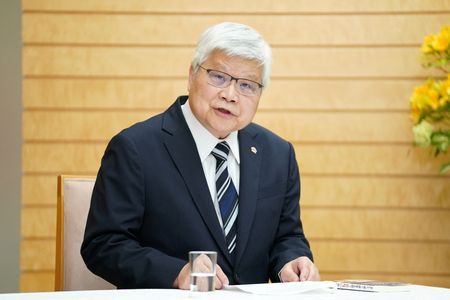
Saturday’s suspect rushed through the checkpoint approaching the ballroom, based on video shared by Trump. The footage depicts officers and agents turning and aiming weapons at the individual as he fled. Officials reported the attacker was quickly restrained without injury. One officer sustained a shot to his bullet-resistant vest but avoided serious harm.
Acting U.S. Attorney General Todd Blanche stated Sunday that the gunman likely intended to target the president and administration members.
The suspect allegedly traveled by rail from California to Chicago, then continued to Washington, where he recently registered as a hotel guest, Blanche reported.
Law enforcement sources identified the suspect to The Associated Press as 31-year-old Cole Tomas Allen from Torrance, California. Allen transmitted writings to family members moments before the shooting, referring to himself as a “Friendly Federal Assassin,” criticizing Trump administration policies and indicating what investigators increasingly view as a politically motivated assault, according to another law enforcement official who requested anonymity due to the ongoing investigation.
The documents contained multiple Trump references without directly naming the president and suggested complaints about various administration decisions, the official stated.
RUNAWAY BAY, Texas — A deadly twister swept through northern Texas communities Saturday evening, claiming two lives and forcing at least 20 families to evacuate their damaged homes, local officials reported Sunday.
Rescue teams spent Saturday night and into Sunday clearing debris and navigating blocked roads in Runaway Bay to reach victims and provide emergency medical assistance, according to Wise County Judge J.D. Clark, the county’s top executive, during a Sunday press briefing.
“Access has been difficult due to blocked roadways and downed utilities, but crews have continued pushing forward to reach those in need,” Clark said. “Roads in the affected area will remain closed by law enforcement to ensure safety and allow emergency crews to manage the scene without obstruction.”
The deadly weather system also struck Springtown, where a second fatality occurred south of the city boundaries, Parker County Assistant Fire Chief David Pruitt confirmed in an email statement. The area suffered “significant damage,” according to Pruitt.
“One of the most significant ongoing challenges is the widespread power outage affecting many residents,” he wrote. “Officials are coordinating with utility providers and emergency partners as restoration efforts continue.”
Weather experts from the National Weather Service verified that an EF-2 category tornado with maximum winds reaching 135 mph struck the Runaway Bay region. Assessment teams were still evaluating damage in Springtown as of Sunday afternoon.
The destructive supercell storm system moved slowly through the region around 10 p.m. Saturday, according to meteorologist Patricia Sanchez from the Fort Worth weather service office.
The storm originated near Wichita Falls close to the Oklahoma state line, then traveled southeast while passing just west of Fort Worth. Runaway Bay sits approximately 45 miles northwest of Fort Worth along Lake Bridgeport, while Springtown is located roughly 30 miles northwest of the city.
Weather service radar detected a “potentially large and extremely dangerous” tornado approaching Azle at 10:14 p.m. Saturday, about 10 miles southeast of Springtown.
Authorities have released the identity of a Chicago police officer who died after being shot by a suspect under guard at a local hospital. Officer John Bartholomew, age 38, lost his life in the Saturday morning incident at Endeavor Health Swedish Hospital.
The 10-year department veteran was declared dead shortly before 1 p.m. on Saturday, the Cook County Medical Examiner’s Office confirmed.
A fellow officer, age 57 with more than two decades of service, also sustained gunshot wounds during the attack and continues to battle for his life in critical condition as of Sunday, according to police reports.
Police Superintendent Larry Snelling addressed the media Saturday, stating the injured officer was “fighting for his life.” Neither the wounded officer’s identity nor the shooter’s name have been made public.
The two officers had escorted the gunman to the medical facility for treatment after his arrest on robbery charges. Following the shooting, the suspect escaped the hospital grounds but was apprehended later, with investigators recovering a firearm, department officials reported. Authorities have not explained how the man obtained the weapon.
Media reports included surveillance images showing the fleeing suspect without clothing and wearing medical monitoring equipment.
Hospital administrators posted on Facebook that the individual arrived under law enforcement escort for emergency care and underwent security screening with a metal detector wand, which is standard procedure. They confirmed the suspect remained under constant police supervision during his visit.
The facility’s statement noted that the man subsequently opened fire on the law enforcement officers before fleeing the building.
Superintendent Snelling revealed that investigators have collected three firearms as evidence in the case.