
A federal court case filed this week in Honolulu targets a program that has provided one of Hawaii’s most significant benefits for Native Hawaiians for over a century: access to land at virtually no expense.
The legal challenge argues that the Hawaiian Homes Commission Act violates the Constitution by restricting land access to individuals with at least 50% Native Hawaiian ancestry. The Pacific Legal Foundation submitted the case on Monday representing a non-Hawaiian plaintiff described as a longtime Hawaii resident. The action represents another attack on Native Hawaiian programs during the current administration’s opposition to diversity and inclusion initiatives.
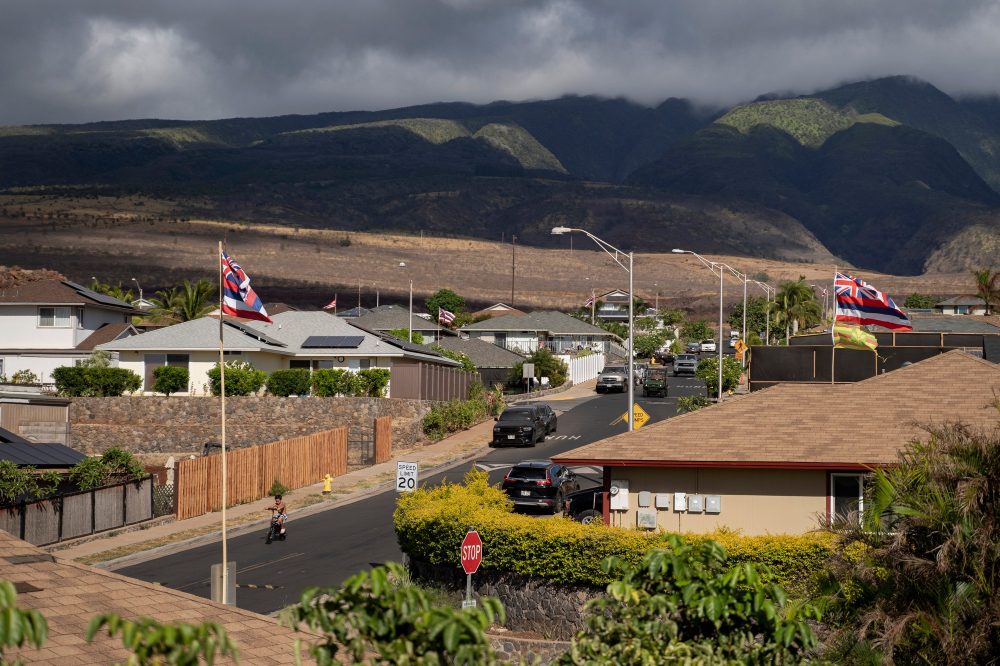
These homestead areas throughout Hawaii have served as foundations for economic independence and preservation of Native Hawaiian customs and heritage. Qualifying individuals can obtain 99-year land leases for just $1 annually. Currently, approximately 29,000 people remain on waiting lists for residential or farming lease opportunities.
During his service as Hawaii Territory’s congressional delegate, Prince Jonah Kūhiō Kalaniana’ole advocated in 1920 for providing Indigenous Hawaiians with land access to assist those who were “landless and dying” due to illness, mixed marriages, and property losses following the 1893 overthrow of the Hawaiian Kingdom by American business interests.
Agricultural business owners resisted the proposal and preferred limiting eligibility to full-blooded Hawaiians, anticipating eventual elimination of that population, explained Robin Puanani Danner, senior adviser to the Sovereign Council of Hawaiian Homestead Associations. Her organization works to safeguard the legislation Congress approved in 1921. Congressional lawmakers ultimately established the 50% Hawaiian ancestry requirement, she noted.
This represents typically the sole situation where Hawaiians consider blood-quantum measurements, which determine ancestral percentage calculations.
“That was not our measurement,” stated Danner, who holds a homestead on the island of Kauai while also waiting for agricultural land. “That was the white man’s measurement.”
Native Hawaiians maintain distinct federal government relationships compared to Native American and Alaska Native communities. Hawaii contains no tribal nations. Beyond Hawaii’s borders, the nation’s 575 tribal governments employ various combinations of blood quantum, family lineage, and additional standards for determining tribal membership eligibility.
A separate legal action by Students for Fair Admissions — headed by Edward Blum, a prominent affirmative action opponent — targets Kamehameha Schools, a selective private educational system that prioritizes Native Hawaiian student admissions.
Hawaii’s governor and attorney general pledged to contest the lawsuit challenging Hawaiian homelands qualification requirements.
The U.S. Department of Interior, named as a defendant, refused to discuss ongoing litigation, as did the Department of Hawaiian Home Lands, the state agency overseeing the trust managing roughly 200,000 acres (81,000 hectares) of property.
“We do not seek to take anything from anyone,” stated Caleb Trotter, an attorney with Pacific Legal Foundation. “All we seek to do is to make sure that this program is available to everyone on equal footing, regardless of their blood quantum. So whether you are 100% Native Hawaiian or zero percent, a successful lawsuit would result in everyone having the same chance of qualifying.”
The legal team anticipates an unfavorable decision from the U.S. district judge in Hawaii, though better prospects may exist with the 9th U.S. Circuit Court of Appeals.
Trotter expressed confidence that the U.S. Supreme Court will determine that government classifications based on ancestry or race violate constitutional principles.
The complainant Eric Ryan tried applying for a lease online but faced rejection during pre-qualification after responding “no” when asked whether he possessed at least 50% Hawaiian heritage, according to court documents.
“This explicitly ancestry-based requirement establishes a permanent government mandate for state officials to engage in outright racial discrimination, perpetuates stereotypes, and limits housing opportunities for most Hawai’i residents,” the legal filing argued.
The substantial waiting list demonstrates Native Hawaiian persistence, said Sanoe Marfil, who was raised on a homestead in Nanakuli in west Oahu: “Our people are still here.”
The program also offers hope for Hawaiians who departed Hawaii due to extremely expensive living costs that they might return when receiving lease awards, she explained.
Marfil, who satisfies the blood-quantum criteria, now holds her own nearby lease. Hawaiians must oppose this lawsuit, she emphasized, ensuring their future generations can flourish on Hawaiian territories.
“We don’t have any plans to go anywhere,” she declared.