
RIO DE JANEIRO (AP) — João Victor Gonçalves never imagined that kicking a soccer ball in one of Rio de Janeiro’s most impoverished and dangerous favelas would eventually take him across international borders to compete on a world stage.
The 18-year-old Brazilian joined nine other young players on a trip to Mexico last month, where they represented their nation in the Street Child World Cup. This tournament brought together teams from 30 nations, all featuring youth from disadvantaged communities, and was held in advance of this year’s FIFA World Cup.
“I never could have imagined that one day this would happen, that I would represent my country, doing what I most love — playing soccer — in another country,” Gonçalves stated. The Brazilian squad remained unbeaten throughout the competition and claimed the championship title, making the experience even more memorable.
Gonçalves and his fellow players share the same passion as countless Brazilians, spending their childhood years playing with soccer balls and following the achievements of the Seleção, Brazil’s national soccer team. Their ultimate aspiration is to become professional players like their sporting idols.
According to the players, this program has already transformed their daily existence.
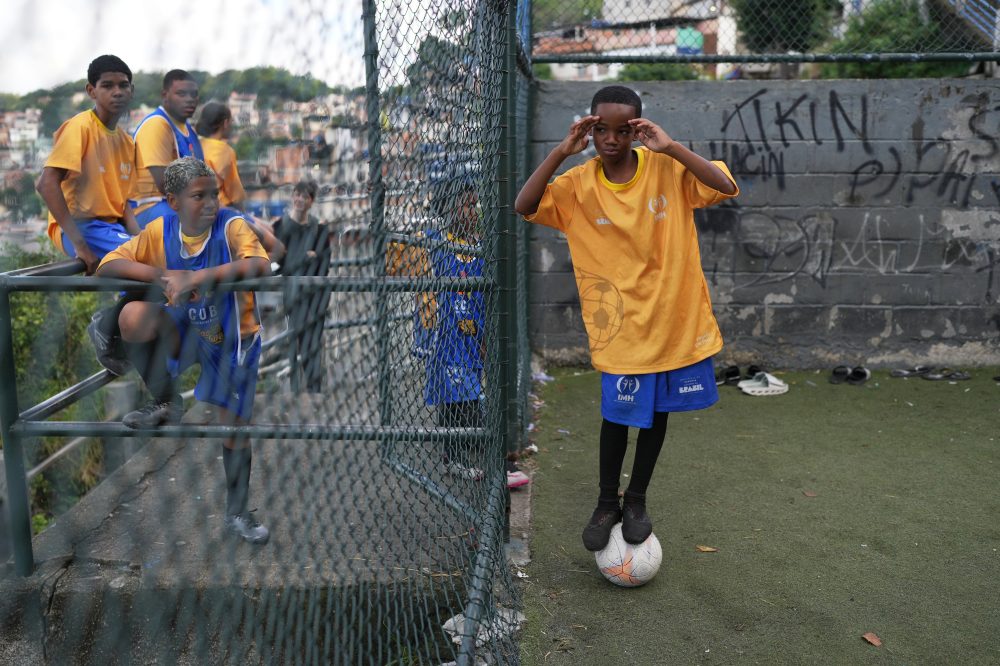
The Street Child United Brazil project operates in the Penha complex of favelas, offering participants a temporary refuge from their challenging daily reality filled with poverty and violence. The program creates an environment where young people can experience safety, community connection, and optimism for the future.
The program launched in 2014 when Brazil served as host for the FIFA World Cup. Currently, approximately 100 young people participate in training sessions that occur four times weekly throughout the year. The program accepts both male and female participants starting at age 6.
For 17-year-old Ryan Mercedes, who also made the journey to Mexico, soccer embodies “love, passion, the realization of dreams.” He explained, “When we enter the field, it’s time for us to have fun and be happy.”
However, soccer enthusiast Rafael Gomes acknowledges that the harsh realities of favela life sometimes intrude on their activities. The players have been forced to halt at least one match due to police operations occurring in their neighborhood.
“We were training when all of a sudden there were shots, we had to run and stay in the corners,” Gomes recalled.
More than 120 people lost their lives last year during a devastating police operation conducted in Penha and the adjacent Alemao complex of favelas. The operation targeted members of the criminal organization Red Command.
This drug-trafficking organization — recently designated as a foreign terrorist organization by the Trump administration — maintains control over sections of the favela. The group poses a dangerous attraction for young people who might consider criminal activity as a rapid path to earning money.
Project coordinator Drica Santos explains that the organization works to provide an alternative to that lifestyle.
“If the project didn’t exist, we would have lost a lot of lives,” Santos noted. “We’re not going to save everyone, but the greatest number of children that we manage to save — that don’t get involved in drug-trafficking — that will already be our victory.”
Community leader Carlos Cassiano da Silva reports that parents appreciate the project because it ensures their children remain engaged in positive activities and avoid dangerous situations.
Da Silva also emphasized that the program helps showcase Penha’s positive aspects. “Many people aren’t used to seeing Penha in a positive manner, they don’t know of the good things we have here too,” he said.
With the World Cup drawing near, Gonçalves expressed his hope that the Seleção would achieve the same success as his team and return home with the championship.
“We did our part. Now it’s up to the Brazilian national team,” Gonçalves concluded.