
A comprehensive military corruption investigation in China is creating substantial weaknesses in the nation’s defense command structure and may be undermining the combat readiness of its modernizing military forces, according to a new report from a prominent defense research organization.
The International Institute for Strategic Studies (IISS), based in London, released findings Tuesday indicating that the anti-corruption campaign remains far from complete despite affecting China’s top Central Military Commission, regional theater commands, weapons acquisition programs, and military educational institutions.
According to the IISS annual Military Balance report, which serves as a crucial resource for defense analysts worldwide, the organizational impact is severe. “From an organisational perspective, until the vacancies are filled, the PLA is operating with serious deficiencies in its command structure,” the research institute stated.
Chinese defense officials have not yet provided a response to requests for comment regarding these findings.
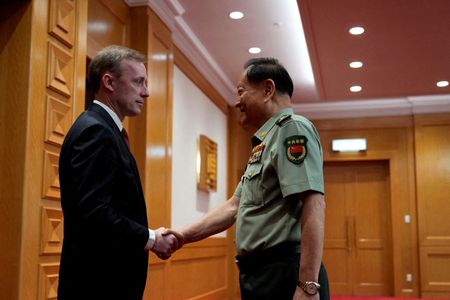
The analysis follows recent disciplinary actions against China’s two most senior military leaders, marking the most significant military purges in recent decades. Zhang Youxia, a longtime military associate of President Xi Jinping, came under investigation in January, while He Weidong faced expulsion last October.
These investigations have dramatically reduced China’s primary military leadership council from seven members to only two individuals: President Xi, who serves as the commission’s chairman, and newly appointed vice chairman Zhang Shengmin.
The report suggests that if personnel advancement occurred through personal relationships rather than merit, if defective military equipment entered service due to procurement irregularities, and if overall military morale has suffered, then “the purge is almost certain to have a near-term impact.”
Despite these concerns, researchers characterized the disruptions as “temporary” and predicted that “modernisation is likely to continue apace.”
The study also highlighted China’s expanding and increasingly aggressive military presence throughout the Indo-Pacific region as it pursues territorial objectives and broader strategic goals, with particular emphasis on heightened military activity near Taiwan in 2025.
President Xi acknowledged the military investigation publicly during a virtual speech to Chinese armed forces earlier this month, describing the previous year as exceptional.
“The past year has been unusual and extraordinary,” Xi stated. “The People’s Army has deepened its political education, effectively addressed various risks and challenges, and undergone revolutionary forging in the fight against corruption.”
The IISS analysis also revealed that Chinese military expenditure increases continue to surpass those of other Asian nations amid worldwide growth in defense spending.
China now accounts for nearly 44% of total regional military spending in 2025, representing an increase from the 37% average recorded between 2010 and 2020.