
Iran appears to be on the verge of finalizing an agreement with China to acquire advanced anti-ship cruise missiles, according to six sources with knowledge of the ongoing discussions. The timing coincides with the United States positioning substantial naval assets near Iranian waters as tensions escalate in the region.
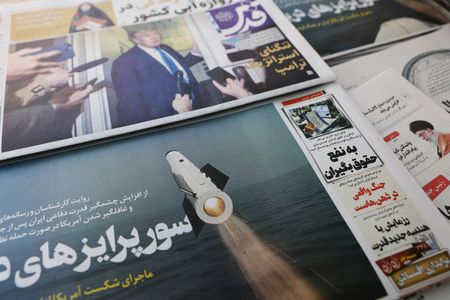
The proposed agreement involves China’s CM-302 missiles, with negotiations reportedly approaching completion, though sources indicate no timeline for delivery has been established. These supersonic weapons systems can strike targets from approximately 290 kilometers away and are engineered to avoid naval defense systems through low-altitude, high-speed flight patterns. Military analysts suggest these missiles would substantially boost Iran’s offensive capabilities and create new risks for American naval operations in the area.
Sources reveal that discussions between the two nations regarding these weapon systems started at least two years ago but gained momentum following the 12-day conflict between Israel and Iran last June. The information comes from three Iranian government-briefed officials and three security personnel. During final negotiations last summer, high-ranking Iranian military and government representatives visited China, including Deputy Defense Minister Massoud Oraei, according to two security sources. This visit had not been previously disclosed.
Danny Citrinowicz, a former Israeli intelligence operative who now researches Iran at Israel’s Institute for National Security Studies, emphasized the significance of such a development. “It’s a complete gamechanger if Iran has supersonic capability to attack ships in the area,” Citrinowicz stated. “These missiles are very difficult to intercept.”
Reuters was unable to confirm the quantity of missiles included in the potential agreement, the financial terms Iran has accepted, or whether China will proceed with the deal given current regional instability.
An Iranian foreign ministry representative told Reuters, “Iran has military and security agreements with its allies, and now is an appropriate time to make use of these agreements.”
When Reuters contacted China’s UN delegation for comment, they were directed to Beijing’s Foreign Ministry. Neither the foreign nor defense ministries responded to requests for statements.
The White House avoided directly commenting on the Iran-China missile negotiations when questioned by Reuters. A White House representative noted that President Donald Trump has made clear that “either we will make a deal or we will have to do something very tough like last time,” referencing the current Iranian standoff.
These weapons would represent some of the most sophisticated military equipment China has provided to Iran and would violate United Nations arms restrictions initially established in 2006. These sanctions were temporarily lifted in 2015 under a nuclear agreement with the U.S. and partner nations, then reinstated last September.
The prospective sale highlights strengthening military cooperation between China and Iran during a period of increased regional instability, creating challenges for U.S. efforts to limit Iran’s missile development and nuclear programs. This also demonstrates China’s increasing readiness to establish influence in a region historically controlled by American military presence.
China, Iran, and Russia conduct yearly joint naval training exercises. Last year, the U.S. Treasury Department imposed sanctions on multiple Chinese organizations for providing chemical materials to Iran’s Islamic Revolutionary Guard Corps for ballistic missile production. China disputed these claims, stating it was uninformed about the cited cases and maintains strict controls on dual-use product exports.
During Iranian President Masoud Pezeshkian’s attendance at a Beijing military parade in September, Chinese President Xi Jinping assured the Iranian leader that “China supports Iran in safeguarding sovereignty, territorial integrity and national dignity.”
On October 18, China joined Russia and Iran in a collective statement declaring their belief that the sanctions reimposition was unjustified.
One government-briefed official involved in the missile discussions observed, “Iran has become a battlefield between the U.S.” on one side and Russia and China on the other.
This development occurs as the United States deploys a massive naval presence within range of Iran, including the aircraft carrier USS Abraham Lincoln and its accompanying vessels. The USS Gerald R. Ford and its escort ships are also en route to the region. These two carriers combined can transport over 5,000 personnel and 150 aircraft.
Citrinowicz, the Israeli Iran expert, explained China’s strategic interests: “China does not want to see a pro-Western regime in Iran. That would be a threat to their interests. They are hoping that this regime will stay.”
On February 19, Trump announced he was allowing Iran 10 days to reach a nuclear program agreement or face military consequences. Reuters reported on February 13 that the U.S. is preparing for potential extended, multi-week operations against Iran should Trump authorize an attack.
According to Pieter Wezeman, a senior researcher at the Stockholm International Peace Research Institute, acquiring the CM-302 would substantially upgrade an Iranian weapons inventory weakened by last year’s conflict.
China’s state-controlled China Aerospace Science and Industry Corporation (CASIC) promotes the CM-302 as the globe’s premier anti-ship missile, claiming it can destroy aircraft carriers or destroyers. The system can be deployed from ships, aircraft, or mobile land-based platforms and can also engage terrestrial targets.
CASIC did not provide a response to comment requests.
Sources indicate Iran is simultaneously pursuing Chinese surface-to-air missile systems, portable air defense systems (MANPADS), anti-ballistic weapons, and anti-satellite capabilities.
While China served as Iran’s primary arms provider during the 1980s, major weapons transfers decreased by the late 1990s due to international pressure. Recently, U.S. officials have alleged that Chinese companies supplied missile-related components to Iran but have not publicly claimed complete missile system deliveries.