
Sources within Myanmar’s ruling party reveal that a former military commander is expected to assume the influential position of parliament speaker, potentially strengthening the armed forces’ hold on power as the nation transitions away from direct military rule.
The military junta that has governed Myanmar since seizing control in 2021 plans to officially transfer authority when the new parliament convenes next month. However, top military officials are anticipated to maintain significant political influence following the Union Solidarity and Development Party’s overwhelming electoral victory. The USDP, established by the military in 2010, dominated the recent elections.
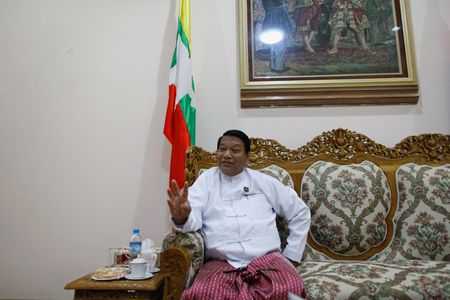
According to three USDP insiders who spoke with Reuters, party chairman Khin Yi, a former brigadier general and ex-police chief, is expected to secure the crucial lower house speaker position.
This role would grant him authority over presidential elections, legislative processes, budget approvals, and major government appointments.
The USDP has not provided any official response regarding Khin Yi’s potential appointment.
The anonymous sources, who requested confidentiality due to the sensitive nature of the matter, indicated that former generals with strong connections to junta leader Min Aung Hlaing will likely assume the first and second vice presidential positions.
“Since there are high-ranking former military officers within the party, understanding their roles, the highest possible position for him would likely be the speaker of the lower house,” one source explained regarding Khin Yi’s expected role.
Myanmar operates under a distinctive power-sharing arrangement that reserves 25% of legislative positions for military personnel, who have controlled the country for five out of the last six decades. The military also maintains control over defense, border affairs, and interior ministries.
The USDP secured 81% of contested seats in both parliamentary chambers during the recent election, which was marked by minimal voter participation, ongoing civil conflict, and absence of credible opposition candidates. This victory effectively places the legislature under military influence.
Additionally, authorities plan to establish a new five-member Union Consultative Council to supervise both military and civilian administrative functions.
Political observers suggest this structure will enable Min Aung Hlaing to pursue the presidency while retaining his military command.
Independent political analyst Htin Kyaw Aye notes that the speaker position, previously held by prominent political figures, carries more substantial influence than the vice presidency, which is largely ceremonial despite its prestige.
“This is a position with a high capacity for influence and action,” he explained. “If one cannot be president, the position of speaker of the Hluttaw (parliament) is the one that allows for the greatest exercise of power.”
An incoming USDP legislator confirmed that details about key appointments remain strictly confidential, known only to the party’s inner circle.
Two party members who attended a recent USDP gathering reported that Khin Yi, who previously served as immigration minister, was informally approached about accepting the vice presidency but indicated his preference for a parliamentary leadership role.
“He said, ‘What is certain is that I think I will be leading in the legislative sectors of one of the houses of parliament’,” one source quoted Khin Yi as stating during the meeting.