
British Parliament members are set to hold an unprecedented debate Tuesday regarding demands for transparency involving a royal family member, as King Charles III’s brother faces mounting scrutiny over his connections to disgraced financier Jeffrey Epstein.
The House of Commons will examine a proposal demanding the disclosure of classified records concerning the appointment of the former Prince Andrew as Britain’s international trade representative in 2001.
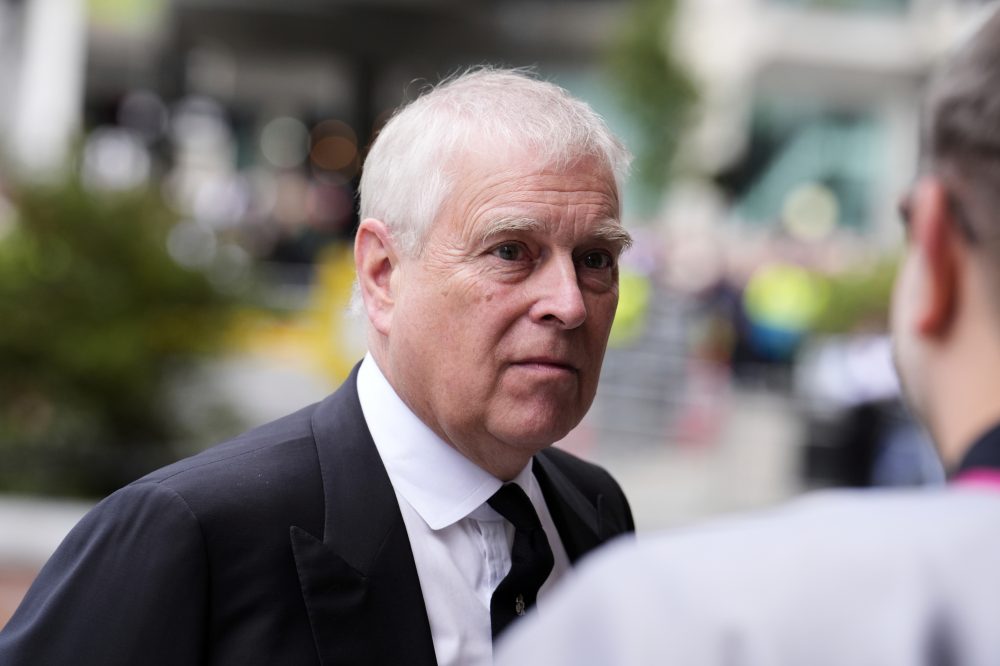
Andrew Mountbatten-Windsor, who lost his royal title last year following revelations about his Epstein ties, was taken into custody last week on allegations of public office misconduct. Authorities suspect he may have provided confidential materials to Epstein while serving in his trade role. He was subsequently released pending further investigation without formal charges.
This parliamentary discussion represents a historic shift for the Commons, where longstanding traditions have prevented legislators from openly criticizing royal family members. Liberal Democrat leader Ed Davey, who proposed the motion, seeks to break this precedent.
“One thing the Liberal Democrats stand for is to hold the powerful to account,” Davey told the BBC. “And I think we’ve seen too often in the past that people, because of their title or their friend or whatever, have not been properly held to account.”
The proceedings occur as the U.S. Justice Department’s publication of extensive Epstein-related documentation reveals how the deceased financier leveraged relationships with wealthy, influential associates to build power and exploit young women. Britain has experienced particularly intense repercussions, with the controversy prompting examination of how authority operates among the aristocracy, high-ranking officials, and prominent business figures collectively known as “the Establishment.”
British authorities also detained Peter Mandelson, a former government official and ex-U.S. ambassador, Monday evening on similar public misconduct allegations involving suspected information sharing with Epstein. Following more than nine hours of interrogation, Mandelson was freed early Tuesday without charges as the investigation proceeds.
Neither Mountbatten-Windsor nor Mandelson has issued public statements regarding the ongoing investigations, though both have previously rejected any wrongdoing allegations. Epstein died in jail in 2019 awaiting sex trafficking trial.
Tuesday’s debate reflects an ongoing crisis for the House of Windsor that continues to intensify.
Buckingham Palace has attempted to shield the monarchy from scandal fallout by establishing clear separation between Mountbatten-Windsor and other royal family members. Beyond stripping his titles, Charles compelled his brother to vacate the 30-room property near Windsor Castle where he had resided without rent for over two decades.
However, these measures may prove insufficient to silence growing calls for reform. The most vocal criticism comes from Republic, an advocacy organization that has consistently pushed for replacing the monarchy with an elected leader.
Though Britain’s constitutional monarchy lacks direct political authority, it maintains substantial influence throughout British society. The monarch symbolizes national continuity while serving as head of state for Britain and 14 additional independent nations connected to the former British Empire. Active royal family members support this role through hundreds of annual public engagements, visiting charitable organizations, military installations, and community groups that continue seeking their presence.
Observers have drawn parallels between current royal pressures and 1936, when King Edward VIII abandoned the throne to wed American divorcée Wallis Simpson.
“Unlike the last significant family crisis of the modern monarchy, the abdication of 1936, this is not an immediate matter of constitutional crisis, yet its implications may well prove more significant for the monarchy, and so they should,” royal historian Anna Whitelock wrote this week in the Sunday Times newspaper. “It is the last of our public institutions to face the full glare of public scrutiny, with questions raised about its role, purpose, governance, financing and accountability.”