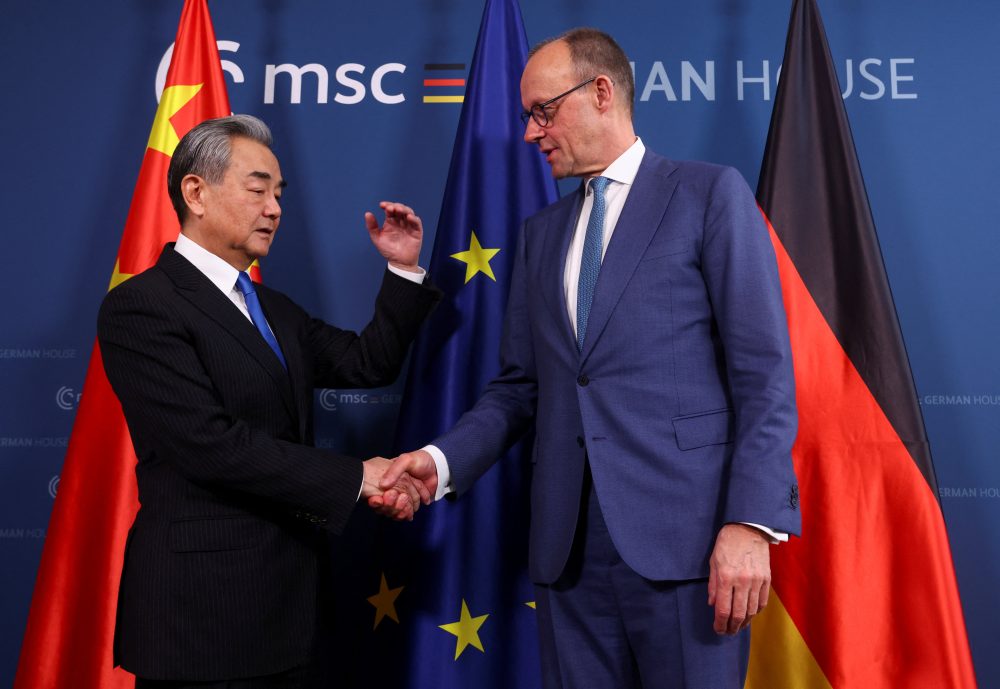

German Chancellor Friedrich Merz arrives in China Wednesday for his inaugural official visit as leader, coming at a time when German businesses are under mounting competitive pressure from Chinese firms and President Trump’s policies are reshaping the global framework Europe has relied on since World War II.
The chancellor’s two-day diplomatic mission makes him the latest world leader to travel to Beijing in advance of Trump’s anticipated visit in approximately five weeks.
Beyond addressing Germany’s expanding trade imbalance with China, Merz plans to confront China’s support for Russia’s stance in the Ukrainian conflict, though officials don’t anticipate any shift in China’s position.
Beijing is working to gain international backing to counter Trump’s challenges to established global institutions and regulations, but Merz has expressed skepticism about China’s vision for reshaping international order in the 21st century. Diplomatic success may hinge on identifying modest areas of collaboration despite fundamental disagreements on major policy issues.
Chinese Foreign Ministry spokesperson Mao Ning stated Tuesday that “As the world’s second and third largest economies, sound China–Germany relations serve the interests of both sides and meet the expectations of the international community.”
She further emphasized that “the Ukraine crisis is not and should not become an issue between China and Europe.” China maintains what it calls “an objective and impartial position,” creating tension with Germany and most European nations.
Merz begins his visit Wednesday with discussions involving China’s Premier Li Qiang and top leader Xi Jinping, whose limited international travel requires foreign officials to come to Beijing for meetings. Thursday’s agenda includes touring a Mercedes-Benz manufacturing plant and traveling to Hangzhou, a technology hub housing e-commerce leader Alibaba and prominent robotics company Unitree Robotics.
The chancellor is accompanied by business executives seeking to boost sales opportunities. China has traditionally served as a crucial market for Germany’s robust manufacturing export sector. However, recent technological progress by Chinese corporations has created fierce competition, particularly in automotive manufacturing, where emerging electric vehicle producers are challenging established brands like Volkswagen.
Trade statistics from last year highlighted concerns about the economic relationship’s growing imbalance. German purchases from China increased 8.8% to 170.6 billion euros ($201 billion), helping Chinese producers compensate for reduced U.S. imports due to Trump’s tariff policies. Conversely, German sales to China dropped 9.7% to 81.3 billion euros.
This widening gap has intensified Germany’s ongoing pressure for China to lower trade restrictions and provide greater market access to international competitors.
Merz’s diplomatic mission comes after visits by French President Emmanuel Macron in December and leaders from Ireland, South Korea, Canada, Finland and Britain last month.
During a January speech to Germany’s parliament, Merz argued that Europe must “learn the language of power politics” to establish its position in an evolving global landscape and strengthen both economically and militarily. He noted that the changing international order creates opportunities for Europe, as democratic nations with expanding markets “seek what we have to offer them, namely partnerships on the basis of mutual respect, trust and reliability.”
Merz has also recently warned that Germany should maintain realistic expectations about China, stating the nation “asserts the claim to define a new multilateral order according to its own rules.”
Following this week’s China visit, Merz is scheduled to make his second Washington trip since assuming office in May.
While some nations — particularly Canada and the United Kingdom — are working to rebuild Chinese relations, Germany aims to preserve a partnership that has grown increasingly complex in recent years.
Germany continues to view China as an essential economic ally while simultaneously recognizing it as a rival. The government has pursued what officials call de-risking, working to decrease the nation’s reliance on China for export markets and critical materials like rare earth elements, which are essential for automotive, technology and defense sectors.
During a December Beijing visit, German Foreign Minister Johann Wadephul addressed his administration’s worries about Chinese government subsidies for specific industries, excessive manufacturing capacity driving exports, rare earth export limitations and the Russia-Ukraine conflict.