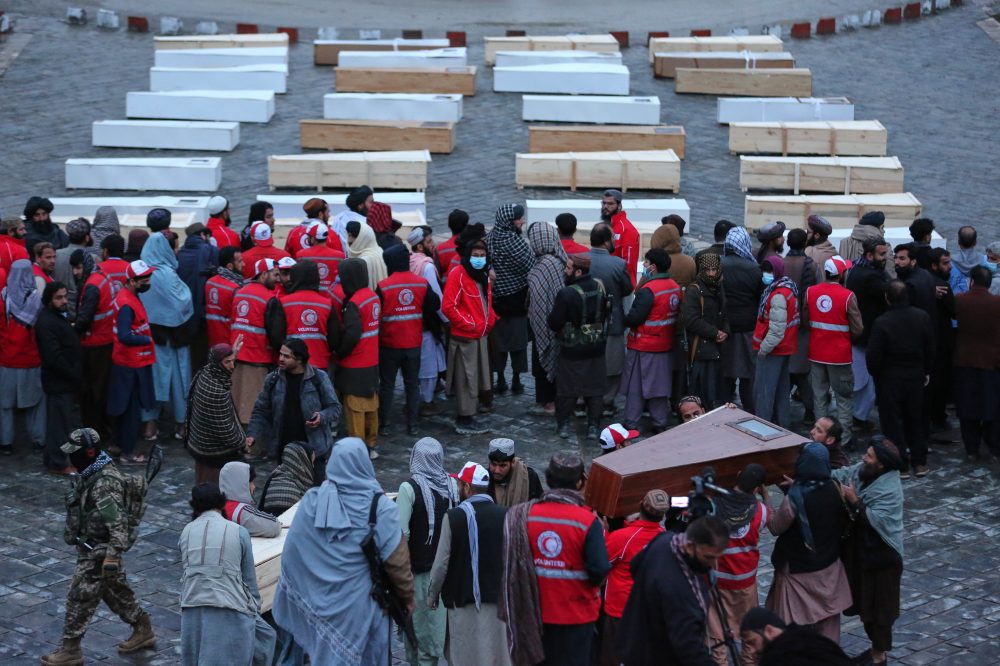
ISLAMABAD (AP) — A prominent banned Pakistani militant organization responsible for multiple armed attacks and bombings declared a three-day halt to hostilities early Thursday before an important Muslim celebration, coming just hours after Pakistan and Afghanistan also announced a temporary suspension of intensifying combat. Officials reported no gunfire exchanges, representing the first quiet period since fighting broke out again in late February.
Mohammad Khurasani, speaking for the Tehrik-e-Taliban Pakistan (TTP), explained the halt in fighting was designed to enable people to celebrate Eid al-Fitr, the festival marking Ramadan’s conclusion.
The TTP operates independently from Afghanistan’s Taliban while maintaining an alliance, and has increased violent operations within Pakistan following the Afghan Taliban’s 2021 return to control. Both the United States and United Nations have classified the TTP as a terrorist entity. Pakistani officials claim Afghanistan’s Taliban leadership provides sanctuary to TTP commanders and thousands of fighters who launch attacks across the border, while Kabul rejects these accusations.
The organization stated their ceasefire will begin on Eid’s opening day, anticipated to start Friday in Pakistan depending on moon visibility.
Pakistan and Afghanistan revealed Wednesday their plans for a temporary combat suspension lasting through Monday evening.
Both nations indicated the truce came following appeals from Saudi Arabia, Turkey and Qatar. These three countries have worked as intermediaries to halt the conflict since cross-border combat restarted in February and previously helped negotiate a ceasefire in October.
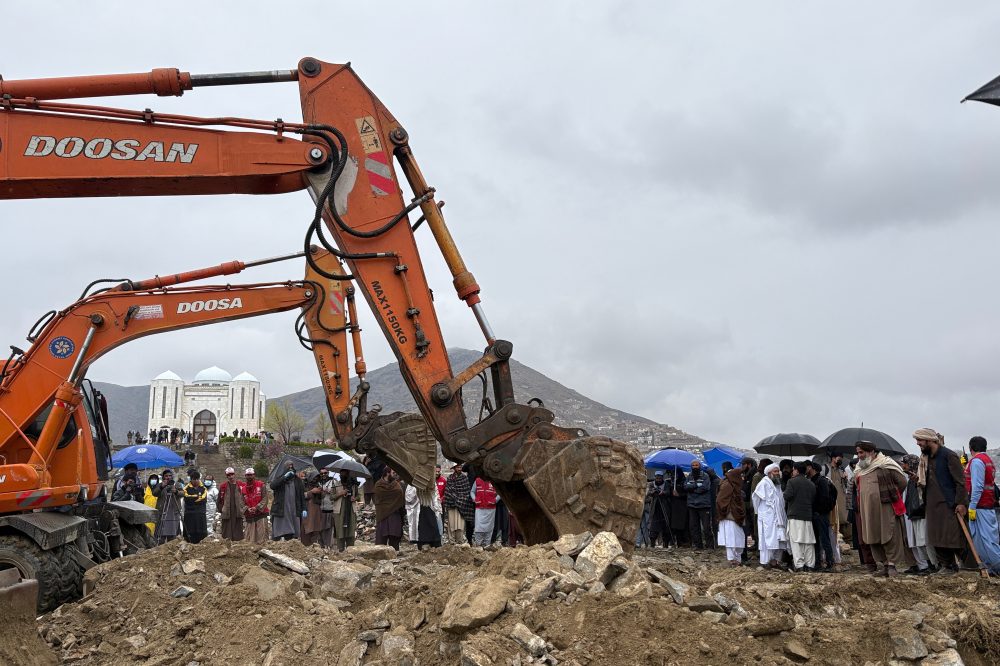
The declarations came after a large funeral service for casualties from a Pakistani military strike on a drug treatment facility in Kabul this week. Afghan Taliban officials reported the assault caused 408 deaths and injured 265 people, though independent confirmation of these numbers was not possible.
Pakistan’s Information Minister Attaullah Tarar stated Wednesday that military forces did not attack any medical facility, explaining the Kabul strikes targeted an ammunition storage site. Tarar simultaneously announced the temporary fighting suspension with Kabul.
BRUSSELS — Top officials from the 27-nation European Union convened Thursday in Brussels to address mounting concerns over escalating oil and gas costs triggered by ongoing conflict in critical Middle Eastern energy regions and shipping corridors.
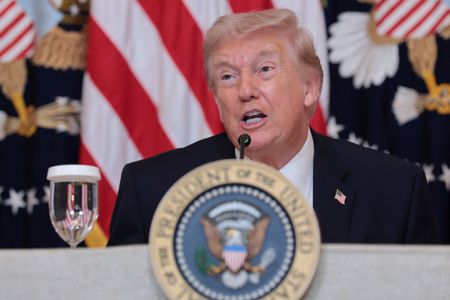
Most European leaders have resisted calls from U.S. President Donald Trump to deploy military resources to protect the Strait of Hormuz, a crucial passage for global oil, gas and fertilizer shipments. The combination of surging energy costs from the conflict and concerns about potential refugee flows has elevated Middle Eastern issues to the forefront of the summit agenda.
Belgian Prime Minister Bart De Wever expressed significant concern before the European Council gathering, stating: “We are very worried about the energy crisis.” He noted that energy costs were already elevated prior to the conflict, but the fighting “created another spike.”
“If that becomes structural, we’re in deep trouble,” De Wever continued. “At a European level, some measures can be taken to address the problem of the high energy prices.”
The European Commission has presented leaders with various financial mechanisms that individual member states could implement to reduce energy expenses, which will be a key discussion topic. Officials acknowledge that no single approach will likely be sufficient to address the economic disruption across the diverse markets spanning from Romania to Ireland.
European officials have found it challenging to establish a unified position regarding the conflict involving Iran and Lebanon. Though they have criticized Iran’s government, they have not offered military assistance.
Dutch Prime Minister Rob Jetten characterized the situation, saying: “This is a war that was started by the United States and Israel against Iran on reasons that I can understand because the Iranian regime is brutal not only for its own people, but also for the broader region and a security threat for Europe.”
“But it’s not a war that we are part of,” Jetten added, advocating for increased sanctions against Iran and greater support for opposition movements.
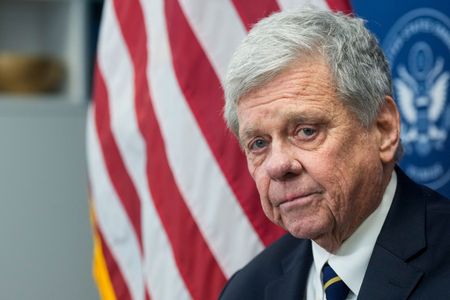
A diplomatic mission aimed at freeing political prisoners brought President Trump’s special envoy John Coale face-to-face with Belarus President Alexander Lukashenko in the capital city of Minsk on Thursday.
Coale’s assignment from Trump focuses on securing freedom for what human rights organizations estimate to be more than 1,100 individuals currently imprisoned in Belarus due to their political activities or human rights work.
The Lukashenko government shared a photo from Thursday’s diplomatic meeting through its official Telegram account.
Earlier negotiations between the two men have yielded significant results, with dozens of political detainees freed last September followed by another 123 releases in December. Among those freed were Nobel Peace Prize recipient Ales Bialiatski along with opposition leaders Maria Kalesnikava and Viktar Babaryka.
These prisoner releases prompted the United States to lift sanctions on Belarus potash exports, a crucial component for fertilizer production. Washington is also considering reopening its Minsk embassy, which shuttered in 2022 following Russian President Vladimir Putin’s use of Belarusian territory to launch his Ukraine invasion.
Lukashenko has maintained power since 1994 and was previously shunned by Western nations due to his human rights violations and support for Russia’s military actions. However, Trump’s diplomatic approach has provided the Belarusian leader with opportunities to reduce his international isolation.
American officials recognize the strategic value in building relationships with Lukashenko, particularly given his close connections to Putin, and credit him with providing valuable counsel as the United States works toward ending the four-year conflict in Ukraine.
Reuters reports that U.S. officials hope their engagement strategy might gradually distance Lukashenko from Putin’s influence.
Belarus opposition leaders living in exile dismiss such efforts as futile, arguing that Lukashenko relies too heavily on Putin’s political and economic backing. Nevertheless, they have thanked Trump and Coale for their work in securing prisoner releases.
In December, Lukashenko indicated that Belarus was working toward a comprehensive agreement with the United States to restore diplomatic relations. He mentioned this could include a presidential summit with Trump, while emphasizing it would not compromise his alliance with Russia.
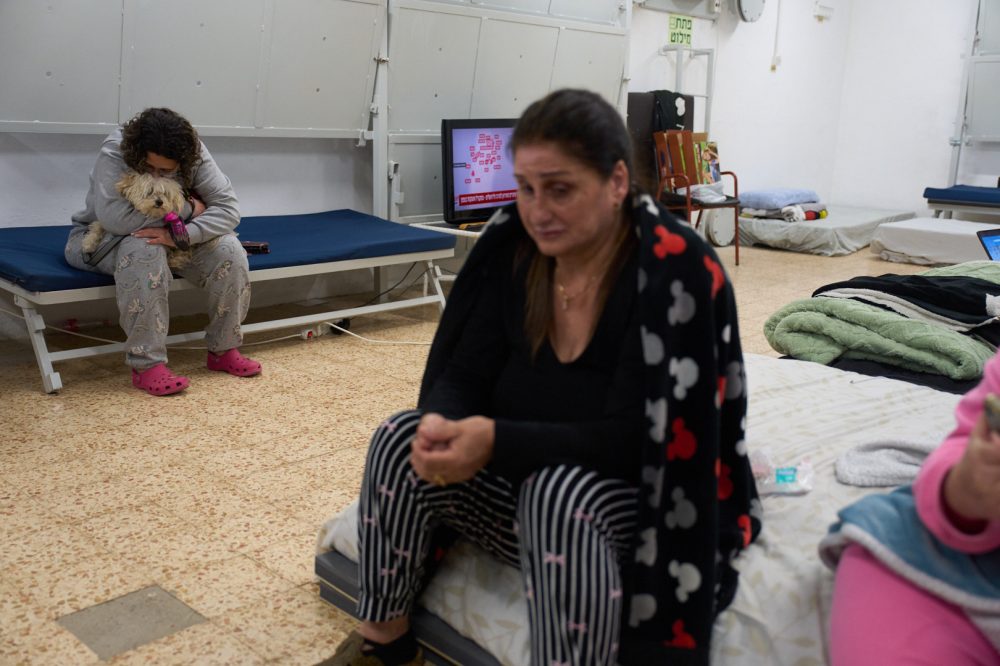
Under normal circumstances, Lilian Jamaan would be busy purchasing new outfits for her daughter and stocking up on meat and sweets to celebrate Eid al-Fitr, the Islamic festival that concludes the holy month of Ramadan.
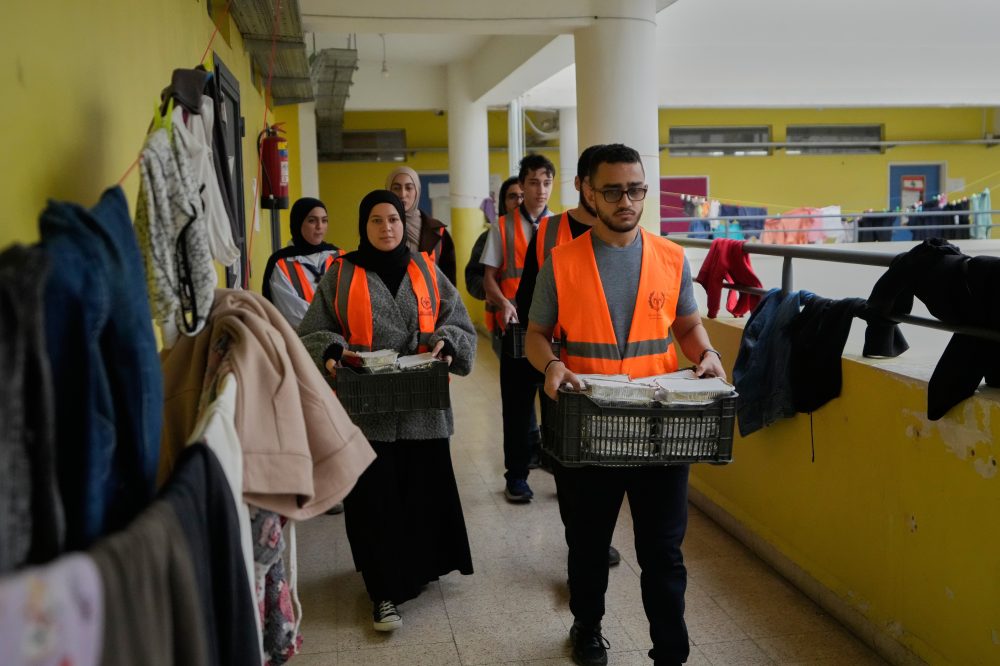
Instead, speaking from a converted school shelter in Sidon, Lebanon, where her family has taken refuge, Jamaan expressed her despair: “there’s no joy for Eid or for Ramadan or for anything.”
“Everything is difficult,” she added.
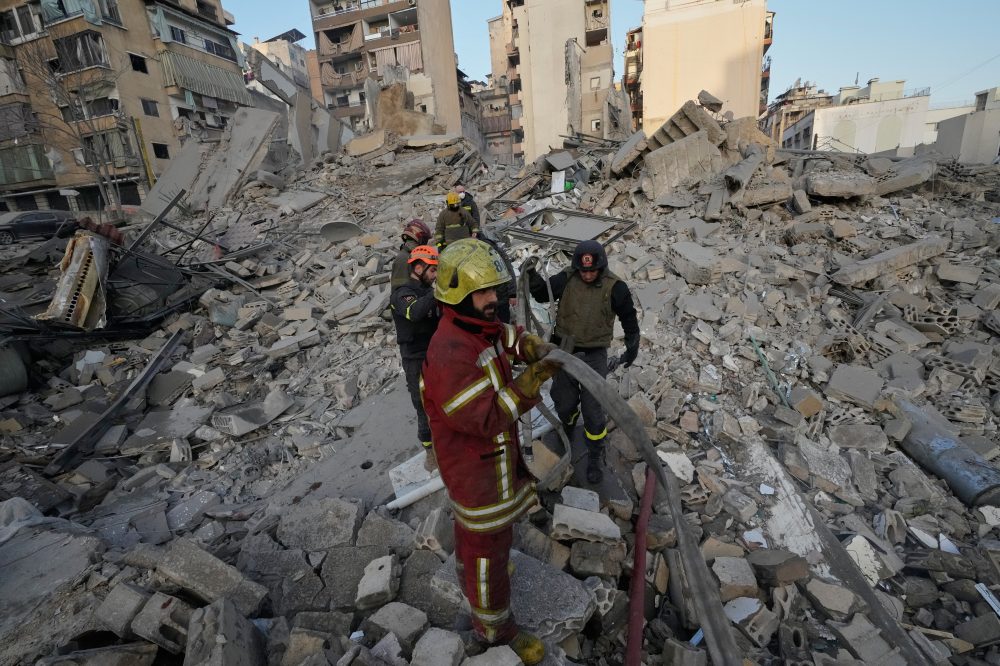
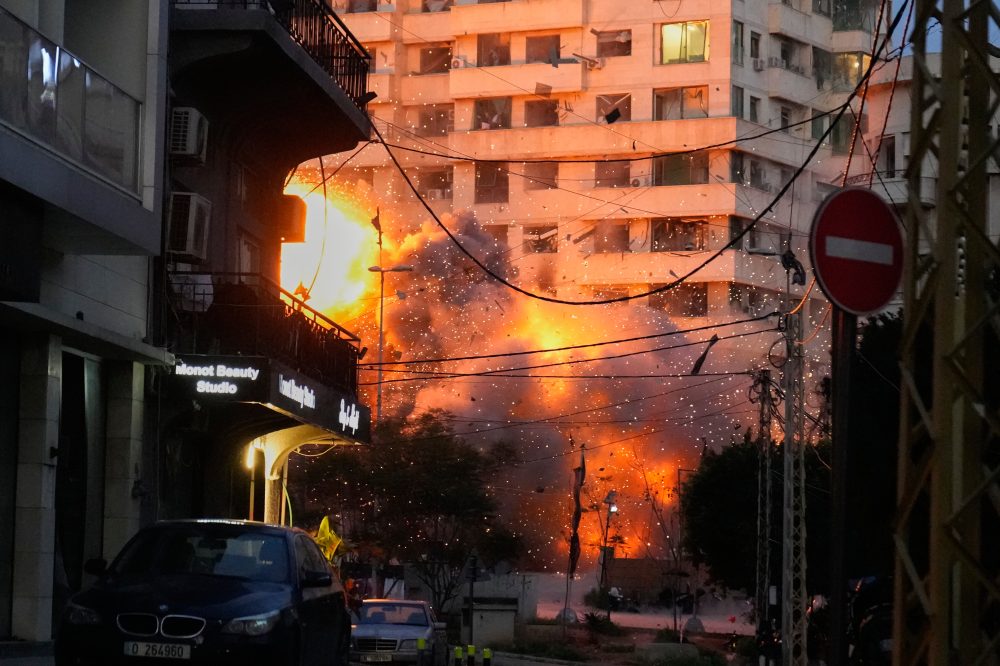
While Muslims around the globe prepare for what is traditionally a celebration filled with happiness, Lebanon has reached a devastating threshold. More than 1 million residents have been forced from their homes due to Israeli military strikes, Lebanese officials report.
According to Lebanon’s health ministry, 968 individuals have lost their lives in Israeli attacks since fighting resumed between Israel and Hezbollah, the Lebanese militant organization.
The Iranian-supported Hezbollah joined the broader regional conflict by launching rocket attacks against Israel, prompting intense Israeli bombardment of southern Lebanon and Beirut’s southern districts, forcing countless families to abandon their residences.
“A lot of the kids that I at least spoke to, their biggest wish was to just spend Eid at home,” explained Basma Alloush, who speaks for the International Rescue Committee. “Eid is a time where all families come together, people celebrate with their relatives, and it usually brings a lot of peace and joy to families. … It could be that many of them just spend Eid in shelters, in displacement.”
The crisis has unfolded throughout Ramadan, with images of families fleeing their residences and resorting to sleeping in street tents or vehicles. While some found space in schools converted to shelters or stayed with family members, many others struggled to secure temporary arrangements. Approximately 130,000 people are currently housed in official shelters.
For Jamaan, the difficult displacement conditions prevented her from maintaining many Ramadan observances—typically a period of fasting, enhanced prayer, and festive community meals with family.
At her home, she explained, she would fast, pray, and study the Quran, Islam’s sacred text.
Currently, she has discontinued fasting and plans to compensate for missed days upon returning home. “Some people fast and some are unable to fast; there’s psychological stress and we’re not sleeping well. … Food is the last thing on my mind, but the circumstances are difficult.”
She described how she and her daughter share sleeping space with others in the school building while her husband sleeps in their car. “There’s no stability.”
She yearns for her family and her usual Ramadan practices. “We would break our fast, pray, make and drink coffee and I would go to the neighbors or they would come over after iftar,” she remembered, referring to the evening meal that breaks the daily fast.
Asmahan Taleb, another displaced person in Sidon, said the approach of Eid has been overshadowed by suffering.
“How can we celebrate Eid when we’re displaced from our homes and our land? Where is the Eid? Where is the happiness?” she questioned. “It will be Eid when we can return to our homes.”
This displacement marks a repeated experience for Jamaan and many others. Her daughter was born during a previous displacement period from earlier fighting that ended with a fragile ceasefire in November 2024. Israel has continued conducting almost daily strikes in Lebanon after the ceasefire, claiming these target Hezbollah’s rebuilding efforts.
“Lebanon for us is really now the epicenter of the more immediate humanitarian fallout of this broader regional crisis,” stated Carl Skau, deputy executive director and chief operating officer of the U.N. World Food Program. “People here have endured crisis after crisis. They’ve been displaced before. But that doesn’t make it any easier.”
He noted that people he encountered appeared exhausted and hadn’t recovered from previous displacements.
“There was this real sense of uncertainty this time. How is this gonna end? When is it gonna end?”
Current conditions present additional challenges beyond previous crises.
“My concern is that the funding is not coming forward like it did last time,” he told The Associated Press. “We know there is less money available. We know there is also competing priorities. … We will need to make an effort that really donors step up.”
The World Food Program has served over half a million hot meals to displaced individuals in Lebanese shelters since March 2 as part of its relief efforts.
Various volunteers, organizations, and businesses have launched online initiatives to prepare, package, and distribute iftar meals while donating essential items including blankets, clothing, baby formula, and medications.
The requirements are extensive and diverse.
“There is a dire need for shelter,” Alloush noted. “There was a massive thunderstorm. We’re just thinking about the people that were sleeping outside, sleeping in tents that are not waterproof, sleeping on the mud.”
The International Rescue Committee has been providing mattresses, pillows, blankets, and coloring books for children.
“People don’t have enough clothes. Children fled with no toys or no activities to kind of get their minds off of the war.”
Eman Abo Khadra, who owns a hair salon in Sidon, attempted to bring some Eid happiness to displaced children through her skills by offering free haircuts.
“It’s a morale thing. What does a child know about war or no war. … It’s just about planting some joy in their hearts.”
Despite her efforts, she recognized the impact of ongoing tensions on young people.
“I was telling them, ‘Come on, clap; be happy; laugh,’ but … tensions are high,” she observed. “People are tired.”
Taking shelter in Sidon, Alia Ismail said maintaining proper Ramadan observance or finding Eid joy has become nearly impossible.
“We no longer can fast or buy anything for Ramadan,” she stated.
Regarding Eid preparations, her children ask for “We want clothes; we want to go out; we want sweets,” she said. “I tell them, ‘I can’t get you that. There’s no money.’”
Under typical circumstances, she would be cleaning her house and purchasing clothing, meat, and sweets for the holiday.
“Can you imagine that we are staying in a school corridor?” she asked during a phone conversation, explaining that she uses clothing as a pillow since none are available.
At a Beirut school housing hundreds of displaced people, some families attempted to recreate Ramadan traditions and remember their former lives. Corridor walls displayed holiday decorations, and one family arranged desks together to hold a small gas burner and charity meal packages.
Shaker Araqa, staying at the school, mourned how his extended family has been scattered. “We used to gather. We were in one building. Now, everyone is at a different place.”
Nabila Hijazi mentioned that her children ask about Eid, and she promised to purchase clothing for them.
“They want to live their lives,” she said. “We tell them ‘God Willing, Eid comes and we return to our homes.’”
She has managed to observe Ramadan normally at the school and acknowledges her situation is better than many others’.
Back in Sidon, Jamaan said she prays “for God to stop the war, for us to return to our homes and for there to be peace.”
CARACAS, Venezuela — Venezuelan joy carries a unique intensity. It resonates more powerfully, sounds more thunderous, and cuts more profoundly than ordinary celebration.
Perhaps this stems from its rarity. Maybe it’s because authorities have suppressed such expressions, forcing citizens to silence themselves to avoid imprisonment. Or it could be that genuine happiness has seemed impossible to achieve, both personally and as a nation.
Yet the entire country experienced this profound emotion Wednesday. Citizens wept, cheered, danced, embraced, and toasted following Venezuela’s stunning 3-2 triumph over the United States in the World Baseball Classic championship the night before.
“We couldn’t express this joy that we wanted to proclaim,” said hairdresser Deyanira Machado while standing outside a Caracas beauty salon.
Unlike many situations in the country, this televised result was definitive. The outcome wouldn’t shift in upcoming hours or days. No one could dispute its meaning. Citizens of all ages, regardless of political involvement or economic status, finally released years of pent-up tension.
“We had that happiness stored away to unleash it properly one day, like last night, and even better than last night,” Machado explained.
This championship came during two turbulent months for Venezuelan citizens.
The year began with their authoritarian leader of nearly 13 years, Nicolás Maduro, being secretly taken by U.S. forces and appearing in handcuffs in New York City. Subsequently, they watched the White House collaborate with government supporters rather than opposition leaders to attempt national reform.
While thousands of Venezuelans living overseas celebrated Maduro’s removal, no one within the country dared publicly show even slight approval. Severe government crackdowns, especially following the 2024 presidential race, had conditioned them to suppress any statements or feelings that might seem hostile.
Joy, like dissent, faced surveillance. Citizens who celebrated what substantial credible proof demonstrated was an overwhelming opposition victory became government targets after election officials proclaimed Maduro victorious without providing supporting evidence. Social media activity and WhatsApp updates were sufficient grounds for imprisonment.
Anxiety, rage, and disillusionment grew. Even local community chats fell silent as conflicts with neighbors became too dangerous.
Venezuelans adjusted once more, constantly anticipating the next crisis. Adults concentrated entirely on “resolver” — managing daily survival by working multiple jobs just to purchase food. Extreme inflation transformed everything beyond basic needs into luxuries.
Acting president Delcy Rodríguez proclaimed a national “day of joy” following the game’s conclusion, establishing a holiday for all except essential personnel. Not that anyone required official permission to skip obligations. The decision was automatic once the final out was recorded and celebrations erupted.
Residents throughout Caracas banged cookware as honking vehicles and motorcycles created chaos on roadways. Venezuelans gathered in public squares sang their national anthem with tears flowing. The capital appeared completely awake long after midnight. Shopping carts at all-night markets overflowed with beer purchases.
Pure elation flooded streets and online platforms well into Wednesday. The national colors of red, yellow, and blue decorated windows, fluttered from motorcycles, and served as makeshift scarves.
“This championship isn’t just about a baseball game, as people may think,” said hospital worker Lanjhonier Lozada while walking to his job Wednesday, carrying a Venezuelan flag and celebrating with equally ecstatic strangers.
“This game is historic. Words fail me,” he continued. “We are world champions! Who would have imagined it?”
Who indeed would have predicted this? The countless young players in community leagues who aspire to Major League careers certainly dreamed of it. However, their parents might have found such possibilities harder to envision. Adults have been worn down by a crisis that forced over 7.7 million Venezuelans to abandon their homeland and led global leaders to use their country’s name as shorthand for disaster.
When the team hoisted their trophy, they elevated Venezuelan spirits worldwide.
“This triumph isn’t just celebrated in Venezuela. In every corner of the world, there is a Venezuelan,” observed Yenny Reyes, mother of two young baseball enthusiasts.
“I’m convinced that this is Venezuela’s year,” she declared. “This is the beginning of many good things to come for Venezuela.”
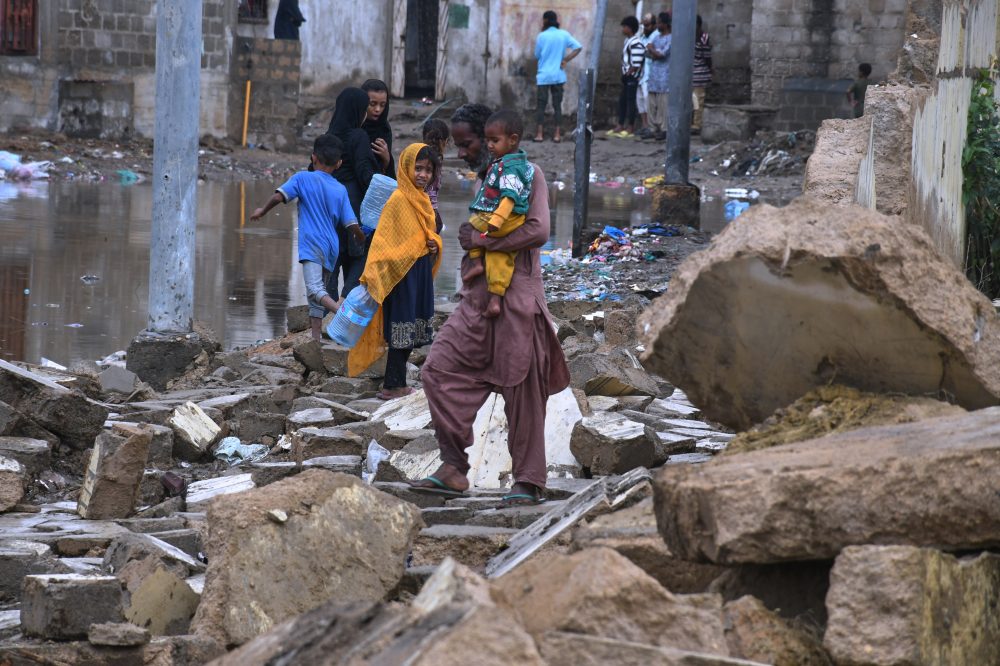
KARACHI, Pakistan — A devastating storm swept through Pakistan’s most populous city during overnight hours, claiming at least 15 lives and leaving numerous others wounded when structures gave way under intense weather conditions, according to emergency response teams and medical facility representatives who spoke Thursday.
The severe weather event started Wednesday and persisted through nighttime hours across Karachi, which serves as the provincial capital of Sindh in southern Pakistan. Local officials recommended that citizens limit travel to essential trips only.
Medical facilities in the metropolitan area received at least 15 fatalities, while more than 24 individuals required hospital treatment following weather-related accidents, according to statements from police surgeon Summaiya Tariq and emergency response coordinators.
The intense weather system also toppled numerous street-side trees and created significant transportation delays, rescue teams and law enforcement agencies reported.
Weather monitoring officials from the Pakistan Meteorological Department recorded sustained winds reaching 90 kilometers per hour (56 miles per hour) that continued for extended periods. Karachi Mayor Murtaza Wahab issued public advisories encouraging citizens to remain in their homes and limit outdoor activities, noting that numerous trees had been downed and repair crews were actively working to restore roadway access.
Weather prediction services indicated that additional precipitation and severe thunderstorms accompanied by powerful winds and potential isolated hail could persist across Karachi and surrounding areas of Sindh province as a western atmospheric system continues moving through the region.
Emergency response agencies documented similar storm conditions and precipitation affecting numerous other regions throughout the nation.
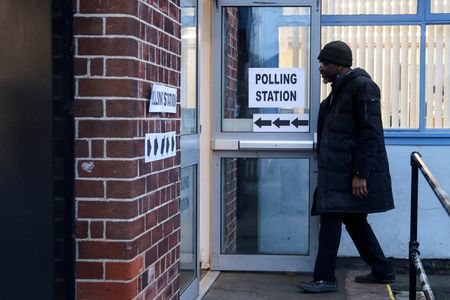
Italian Prime Minister Giorgia Meloni confronts a significant political challenge as citizens prepare to cast ballots in a referendum that could reshape the country’s judicial system and alter the political landscape before next year’s national elections.
The March 22-23 vote centers on whether to divide the roles of judges and prosecutors, creating separate governing bodies for each profession with members selected through a lottery system instead of elections. This would fundamentally restructure Italy’s High Council of the Judiciary, known as the CSM.
What began as a debate over court administration has evolved into a fierce political battle, with Meloni’s administration championing the ‘Yes’ position while opposition parties rally behind ‘No’ votes. Unlike many referendums, this one requires no minimum voter participation to be considered valid.
Political experts believe most citizens will base their decisions on party loyalty rather than understanding the complex legal issues involved, following an intense campaign filled with questionable assertions from both sides.
“Only a small minority of Italians knows much about the issue. Many will look instead to party and coalition leaders, who are all trying to mobilise their voters to win,” explained Fabrizio Masia, who leads the EMG polling organization.
Recent surveys conducted before the mandatory two-week campaign silence showed an extremely tight race, with reform opponents appearing to gain traction as some conservative voters seemed increasingly disengaged.
Meloni has publicly stated she will not step down if voters reject the proposal, a declaration many interpret as strategy to reduce opposition turnout among those hoping to force her from office.
Her governing alliance, which brings together the Brothers of Italy, the League, and Forza Italia parties, maintains stronger overall support than the fragmented left-wing opposition still working to unite the Democratic Party with the 5-Star Movement.
“A ‘no’ win could give fresh momentum to efforts to build a centre-left bloc, also causing trouble within Meloni’s ranks,” Masia noted.
Conversely, approval of the reforms would provide Meloni with crucial political capital as she approaches the final phase of her term while managing challenges from the expanding Middle East conflict and Italy’s sluggish economic performance.
“A government victory would strengthen its longer-term political project, also in view of the 2027 election,” said Emanuele Massetti, who teaches political science at Trento University.
The judicial system has remained contentious in Italian politics since former Prime Minister Silvio Berlusconi, who passed away in 2023, faced numerous legal proceedings related to his business operations and frequently criticized judges for alleged political motivations.
Massetti characterized the referendum as the most recent development in an ongoing clash between conservative politicians and the court system, with public opinion split along ideological lines since Berlusconi’s era.
The campaign has also created tension between Meloni and the magistrates’ union ANM, which argues the changes would undermine judicial autonomy and invite greater political meddling.
Government officials dismiss these concerns, contending the reforms are necessary to eliminate partisan politics from CSM member selection following corruption scandals that revealed secret negotiations over high-level prosecutor positions.
“The reform aims to make the justice system more modern, fair, accountable and independent, free from political pressure and from the factionalism that has damaged its credibility and authority,” Meloni stated in an interview with Il Dubbio newspaper this week.
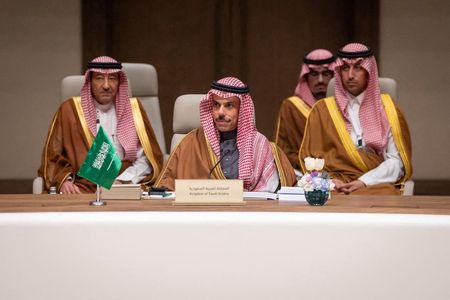
The Kingdom of Saudi Arabia announced it will convene foreign ministers from multiple Arab and Islamic nations in Riyadh on Wednesday to address regional security concerns stemming from the ongoing Iran conflict, according to the Saudi foreign ministry.
According to a Turkish diplomatic source, the gathering will include delegates from ten nations: Azerbaijan, Bahrain, Egypt, Jordan, Kuwait, Pakistan, Qatar, Syria, Turkey and the United Arab Emirates.
The conflict between the United States, Israel and Iran has now stretched into its third week with little indication of winding down, creating widespread regional instability and causing major disruptions to worldwide energy markets.
Turkey’s Foreign Minister Hakan Fidan plans to travel to additional countries following the Riyadh meeting to emphasize the importance of finding a diplomatic resolution to end the hostilities peacefully. The Turkish diplomatic source noted that continued warfare could cause permanent harm to relationships between nations in the region.
Before the conflict erupted, Turkey, which is a NATO member and shares a border with Iran, had attempted to serve as a mediator between Tehran and Washington.
Turkey has denounced both American and Israeli military actions against Iran as violations of international law, while simultaneously criticizing Iran’s strikes against Gulf nations as unacceptable behavior.
LONDON – British authorities have filed espionage charges against two individuals accused of conducting surveillance operations targeting Jewish community sites and individuals on behalf of Iran, according to prosecutors who announced the charges Tuesday.
The defendants, identified as 40-year-old Nematollah Shahsavani, who holds dual Iranian-British citizenship, and 22-year-old Alireza Farasati, an Iranian citizen, face accusations stemming from alleged monitoring activities conducted in northern London during a five-week period spanning July and August of last year.
The case represents part of ongoing concerns about Iranian threats to British security that have been highlighted by government officials and the MI5 intelligence service for years, with multiple arrests and foiled plots uncovered prior to the military operations between the U.S. and Israel that began nearly three weeks ago.
Vicki Evans, who serves as senior national coordinator for Counter Terrorism Police, emphasized that the investigation demonstrates law enforcement’s commitment to protecting Jewish communities from security threats.
“These are extremely serious charges under the National Security Act, which have come about following what has been a very complex investigation,” Evans stated.
Both suspects were taken into custody earlier this month and are scheduled for their initial court appearance at Westminster Magistrates’ Court this Thursday.
Authorities also confirmed that two additional men who were detained during the same operation have been released without facing any charges.
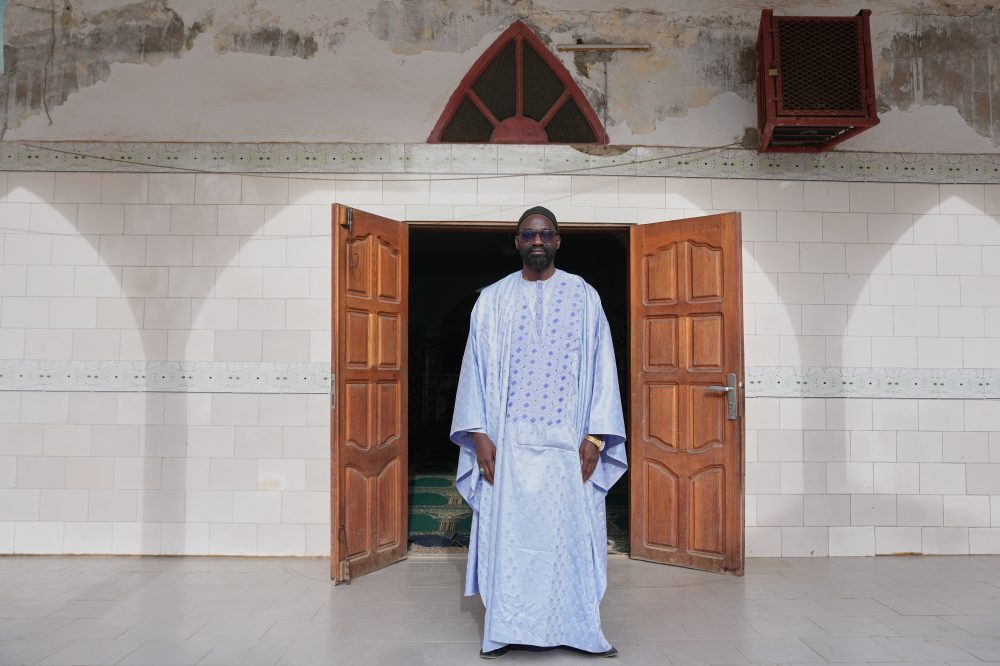
DAKAR, Senegal — A young man met with reporters at a high-end hotel in Senegal’s capital city, displaying clear signs of anxiety as he avoided direct eye contact and positioned himself with his back to the wall while watching the entrance. He explained that he had gone into hiding after his family rejected him for being gay and authorities questioned one of his friends.
Originally from Touba, a city that serves as the heart of Senegal’s Sufi Muslim tradition, he now stays with another friend who remains unaware of his sexual orientation. His experience reflects a growing pattern in this nation where same-sex relationships are prohibited by law, and officials are on the verge of implementing extended prison sentences for such conduct.
“There’s a lot of fear,” the young man said.
The Associated Press was unable to independently confirm his story or verify accounts from other individuals who requested anonymity due to concerns about potential retaliation.
Senegal joins a growing list of African nations — where more than half have criminalized homosexuality — that are pursuing stricter punishments for same-sex conduct. Uganda recently implemented capital punishment for “aggravated homosexuality,” sparking widespread international condemnation.
Prime Minister Ousmane Sonko announced plans earlier this year to enhance penalties for “unnatural acts,” the legal terminology used in Senegalese statutes to describe homosexuality, expanding the maximum sentence from five years imprisonment plus fines to ten years behind bars.
Parliamentary approval came on March 11, and the legislation awaits President Bassirou Diomaye Faye’s signature to take effect, with expectations that he will endorse the measure.
Article 319 of the Penal Code currently criminalizes consensual same-sex behavior, prohibiting “acts against nature.” This conservative, predominantly Muslim nation adopted these anti-homosexuality provisions from colonial French legal codes, though enforcement has historically been inconsistent.
Neither Senegal’s justice ministry nor the presidential office provided responses to inquiries regarding the push for harsher sentencing. Multiple local experts declined to discuss the matter, expressing concerns about possible retaliation.
News outlets have documented numerous detentions since early February, including the arrest of well-known local journalist Pape Biram Bigué Ndiaye, who was subsequently freed. Dakar law enforcement officials confirmed they are investigating multiple related cases.
Following the detention of twelve gay men in Dakar, Human Rights Watch documented the escalation of anti-LGBTQ+ messaging, highlighting that Senegalese lawmakers unsuccessfully attempted to strengthen homosexuality penalties in both 2022 and 2024.
The human rights organization reported that public hostility toward homosexuality has sometimes turned violent: In October 2023, residents of Kaolack “a mob exhumed the body of a man they believed to be gay, dragged it through the streets, and burned it in the town square.” Video of the incident spread widely online.
During a February demonstration in Dakar protesting what organizers termed the “intentional transmission of HIV,” participants shouted anti-gay chants. “Intentional transmission of HIV” represents a frequent allegation in Senegal targeting any sexual activity involving someone who is HIV-positive.
The organization And Samm Djiko Yi, which translates to “Together for the Preservation of Values,” has coordinated recent demonstrations and spearheaded efforts to extend prison terms.
Organization founder Serigne Ababacar Mboup characterized his opposition to “the homosexual agenda” as crucial, claiming that Western nations and the United Nations are forcing LGBTQ+ acceptance onto Senegal as these entities increasingly embrace gay rights.
“Homosexuality is contrary to our customs, our values, and our beliefs,” Mboup told the AP. “We are not trying to impose anything on you, so in turn, learn to respect people and their positions, especially on societal issues.”
Free Senegal, an organization dedicated to helping relocate LGBTQ+ individuals facing legal action, reported that conditions have worsened. The group maintained a secure residence in Dakar until 2025, when they shut it down over concerns that local residents would alert law enforcement.
A representative for the organization attributed the growth of anti-gay groups and the “freedom to express hatred towards the LGBT community” to politicians courting voter support during campaign seasons.
Free Senegal represents one of several organizations working to safeguard Senegal’s LGBTQ+ population. The spokesperson identified insufficient financial resources as another significant obstacle.
Some individuals choose to leave the country entirely. One man who escaped to France in 2000 after facing backlash for appearing in a gay rights documentary now assists Free Senegal’s operations from abroad.
His voice became emotional during his conversation with the AP as he recalled the confrontation with neighbors and the persistent opposition to LGBTQ+ people in his homeland.
BRUSSELS (AP) — Top European Union officials are convening in Brussels Thursday to address the ongoing conflict with Iran, soaring energy costs, immigration concerns, and a massive financial assistance package for Ukraine that Hungary continues to obstruct.
Several European leaders have turned down requests from U.S. President Donald Trump to deploy military resources to protect the Strait of Hormuz, a crucial passage for worldwide shipments of oil, natural gas, and fertilizer. Escalating energy costs due to the conflict and concerns about a potential new wave of refugees have prompted officials to prioritize Middle East issues during this gathering.
The European Commission, which serves as the EU’s administrative arm, has proposed a comprehensive set of strategies to reduce energy costs for discussion among leaders. According to an unnamed senior European diplomat who requested anonymity, no single approach will effectively address the diverse economic challenges across all 27 member countries affected by the conflict.
Thursday’s meeting will also address an ongoing dispute between Hungarian Prime Minister Viktor Orbán and the majority of other EU member states.
During the previous EU gathering in December at a Belgian castle, leaders including Orbán approved a 90 billion-euro ($104 billion) financial package to help Ukraine address its budget deficit while continuing its prolonged conflict with Russia.
However, Orbán reversed his position a month afterward when the Druzhba oil pipeline was damaged in January in what Ukrainian authorities described as a Russian drone strike. The pro-Russia leader, who has governed Hungary since 2010, is conducting an intense media blitz criticizing both Brussels and Kyiv while campaigning for reelection next month.
“If there is no oil, there is no money,” Orbán stated in a social media post on Tuesday.
To secure the critical funding for Ukraine, EU officials and diplomats plan to pressure Orbán and Slovakia’s prime minister, Robert Fico, whose administration has also adopted pro-Russia positions.
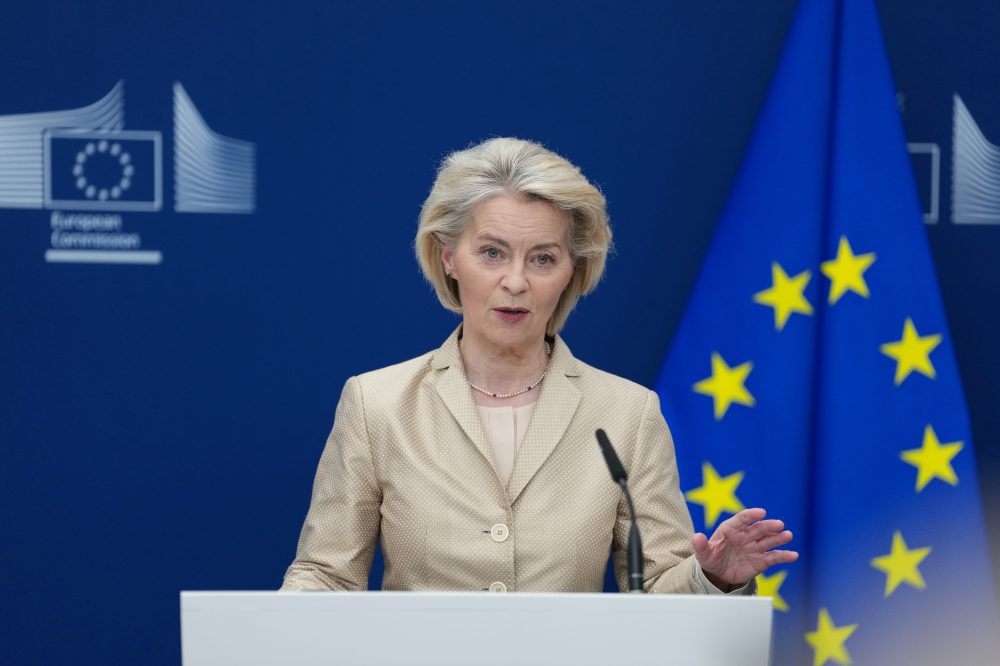
On Tuesday, European Commission President Ursula von der Leyen proposed that the EU would fund repairs to the Druzhba pipeline and help develop alternative fuel supply routes for Hungary and Slovakia.
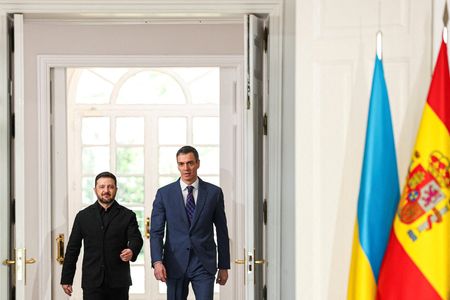
Ukrainian President Volodymyr Zelenskyy called any interference with the loan “absolutely unfair” and emphasized that his war-torn nation has “no alternative” to these funds as it confronts a serious budget emergency due to the conflict that started on Feb. 24, 2022.
“There may be alternatives in terms of financing mechanisms, but there is simply no alternative to strengthening our army,” Zelenskyy stated on Wednesday.
German Chancellor Friedrich Merz addressed lawmakers in Berlin Wednesday, emphasizing that the EU must quickly finalize the 20th round of Russian sanctions and approve the Ukrainian loan.
He promised to “advocate for that emphatically” in Brussels and declared that “we must not take into consideration a single country in the European Union that is currently setting up this blockade in Europe now for domestic political reasons and because of an election campaign that is being conducted there.”
Merz urged additional sanctions, stating that “the needs of the moment call for us to increase the pressure on Moscow together – the U.S. and the European partners together.”
BALTI, Moldova — A Russian military strike on a Ukrainian power facility has left tens of thousands of people in Moldova without access to clean water after oil contamination spread through a crucial river system shared by both nations.
Moldova’s President Maia Sandu has placed blame squarely on Russia for contaminating the Dniester River following the March 7 assault on Ukraine’s Novodnistrovsk hydroelectric facility, stating it poses a danger to Moldova’s water infrastructure in the nation seeking European Union membership.
The Ukrainian facility sits approximately 15 kilometers (9 miles) north of Moldova’s border and provides water resources to roughly 80% of Moldova’s 2.5 million residents. Russia has consistently attacked Ukraine’s essential civilian infrastructure, including dams and river facilities, throughout its full-scale invasion that began in 2022.
“Russia bears full responsibility,” Sandu declared Sunday in a social media statement.
Moldovan environmental officials announced a 15-day emergency environmental alert on Sunday, providing legal authority to enhance technical responses and implement temporary water restrictions.
“We are taking this decision to make sure we prevent any risk to the population’s health,” officials stated. “Because of the continuous wave of pollution with oil products, the risk of the pollution spreading, and the exceedance of contaminant levels in the northern area of the Dniester River.”
Although petroleum-based pollutants have been detected in the waterway after the attack, officials have not yet determined the precise origin of the contamination.
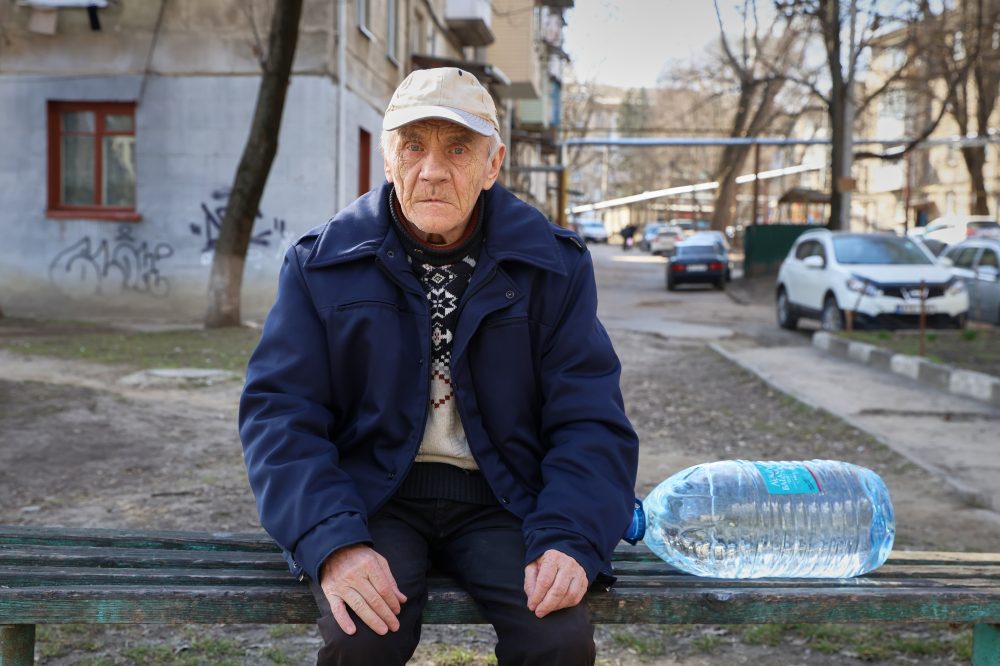
The crisis has compelled officials to suspend water service to multiple regions, including Balti, Moldova’s second-most populous city with approximately 90,000 residents. Moldova’s armed forces have deployed 10-tonne water trucks to deliver drinking water to the northern city, supplemented by humanitarian assistance from Romania.
“It’s very hard, very hard,” explained 84-year-old Balti resident Liuba Istrati, who has been hauling water buckets to her apartment. “We live on the fifth floor, it’s just the two of us, old people, my husband is sick in bed.”
Educational institutions have been forced to shut down and transition to remote learning due to the water shortage.
“It’s a complicated situation, I have to come every day to get water,” said Irina Mutluc, an educator from Balti. “Even for one person you need quite an amount of water to consume, for the bathroom and so on, so it’s really complicated.”
Officials are working urgently to eliminate contamination and conduct comprehensive water testing and monitoring. Romania, which maintains strong diplomatic ties with Moldova, has sent specialized teams and equipment including absorbent dam materials to assist with cleanup operations.
“The latest samples taken show an improvement in the water indicators, which confirms the effectiveness of the filters and barriers for the capture and disposal of pollutants,” the Environment Ministry reported Wednesday.
The ministry emphasized that officials are “working at an accelerated pace” to restore water service, “but this decision will be made exclusively on the basis of at least two consecutive sets of analyses, taken on two different days… Protecting the health of citizens remains the absolute priority.”
Environment Minister Gheorghe Hajder announced Wednesday during a news conference that three key river monitoring locations had “reached the admissible limit” of oil contamination for the first time since the emergency began.
He noted that if testing shows similar or better results within the next 48 hours, officials may reopen a pumping facility on the northeastern Ukrainian border that serves multiple districts and Balti.
“It is clear evidence that upstream oil diversions have been greatly mitigated, and the absorbing dams have had their effect,” he stated.
The Dniester River begins in southwestern Ukraine and extends over 1,300 kilometers (846 miles), flowing through Moldova before returning to southern Ukraine and reaching the Black Sea.
“Although at some points values may temporarily return within acceptable limits, matter continues to come in waves, making it difficult to accurately anticipate evolution,” environmental officials said.
Moldova’s chief prosecutor announced Tuesday the opening of a criminal investigation into the incident, while the foreign ministry called in Russian Ambassador Oleg Ozerov to Chisinau, presenting him with a bottle containing brownish water.
In a Wednesday online response, Russia’s embassy in Moldova disputed that Moldovan officials had provided evidence of Russian involvement, dismissing “a container with an unknown murky liquid, with no markings regarding where and when it was obtained,” claiming it “by definition cannot be proof of anything.”
The embassy statement accused Moldovan authorities of “publicly claim a lack of precise information about the nature of the incident, the type, and the amount of pollutants,” while advancing “conflicting theories.”
Ilya Trombitsky, a researcher with Eco-TIRAS, an environmental organization network spanning Moldova and Ukraine, noted that while determining immediate or future impacts remains challenging, the fact that “several cities are without water is an evident social damage.”
“It depends on the nature of the pollutant… we still do not know either the source or the substance of pollution,” he explained to reporters. “It is evident that it is not healthy for birds, wetland birds. It is evident that some invertebrates were killed, especially upstream… crustaceans, but small ones, (which) can be food for fish.”
“Moldova does not have experience in such spills,” he added.
DHAKA, Bangladesh (AP) — The bustling capital city of Bangladesh is witnessing a dramatic transformation as its population begins a massive exodus.
Countless internal workers who migrated to the city are now making their way back to their ancestral homes to celebrate Eid al-Fitr, the religious celebration that concludes the month of Ramadan.
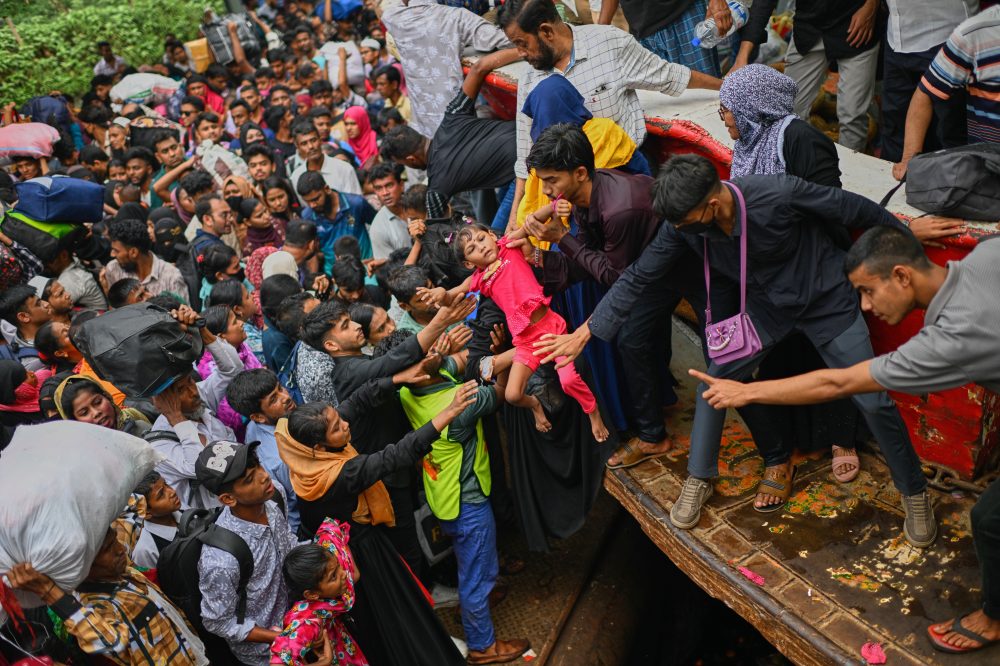
Striking images show a young child wearing festive bright pink clothing sitting above crowds of people attempting to board ferry vessels. The nighttime boats illuminate the darkness with colorful signage displaying the names of various cities where these travelers originated.
Similar pandemonium unfolds at the capital’s train terminals. Passengers force themselves through small windows while others scale the tops of railway cars. Extended families transport overhead luggage filled with presents intended for relatives and community members back home.
Temporarily, the metropolis experiences a rare stillness. This urban center that continuously grows with workers seeking employment and education opportunities now releases its population annually for spiritual observance and family reunification. The capital attracted these individuals with employment prospects, educational institutions, and advancement possibilities, but now sends them back to rural communities throughout the nation.
Every trip represents both routine travel and remarkable significance.
These striking images document the movement and celebration of Eid as more than just a religious observance, but as a massive reunion for countless people.
NEW YORK (AP) — The ongoing conflict between the United States, Israel and Iran has placed the Strait of Hormuz at the center of international attention once more.
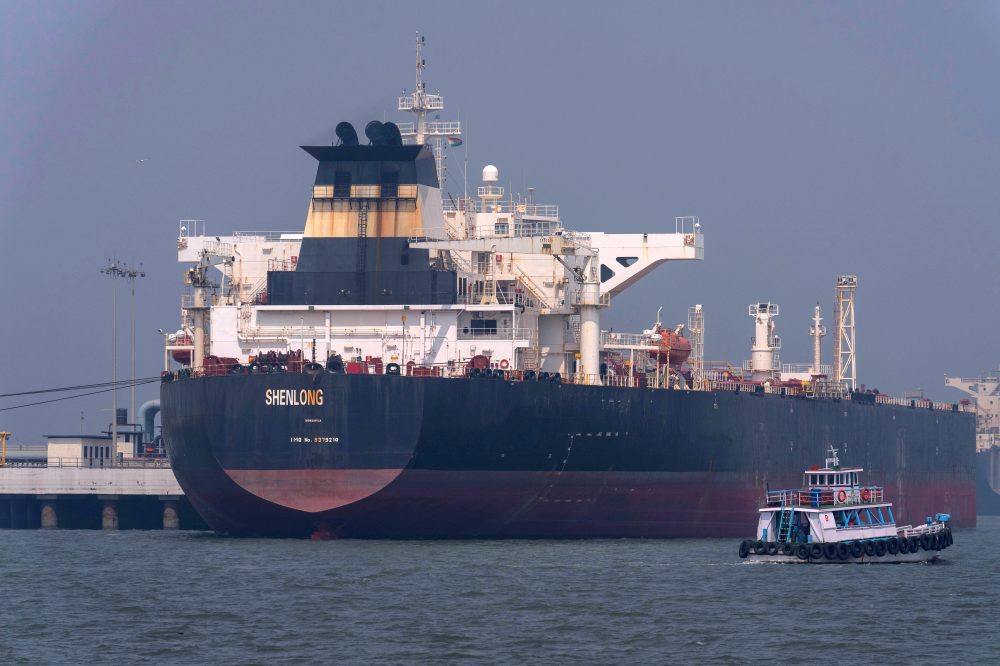
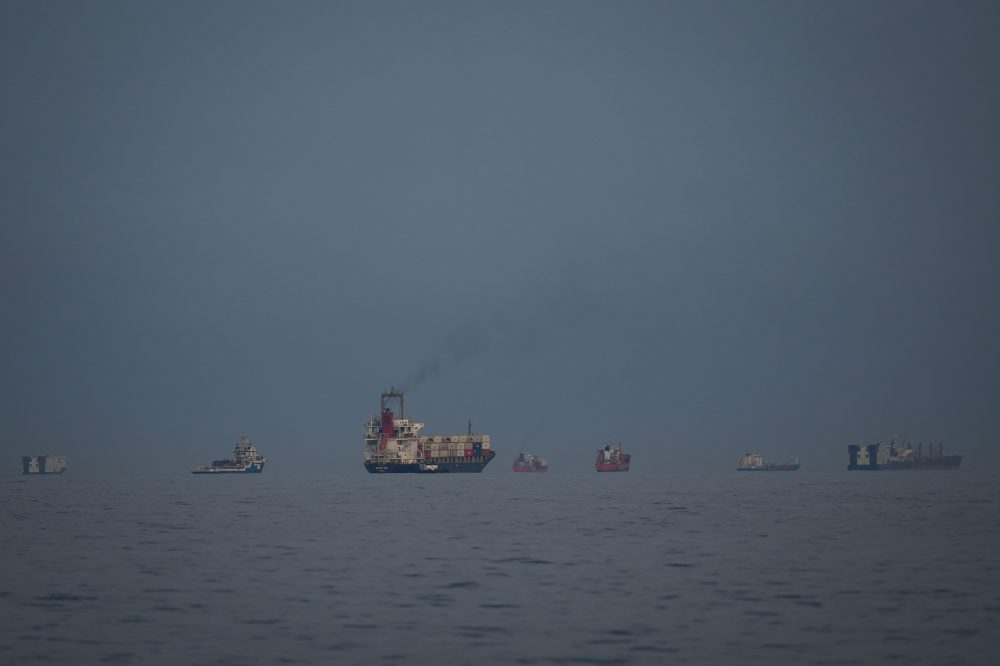
Iran has brought maritime traffic through this vital waterway connecting the Persian Gulf to international waters to a near-complete standstill, blocking a crucial route for global petroleum transport. Commercial vessel attacks and additional strike warnings have prevented most tankers carrying oil, natural gas and other cargo from navigating the passage. Major oil-producing nations have also reduced output since their petroleum products cannot reach markets.
The weaponization of the Strait of Hormuz represents a recurring pattern throughout history. Maritime seizures and regional conflicts have previously created hazardous conditions for commercial vessels, sometimes severely limiting their passage capabilities. Tehran has made repeated closure threats regarding the strait when facing sanctions and diplomatic tensions over many years, though it previously avoided completely blocking maritime traffic. Despite most shipping being suspended during the present conflict, maritime tracking systems show dozens of vessels continue crossing the waterway.
Although both Iran and Oman possess territorial claims within the Strait of Hormuz, the narrow shipping lanes are considered international waters open to all maritime traffic. However, Tehran maintains substantial control over the passage through its military installations and authority over strategic islands in the region.
The current confrontation, entering its third week following U.S. and Israeli military strikes against Iran that resulted in the death of its supreme leader, has created significant energy market impacts: approximately 20 percent of global oil shipments previously transited the Strait of Hormuz before hostilities began, and supply constraints have caused fuel costs to spike dramatically.
Several historical incidents demonstrate previous disruptions or threats to Strait of Hormuz navigation.
Throughout the devastating eight-year conflict between Iran and Iraq during the 1980s, both nations targeted tankers and commercial vessels within and around the Strait of Hormuz, deploying naval mines to block traffic periodically. American forces became involved in what became known as the Tanker War — including a single-day naval engagement with Iran in 1988, followed by the accidental downing of an Iranian passenger aircraft mistaken for a military plane, resulting in 290 civilian deaths.
Complete closure of the strait never occurred. During wartime, American naval vessels provided escort protection for Kuwaiti oil tankers against Iranian assault. Nevertheless, the waterway became extremely hazardous and maritime operations faced significant disruption.
Between late 2011 and early 2012, Iran issued closure threats against the Strait of Hormuz responding to Western sanctions targeting its nuclear activities. The European Union implemented a prohibition on Iranian oil purchases — while the United States similarly sanctioned the nation’s energy industry and blocked central bank transactions. These measures subsequently discouraged other countries from purchasing Iranian petroleum.
Iran eventually softened these threats, and government officials ultimately chose not to shut down the Strait of Hormuz. Market instability and supply changes nonetheless caused oil price fluctuations. Brent crude — the global benchmark — traded above $100 throughout December 2011 and much of 2012, reaching peaks exceeding $126 per barrel in March 2012, before declining later that year.
In May 2018, during his initial presidential term, Donald Trump abandoned an Obama administration nuclear agreement with Iran and reimposed sanctions. Despite certain exemptions, Trump pledged to eventually eliminate all Iranian oil exports. Responding to this action, then-Iranian President Hassan Rouhani reiterated previous Strait of Hormuz closure threats.
Once again, Iran chose not to close the strait. Although market volatility occurred throughout the year, particularly affecting OPEC producer output, Brent concluded the year trading near $54 per barrel, declining from approximately $75 per barrel when Trump announced the withdrawal in May 2018.
American naval officials attributed a series of limpet mine attacks damaging tankers near the strait in 2019 to Iran, along with a deadly drone strike on an Israeli-connected oil tanker in 2021. Tehran rejected responsibility at the time. Regardless, such conflicts increased insurance costs and heightened shipping company concerns.
Iran also captured multiple vessels in the waterway, including several international oil tankers allegedly transporting smuggled fuel at the end of last year, according to state media reports. The country additionally seized a Portuguese-flagged cargo vessel in 2024 and detained two Greek tankers for months in 2022, among other captures. The strait remained operational throughout these incidents.
Concerns about potential Strait of Hormuz closure also intensified during last year’s 12-day Israel-Iran war, especially after American forces joined the conflict with bombing strikes on three Iranian nuclear and military facilities.
Iran did not close the strait, and oil prices avoided sustained increases. Although costs rose during the conflict’s initial days, petroleum markets actually experienced significant selling as traders questioned the probability of attacks on crude shipments. By the war’s conclusion, Brent was trading below $67 per barrel, several dollars lower than pre-conflict levels.
DUBAI, United Arab Emirates (AP) — Iran launched an escalated campaign of missile strikes against Gulf Arab energy infrastructure Thursday, igniting blazes at Qatari natural gas facilities in direct retaliation for Israeli attacks on Iran’s primary gas field, marking a significant expansion of Middle East hostilities that has driven worldwide fuel costs dramatically higher.
Maritime vessels caught fire near the United Arab Emirates coastline while another sustained damage off Qatar’s shores, highlighting the persistent threats facing shipping due to Iran’s control over the critical Strait of Hormuz.
Qatar, which serves as a crucial global natural gas supplier, reported that emergency crews extinguished flames at a major LNG plant following Iranian missile bombardment. While production had previously ceased due to earlier strikes, officials said the most recent missile barrage created “sizeable fires and extensive further damage.”
The facility damage could potentially postpone Qatar’s ability to resume market deliveries even following the conclusion of the Iran conflict.
Officials in Abu Dhabi announced the nation was compelled to cease operations at both its Habshan gas facility and Bab field, characterizing Iran’s overnight strikes on these locations as a “dangerous escalation” of the ongoing war.
Air raid warning systems activated across multiple Gulf regions, while Israel issued alerts regarding approaching Iranian missile fire.
Qatar, Saudi Arabia and the United Arab Emirates all condemned Iran’s attacks, with Saudi Arabia’s chief diplomat stating that assaults on the kingdom meant “what little trust there was before has completely been shattered.”
During early market activity, Brent crude oil, the global benchmark, climbed above $110 per barrel, representing an increase of more than 50% since Israel and the United States initiated the conflict February 28 with strikes against Iran.
Iran’s missile offensive followed Israel’s attack on South Pars, the planet’s largest gas field situated offshore in the Persian Gulf and jointly controlled by Iran and Qatar.
Given that approximately 80% of Iran’s electricity generation relies on natural gas, according to the Paris-based International Energy Agency, the strike directly jeopardizes the nation’s power grid. Natural gas also provides household heating and cooking throughout the Islamic Republic.
Targeting the gas field represents a “clear expansion of the conflict,” the New York-based Soufan Center stated in an analysis.
“Israel’s target selection in this war has heavily focused on the institutions, leaders and infrastructure …” the research organization noted. “It now seeks to inflict additional pressure on the regime by making the living conditions for civilians intolerable.”
Iran denounced the South Pars attack, with Iranian President Masoud Pezeshkian cautioning of “uncontrollable consequences” that “could engulf the entire world.”
From Washington, President Donald Trump indicated that Israel would not strike South Pars again, but cautioned via social media that continued Iranian attacks on Qatar’s energy infrastructure would prompt U.S. retaliation to “massively blow up the entirety” of the field.
“I do not want to authorize this level of violence and destruction because of the long term implications that it will have on the future of Iran,” Trump posted on social media.
Qatar Energy announced on X that a missile strike on its extensive Ras Laffan liquefied natural gas facility triggered the early Thursday fire.
A vessel also sustained damage off the nation’s coastline, according to the British military’s United Kingdom Maritime Trade Operations center. Officials remained uncertain whether the ship was intentionally targeted or struck by falling debris as Qatar deployed missile interceptors against incoming Iranian attacks.
Saudi Arabia similarly reported destroying Iranian drones aimed at its natural gas installations overnight, while Abu Dhabi authorities said they were forced to halt operations at the Habshan gas facility and Bab field following interceptions above these sites.
Another vessel ignited early Thursday near the United Arab Emirates coast. The UKMTO indicated uncertainty regarding whether it was deliberately targeted or hit by debris.
The organization said the ship was positioned just off Khor Fakkan in the UAE, close to the Strait of Hormuz entrance, through which one-fifth of global oil typically passes.
More than 20 vessels have suffered attacks throughout the Iran war as Tehran maintains strict control over shipping traffic through the waterway connecting the Persian Gulf to international waters.
Iran maintains the waterway remains open, though not to the U.S. or its allies, and while some ships have successfully transited, the volume has been minimal.
Iran’s judicial system announced Thursday the execution of three individuals detained during January’s nationwide protests, marking the first known implementation of such sentences.
Iran’s Mizan news agency confirmed the executions. Iran typically implements capital punishment through hanging.
Mizan named those executed as Mehdi Ghasemi, Saleh Mohammadi and Saeed Davvodi. The agency claimed the three men had fatally stabbed two police officers in Qom, approximately 130 kilometers (80 miles) south of Tehran, during the demonstrations.
Iran’s judiciary had been threatening to execute those arrested during the protests.
Iran suppressed the demonstrations through severe violence that resulted in thousands of deaths and tens of thousands of detentions.
Over 1,300 people in Iran have died during the war. Israeli strikes have forced more than 1 million Lebanese to flee their homes — roughly 20% of the population — according to the Lebanese government, which reports 968 fatalities.
In Israel, 14 people have died from Iranian missile attacks. At least 13 U.S. military personnel have been killed.
MOSCOW – Russian state newspaper Izvestia reported Thursday that diplomatic negotiations between the United States, Russia, and Ukraine have been temporarily suspended due to warfare involving Iran, according to Russian government sources.
The Moscow-based publication stated that Kremlin officials confirmed the suspension and suggested that Iran’s military involvement could influence Ukraine to adopt a more flexible negotiating stance.
According to the report, Kremlin spokesperson Dmitry Peskov indicated that while Russian presidential representative Kirill Dmitriev will maintain his focus on investment and economic partnerships, the three-nation diplomatic discussions have been put on hold.
“Kirill Dmitriev continues work. The trilateral group is on pause,” Peskov stated, as reported by Izvestia.
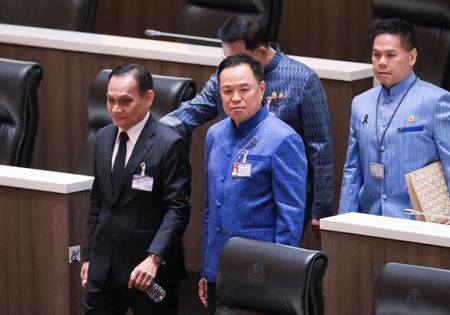
Thailand’s legislative body commenced voting Thursday to select a new prime minister, as Anutin Charnvirakul pursues approval to establish a government that might bring uncommon political stability to the Southeast Asian nation after years of governmental turmoil.
The Bhumjaithai party, led by Anutin, delivered an unexpected and commanding performance in February’s elections, marking a dramatic shift for a political organization that previously held minimal influence in Thai governance. The party’s success stemmed from tapping into nationalist sentiment that emerged following military clashes with Cambodia in the previous year.
Anutin’s political rise largely resulted from strategic maneuvering during the decline of the previously powerful Pheu Thai party. He first withdrew from their coalition government before quickly positioning himself to establish his own administration after judicial decisions removed a second prime minister within just over twelve months.
The Bhumjaithai party has formed an agreement with the weakened Pheu Thai and joined forces with various smaller political groups, creating a coalition that would command 292 out of 499 parliamentary seats.
During a Thursday press conference at parliament, Anutin stated: “The government coalition is ready to perform its duty in the legislature and executive smoothly to bring prosperity to the country.”
He added: “We’ll quickly form a cabinet and give a policy statement to solve the problems of the country.”
To secure the prime ministerial position, the 59-year-old Anutin requires support from more than half the chamber, meaning at least 251 votes are needed for victory.
His competition comes from 38-year-old Natthaphong Ruengpanyawut, who leads the People’s Party that finished second in the elections.
The extent of Natthaphong’s backing remains uncertain beyond his party’s 120 seats, and whether he has negotiated agreements with other political factions is unknown.
As a devoted royalist, Anutin has maintained a consistent presence in Thai political circles for two decades, successfully navigating periods of instability by strategically positioning Bhumjaithai between competing elite factions locked in ongoing power disputes. This approach secured the party’s participation in multiple coalition governments.
Should Anutin succeed, he would gain his first clear leadership mandate in a nation struggling with economic stagnation, overwhelming household debt, urgent need for structural changes, and challenges from trade uncertainties and consequences of the U.S.-Israeli conflict with Iran.
Political observers suggest Anutin’s adaptability and skill at bridging political divisions could serve as his greatest strengths, noting that Bhumjaithai has avoided confrontation with Thailand’s influential military and judicial institutions, which have previously orchestrated the collapse of numerous governments and parties.
Napon Jatusripitak, a political expert at Singapore’s ISEAS–Yusof Ishak Institute, indicated that with Bhumjaithai positioned to influence both parliamentary chambers and Thailand’s institutional power centers apparently supporting Anutin, the outlook for medium-term stability appears positive.
“People have strong reasons to believe that this government can last, particularly because it’s the first time in a long while that the referee and the players are on the same side,” Napon explained.
“There’s control,” he continued. “And we have a highly fragmented opposition.”
Israel has systematically eliminated numerous high-ranking Iranian officials through airstrikes in an effort to destabilize the Islamic Republic. However, defense analysts point to Israel’s historical experience with targeted eliminations, suggesting this approach has limitations and may sometimes produce unintended consequences.
Despite Israel eliminating Hezbollah commander Hassan Nasrallah, the organization continues launching rocket attacks.
Although Israel eliminated Hamas leadership, the organization maintains control over portions of Gaza and continues armed resistance.
Military strategists note that targeted eliminations have seldom been used against nation-states. While such operations may deliver concrete results that officials can present as successes — particularly in conflicts without clear conclusions — they typically fail to resolve the fundamental issues driving these disputes.
Jon Alterman, chair of Global Security and Geostrategy at the Center for Strategic and International Studies, explained that the effects of targeted eliminations typically diminish over time.
Alterman observed that Iran’s administration and armed forces consist of multiple interconnected organizations that have withstood repeated devastating American and Israeli attacks. “Even dictators need to rely on entire networks that support them,” he said.
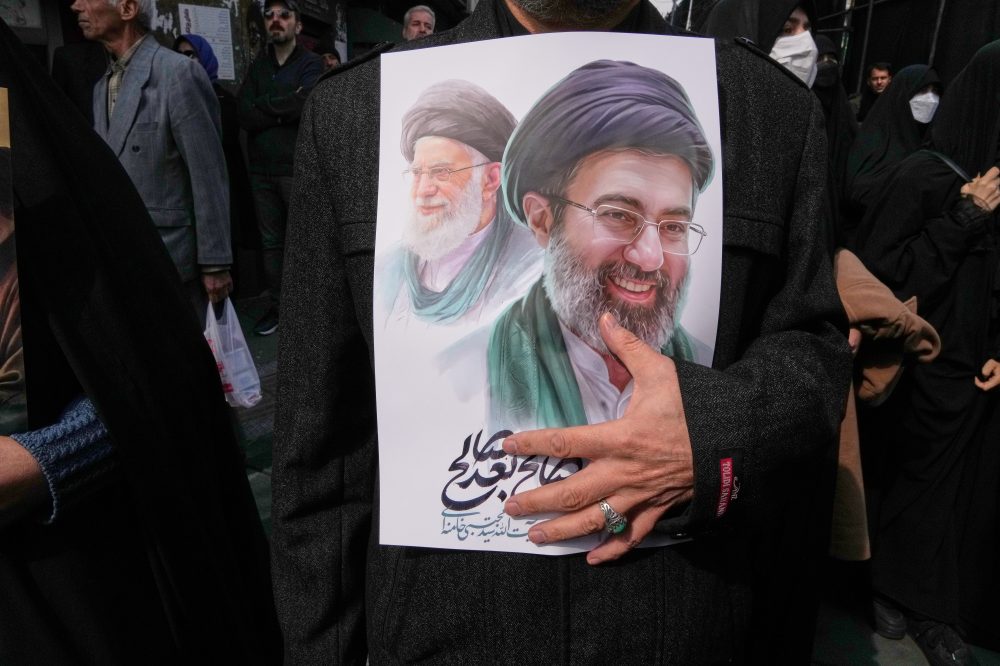
Iran’s Supreme Leader Ayatollah Ali Khamenei was eliminated during the conflict’s initial phase. His successor, son Mojtaba, is considered even more hardline. Iran’s Revolutionary Guard has maintained missile barrages against Israel and nearby Gulf nations — and successfully disrupted shipping through the Strait of Hormuz — despite losing senior commanders or forcing them into hiding.
Throughout its existence, Israel has conducted numerous targeted eliminations, yet Palestinian and Lebanese militant organizations have frequently survived and sometimes emerged stronger following the deaths of key figures.
Consider Hezbollah’s experience. An Israeli strike eliminated then-leader Abbas Musawi in southern Lebanon during 1992. Under his charismatic successor Nasrallah, Hezbollah developed into the region’s most formidable armed organization and battled Israel to a costly deadlock in 2006.
Nasrallah and virtually all his senior deputies perished during the 2024 Israeli-Hezbollah conflict. The Iran-supported organization sustained additional significant casualties that year, yet renewed missile and drone operations against Israel within days of the current conflict’s beginning.
Hamas has lost multiple leaders. Israel eliminated founder and spiritual guide Sheikh Ahmed Yassin through a 2004 airstrike. Nearly every planner of the organization’s Oct. 7, 2023, assault on Israel has subsequently been eliminated.
Both organizations have persevered, driven by longstanding grievances rooted in the Israeli-Palestinian dispute.
America has similarly employed targeted eliminations against al-Qaida and the Islamic State organization, eliminating Osama bin Laden during a 2011 Pakistan operation and IS founder Abu Bakr al-Baghdadi in 2019. While both groups suffered major setbacks, this occurred only after extended conflicts involving ground troops.
Israeli Prime Minister Benjamin Netanyahu states that eliminating Iran’s leadership aims to weaken the government sufficiently for Iranians to revolt and replace it, preferably with a friendly administration similar to the pro-Western monarchy toppled in 1979.
No such uprising has materialized since the conflict began, following Iranian authorities’ suppression of widespread protests in January.
U.S. President Donald Trump has occasionally indicated the conflict seeks to promote a more moderate leader from within Iran’s administration, though the outcome might be a more radical figure — or complete disorder if the state collapses.
In contemporary times, one nation rarely assassinates another’s leaders.
Congo’s Prime Minister Patrice Lumumba was overthrown and killed in 1961 through a CIA and Belgian-supported conspiracy. The African nation subsequently endured decades of authoritarian governance, civil conflict and instability.
NATO’s 2011 Libya intervention enabled rebels to capture and kill longtime dictator Moammar Gadhafi. Following more than ten years of conflict and instability, that nation remains fragmented. Iraq experienced similar turmoil when the 2003 U.S.-led invasion dismantled Saddam Hussein’s administration and resulted in his capture and eventual execution.
Yossi Kuperwasser, former director of Israel’s military intelligence research division, described targeted eliminations as potentially effective tools but not a “cure for all problems.”
“These operations by themselves don’t dramatically change the ability of those organizations to cause damage and to carry out attacks,” he said. “But it’s important for Israel to weaken its enemies.”
Regarding Gaza, Lebanon and now Iran, he noted that Israel has eliminated dozens of officials, permanently altering leadership structures. Concerning Iran, “maybe there’s not ‘regime change’ yet, but there is ‘change in regime.’ The people are not the same people,” he said.
A senior Israeli intelligence official informed The Associated Press that Israel’s leadership elimination strikes in Iran had compromised political leaders’ capacity to command military forces, develop policy and reach decisions. The official requested anonymity to discuss classified evaluations.
However, eliminating leaders may also produce negative consequences, radicalizing supporters, promoting more extreme replacements or transforming deceased leaders into martyrs with lasting influence.
Northeastern University political scientist Max Abrahms noted that data from Afghanistan, Pakistan, Israel and Palestinian territories demonstrates civilian violence increases following targeted eliminations.
“Leadership decapitation is risky,” he said. “When you take out a leader that prefers some degree of restraint and had influence over subordinates, then there’s a very good chance that, upon that person’s death, you’re going to see even more extreme tactics.”
Targeted eliminations may create leadership gaps and opportunities for change, but only when combined with a comprehensive political approach, explained Mohanad Hage Ali, deputy director of the Carnegie Middle East Center in Beirut.
“You can decapitate an organization or defeat it militarily, but if you don’t follow through politically, it doesn’t work. And it’s hard to see how this goes much further,” he said.
Following the deaths of thousands of Iranian protesters during a government crackdown in January, Iranian Americans nationwide are observing their cherished spring celebration with heavy hearts this year.
Shima Razavi Gacek, a 46-year-old Los Angeles woman, chose not to host her usual Nowruz house party with its traditional large bonfire. Instead, she coordinated a memorial gathering at a neighborhood park Tuesday evening, where photographs of killed demonstrators were on display and dozens of community members lit candles while participating in a modified version of Chaharshanbe Suri, the customary fire-jumping ritual using small tea lights.
“It is such a beautiful and joyous time of year,” expressed Razavi Gacek, who has called the United States home since age 5. “This year, it’s not, but we need our community more than ever.”
Across the nation, Iranian American communities are observing Nowruz through a combination of mournful remembrances and traditional elements like flowers, music and dancing. Numerous groups have called off their planned celebrations in response to January’s violent suppression of protesters, while others have arranged more intimate, subdued versions of what is typically an exuberant festival.
This year’s observance occurs less than a month following attacks by U.S. and Israeli forces on Iran that resulted in the death of Supreme Leader Ayatollah Ali Khamenei. Regional conflict has expanded since that time.
The term Nowruz translates to “new day” in Farsi, Iran’s primary language. This celebration, which aligns with the spring equinox, has its origins in ancient Zoroastrian customs spanning thousands of years and extends from Afghanistan through Turkey. Iranians from various religious backgrounds observe Nowruz despite occasional discouragement from Iran’s strict government.
The holiday is also widely celebrated throughout the United States, particularly in Los Angeles, where nearly one-third of America’s 750,000 Iranian Americans reside, and in Nashville, Tennessee, which hosts the nation’s largest Kurdish population.
Numerous communities have called off scheduled Nowruz gatherings and activities following Iran’s violent suppression of protests.
In New York, a group of senior Iranian American women decided against their usual celebration, typically held at a suburban shopping center 25 miles from Manhattan.
“People are not in the mood to celebrate the New Year,” explained Marjan Khalili, who leads the Long Island Ladies Association. “That’s what Nowruz is — we welcome the New Year, and now we really don’t have much to welcome, you know?”
Shani Moslehi, who heads the Orange County Iranian American Chamber of Commerce in Southern California, said her organization abandoned plans for their yearly celebration and instead partnered with a mental health facility to offer assistance to community members struggling with war-related stress and their inability to contact relatives in Iran.
“Everyone I hear from is not doing well,” Moslehi stated. “The dancing and singing lasted a day, and people realized just killing that one guy is not going to solve the problem.”
Several community groups decided to continue Nowruz customs but modified them to reflect current circumstances.
At New York University, the student-led Persian Cultural Society organized a memorial service featuring speeches and poetry instead of their typical Nowruz festivities, requesting participants wear black clothing rather than the bright colors usually associated with the holiday.
In Los Angeles, planners canceled an outdoor festival that normally attracts thousands, replacing it with a concert called “Light Always Prevails.” The event featured an Iranian female singer who was prohibited from performing after the 1979 Islamic Revolution and an Iranian-American artist singing in Persian for the first time, according to Shahab Paranj, who serves as artistic director for the Iranshahr Orchestra.
Celebrating Nowruz now serves as an act of resistance against the Islamic government, according to Hedi Yousefi, who organized a Norooz Bazaar in Manhattan featuring vendors and artists, along with a memorial display listing approximately 3,000 individuals killed in January.
“They want us to be quiet. They want us to shut up and don’t talk and celebrate,” she stated. “But we have to talk about our culture, we have to keep our tradition alive.”
In the Nashville region, where local Kurdish residents come from Iran, Iraq, Syria and Turkey, organizers are preparing an event designed to demonstrate support for people throughout the conflict-affected area.
“It’s not going to be a grief celebration or a sad celebration,” said Tabeer Taabur, who heads the Tennessee Kurdish Community Council.
At the Los Angeles park, dozens of attendees shared meals at picnic tables draped with white linens and decorated with displays of sprouts, fruit and flowers. Participants took turns leaping over small fires burning in containers to mark the year’s transition.
Mojan Gabbay, age 50, placed a candle at the memorial table honoring Iranian protesters, then crossed the patio to jump over an aluminum container filled with burning bark, smiling afterward. She mentioned that while she doesn’t typically observe Chaharshanbe Suri, she felt compelled this year to maintain the tradition for her two children.
“I wanted my kids to know where their roots are from and everything that’s going on has really touched our hearts,” Gabbay said, fighting back tears. “These are your people and when you hear their pain and when you see their suffering, you feel it.”
Citizens across the globe will cast ballots in over 50 nations this year, facing decisions shaped by ongoing conflicts, trade disputes, and economic uncertainty that could send ripples through international financial markets.
Market analysts are keeping close watch on several pivotal elections that could reshape economic policies worldwide:
DENMARK
Danish Prime Minister Mette Frederiksen hopes to benefit from increased popularity following her firm response to U.S. pressure regarding Greenland in Tuesday’s parliamentary vote.
Greenland’s election results will indicate residents’ desire for independence and their reaction to Trump’s territorial ambitions. The current governing alliance supports gradual independence while maintaining ties with Denmark, but the opposition Naleraq party seeks complete separation – a division experts believe Washington might try to leverage.
HUNGARY
Viktor Orban faces his most serious electoral challenge in 16 years of leadership during the April 12 vote, with the center-right Tisza party ahead in most surveys.
The nationalist leader has reduced taxes and increased salaries to appease citizens in an economy that has underperformed compared to neighboring countries. His decision to block Ukrainian aid has also frustrated much of Europe.
Goldman Sachs economists stated in their analysis: “Should Tisza prevail, we would expect EU fund inflows to resume swiftly, and the prospect of potential euro membership would likely lead to a notable appreciation of Hungarian assets.”
UNITED KINGDOM
While local elections typically don’t capture international investor interest, the UK’s May 7 contests are an exception. Prime Minister Keir Starmer’s Labour Party is falling behind both the populist Reform UK and the left-leaning Green Party in polling, having failed to fulfill promises of economic expansion.
Bond markets are particularly watching for indicators that the fiscally conservative Starmer might face replacement, which could further weaken the pound.
Though the Middle East conflict has reduced speculation about Starmer’s immediate departure, the Polymarket prediction platform shows a 69% probability of his exit before year’s end. The next nationwide election is scheduled by August 2029.
ETHIOPIA AND ZAMBIA
Both Ethiopia and Zambia, having defaulted on their obligations, will conduct summer elections with economic issues taking center stage.
Market watchers have praised Zambia’s economic restructuring and expanding copper output, while Ethiopia’s increasing gold and coffee exports plus currency reforms have improved its outlook.
Ethiopian Prime Minister Abiy Ahmed’s Prosperity Party appears virtually guaranteed victory in June due to opposition boycotts and security issues that may limit voter participation.
Zambian President Hakainde Hichilema is favored to win in August, though energy and fertilizer cost increases linked to the Iran conflict could pose challenges. S&P ratings agency warns the election threatens policy stability just as government budget tightening begins showing results.
PERU AND COLOMBIA
Colombia’s May presidential contest remains competitive following mixed results in March’s congressional races.
Some investors are encouraged by center-right candidate Paloma Valencia’s improving prospects despite political divisions.
Barclays economist Alejandro Arreaza noted: “We are inclined to hold a constructive view, as political conditions still support a swing toward pro-market policies.”
In Peru, two conservative presidential hopefuls lead polling for April’s election, though Bank of America indicated most candidates “do not seem to represent a major threat” to Peru’s traditional economic approach.
Despite having eight presidents since 2018, growth across nearly all economic sectors has strengthened the country. Bank of America cautioned that election chaos, similar to 2021’s disputed race with turmoil and fraud claims, could prompt capital withdrawal.
ISRAEL
Israel’s parliamentary elections, anticipated in October, are seen as a judgment on Prime Minister Benjamin Netanyahu. The timing could advance if the Knesset fails to approve the 2026 budget by March’s end.
Pre-war polling indicated Netanyahu’s right-wing alliance would face difficulty securing enough seats for government formation.
Tellimer’s Hasnain Malik observed that war casualties and expenses could make it difficult for Netanyahu’s coalition to recover support.
Israel’s economy had recovered in 2025 and was projected to continue improving in 2026 before the conflict began. This uncertainty may increase volatility in the shekel and government securities.
BRAZIL
Leftist President Luiz Inacio Lula da Silva is tied in October’s race with right-wing Senator Flavio Bolsonaro, son of former President Jair Bolsonaro.
Lower house seats, two-thirds of Senate positions, and all 27 state governorships are also contested.
While inflation has decreased and unemployment reached record lows in December, last year’s 2.3% economic growth was the slowest since the COVID pandemic.
Oxford Economics’ Felipe Camargo suggested a center-right Bolsonaro administration could create a “goldilocks scenario for markets” with emphasis on reducing inflation and addressing the rising debt-to-GDP ratio.
UNITED STATES
November’s U.S. midterm elections will decide congressional control, serving as a crucial test for President Donald Trump, particularly if Middle East conflicts continue.
Trump’s foreign policy approach may hurt Republican prospects as voters prioritize cost-of-living issues.
Reuters/Ipsos polling shows Democrats maintain a small advantage over Republicans on affordability matters, prompting the White House to implement measures like credit card interest rate caps.
Peter Ricchiuti, finance professor at Tulane University’s Freeman School of Business, explained: “The big issue in the mid-terms will be affordability and people in the middle-class income range will be most affected by higher oil prices.”
Experts suggest pre-election uncertainty could pressure the dollar and global equity markets.
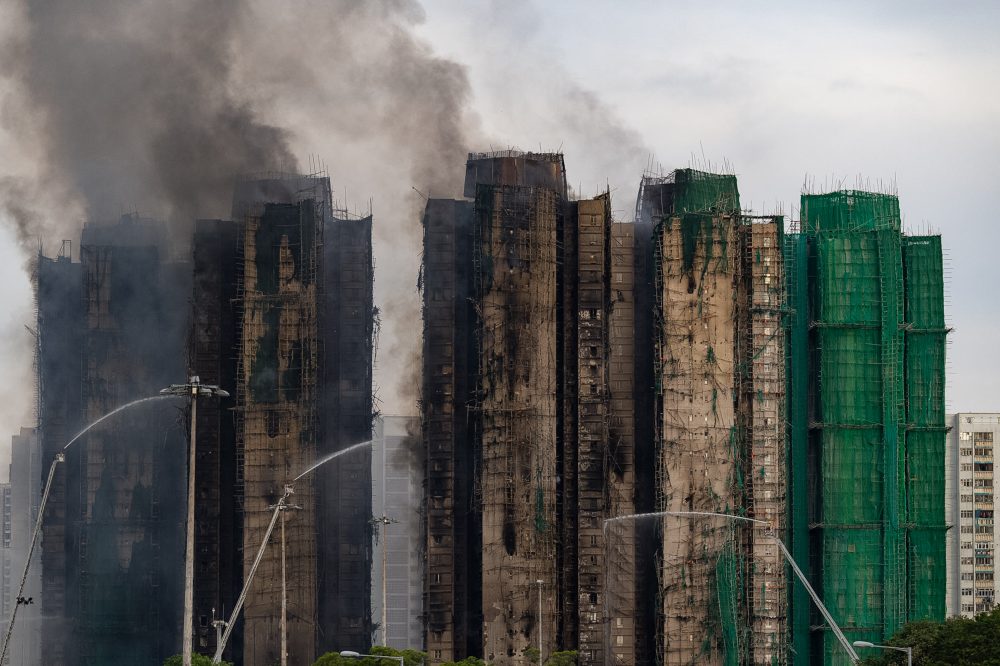
HONG KONG (AP) — Evidence hearings have commenced for an independent investigation examining Hong Kong’s most catastrophic fire in recent history, which claimed 168 lives and destroyed seven buildings due to numerous safety breakdowns.
Survivors and families of victims have sought answers since the November 2025 tragedy that devastated Wang Fuk Court, a tightly-knit residential community in Tai Po’s suburban area where thousands resided.
During opening statements Thursday, committee lead attorney Victor Dawes indicated the blaze likely originated on a platform within a light well adjacent to two ground-floor units, where investigators discovered cigarette remnants on both the platform and nearby scaffolding.
According to Dawes, evidence reveals several contributing elements combined to create the disaster, including deactivated fire alarms and water hose systems, along with the installation of flammable scaffolding materials and foam board window coverings.
“On the day of the fire, nearly all fire safety systems meant to protect lives failed because of human factors,” he said.
The November 26 fire rapidly consumed seven of the complex’s eight residential towers. Authorities have detained multiple individuals on charges including manslaughter, fraud, and corruption.
The judge-appointed investigation panel, established in December, will also explore whether systematic issues like contract manipulation affected large construction maintenance and renovation projects. Officials estimated the committee’s work would require nine months to complete.
Following attorney presentations, the panel will collect testimony from witnesses, including Wang Fuk Court residents, with various government agencies participating in the proceedings.
Prior to Thursday’s session, Phyllis Lo, whose mother perished in the fire, expressed hope for hearing diverse perspectives to gain complete understanding of the incident.
Resident Seneca Lee stated her desire to understand how the flames spread across so many structures and caused such extensive loss of life.
Numerous former complex residents currently occupy temporary accommodations throughout the city. Hong Kong authorities recently announced plans to purchase homeownership rights from fire victims based on resident preference surveys, disappointing those hoping to reconstruct their homes on the original site.
Hong Kong leader John Lee announced Tuesday that officials are developing arrangements for affected residents to access their apartments and retrieve personal belongings in April.
SEOUL, South Korea (AP) — The global K-pop phenomenon BTS is set to return to the stage Saturday evening with a highly anticipated performance at Gwanghwamun Square in Seoul, a historic location that symbolizes South Korea’s royal past and serves as a center for political and cultural activities.
The complimentary performance is anticipated to attract tens of thousands of supporters as the seven-member South Korean group showcases material from “ARIRANG,” their debut album release in almost four years. The album takes its name from Korea’s most cherished traditional folk song.
“‘ARIRANG’ is an album that embodies the origin and identity of BTS and carries the message that they want to convey now,” stated Hybe Corp., BTS’ parent management company, when responding to Associated Press inquiries. “Considering the symbolic significance of the word ‘Arirang,’ we’ve decided to hold a performance at Gwanghwamun, a place that represents Korea.”
The square derives its name from the massive entrance gate to the adjacent Gyeongbokgung palace, which served as the royal residence during Korea’s Joseon dynasty. This dynasty governed the peninsula for over five centuries before ending in 1910.
Situated at Seoul’s center, this expansive plaza regularly hosts artistic and cultural gatherings. Two monumental statues honor Korea’s most revered historical figures: King Sejong, creator of the Korean alphabet in 1443, and Admiral Yi Sun-shin, who successfully repelled Japanese forces during the 16th century.
The location also represents South Korea’s developing democracy, having witnessed large-scale demonstrations during recent political crises.
During late 2024, when former President Yoon Suk Yeol’s martial law declaration created the nation’s most serious democratic crisis in decades, citizens assembled at the square demanding his removal. These political gatherings uniquely merged activism with popular culture, featuring protesters carrying the colorful light sticks typically seen at K-pop events while singing tracks like Girls’ Generation’s “Into the New World.”
Analysts suggest the hour-long Gwanghwamun performance, which Netflix will broadcast live internationally, will reinforce BTS’ status as artists who successfully transitioned from Korean stars to global icons. The group had been inactive while members fulfilled their required South Korean military service.
Cultural analyst Ha Jae-keun noted that regardless of venue choice, any BTS comeback concert would succeed. However, as K-pop’s biggest stars, the group likely chose this symbolic Korean location as the “most meaningful” option, he explained.
Pop culture expert Jung Dukhyun suggested the Gwanghwamun selection reflects the belief that Korean traditional elements can achieve worldwide appeal, similar to the recent success of Netflix’s “KPop Demon Hunters,” which earned Oscar recognition for best animated feature and best song for “Golden” this week.
Government officials expect the concert will boost South Korea’s global cultural impact.
Extensive security measures are being implemented to avoid crowd-control problems.
South Korean President Lee Jae Myung posted on X Wednesday, describing BTS as “a proud artist of the Republic of Korea” and expressing hopes the concert will showcase “our beautiful cultural heritage and the charm of K-culture.”
While approximately 20,000 ticket holders will attend at the square itself, an estimated 240,000 additional fans are expected to gather in surrounding areas to view the performance on temporary screens. Transportation authorities will redirect traffic, modify subway schedules at certain stations, and temporarily close Gyeongbokgung palace.
Some local residents have criticized what they perceive as special treatment for BTS and potential public disruption. However, many specialists emphasize the concert’s significant public benefit.
“BTS is the nation’s band. Now they intend to hold an open performance for the public free of charge. I think it would be very natural for the government to support it,” Ha stated.
BANGKOK (AP) — Thai lawmakers assembled Thursday to select the country’s next prime minister, following a general election held more than a month ago that revealed a notable conservative turn in the nation’s political landscape.
Current Prime Minister Anutin Charnvirakul appears positioned to gain sufficient backing from the 500-seat House of Representatives to continue leading the government. Securing a prime ministerial position requires a simple majority vote.
Official election results show Anutin’s Bhumjaithai Party captured 191 parliamentary seats and has successfully assembled a coalition with multiple other parties to establish a governing majority. The populist Pheu Thai Party, which earned third place with 74 seats, stands among its coalition partners.
The progressive People’s Party, despite finishing in second place with 120 seats, has announced it will not participate in the Bhumjaithai-led administration. The party plans to put forward one of its own candidates during Thursday’s voting process, though it describes this as merely a symbolic challenge.
Anutin assumed the prime ministerial role just last September following his service in the cabinet under his immediate predecessor, Paetongtarn Shinawatra, who was removed from office due to ethics violations related to mismanaging relations with Cambodia. Facing the threat of a no-confidence motion, Anutin dissolved Parliament in December to trigger an early election.
His popularity has grown significantly after positioning himself as a national defender during the Thailand-Cambodia border dispute, which fueled nationalist feelings among the electorate.
The two nations engaged in territorial conflicts twice during the previous year over disputed border areas.
Following the parliamentary vote, the newly selected prime minister will officially assume duties within days after receiving formal designation from King Maha Vajiralongkorn. Cabinet appointments are anticipated in the subsequent weeks.
The next administration will confront pressing challenges immediately. Middle Eastern warfare that erupted in February has pushed global energy costs higher, inflating commodity prices and sparking worries about potential oil supply shortages.
Additional political uncertainty emerged Wednesday when the Constitutional Court announced it would decide whether to invalidate last month’s election results.
This legal challenge originates from a complaint submitted by the Ombudsman’s Office against the Election Commission, claiming that barcodes and QR codes printed on voting ballots could undermine voter privacy, potentially violating election statutes mandating secret voting procedures.
WASHINGTON — Japanese Prime Minister Sanae Takaichi heads into what she herself described as a “very difficult” White House meeting with President Donald Trump on Thursday, as tensions mount over Japan’s unwillingness to provide military support in the Strait of Hormuz.
What was initially planned as a strategic discussion before Takaichi’s trip to China has transformed into a potentially confrontational encounter. The ongoing conflict in Iran and Trump’s public frustration with allies who declined to assist in protecting the vital oil and gas shipping route have forced a delay in the China visit.
Trump has openly expressed his displeasure both in public statements and on social media regarding U.S. allies, particularly Japan, turning down his appeals for assistance in securing the strategically important waterway.
“In fact, speaking as President of the United States of America, by far the Most Powerful Country Anywhere in the World, WE DO NOT NEED THE HELP OF ANYONE!” Trump posted on Truth Social following the rejection of his initial assistance requests.
Before departing Japan, Takaichi conceded she anticipates a challenging discussion with Trump. Japanese officials have maintained that no formal request was made by Washington for Japanese naval vessels to participate in the U.S.-Israeli operation.
Japan stands among the nations Trump specifically criticized Tuesday during his public complaints about the lack of cooperation regarding the Strait of Hormuz, before ultimately stating such assistance was unnecessary.
Kurt Campbell, former deputy secretary of state under the Biden administration and current chair of The Asia Group, predicts Trump will apply “enormous pressure” on Takaichi during their meeting.
Campbell noted he has never witnessed a meeting between American and Japanese leadership carrying such significant consequences. He suggested that for Takaichi to advance Japan’s interests, she must find a method to demonstrate Japan’s participation in U.S. Middle East strategy.
“She’s going to want to come out of that as a partner in this case and realize that if she can do that, that she can translate that potentially into the president listening more to Japanese concerns about Taiwan or other issues,” Campbell explained.
Japan faces constitutional limitations regarding its participation in Iran operations, including post-World War II restrictions that prohibit using force except for territorial defense. The nation’s military operates under the name Self-Defense Force.
Christopher Johnstone, a partner at The Asia Group specializing in defense and national security, indicated Japan could potentially contribute through mine-clearing operations and has maintained “a small naval presence” in the area for anti-piracy efforts spanning over ten years. However, joining the U.S. mission would require Takaichi to overcome “an exceptionally high bar politically to invoke collective self-defense” — something never before accomplished.
Takaichi, who first met Trump in Tokyo last October, holds the distinction of being Japan’s first female prime minister and was mentored by former leader Shinzo Abe, who cultivated a strong relationship with Trump.
As a conservative hardliner and long-time Taiwan advocate, her statements regarding Japan’s potential military support for the island have increased tensions with China.
Prior to her Trump meeting, Takaichi had planned to concentrate discussions on trade relations, strengthening U.S.-Japan ties, and security issues. Japanese representatives indicated both nations would work toward enhanced cooperation in regional security, critical minerals, energy, and China-related matters.
China considers self-governing Taiwan, crucial to U.S. computer chip manufacturing, as its territory and has threatened military action if necessary to claim it.
However, questions surrounding Strait of Hormuz assistance and broader implications of the Iran conflict have placed the Japanese leader in a more challenging position with Trump as she works to secure U.S. commitment to the Indo-Pacific region.
Japan views China as an escalating security concern and has pursued military expansion on southwestern islands near the East China Sea. Yet the U.S. has relocated some Japan-stationed troops to the Middle East, reducing deterrence against Chinese influence.
Takaichi plans to address troop redeployment concerns with Trump, particularly as these moves coincide with China conducting numerous military exercises around Taiwan.
“This raises the prospect that — once again — the United States will be distracted and bogged down in the Middle East at a time when the deterrence problem in East Asia has never been greater,” Johnstone stated.
President Donald Trump declared that Israel struck Iran’s major South Pars gas facility in what he characterized as an angry and violent response to ongoing Middle East conflicts, but promised no additional Israeli attacks unless Iran strikes back.
The Wednesday assault on the massive gas installation caused oil prices to surge and led Iran to threaten attacks on energy infrastructure throughout the Gulf region, while launching missiles toward Qatar and Saudi Arabia.
This escalation increases the extraordinary disruption to worldwide energy supplies that has created political challenges for Trump, who entered the conflict alongside Israel approximately four weeks ago.
QatarEnergy, the state-owned energy company, described “extensive damage” following Iranian missile strikes on the Ras Laffan Industrial City, which handles roughly 20 percent of the world’s gas production.
Saudi officials announced they successfully intercepted and destroyed four ballistic missiles aimed at Riyadh on Wednesday, along with stopping a drone assault on an eastern gas installation.
Iran continued its attacks Thursday, again striking Qatar’s gas infrastructure while also targeting the Saudi capital with additional missiles.
QatarEnergy reported “sizeable fires” and widespread destruction at multiple liquefied natural gas facilities hit during Thursday’s early morning missile strikes.
The President stated that America had no prior warning of Israel’s strike and emphasized that Qatar was not involved in the initial attack.
“Israel, out of anger for what has taken place in the Middle East, has violently lashed out at a major facility known as South Pars Gas Field in Iran,” Trump wrote on X Wednesday.
“Unfortunately, Iran did not know this, or any of the pertinent facts pertaining to the South Pars attack, and unjustifiably and unfairly attacked a portion of Qatar’s LNG Gas facility.
“NO MORE ATTACKS WILL BE MADE BY ISRAEL pertaining to this extremely important and valuable South Pars Field unless Iran unwisely decides to attack a very innocent, in this case, Qatar.
“In which instance the United States of America, with or without the help or consent of Israel, will massively blow up the entirety of the South Pars Gas Field at an amount of strength and power that Iran has never seen or witnessed before.”
The Wall Street Journal previously reported that Trump had given approval for Israel’s planned assault on Iran’s natural gas infrastructure.
South Pars represents Iran’s portion of the planet’s largest natural gas reserve, shared between Iran and Qatar, a key U.S. partner that hosts America’s largest Gulf military installation.
Throughout this conflict, Tehran has attacked not only Israeli targets but also American diplomatic and military sites across the Gulf while warning neighboring countries against supporting strikes on Iranian territory.
With no signs of de-escalation, Trump is reportedly considering deploying thousands of additional U.S. military personnel to the Middle East, according to officials and sources familiar with the planning.
These forces could help ensure safe passage for oil tankers through the Strait of Hormuz, a critical waterway handling one-fifth of global oil commerce.
Foreign ministers from six Islamic nations meeting in Riyadh condemned Iran’s attacks on Gulf neighbors and demanded an immediate cessation of hostilities.
The ministers stated that Iran’s targeting of civilian areas and critical infrastructure including oil facilities, airports and water treatment plants cannot be justified under any circumstances.
“This pressure from Iran will backfire politically and morally and certainly we reserve the right to take military actions, if deemed necessary,” Saudi Foreign Minister Prince Faisal bin Farhan said during a press conference following the diplomatic meeting in Riyadh.
Defense systems were observed firing interceptors near the Riyadh hotel hosting the conference around the time ministers convened for their consultative session on the Iran conflict.
The UAE closed its Habshan gas facility after intercepting missiles in what its foreign ministry termed a “terrorist attack” by Iran.
The U.S.-based Iran human rights organization HRANA estimates that more than 3,000 people have died in Iran since the U.S.-Israeli attacks commenced on February 28.
Lebanese authorities report 900 deaths in their country and 800,000 people displaced from their homes.
Iranian strikes have caused casualties in Iraq and throughout Gulf states, while at least 13 U.S. service members have been killed in the conflict.
BEIJING – Top government officials from across Asia are preparing to attend China’s prestigious Boao Forum next week, organizers announced Thursday.
The annual economic gathering, frequently described as Asia’s equivalent to the World Economic Forum held in Davos, Switzerland, will take place from March 24 through March 27 in China’s southern Hainan province.
Among the high-profile attendees will be South Korean Prime Minister Kim Min-seok and Singapore Prime Minister Lawrence Wong. Other notable participants include Sahiba Gafarova, who serves as speaker of Azerbaijan’s National Assembly, and Jagath Wickramaratne, the parliamentary speaker from Sri Lanka. Kazakhstan will be represented by Roman Skylar, the nation’s first deputy prime minister.
The forum traditionally features addresses from senior Chinese leadership. During last year’s event, Vice Premier Ding Xuexiang delivered remarks promising enhanced policy measures to support China’s economy, which ranks as the world’s second largest.
A federal appeals court has temporarily blocked investors from searching for Argentine government assets within the United States as they attempt to collect on a massive $16 billion court judgment related to the South American nation’s takeover of its primary energy corporation in 2012.
The asset discovery process will remain suspended while appeals continue in the lengthy legal battle, where U.S. District Judge Loretta Preska previously ruled that Argentina must pay compensation to investors following the government seizure of majority control in YPF Energy.
According to court documents reviewed by The Associated Press, the Second Circuit U.S. Court of Appeals in New York blocked former shareholders Petersen Energía and Petersen Energía Inversora — supported by litigation financier Burford Capital — from gathering information about Argentine assets located in America, including central bank reserves like gold holdings.
On Wednesday, Argentine President Javier Milei called the court’s decision “historic” and “unprecedented” in favor of his country regarding the YPF litigation.
“This decision represents a historic milestone in the defense of the Argentine Republic in litigation that, for more than 12 years, has imposed enormous economic, legal and reputational costs on the country,” the president said in a statement. According to the government’s announcement, Argentine officials requested the discovery suspension on March 6.
However, a legal expert warned that Argentina’s procedural victory doesn’t guarantee the appeals court will reverse the $16.1 billion judgment — an amount that has grown beyond $18 billion when including interest.
Sebastián Maril, who analyzes Latin American litigation for Latam Advisors, explained to The Associated Press that Wednesday’s ruling merely suspends secondary legal proceedings like asset tracing until the court decides Argentina’s main appeal. Oral arguments took place in October, with a final decision still pending.
Last June, Judge Preska directed Argentina to hand over its 51% majority ownership in YPF as partial payment to the plaintiffs. The appeals court suspended that directive two months later.
President Milei, who faces challenges rebuilding Argentina’s diminished foreign currency reserves and has promised to sell off government-controlled enterprises, has attributed the legal case to his political rivals. In 2012, former President Cristina Fernández de Kirchner, who led the country from 2007 to 2015, supervised the state acquisition of Argentina’s top energy firm, further damaging the nation’s international financial credibility.
The plaintiffs were able to file their lawsuit against YPF in American courts because the company maintains a listing on the New York Stock Exchange.
Following the government takeover, YPF has intensified development of Argentina’s extensive shale gas deposits in the Vaca Muerta region of Patagonia. Oil production from Vaca Muerta has grown consistently, hitting nearly 600,000 barrels daily in January, representing about 68% of the country’s total output. YPF announced a $5 million profit in 2025, marking its best financial performance in a decade.
Two days of American-facilitated negotiations in Washington this week resulted in new commitments from the Democratic Republic of Congo and Rwanda to take coordinated action toward reducing regional tensions.
The diplomatic sessions, held Tuesday and Wednesday, represented the initial face-to-face discussions between the two African nations following the US Treasury Department’s decision to impose sanctions on Rwanda’s military forces and four high-ranking officials on March 2nd.
American officials have accused Rwanda of providing support to the M23 rebel organization, which they say has fueled ongoing conflict in eastern Congo. Rwandan leadership disputes these allegations of backing M23. The rebel group conducted a rapid military campaign in eastern Congo during January 2025 and continues to control significant territorial areas.
A tri-party statement issued Wednesday by the State Department announced that the DRC and Rwanda had “agreed to a series of coordinated steps to de-escalate tensions and advance progress on the ground.”
The statement detailed that “these efforts include a mutual commitment to specific measures to support each other’s sovereignty and territorial integrity, the scheduled disengagement of forces/lifting of defensive measures by Rwanda in defined areas in DRC territory, time-bound and intensified efforts by the DRC to neutralize the FDLR, and the protection of all civilians.”
The FDLR organization originated from Hutu militants who escaped Rwanda following their involvement in the 1994 mass killings that claimed nearly one million lives among Tutsi and moderate Hutu populations. M23 leadership claims their military actions aim to defend ethnic Tutsi populations living in eastern Congo.
The two nations had previously committed to a peace agreement in Washington during December, as part of President Donald Trump’s initiative to establish regional stability and encourage substantial Western financial investment.
However, within days of that diplomatic ceremony, M23 forces moved into Uvira, an eastern Congolese city located close to the Burundian frontier, representing the conflict’s most significant escalation in several months.
The rebel forces subsequently withdrew following American diplomatic pressure. This month, Washington officials warned that the rebels’ ongoing presence near Burundi’s border “carries the risk of escalating the conflict into a broader regional war.”
Global crude oil markets experienced a sharp uptick Thursday following Iranian missile attacks targeting energy infrastructure throughout the Middle East region, marking a significant escalation in ongoing tensions with the United States and Israel.
Brent crude futures climbed $3.69 per barrel, reaching $111.07 – a 3.44% increase as of early Thursday trading. Meanwhile, West Texas Intermediate crude gained $2.29 to $98.61 per barrel, representing a 2.38% rise.
The Iranian strikes came as retaliation for earlier attacks on Tehran’s South Pars gas field operations. Wednesday’s trading had already seen Brent futures close 3.8% higher, while WTI remained relatively unchanged.
QatarEnergy reported Wednesday that Iranian missile strikes against the Ras Laffan facility, which houses Qatar’s primary liquefied natural gas processing operations, resulted in “extensive damage” to the energy complex. The United Arab Emirates responded by temporarily halting certain energy operations following incidents at Habshan gas facilities and the Bab oil field, where debris from intercepted missiles caused disruptions.
Saudi Arabian officials confirmed they successfully intercepted four ballistic missiles targeting Riyadh on Wednesday, along with thwarting a drone assault aimed at a gas installation.
Before launching the attacks, Iran provided evacuation notices for multiple oil facilities throughout Saudi Arabia, the UAE, and Qatar as it prepared retaliatory strikes following damage to its energy infrastructure at South Pars and Asaluyeh locations.
The South Pars field represents Iran’s portion of the globe’s most extensive natural gas reserve, which the nation shares with Qatar, a U.S. ally, across the Persian Gulf waters.
Market analyst Tina Teng from Moomoo ANZ indicated that oil prices will likely maintain their upward trajectory as Iran’s recent attacks on regional energy infrastructure intensify Middle Eastern tensions, with no indication of conflict de-escalation or near-term reopening of the Strait of Hormuz shipping lane.
Earlier reports indicated the Trump administration is evaluating the deployment of thousands of additional U.S. military personnel to strengthen Middle Eastern operations as the United States prepares its next moves against Iran.
Potential strategies include ensuring safe passage for oil tankers through the Strait of Hormuz using primarily air and naval assets, though securing the waterway could require ground troop deployment, according to sources familiar with the discussions.
TOKYO – Japanese government officials are disputing claims from American intelligence agencies that the country has altered its military policy concerning Taiwan, with a top spokesperson emphasizing Friday that Japan’s approach remains unchanged.
U.S. intelligence services indicated in their yearly threat assessment released Wednesday that Prime Minister Sanae Takaichi’s statements suggesting Japan might respond militarily to a potential Chinese invasion of Taiwan represented a notable departure from how previous Japanese leaders have spoken on the issue.
Chief Cabinet Secretary Minoru Kihara addressed reporters during a briefing, stating: “The government’s position of judging an existential crisis situation with all the information it gathers is consistent with the past.”
Kihara further emphasized: “The assessment that there has been a major shift is not accurate.”
Beijing, which considers Taiwan part of Chinese territory, has reacted angrily to Takaichi’s statements, advising Chinese citizens against traveling to Japan and restricting certain export activities.
The Japanese Prime Minister has consistently argued that her position aligns with Japan’s established policy framework.
BRUSSELS – Hungarian Prime Minister Viktor Orban will face intense pressure from fellow European Union leaders during Thursday’s summit to end his obstruction of a critical $103 billion loan package designed to help Ukraine continue defending against Russia’s military assault.
While EU leadership reached consensus on the 90-billion-euro financial aid package back in December, Orban – known for maintaining friendly relations with Russia and frequently feuding with Ukrainian President Volodymyr Zelenskyy – halted the funding’s rollout last month over disagreements regarding a battle-damaged oil conduit.
The Druzhba pipeline, which transported Russian petroleum through Ukrainian territory to reach Hungary and Slovakia, sustained damage during a Russian strike in January, according to officials. Ukrainian authorities state repairs will require significant time, while Hungarian leadership claims the infrastructure is already operational.
During Thursday’s Brussels gathering, fellow leaders from the 27-member alliance plan to highlight Zelenskyy’s recent commitment to restore the pipeline using EU technical assistance and financial support, while urging Orban to abandon his opposition to the loan arrangement, diplomatic sources indicate.
Orban’s position has generated frustration among other EU leadership, as Kyiv faces potential financial shortfalls within weeks without additional funding. His reversal has also undermined confidence in the European Council, the union’s premier decision-making institution.
The Hungarian leader, a nationalist figure aligned with U.S. President Donald Trump amid his challenging reelection bid, has frequently challenged mainstream EU politicians but has not previously reversed agreements made among EU leadership, diplomats note.
“In December, we took a political decision – a political decision at the level of the European Council. Now is the time to deliver,” stated Cypriot President Nikos Christodoulides on Wednesday.
“I don’t want to think of a scenario where the European Union decides something at the level of the European Council, at the level of 27 leaders, and this political decision is not implemented,” he remarked during a Brussels event hosted by the European Policy Centre think tank.
Numerous EU officials express particular frustration with Orban’s obstruction since he negotiated exemption from covering the loan’s expenses, alongside the Czech Republic and Slovakia.
However, Orban has demonstrated no indication of retreating from his position. “No oil deliveries? No money. It’s that simple,” he wrote on X Tuesday.
A comprehensive study on global well-being released Thursday shows Finland continues to lead the world in happiness for the ninth straight year, while researchers warn that excessive social media usage is severely damaging the mental health of young people worldwide.
The 2026 World Happiness Report, compiled by Oxford University’s Wellbeing Research Centre, reveals that Nordic nations continue their dominance in happiness rankings, with Iceland, Denmark, Sweden and Norway all securing spots in the top ten countries.
However, the research raises serious concerns about declining mental health among youth under 25, particularly in English-speaking nations including the United States, Canada, Australia and New Zealand, where life satisfaction scores have plummeted over the last ten years.
Costa Rica emerged as a surprising success story, jumping from 23rd position in 2023 to fourth place this year. Researchers credit the Central American nation’s rise to strong family relationships and robust social networks.
“We think it’s because of the quality of their social lives and the stability that they currently enjoy,” explained Jan-Emmanuel De Neve, an Oxford economics professor who leads the Wellbeing Research Centre and helps edit the annual report.
“Latin America more generally has strong family ties, strong social ties, a great level of social capital, as a sociologist would call it, more so than in other places,” De Neve added.
The study attributes Finland and other Scandinavian countries’ continued success to their combination of prosperity, equitable wealth distribution, comprehensive social safety nets that shield citizens during economic downturns, and high life expectancy rates.
At the opposite end of the spectrum, countries experiencing major conflicts ranked lowest. Afghanistan received the unhappiest designation once again, with Sierra Leone and Malawi from Africa filling out the bottom three positions.
The rankings drew from responses by approximately 100,000 individuals across 140 nations and territories who evaluated their own life satisfaction. The research was conducted alongside analytics company Gallup and the United Nations Sustainable Development Solutions Network, typically surveying about 1,000 people per country through phone or in-person interviews.
The study’s most alarming findings center on young people’s declining well-being. When asked to rate their lives on a zero-to-ten scale, respondents under 25 in English-speaking and Western European countries showed nearly a full-point decrease over the past decade.
Teenage girls face particularly severe impacts from heavy social media consumption. The research found that 15-year-old girls spending five or more hours daily on social platforms reported notably lower life satisfaction compared to peers with lighter usage.
Interestingly, young people using social media for less than one hour per day showed the highest well-being levels – even higher than those avoiding social media entirely. Yet teenagers currently average approximately 2.5 hours daily on these platforms.
“It is clear that we should look as much as possible to put the ‘social’ back into social media,” De Neve stated.
The research identified specific platform features as particularly harmful, including algorithmic content feeds, influencer culture, and visual-heavy formats that promote social comparison. Platforms focused primarily on communication showed less negative impact on users’ mental health.
Notably, some regions including the Middle East and South America showed more positive relationships between social media use and well-being, with youth happiness remaining stable despite heavy platform usage.
For the second consecutive year, no English-speaking countries appeared in the top ten rankings. The United States placed 23rd, Canada ranked 25th, and Britain came in at 29th position.
These findings arrive as governments worldwide increasingly consider or implement social media restrictions for minors, highlighting growing concerns about these platforms’ impact on young people’s mental health.
MELBOURNE, Australia — A traveler browsing an airport gift shop got quite the surprise when they noticed one of the stuffed animals had moving eyes.
The unexpected discovery happened Wednesday at Hobart Airport in Tasmania, where a live Australian brushtail possum had somehow made its way onto a merchandise shelf filled with plush toy animals, according to airport retail manager Liam Bloomfield, who spoke about the incident Thursday.
The real possum had positioned itself among stuffed kangaroos, while toy bilbies with their distinctive rabbit-like ears, dingoes, and Tasmanian devils surrounded it on nearby shelves.
“A passenger reported it to …. one of the staff members on shift who couldn’t quite believe what she was hearing,” Bloomfield said. “She then called the (airport) management and said we’ve got a possum in the store.”
An employee managed to capture video footage of the unusual visitor using her mobile phone before the possum became uncomfortable with the increased attention and departed the shop on its own.
Airport personnel successfully guided the possum out of the terminal without causing any harm to the animal.
Bloomfield remains puzzled about what drew the possum to that particular display area.
“I’m imaging it saw some of the plush animals that were for sale on the shelf and it decided to make its home with those. It wanted to blend in,” Bloomfield joked.
The mystery extends to how the possum entered the store initially and the duration of its stay among the merchandise.
Officials ruled out the possibility of a practical joke, noting that bringing the possum into the secure departure area would have required passing it through X-ray security screening.
Early Thursday morning, Russian drone attacks targeted residential areas in Ukraine’s crucial Black Sea port city of Odesa, causing building damage and leaving at least three people wounded, according to local authorities.
Serhiy Lysak, the city’s military administration chief, reported on Telegram that the assault damaged multiple structures. “There has been damage to two high-rise apartment buildings, another residence in the city’s historic centre as well as private homes,” Lysak stated.
“Fires broke out, but were quickly brought under control,” he added.
Among the three casualties, two individuals required hospitalization for their injuries, Lysak confirmed.
Social media images from unofficial channels displayed flames engulfing upper-level apartments in residential towers. Reports indicated that debris from the unmanned aircraft had scattered throughout the city center.
The strategically vital port city, which serves as a major hub for Ukrainian grain and goods exports, has repeatedly faced Russian bombardment during the ongoing four-year conflict between the two nations.
Meanwhile, in western Ukraine near the Polish frontier, the city of Lviv experienced its own drone assault. Regional Governor Maksym Kozytskyi announced via Telegram that Russian aircraft targeted the local SBU security service headquarters, inflicting significant structural damage. He noted that drone wreckage had landed throughout the urban area.
Further attacks occurred in Ukraine’s northern Volyn region, where drones struck an electrical facility, cutting power to approximately 30,000 homes, regional officials reported.
In occupied Crimea, which Russia seized from Ukraine in 2014, local Sevastopol Governor Mikhail Razvozhaye said Russian defense systems destroyed 14 incoming Ukrainian drones. While debris sparked fires upon impact, no casualties were recorded in the port city that houses Russia’s Black Sea naval fleet.
Russian air defense forces in the Stavropol region also successfully intercepted Ukrainian drone attacks, according to the area’s governor.
The Trump administration is exploring the possibility of sending thousands of additional American military personnel to the Middle East as the conflict with Iran continues into its fourth week, according to multiple sources familiar with the discussions.
Military planners are examining various scenarios that could give President Trump more strategic choices as the campaign against Iran progresses, sources told reporters. Among the possibilities being evaluated is ensuring safe navigation for oil tankers through the crucial Strait of Hormuz, a mission that would primarily rely on air and sea power, though it might also require positioning American forces along Iran’s coastline.
Administration officials have also explored the potential deployment of ground forces to Iran’s Kharg Island, which serves as the central hub for approximately 90% of the country’s oil exports. However, one official characterized such an operation as extremely dangerous, noting Iran’s capability to target the island using missiles and unmanned aircraft.
American forces conducted military strikes on the island on March 13, and Trump has warned of potential attacks on Iran’s critical oil infrastructure. Military analysts suggest that gaining control of the island might prove more strategically valuable than destroying it outright, given its economic importance to Iran.
The deployment of American ground forces, even for restricted missions, could create substantial political challenges for Trump, particularly given limited public support for the Iran campaign and his previous campaign pledges to avoid new Middle Eastern military entanglements.
Sources also revealed that administration officials have considered deploying forces to secure Iran’s highly enriched uranium reserves, though experts describe such an operation as extremely complicated and dangerous, even for elite special operations units.
While sources indicated that no ground force deployment appears immediate, they declined to provide details about specific operational planning.
A White House spokesperson, speaking anonymously, stated: “There has been no decision to send ground troops at this time, but President Trump wisely keeps all options at his disposal.”
The official continued: “The president is focused on achieving all of the defined objectives of Operation Epic Fury: destroy Iran’s ballistic missile capacity, annihilate their navy, ensure their terrorist proxies cannot destabilize the region, and guarantee that Iran can never possess a nuclear weapon.”
Pentagon officials declined to provide comment on the matter.
These strategic discussions are occurring as American forces continue targeting Iran’s naval assets, missile and drone arsenals, and defense manufacturing capabilities. Since initiating military operations on February 28, the U.S. has conducted over 7,800 strikes and damaged or destroyed more than 120 Iranian vessels, according to data released Wednesday by U.S. Central Command, which manages approximately 50,000 American troops stationed throughout the Middle East.
Trump has indicated his objectives extend beyond weakening Iran’s military capabilities to include ensuring safe passage through the Strait and preventing Iranian nuclear weapons development. Ground forces could expand his strategic options but would involve considerable risks.
Even without direct combat operations inside Iran, 13 American service members have died in the conflict so far, with approximately 200 wounded, though military officials report most injuries have been minor.
Throughout his political career, Trump has criticized predecessors for foreign military involvement and promised to avoid overseas conflicts. However, he has recently declined to rule out the possibility of deploying ground forces in Iran.
A senior White House official told reporters that Trump has multiple approaches available for obtaining Iran’s nuclear materials but has not determined how to proceed. “Certainly there are ways in which it could be acquired,” the official explained, adding: “He hasn’t made a decision yet.”
In congressional testimony Wednesday, Director of National Intelligence Tulsi Gabbard reported that Iran’s nuclear enrichment program had been completely destroyed by June strikes, with underground facility entrances “buried and shuttered with cement.”
The reinforcement discussions go beyond next week’s scheduled arrival of an Amphibious Ready Group in the Middle East, which includes a Marine Expeditionary Unit with over 2,000 Marines. However, one source noted that the military is losing significant capabilities with the decision to send the USS Gerald R Ford aircraft carrier to Greece for repairs following an onboard fire.
Trump has shown uncertainty regarding whether America should secure the Strait of Hormuz. After initially suggesting Navy escort missions for vessels, he called on other nations to help reopen the vital waterway. With minimal allied interest, Trump questioned the approach Wednesday.
“I wonder what would happen if we ‘finished off’ what’s left of the Iranian Terror State, and let the Countries that use it, we don’t, be responsible for the so called ‘Strait?,’” Trump wrote on Truth Social.
BANGKOK, March 19 – Parliamentary lawmakers in Thailand will cast ballots Thursday to determine whether Anutin Charnvirakul can secure another term as prime minister, potentially bringing an uncommon stretch of political calm to a nation historically marked by governmental upheaval and instability.
The 59-year-old politician’s Bhumjaithai party achieved an unexpected breakthrough in February’s national election, riding a surge of patriotic fervor sparked by armed clashes with Cambodia in the previous year. This marked a dramatic reversal of fortune for a political organization that had previously struggled to establish significant influence in Thailand’s complex political landscape.
Anutin’s political success stems largely from his strategic timing in exploiting the weakening position of the previously powerful Pheu Thai party, first by withdrawing from their coalition arrangement and then quickly assembling his own governing alliance.
Following February’s electoral results, Bhumjaithai has forged an agreement with the politically weakened Pheu Thai party and joined forces with various smaller political groups to create a coalition commanding 290 seats out of the current 499-member parliament.
OPPOSITION CANDIDATE EMERGES
To secure the prime ministerial position, Anutin requires backing from more than half the legislative body, meaning he needs at least 251 votes to prevail.
However, Thursday’s proceedings may feature a competitive race, as the People’s Party, which finished second in the election, has indicated plans to put forward their 38-year-old chairman Natthaphong Ruengpanyawut as an alternative candidate to challenge Anutin directly.
The extent of Natthaphong’s support remains uncertain beyond his party’s 120 parliamentary seats, and it’s unknown whether he has secured backing from other political factions. The young leader stated last week that his goal was to use the voting process as a platform to outline his party’s policy agenda before parliament.
As a devoted monarchist, Anutin has maintained a consistent presence in Thai political circles for two decades, successfully navigating periods of significant turmoil by positioning Bhumjaithai as a bridge between competing elite factions locked in ongoing power disputes, which secured the party’s participation in multiple coalition governments.
Should Anutin succeed, he would gain his first clear governing mandate to lead a nation grappling with economic stagnation, overwhelming household debt burdens, urgent need for structural reforms, and external pressures from trade disputes and consequences of the U.S.-Israeli conflict with Iran.
STABILITY ON THE HORIZON
Political observers suggest that Anutin’s adaptability and skill at navigating political divisions could serve as his greatest strength, noting that Bhumjaithai has avoided confrontation with Thailand’s influential military and judicial institutions, which have historically orchestrated the collapse of numerous administrations and political parties.
Napon Jatusripitak, who studies politics at Singapore’s ISEAS–Yusof Ishak Institute, observed that with Bhumjaithai positioned to influence both parliamentary chambers and Thailand’s key institutional powers apparently supporting Anutin, conditions appear favorable for sustained political stability.
“People have strong reasons to believe that this government can last, particularly because it’s the first time in a long while that the referee and the players are on the same side,” Napon said.
“There’s control,” he said. “And we have a highly fragmented opposition.”
Emergency medical services in Israel confirmed Thursday morning that a foreign worker lost their life during an Iranian missile strike that hit central Israel’s Moshav Adanim community.
The deadly incident occurred as part of broader missile attacks that also claimed the lives of three Palestinians in the Israeli-occupied West Bank on Wednesday, according to Israeli ambulance authorities.
ATHENS, Greece — A heartwarming rescue mission unfolded Wednesday as Greece organized a specialized evacuation flight that brought home citizens along with their cherished pets from the conflict-torn Middle East.
The Aegean Airlines flight from Abu Dhabi transported 101 Greek nationals and 45 beloved animals back to Athens International Airport, where touching reunions took place as small dogs jumped excitedly after being released from their travel carriers.
“Our pets are not luggage, they are part of our families,” declared Nikos Chrysakis, the Greek Interior Ministry’s Special Secretary for the Protection of Companion Animals. He explained that both the interior and foreign ministries collaborated for several days “so we can have this good result, for the animals and people to return home safely.”
The ongoing Israeli and U.S. military action against Iran has severely disrupted air travel throughout the Middle East region. Nations have been compelled to close airspace repeatedly and ground thousands of flights at major aviation centers like Dubai and Qatar as missiles crossed overhead, leaving hundreds of thousands of passengers stranded.
For traveler Danai Koukoulomati, securing passage for her feline companion Muay Thai was absolutely essential.
“To me, my pet, my cat is my family. There is no chance I’m going to leave him behind,” she explained. However, she discovered that no available flights would accommodate animals either in passenger cabins or cargo areas. “It is very, very difficult to fly out of the country with your pets.”
Regarding the wartime conditions, Muay Thai displayed remarkable composure compared to his owner. During explosive sounds, “he would hide in the bathroom and that would be all. He was a calm cat,” Koukoulomati shared. “I was not as calm as my cat. I need to take some lessons from him.”
Dubai resident Alexandra Papayanis, who had lived there for five years, returned with her dog Sirtaki — named for a traditional Greek dance — plus a second canine she rescued for a friend. She also encountered significant challenges locating evacuation flights that accepted animals.
“It’s so important. I mean, our pets are part of our family,” she emphasized. “And in these very difficult circumstance, the challenges we are facing is how to bring our dogs and our cats back.” She described bringing Sirtaki back to Greece as “absolutely fantastic.”
Fellow passenger Maria Theochari considered abandoning her dog Matisse completely unacceptable. “Like my kids, I have Matisse,” she stated. “This is important for me. I don’t separate my animal or my kids, it’s the same for me.”
Mediterranean nations are sounding the alarm about a crippled Russian fuel tanker that’s been floating without a crew since suffering damage in what officials believe was a drone strike earlier this month.
The vessel, known as the Arctic Metagaz, belongs to Russia’s unofficial fleet that transports oil and gas despite international sanctions. The ship was transporting liquefied natural gas when it sustained severe damage in waters near Malta.
Leaders from Italy, Spain, Malta, Greece and Cyprus have written to European Commission President Ursula von der Leyen, describing the situation as urgent. They’re asking the European Union to activate emergency response protocols to deal with what they call an environmental emergency waiting to happen.
Spanish officials and three other European Union representatives, who requested anonymity due to authorization restrictions, verified the letter’s contents on Wednesday.
The Mediterranean countries are pushing for a coordinated response from Brussels, emphasizing concerns about the ship’s deteriorating state and dangerous cargo.
“The precarious condition of the vessel, combined with the nature of its specialised cargo, gives rise to an imminent and serious risk of a major ecological disaster in the heart of the union’s maritime space,” the leaders stated in their correspondence.
While the entire crew was rescued safely, the vessel remains adrift with its volatile cargo of LNG and additional fuels, creating an explosion risk.
The letter also addressed wider concerns about ships that don’t follow international safety protocols, pointing to ongoing dangers for Mediterranean shipping lanes and marine ecosystems.
The five nations plan to discuss these concerns during this week’s European Council session and have expressed readiness to work with EU officials toward what they termed “a swift, European-led resolution.”
Recent reports from Malta indicate the tanker has moved from its earlier position between Malta and Sicily’s Lampedusa island and is now drifting toward Libyan waters.
Italian government official Alfredo Mantovano told radio listeners Monday that Malta has established a 7-kilometer safety perimeter around the vessel, “because the vessel could explode at any moment.”
CARACAS, Venezuela — In a significant government restructuring on Wednesday, Venezuela’s acting President Delcy Rodríguez replaced the nation’s defense minister, removing a key military figure who had been instrumental in supporting former President Nicolás Maduro’s regime.
Using her Telegram channel to make the announcement, Rodríguez revealed that Gen. Gustavo González López would immediately take over the defense ministry position. The move removes Gen. Vladimir Padrino López, who had been a crucial pillar of military backing for Maduro’s administration. In her statement, Rodríguez expressed gratitude to Padrino López for his “loyalty to the Homeland” while voicing optimism about his future contributions.
This cabinet reshuffle occurs more than ten weeks following Rodríguez’s assumption of leadership after U.S. military forces captured Maduro on January 3rd to face drug trafficking charges in American courts.
The Trump administration has intensified its efforts to pressure remaining Maduro supporters who continue to control the petroleum-rich South American nation.
The newly appointed González López brings significant intelligence experience to his role, though he previously faced American sanctions due to his involvement in suppressing street demonstrations in 2014. Following Rodríguez’s security reorganization on January 6th, he has been leading both the presidential honor guard and the military’s intimidating counterintelligence division.
Padrino López had maintained his cabinet position as one of the most enduring ministers since Maduro assumed power in 2013, serving as defense minister continuously since his 2014 appointment, making him among Venezuela’s longest-tenured defense officials.
TOKYO, March 19 – Japan’s central bank will likely maintain current interest rates during Thursday’s policy meeting as officials monitor how escalating Middle East tensions might influence the nation’s economy, which depends heavily on imports and has already experienced rising inflation pressures.
This policy decision occurs during a busy week of central bank announcements worldwide, including meetings by the Federal Reserve and European Central Bank, with all institutions grappling with complications from Middle East oil market disruptions.
Bank of Japan Governor Kazuo Ueda is anticipated to reaffirm the institution’s commitment to gradually increasing borrowing costs from their current low levels, though he’s unlikely to provide specific timing details for future rate adjustments, which will largely depend on the duration of regional conflicts, according to financial experts.
“Japan faces two-sided risks from the energy shock,” according to Evercore ISI analysts, who noted in their research that elevated oil prices could simultaneously burden economic growth while accelerating inflation.
“We think the aim (for Ueda) will be to keep the next meeting in April live for a hike without in any way locking it in,” the analysts explained.
During the two-day policy session concluding Thursday, the Bank of Japan is widely anticipated to maintain its short-term interest rate at 0.75%. Board member Hajime Takata, known for his hawkish stance, may again propose raising rates to 1.0%, similar to his unsuccessful January attempt.
Market observers are particularly interested in how Ueda will address the delicate balance between supporting an economy affected by external shocks while preventing the central bank from falling behind on inflation control during his post-meeting press conference.
Even with increased uncertainty stemming from the Iran conflict, financial markets still assign approximately 60% probability to another rate increase in April.
The central bank elevated interest rates to 0.75% in December, reaching a three-decade peak, and has indicated willingness to continue raising borrowing costs as Japan moves toward sustainably meeting its 2% inflation goal supported by wage increases.
Oil price increases resulting from the Iran conflict have compounded existing import cost pressures from a weakened yen, keeping core inflation above the central bank’s target for nearly four years running.
However, Japan’s substantial dependence on Middle Eastern oil supplies may amplify negative impacts on business profits and overall economic performance from rising fuel expenses, potentially giving Prime Minister Sanae Takaichi’s government additional justification to resist immediate rate increases.
During parliamentary testimony following the February 28 U.S.-Israel military action against Iran, Ueda acknowledged that while higher oil prices could damage economic growth, they might also elevate underlying inflation by raising long-term price expectations.
Iran’s President Masoud Pezeshkian announced Wednesday that the country’s Intelligence Minister Esmaeil Khatib was killed in an Israeli airstrike, as Israeli officials described the attack as part of a broader military offensive targeting high-ranking Iranian leaders.
In a post on social media platform X, Pezeshkian expressed grief over multiple casualties within Iran’s government and security apparatus. The president listed Khatib among several officials who have been killed, including Supreme National Security Council Secretary Ali Larijani, who died Tuesday, and Defense Minister Aziz Nasirzadeh, who was killed February 28. Pezeshkian also mentioned the deaths of family members, support staff, and military personnel including Basij forces.
The 65-year-old Khatib had served as Iran’s intelligence minister since 2021, when former President Ebrahim Raisi appointed him to the role, according to reports from the semi-official Mehr news agency. He continued in that capacity under the current government. His previous experience included working in the office of Iran’s former Supreme Leader Ali Khamenei and directing the judiciary’s protection and intelligence division.
Pezeshkian condemned the attacks, describing them as “cowardly assassinations.”
“I firmly believe that their path will continue with even greater resolve than before,” the Iranian president stated.
Israeli Defense Minister Israel Katz confirmed earlier Wednesday that Khatib died in the nighttime air assault on Tehran. Speaking during a security briefing, Katz indicated that Israeli operations are expanding in scope.
“On this day, significant surprises are expected across all arenas that will escalate the war we are conducting against Iran and Hezbollah in Lebanon,” Katz said in a statement from his office.
He continued: “The intensity of the strikes in Iran is increasing. The Iranian intelligence minister Khatib was also eliminated overnight.”
BEIRUT – The conflict between Israel and the Iran-backed Lebanese militant organization Hezbollah has rapidly intensified in recent days.
On Wednesday, Israeli airstrikes targeted several neighborhoods in central Beirut, causing a multi-story residential building to collapse along a major street and damaging walls of surrounding structures. These attacks followed Hezbollah’s launch of dozens of missiles into Israeli territory the night before.
Along Lebanon’s southern border, Israeli military forces are gathering for what could become a large-scale ground offensive, with fighting already taking place in certain border regions.
Efforts by Lebanese government representatives to begin direct peace talks with Israel have failed to gain traction. Both Hezbollah and Israel appear unwilling to pursue an immediate end to hostilities.
Israel aims to eliminate the security threat along its northern frontier through this military campaign. Hezbollah views the conflict as a fight for survival. Regardless of how it concludes, the war is expected to have significant impacts across Lebanon and the broader Middle East.
The two adversaries have engaged in several conflicts since Hezbollah emerged in the 1980s as a guerrilla organization opposing Israel’s occupation of southern Lebanon during that period.
Fighting resumed on March 2, just two days after joint Israeli-American strikes against Iran that contributed to expanding regional warfare. Hezbollah fired missiles at Israel, stating the attack was revenge for the death of Iranian Supreme Leader Ayatollah Ali Khamenei and in response to “repeated Israeli aggressions” in Lebanon.
This renewed hostility between the long-standing enemies began 15 months after a ceasefire agreement brokered by the United States ended their last war. During the ceasefire period, Israel maintained almost daily air operations in Lebanon, claiming these were necessary to prevent Hezbollah from rebuilding its capabilities. Israeli forces also maintained control of five strategic hilltops within Lebanese territory along the border.
During this time, Hezbollah faced both domestic and international demands to give up its remaining weapons stockpile. The organization remained relatively inactive and did not participate in last year’s Israel-Iran conflict. Many observers believed the group had been significantly weakened following substantial casualties in the 2024 fighting.
Hezbollah’s choice to rejoin the conflict surprised and angered many Lebanese citizens, including some within the group’s Shiite supporter base, who criticized the organization for providing Israel with justification to escalate military action.
However, Mohanad Hage Ali, a senior fellow at the Malcolm H. Kerr Carnegie Middle East Center in Beirut, explained that from Hezbollah’s viewpoint, joining the regional conflict made strategic sense.
Iran was confronting an existential danger, and Hezbollah “is backed and funded and trained by the Iranian regime,” he explained. The fall of the Islamic Republic would “basically mean the death of Hezbollah as a project.”
Additionally, Hage Ali noted that even if Hezbollah had remained neutral, the militant organization anticipated that Israel would eventually launch an attack against it regardless.
From Hezbollah’s strategic perspective, he explained, “There’s no point in continuing to be a sitting duck until Israel finishes off your main ally and comes for you. It makes more sense that you join your ally in the war and try to achieve a ceasefire as part of a package.”
Lebanese health ministry statistics show that as of Wednesday, Israeli strikes have killed 968 people in Lebanon since March 2, including 77 women and 116 children, with over 2,400 people injured.
More than one million Lebanese residents have been forced from their homes after Israel issued widespread evacuation orders throughout the country. Many displaced families are living in vehicles, on streets, or in overcrowded schools converted to emergency shelters.
Israeli Foreign Minister Gideon Saar stated Wednesday that “since March 2nd, Israel has been attacked from Lebanese territory more than 2,000 times with missiles and drones.” Most projectiles were intercepted by defense systems or landed in unpopulated areas. The Israeli military has confirmed two soldier deaths during combat operations in southern Lebanon, though casualty numbers for wounded personnel have not been released.
While no major civilian casualties have occurred in Israel from Lebanese attacks, the continuous barrage of missiles and drones has created anxiety among residents in northern Israel. Many citizens are frustrated that the government has not offered evacuation assistance payments as it provided during the previous war when tens of thousands were displaced.
United Nations peacekeeping forces deployed in southern Lebanon have observed a clear increase in Israeli military presence along the border, according to Kandice Ardiel, spokesperson for the peacekeeping mission known as UNIFIL.
“Peacekeepers are seeing concentrations of IDF (Israel Defense Forces) troops in at least half a dozen locations near the Blue Line in Lebanese territory,” she stated, referring to the international border between the nations.
UNIFIL personnel have monitored combat activity near the villages of Odaisseh and Khiam and “have seen IDF ground incursions in some cases at least 5 kilometers (3 miles) into Lebanese territory,” Ardiel reported.
However, she noted that Israeli forces have subsequently pulled back rather than establishing permanent positions.
An Israeli military official confirmed that several thousand troops are operating inside Lebanon, primarily concentrated near the border area in what he characterized as a defensive mission to protect nearby Israeli communities. He indicated that the operation remains in early phases of a gradual process that might develop into a full-scale invasion with deeper territorial penetration. The official provided information anonymously according to military briefing protocols.
Lebanon’s national army has not actively participated in the fighting, though three Lebanese soldiers were killed in Israeli strikes on Tuesday. The Israeli military stated it is investigating the incident.
Tensions have also increased along Lebanon’s eastern border with Syria.
Last week, Syria’s military claimed that Hezbollah fired artillery rounds across the border at Syrian army positions, which Hezbollah has denied.
Subsequent reports suggested that the United States had proposed that Syria – whose government maintains hostile relations with Iran – deploy forces across the border to combat Hezbollah. U.S. envoy to Syria Tom Barrack denied these reports on Tuesday.
A senior Syrian official also rejected claims that such a proposal had been made, stating that discussions focused solely on preventing cross-border smuggling and Hezbollah’s use of Syrian territory. The official, speaking anonymously due to lack of authorization for public comment, said Syria had notified the Lebanese government that it would not intervene in Lebanon.
Turkish Foreign Minister Hakan Fidan told The Associated Press on Saturday that Turkey had “been approached by the Lebanese officials” regarding efforts to reduce tensions “and we talked with our Syrian counterparts” to help facilitate dialogue. Fidan noted that Turkey has not communicated directly with Hezbollah since the conflict began.
LUSAKA, Zambia — Women’s rights advocates and political leaders in Zambia are raising alarms about female election hopefuls being pressured for sexual favors by high-ranking male party leaders who control endorsements.
The troubling pattern gained widespread attention this week when a senior government gender equality official revealed she had fielded 10 harassment complaints from women seeking party support for Zambia’s upcoming August national elections.
Mainga Kabika, who serves as permanent secretary of the government’s Gender Division, disclosed Monday that the complaints detailed how “various political party officials, including chairpersons, youth leaders and those holding senior positions, are asking for sexual favours” as a condition for backing women candidates and funding their campaigns.
“I appeal to all female aspiring candidates to secure evidence against suspects,” Kabika stated. She declined to identify which parties or specific officials were involved in the allegations.
Saboi Imboela, who leads the opposition National Democratic Congress party, told The Associated Press Wednesday that this disturbing cycle repeats during every election period, with qualified candidates frequently pushed aside for refusing to submit to such demands.
“As a result, the wrong candidates are selected while deserving individuals are left out. This must be fought at all costs,” she explained.
Imboela, a former recording artist, revealed that female politicians and advocacy groups including the Zambia National Women’s Lobby have established a special committee to combat what she termed the “sextortion” of women in politics. The group operates a toll-free hotline for victims, she noted.
The August 13 elections will determine not only Zambia’s president but also parliamentary representatives and local council members. The southern African country already struggles with limited female political participation, with women holding just 15% of Parliament seats according to the Inter-Parliamentary Union, a global organization tracking legislative bodies.
Golden Nachibinga, who directs the Zambia National Women’s Lobby, explained that past accusations of officials demanding sexual compliance during pre-election periods have deterred women from pursuing political careers.
Venna Banda, who seeks to run for mayor representing the governing United Party for National Development, acknowledged facing sexual harassment during her own political journey and encouraged female politicians to “refuse,” while recognizing that newcomers and less-established candidates face particular vulnerability.
Women’s advocacy organizations describe Zambia as a stable democracy operating within a predominantly conservative and male-dominated cultural framework.
Last year, Zambia enacted legislation guaranteeing at least 20 parliamentary seats for women while also working to boost representation for youth and disabled citizens. President Hakainde Hichilema has recognized gender imbalances in Zambian politics, though he selected Mutale Nalumango, a woman, as his vice president.
BOGOTA, Colombia — Mexican law enforcement has captured and transferred to Colombia a key figure sought in connection with the 2023 murder of Ecuadorian presidential hopeful Fernando Villavicencio, officials announced Wednesday.
The suspect, Ángel Esteban Aguilar Morales, an Ecuador native, landed in Bogota Wednesday where Colombian immigration officials took him into custody at El Dorado Airport. Officials have not disclosed specifics regarding his legal status or whether formal extradition procedures were followed.
Going by the alias “Lobo Menor,” Aguilar is believed to be among the top leaders of the Ecuadorian crime organization “Los Lobos” and ranks among Ecuador’s most sought-after criminals, with an Interpol Red Notice issued for his worldwide capture.
According to Mexican authorities, Aguilar was monitored from the moment he crossed into Mexican territory, prompting continuous surveillance operations. Intelligence shared by Colombian officials later helped pinpoint his exact whereabouts in Mexico City.
The apprehension in Mexico occurred “without the use of violence,” according to security officials, who placed Aguilar under the supervision of the National Migration Institute to assess his legal standing in the country, though they did not clarify whether deportation proceedings were involved.
“The individual was attempting to evade immigration controls by using a false identity as a Colombian citizen,” the Colombian migration agency said in a statement.
Mexico severed diplomatic ties with Ecuador in April 2024 after Ecuadorian military forces raided the Mexican Embassy in Quito to apprehend former Vice President Jorge Glas, a corruption defendant who had sought refuge there since late 2023.
Neither Colombia’s foreign ministry nor its migration agency immediately provided responses to requests for additional information.
Colombian police report that Aguilar had traveled to Mexico from Medellin, Colombia, carrying fraudulent documentation with the “express purpose of strengthening criminal networks in the region.”
Colombian President Gustavo Petro praised the international law enforcement collaboration on X, calling it “a significant blow against transnational organized crime.”
Last February, Ecuador’s Attorney General’s Office unveiled fresh evidence attempting to formally connect three suspects — Aguilar among them — to the Villavicencio murder case. These individuals reportedly provided logistical and operational support for the August 9, 2023 killing, which occurred as the presidential candidate departed a campaign event in Quito’s northern district.
Beyond the Villavicencio investigation, law enforcement officials indicate that “Lobo Menor” maintains suspected connections to Mexican drug cartels and to Néstor Gregorio Vera, also called Iván Mordisco — who heads a breakaway group from the former Revolutionary Armed Forces of Colombia (FARC) guerrilla movement, comprised of members who rejected the 2016 peace accord with Colombia’s government.
MAIDUGURI, Nigeria — Nigerian military forces successfully defended against an early morning assault by suspected Islamic extremists at a northeastern military installation, resulting in the deaths of at least 80 attackers, according to military officials.
The assault took place at approximately 12:50 a.m. Wednesday at the Mallam Fatori base in Borno state, close to Nigeria’s border with Niger, military spokesman Sani Uba announced. The attackers, believed to be affiliated with either Boko Haram or the Islamic State West Africa Province, deployed multiple weaponized drones during their offensive.
According to Uba’s statement, military personnel had advance knowledge of the impending assault and successfully fought back using both ground forces and aerial assistance, eliminating at least 80 militants, including three senior commanders. The Associated Press was unable to confirm these figures independently.
Earlier military reports had estimated the militant casualties at more than 60.
Uba reported that four military personnel sustained injuries and were transported for medical care. Forces seized an extensive weapons stockpile from the attackers, including automatic weapons, rocket-propelled grenade launchers, heavy machine guns, ammunition, explosive devices, and drone equipment.
This military confrontation follows Monday’s triple suicide bombing attacks in Maiduguri, Borno’s capital city, which claimed 23 lives and injured 108 others. While no organization has taken credit for those bombings, investigators suspect Boko Haram’s involvement. The extremist organization initiated its violent campaign in northeastern Nigeria in 2009, seeking to impose their strict interpretation of Islamic law.
Boko Haram has expanded significantly since its inception, now comprising thousands of fighters across multiple factions. The Islamic State West Africa Province, one splinter group with ties to the Islamic State organization, has intensified its military targeting in recent months.
These ongoing conflicts have severely strained Nigeria’s armed forces, which simultaneously confront various security challenges throughout the country’s troubled northern regions.
United Nations statistics indicate that Boko Haram’s insurgency has resulted in over 40,000 deaths in Nigeria since it began. Security experts argue that government efforts to safeguard civilians remain inadequate.
The United States deployed military advisors to the West African country last month to assist with security operations.
NEW YORK, March 18 – Syria’s new leadership announced Wednesday the launch of a comprehensive initiative to locate and destroy chemical weapons remaining from Bashar al-Assad’s regime, with backing from the United States and international allies.
Assad’s government operated an extensive chemical weapons program for many years, deploying these banned substances against Syrian civilians throughout the nation’s prolonged civil conflict, resulting in thousands of casualties.
Although Damascus became a signatory to the Chemical Weapons Convention in 2013 and reported possessing 1,300 tons of such materials, the prohibited weapons continued to be deployed, and the full scope of the program has never been determined.
According to Syria’s UN Ambassador Ibrahim Olabi, a multinational coalition including the United States, Germany, Britain, Canada, and France will work to locate all remaining components of the weapons program and eliminate them under oversight from the Organisation for the Prohibition of Chemical Weapons.
Chemical weapons experts estimate that approximately 100 locations throughout Syria require examination to assess what dangerous materials still exist and determine appropriate disposal methods.
The operation will demand significant time and resources to prevent weapons of mass destruction from spreading throughout a region already experiencing conflict and instability. Officials note that ongoing tensions, including the expanding U.S.-Israeli conflict with Iran and broader security issues, create uncertainty about mission timing while making the work even more critical.
Following Assad’s removal from power in December 2024, Syria’s current administration under President Ahmed al-Sharaa has committed to completely eliminating prohibited chemical weapons and providing investigators unrestricted access.
Olabi described this transformation as Syria moving from a nation that previously concealed chemical weapons usage to one now “leading the resolve” to eliminate them entirely.
Multiple international investigations determined that Assad’s forces deployed sarin nerve agent, chlorine, and sulfur mustard gas, though these probes never uncovered the complete extent of the covert program.
“We don’t know what’s remaining. It was a secret program,” Olabi explained. “The job is on Syria to basically look for these things and then declare them.”
A diplomatic source, speaking anonymously due to the matter’s sensitivity, indicated the 100 locations could include anything from military installations to research facilities or administrative offices.
“It will probably take many months if not years to get it done, and of course the current situation in the Middle East doesn’t help the process to move forward to the actual destruction of any remnants of Assad’s chemical weapons program,” the source stated.
Iceland’s top diplomat believes her nation could become a member of the European Union within four years if citizens vote to restart membership discussions that have been on hold for over a decade.
Foreign Minister Thorgerdur Katrin Gunnarsdottir shared her confidence during a Wednesday interview with Reuters in Brussels, stating that fishing rights and agricultural policies would likely present the biggest challenges during negotiations.
Voters in Iceland will decide on August 29 whether to resume EU membership discussions through a national referendum. The previous government halted these talks in 2013 after more EU-skeptical leaders came to power in Reykjavik.
“We have seen that it’s beneficial to have a voice at the table,” Gunnarsdottir stated during her Brussels interview.
The minister anticipates that fishing industry negotiations will prove most challenging, given Iceland’s history of disputes with the EU over fishing quotas that significantly impact the country’s economic foundation.
Gunnarsdottir emphasized that renewed negotiations should immediately address the most contentious areas, including fishing rights, agricultural policies, and labor market regulations.
“If we do that, then I’m pretty optimistic then we will be, before the end of the year 2028, a member of the European Union,” she added.
The island nation, with nearly 400,000 residents, helped establish NATO and currently participates in the European single market and Schengen border-free travel agreement.
Polling data indicates that rising living costs and Russia’s ongoing invasion of Ukraine have sparked renewed interest among Icelanders in EU membership.
President Donald Trump’s repeated statements about potentially annexing Greenland, positioned between Iceland and the United States, have also highlighted potential EU membership benefits.
“Iceland is there in the middle, a kind of link between those two continents,” she said.
Citizens would need to approve membership through a second referendum if initial talks receive voter support.
EU foreign policy chief Kaja Kallas expressed support, stating: “Should you choose to pursue EU membership, Iceland would certainly be a frontrunner in this process.”
French President Emmanuel Macron revealed Wednesday that his nation’s upcoming nuclear-powered aircraft carrier will bear the name ‘France Libre’ (‘Free France’), positioning the vessel as a representation of national sovereignty while boosting the country’s maritime military strength amid significant naval operations in Middle Eastern waters.
During a visit to the Indret shipyard in western France, where the carrier’s dual nuclear reactors will be constructed, Macron announced the warship’s designation. The France Libre is scheduled to begin operations in 2038 and will accommodate 30 Rafale fighter aircraft along with 2,000 crew members, carrying a price tag of approximately 10 billion euros ($11.5 billion).
This announcement coincides with France’s current naval deployment to the eastern Mediterranean and broader Middle East region, including eight frigates, two helicopter carriers, and the existing nuclear aircraft carrier Charles de Gaulle. Macron characterized this extensive French naval presence as having no historical precedent, establishing France as the European country with the strongest military footprint in the area.
According to Macron, the France Libre name pays tribute to General Charles de Gaulle’s resistance organization that fought alongside Allied forces to free France and Europe from Nazi occupation during World War II.
“In this name lives the memory of the women and men who stood up against barbarity, united to save the homeland, determined to defend a certain idea of our nation,” he said. “This name therefore seals a pledge for the future: to remain free, we must be feared. To be feared, we must be powerful.”
The new carrier will measure 310 meters (1,017 feet) in length with a displacement of approximately 80,000 tons, significantly larger than the Charles de Gaulle’s 261-meter (856-foot) length and 42,000-ton displacement.
Despite its impressive size, the France Libre will remain smaller than the world’s largest warship, the USS Gerald Ford aircraft carrier, which displaces over 100,000 tons and stretches 1,100 feet (334 meters).
Macron emphasized that the France Libre will bolster France’s nuclear deterrent capabilities by carrying nuclear-equipped aircraft, similar to the Charles de Gaulle’s current role.
This month, Macron revealed plans to expand France’s nuclear weapons stockpile and, in an unprecedented move, permit temporary deployment of nuclear-armed aircraft to partner nations as part of a new approach designed to increase European strategic autonomy.
Following Britain’s departure from the European Union in 2020, France remains the bloc’s sole nuclear-armed member state.
RIO DE JANEIRO — Eight people died during a major police raid Wednesday targeting drug trafficking operations in multiple Rio de Janeiro favelas, according to law enforcement authorities.
Among the casualties was Claúdio Augusto dos Santos, a high-ranking narcotics trafficking leader affiliated with the Red Command criminal network, Military Police Secretary Col. Marcelo de Menezes announced during a news briefing.
The operation also claimed the life of an innocent local resident who became trapped in the violence, while seven suspected drug dealers were killed during confrontations with police.
Following the raid, criminals responded with acts of revenge, torching a public bus and creating roadblocks throughout Rio’s downtown area, resulting in four additional arrests, police reported.
Bus operator Márcio Sousa described how attackers boarded his vehicle carrying two containers of gasoline before setting it ablaze.
“It all happened very fast,” Sousa told The Associated Press during an interview. “There is no security. Rio de Janeiro is like this — it is not for amateurs.”
The large-scale enforcement action was launched after authorities tracked down dos Santos through intelligence gathering, de Menezes explained.
Approximately 150 military police personnel participated in the coordinated strike across six sprawling neighborhoods: Prazeres, Fallet, Fogueteiro, Coroa, Escondidinho and Paula Ramos. Officers confiscated various firearms including rifles, handguns and revolvers, military police announced on social media.
During the violence, criminals took a local married couple hostage, killing the husband in the subsequent gunfight while the wife was successfully freed by authorities.
Military police forces will maintain an ongoing presence in these communities to preserve safety and ensure residents can move freely, Menezes stated. He characterized the drug traffickers as “narco-terrorists,” echoing terminology employed by U.S. President Donald Trump.
News organization UOL reported March 8 that the current U.S. government is weighing whether to officially designate Brazilian crime syndicates PCC and Red Command as terrorist groups.
A previous major assault on Red Command positions last year led to over 120 fatalities in the Penha and Complexo de Alemao neighborhoods, marking Rio’s deadliest police operation on record. The massive casualty count triggered public demonstrations and demands for Governor Cláudio Castro to step down.
Several of America’s key European partners are declining President Donald Trump’s call to participate in military action against Iran, marking a significant rift in transatlantic relations.
German Chancellor Friedrich Merz, who typically supports strong U.S.-European cooperation, delivered unusually sharp criticism when addressing lawmakers Wednesday about Trump’s request for naval assistance in reopening the Strait of Hormuz.
“To this day, there is no convincing plan for how this operation could succeed. Washington has not consulted us and did not say European assistance was necessary,” Merz stated to German parliament members.
“We would have advised against pursuing this course of action as it has been pursued. Therefore, we have declared that as long as the war continues, we will not participate in ensuring freedom of navigation in the Strait of Hormuz, for example, by military means,” he added.
European officials are hesitant to become involved in what they view as an unpredictable military campaign with unclear goals that lacks support among their populations.
German Defense Minister Boris Pistorius echoed his chancellor’s position Monday, declaring: “This is not our war, we have not started it.” French President Emmanuel Macron similarly stated “We are not party to the conflict.”
The European resistance comes despite concerns that refusing Trump could jeopardize American support for Ukraine or threaten NATO relationships, especially after Trump’s earlier suggestions about acquiring Greenland from Denmark.
Trump criticized the European decision as a “very foolish mistake” and specifically targeted British Prime Minister Keir Starmer, saying he was “no Winston Churchill.”
However, public sentiment supports the European leaders’ stance. British polling by YouGov shows 49% opposition to the Iranian strikes compared to 28% support.
Even typically pro-American British politicians defended Starmer against Trump’s criticism. Conservative Party leader Kemi Badenoch called the White House rhetoric “childish,” while Reform UK’s Robert Jenrick said “I don’t like to see our Prime Minister be berated by foreign leaders.”
Spanish Prime Minister Sanchez condemned the Iranian operations as reckless and illegal, dismissing Trump’s trade threats. Deputy Prime Minister Maria Jose Montero declared: “We are certainly not going to be anybody’s vassals, we won’t tolerate any threats and we’ll defend our values.”
Spanish public opinion strongly backs this position, with 68% opposing the conflict according to polling firm 40db. German surveys show 58% opposition versus 25% support.
An unnamed European official explained that American military objectives remain undefined and potentially conflict with Israeli goals, particularly regarding regime change in Iran.
European nations are developing their own response strategies. Britain is collaborating with partners on plans to reopen the crucial shipping lane, through which one-fifth of global oil passes.
France is organizing a coalition to secure the strait once conditions stabilize, deliberately excluding American participation. President Macron explained this approach would involve “discussions and de-escalation with Iran” along with talks involving maritime industries and insurers.
EU foreign policy chief Kaja Kallas told Reuters the bloc has adapted to Trump’s governing style, saying they are “now more calm, because we are expecting unpredictable things to happen all the time and take it as it is, put some ice in our hats, and be calm and stay focused.”
The dispute highlights growing tensions over Trump’s decision to ease Russian oil sanctions to address rising global energy prices, which European leaders say caught them off guard.
Venezuela’s acting President Delcy Rodriguez announced Wednesday a major shake-up in the country’s military leadership, naming General Gustavo Gonzalez Lopez as the new defense minister to succeed General Vladimir Padrino, who has served in the role for over a decade.
Rodriguez expressed gratitude to Padrino through a Telegram message, acknowledging his dedication and commitment to the nation while indicating he would transition to different duties within the government.
Padrino’s military career began with overseeing ceremonial duties for the presidential guard during the late President Hugo Chavez’s administration, but he gained prominence under former President Nicolas Maduro, who appointed him to lead the defense ministry in late 2014.
Reuters sources had previously indicated that Padrino’s replacement was anticipated, noting that his continued service following Maduro’s removal was intended to maintain order within Venezuela’s military structure, which includes approximately 2,000 generals overseeing underfunded forces and significant commercial enterprises.
Officials from Colombia and Ecuador are jointly investigating whether international boundaries were crossed during a military operation that left more than a dozen people dead near their shared border.
Colombian Defense Minister Pedro Sanchez revealed Wednesday that 14 individuals perished in explosions at cocaine processing facilities in January. The deaths occurred in the border province of Narino, with 12 people killed on January 22 and two more dying days later under similar circumstances.
The investigation stems from accusations by Colombian President Gustavo Petro, who claimed this week that Ecuadorean forces conducted bombing operations on Colombian soil, resulting in 27 deaths. However, Petro offered no supporting evidence for his allegations.
Ecuadorean President Daniel Noboa firmly rejected the claims, stating his nation’s military targeted drug trafficking operations exclusively within Ecuador’s own borders. According to Noboa, the targeted locations served as bases for narco-terrorism organizations primarily composed of Colombian nationals.
“The information we have at this moment is that those people died after being burned alive. The site where they died was a cocaine laboratory, and the causes and who was behind it are under investigation. Two other people died under similar conditions at another site on January 24,” Sanchez explained to reporters.
Adding complexity to the dispute, Colombian authorities discovered what appears to be an Ecuadorean military explosive device on their territory. Sanchez indicated the bomb, which has been safely disarmed, likely originated from Ecuador’s armed forces.
Ecuador’s Foreign Minister Gabriela Sommerfeld expressed caution about the bomb’s origins when speaking to FM Mundo radio. “It is very difficult to speculate, to say that it is so or that it is not,” she stated. “We are open to receiving the diplomatic note … so that we can respond technically, with due importance given to that case.”
Sommerfeld emphasized that all Ecuadorean military actions occur within the country’s own territorial limits and indicated Ecuador’s willingness to engage in diplomatic discussions to resolve the disagreement.
Petro shared imagery from Colombian state television RTVC showing the alleged explosive device – a dark green cylindrical object found in vegetation. The Colombian president claimed the bomb was discovered just across the border from an area bombed by Ecuador and was delivered by a low-altitude aircraft.
The controversy emerges as Ecuador launched a comprehensive two-week security campaign across four Pacific coastal provinces to combat escalating gang violence. Ecuador regularly conducts operations along its Colombian border, which serves as a critical corridor for drug trafficking routes leading to the United States.
Ecuador has secured support from allied nations, including the United States, for its anti-narcotics efforts. President Noboa previously sought backing from former U.S. President Donald Trump for his crime-fighting initiatives.
Tensions between the neighboring countries have intensified recently, with Noboa imposing 50% tariffs on Colombian imports last month. The Ecuadorean leader justified the trade measure by claiming Colombia was not adequately addressing drug trafficking concerns. Colombia has indicated it may implement similar retaliatory trade restrictions.
ROME, March 18 – In a rare departure from typical Vatican diplomacy, the Holy See’s chief diplomat issued a direct public appeal Wednesday for President Donald Trump to bring the escalating Iran conflict to an immediate conclusion.
Cardinal Pietro Parolin, who serves as the Vatican’s Secretary of State, made the unusually blunt statement while addressing reporters at an event held in Italy’s parliament building.
“I would say to finish it as soon as possible … and to leave alone Lebanon,” stated Parolin, who has served as a key adviser to American Pope Leo since taking his position in 2013.
The cardinal extended his message beyond the U.S. administration, adding, “This message goes also to the Israelis,” specifically referencing Israel’s ongoing military actions in Lebanon.
The public nature of Parolin’s comments represents a significant shift from standard Vatican diplomatic practices, which typically involve quiet behind-the-scenes negotiations rather than public pressure on world leaders. Known for his measured approach and preference for staying out of public attention, the cardinal’s direct appeal signals growing Vatican concern over the conflict’s trajectory.
Pope Leo has similarly intensified his peace advocacy in recent days, though he typically employs more diplomatic language in his public statements.
Earlier this week, the pontiff addressed members of the media, encouraging them to focus reporting on the human cost of warfare while warning against coverage that could serve as propaganda by romanticizing military conflicts.
Expressing fears about continued escalation, Parolin emphasized Wednesday that he wants Trump and other international leaders “to resolve problems … through the peaceful ways of diplomacy and dialogue.”
American intelligence officials released their latest assessment Wednesday indicating that China has no current intentions to launch a military invasion of Taiwan by 2027, preferring instead to achieve control through peaceful means.
The findings appear in the intelligence community’s yearly global threat evaluation, offering a more restrained perspective on what many consider one of the world’s most dangerous potential conflict zones. This comes at a time when Beijing has intensified its pressure campaign against Taiwan through regular military exercises, while President Donald Trump has minimized concerns about potential Chinese military action during his presidency.
Last year, Pentagon officials stated that U.S. military analysts believed China was working toward the capability to successfully capture Taiwan by 2027, marking the 100th anniversary of the People’s Liberation Army’s establishment. Defense officials said China was developing strategies to seize Taiwan through “brute force” if necessary.
According to the intelligence report, “China, despite its threat to use force to compel unification if necessary and to counter what it sees as a U.S. attempt to use Taiwan to undermine China’s rise, prefers to achieve unification without the use of force, if possible.”
The assessment further states that American intelligence “assesses that Chinese leaders do not currently plan to execute an invasion of Taiwan in 2027, nor do they have a fixed timeline for achieving unification.”
The document confirmed earlier evaluations that China’s military continues making “steady but uneven” advancement in developing capabilities that could be used to capture the democratically-run island.
Neither China’s Washington embassy nor Taiwan’s unofficial diplomatic mission in the capital provided immediate responses to requests for comment.
President Trump, who frequently emphasizes his positive relationship with Chinese President Xi Jinping, has dismissed concerns about Chinese military activities around Taiwan. Trump claims Xi assured him there would be no attack on Taiwan during his term in office, though Beijing has never publicly confirmed such a statement.
Beijing considers Taiwan part of Chinese territory and maintains that military force remains an option for bringing the island under its authority. Taiwan’s government rejects China’s territorial claims, insisting that only Taiwan’s citizens have the right to determine their nation’s future.
Despite questions about Trump’s commitment to Taiwan’s defense, his administration approved a historic $11 billion weapons package for the island in December, drawing sharp criticism from Beijing, which demands an end to such military sales.
Ukrainian military officials announced Wednesday that their forces successfully targeted two Russian aviation facilities responsible for manufacturing and servicing military aircraft in separate regions of Russia.
According to the Ukrainian General Staff, forces attacked the Aviastar facility on March 16, which operates under Russia’s United Aircraft Corporation umbrella in Ulyanovsk. The facility sits approximately 500 miles from Ukraine’s border.
This particular plant manufactures Ilyushin-76MD-90A military transport aircraft and Ilyushin-78M-90A refueling aircraft, while also servicing “Ruslan” cargo planes, Ukrainian officials reported.
Military sources indicated that the strike damaged hangars and aircraft parking zones, with several planes sustaining damage in the attack.
A second operation took place March 17 at the 123rd aircraft maintenance facility located in Staraya Russia within the Novgorod region, according to Ukrainian military statements.
Ukrainian forces reported via Telegram that this second facility handles comprehensive repair and upgrade services for heavy transport aircraft, including Ilyushin-76, Ilyushin-78, and L-410 models.
The strike hit a hangar designated for servicing Ilyushin-76 and L-410 transport planes, though Reuters could not independently confirm these claims.
“Striking such targets directly reduces the enemy’s ability to restore and sustain combat-ready aircraft,” Ukrainian drone forces stated on social media platform X.
Israeli aviation officials reported Wednesday that falling fragments from intercepted Iranian missiles caused significant damage to three privately-owned aircraft stationed at Ben Gurion Airport outside Tel Aviv.
The Israel Airports Authority announced that the aircraft sustained major damage from the missile debris, with the incidents taking place during recent days. Officials did not release information about who owns the affected planes.
Ben Gurion Airport has suspended regular commercial operations since late February following U.S.-Israeli military strikes against Iran on February 28, which prompted Iran to launch missiles toward Israel. Despite the suspension, Israeli airlines have continued operating special flights to bring home citizens stuck overseas.
The airport has also maintained some departing flights and continues serving as a hub for both Israeli and American military operations.
According to reports, approximately half of the Iranian missiles that penetrate Israeli airspace consist of cluster munitions designed to break apart during flight, releasing hundreds of smaller explosive devices across extensive areas.
WASHINGTON – America’s top intelligence official testified Wednesday that while Iran’s leadership has been significantly weakened by ongoing military operations, the regime continues to function and poses threats to U.S. interests across the Middle East.
Director of National Intelligence Tulsi Gabbard told senators during the annual Worldwide Threats hearing that Iran’s government “appears to be intact but largely degraded by Operation Epic Fury,” the joint U.S.-Israeli military operation that began February 28.
“Even so, Iran and its proxies remain capable of and continue to attack U.S. and allied interests in the Middle East. If a hostile regime survives, it will seek to begin a years-long effort to rebuild its missiles and UAV (drone) forces,” Gabbard stated in her prepared remarks to the Senate Intelligence Committee.
The congressional hearing centered on the three-week-old conflict, with both Republican and Democratic lawmakers seeking additional details about military operations that have resulted in thousands of casualties, displaced millions of civilians, and caused volatility in global energy and financial markets.
Democratic members have particularly criticized the Trump administration for insufficient congressional briefings about a war costing American taxpayers billions of dollars, pushing for public hearings instead of the classified sessions held over recent weeks.
Wednesday’s testimony from Gabbard and CIA Director John Ratcliffe also addressed the surprising resignation Tuesday of a key Gabbard deputy over the Iran conflict.
Joe Kent, who led the National Counterterrorism Center and maintains close ties to Gabbard, became the first senior Trump administration official to step down in protest of the war.
“I cannot in good conscience support the ongoing war in Iran. Iran posed no imminent threat to our nation, and it is clear that we started this war due to pressure from Israel and its powerful lobby,” Kent wrote in a resignation letter shared on social media.
White House officials dismissed Kent’s statements, calling his letter filled with “false claims.”
Gabbard’s intelligence assessment highlighted ongoing confusion about Iran’s nuclear capabilities. While some officials claimed before the conflict that Iran was close to weapons development, Gabbard said Wednesday that U.S. and Israeli strikes in June completely destroyed Iran’s uranium enrichment facilities, with no reconstruction efforts detected since.
Committee Chairman Tom Cotton, an Arkansas Republican, commended President Trump’s actions, arguing they have enhanced global security. Virginia Democrat Mark Warner, the panel’s ranking member, criticized the administration’s limited congressional consultation and questioned Gabbard’s focus on domestic election investigations while reducing staff monitoring Iranian activities.
Intelligence sources indicate Trump received warnings before authorizing strikes that Iran might retaliate against U.S. Gulf partners, despite his Monday claims that Tehran’s response surprised him. Officials also briefed the president that Iran would likely attempt to block the strategic Strait of Hormuz shipping lane.
The House Intelligence Committee will conduct its own worldwide threats hearing Thursday.
Cuban President Miguel Díaz-Canel fired back at the Trump administration on Tuesday evening after President Trump indicated he could take any action he chooses regarding Cuba and hinted at possible “imminent action” against the Caribbean nation.
In a post on social media platform X, Díaz-Canel accused the Trump administration of making daily “public threats” to topple Cuba’s government, warning that any aggressive moves “will clash with an impregnable resistance.”
The Cuban leader’s sharp response followed recent aggressive statements from Trump and Secretary of State Marco Rubio, who declared that Cuba’s socialist economic system must “change dramatically.”
Cuba’s economy has been severely damaged by decades of American sanctions, even as the Cuban government maintains strict controls over private business operations within the country.
According to sources familiar with ongoing diplomatic discussions between Washington and Havana, the Trump administration wants Díaz-Canel removed from power as negotiations continue with Cuban officials. The sources requested anonymity due to the sensitive nature of these talks.
The administration has not revealed who they would prefer to see leading Cuba instead.
These latest Cuban threats follow Trump’s recent military operations that resulted in the capture of former Venezuelan President Nicolás Maduro and the launch of military strikes against Iran.
The current administration has essentially stopped crucial oil shipments to Cuba, bringing the island nation to a critical economic breaking point.
The Cuban citizens that Trump and Rubio claim to support have suffered severe consequences from these policies.
International activist organizations delivered five tons of medical supplies and humanitarian aid to Cuba overnight, according to Cuban state media, as the island continues to struggle with widespread power outages.
WASHINGTON – Vice President JD Vance is expected to travel to Hungary within days to demonstrate backing for Prime Minister Viktor Orban, who confronts his most challenging re-election campaign since assuming power in 2010, according to two sources with knowledge of the arrangements disclosed Wednesday.
This journey would follow Secretary of State Marco Rubio’s February travel to Budapest, where he publicly endorsed Orban before his most difficult electoral contest to date. Current polling data indicates the Hungarian leader is behind with less than a month remaining before the April 12 election.
Sources warned that the specific dates for Vance’s trip remain unclear and could be modified, particularly as senior officials might choose to stay in Washington during the ongoing U.S.-Israeli military operations against Iran. President Donald Trump has already postponed his planned China visit due to the conflict.
The White House has not provided immediate response regarding this report.
Orban, among Trump’s strongest European allies, has maintained ongoing disputes with the European Union across multiple issues, particularly regarding Ukraine policy. Going against Brussels’ position, he has preserved friendly relations with Moscow, declined to provide military aid to Ukraine, and maintains that Kyiv cannot become an EU member.
Last month, Trump gave his endorsement to Orban, describing him as “a truly strong and powerful Leader” through social media, while many American conservative hardliners view him as an example for Trump’s strict immigration approach and Christian conservative values.
Trump has backed conservative politicians globally, recently supporting Argentina’s Javier Milei and Japan’s Sanae Takaichi.
Vance has become an influential vice president who frequently plays a key role in international policy matters. He is widely considered the leading candidate to succeed Trump in 2028.
During his Hungarian visit, Rubio stated that Orban’s governance was essential for American interests while suggesting that maintaining strong relationships depended on Orban winning re-election. He also hinted that Washington might provide financial assistance to Budapest if necessary.
As the campaign enters its final weeks, polling shows Orban’s Fidesz party behind the opposition Tisza party, headed by former government official Peter Magyar, although numerous voters have not made their decision.
This election occurs while Hungary deals with sluggish economic growth and ongoing effects from inflation increases following Russia’s February 2022 Ukraine invasion, and will significantly impact Europe as conservative and far-right political movements gain strength.
The United States is working to establish a partnership with Brazil focused on securing critical mineral supply chains, according to U.S. Chargé d’Affaires Gabriel Escobar, even as diplomatic relations between the two nations face significant challenges.
Escobar made the announcement Wednesday following the signing of a preliminary cooperation agreement with Brazil’s Goias state, just ahead of a U.S. embassy event connecting American investors with Brazilian companies involved in critical mineral production. Major firms including Citi and Anglo American participated in the gathering.
“We have a proposal for a deal at the federal level. We are discussing it, we had some preliminary discussions, but we’re still waiting,” Escobar stated during the event.
The push comes as America works urgently to secure access to critical mineral reserves, particularly rare earth elements that are currently controlled primarily by Chinese companies.
However, recent diplomatic friction has complicated these efforts. Brazilian officials withdrew from the embassy event after relations deteriorated when a hard-right U.S. official requested permission last week to visit former President Jair Bolsonaro in prison. Brazil viewed this as interference in its internal affairs and denied entry to the envoy, citing “falsification” of visit purposes.
Sources revealed to Reuters that Brazilian authorities received a memorandum of understanding proposal in February, though it initially contained errors including another country’s name before corrections were made.
Current negotiations involve the U.S. Trade Representative’s office and are being considered as part of a potential visit by Brazilian President Luiz Inacio Lula da Silva to Washington. However, an anticipated meeting between Lula and President Donald Trump scheduled for this month has been delayed due to the U.S.-Israel conflict with Iran and ongoing diplomatic tensions.
Brazilian officials privately expressed frustration over the U.S. decision to partner directly with Goias Governor Ronaldo Caiado, who opposes President Lula politically. One Brazilian official characterized this as an attempt to circumvent federal authority.
The Goias agreement establishes cooperation in multiple areas including mineral mapping, connecting local mining operations with American technology, and regulatory improvements, according to state government statements.
Goias possesses significant reserves of lithium and niobium, and hosts Serra Verde, the only company currently producing rare earths commercially in Brazil with U.S. backing.
State officials said the partnership aims to advance “value-added processing and manufacturing capabilities, including rare earth separation” within Goias.
Developing domestic processing capabilities remains a key priority for President Lula, according to a Brazilian foreign trade ministry official who spoke anonymously about ongoing negotiations.
American officials believe the potential exists for billions of dollars in investment and have identified over 50 Brazilian mining projects that could support international efforts to diversify supply chains and reduce China’s control over critical minerals.
MOSCOW – Russia’s state communications oversight agency declared Wednesday that the widely-used Telegram messaging platform continues to violate the country’s regulations, according to reports from the state-operated RIA news service.
Officials in Moscow have consistently charged Telegram, which ranks among Russia’s most widely-adopted messaging applications, with permitting its platform to host unlawful and radical material.
The messaging service disputes these allegations and has countered that Russian officials are deliberately slowing down its operations in an effort to push users toward MAX, a government-controlled messaging application.
CAIRO (AP) — Already earning less than $100 monthly to support his family, Sayyed Ragheb now faces an even tougher financial situation following Egypt’s decision to increase fuel costs amid regional warfare.
The father of four children who attend school picks up work at coffee shops and construction sites to make ends meet. With meat and vegetable costs spiking in recent days, he’s concerned about providing for his family’s essential needs.
“This means a price increase for everything,” Ragheb commented while serving beverages at a Cairo coffee shop during a recent evening shift. “This is catastrophic for someone like me.”
Among Middle Eastern nations, Egypt remains one of the few countries not directly impacted by the ongoing conflict, which has entered its third week with no resolution in sight. The country isn’t participating in the U.S.-Israeli military operations against Iran, nor has it faced Iranian missile attacks like Gulf states or Israeli strikes like Lebanon.
However, the nation’s 108 million residents are experiencing indirect consequences from the fighting. Rising energy costs have compelled officials to dramatically increase prices for government-subsidized fuel and cooking gas.
This price adjustment is creating a cascading impact throughout Egypt’s already weakened economy. The timing is particularly challenging as it coincides with Ramadan, when families typically host large evening meals, and precedes Eid al-Fitr celebrations, a significant shopping period for new clothing, particularly children’s garments.
Global energy costs have climbed sharply since U.S. and Israeli forces began their campaign on February 28. Iran responded by targeting oil and gas facilities throughout the Persian Gulf region and essentially halting passage through the Strait of Hormuz, a waterway handling one-fifth of global oil trade.
Brent crude prices jumped from under $70 per barrel on February 27 to nearly $120 by early March 9. Wednesday’s trading showed prices around $104.
This increase particularly burdens Egypt since the government allocates substantial portions of its already tight budget to subsidize gasoline, fuel, and electricity costs.
Energy expenses aren’t the country’s sole concern.
Suez Canal revenue, a crucial government income source, had begun recovering following two years of Houthi rebel attacks on Red Sea shipping routes. However, some shipping companies are once again avoiding Middle Eastern routes due to current instability, with officials anticipating additional financial losses.
Egypt’s tourism industry, which generates significant foreign currency from visitors to ancient pyramid sites, expects dramatic decreases as travelers avoid the region.
Should the conflict continue driving up costs while reducing government income, short-term economic difficulties could evolve into broader political and economic turmoil, according to Alexandra Blackman, a Cornell University Middle East politics specialist.
“That will be more challenging for the regime to manage and control,” she explained.
Government officials announced March 10 price increases of 15% for gasoline, 22% for cooking gas, and 17% for diesel fuel commonly used in commercial and public transportation.
President Abdel-Fattah el-Sissi recognized the burden on citizens but described the increases as “inevitable” and “the least expensive” approach to safeguard the economy.
“The requirements of the reality sometimes necessitate taking difficult measures … to avert harsher options and more serious consequences,” el-Sissi stated during a weekend Iftar gathering, the daily meal breaking Ramadan’s sunrise-to-sunset fast.
He noted that Egypt’s annual oil product consumption costs $20 billion, including fuel for power plant operations.
According to Petroleum Minister Karim Badawy, the government must import 28% of gasoline requirements and 45% of diesel needs, creating budget strain.
Officials announced several measures to reduce impact, including cutting official international travel and limiting fuel use across government departments. Salary increases beginning in July were also announced.
Egypt’s lower and middle-income populations have already experienced reduced buying power over the past decade due to government cost-cutting policies. These included subsidy reductions and currency devaluation as components of a comprehensive 2016 reform initiative.
Official data shows inflation rose from 10% in January to 11.5% in February this year. Price increases are spreading throughout the economy in a nation where government statistics indicate one-third of residents live below the poverty threshold.
Following the new fuel pricing implementation, meat costs have increased 25% while fruits and vegetables rose 15-30%, according to vendors at three Cairo marketplaces.
Hussein Rashad, who operates a grocery store in a lower-income neighborhood, reports customers have become more choosy, with most reducing vegetable purchases. Some have eliminated fruit buying entirely, he noted.
“Many things have become out of their reach,” he observed.
Ragheb, the coffee shop employee, explained his family has restricted spending, including switching to the most affordable food basics. He won’t purchase new clothing for his children for the approaching Eid celebration.
PARIS (AP) — President Donald Trump’s transactional approach to foreign policy is hitting a wall as European allies refuse his demands for military assistance in the Iran conflict. Trump’s message to longtime partners has been simple: after decades of American security protection, it’s time for them to return the favor.
The widespread rejections suggest Trump’s diplomatic capital with European nations has reached dangerously low levels. Since his return to office, the president has antagonized allies through aggressive tactics on trade tariffs, territorial demands regarding Greenland, and controversial statements minimizing their military contributions in Afghanistan.
Trump is now insisting — rather than simply asking — that allied nations deploy naval vessels to assist American efforts in reopening the Strait of Hormuz, the critical waterway that handles one-fifth of global oil trade. Essentially, he wants them to help clean up what many view as a Middle Eastern crisis sparked by Trump and Israeli actions.
French defense expert François Heisbourg characterized the allied response as a “global raspberry.”
Not a single major ally has offered immediate military support. The United Kingdom has categorically declined involvement in the conflict. France insists hostilities must cease before any naval mission begins. Other nations remain uncommitted, while China has completely ignored Trump’s appeals for assistance.
European Union foreign policy leader Kaja Kallas stated plainly on Tuesday: “This is not Europe’s war. We didn’t start the war. We were not consulted.”
Trump has expressed particular frustration with Britain’s refusal. Despite Prime Minister Keir Starmer’s efforts to build rapport with the Trump administration and secure early trade agreements, the UK remains among the nations declining to participate in a regional conflict without clear objectives.
Describing Britain’s traditional role, Trump commented Monday: “The U.K. was sort of considered the Rolls-Royce of allies,” noting he had specifically requested British minesweeping vessels.
“I was not happy with the U.K,” Trump declared. “They should be involved enthusiastically. We’ve been protecting these countries for years.”
Starmer responded that Britain “will not be drawn into the wider war” and emphasized that deploying British forces requires international legal backing and “a proper thought-through plan” — implying these elements are currently absent.
Initially, Starmer blocked American bombers from using British bases for Iran strikes, though he later permitted their use for targeted attacks on Iran’s missile capabilities.
Former U.S. Army Europe commander Lt. Gen. Ben Hodges (retired) observed that allies are “looking at the United States in a way that they never have before. And this is bad for the United States.”
He noted that European leaders who previously tried to appease Trump are “starting to realize that there’s no benefit or value in using flattery.”
Trump’s decision to initiate military action without allied consultation aligns with his America-first philosophy.
“My attitude is: We don’t need anybody. We’re the strongest nation in the world,” he stated Monday.
However, the absence of international authorization — unlike the broad coalition assembled for the 1990 Gulf War — is creating diplomatic blowback.
German Defense Minister Boris Pistorius explained: “It is not our war; we did not start it. We want diplomatic solutions and a swift end to the conflict. Sending more warships to the region will certainly not contribute to that.”
French President Emmanuel Macron has suggested possible naval escort missions in the Strait of Hormuz — but only after combat operations conclude.
“France didn’t choose this war. We’re not taking part,” Macron declared.
Following contentious tariff disputes in Trump’s previous term, early 2026 has brought additional alliance strain. Trump’s renewed push for American control over Greenland, including tariff threats against eight European countries, combined with his false claims about allied combat participation in Afghanistan, has further damaged NATO relationships.
Former French diplomat Sylvie Bermann, who served as ambassador to China, Britain, and Russia, explained: “Allies, or at least the Europeans, aren’t willing to be at the beck and call of a demand from Donald Trump.”
“And even in asking for a helping hand, he is doing so in a brutal manner, saying: ‘You’re useless, we’re the strongest, we don’t need you, but come,’” she added.
Naval experts warn that forcing military escorts through the Strait of Hormuz during active warfare without Iranian agreement would be extremely hazardous.
France has positioned its Charles de Gaulle aircraft carrier in the Mediterranean and is coordinating with other nations to prepare escort missions once aerial combat subsides. French military spokesperson Col. Guillaume Vernet emphasized that any escort operations would require negotiations with Iran, and Macron has conducted two phone conversations with Iranian President Masoud Pezeshkian within eight days.
This diplomatic engagement has earned Trump’s approval.
“On a scale of zero to 10, I’d say he’s been an eight,” Trump said Monday regarding Macron. “Not perfect, but it’s France. We don’t expect perfect.”
However, Trump remains angry with other allies.
“We will protect them, but they will do nothing for us, in particular, in a time of need,” Trump complained Tuesday.
European and Asian allies depend on Middle Eastern oil, gas, and other commodities, giving Trump some negotiating power.
Past experience has also shown that opposing Trump can trigger retaliatory measures.
“It really could be anything. Are the Europeans prepared for that?” questioned Ed Arnold, a former British military officer now researching at London’s Royal United Services Institute.
European nations need continued American support for Ukraine, including weapons, intelligence, and financial pressure on Russia. The U.S. has begun relaxing some Russian sanctions by temporarily permitting oil shipments to address shortages caused by the Iran conflict. Allies also want Trump’s involvement in peace negotiations.
Amanda Sloat, a former U.S. national security adviser now teaching at Spain’s IE University, noted: “That was what kept European leaders quiet for a lot of last year in the face of the rhetoric and actions.”
“It is also the thing that is making them a little bit nervous now.”
A high-ranking Iranian government official who helped orchestrate a deadly response to anti-government demonstrations has reportedly been killed in an Israeli military strike.
Ali Larijani, who served as an adviser to Iran’s Supreme Leader and held the position of secretary of the Supreme National Security Council, was reportedly killed Monday evening, March 16, during Israeli attacks. Gholamreza Soleimani, who led the IRGC Basij force, also died in the same strikes, according to reports. Initially, there was confusion about whether Larijani had survived the attack, with official confirmation and details about his death remaining unclear.
Larijani had been instrumental in directing the violent suppression of widespread anti-government protests that erupted in January 2026. His leadership during that crackdown led to the deaths of thousands of Iranian citizens and resulted in deadly force being authorized against demonstrators. Estimates suggest between 10,000 and 31,000 Iranians lost their lives during the violence, with the heaviest casualties occurring on January 8 and 9.
The 67-year-old official was born in Najaf, Iraq, in 1957 to an influential Iranian religious family. He completed his education at the University of Tehran, where he focused on philosophy and Western philosophical traditions. This educational foundation helped establish his reputation as one of Iran’s more scholarly political figures, someone who could navigate both Islamic doctrine and broader intellectual concepts.
Larijani’s government career began after the 1979 Islamic Revolution, when he joined Iran’s developing political institutions. From 1994 to 2004, he directed Iran’s state broadcasting network (IRIB), controlling a crucial government communication channel during a time of domestic reform movements and international conflicts.
He subsequently took on the roles of Supreme National Security Council secretary and Iran’s primary nuclear negotiator, positioning him at the heart of the country’s most critical policy decisions. His time in these roles came during intense international examination of Iran’s nuclear activities, and observers often characterized his methods as resolute yet strategic, showing both ideological dedication and awareness of diplomatic limitations.
Between 2008 and 2020, Larijani held the position of Parliament speaker (Majlis), representing one of Iran’s most powerful government roles. Throughout this time, he established himself as a practical conservative, frequently serving as a connection point between hardline and moderate political groups. He significantly supported the 2015 nuclear deal, the Joint Comprehensive Plan of Action, sometimes working alongside President Hassan Rouhani’s administration despite political divisions.
While some colleagues viewed Larijani as comparatively moderate, he took an uncompromising stance when the government faced domestic opposition, directly supporting Supreme Leader Ali Khamenei. He was identified as one of the first senior officials to advocate using force against January 2026 protesters, leading to a crackdown with casualties numbering in the thousands.
His involvement in suppressing civilian demonstrations resulted in U.S. sanctions. On January 15, one week after the latest violent crackdown started, Washington imposed penalties on Larijani, charging him with “coordinating the suppression of protests and issuing orders for the use of force against protesters” in his council secretary capacity. The actions he endorsed were designed to stop what officials called “domestic unrest” and protect the Islamic Republic’s stability.
Larijani’s death creates a substantial leadership void in Iran, where he had functioned as the second-most influential figure following the now-deceased supreme leader. The recently appointed supreme leader, Mojtaba Khamenei, has been largely unavailable, both because he must remain hidden during wartime and due to reports of serious injuries from an airstrike.
During this leadership absence, Larijani was commonly viewed as overseeing the regime’s daily functions, including implementing severe actions against protesters and political opponents. Eliminating Larijani represents a significant strategic action that may not completely overthrow the government but will certainly weaken it and raises questions about who will lead Iran while the conflict continues.
MADRID, March 18 – During a Wednesday meeting in Madrid, Spain’s Prime Minister Pedro Sanchez assured Ukrainian President Volodymyr Zelenskyy that ongoing Middle East conflicts will not weaken Spain’s commitment to Ukraine’s defense against Russian aggression. The leaders formalized military cooperation agreements covering joint production of defense equipment including unmanned aircraft, radar systems, and missile technology.
“We cannot deny that the crisis in the Middle East is monopolising conversation and precisely for that reason, I want to say to the government of Ukraine that nothing and no one will make us forget what is happening in Ukraine,” Sanchez declared. “We will keep our support for the Ukrainian people with the same intensity.”
The meeting comes as Russia’s full-scale assault on Ukraine continues beyond four years, while the U.S.-Israeli conflict with Iran enters its third week with no resolution apparent.
Zelenskyy announced through his X social media account that beyond his discussions with Sanchez, he also conducted meetings with Spanish defense contractor Sener Aerospace & Defence to finalize manufacturing partnerships for air defense systems and missiles, plus potential collaboration on long-distance drone development.
“We discussed production capabilities and bolstering Ukraine’s air defence,” he stated. “Strengthening air defence and protecting lives are our top priorities. Ukraine has new developments and is ready to scale them up.”
Sener Aerospace & Defence issued a confirmation that their agreements involve Ukrainian defense manufacturers Fire Point, Luch and Radionix.
Looking ahead to Thursday’s European leadership summit in Brussels, Zelenskyy expressed optimism that continental leaders will approve a 90 billion euro financial package for Kyiv covering military assistance and general budget needs, despite Hungarian resistance to the proposal.
“I know most European countries understand this is not a fair blockage,” he commented. “There is no alternative to the 90 billion.”
Israeli military forces have targeted and killed approximately a dozen Gaza police officers over the past week, marking an intensification of strikes against the Hamas-controlled security force, according to Gaza officials.
The fate of Hamas’ roughly 10,000 police officers has become a major obstacle in negotiations surrounding President Trump’s Gaza proposal. While Hamas seeks to incorporate these officers into a future police force outlined in the plan, Israel firmly opposes any involvement of personnel with Hamas connections.
Under Trump’s framework, the militant organization would surrender its weapons and transfer governing authority to a group of Palestinian technical experts who would oversee Gaza’s police operations as Israeli forces pull back. However, discussions about disarming Hamas have been postponed due to the ongoing U.S.-Israeli conflict with Iran, according to Reuters reporting.
Throughout the coastal territory where Hamas maintained authority following the October ceasefire after two years of conflict, largely unarmed officers wearing dark blue police uniforms continue their street patrols.
On Monday, these officers were observed managing traffic flow and monitoring marketplaces and temporary housing camps throughout Gaza City.
Ismail Al-Thawabta, who heads the Hamas-controlled Gaza government’s media department, reported that Israeli forces have eliminated more than 2,800 Gaza police personnel since the October 7, 2023 Hamas-led assault on southern Israel that sparked the current war.
Since the ceasefire began, dozens of officers have lost their lives, with at least 10 killed since the U.S.-Israeli confrontation with Iran commenced, Thawabta stated.
In an effort to minimize additional casualties, he explained that “operational orders and precautionary measures” have been implemented “to reduce risks to police personnel, including reorganizing movements and deployments.” He declined to provide additional specifics.
Israeli officials maintain that their Gaza operations resulting in police officer deaths have focused on neutralizing threats to their military personnel from Hamas. Israeli forces continue to occupy approximately 53% of Gaza’s territory.
In the latest incident, nine police officers died when an airstrike hit their vehicle in Zawayda in central Gaza on Sunday, local medical sources reported. The destroyed car’s bloody remains were abandoned on the street, surrounded by damaged structures.
Israeli military representatives stated they had targeted an armed Hamas unit planning an assault on Israeli troops, claiming six fatalities. Neither Hamas nor the military immediately addressed the conflicting casualty numbers when contacted for comment.
Hamas maintains that Israel is deliberately attacking police officers who are working to preserve public order and security in Gaza after the two-year conflict. Israel disputes this characterization.
Palestinian political expert Reham Owda suggested that Israel’s police targeting reflects concerns about Hamas strengthening its control over Gaza territories under its authority.
“These strikes aim to disrupt Hamas’ security efforts in the territory and convey a clear message that Israel will not accept any expanded security role for Hamas within Gaza,” Owda explained to Reuters.
Gaza’s health department reports that Israeli forces have killed at least 670 individuals since the October ceasefire took effect. Israeli authorities say militants in Gaza have killed four soldiers during the same timeframe.
On Wednesday, an Israeli airstrike eliminated Mohammad Abu Shahla, a local armed Hamas leader, in Khan Younis in southern Gaza, according to Hamas and medical officials. That same night, two motorcycle riders shot and injured a high-ranking Hamas police official in Gaza City. Hamas attributed the shooting to “Israeli collaborators.”
Israeli authorities did not provide immediate responses regarding these events.
Abdallah Al-Araisha, a Palestinian resident of a tent settlement in Gaza City, praised the police for their efforts to combat crime and safeguard civilians throughout Gaza, where most of the territory’s 2 million residents have been forced from their homes.
“Without the police, we would be ruined,” Al-Araisha commented.
Japanese Prime Minister Sanae Takaichi departed Wednesday for Washington, D.C., anticipating challenging discussions with President Donald Trump following his request for Japan and allied nations to deploy naval vessels to protect the Strait of Hormuz.
The planned three-day Washington visit was initially designed to address trade issues and reinforce U.S.-Japan relations amid China’s expanding regional presence. However, the agenda is now dominated by the conflict between the United States, Israel, and Iran that began February 28.
“I think the U.S. visit will be a very difficult one, but I will do everything to maximize our national interest and to protect the daily lives of the people when the situation changes daily,” Takaichi addressed parliament Wednesday before her departure.
This marks Takaichi’s second encounter with Trump since their October meeting in Tokyo, which occurred shortly after she became Japan’s first female prime minister. The conservative leader follows in the footsteps of former Prime Minister Shinzo Abe, who maintained strong ties with Trump.
Originally, Takaichi planned to concentrate discussions on China and bolster bilateral relations before Trump’s scheduled diplomatic mission to China. The White House announced Tuesday that trip has been postponed due to Middle Eastern hostilities.
Takaichi faces pressure to determine appropriate commitments to offer Trump. Political analysts suggest demonstrating progress on investment agreements will be crucial for summit success.
Japanese representatives indicate both nations will work to expand collaboration on regional security, essential minerals, energy resources, and China-related concerns.
As a crucial Asian ally, Japan has avoided explicitly endorsing U.S.-Israeli military actions against Iran or committing to warship deployment. This stance reflects Japan’s constitutional limitations, legal concerns about U.S. actions, and domestic opposition.
Speaking to parliament, she expressed Japan’s desire for conflict de-escalation, noting disruptions to oil and gas supplies Japan heavily relies upon.
“Without early de-escalation of the situation, our economy will be in trouble,” she stated. “Early de-escalation is important for both the U.S. and global economy.”
Japan seeks to maintain its longstanding relationship with Iran, a primary source of Japanese oil imports.
Takaichi and her cabinet have disputed claims that Washington formally requested Japanese warships for the Strait of Hormuz. Trump posted on X asking multiple countries, including Japan, to volunteer before later stating he no longer required assistance due to lukewarm responses.
This development reduces pressure on Takaichi.
“We have no plans to send warships right now,” Takaichi informed parliament Wednesday. She indicated reconnaissance and intelligence missions might be possible only after a ceasefire. Japanese analysts suggest minesweeping operations could be feasible once hostilities conclude.
“I will clearly explain what we can do and cannot do based on the Japanese law,” Takaichi said. “I’m sure (Trump) is fully aware of the Japanese law.”
Takaichi aims to address China’s security and economic pressure tactics while securing U.S. commitment to the Indo-Pacific region, particularly as American forces stationed in Japan relocate to the Middle East—a shift Japan views as potentially risky given China’s growing influence.
She plans to reassure Trump regarding Japan’s military expansion, highlighting accelerated long-range missile deployment to strengthen offensive capabilities. This represents a departure from Japan’s post-war defense-only doctrine and demonstrates closer U.S. alignment.
During the summit, Takaichi expects to express Japan’s interest in participating in America’s “Golden Dome” multi-billion dollar, comprehensive missile defense program.
Japan views China as an escalating security concern and has promoted military development on southwestern islands near the East China Sea.
Takaichi has committed to updating Japan’s security and defense policies by December and aims to further strengthen Japan’s military with unmanned combat systems and long-range weaponry.
Her administration plans to eliminate restrictions on lethal arms exports in coming weeks to advance Japan’s defense sector and cooperation with the United States and allied nations.
As a resource-limited country, Japan seeks to diversify oil sources and is completing Japanese investment for expanded Alaskan oil production and domestic stockpiles, according to media accounts. Japanese investment in small modular reactors and American natural gas is also under consideration.
If approved, these projects would comprise part of a $550 billion investment commitment Japan made in October. In February, both sides announced Japan’s dedication to a $36 billion initial project phase—including an Ohio natural gas facility, a Gulf Coast crude oil export terminal, and a synthetic diamond production site—whose advancement will be discussed with Trump.
Japan reportedly intends to suggest joint rare earth development from undersea deposits near the remote Japanese island of Minamitorishima as part of the investment package.
Diplomatic and trade tensions have intensified since Takaichi’s statement that Chinese military action against Taiwan could justify Japanese military intervention.
KABUL, Afghanistan — Heavy machinery carved burial sites at a cemetery in Afghanistan’s capital Wednesday as the nation prepared for a mass funeral ceremony honoring victims of a devastating attack on a drug treatment facility that Afghan authorities attribute to Pakistani forces.
The attack represents the most lethal incident in an intensifying three-week conflict between the neighboring countries. Afghan authorities report 408 fatalities and 265 injuries from the incident, though these numbers remain unconfirmed by independent sources.
Pakistani leadership disputes Afghanistan’s claims that it deliberately struck the Omid Addiction Treatment Hospital, maintaining that Monday’s military operations in Kabul and eastern Afghanistan focused exclusively on military targets. Pakistani officials have characterized Afghan casualty reports as false propaganda.
Speaking to The Associated Press from Islamabad Wednesday, Pakistan’s Information Minister Attaullah Tarar stated that Pakistan had “only targeted terrorist infrastructure.”
“We have just gone after the Afghan Taliban regime, their military setups, their terrorist infrastructure, and all the setups which are supporting or promoting terrorists,” Tarar said.
Cross-border violence and aerial bombardments within Afghanistan, including multiple strikes on the capital, have marked this conflict that erupted in late February, continuing despite international appeals for peace.
Pakistani leadership alleges that Afghanistan shelters extremists who launch attacks within Pakistani territory, particularly members of the Pakistani Taliban. This organization operates independently from but maintains close ties with the Afghan Taliban, who assumed control of Afghanistan in 2021 following the withdrawal of U.S.-led forces. Afghan officials reject these accusations.
Wednesday’s somber scene featured steady rainfall as emergency vehicles queued outside the burial ground, removing simple wooden coffins. The ceremony honored victims from Kabul province whose remains had been positively identified. Officials indicated that casualties from other Afghan regions would be returned to their home areas for interment.
The strike targeted the 2,000-bed Omid facility around 9 p.m. Monday. The hospital had undergone renaming and significant expansion approximately one year earlier as part of the Taliban government’s campaign against widespread substance abuse issues plaguing the nation.
Afghanistan’s extensive opium cultivation has supplied much of the global heroin market, and combined with prolonged warfare and economic hardship, has created severe addiction problems that current leadership has pledged to address.
The facility’s location near Kabul’s international airport sits adjacent to the former Camp Phoenix NATO base, previously used by American forces for Afghan National Army training. Current usage of that location remains unclear. The Monday attack triggered a massive fire, with local media footage showing rescue teams searching debris with handheld lights throughout the night while firefighters battled the flames.
Tarar described Pakistan’s military actions as precise strikes “carried out in an ammunition depot in Kabul. In the aftermath of which, we saw fumes and flames in the atmosphere in Kabul.”
He attributed subsequent casualties, without providing specific numbers, to the presence of “ammunition, there were technical equipment, there were arms there in that depot.”
Recovery teams continued extracting bodies from the hospital’s charred ruins Tuesday morning.
Afghan government spokesperson Zabihullah Mujahid denounced the attack, charging Pakistan with “targeting hospitals and civilian sites to perpetrate horrors.” He described the deceased as “innocent civilians and addicts.”
This current violence, representing the most serious confrontation between the nations, began in late February when Afghanistan launched retaliatory cross-border operations following Pakistani airstrikes. The hostilities shattered a Qatar-mediated ceasefire established in October after earlier fighting claimed dozens of military personnel, civilians and suspected militants.
Pakistan declared itself in “open war” with Afghanistan last month. The escalating situation has concerned the international community, particularly given the region’s continued presence of other extremist groups, including al-Qaida and the Islamic State, which have attempted to regain influence.
A decade has passed since terrorists struck Brussels Airport and a metro station, yet Walter Benjamin remains locked in a fight for complete compensation while dealing with lasting physical and psychological wounds from that horrific day.
Benjamin, now 57, was standing in the airport’s departure area when three ISIS operatives entered with luggage packed with explosives on March 22, 2016. Two attackers died in the blast while a third escaped after abandoning his device.
About an hour afterward, another bomber detonated explosives at the Maalbeek metro station. The coordinated assault claimed 32 lives and injured over 300 individuals, with Benjamin among those severely wounded.
“My leg was torn off … right in the middle of the knee,” he said.
The traumatic memories continue haunting Benjamin, who requires medication before entering any airport facility. He believes the terrorists completely destroyed his previous way of life.
“I can still smell the burned bodies,” Benjamin said. “You have to realise this was actually a war zone. People died, people were torn apart.”
Hospital photos from the attack’s aftermath show Benjamin recovering in bed alongside his daughter, with Belgium’s King Philippe and Queen Mathilde visiting during his treatment.
Today, Benjamin maintains his rehabilitation routine, working out on exercise equipment multiple times weekly as part of his ongoing recovery process.
Beyond physical therapy, Benjamin faces continued bureaucratic struggles over his compensation case. His files from a decade of insurance dealings, medical evaluations, and legal proceedings have grown into towering stacks.
“(It) still hasn’t been closed to this day,” he said. “Every day there’s something new that comes up … It weighs heavily on the mind.”
While Benjamin has collected partial payments from MSIG Europe, the insurance company managing his Brussels Airport claim, no complete resolution has been achieved.
MSIG Europe stated: “Discussions are ongoing to reach a final settlement.”
Additionally, Belgian authorities have significantly cut Benjamin’s war pension – a benefit provided to attack survivors – prompting him to challenge the reduction through legal counsel.
According to Life4Brussels, a survivor advocacy group, Benjamin’s situation reflects a widespread problem. The organization reports that victims encounter a complicated and draining compensation system, leading some to give up their claims entirely.
Assuralia, representing Belgian insurance companies, announced that insurers have distributed 88.2 million euros ($101.78 million) in victim compensation since 2016.
A government representative noted that Belgium’s Commission for Financial Aid to Victims has separately allocated 7.9 million euros ($9.11 million) to attack survivors. Benjamin confirmed receiving money from this source as well.
Belgium plans to commemorate the attacks’ 10th anniversary through multiple ceremonies coordinated by airport officials, Brussels transit authority MIVB, and government agencies working alongside victims’ groups, according to the prime minister’s office.
In July 2023, courts convicted six individuals for their roles in the bombings, imposing sentences ranging from 20 years to life imprisonment.
Emergency responders are conducting a rescue mission at a Swiss ski destination following reports that a gondola cabin plummeted down a snow-covered slope amid severe wind conditions on March 18th.
Officials have not confirmed whether passengers were aboard the fallen cable car when the accident occurred at Engelberg, a popular skiing destination located in Switzerland’s central region.
A representative from Rega, Switzerland’s air rescue organization, confirmed that one of their helicopters is participating in the emergency response but declined to provide additional information about the operation.
According to Swiss publication 20 Minuten, the incident resulted in at least one person sustaining injuries.
BET, the company that operates the lift system at the resort, has not yet responded to requests for comment regarding the accident.
KIRYAT SHMONA, Israel — When Gila Pahima moved back to her northern Israeli community last spring, she had hoped the worst was behind her. After being forced from her home for a year and a half due to Hezbollah attacks, residents had finally been allowed to return following a ceasefire in November 2024.
Today, warning sirens blare continuously as explosions from incoming missiles and defense systems thunder overhead.
“I feel like we’re in constant war,” she said. “You feel like you’re on a battlefield all day.”
Following their previous conflict, Israel appeared to have severely damaged the Iranian-supported Hezbollah organization. The group’s leadership had been eliminated, hundreds of fighters were injured by explosive devices planted in communication equipment, and large portions of southern Lebanon lay destroyed.
However, Hezbollah has renewed its missile attacks following joint Israeli and American strikes against Iran, its primary backer, which has also fired multiple rounds of rockets toward Israel.
While most Israelis back the conflict with Iran, believing it could bring significant regional transformation, exhaustion is growing, particularly in northern communities where residents continuously flee to protective shelters or live in them permanently. Many question whether aerial bombardments or ground operations can deliver lasting security.
“You brought us here. You said, ‘Hezbollah is weakened,’” said another resident, Avraham Golan, addressing the Israeli government. “Where is it weakened? They are worse than what they used to be.”
The government relocated 60,000 northern residents when Hezbollah started launching rockets and unmanned aircraft in support of Hamas following its October 7, 2023, assault on Israel from Gaza. Citizens began returning only after the Israel-Hezbollah truce more than 12 months later.
While Prime Minister Benjamin Netanyahu maintains strong backing in this conservative community, residents express frustration over the gap between official statements about defeating Hezbollah and their reality of enduring daily bombardment.
Golan, age 79, came to Kiryat Shmona in 1951 when his family left Iraq for Israel. The retiree previously worked in apple groves scattered across the verdant hills encircling the community.
Evening hours bring the greatest terror, he explained while fighting back emotion. The blasts occur so nearby they seem to penetrate your bedroom, and residents haven’t managed more than two consecutive hours of rest, he noted. Between alarm warnings, people briefly leave to purchase essential supplies.
Bruria Danino, 61, relocated to a shelter with her relatives after injuring her nose while rushing there in darkness during the early phase of this conflict.
For most of the last two weeks, they’ve shared their neighborhood shelter with three other families, sleeping on metal bunks that fold from the walls. When missile alerts interrupt her grandson’s virtual schooling, he calmly switches to animated shows on his tablet and settles onto an air mattress.
“They promised us a few years of quiet, but after 10 months, it’s the same situation,” Danino said.
Her daughter, Hodaya, described the experience as resembling a “horror movie.”
“People say Israel’s homefront is so strong, but we’re not strong, we all have post-trauma,” she said.
She wants officials to fund evacuation costs, as occurred during the previous war. All families with financial resources have departed, she noted, abandoning those with fewer means.
Israeli forces have conducted extensive bombing campaigns across southern Lebanon and Beirut’s southern districts, regions with significant Hezbollah presence that also house hundreds of thousands of Lebanese civilians who experienced severe damage in the last conflict. Israeli ground forces have advanced further into southern Lebanon while warning residents to evacuate from extensive areas.
The bombardments have claimed hundreds of Lebanese lives, forcing over one million to abandon their homes. Defense Minister Israel Katz has stated none will return until northern Israel achieves safety and stability.
Iranian rocket attacks have resulted in at least 12 Israeli deaths, while two soldiers have died in southern Lebanon combat operations.
Pahima, who returned last spring, was born in Kiryat Shmona and raised four sons there. She cherishes the natural beauty surrounding her residence and the peaceful atmosphere of the city, distant from Israel’s busy metropolitan areas. She fears the community may never recover its former character.
Numerous evacuated families, particularly those with young children, chose not to return. City officials declined to provide data on returnee numbers, but Pahima and other residents estimate roughly half remained elsewhere.
The community, already challenged by remote location, now offers even fewer prospects for young adults, she observed. She comprehends why families hesitate to come back.
“Maybe it will calm down for a few years,” she said. “But then war will come back.”
CAIRO (AP) — Violent clashes between opposing forces near Sudan’s border with Chad have resulted in 17 fatalities and numerous injuries, according to a humanitarian medical organization.
Monday’s assault in the border town of Tina left 66 individuals in critical condition, reported Doctors Without Borders (Médecins Sans Frontières or MSF) in a social media statement released Tuesday evening.
Sudan’s military forces announced that the paramilitary Rapid Support Forces (RSF) had broadened their offensive operations targeting military installations in Tina, though army personnel successfully defended against the assault and forced the attackers to retreat.
These violent incidents represent an escalation in border region combat between government troops and the RSF, groups that have been engaged in warfare since April 2023. United Nations data indicates the ongoing conflict has claimed over 40,000 lives, though humanitarian organizations believe the actual death toll may be significantly higher.
The town of Tina represents one of the final strongholds maintained by Sudan’s armed forces within the vast Darfur region, territory that has remained under RSF dominance since October 2025. The adjacent Tine border crossing previously served as the primary corridor for international humanitarian assistance from Chad during periods when the Adre crossing point was temporarily shuttered.
Chad announced last month it had sealed its Sudanese border “until further notice” as a measure to prevent conflict from spreading across its territorial boundaries.
Victims from Monday’s violence received medical treatment from MSF personnel and Chadian healthcare workers at a recently established medical facility in Tine, Chad.
An MSF medical professional working at the facility reported that physicians are providing care without access to running water or electrical power, depending instead on backup generators and solar energy systems. Medical supply reserves are reportedly dwindling due to the sudden influx of new casualties.
Chad had previously closed its border temporarily following Sudan’s descent into chaos in April 2023, when political tensions between military leadership and the RSF erupted into armed conflict throughout the capital city of Khartoum and other regions.
The Darfur and Kordofan areas have become central battlegrounds in Sudan’s civil war, with Kordofan experiencing frequent deadly drone bombardments. Military analysts and aid workers have previously noted that increased aerial attacks in Kordofan have caused mounting civilian casualties and disrupted relief efforts.
THE HAGUE, Netherlands — Rwanda is demanding Britain pay $115 million through international arbitration proceedings after the UK abruptly cancelled a disputed refugee resettlement agreement, officials said Wednesday.
The arrangement, negotiated in 2022 under former Prime Minister Rishi Sunak, would have relocated migrants arriving in Britain by boat or as stowaways to the East African nation. The agreement included financial compensation to Rwanda for associated expenses.
Rwanda’s Justice Minister and Attorney General Emmanuel Ugirashebuja told arbitrators at The Hague’s Permanent Court of Arbitration that his country established an asylum appeals system, built governmental and administrative frameworks, and “prepared reception facilities for the incoming refugees and incurred significant costs in doing so.”
However, when Starmer assumed power, “The new prime minister declared the Rwanda scheme to be dead and buried on his first full day in office,” Ugirashebuja stated. “The United Kingdom did not do Rwanda the courtesy of informing it in advance. Instead, Rwanda was left to read about these developments in the media.”
British officials are asking the tribunal to reject Rwanda’s financial demands, contending that both nations reached an agreement in November 2024 where Rwanda would abandon its payment claims.
Rwanda disputes this assertion. Ugirashebuja informed the panel that the UK “sought to walk away from its legal obligations.”
“A lot of the arbitration is going to turn around on the proof of that agreement,” said Joelle Grogan, visiting senior research fellow at UCD Sutherland School of Law in Dublin, in an Associated Press interview.
The arbitration tribunal at The Hague’s ornate Peace Palace will likely require months or longer to render a verdict following this week’s proceedings.
Sunak originally designed the initiative to transport certain migrants on one-way journeys to Rwanda. When Starmer cancelled the program, his home secretary Yvette Cooper condemned it as the “most shocking waste of taxpayer money I have ever seen.”
Cooper calculated that the plan, which faced legal obstacles and widespread human rights criticism, consumed 700 million pounds ($904 million) in public money, including Rwanda payments, chartered flights that never departed, and salaries for over 1,000 civil servants assigned to the program.
The 2022 agreement stipulated that migrants would be transported to Rwanda for asylum processing, and successful applicants would remain there permanently. Britain’s Supreme Court declared the policy illegal, ruling that Rwanda does not qualify as a safe destination for relocated migrants.
Rwanda initiated the arbitration process in January, stating that Starmer destroyed the deal “without prior notice to Rwanda.”
In the legal proceedings, Rwanda also contends that the UK breached the agreement’s provision requiring London to resettle vulnerable refugees from Rwanda.
MOSCOW – A senior Russian official on Wednesday rejected claims made by The Wall Street Journal regarding alleged military technology sharing between Moscow and Tehran.
Dmitry Peskov, who serves as the Kremlin’s chief spokesperson, dismissed the newspaper’s report as “fake news” during a Wednesday statement. The Wall Street Journal had published an article Tuesday alleging that Russia has been providing Iran with satellite data and enhanced drone capabilities.
According to the newspaper’s Tuesday report, which cited unnamed sources with knowledge of the situation, Moscow has been expanding its intelligence collaboration and military partnership with Iran. The report claimed this cooperation includes providing satellite imagery and upgraded drone technology that helps Tehran target American military personnel stationed throughout the region.
Ukraine’s government is pressing India to free six of its citizens who were detained last week on accusations of illegally entering Myanmar to provide drone warfare training to groups fighting the military junta.
Indian police took the six Ukrainians and one American into custody on March 13 at three separate airports across the country.
Court documents from Monday ordering the seven individuals held until a March 27 hearing reveal they’re charged with unlawfully traveling to India’s northeastern Mizoram state, entering Myanmar without authorization, and instructing anti-junta ethnic militias in drone operations. They’re also accused of smuggling large quantities of drones from Europe into Myanmar through Indian territory.
Mizoram shares a border with Myanmar’s Chin State. Myanmar has been torn apart by civil war and a humanitarian disaster since military forces toppled the democratically elected government led by Nobel Prize winner Aung San Suu Kyi in 2021.
India’s National Investigation Agency, the country’s primary anti-terrorism organization, is conducting the investigation into the detained individuals.
Ukraine’s foreign ministry issued a statement Tuesday evening asserting that “no established facts proving the involvement of the said Ukrainian citizens in unlawful activities on the territory of India or Myanmar” exist.
Ukrainian Ambassador Oleksandr Polishchuk met with Sibi George, a high-ranking Indian foreign ministry official, on Monday to deliver a formal protest note “demanding the immediate release of the Ukrainian citizens and access to them,” according to the ministry’s statement.
“We draw attention to the fact that there are certain restricted-access zones in India for foreign nationals, entry to which is possible only with special permits,” the Ukrainian statement noted.
“At the same time, proper marking of such areas on the ground is often absent, which creates a risk of unintentional violation of the established rules.”
A representative from the U.S. embassy acknowledged awareness of the situation but stated that “for privacy reasons, we cannot comment on cases involving U.S. citizens.”
Neither India’s foreign ministry nor Myanmar government officials responded to requests for comment.
The court filing didn’t identify which Myanmar-based ethnic armed organizations the group allegedly contacted.
However, the document cited investigation findings suggesting the accused were suspected of providing assistance to “proscribed Indian insurgent groups by way of supplying weapons and other terrorist hardware and training them, thus affecting national security and interests of India.”
Indian officials have reported that militant organizations that sought sanctuary in Myanmar and participated in its civil conflict returned in 2024, intensifying months of deadly ethnic violence in India’s northeastern Manipur state.
India mandates that foreign visitors obtain special entry permits for certain northeastern border states that have experienced ethnic tensions and security challenges.
The United Nations Assistance Mission in Afghanistan confirmed Wednesday that 143 people were killed in Pakistan’s bombing of a drug treatment facility in Kabul, according to a UN official who spoke with Reuters.
Afghanistan’s Taliban government had previously reported much higher casualties from Monday evening’s airstrike, claiming more than 400 people died and another 265 were wounded in the attack.
Pakistani officials have disputed the Taliban’s assertion that they struck a drug rehabilitation center, stating instead that their forces “precisely targeted military installations and terrorist support infrastructure.”
STOCKHOLM, March 18 – Sweden’s intelligence agency has identified Russia, China and Iran as the most significant security threats confronting the Scandinavian nation, according to Wednesday’s release of the annual threat assessment from the Swedish Security Service, known as SAPO.
In recent years, the security agency has documented escalating dangers, particularly from Moscow’s government as it becomes more willing to engage in dangerous operations connected to its conflict in Ukraine, including destabilizing hybrid warfare tactics across European nations.
Iranian activities have similarly been designated as a major concern for an extended period, with Swedish officials observing how organized crime groups within the country – which has struggled with gang violence for the past ten years – have been exploited by foreign governments to execute violent operations.
Security Service Chief Charlotte von Essen stated in the assessment that recent military actions involving the United States and Israel against Iran, along with Tehran’s retaliatory responses, “have increased the threat against American, Israeli and Jewish targets in Sweden.”
TOKYO – Japan experienced its busiest February on record for international tourism, welcoming 3.46 million foreign visitors last month according to government statistics released Wednesday. The figure represents a 6.4% jump compared to the same period last year.
The Japan National Tourism Organization reported these milestone numbers occurred even as Chinese visitor arrivals plummeted by 45% to 396,400 people, reflecting continued diplomatic strain between the neighboring countries.
Tourism officials noted the timing of Lunar New Year celebrations contributed to the strong showing, as the holiday occurred in February this year compared to late January in 2023.
The impact of fewer Chinese visitors was evident at popular destinations like the Kawazu Sakura Festival in eastern Japan, which celebrates early-blooming cherry blossoms beginning in February. Hoshi Mori, who directs the town’s tourism association, observed the noticeable absence of Chinese tourists at the event.
“Still, the festival drew about 630,000 visitors, its highest attendance since 2022, thanks to an increase in domestic tourists and those from Taiwan,” Mori explained.
South Korean travelers dominated February’s visitor statistics, maintaining their position as Japan’s largest tourist market with 1.08 million arrivals – a 28% increase. Taiwan followed as the second-largest source, contributing 693,600 visitors, representing a 37% surge from the previous February.
Security analysts are challenging Nigeria’s president’s characterization of recent terror attacks as desperate acts, arguing instead that coordinated suicide bombings in the country’s most fortified northeastern city demonstrate the continued strength of militant organizations.
The synchronized assault on Maiduguri reveals significant intelligence breakdowns and shows that extremist groups maintain the ability to target urban centers despite continuous government military campaigns against them, experts warn.
The identity of the specific militant organization responsible for the attack remains unclear, highlighting the complicated nature of a widespread 17-year conflict that has claimed tens of thousands of lives and displaced millions of residents.
Recent weeks have witnessed multiple attacks by both Boko Haram fighters and ISWAP, a faction aligned with Islamic State, leading some security experts to suggest possible coordination between these typically competing groups.
“We have to see this as the groups oozing confidence in their ability to wreak terror in that part of the country,” said Ikemesit Effiong, partner at SBM Intelligence, a Nigeria-based risk advisory company.
“We think this is the start of a spate of bombings, not just in Maiduguri but also less protected urban areas in the northeast,” Effiong added.
President Bola Tinubu announced Tuesday his authorization of additional military equipment and support, promising forces would “completely defeat” the militants – echoing similar commitments made by former leaders.
With violence expanding throughout Nigeria, including northwestern regions, U.S. forces have recently conducted airstrikes and deployed military advisers. Officials have not clarified whether American troops would participate in any response to the bombings.
Nigeria’s battle against Islamic extremists in the northeast began in 2009 when Boko Haram first appeared in Maiduguri, the capital of Borno State, attempting to establish an Islamic state. A harsh government response resulted in the group leader’s death while in police custody and forced militants from urban areas.
The organization has since fractured into multiple factions, with one declaring loyalty to Islamic State and becoming the most powerful, controlling large portions of northeastern Nigeria.
ACLED, a crisis-monitoring organization, reported Monday’s attack as Nigeria’s deadliest suicide bombing in seven years.
Nigerian military operations have failed to prevent Islamic groups from establishing permanent footholds over the years, according to Vincent Foucher, senior research fellow with the National Centre for Scientific Research in Bordeaux.
“The jihadists control substantial rural areas, the military hold towns which are entrenched,” he explained.
Even when forces target ISWAP strongholds, such as recent operations in the Alagarno forest, Foucher noted that victories are typically short-lived.
“They killed a few people, seized and destroyed some infrastructure, including an ISWAP prison. But the jihadists just move away and wait the military out,” he said.
Nigerian military officials reported preventing four attacks in separate locations outside Maiduguri before Monday’s bombings occurred.
Malik Samuel, senior researcher at Good Governance Africa, explained that while militant groups possess the capability to attack anywhere in Borno state, executing three simultaneous strikes in a city housing military headquarters raises serious concerns about whether explosives were transported into the city or constructed locally.
“It speaks to the intelligence failure and it shows that both factions are still very, very capable,” he said.
Samuel and two additional experts believe Boko Haram militants conducted the actual attack, given their history with suicide bombings, while ISWAP typically avoids such tactics.
However, Effiong and two security sources have not dismissed the possibility of some collaboration between the groups.
“Clearly, it means Maiduguri is not as safe as the authorities would want people to believe,” Samuel stated. “Attacking Maiduguri is symbolic for these groups.”
Extremist fighters have intensified attacks against Nigerian military forces during the Muslim holy month of Ramadan, killing numerous troops, including high-ranking officers, and capturing equipment.
Additionally, the Maiduguri attack demonstrated that militants are “not going anywhere, anytime soon,” Samuel observed.
The United States, maintaining a long-standing partnership with Nigeria’s military through training and weapons sales, conducted airstrikes in the northwest on Christmas Day to prevent targeting of Christians in the region.
Approximately 100 American troops have since been deployed to support the military, with U.S. forces providing intelligence through aerial surveillance.
One security source reported that this intelligence contributed to destroying four ISWAP gun trucks on March 11. However, Effiong warned it also exposes the government to accusations of being a Western puppet, potentially encouraging jihadi recruitment.
Neither the State Department nor U.S. Africa Command provided responses to requests for comment.
Foucher noted that the faction targeted by U.S. Tomahawk missiles in December remains active, demonstrating the constraints of American military intervention.
“They can regenerate easily,” Foucher said. “There are so many different fires that are burning throughout Nigeria now. It is whack-a-mole.”
BEIJING, March 18 – Beijing made a strategic proposal Wednesday, promising Taiwan guaranteed energy stability if the island nation accepts Chinese governance, as part of an ongoing effort to persuade Taiwan that unification would benefit its citizens.
The proposal comes as nations worldwide seek backup energy sources due to ongoing Middle East conflicts that have disrupted crucial shipping routes through the Strait of Hormuz.
Taiwan currently obtains one-third of its liquefied natural gas from Qatar and receives no energy resources from China. Island officials have announced they’ve arranged backup supply sources for upcoming months, with increased deliveries from the United States, Taiwan’s primary international ally.
Chen Binhua, speaking for China’s Taiwan Affairs Office, addressed reporters in Beijing, stating that “peaceful reunification” would provide enhanced protection for Taiwan’s energy and resource needs through support from a “strong motherland.”
“We are willing to provide Taiwan compatriots with stable and reliable energy and resource security, so that they may live better lives,” Chen stated when asked about Taiwan’s energy situation during Middle East hostilities.
Taiwan’s government has not yet responded to these remarks. The island consistently rejects Beijing’s claims of authority and maintains that only Taiwan’s citizens can determine their political future.
During a Wednesday gathering of his Democratic Progressive Party in Taipei, Taiwan President Lai Ching-te confirmed that energy supplies remain secure through this month and next, with expanded U.S. gas shipments beginning in June.
“Taiwan has adopted a diversified and multi-source strategic approach to energy imports,” Lai stated, according to party documentation.
Beijing has repeatedly presented Taiwan with “one country, two systems” autonomy arrangements in exchange for accepting Chinese authority, a proposal that lacks support from any significant Taiwanese political organization.
Last October, China’s state-run Xinhua news service outlined supposed benefits Taiwan would receive following “reunification,” including financial assistance, though requiring the island be governed by “patriots.”
Beijing has consistently maintained that military action remains an option for bringing Taiwan under Chinese control.
China, which leads global oil imports, implemented a fuel export prohibition last week extending through March’s end to prevent domestic supply shortages, according to sources. This restriction affects exports valued at $22 billion in the previous year.
KABUL, Afghanistan – Desperate families gathered at the ruins of a drug rehabilitation facility in Afghanistan’s capital Wednesday, frantically searching for relatives who may be among the hundreds of victims from a devastating Pakistani airstrike two days earlier.
According to Afghanistan’s Taliban government, the Monday night bombing killed more than 400 people and injured 265 others at the treatment center. The attack occurred while patients and staff members were engaged in prayer, just days before the conclusion of Ramadan.
Pakistani officials have disputed these casualty figures, stating they conducted “precisely targeted military installations and terrorist support infrastructure.” This dramatic escalation has deepened tensions between the two Islamic nations during a period of regional instability involving U.S.-Israeli military actions against Iran.
At the bombing site Wednesday, relatives of rehabilitation center patients searched desperately for information about their missing family members who had been receiving treatment at the facility.
Uncertainty plagued many families who remained unsure whether their loved ones survived, perished, or had been relocated to other locations.
“We came here looking for our patient, he is missing,” explained Mazar, a 50-year-old man who provided only his first name. “We came to find out whether he is well, alive, or what has happened to him.”
Mazar explained that his relative had been receiving treatment at the center for the second time, but no information was available about his whereabouts. “We checked the lists, but his name was not in the list of the living. Maybe he is injured or has been killed,” he stated.
RECOVERY EFFORTS CONTINUE
Another family member, who requested anonymity, described attempting to access the facility Tuesday but being denied entry.
“We did not find his body, nor was he among the wounded, and his name is not on the list of survivors,” the man said. “We have come again today for more information.”
A Reuters correspondent observed smoke continuing to rise from sections of the complex as firefighting crews worked to extinguish remaining blazes, approximately 36 hours following the bombing. Destroyed furniture, bedding, and personal belongings were scattered throughout the wreckage.
Afghanistan’s interior ministry announced that funeral services for some victims would be conducted later Wednesday.
“Some of the bodies were not identifiable and are currently at the forensic department. Some bodies were intact and were handed over to their families,” stated interior ministry spokesperson Abdul Mateen Qanie. “Others were completely destroyed, collected almost like pieces of flesh.”
Najibullah Farooqi, who leads Afghanistan’s legal medicine directorate, reported that recovery teams continued extracting bodies from the rubble as late as Tuesday evening, with remains being released to families after identification.
“Some bodies have been handed over after their identities were confirmed. However, a large number of bodies still remain with us,” Farooqi said.
CONFLICTING ACCOUNTS OF TARGET
The two nations have presented sharply different versions regarding what the airstrike was intended to hit.
Afghan officials maintain the attack deliberately struck a well-recognized rehabilitation facility, which had been converted from a former NATO military installation called Camp Phoenix approximately ten years ago.
Pakistani authorities acknowledge targeting Camp Phoenix but characterize it as a “military terrorist ammunition and equipment storage site,” pointing to secondary explosions visible after the strikes as evidence of substantial weapons stockpiles at the location.
The European Union, United Nations agencies, and international humanitarian organizations have condemned targeting civilian and medical facilities during conflicts and urged immediate de-escalation.
The dispute between these former allies began last year when Pakistan accused Afghanistan of providing sanctuary and support to militants conducting attacks on Pakistani soil, allegations the Afghan Taliban government has rejected.
While the conflict had diminished due to mediation efforts by friendly nations including China, tensions resurged last month when Pakistan began directly targeting Afghan Taliban positions rather than limiting strikes to Pakistani Taliban militant locations that Islamabad claims operate across the border.
NAIROBI, Kenya — A casual lunch discussion about a colleague’s menstrual discomfort has led to a groundbreaking workplace policy in Kenya’s capital city. Female government workers in Nairobi can now take two paid days off each month to manage menstrual pain and discomfort.
The pioneering initiative launched in December 2025, making Nairobi the first location in Kenya to implement such a policy. It covers county government staff members, with the goal of enhancing both productivity and employee welfare.
Governor Johnson Sakaja, who championed the program, told The Associated Press that Kenya’s federal leadership and fellow county officials are closely watching the results. His administration employs approximately 18,000 people, with women making up more than half the workforce.
“Your biggest asset is your staff,” Sakaja explained. “It starts with dignifying your own staff, for them to feel that they’re respected and dignified.”
The policy has faced minimal public resistance, though some critics worry it might make employers less likely to hire women. Sakaja rejected this concern, arguing that properly supported women outperform men in the workplace.
Female leaders currently head Nairobi county’s business and health departments.
“A lot of labor policies were written many years ago by men,” the governor noted. “Women’s rights are not anti-productivity. They are an input that creates productivity. It’s actually an investment in your workforce.”
According to Sakaja, the program won’t strain finances since multiple employees handle each function.
“It will not be a train smash if three or four people in a department are not there for a day or two,” he stated.
While Japan introduced menstrual leave in 1947, Spain became the most recent adopter in 2023. Indonesia and South Korea also have similar policies.
Across Africa, only Zambia maintains a nationwide menstrual leave program, granting female workers one monthly day off without requiring medical documentation.
Supporters argue these policies acknowledge menstruation as a valid workplace health concern.
“The feedback we have gotten, especially from the staff that work in public service management, is that it’s very refreshing. And when they come back, they are able to work even better,” explained Nairobi County Human Resource Manager Janet Opiata.
Opiata reported that at least 12 women from her department, including a senior director, used the leave during February.
The program operates as a “no-questions-asked, no-forms-filled” system, providing paid time off in addition to standard sick and vacation leave guaranteed by labor laws. Nairobi established the policy through a cabinet order and human resources department memo.
Marion Kapuya, a 25-year-old county revenue officer, said the policy has already improved her work experience.
“Working with pain or discomfort can lead to mistakes or low productivity,” she shared. “When you take the break and you are relieved from the pain, your performance will be top-notch.”
Kapuya noted that workplace stigma continues to present challenges.
“Before I get to a point of saying, ‘Excuse me, sir, I am on my period and I don’t feel okay,’ it is so hard,” she admitted.
Governor Sakaja acknowledged receiving reports that some employees still find it awkward to request menstrual leave from supervisors.
Christine Akinyi, who works in Nairobi’s private sector, praised the two-day allowance as an excellent beginning but suggested expanding it to four days. She also voiced concerns about potential hiring discrimination.
“People will prefer to employ more men because they don’t have these sick leaves,” she warned.
Dr. Eunice Cheserem, a Nairobi gynecologist, reported that severe menstrual pain affects 50% of her patients. Kenya lacks comprehensive national statistics on menstrual pain prevalence.
“If a woman gets severe menstrual pain, she actually ceases to be functional. Some will get vomiting, severe headaches, they vomit everything, they have diarrhea, they have very terrible cramps,” she described. “Some respond to conventional analgesics, but very many need very, very strong analgesics for them even to be able to function.”
Dr. Cheserem believes Nairobi county’s menstrual leave policy provides essential recovery time and allows women to properly care for themselves.
A college in China has issued an unconventional message to its students: put away the textbooks and focus on finding romance during spring break.
The Sichuan Southwest Vocational College of Aviation announced on its official WeChat platform that the theme for their upcoming spring holiday will be “See the flowers and enjoy romance.” The break runs from April 1 through April 6.
This directive, posted on Tuesday, represents a departure from China’s traditionally academic-focused culture and comes roughly two weeks after the country announced plans to add spring and fall breaks to the school calendar alongside existing summer and winter holidays.
The romance-focused break is part of broader government efforts to increase domestic tourism and consumer spending among China’s 1.4 billion residents. Officials are also implementing staggered paid leave policies to spread out travel throughout the year rather than concentrating it during peak seasons.
Multiple regions are rolling out similar spring break programs, with provinces like Sichuan and Jiangsu, plus cities including Suzhou and Nanjing, scheduling their breaks for April or early May.
Behind these initiatives lies a more serious concern: China’s declining birth rates. The country’s population decreased for the fourth straight year in 2025, with birth rates hitting historic lows that experts predict will continue falling.
Chinese officials released additional guidelines on Tuesday aimed at creating more “child-friendly cities” through improved public services covering education, healthcare, transportation, sports, and entertainment facilities.
James Liang, who co-founded the Chinese travel platform Trip and works as a demographics researcher, supports these new policies but says more action is needed.
“Society needs to have enough time and money to raise children,” Liang stated. He emphasized that “Greater efforts are needed to educate young people on the social and personal benefits of raising larger families.”
Liang suggested the government should create more comprehensive support systems by redistributing resources and increasing financial aid for families.
Iran’s Foreign Minister Abbas Araqchi indicated Wednesday that the country’s position against developing nuclear weapons will likely remain unchanged, though he noted the new supreme leader has yet to publicly state his views on nuclear policy.
In comments made to Al Jazeera and reported by Iranian media, Araqchi referenced the previous Supreme Leader Ayatollah Ali Khamenei’s religious ruling from the early 2000s that prohibited the development of weapons of mass destruction. Khamenei was killed during the recent U.S.-Israeli conflict with Iran.
For years, Western nations including the United States and Israel have alleged that Tehran is pursuing nuclear weapons capabilities, while Iranian officials have consistently maintained their nuclear program serves only peaceful civilian purposes.
Araqchi explained that religious edicts are tied to the specific Islamic scholar who issues them, noting he cannot yet assess the religious or political positions of Mojtaba Khamenei, who now serves as Iran’s supreme leader.
BANGKOK — Authorities in Thailand have detained a man who illegally broke into the habitat of Moo Deng, the baby pygmy hippo whose adorable antics made her a worldwide internet celebrity, according to zoo officials.
The Thai individual allegedly breached the enclosure Tuesday evening during a time when the animal caretaker was absent and no other guests were present, Khao Kheow Open Zoo Director Narongwit Chodchoy explained to The Associated Press.
Surveillance video that has circulated extensively online captures a person dressed in a black beanie, sunglasses, green tank top, and brown shorts getting close to Moo Deng and her mother Jona while holding a tablet device, seemingly filming or photographing them.
The individual stayed within the habitat for approximately one to two minutes before zoo personnel spotted him, Narongwit explained, noting that the suspect made no effort to escape when the facility contacted law enforcement.
Moo Deng became a global celebrity following her birth in 2024, primarily due to a zookeeper who posted charming images and clips of the infant hippo across social media platforms. Her fame has since attracted massive crowds from both Thailand and international destinations, with visitors eager to experience her appeal firsthand and capture their own photos and videos of her endearing behaviors.
Law enforcement has initially filed trespassing charges against the individual, though the investigation continues and Narongwit indicated the zoo plans to seek all possible legal remedies. Authorities have not revealed the suspect’s identity.
The individual has since been freed on bail, Narongwit reported. He confirmed that both Moo Deng and Jona remained unharmed since the intruder made no attempt at physical contact.
According to a statement published Tuesday on the zoo’s official Facebook account, both animals seemed somewhat disturbed by the incident and will receive close veterinary supervision.
The facility also called on guests to “strictly follow all rules and instructions from staff for the safety of both themselves and the wildlife.”
The Khao Kheow Open Zoo, located approximately 100 kilometers (60 miles) southeast of Bangkok, spans 800 hectares (nearly 2,000 acres) and houses over 2,000 animals.
DUBAI, United Arab Emirates (AP) — Following the death of a senior Iranian official in an Israeli airstrike, Iran retaliated Wednesday with missile strikes targeting Israel and Gulf nations, deploying advanced weaponry designed to penetrate defense systems and resulting in two deaths near Tel Aviv as Middle East hostilities continue to escalate.
Israeli forces maintained their aggressive campaign against Lebanon, conducting strikes aimed at Iran-supported Hezbollah fighters and destroying several residential buildings in Beirut, resulting in at least six fatalities.
A projectile struck Iran’s Bushehr nuclear facility complex, though officials reported no casualties or structural damage, according to the International Atomic Energy Agency following Tehran’s briefing. IAEA Director Rafael Grossi renewed his appeal “for maximum restraint during the conflict to prevent risk of a nuclear accident.”
Brent crude oil prices continued trading above $100 per barrel Wednesday morning, representing a more than 40% increase since hostilities began.
Following the February 28 U.S. and Israeli assault on Iran that initiated the conflict, Tehran has systematically targeted Gulf Arab nations’ energy facilities and military installations as part of an effort to inflate oil costs and pressure Washington into withdrawal.
Iranian judicial authorities announced the execution of a man accused of espionage for Israel’s Mossad intelligence service. The judiciary’s Mizan news outlet named the individual as Kourosh Keyvani, claiming he “provided images and information on sensitive locations” to Israeli operatives.
Human rights organizations have cautioned since Iran’s January nationwide demonstrations that the Islamic Republic might initiate widespread executions. Iranian authorities brutally crushed the protests through force that resulted in thousands of deaths and tens of thousands of arrests.
Wednesday morning brought reports of fresh strikes across multiple Gulf states, including Saudi Arabia’s Eastern Province oil region, along with Kuwait, Bahrain, Qatar and the United Arab Emirates.
Australian Prime Minister Anthony Albanese reported that a projectile sparked a minor blaze at Australia’s UAE base near Dubai without causing injuries. His statement appeared linked to explosions heard near Al Minhad Air Base, utilized by Western forces as a regional transit point.
Saudi forces intercepted a ballistic missile aimed at Prince Sultan Air Base, which houses U.S. personnel and aircraft.
Iran continues its tight control over the Strait of Hormuz, the critical waterway carrying one-fifth of global oil shipments, raising fears of an international energy emergency.
U.S. Central Command reported American forces deployed several 5,000-pound bunker-buster bombs Tuesday against Iranian missile installations along the strait’s coastline.
In response to Israel’s assassination of Ali Larijani, Iran’s Supreme National Security Council secretary and a key government figure, the Revolutionary Guard announced Wednesday it had struck central Israel using multi-warhead missiles designed to bypass defense systems and overwhelm tracking technology.
Israeli authorities confirmed at least two waves of incoming projectiles, with the nation’s medical services reporting two deaths in Ramat Gan, located east of Tel Aviv.
Iran’s Revolutionary Guard stated it fired Khorramshahr-4 and Qadr multi-warhead missiles to avenge Larijani’s death. Associated Press footage captured at least one missile deploying cluster munitions over Israeli territory.
Larijani, a former parliament speaker, served as a key strategic advisor to the late Supreme Leader Ali Khamenei during nuclear negotiations with the Trump administration. The U.S. Treasury sanctioned him in January for his involvement in “coordinating” Iran’s brutal suppression of national protests.
Gen. Gholam Reza Soleimani, commander of the Revolutionary Guard’s Basij militia, also died in Tuesday’s Israeli attack. The U.S., European Union and other nations had sanctioned Soleimani for his years-long role in crushing dissent through the Basij.
The U.S. Embassy in Baghdad faced attack for the second consecutive day early Wednesday, according to two Iraqi security sources who requested anonymity due to lack of authorization to speak publicly.
Additional information remained unavailable, though pro-Iranian militia groups have consistently struck American positions in Iraq since the war’s onset. Tuesday saw a drone crash within the Baghdad embassy grounds.
Israeli forces demolished a Beirut apartment complex approximately one hour after issuing evacuation warnings. This marked the fourth targeting of the structure, though three previous attempts last week failed to destroy it.
Israel’s military alleged the building served as Hezbollah storage for “millions of dollars intended to finance its activities,” offering no supporting evidence.
While no immediate casualty reports emerged, other strikes on Beirut residential buildings killed at least six people and injured 24 others, Lebanon’s Health Ministry confirmed.
Israeli forces also announced a new wave of strikes against Hezbollah positions in southern Lebanon “in response to firing into Israeli territory.”
Israeli bombardment has forced over 1 million Lebanese residents – approximately 20% of the population – from their homes, according to Lebanese officials who report more than 900 deaths. In Israel, Iranian missiles have killed 14 people, while at least 13 U.S. military personnel have died.
More than 1,300 people have perished in Iran since the February 28 conflict began, the Iranian Red Crescent reported.
DUBAI, United Arab Emirates — Officials from Iran and Russia have confirmed that a projectile struck the Bushehr nuclear facility complex on Tuesday, sparking fears about potential radiation exposure amid ongoing Middle Eastern conflicts involving Iran, Israel, and the United States.
Both nations maintain that no nuclear materials were released during the Tuesday incident, though the event highlights longstanding concerns among regional neighbors about the vulnerability of the Persian Gulf coastal facility to potential attacks or natural disasters like earthquakes.
Understanding this incident requires examining the facility itself and Iran’s broader nuclear activities, which President Donald Trump has cited as justification for the February 28 military action alongside Israel against Iran.
According to Russia’s state-controlled Tass news agency, Rosatom chief executive Alexey Likhachev stated late Tuesday that “a strike hit the area adjacent to the metrology service building located at the Bushehr Nuclear Power Plant site, in close proximity to the operating power unit.” The facility operates under Russian technical supervision, utilizing Russian-supplied low-enriched uranium.
“There were no casualties among Rosatom State Corporation personnel,” Likhachev said. “The radiation situation at the site is normal.”
Iran’s Atomic Energy Organization subsequently released its own statement declaring that “no financial, technical, or human damage occurred and no part of the plant was harmed.”
The International Atomic Energy Agency, whose Iranian inspections have faced restrictions following years of diplomatic tensions after Trump withdrew from the 2015 nuclear agreement, released a cautiously worded statement Wednesday morning.
“The IAEA has been informed by Iran that a projectile hit the premises of the Bushehr NPP on Tuesday evening,” the UN agency stated, using nuclear power plant abbreviation. “No damage to the plant or injuries to staff reported.”
No independent verification of the reported damage exists. Neither Iranian nor Russian authorities have released photographs of the impact site. Russia has previously made unsubstantiated claims regarding nuclear facilities during its Ukrainian conflict, while Iran continues employing military pressure and diplomatic coercion to influence neighboring countries and ultimately pressure America to cease hostilities.
The nature of the “projectile” that struck the complex remains unknown. The U.S. military’s Central Command, responsible for coordinating airstrikes throughout southern Iran, has not responded to requests for comment.
Debris from intercepted missiles and air defense activities has caused regional damage since hostilities began. Bushehr sits approximately 750 kilometers (465 miles) south of Tehran, housing an Iranian naval facility and a dual-purpose civilian-military airport protected by air defense installations.
During the 1970s, Shah Mohammad Reza Pahlavi unveiled ambitious plans for 23 nuclear reactors while maintaining complete nuclear fuel cycle control — potentially enabling atomic weapon development. This concerned American officials, who restricted U.S. company sales to Iran. Germany’s Kraftwerk Union started Bushehr construction in 1975 as part of a $4.8 billion four-reactor agreement.
The 1979 Islamic Revolution suspended the project. Throughout the 1980s eight-year conflict, Iraq repeatedly targeted the site to disrupt Tehran’s nuclear ambitions.
Russia eventually joined the project, connecting the power plant to Iran’s electrical grid in 2011. The pressurized-water reactor produces up to 1,000 megawatts of electricity, sufficient for hundreds of thousands of residential and commercial users, though contributing only 1% to 2% of Iran’s total power generation.
Iranian officials seek to expand Bushehr into a multi-reactor complex. A 2019 initiative aims to add two additional 1,000-megawatt reactors to the site. December satellite imagery from Planet Labs PBC revealed ongoing construction with cranes visible at both expansion locations.
Bushehr’s operational reactor utilizes Russian uranium enriched to 4.5%, the low concentration required for civilian power generation.
During June’s 12-day Israel-Iran conflict, Bushehr remained untargeted as an operational civilian nuclear facility. U.S. forces struck three Iranian uranium enrichment sites during that period, destroying centrifuges and likely burying Tehran’s highly enriched 60% uranium stockpile underground. Since then, Iran has prevented IAEA inspector access to those locations.
A nuclear power plant attack could release environmental radiation. This concern has intensified since Russia’s 2022 full-scale Ukrainian invasion. Ukrainian nuclear facilities, constructed during the Soviet era, have faced attacks and found themselves in combat zones.
Any Persian Gulf radiation leak would create an existential threat for Gulf Arab nations, whose water supplies depend on gulf-based desalination facilities.
HANOI, Vietnam — The United States and Indonesia have finalized a comprehensive trade agreement that significantly strengthens economic relationships between the two nations, connecting Indonesia’s abundant natural resources with America’s strategic objectives.
Under the new arrangement, Indonesia has committed to expanding opportunities for American investors in the critical minerals sector, increasing purchases of U.S. crude oil and liquefied petroleum gas, supporting the creation of an American coal export pathway, and collaborating on small modular nuclear reactor technology.
The United States responded by reducing a proposed 32% tariff on Indonesian exports to 19% and providing enhanced access to American markets, including elimination of tariffs on key Indonesian products like palm oil, coffee, cocoa, spices and rubber.
While the U.S. Supreme Court’s recent decision challenging President Trump’s tariff policies could affect implementation, the agreement aligns with America’s long-term strategy to strengthen critical mineral supply chains, expand oil and gas exports, and decrease reliance on China.
Other export-dependent Southeast Asian nations currently in trade discussions with the United States, including Vietnam, are monitoring the Indonesian agreement closely for insights into potential tariff rates and concessions Washington might seek throughout the region.
As the world’s leading nickel producer, Indonesia possesses extensive mineral deposits essential for electric vehicle manufacturing and clean energy infrastructure. The country finds itself positioned between competing interests from the U.S. and China, which serves as a major source of foreign investment and a primary market for Indonesian coal and nickel, according to analysts.
China focuses on electrification, renewable energy, and controlling battery supply chains, while the United States combines its push for mineral access with increased fossil fuel exports.
Haryo Limanseto from Indonesia’s Coordinating Ministry for Economic Affairs stated the agreement’s energy components “balance foreign trade and meet domestic energy needs.”
“The leadership of Indonesia is trying to tread a fine line between the West and China,” explained Putra Adhiguna from the Jakarta-based Energy Shift Institute, noting that Chinese influence remains “inescapable” given China’s position as Indonesia’s largest trading partner.
Indonesia has committed to encouraging U.S. investment throughout its mineral sector, covering exploration, mining, refining, transportation and export operations. American investors will sometimes receive treatment “no less favorable” than local companies.
Export limitations on critical minerals to the United States will be eased to accelerate development of Indonesia’s rare earth and critical minerals industry with American partners, offering “greater certainty” for extraction companies to help increase production, according to the agreement.
Significant policy changes have transformed Indonesia’s mining industry over the last six months, and the trade deal’s new limitations on existing foreign-owned operations in Indonesia will reduce excessive output from processing facilities. International businesses must comply with identical tax, environmental, labor and quota regulations as other enterprises.
China currently dominates Indonesia’s critical mineral processing industry, with Chinese companies operating or funding numerous nickel smelters and industrial complexes.
“Indonesia is absolutely central to this competition because it combines resource endowment with political ambition,” said Kevin Zongzhe Li from the Center for China Analysis within the Asia Society Policy Institute, a New York-based research organization.
As competition for critical minerals intensifies, the agreement “opens the door for U.S. firms to have a real shot” at “modestly leveling a sector where Chinese industries established first mover advantage,” he explained.
Indonesia has agreed to reduce bureaucratic obstacles to help its companies purchase U.S. energy products more easily.
The country plans to acquire $15 billion in American energy commodities over an undetermined timeframe, primarily fossil fuels including liquefied petroleum gas, crude oil and gasoline.
Trump’s campaign to convince Asian nations to increase American LNG purchases has gained traction during trade negotiations, with energy acquisitions becoming a method to reduce trade imbalances. The impact of oil market disruption from the conflict with Iran on this initiative remains uncertain.
Indonesia, among the world’s largest coal exporters, will also invest in creating an export corridor from the U.S. West Coast to enhance American coal competitiveness in international markets, the agreement states.
Indonesia has also promised to collaborate with the United States and Japan on deploying small modular nuclear reactors, beginning with a possible project in West Kalimantan.
The agreement reflects altered U.S. energy priorities under the Trump administration, moving away from cooperation on reducing Indonesia’s climate change-contributing emissions.
In 2022, Indonesia participated in the Just Energy Transition Partnership, a multi-billion dollar initiative where the United States and other developed countries promised support for decreasing coal consumption and expanding renewable energy. The program struggled even before Trump withdrew from it last year.
Despite American withdrawal, Indonesian officials confirmed the $21.4 billion partnership will proceed. As of January, approximately $3.4 billion, roughly 15% of the funds, had been distributed, according to Airlangga Hartarto, Indonesia’s minister for economic affairs.
Adhiguna suggested the deal’s most significant impact could be political, with Jakarta adopting the U.S. focus on fossil fuel utilization.
“There is the risk that the political leadership of Indonesia is going to fall back into that hole,” Adhiguna warned.
This would result in even slower advancement in areas like solar energy development.
During the past five years, tropical Indonesia has installed less than 1 gigawatt of solar capacity — compared to approximately 2 GW in Vietnam and nearly 60 GW in India. The International Energy Agency determined that fossil fuels, including coal, oil and natural gas, comprised nearly 78% of Indonesia’s energy portfolio in 2023.
Indonesia should focus on constructing 100 GW of solar and storage infrastructure and expanding interconnection networks to facilitate renewable energy distribution, recommended Dinita Setyawati from the United Kingdom-based energy research organization Ember.
The agreement’s future faces uncertainty following the U.S. Supreme Court’s recent decision against Trump’s comprehensive global tariffs, announced shortly after the deal was reached — raising questions about the sustainability of his trade approach. The agreement requires approval from Indonesia’s parliament before implementation.
This creates another “layer of uncertainty,” noted Meha Sitepu from the Washington-based strategic consulting firm The Asia Group.
Certain agreement provisions face criticism, including those perceived as weakening Indonesia’s halal certification standards in the predominantly Muslim nation of nearly 288 million people, Southeast Asia’s most populous country.
“Parliamentary approval could be an uphill battle and added uncertainty from the U.S. side may complicate things further,” Sitepu concluded.
Maritime tracking data reveals that nearly 90 vessels, including numerous oil tankers, have successfully navigated through the Strait of Hormuz since the current Iran conflict began, even as the critical waterway remains largely disrupted.
According to Lloyd’s List Intelligence, a maritime data company, many of these vessels conducted what experts call “dark” passages – operations designed to avoid Western sanctions and monitoring systems, with suspected connections to Iran. Recent crossings have also included ships linked to India and Pakistan following diplomatic negotiations between those nations and Iran.
The conflict has driven crude oil prices beyond $100 per barrel, prompting President Donald Trump to urge allies and trading partners to deploy naval vessels and help reopen the strait in an effort to reduce energy costs.
The Strait of Hormuz serves as a vital corridor for global petroleum and natural gas shipments, handling approximately one-fifth of worldwide crude oil supplies. Since the war’s start in early March, most commercial shipping through the waterway has ceased, with roughly 20 vessels suffering attacks in the region.
Despite these challenges, trade analytics company Kpler estimates that Iran has successfully exported more than 16 million barrels of oil since March began. China has emerged as the primary purchaser of Iranian crude due to Western sanctions and associated shipping risks.
“There has been continued resilience” in Iran’s oil export volumes, noted Ana Subasic, a trade risk analyst with Kpler.
Kun Cao, client director at consulting firm Reddal, explained that Iran has managed to generate revenue from petroleum sales while also “preserve its own export artery” through its strategic control of this maritime chokepoint.
Maritime traffic information supports the oil export estimates from Iran.
Between March 1 and 15, at least 89 ships traversed the Strait of Hormuz, including 16 oil tankers, according to Lloyd’s List Intelligence. This represents a significant decline from the pre-war daily average of 100 to 135 vessel passages. More than 20% of these 89 ships were believed to have Iranian connections, while vessels from China and Greece comprised much of the remaining traffic.
Additional vessels have also managed successful crossings.
The Pakistan-flagged oil tanker Karachi, operated by Pakistan National Shipping Corp., completed its passage through the strait on Sunday, Lloyd’s List Intelligence reported.
Shariq Amin, a spokesperson for Pakistan Port Trust, declined to confirm or deny the MT Karachi’s specific route but stated the vessel would arrive safely in Pakistan soon.
Two Indian-flagged liquefied petroleum gas carriers, the Shivalik and Nanda Devi, both operated by state-owned Shipping Corp. of India, also crossed the strait around March 13 or 14, maritime data shows. LPG serves as the primary cooking fuel for millions of Indian families.
India’s foreign minister, Subrahmanyam Jaishankar, confirmed to the Financial Times that the two ships were permitted passage following discussions with Iran. Iraq has also initiated talks with Iran seeking permission for Iraqi oil tankers to transit the Strait of Hormuz, according to state media reports.
“Vessels may be transiting with at least some level of diplomatic intervention,” explained Richard Meade, editor-in-chief of Lloyd’s List. This suggests Iran may have “effectively created a safe corridor” allowing certain ships to pass near the Iranian coastline.
Earlier analysis from ship tracking platform MarineTraffic found that some vessels near the strait had identified themselves as China-linked or claimed all-Chinese crews to minimize attack risks. Experts believe these ships were leveraging China’s stronger diplomatic relationship with Iran.
Oil prices have surged more than 40% to exceed $100 per barrel since the Iran war commenced, with Iran threatening it will not permit “even a single liter of oil” bound for the United States, Israel, or their allies to pass through the waterway.
In an effort to stabilize energy prices, the United States announced it would permit Iranian oil tankers to cross the strait. “The Iranian ships have been getting out already, and we’ve let that happen to supply the rest of the world,” Treasury Secretary Scott Bessent told CNBC on Monday.
While the U.S. conducted bombing operations against military installations on Kharg Island off Iran’s coast – a crucial hub for the country’s oil network and exports – President Trump indicated he has avoided targeting Iran’s oil infrastructure for now.
Recent vessel movements through the Strait of Hormuz demonstrate the waterway is not completely “closed,” Cao observed. “It is better understood as closed selectively against some traffic, while still functioning for Iranian exports and a narrow set of tolerated non-Iranian movements,” he explained.
However, Dutch bank ING strategists Warren Patterson and Ewa Manthey warned in a research note that if Iran’s strategy is to “inflict pain through higher energy prices, the number of tankers it allows through the Strait of Hormuz may be very limited.”
Early Wednesday morning, Iran conducted military strikes targeting Israel and several Gulf nations, with blasts reported in the United Arab Emirates and Qatar while Saudi Arabia intercepted incoming attacks.
These retaliatory strikes followed confirmation from Iranian state media that Israeli forces had eliminated senior Iranian security leader Ali Larijani during a nighttime operation, along with Gen. Gholam Reza Soleimani, who commanded the Revolutionary Guard’s Basij unit responsible for crushing domestic demonstrations.
Simultaneously, Israeli forces bombed a residential building in central Beirut’s Bachoura district at dawn, completely destroying the structure. Earlier Wednesday, two separate Israeli attacks on apartment complexes in other central Beirut areas resulted in six deaths and 24 injuries, Lebanese Health Ministry officials reported.
Recent days have seen Israeli military operations increasingly target central Beirut areas, moving beyond the southern suburbs where evacuation warnings were initially issued when the conflict with Hezbollah began. These newer strikes often occur with little to no advance notice to civilians.
The ongoing U.S.-Israeli conflict with Iran has resulted in significant casualties: at least 1,300 deaths in Iran, over 900 in Lebanon, and 14 in Israel, based on official counts from each nation. American military officials report 13 U.S. service members killed and approximately 200 injured.
In related developments, Australian Treasurer Jim Chalmers stated Wednesday that his government has not received any official U.S. request for military assistance to maintain access through the Strait of Hormuz. His comments addressed President Trump’s criticism that Australia, Japan, South Korea and NATO allies had declined American calls for help protecting the strategic waterway from Iranian threats.
“Not that I’m aware of,” Chalmers responded when asked about formal U.S. military support requests during an Australian Broadcasting Corp interview.
“It’s not something that we’ve been considering, in terms of sending battleships to the Strait of Hormuz,” he told Sky News television separately.
TOKYO – President Donald Trump’s request for allied nations to deploy naval vessels for protecting oil tankers in the Strait of Hormuz has sparked renewed debate over Japan’s constitutional restrictions on military involvement and how much support Tokyo can provide to Washington in potential conflicts.
Prime Minister Sanae Takaichi faces limited legal pathways and must consider historical precedents as she weighs Japan’s response to the American request.
LAW ENFORCEMENT OPERATIONS
Following Japan’s World War II surrender, the nation embraced a constitution written by American officials that prohibited using military force to resolve international conflicts.
Despite these constraints, Takaichi has the authority to send Maritime Self-Defense Force ships abroad for law enforcement purposes. Japan demonstrated this approach in 2009 when it joined anti-piracy efforts near Somalia and in the Gulf of Aden, after updating laws to permit Japanese naval forces to safeguard ships from any nation.
In response to Trump’s appeal, Defense Minister Shinjiro Koizumi informed lawmakers Monday that similar police-style operations might be explored “if further measures by the SDF are deemed necessary.”
However, this legal framework was created for law enforcement rather than military engagement. Using it in situations where Japanese personnel might face a nation-state like Iran would create significant legal complications.
ELEVATED LEGAL STANDARDS
Japan took a notable departure from its postwar pacifist stance in 2015 by enacting security legislation that permits overseas military action under specific conditions. Such action is only authorized when an attack – including one targeting a close security ally – poses a threat to Japan’s existence and no alternative solutions exist.
While these laws allow more extensive use of force than anti-piracy missions permit, the legal requirements for activating them are much more demanding. Takaichi would need to demonstrate that energy supply disruptions from Strait of Hormuz closure represent an existential danger – an argument that would likely encounter strong political and public resistance.
These security laws remain unused, and Takaichi stated this week that Japan would emphasize diplomatic initiatives to reduce Middle Eastern tensions.
HISTORICAL MILITARY DEPLOYMENTS
Japan’s previous Middle Eastern operations provide Takaichi with guidance while highlighting how Tokyo has stayed within constitutional boundaries.
During the 1991 Gulf conflict, Japan provided financial support instead of troops, drawing criticism from America and other countries as ‘checkbook diplomacy.’ Once fighting concluded, Japan sent mine-clearing vessels to the Persian Gulf in the Self-Defense Forces’ inaugural overseas mission.
“Japan’s poor response during the Gulf War remains a scar in the national consciousness. So I suspect her (Takaichi’s) government is looking hard for some way to show the flag,” said Michael Green, a professor and chief executive of The United States Studies Centre at the University of Sydney.
Following the September 11, 2001 terrorist attacks, Japan deployed naval vessels to the Indian Ocean for refueling and supporting American-led Afghan operations. This eight-year mission excluded combat or escort duties.
In 2004, Japan deployed approximately 600 ground forces to Iraq for reconstruction activities, plus aircraft for supply and personnel transport. These soldiers could only use force as a final option and received protection from Dutch and Australian forces throughout their two-year deployment.
After 2019 tanker attacks that Washington attributed to Iran, Japan redirected a destroyer and patrol aircraft from Somali anti-piracy operations to collect intelligence in the Gulf of Oman, Arabian Sea and Gulf of Aden. These vessels remained outside the Strait of Hormuz and Persian Gulf.
INTERNATIONAL LAW CONCERNS
Japan confronts an additional legal challenge: determining whether American military actions comply with international law.
The United Nations Charter typically prohibits force unless the U.N. Security Council provides authorization or it serves as self-defense against armed aggression.
For a nation that has consistently championed international law, this uncertainty could further restrict Tokyo’s willingness to participate.
Legal scholars remain split on whether U.S. strikes against Iran satisfy these requirements, and Takaichi has avoided stating Japan’s official stance on the matter.
Iranian authorities have carried out the death sentence against a man convicted of espionage charges, according to reports from the country’s judicial news outlet Mizan on Wednesday.
The executed individual was identified as Kurosh Keyvani, who officials said was convicted of espionage activities targeting his home country.
According to Mizan’s reporting, Keyvani was determined to be “guilty of providing Israel’s spy agency, Mossad, with pictures and information about sensitive locations in Iran.”
This execution represents the latest development in the ongoing covert conflict between Iran and Israel that has persisted for decades. Iranian authorities have previously put to death multiple individuals they claim were connected to Mossad operations or assisted Israeli intelligence activities within Iranian territory.
Baghdad and Kurdistan Regional Government officials announced Tuesday they have struck a deal to restart crude oil shipments to Turkey’s Ceyhan energy terminal, with flows set to begin Wednesday morning.
Iraqi Oil Minister Hayan Abdel-Ghani told state media that petroleum exports would commence at 10 a.m. local time Wednesday through the regional pipeline system.
Kurdistan authorities confirmed the arrangement in an official statement, explaining that both governments will establish a joint oversight committee to coordinate the export restart. All revenues generated will flow back to Iraq’s federal treasury, according to the agreement.
The deal also includes provisions for enhanced security measures to safeguard oil production facilities and maintain uninterrupted export operations, Kurdish officials said.
Kurdistan Regional Government Prime Minister Masrour Barzani announced on social media that the region would permit crude shipments through its pipeline infrastructure as soon as possible “in light of the exceptional circumstances the country is confronting.”
“Discussions with Baghdad will continue to urgently lift restrictions on imports and trade to the region, and to provide the necessary guarantees to oil and gas companies to ensure they can resume production in a safe environment,” Barzani stated.
In a subsequent social media post, Barzani revealed that during a telephone conversation with U.S. envoy Tom Barrack, he had directed his team to provide full support for restarting oil exports to benefit citizens during these challenging times.
The breakthrough follows recent tensions between the two governments. Kurdish leadership claimed Sunday that Baghdad had not adequately addressed security and economic issues affecting the petroleum sector, pushing back against allegations that they were blocking pipeline access.
Those comments came after Iraq’s oil ministry accused Kurdish authorities of implementing unreasonable conditions and refusing pipeline access for alternative crude transport routes disrupted by the Iran conflict.
Earlier Tuesday, Iraq’s presidency called on both the federal government and Kurdish region to work together on resuming petroleum exports.
Parliament also weighed in Wednesday with a seven-point resolution during a special session focused on Ceyhan pipeline exports, urging the federal government to secure alternative outlets for Iraqi crude to prevent economic harm amid current security challenges.
The parliamentary measures appeared designed to strengthen Baghdad’s oversight of the nation’s oil industry and followed a late Tuesday meeting with the oil minister to evaluate the impact of halted exports after Strait of Hormuz closure.
Lawmakers said they stood ready to approve any necessary steps to support export efforts and called on the federal government to assert authority over all petroleum production, transportation and distribution activities.
Parliament also recommended supplying fuel oil to government and private industrial facilities to prevent refinery inventory buildup, and rehabilitating the Iraqi pipeline route from Kirkuk through western Mosul, Zummar and Fishkhabour to Ceyhan.
Oil production from Iraq’s primary southern fields, which generate most of the country’s crude output and exports, has dropped 70% to just 1.3 million barrels daily, sources reported March 8. The decline stems from the Iran conflict effectively closing the critical Strait of Hormuz, through which approximately 20% of global oil supplies pass.
In early March, Iraq’s oil ministry requested Kurdish authorities allow at least 100,000 barrels per day of Kirkuk crude to flow through the Kurdistan pipeline network to Turkey’s Ceyhan terminal, according to two oil officials.
Kurdish officials say relations with Baghdad have deteriorated after the federal government implemented a new electronic customs monitoring system, allowing oversight of imports and revenue streams. The Kurdistan Regional Government views this as an attack on its autonomous authority and trade control.
International nuclear authorities confirmed that a missile struck the grounds of Iran’s Bushehr nuclear facility on Tuesday night, though Iranian officials say no damage occurred to the plant or its workers.
The International Atomic Energy Agency announced on social media that Iranian authorities had notified them of the projectile impact at the Bushehr nuclear power plant Tuesday evening, stating no facility damage or staff injuries resulted from the strike.
The attack occurred during the ongoing three-week conflict between U.S.-Israeli forces and Iran.
Rafael Grossi, who leads the IAEA, renewed his appeal for all parties to exercise extreme caution during military operations to prevent potential nuclear incidents.
Iran’s nuclear authority verified the strike earlier Tuesday, with the nation’s Tasnim news outlet reporting the projectile struck the nuclear facility’s perimeter in the coastal city of Bushehr around 7 p.m. local time.
Russia’s state nuclear company Rosatom criticized the attack on Tuesday, noting that radiation measurements around the facility remained at normal levels. The plant’s construction began under a German company during the 1970s before Russia took over and finished the project.
SANTIAGO, Chile — Paraguay’s legislature has given final approval to a historic trade agreement between South American nations and the European Union, completing a 25-year negotiation process that will create one of the planet’s most expansive free trade zones.
On Tuesday, all 58 Paraguayan representatives present during the voting session unanimously endorsed the Mercosur-European Union trade pact. The approval came nearly two weeks following the Senate’s endorsement and now awaits President Santiago Peña’s signature to become official.
This milestone makes Paraguay the fourth and last founding member of Mercosur to ratify the comprehensive agreement, joining Uruguay, Argentina, and Brazil in approving the deal. The European Commission has indicated it will provisionally implement the agreement while European lawmakers pursue a legal challenge through the European Court of Justice.
The trade pact encompasses regions housing more than 700 million residents and represents 25% of the world’s total economic output. Bolivia, which recently joined Mercosur, did not take part in the original negotiations but will have the opportunity to participate in future years.
Deputy Rodrigo Gamarra, a member of the governing Colorado Party and current leader of the Mercosur Parliament, called the development groundbreaking. “This is a historic agreement for Paraguay, for the region, and for the world. We are creating what is possibly the largest market in the world,” Gamarra stated.
The legislative session extended beyond nine hours, with lawmakers highlighting the potential benefits the agreement will bring to both trading blocs. Colorado Party Deputy Juanma Añazco described the arrangement as crucial for future cooperation, saying “This provisional agreement is the bridge to full integration.”
Another ruling coalition member, Deputy Alejandro Aguilera, emphasized the significance of reaching this point after decades of discussions. “It was years and years of negotiations and reluctance … achieving this is truly historic,” Aguilera commented.
Opposition lawmakers also voiced support for the trade deal, with independent Deputy Raúl Benítez stating that “where there is isolation, we respond with multilateralism.”
Paraguay’s approval concludes the ratification process for all South American participants in the agreement. Uruguay initiated the approval wave in late February, with Argentina completing its ratification the same day through substantial majorities in both legislative chambers. Brazil, representing Mercosur’s largest economy, followed suit in early March with unanimous Senate approval after lower house endorsement.
Unlike the South American process, the European Union’s 27 member nations do not require individual legislative approval for the major trade agreement. However, the European Parliament will conduct another ratification vote once the ongoing court case determines whether the deal violates EU treaties.
The agreement faces resistance from France, left-wing organizations, and agricultural unions, who contend it will harm European farming interests.
This trade pact emerges during a period of global political division and economic uncertainty, as several European countries confront security threats and navigate strained relationships with the United States.
European Commission President Ursula von der Leyen, working alongside Brazilian President Luiz Inácio Lula da Silva, served as a key advocate for the agreement. Von der Leyen has characterized it as “one of the most significant trade agreements of the first half of this century.”
“Mercosur embodies the spirit with which Europe operates on the global stage. Europe is strengthening itself and gaining independence,” von der Leyen declared in her statement.
Australian Prime Minister Anthony Albanese confirmed Wednesday that an Iranian missile struck near Australia’s Al Minhad Air Base located in the United Arab Emirates, though he reported no injuries among Australian military personnel stationed there.
Speaking to media in Tasmania, Albanese described the damage as limited. “There was minor damage to an accommodation block and a medical facility due to a small fire that was created as a result of that projectile hitting on a road leading up to that base,” the Prime Minister explained.
The incident marks a concerning escalation in regional tensions, with the missile landing close enough to the Australian military installation to cause property damage through the resulting blaze.
MOSCOW – Russia’s defense ministry announced Tuesday that its military forces have seized two Ukrainian settlements, marking the latest territorial claims in the ongoing conflict that has stretched into its fourth year.
According to Moscow officials, Russian troops now control Sopych village in Ukraine’s northern Sumy region and Kalenyky in the eastern Donetsk area. The announcement came one day after both nations made competing assertions about which side was gaining ground along the extensive 1,250-kilometer (775-mile) battle zone.
“The armed forces of the Russian Federation liberated the settlement of Kalenyky in (Donetsk) as well as establishing control over the settlement of Sopych in Sumy region,” the ministry stated in a Telegram message.
Top Russian military commander Valery Gerasimov provided an update Monday regarding his forces’ progress, indicating that troops were working to create protective buffer areas within the Sumy and Kharkiv regions.
The village of Sopych sits directly on Russia’s border within Sumy region, an area where Moscow’s military has spent months attempting to gain a foothold.
Ukrainian media outlet Suspilne reported last week, citing the former director of the nation’s foreign intelligence service, that Russian soldiers had entered Kalenyky and forcibly relocated 19 local residents across the border into Russian territory.
Kalenyky’s location places it to the east of Sloviansk, a heavily fortified city that has become a key defensive position. Gerasimov stated in his military briefing that Russian forces were “actively moving towards Sloviansk.”
Ukrainian President Volodymyr Zelenskyy countered Moscow’s claims Monday, asserting that his nation’s military had successfully thwarted a planned Russian assault. He stated the attack’s intensity fell short of “what Russia had planned and what its command promised to Russia’s political leadership.”
Russia’s defense ministry also reported intercepting 35 Ukrainian unmanned aircraft between 1:00 p.m. and 8:00 p.m. (1000-1700 GMT) in their most recent operational summary, with the majority shot down over the Krasnodar region along Ukraine’s eastern frontier.
The ongoing conflict involving Iran could drive an additional 45 million people into severe hunger by June, according to new projections released Tuesday by the World Food Programme.
The military operations between U.S.-Israeli forces and Iran, which commenced on February 28, have significantly disrupted critical humanitarian supply chains and delayed essential aid deliveries to regions already facing severe food crises.
World Food Programme Deputy Executive Director Carl Skau warned reporters in Geneva that the additional 45 million people facing acute hunger would push global totals beyond the current record of 319 million people experiencing food insecurity. The increase stems from escalating costs for food, fuel, and shipping services.
“This would take global hunger levels to an all-time record and it’s a terrible, terrible prospect,” Skau stated. “Already, before this war, we were in a perfect storm where hunger has never been as severe as now, in terms of numbers and how deep that hunger is,” he continued.
The humanitarian organization reports that transportation costs have jumped 18 percent since the conflict began in late February, forcing aid shipments to take longer, more expensive alternative routes. These mounting expenses come at a time when the World Food Programme has already implemented significant budget reductions as donor nations shift resources toward defense spending, Skau noted.
An Iranian missile bombardment targeting central Israel resulted in two fatalities late Tuesday evening, with an elderly couple in their 70s killed in Ramat Gan during the assault that triggered warning sirens throughout multiple regions.
According to United Hatzalah emergency services, the victims were making their way down a stairwell toward a protective shelter when the strike occurred.
Medical personnel from MDA provided care to a 25-year-old man from Bnei Brak who suffered shrapnel injuries to his hand during the bombardment.
Authorities believe the weapon used was a cluster-type munition, creating more than eight separate debris impact zones throughout central Israel’s urban areas.
Video evidence documented destruction at numerous locations following the assault, with a Tel Aviv railway station among the damaged facilities.
Early assessments indicated that debris from defensive interceptor missiles fell across various locations, including educational grounds in Jerusalem and residential sections of Ramat Gan.
Warning systems activated across Jerusalem, the Dead Sea region, and West Bank territories, along with the Sharon district and Lakhish vicinity, encompassing communities such as Bat Yam, Tel Aviv-Jaffa, Brenner, Hevel Yavneh, and Lev HaSharon. Iranian missile launches prompted two separate overnight alert cycles.
First responders rushed to numerous locations throughout the affected areas to evaluate structural damage and provide medical assistance to injured civilians.
This bombardment represents another escalation in Iran’s ongoing missile campaign against Israel’s heavily populated metropolitan regions, with overnight strikes documented across urban population centers.