
Officials from Colombia and Ecuador are jointly investigating whether international boundaries were crossed during a military operation that left more than a dozen people dead near their shared border.
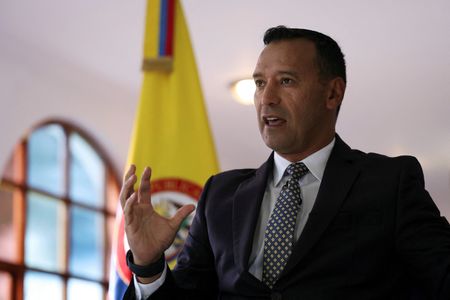
Colombian Defense Minister Pedro Sanchez revealed Wednesday that 14 individuals perished in explosions at cocaine processing facilities in January. The deaths occurred in the border province of Narino, with 12 people killed on January 22 and two more dying days later under similar circumstances.
The investigation stems from accusations by Colombian President Gustavo Petro, who claimed this week that Ecuadorean forces conducted bombing operations on Colombian soil, resulting in 27 deaths. However, Petro offered no supporting evidence for his allegations.
Ecuadorean President Daniel Noboa firmly rejected the claims, stating his nation’s military targeted drug trafficking operations exclusively within Ecuador’s own borders. According to Noboa, the targeted locations served as bases for narco-terrorism organizations primarily composed of Colombian nationals.
“The information we have at this moment is that those people died after being burned alive. The site where they died was a cocaine laboratory, and the causes and who was behind it are under investigation. Two other people died under similar conditions at another site on January 24,” Sanchez explained to reporters.
Adding complexity to the dispute, Colombian authorities discovered what appears to be an Ecuadorean military explosive device on their territory. Sanchez indicated the bomb, which has been safely disarmed, likely originated from Ecuador’s armed forces.
Ecuador’s Foreign Minister Gabriela Sommerfeld expressed caution about the bomb’s origins when speaking to FM Mundo radio. “It is very difficult to speculate, to say that it is so or that it is not,” she stated. “We are open to receiving the diplomatic note … so that we can respond technically, with due importance given to that case.”
Sommerfeld emphasized that all Ecuadorean military actions occur within the country’s own territorial limits and indicated Ecuador’s willingness to engage in diplomatic discussions to resolve the disagreement.
Petro shared imagery from Colombian state television RTVC showing the alleged explosive device – a dark green cylindrical object found in vegetation. The Colombian president claimed the bomb was discovered just across the border from an area bombed by Ecuador and was delivered by a low-altitude aircraft.
The controversy emerges as Ecuador launched a comprehensive two-week security campaign across four Pacific coastal provinces to combat escalating gang violence. Ecuador regularly conducts operations along its Colombian border, which serves as a critical corridor for drug trafficking routes leading to the United States.
Ecuador has secured support from allied nations, including the United States, for its anti-narcotics efforts. President Noboa previously sought backing from former U.S. President Donald Trump for his crime-fighting initiatives.
Tensions between the neighboring countries have intensified recently, with Noboa imposing 50% tariffs on Colombian imports last month. The Ecuadorean leader justified the trade measure by claiming Colombia was not adequately addressing drug trafficking concerns. Colombia has indicated it may implement similar retaliatory trade restrictions.