
BRUSSELS (AP) — Top European Union officials are convening in Brussels Thursday to address the ongoing conflict with Iran, soaring energy costs, immigration concerns, and a massive financial assistance package for Ukraine that Hungary continues to obstruct.
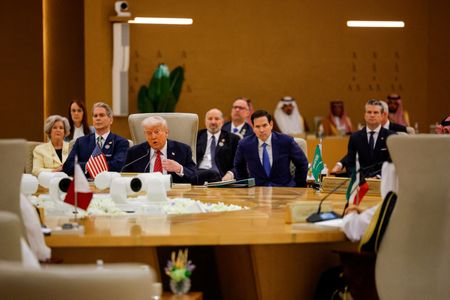
Several European leaders have turned down requests from U.S. President Donald Trump to deploy military resources to protect the Strait of Hormuz, a crucial passage for worldwide shipments of oil, natural gas, and fertilizer. Escalating energy costs due to the conflict and concerns about a potential new wave of refugees have prompted officials to prioritize Middle East issues during this gathering.
The European Commission, which serves as the EU’s administrative arm, has proposed a comprehensive set of strategies to reduce energy costs for discussion among leaders. According to an unnamed senior European diplomat who requested anonymity, no single approach will effectively address the diverse economic challenges across all 27 member countries affected by the conflict.
Thursday’s meeting will also address an ongoing dispute between Hungarian Prime Minister Viktor Orbán and the majority of other EU member states.
During the previous EU gathering in December at a Belgian castle, leaders including Orbán approved a 90 billion-euro ($104 billion) financial package to help Ukraine address its budget deficit while continuing its prolonged conflict with Russia.
However, Orbán reversed his position a month afterward when the Druzhba oil pipeline was damaged in January in what Ukrainian authorities described as a Russian drone strike. The pro-Russia leader, who has governed Hungary since 2010, is conducting an intense media blitz criticizing both Brussels and Kyiv while campaigning for reelection next month.
“If there is no oil, there is no money,” Orbán stated in a social media post on Tuesday.
To secure the critical funding for Ukraine, EU officials and diplomats plan to pressure Orbán and Slovakia’s prime minister, Robert Fico, whose administration has also adopted pro-Russia positions.
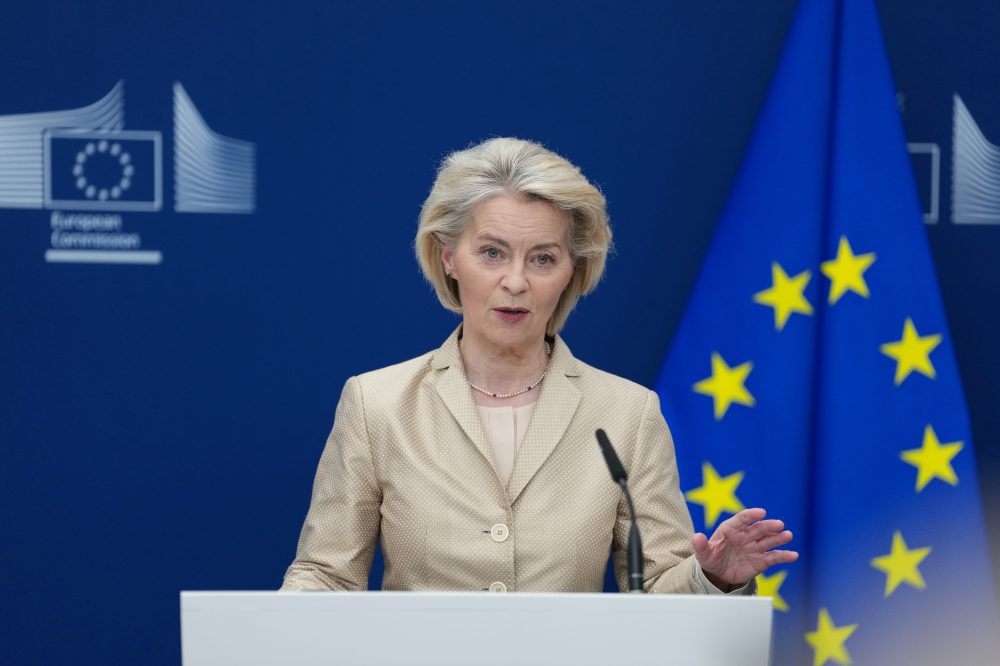
On Tuesday, European Commission President Ursula von der Leyen proposed that the EU would fund repairs to the Druzhba pipeline and help develop alternative fuel supply routes for Hungary and Slovakia.
Ukrainian President Volodymyr Zelenskyy called any interference with the loan “absolutely unfair” and emphasized that his war-torn nation has “no alternative” to these funds as it confronts a serious budget emergency due to the conflict that started on Feb. 24, 2022.
“There may be alternatives in terms of financing mechanisms, but there is simply no alternative to strengthening our army,” Zelenskyy stated on Wednesday.
German Chancellor Friedrich Merz addressed lawmakers in Berlin Wednesday, emphasizing that the EU must quickly finalize the 20th round of Russian sanctions and approve the Ukrainian loan.
He promised to “advocate for that emphatically” in Brussels and declared that “we must not take into consideration a single country in the European Union that is currently setting up this blockade in Europe now for domestic political reasons and because of an election campaign that is being conducted there.”
Merz urged additional sanctions, stating that “the needs of the moment call for us to increase the pressure on Moscow together – the U.S. and the European partners together.”