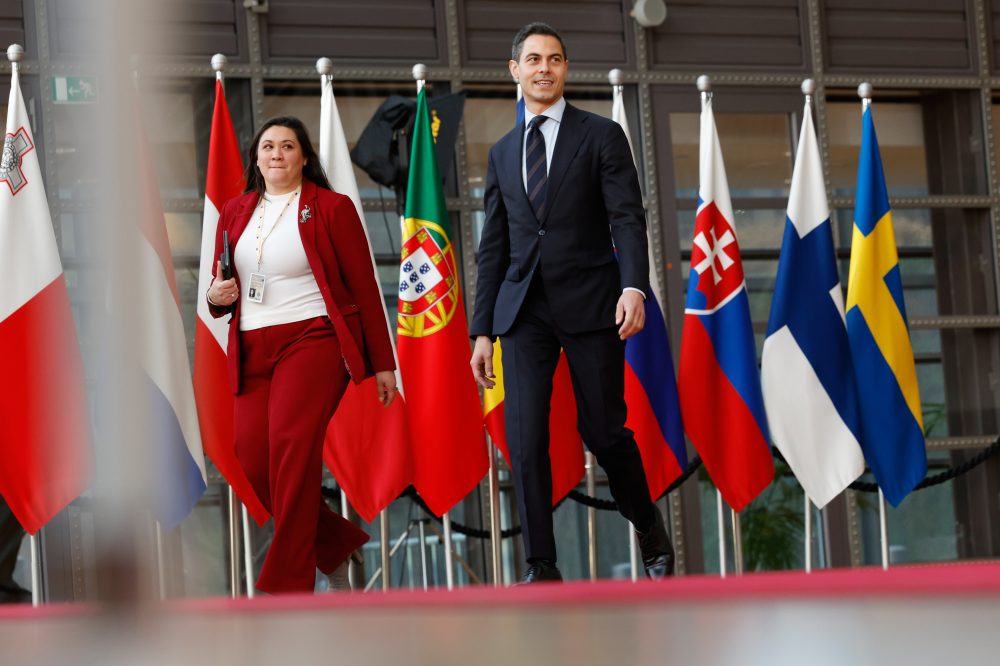

BRUSSELS — Top officials from the 27-nation European Union convened Thursday in Brussels to address mounting concerns over escalating oil and gas costs triggered by ongoing conflict in critical Middle Eastern energy regions and shipping corridors.
Most European leaders have resisted calls from U.S. President Donald Trump to deploy military resources to protect the Strait of Hormuz, a crucial passage for global oil, gas and fertilizer shipments. The combination of surging energy costs from the conflict and concerns about potential refugee flows has elevated Middle Eastern issues to the forefront of the summit agenda.
Belgian Prime Minister Bart De Wever expressed significant concern before the European Council gathering, stating: “We are very worried about the energy crisis.” He noted that energy costs were already elevated prior to the conflict, but the fighting “created another spike.”
“If that becomes structural, we’re in deep trouble,” De Wever continued. “At a European level, some measures can be taken to address the problem of the high energy prices.”
The European Commission has presented leaders with various financial mechanisms that individual member states could implement to reduce energy expenses, which will be a key discussion topic. Officials acknowledge that no single approach will likely be sufficient to address the economic disruption across the diverse markets spanning from Romania to Ireland.
European officials have found it challenging to establish a unified position regarding the conflict involving Iran and Lebanon. Though they have criticized Iran’s government, they have not offered military assistance.
Dutch Prime Minister Rob Jetten characterized the situation, saying: “This is a war that was started by the United States and Israel against Iran on reasons that I can understand because the Iranian regime is brutal not only for its own people, but also for the broader region and a security threat for Europe.”
“But it’s not a war that we are part of,” Jetten added, advocating for increased sanctions against Iran and greater support for opposition movements.