
President Donald Trump declared that Israel struck Iran’s major South Pars gas facility in what he characterized as an angry and violent response to ongoing Middle East conflicts, but promised no additional Israeli attacks unless Iran strikes back.
The Wednesday assault on the massive gas installation caused oil prices to surge and led Iran to threaten attacks on energy infrastructure throughout the Gulf region, while launching missiles toward Qatar and Saudi Arabia.
This escalation increases the extraordinary disruption to worldwide energy supplies that has created political challenges for Trump, who entered the conflict alongside Israel approximately four weeks ago.
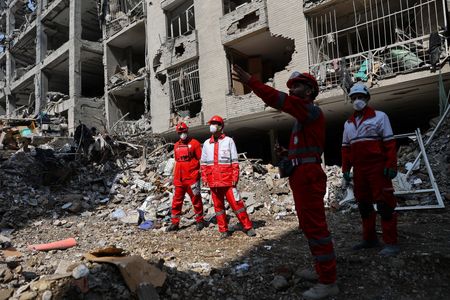
QatarEnergy, the state-owned energy company, described “extensive damage” following Iranian missile strikes on the Ras Laffan Industrial City, which handles roughly 20 percent of the world’s gas production.
Saudi officials announced they successfully intercepted and destroyed four ballistic missiles aimed at Riyadh on Wednesday, along with stopping a drone assault on an eastern gas installation.
Iran continued its attacks Thursday, again striking Qatar’s gas infrastructure while also targeting the Saudi capital with additional missiles.
QatarEnergy reported “sizeable fires” and widespread destruction at multiple liquefied natural gas facilities hit during Thursday’s early morning missile strikes.
The President stated that America had no prior warning of Israel’s strike and emphasized that Qatar was not involved in the initial attack.
“Israel, out of anger for what has taken place in the Middle East, has violently lashed out at a major facility known as South Pars Gas Field in Iran,” Trump wrote on X Wednesday.
“Unfortunately, Iran did not know this, or any of the pertinent facts pertaining to the South Pars attack, and unjustifiably and unfairly attacked a portion of Qatar’s LNG Gas facility.
“NO MORE ATTACKS WILL BE MADE BY ISRAEL pertaining to this extremely important and valuable South Pars Field unless Iran unwisely decides to attack a very innocent, in this case, Qatar.
“In which instance the United States of America, with or without the help or consent of Israel, will massively blow up the entirety of the South Pars Gas Field at an amount of strength and power that Iran has never seen or witnessed before.”
The Wall Street Journal previously reported that Trump had given approval for Israel’s planned assault on Iran’s natural gas infrastructure.
South Pars represents Iran’s portion of the planet’s largest natural gas reserve, shared between Iran and Qatar, a key U.S. partner that hosts America’s largest Gulf military installation.
Throughout this conflict, Tehran has attacked not only Israeli targets but also American diplomatic and military sites across the Gulf while warning neighboring countries against supporting strikes on Iranian territory.
With no signs of de-escalation, Trump is reportedly considering deploying thousands of additional U.S. military personnel to the Middle East, according to officials and sources familiar with the planning.
These forces could help ensure safe passage for oil tankers through the Strait of Hormuz, a critical waterway handling one-fifth of global oil commerce.
Foreign ministers from six Islamic nations meeting in Riyadh condemned Iran’s attacks on Gulf neighbors and demanded an immediate cessation of hostilities.
The ministers stated that Iran’s targeting of civilian areas and critical infrastructure including oil facilities, airports and water treatment plants cannot be justified under any circumstances.
“This pressure from Iran will backfire politically and morally and certainly we reserve the right to take military actions, if deemed necessary,” Saudi Foreign Minister Prince Faisal bin Farhan said during a press conference following the diplomatic meeting in Riyadh.
Defense systems were observed firing interceptors near the Riyadh hotel hosting the conference around the time ministers convened for their consultative session on the Iran conflict.
The UAE closed its Habshan gas facility after intercepting missiles in what its foreign ministry termed a “terrorist attack” by Iran.
The U.S.-based Iran human rights organization HRANA estimates that more than 3,000 people have died in Iran since the U.S.-Israeli attacks commenced on February 28.
Lebanese authorities report 900 deaths in their country and 800,000 people displaced from their homes.
Iranian strikes have caused casualties in Iraq and throughout Gulf states, while at least 13 U.S. service members have been killed in the conflict.