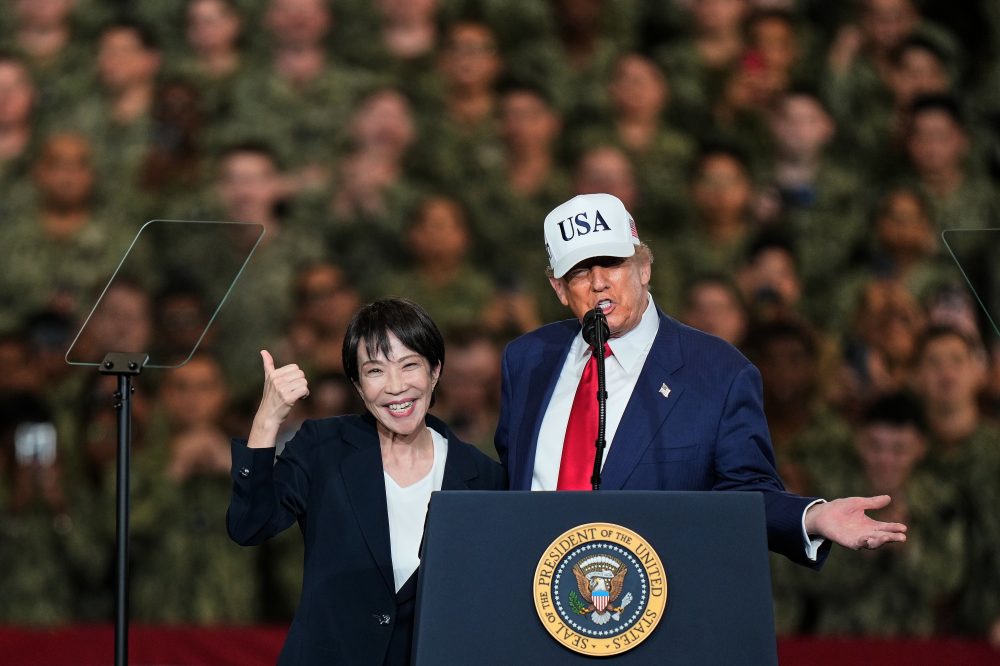

WASHINGTON — Japanese Prime Minister Sanae Takaichi heads into what she herself described as a “very difficult” White House meeting with President Donald Trump on Thursday, as tensions mount over Japan’s unwillingness to provide military support in the Strait of Hormuz.
What was initially planned as a strategic discussion before Takaichi’s trip to China has transformed into a potentially confrontational encounter. The ongoing conflict in Iran and Trump’s public frustration with allies who declined to assist in protecting the vital oil and gas shipping route have forced a delay in the China visit.
Trump has openly expressed his displeasure both in public statements and on social media regarding U.S. allies, particularly Japan, turning down his appeals for assistance in securing the strategically important waterway.
“In fact, speaking as President of the United States of America, by far the Most Powerful Country Anywhere in the World, WE DO NOT NEED THE HELP OF ANYONE!” Trump posted on Truth Social following the rejection of his initial assistance requests.
Before departing Japan, Takaichi conceded she anticipates a challenging discussion with Trump. Japanese officials have maintained that no formal request was made by Washington for Japanese naval vessels to participate in the U.S.-Israeli operation.
Japan stands among the nations Trump specifically criticized Tuesday during his public complaints about the lack of cooperation regarding the Strait of Hormuz, before ultimately stating such assistance was unnecessary.
Kurt Campbell, former deputy secretary of state under the Biden administration and current chair of The Asia Group, predicts Trump will apply “enormous pressure” on Takaichi during their meeting.
Campbell noted he has never witnessed a meeting between American and Japanese leadership carrying such significant consequences. He suggested that for Takaichi to advance Japan’s interests, she must find a method to demonstrate Japan’s participation in U.S. Middle East strategy.
“She’s going to want to come out of that as a partner in this case and realize that if she can do that, that she can translate that potentially into the president listening more to Japanese concerns about Taiwan or other issues,” Campbell explained.
Japan faces constitutional limitations regarding its participation in Iran operations, including post-World War II restrictions that prohibit using force except for territorial defense. The nation’s military operates under the name Self-Defense Force.
Christopher Johnstone, a partner at The Asia Group specializing in defense and national security, indicated Japan could potentially contribute through mine-clearing operations and has maintained “a small naval presence” in the area for anti-piracy efforts spanning over ten years. However, joining the U.S. mission would require Takaichi to overcome “an exceptionally high bar politically to invoke collective self-defense” — something never before accomplished.
Takaichi, who first met Trump in Tokyo last October, holds the distinction of being Japan’s first female prime minister and was mentored by former leader Shinzo Abe, who cultivated a strong relationship with Trump.
As a conservative hardliner and long-time Taiwan advocate, her statements regarding Japan’s potential military support for the island have increased tensions with China.
Prior to her Trump meeting, Takaichi had planned to concentrate discussions on trade relations, strengthening U.S.-Japan ties, and security issues. Japanese representatives indicated both nations would work toward enhanced cooperation in regional security, critical minerals, energy, and China-related matters.
China considers self-governing Taiwan, crucial to U.S. computer chip manufacturing, as its territory and has threatened military action if necessary to claim it.
However, questions surrounding Strait of Hormuz assistance and broader implications of the Iran conflict have placed the Japanese leader in a more challenging position with Trump as she works to secure U.S. commitment to the Indo-Pacific region.
Japan views China as an escalating security concern and has pursued military expansion on southwestern islands near the East China Sea. Yet the U.S. has relocated some Japan-stationed troops to the Middle East, reducing deterrence against Chinese influence.
Takaichi plans to address troop redeployment concerns with Trump, particularly as these moves coincide with China conducting numerous military exercises around Taiwan.
“This raises the prospect that — once again — the United States will be distracted and bogged down in the Middle East at a time when the deterrence problem in East Asia has never been greater,” Johnstone stated.