
BALTI, Moldova — A Russian military strike on a Ukrainian power facility has left tens of thousands of people in Moldova without access to clean water after oil contamination spread through a crucial river system shared by both nations.
Moldova’s President Maia Sandu has placed blame squarely on Russia for contaminating the Dniester River following the March 7 assault on Ukraine’s Novodnistrovsk hydroelectric facility, stating it poses a danger to Moldova’s water infrastructure in the nation seeking European Union membership.
The Ukrainian facility sits approximately 15 kilometers (9 miles) north of Moldova’s border and provides water resources to roughly 80% of Moldova’s 2.5 million residents. Russia has consistently attacked Ukraine’s essential civilian infrastructure, including dams and river facilities, throughout its full-scale invasion that began in 2022.
“Russia bears full responsibility,” Sandu declared Sunday in a social media statement.
Moldovan environmental officials announced a 15-day emergency environmental alert on Sunday, providing legal authority to enhance technical responses and implement temporary water restrictions.
“We are taking this decision to make sure we prevent any risk to the population’s health,” officials stated. “Because of the continuous wave of pollution with oil products, the risk of the pollution spreading, and the exceedance of contaminant levels in the northern area of the Dniester River.”
Although petroleum-based pollutants have been detected in the waterway after the attack, officials have not yet determined the precise origin of the contamination.
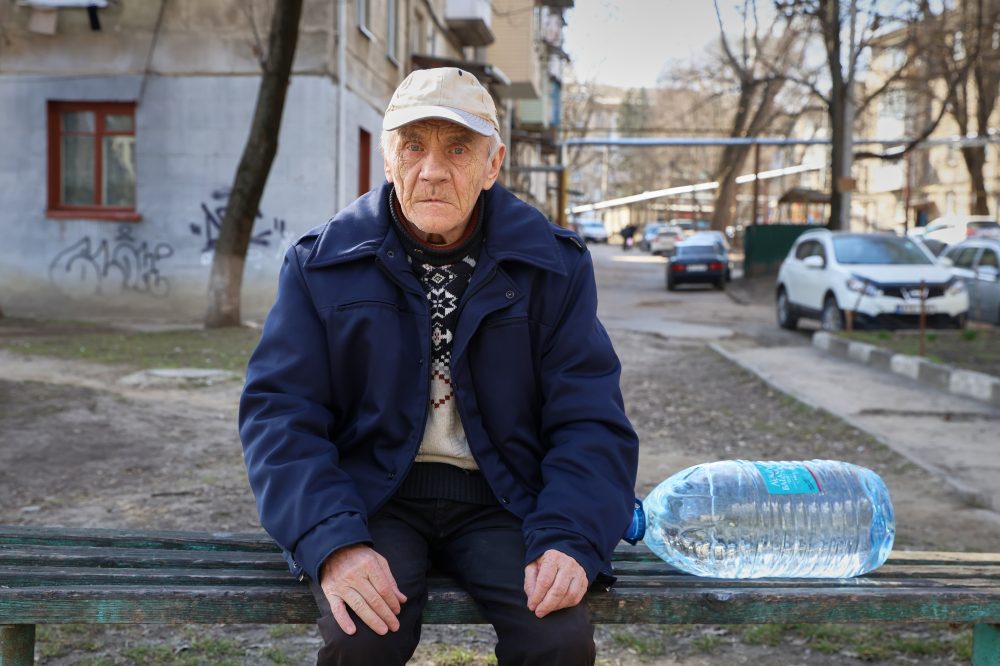
The crisis has compelled officials to suspend water service to multiple regions, including Balti, Moldova’s second-most populous city with approximately 90,000 residents. Moldova’s armed forces have deployed 10-tonne water trucks to deliver drinking water to the northern city, supplemented by humanitarian assistance from Romania.
“It’s very hard, very hard,” explained 84-year-old Balti resident Liuba Istrati, who has been hauling water buckets to her apartment. “We live on the fifth floor, it’s just the two of us, old people, my husband is sick in bed.”
Educational institutions have been forced to shut down and transition to remote learning due to the water shortage.
“It’s a complicated situation, I have to come every day to get water,” said Irina Mutluc, an educator from Balti. “Even for one person you need quite an amount of water to consume, for the bathroom and so on, so it’s really complicated.”
Officials are working urgently to eliminate contamination and conduct comprehensive water testing and monitoring. Romania, which maintains strong diplomatic ties with Moldova, has sent specialized teams and equipment including absorbent dam materials to assist with cleanup operations.
“The latest samples taken show an improvement in the water indicators, which confirms the effectiveness of the filters and barriers for the capture and disposal of pollutants,” the Environment Ministry reported Wednesday.
The ministry emphasized that officials are “working at an accelerated pace” to restore water service, “but this decision will be made exclusively on the basis of at least two consecutive sets of analyses, taken on two different days… Protecting the health of citizens remains the absolute priority.”
Environment Minister Gheorghe Hajder announced Wednesday during a news conference that three key river monitoring locations had “reached the admissible limit” of oil contamination for the first time since the emergency began.
He noted that if testing shows similar or better results within the next 48 hours, officials may reopen a pumping facility on the northeastern Ukrainian border that serves multiple districts and Balti.
“It is clear evidence that upstream oil diversions have been greatly mitigated, and the absorbing dams have had their effect,” he stated.
The Dniester River begins in southwestern Ukraine and extends over 1,300 kilometers (846 miles), flowing through Moldova before returning to southern Ukraine and reaching the Black Sea.
“Although at some points values may temporarily return within acceptable limits, matter continues to come in waves, making it difficult to accurately anticipate evolution,” environmental officials said.
Moldova’s chief prosecutor announced Tuesday the opening of a criminal investigation into the incident, while the foreign ministry called in Russian Ambassador Oleg Ozerov to Chisinau, presenting him with a bottle containing brownish water.
In a Wednesday online response, Russia’s embassy in Moldova disputed that Moldovan officials had provided evidence of Russian involvement, dismissing “a container with an unknown murky liquid, with no markings regarding where and when it was obtained,” claiming it “by definition cannot be proof of anything.”
The embassy statement accused Moldovan authorities of “publicly claim a lack of precise information about the nature of the incident, the type, and the amount of pollutants,” while advancing “conflicting theories.”
Ilya Trombitsky, a researcher with Eco-TIRAS, an environmental organization network spanning Moldova and Ukraine, noted that while determining immediate or future impacts remains challenging, the fact that “several cities are without water is an evident social damage.”
“It depends on the nature of the pollutant… we still do not know either the source or the substance of pollution,” he explained to reporters. “It is evident that it is not healthy for birds, wetland birds. It is evident that some invertebrates were killed, especially upstream… crustaceans, but small ones, (which) can be food for fish.”
“Moldova does not have experience in such spills,” he added.