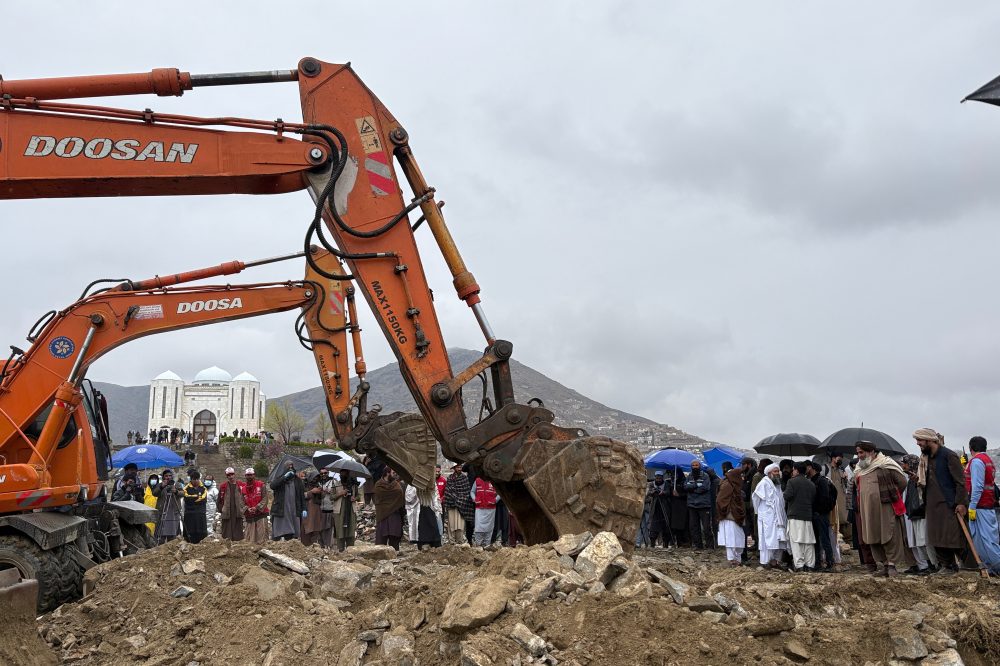

KABUL, Afghanistan — Heavy machinery carved burial sites at a cemetery in Afghanistan’s capital Wednesday as the nation prepared for a mass funeral ceremony honoring victims of a devastating attack on a drug treatment facility that Afghan authorities attribute to Pakistani forces.
The attack represents the most lethal incident in an intensifying three-week conflict between the neighboring countries. Afghan authorities report 408 fatalities and 265 injuries from the incident, though these numbers remain unconfirmed by independent sources.
Pakistani leadership disputes Afghanistan’s claims that it deliberately struck the Omid Addiction Treatment Hospital, maintaining that Monday’s military operations in Kabul and eastern Afghanistan focused exclusively on military targets. Pakistani officials have characterized Afghan casualty reports as false propaganda.
Speaking to The Associated Press from Islamabad Wednesday, Pakistan’s Information Minister Attaullah Tarar stated that Pakistan had “only targeted terrorist infrastructure.”
“We have just gone after the Afghan Taliban regime, their military setups, their terrorist infrastructure, and all the setups which are supporting or promoting terrorists,” Tarar said.
Cross-border violence and aerial bombardments within Afghanistan, including multiple strikes on the capital, have marked this conflict that erupted in late February, continuing despite international appeals for peace.
Pakistani leadership alleges that Afghanistan shelters extremists who launch attacks within Pakistani territory, particularly members of the Pakistani Taliban. This organization operates independently from but maintains close ties with the Afghan Taliban, who assumed control of Afghanistan in 2021 following the withdrawal of U.S.-led forces. Afghan officials reject these accusations.
Wednesday’s somber scene featured steady rainfall as emergency vehicles queued outside the burial ground, removing simple wooden coffins. The ceremony honored victims from Kabul province whose remains had been positively identified. Officials indicated that casualties from other Afghan regions would be returned to their home areas for interment.
The strike targeted the 2,000-bed Omid facility around 9 p.m. Monday. The hospital had undergone renaming and significant expansion approximately one year earlier as part of the Taliban government’s campaign against widespread substance abuse issues plaguing the nation.
Afghanistan’s extensive opium cultivation has supplied much of the global heroin market, and combined with prolonged warfare and economic hardship, has created severe addiction problems that current leadership has pledged to address.
The facility’s location near Kabul’s international airport sits adjacent to the former Camp Phoenix NATO base, previously used by American forces for Afghan National Army training. Current usage of that location remains unclear. The Monday attack triggered a massive fire, with local media footage showing rescue teams searching debris with handheld lights throughout the night while firefighters battled the flames.
Tarar described Pakistan’s military actions as precise strikes “carried out in an ammunition depot in Kabul. In the aftermath of which, we saw fumes and flames in the atmosphere in Kabul.”
He attributed subsequent casualties, without providing specific numbers, to the presence of “ammunition, there were technical equipment, there were arms there in that depot.”
Recovery teams continued extracting bodies from the hospital’s charred ruins Tuesday morning.
Afghan government spokesperson Zabihullah Mujahid denounced the attack, charging Pakistan with “targeting hospitals and civilian sites to perpetrate horrors.” He described the deceased as “innocent civilians and addicts.”
This current violence, representing the most serious confrontation between the nations, began in late February when Afghanistan launched retaliatory cross-border operations following Pakistani airstrikes. The hostilities shattered a Qatar-mediated ceasefire established in October after earlier fighting claimed dozens of military personnel, civilians and suspected militants.
Pakistan declared itself in “open war” with Afghanistan last month. The escalating situation has concerned the international community, particularly given the region’s continued presence of other extremist groups, including al-Qaida and the Islamic State, which have attempted to regain influence.