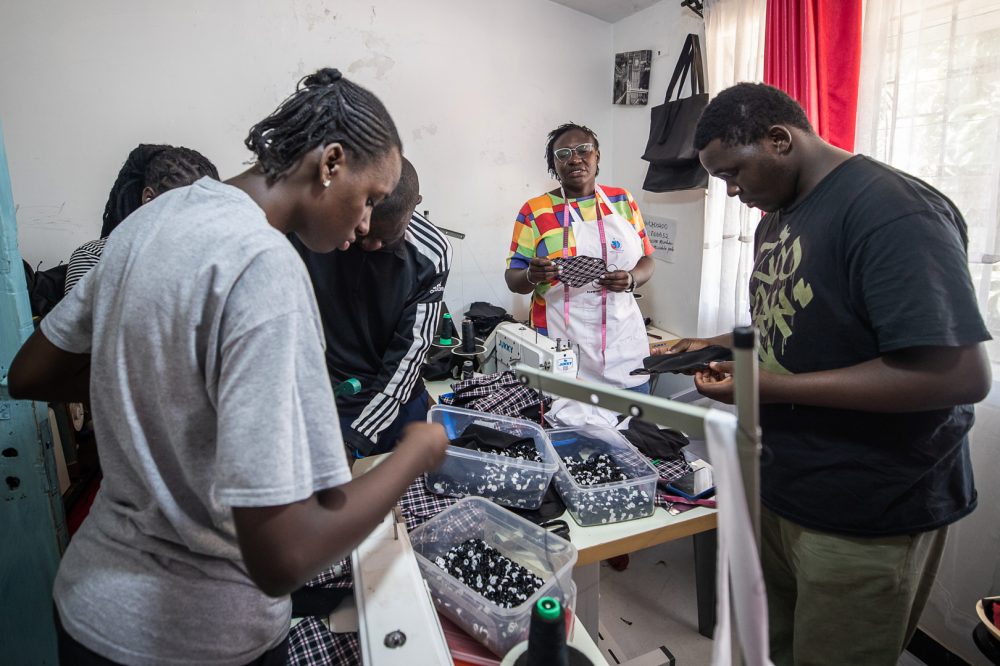

NAIROBI, Kenya — A casual lunch discussion about a colleague’s menstrual discomfort has led to a groundbreaking workplace policy in Kenya’s capital city. Female government workers in Nairobi can now take two paid days off each month to manage menstrual pain and discomfort.
The pioneering initiative launched in December 2025, making Nairobi the first location in Kenya to implement such a policy. It covers county government staff members, with the goal of enhancing both productivity and employee welfare.
Governor Johnson Sakaja, who championed the program, told The Associated Press that Kenya’s federal leadership and fellow county officials are closely watching the results. His administration employs approximately 18,000 people, with women making up more than half the workforce.
“Your biggest asset is your staff,” Sakaja explained. “It starts with dignifying your own staff, for them to feel that they’re respected and dignified.”
The policy has faced minimal public resistance, though some critics worry it might make employers less likely to hire women. Sakaja rejected this concern, arguing that properly supported women outperform men in the workplace.
Female leaders currently head Nairobi county’s business and health departments.
“A lot of labor policies were written many years ago by men,” the governor noted. “Women’s rights are not anti-productivity. They are an input that creates productivity. It’s actually an investment in your workforce.”
According to Sakaja, the program won’t strain finances since multiple employees handle each function.
“It will not be a train smash if three or four people in a department are not there for a day or two,” he stated.
While Japan introduced menstrual leave in 1947, Spain became the most recent adopter in 2023. Indonesia and South Korea also have similar policies.
Across Africa, only Zambia maintains a nationwide menstrual leave program, granting female workers one monthly day off without requiring medical documentation.
Supporters argue these policies acknowledge menstruation as a valid workplace health concern.
“The feedback we have gotten, especially from the staff that work in public service management, is that it’s very refreshing. And when they come back, they are able to work even better,” explained Nairobi County Human Resource Manager Janet Opiata.
Opiata reported that at least 12 women from her department, including a senior director, used the leave during February.
The program operates as a “no-questions-asked, no-forms-filled” system, providing paid time off in addition to standard sick and vacation leave guaranteed by labor laws. Nairobi established the policy through a cabinet order and human resources department memo.
Marion Kapuya, a 25-year-old county revenue officer, said the policy has already improved her work experience.
“Working with pain or discomfort can lead to mistakes or low productivity,” she shared. “When you take the break and you are relieved from the pain, your performance will be top-notch.”
Kapuya noted that workplace stigma continues to present challenges.
“Before I get to a point of saying, ‘Excuse me, sir, I am on my period and I don’t feel okay,’ it is so hard,” she admitted.
Governor Sakaja acknowledged receiving reports that some employees still find it awkward to request menstrual leave from supervisors.
Christine Akinyi, who works in Nairobi’s private sector, praised the two-day allowance as an excellent beginning but suggested expanding it to four days. She also voiced concerns about potential hiring discrimination.
“People will prefer to employ more men because they don’t have these sick leaves,” she warned.
Dr. Eunice Cheserem, a Nairobi gynecologist, reported that severe menstrual pain affects 50% of her patients. Kenya lacks comprehensive national statistics on menstrual pain prevalence.
“If a woman gets severe menstrual pain, she actually ceases to be functional. Some will get vomiting, severe headaches, they vomit everything, they have diarrhea, they have very terrible cramps,” she described. “Some respond to conventional analgesics, but very many need very, very strong analgesics for them even to be able to function.”
Dr. Cheserem believes Nairobi county’s menstrual leave policy provides essential recovery time and allows women to properly care for themselves.