
DUBAI, United Arab Emirates (AP) — Iran launched an escalated campaign of missile strikes against Gulf Arab energy infrastructure Thursday, igniting blazes at Qatari natural gas facilities in direct retaliation for Israeli attacks on Iran’s primary gas field, marking a significant expansion of Middle East hostilities that has driven worldwide fuel costs dramatically higher.
Maritime vessels caught fire near the United Arab Emirates coastline while another sustained damage off Qatar’s shores, highlighting the persistent threats facing shipping due to Iran’s control over the critical Strait of Hormuz.
Qatar, which serves as a crucial global natural gas supplier, reported that emergency crews extinguished flames at a major LNG plant following Iranian missile bombardment. While production had previously ceased due to earlier strikes, officials said the most recent missile barrage created “sizeable fires and extensive further damage.”
The facility damage could potentially postpone Qatar’s ability to resume market deliveries even following the conclusion of the Iran conflict.
Officials in Abu Dhabi announced the nation was compelled to cease operations at both its Habshan gas facility and Bab field, characterizing Iran’s overnight strikes on these locations as a “dangerous escalation” of the ongoing war.
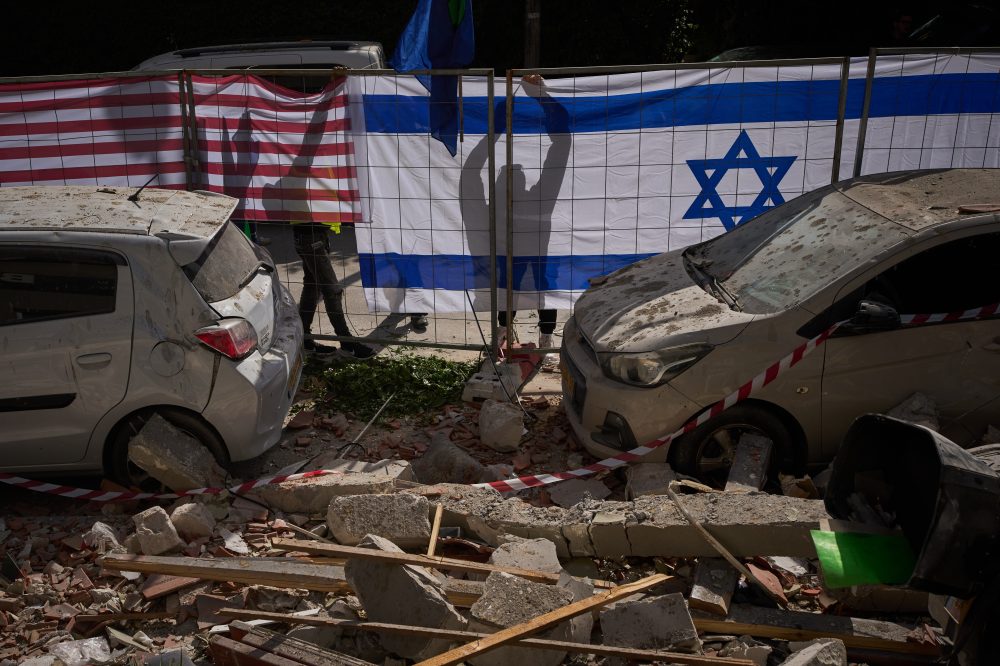
Air raid warning systems activated across multiple Gulf regions, while Israel issued alerts regarding approaching Iranian missile fire.
Qatar, Saudi Arabia and the United Arab Emirates all condemned Iran’s attacks, with Saudi Arabia’s chief diplomat stating that assaults on the kingdom meant “what little trust there was before has completely been shattered.”
During early market activity, Brent crude oil, the global benchmark, climbed above $110 per barrel, representing an increase of more than 50% since Israel and the United States initiated the conflict February 28 with strikes against Iran.
Iran’s missile offensive followed Israel’s attack on South Pars, the planet’s largest gas field situated offshore in the Persian Gulf and jointly controlled by Iran and Qatar.
Given that approximately 80% of Iran’s electricity generation relies on natural gas, according to the Paris-based International Energy Agency, the strike directly jeopardizes the nation’s power grid. Natural gas also provides household heating and cooking throughout the Islamic Republic.
Targeting the gas field represents a “clear expansion of the conflict,” the New York-based Soufan Center stated in an analysis.
“Israel’s target selection in this war has heavily focused on the institutions, leaders and infrastructure …” the research organization noted. “It now seeks to inflict additional pressure on the regime by making the living conditions for civilians intolerable.”
Iran denounced the South Pars attack, with Iranian President Masoud Pezeshkian cautioning of “uncontrollable consequences” that “could engulf the entire world.”
From Washington, President Donald Trump indicated that Israel would not strike South Pars again, but cautioned via social media that continued Iranian attacks on Qatar’s energy infrastructure would prompt U.S. retaliation to “massively blow up the entirety” of the field.
“I do not want to authorize this level of violence and destruction because of the long term implications that it will have on the future of Iran,” Trump posted on social media.
Qatar Energy announced on X that a missile strike on its extensive Ras Laffan liquefied natural gas facility triggered the early Thursday fire.
A vessel also sustained damage off the nation’s coastline, according to the British military’s United Kingdom Maritime Trade Operations center. Officials remained uncertain whether the ship was intentionally targeted or struck by falling debris as Qatar deployed missile interceptors against incoming Iranian attacks.
Saudi Arabia similarly reported destroying Iranian drones aimed at its natural gas installations overnight, while Abu Dhabi authorities said they were forced to halt operations at the Habshan gas facility and Bab field following interceptions above these sites.
Another vessel ignited early Thursday near the United Arab Emirates coast. The UKMTO indicated uncertainty regarding whether it was deliberately targeted or hit by debris.
The organization said the ship was positioned just off Khor Fakkan in the UAE, close to the Strait of Hormuz entrance, through which one-fifth of global oil typically passes.
More than 20 vessels have suffered attacks throughout the Iran war as Tehran maintains strict control over shipping traffic through the waterway connecting the Persian Gulf to international waters.
Iran maintains the waterway remains open, though not to the U.S. or its allies, and while some ships have successfully transited, the volume has been minimal.
Iran’s judicial system announced Thursday the execution of three individuals detained during January’s nationwide protests, marking the first known implementation of such sentences.
Iran’s Mizan news agency confirmed the executions. Iran typically implements capital punishment through hanging.
Mizan named those executed as Mehdi Ghasemi, Saleh Mohammadi and Saeed Davvodi. The agency claimed the three men had fatally stabbed two police officers in Qom, approximately 130 kilometers (80 miles) south of Tehran, during the demonstrations.
Iran’s judiciary had been threatening to execute those arrested during the protests.
Iran suppressed the demonstrations through severe violence that resulted in thousands of deaths and tens of thousands of detentions.
Over 1,300 people in Iran have died during the war. Israeli strikes have forced more than 1 million Lebanese to flee their homes — roughly 20% of the population — according to the Lebanese government, which reports 968 fatalities.
In Israel, 14 people have died from Iranian missile attacks. At least 13 U.S. military personnel have been killed.