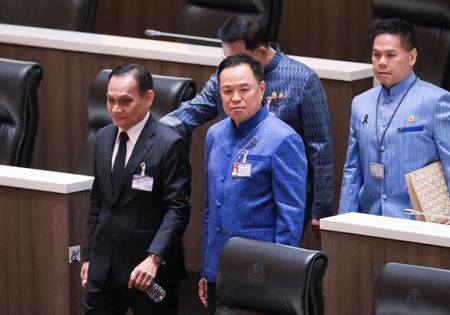

Thailand’s legislative body commenced voting Thursday to select a new prime minister, as Anutin Charnvirakul pursues approval to establish a government that might bring uncommon political stability to the Southeast Asian nation after years of governmental turmoil.
The Bhumjaithai party, led by Anutin, delivered an unexpected and commanding performance in February’s elections, marking a dramatic shift for a political organization that previously held minimal influence in Thai governance. The party’s success stemmed from tapping into nationalist sentiment that emerged following military clashes with Cambodia in the previous year.
Anutin’s political rise largely resulted from strategic maneuvering during the decline of the previously powerful Pheu Thai party. He first withdrew from their coalition government before quickly positioning himself to establish his own administration after judicial decisions removed a second prime minister within just over twelve months.
The Bhumjaithai party has formed an agreement with the weakened Pheu Thai and joined forces with various smaller political groups, creating a coalition that would command 292 out of 499 parliamentary seats.
During a Thursday press conference at parliament, Anutin stated: “The government coalition is ready to perform its duty in the legislature and executive smoothly to bring prosperity to the country.”
He added: “We’ll quickly form a cabinet and give a policy statement to solve the problems of the country.”
To secure the prime ministerial position, the 59-year-old Anutin requires support from more than half the chamber, meaning at least 251 votes are needed for victory.
His competition comes from 38-year-old Natthaphong Ruengpanyawut, who leads the People’s Party that finished second in the elections.
The extent of Natthaphong’s backing remains uncertain beyond his party’s 120 seats, and whether he has negotiated agreements with other political factions is unknown.
As a devoted royalist, Anutin has maintained a consistent presence in Thai political circles for two decades, successfully navigating periods of instability by strategically positioning Bhumjaithai between competing elite factions locked in ongoing power disputes. This approach secured the party’s participation in multiple coalition governments.
Should Anutin succeed, he would gain his first clear leadership mandate in a nation struggling with economic stagnation, overwhelming household debt, urgent need for structural changes, and challenges from trade uncertainties and consequences of the U.S.-Israeli conflict with Iran.
Political observers suggest Anutin’s adaptability and skill at bridging political divisions could serve as his greatest strengths, noting that Bhumjaithai has avoided confrontation with Thailand’s influential military and judicial institutions, which have previously orchestrated the collapse of numerous governments and parties.
Napon Jatusripitak, a political expert at Singapore’s ISEAS–Yusof Ishak Institute, indicated that with Bhumjaithai positioned to influence both parliamentary chambers and Thailand’s institutional power centers apparently supporting Anutin, the outlook for medium-term stability appears positive.
“People have strong reasons to believe that this government can last, particularly because it’s the first time in a long while that the referee and the players are on the same side,” Napon explained.
“There’s control,” he continued. “And we have a highly fragmented opposition.”