
HAVANA (AP) — The classic old cars that once defined Cuba’s streets have largely disappeared. In their place, small electric tricycles — the majority manufactured in China — have emerged as the go-to form of transportation for hundreds of thousands of Cubans struggling through an extended fuel crisis.
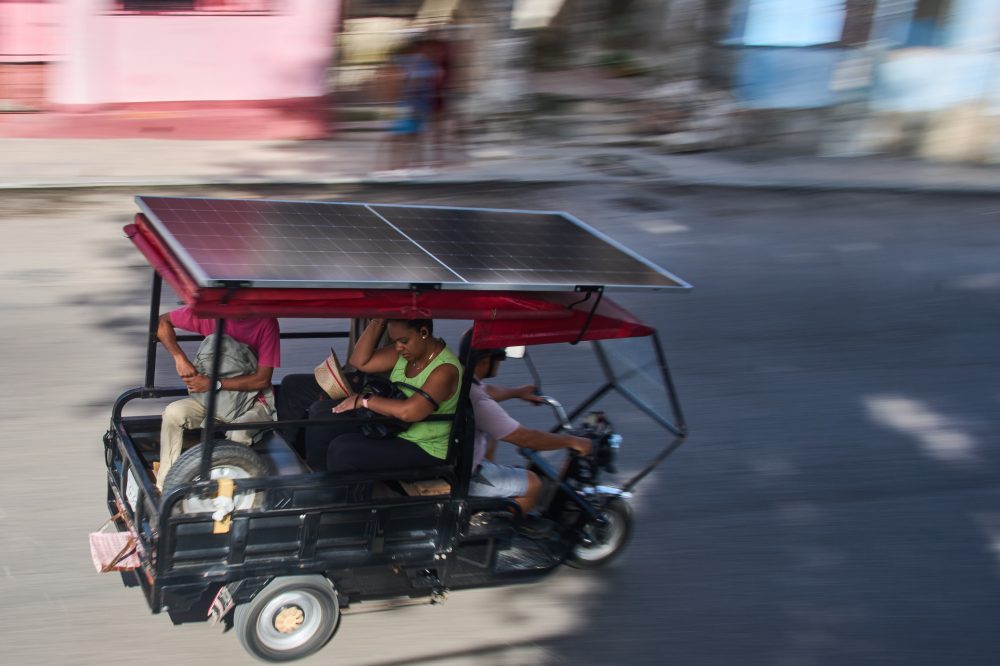
What makes these vehicles especially remarkable is that many owners have added solar panels to them, enabling the tricycles to charge up while on the move without drawing from the country’s already overtaxed electrical grid.
These compact three-wheelers are a dramatic departure from the gas-guzzling old vehicles that were still a common sight just a year ago, leaving trails of black exhaust in their wake.
“This is how people get around now,” said Liecer de la Cruz, a 40-year-old who owns one of the vehicles.
Priced between $2,000 and $4,000, the tricycles are used to haul goods and run fixed routes that buses once covered. Though that cost is beyond what most Cubans can afford, many have traded in their old gasoline-powered vehicles to purchase one. Others have received them from family members living abroad, where the tricycles tend to be less expensive. Some small-business owners have invested their earnings into the vehicles, hoping to recover the expense over time.
The fuel situation worsened in January when U.S. President Donald Trump threatened tariffs on nations that supply oil to Cuba — a country that produces only around 40% of the fuel it consumes. Since that announcement, just one oil tanker has docked on the island, arriving in late March. That’s a sharp drop from the roughly eight tankers per month that had been arriving previously.
The effects on everyday Cuban life have been severe. Rolling blackouts have grown more frequent, compounding hardships in a country whose economy has been in turmoil for five years. Shortages of food and medicine have worsened, and public transportation has been dramatically scaled back.
In this environment, the electric tricycles have become essential. They move goods, cover bus routes that no longer operate, and in certain Havana neighborhoods, they are even used to pick up trash.
Residents carrying heavy loads of groceries can hop on for a ride — slow, hot, and far from comfortable — but preferable to walking.
“If you can pay for it, you just take it; otherwise you can’t go anywhere,” said Berta Ferrer, a 52-year-old who works as a clerk at a store in central Havana four days a week.
She spends roughly 500 Cuban pesos — less than one U.S. dollar — per ride. In a country where state workers earn an average of about $10 per month and private-sector employees bring in around $40, even that small fare is a meaningful expense.
Chinese brands including Zonsen and Jinpeng have become a familiar presence on Cuban roads. Many of the tricycles are purchased in countries like Panama and shipped to Cuba by relatives or importers for resale. They run on gel or lithium batteries. One brand, Vedca, is assembled directly in Cuba under an agreement with China.
Some owners have fitted solar panels onto the awnings above the passenger seats, allowing the vehicles to recharge while in use and continue operating through the island’s ongoing energy crisis.
“There are so many tricycles in Havana that you can’t spend 10 minutes on a street without seeing countless numbers of them pass by,” said Carlos Álvarez, a 29-year-old engineer who runs a workshop focused on electric vehicles.
Álvarez made the comment while attaching a solar panel mounting bracket to one of the tricycles. He acknowledged the solar upgrade runs about $500, but said the investment pays for itself quickly by helping owners stay mobile despite fuel shortages and power outages.
Ricardo Quintero, an engineer who also owns one of the tricycles, uses his to deliver produce to the vegetable stand he operates with his family.
“I think this is here to stay,” he said, glancing at his three-wheeler.