
BOGOTA, Colombia — Colombia’s outgoing environment minister is sounding the alarm over what she sees as a dangerous shift in the country’s approach to climate and conservation under the incoming government.
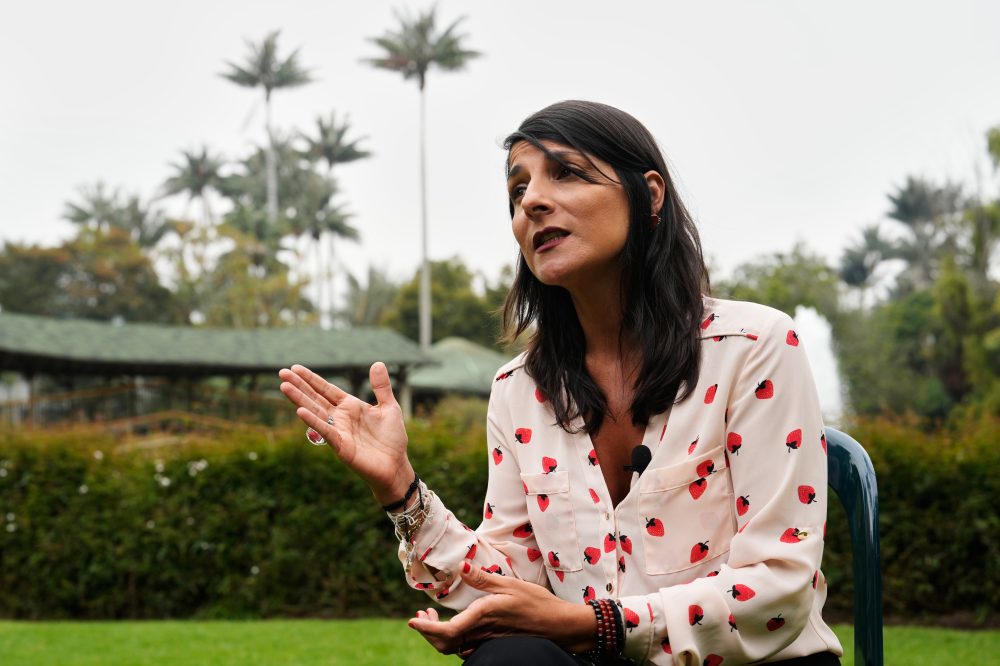
In an interview with The Associated Press on Friday, Environment Minister Irene Vélez Torres said she fears the new administration will roll back the progress Colombia has made on climate action — progress she says is urgently needed as the country faces growing environmental threats, including El Niño, a naturally occurring weather phenomenon that can disrupt rainfall and trigger droughts, floods, and extreme heat.
“Arriving with an attitude of climate denialism is absolutely dangerous,” Vélez said.
Her remarks come just weeks before President-elect Abelardo de la Espriella is set to take office on August 7, following a narrow election win that signals a significant political shift for Colombia. The country has spent the past four years under President Gustavo Petro, whose administration worked to establish Colombia as a global leader in climate diplomacy, Amazon protection, and moving away from fossil fuels.
During his campaign, which received an endorsement from U.S. President Donald Trump, de la Espriella pledged to revitalize Colombia’s oil industry, expressed support for fracking, and argued that the country should tap more of its natural resources to drive economic growth. Environmental advocates and some Indigenous leaders have cautioned that a greater focus on extractive industries could put pressure on ecologically sensitive regions, including parts of the Amazon rainforest.
Approximately 42% of Colombia’s land area is covered by Amazon rainforest, and the Petro administration made protecting that rainforest — along with transitioning away from fossil fuels — a cornerstone of its environmental policy.
One of Vélez’s top concerns involves the future of Indigenous communities’ role in managing the Amazon environment. She worries the incoming government could undermine recent efforts to recognize Indigenous authorities as central figures in environmental decision-making and reduce backing for Indigenous territorial governance programs.
Vélez also raised concerns about the possible return of aerial spraying of glyphosate on coca crops — the plant used to produce cocaine. She described the herbicide as “potentially carcinogenic to humans” and said its past use left lasting damage to both the environment and public health in Colombia.
Additionally, she warned against expanded fossil fuel development and mining in Colombia’s paramos — distinctive high-altitude wetlands that provide drinking water to millions of Colombians.
The incoming administration has disputed some of those concerns. Fabio Arjona, a marine biologist selected by de la Espriella to serve as environment minister, has argued that environmental discussions should be less driven by ideology. He criticized what he called “environmental hysteria” and said fracking could be considered under strict regulations, though not in protected areas like national parks and paramos.
Requests for comment sent to representatives for de la Espriella and Arjona went unanswered before this story was published.
Vélez urged the new administration not to abandon the work done to reduce deforestation, restore ecosystems, and strengthen protections for wetlands, paramos, and the Amazon.
“We have a legacy that, despite our differences, should be preserved,” she said. “It would be an unforgivable mistake to abandon this agenda simply because it comes from a different political sector. Social and environmental justice must remain at the center of the political agenda.”