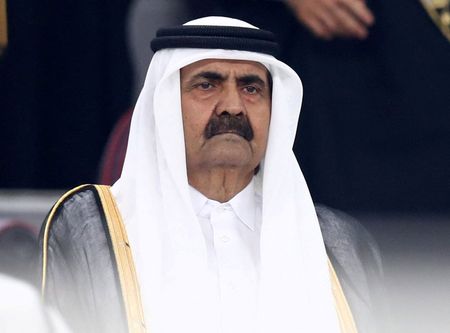

Sheikh Hamad bin Khalifa Al Thani, the former emir who turned Qatar into a powerful presence on the world stage before making history by willingly stepping aside for his son, has died at the age of 74, according to Qatar’s state-run news agency.
The Qatar News Agency announced his passing but provided no details about the cause of death.
During his 18 years as emir — a reign that ended in June 2013 — Sheikh Hamad was the driving force behind Qatar’s dramatic transformation from a largely overlooked Gulf state into a nation with global reach in diplomacy, media, and investment. Among his legacy projects: Qatar’s ownership of the Harrod’s department store in London and the founding of the Al Jazeera satellite news network, which became a major voice in international media.
Qatar’s influence today extends from North Africa to Afghanistan, and the country hosted the 2022 FIFA World Cup — the most-watched soccer event on the planet. Though he had long since left office, Sheikh Hamad received a rousing reception from Qatari fans at the tournament’s opening match.
However, Qatar’s ascent under his leadership also created friction with regional neighbors and Western allies. Critics pointed to the country’s close relationships with Iran, the Palestinian militant group Hamas, and Egypt’s banned Muslim Brotherhood as sources of tension. Al Jazeera, while widely praised for breaking from the traditionally cautious style of Arab journalism, also drew accusations of shaping its coverage to reflect the preferences of Qatar’s leadership.
When Sheikh Hamad announced his abdication, he addressed the nation with a message for the next generation: “The future lies ahead of you, the children of this homeland, as you usher into a new era where young leadership hoists the banner.” Power was passed to his son, the British-educated crown prince Sheikh Tamim bin Hamad Al Thani, who was 33 years old at the time.
Such a peaceful and deliberate transfer of authority was highly unusual in the region, where leadership changes typically come through death or forceful removal. Ironically, Sheikh Hamad had himself come to power by ousting his own father, Sheikh Khalifa, in a bloodless palace coup in 1995. His father subsequently lived in exile for nearly a decade.
His decision to step down was widely interpreted as an effort to get ahead of the reform movements sweeping the Arab world at the time and to respond to the growing influence of the region’s younger population. Qatar, a peninsula roughly half the size of New Jersey, is home to an estimated 300,000 citizens. Sheikh Hamad had also reportedly dealt with health issues for several years prior to his abdication. In December 2015, Qatari officials confirmed he had been flown to Switzerland for surgery after breaking his leg while vacationing.
Sheikh Hamad received his military training at Britain’s Sandhurst academy and went on to serve as commander of Qatar’s armed forces and as defense minister. He was designated crown prince in the late 1970s and steadily expanded his responsibilities to include overseeing the development of Qatar’s enormous oil and gas wealth.
After taking power, he quickly opened the previously insular nation to outside engagement. Al Jazeera became a symbol of that shift, though its willingness to broadcast statements from the al-Qaida terror network stirred anger in Washington — even as Qatar simultaneously hosted a major U.S. military logistics hub following the September 11, 2001 attacks and the subsequent invasions of Afghanistan and Iraq.
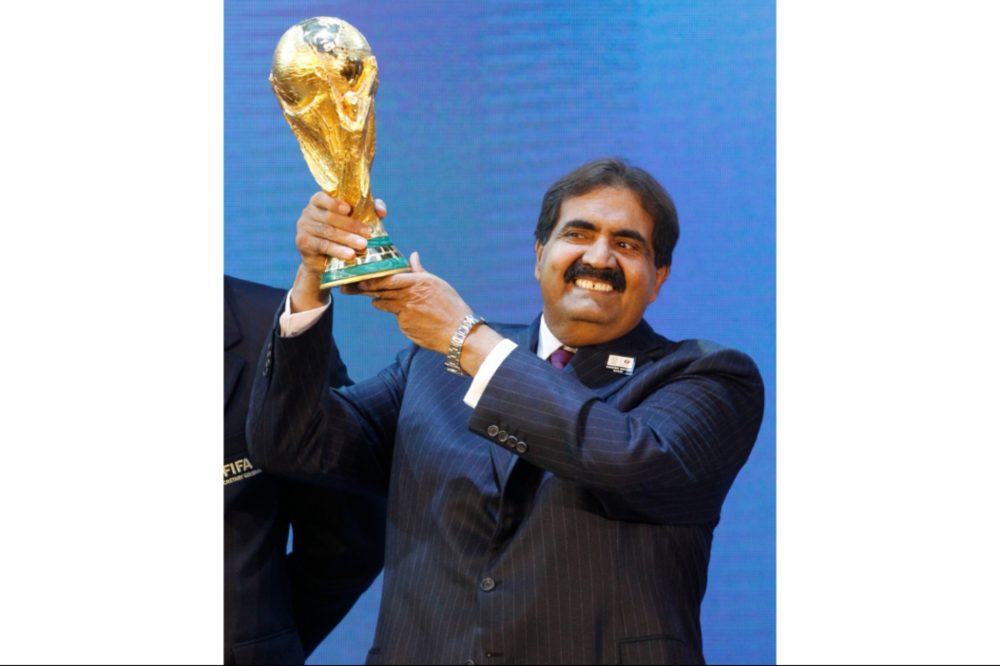
Sheikh Hamad also made sports a cornerstone of Qatar’s global image, most notably through the successful — though controversial — bid to host the World Cup. Critics alleged that Qatar used its vast financial resources to secure votes from less wealthy nations. Qatar’s sports footprint also includes sponsorship agreements with Spanish football club Barcelona and a majority ownership stake in Paris Saint-Germain.
Under his direction, Qatar Airways expanded into a major international airline in competition with neighboring carriers. The international airport in Doha, Qatar’s capital, which cost at least $15 billion to build, bears his name.
Sheikh Hamad pursued an ambitious diplomatic agenda as well, with Qatar serving as a mediator in conflicts ranging from Sudan’s Darfur region to political divisions in Lebanon and the internal rift between Palestinian factions Hamas and Fatah.
In October 2012, he became the first head of state to visit the Gaza Strip since Hamas had taken control five years earlier, pledging $400 million in investments and development projects. During that visit, Gaza radio stations broadcast a song called “Thank you, Qatar.”
Qatar also maintained a degree of engagement with Israel. Sheikh Hamad met with Israel’s then-foreign minister, Tzipi Livni, at the United Nations General Assembly in 2007, and Qatar allowed an Israeli trade office to operate in Doha until it was shut down in response to Israeli military action in Gaza in late 2008. While neighboring Bahrain and the United Arab Emirates formally recognized Israel in 2020, Qatar kept its distance from normalization.
During the Arab Spring, Qatar dispatched warplanes to support the NATO-led mission in Libya against Moammar Gadhafi’s forces and provided critical military and financial backing to the Libyan rebel movement. In Syria, Qatar played a leading role in supporting opposition forces against then-President Bashar Assad and pushed for increased weapons supplies to Syrian rebels.
Qatar’s support for Islamist groups, including the Muslim Brotherhood, strained its relationships with other nations in the region. Those tensions boiled over under Sheikh Tamim’s rule, when Bahrain, Egypt, Saudi Arabia, and the UAE launched a years-long diplomatic and economic boycott of Qatar — partly rooted in policies that had originated during his father’s tenure.
One of Sheikh Hamad’s final significant acts before leaving office was overseeing the formal opening of a Taliban office in Qatar, which eventually laid the groundwork for negotiations between the United States and the Taliban — talks that ultimately preceded the chaotic American and NATO withdrawal from Afghanistan in 2021.