
MADRID (AP) — Deadly wildfires have swept across Europe over the past decade, claiming hundreds of lives, and experts say rising global temperatures will only make the situation worse in the years ahead.
A fire that tore through southern Spain overnight into Friday morning left at least 11 people dead, placing it among the most lethal wildfires ever recorded in that country. The blaze struck as scorching heat settled over much of the nation.
According to the European Union’s Copernicus Climate Change Service, Europe is warming faster than any other continent on the planet — temperatures there have risen at twice the global average rate since the 1980s. Worldwide, 2025 ranked as the third-hottest year ever recorded, bringing with it a series of punishing heat waves across the continent.
Researchers caution that the burning of fossil fuels such as gasoline, oil, and coal is driving climate change, which in turn is making heat and drought more frequent and more severe — conditions that set the stage for catastrophic wildfires in vulnerable regions.
Here is a look at some of the deadliest wildfires to strike Europe over the past ten years:
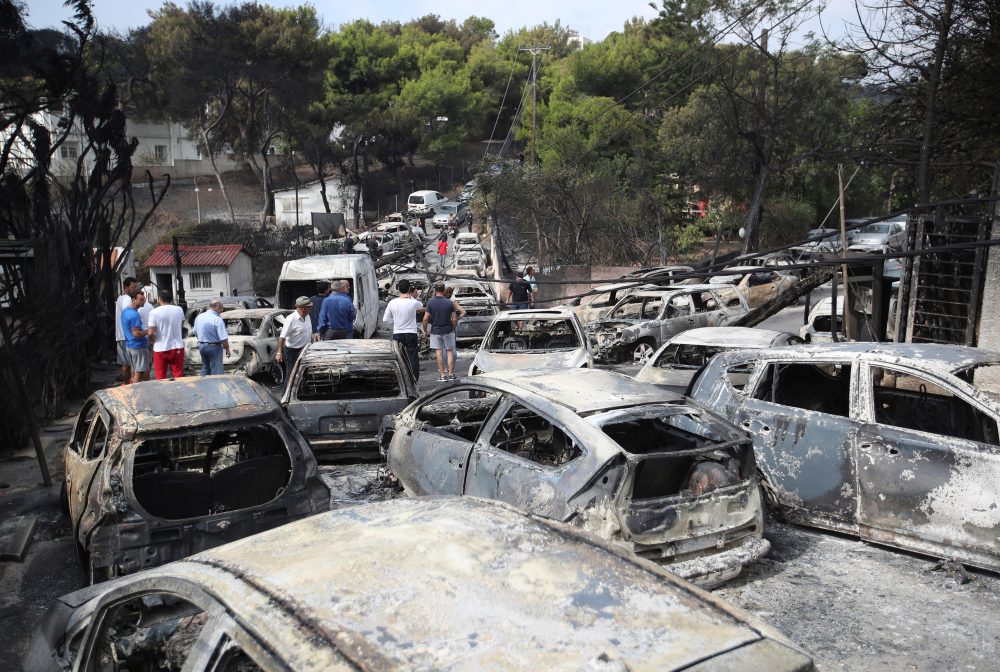
Greece suffered its worst wildfire on record in 2018, when a massive fire ripped through Mati, a seaside community east of Athens. Residents were trapped in their homes and on roadways as they attempted to escape. More than 100 people perished, with some drowning after jumping into the sea to flee the advancing flames.
Five years later, in 2023, Greek wildfires claimed more than 20 lives. Among the victims were 18 migrants who were moving through a forest in northeastern Greece when they were overtaken by what became the largest single wildfire ever recorded on the European continent.
Just last week, a wildfire in northern Greece killed a 12-year-old boy and his father.
Last July, 10 firefighters and rescue personnel lost their lives battling a wildfire in a forested section of Eskisehir province in northwestern Turkey. The victims included forestry workers and members of the AKUT rescue organization.
Forestry Minister Ibrahim Yumakli explained at the time that a sudden shift in wind direction caused the fire to change course and engulf the workers before they could escape.
Among those killed was a 28-year-old man who had returned from his honeymoon just two days before his death. One AKUT volunteer had previously spent a month helping to rescue survivors of a devastating earthquake that struck southern Turkey in February 2023.
Portugal’s deadliest wildfire occurred in 2017, when a blaze in Pedrogao Grande — located roughly 200 kilometers (120 miles) northeast of Lisbon — killed 66 people. The majority of victims died on a single road while trying to escape by car.
Additional fires later that same year pushed Portugal’s total wildfire death toll for 2017 past 120, making it the deadliest year on record for fire-related fatalities in the country. Among the dead were a one-month-old infant and the baby’s parents.
In the aftermath, the Portuguese government introduced a broad set of measures aimed at preventing and controlling future wildfires. Those steps included public education campaigns about fire prevention, the creation of a rapid-response firefighting force, the clearing of thousands of kilometers of firebreaks, and the deployment of a large number of firefighting resources.
In Cyprus, officials have repeatedly pointed to climate change as the driving force behind the growing ferocity of wildfires that have killed at least six people over the past five years.
In July 2021, the charred remains of four Egyptian workers were found near a fire-ravaged mountain village in what one official described as the most destructive wildfire the island nation had ever experienced.
Last July, rescue teams discovered the bodies of an elderly couple inside a burned-out vehicle on the side of a mountain road. The fire had scorched approximately 50 square miles of forested hillside with alarming speed, prompting President Nikos Christodoulides to state that “there’s never been anything like this before in Cyprus.”
Extreme winds, high temperatures, and severely dry conditions — the result of three consecutive winters with little rainfall — combined to create devastating circumstances at the height of the fire.
A study released in August of last year by World Weather Attribution concluded that climate change, which has fueled record heat and reduced rainfall, caused wildfires in Turkey, Greece, and Cyprus to burn far more intensely during that summer.