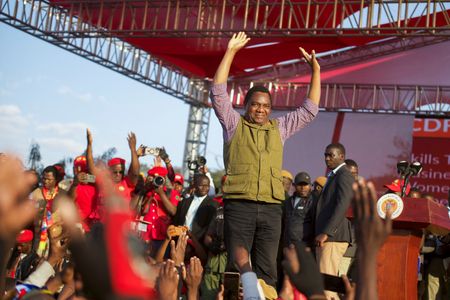

LUSAKA, Zambia — Zambia is preparing for an August presidential election in which incumbent President Hakainde Hichilema is considered the frontrunner for a second term, though opposition leader Brian Mundubile is shaping up to be a formidable challenger.
The election is widely being seen as a judgment on Hichilema’s handling of the economy since he came to power in 2021, when he inherited a country still reeling from a sovereign debt default.
Zambia, Africa’s second-largest copper producer, has experienced an economic turnaround backed by strong copper prices following a debt restructuring deal. However, the rising cost of living continues to weigh on many citizens — a vulnerability the opposition intends to highlight.
Annual inflation dropped to 6.5% in June, the lowest it has been in over eight years, pointing to a meaningful recovery from the country’s debt crisis. Still, many households say they continue to feel financial pressure.
At his campaign launch in the capital Lusaka, Hichilema addressed supporters directly: “A lot of our families still need support beyond what we are delivering today, but I want you to know we hear you.”
Hichilema, 64, is a businessman who won by a wide margin in 2021, defeating the late former president Edgar Lungu. His challenger, Mundubile, is a 55-year-old lawyer and former member of parliament who had never previously run for president. He entered the race relatively late after a divided opposition united behind him.
Despite Zambia’s history of peaceful democratic transitions, the opposition has leveled accusations that Hichilema has limited their ability to campaign and cracked down on political dissent — allegations the president denies.
A cybercrime law introduced in 2025 has drawn criticism from civil society organizations, who argue its broad language could discourage people from expressing themselves online. Additionally, Hichilema signed constitutional amendments in December that will expand the size of parliament — a change critics say could benefit his party.
In an interview with Reuters, Mundubile described a difficult environment for opposition activity: “Any dissenting voice is regarded as an enemy of the state, so it’s been very difficult for the opposition to engage their members.” He also said opposition gatherings had been broken up by police.
Hichilema, meanwhile, is leaning on positive economic data to make his case to voters. The International Monetary Fund projects Zambia’s economy will grow 4.3% this year, up from 3.8% in the prior year, and foreign investment has been increasing.
A survey conducted late last year by the Zambia Election Research Network found that 51% of respondents anticipated a free and fair vote, and 55% said they planned to support Hichilema — though the poll was completed before Mundubile formally entered the race.
“While the opposition started late to mobilise and organise, they should not be dismissed,” said Lee Habasonda, a political science lecturer at the University of Zambia.
The president also benefits from the advantages of incumbency, including access to government resources and aircraft, while his rivals must travel by road through a country roughly three times the geographic size of the United Kingdom.
Mundubile, however, argues that the government’s economic numbers have not translated into real improvements for everyday Zambians. “How can you boast that you have built $6.5 billion in foreign reserves when your people are going hungry?” he said at a campaign rally last month.