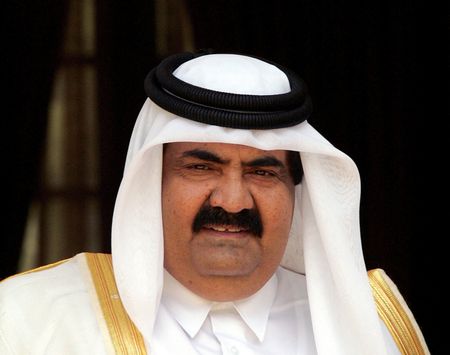

DOHA — Sheikh Hamad bin Khalifa Al-Thani, Qatar’s former emir who dramatically reshaped the tiny Gulf nation over nearly two decades in power, has passed away at the age of 74.
Qatar’s highest government authority, the Amiri Diwan, announced Sunday morning that Sheikh Hamad had died, offering no details about the cause of his death.
By the time Sheikh Hamad handed leadership to his son, the current Emir Sheikh Tamim bin Hamad Al-Thani, Qatar had already undergone a sweeping transformation driven by the elder ruler’s vision and ambition.
During his tenure, Sheikh Hamad oversaw one of the most significant chapters in Qatar’s history, guiding the country through rapid change that redefined its economy, international standing, and political reach.
Known for his strong will and independent thinking, Sheikh Hamad addressed the nation during his 2013 abdication, expressing his desire for a younger generation — one with “innovative ideas and active energies” — to carry the country forward.
Among his most lasting contributions was building out Qatar’s liquefied natural gas infrastructure, which allowed the country to tap into its enormous gas reserves and sell them on the world market. That move transformed Qatar into one of the globe’s top energy exporters and built the financial foundation for its remarkable wealth.
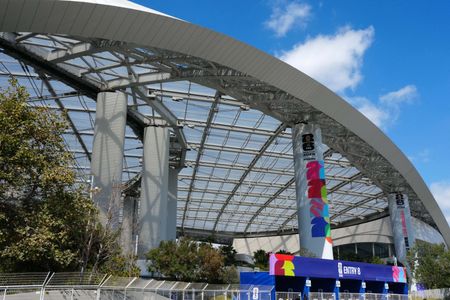
Sheikh Hamad also founded the Al Jazeera media network, which gave Qatar an influential voice throughout the Arab world and extended its reach well beyond the Gulf region. He additionally guided Qatar’s successful campaign to host the 2022 FIFA World Cup — a milestone that thrust the nation onto the global stage and sparked a decade of massive infrastructure development that transformed the capital city of Doha.
His approach to foreign policy positioned Qatar as a go-between in various international disputes, helping to broker negotiations in conflicts spanning Lebanon, Yemen, and Darfur. At the same time, Qatar maintained relationships with the United States — including hosting U.S. Central Command — as well as Iran and groups aligned with Tehran. That careful balancing act set the stage for Qatar’s ongoing involvement in talks between the U.S. and Iran, and in its extended efforts to help end the war in Gaza.
During the Arab Spring uprisings of 2011, Qatar under Sheikh Hamad took an active and divisive role, channeling its resources and influence to support revolutionary movements and Islamist groups throughout the region. While Doha described its actions as backing popular calls for political change, critics charged that Sheikh Hamad was selectively supporting factions that served Qatar’s own interests — particularly those tied to the Muslim Brotherhood.
That stance created friction with neighboring Gulf monarchies in Saudi Arabia and the United Arab Emirates, which viewed such movements as threats to regional stability and their own hold on power. Although Qatar’s regional influence grew, so did tensions with its neighbors, and the effects of that era continue to reverberate in Gulf politics today.
Sheikh Hamad’s decision to step down was partly aimed at ensuring a smooth transfer of power and reducing the risk of internal conflict within a royal family long marked by palace intrigue. He had himself come to power through a bloodless coup against his own father in 1995, and just a year later survived an attempted counter-coup believed to have been orchestrated by his father — who had similarly taken power in 1972 by removing his cousin.
One of Sheikh Hamad’s closest partners in reshaping Qatar was one of his wives, Sheikha Moza bint Nasser, whose public presence was unusual for a spouse of a Gulf ruler. As Sheikh Hamad worked to reposition Qatar at home and internationally, Sheikha Moza pursued a complementary agenda focused on education, research, and social development.
When he first came to power, Sheikh Hamad was the youngest head of state in the region at 44 years old. Unlike many Gulf Arab leaders, he was known for being approachable — often found at a favorite café in Doha’s souq, engaging with ordinary patrons.