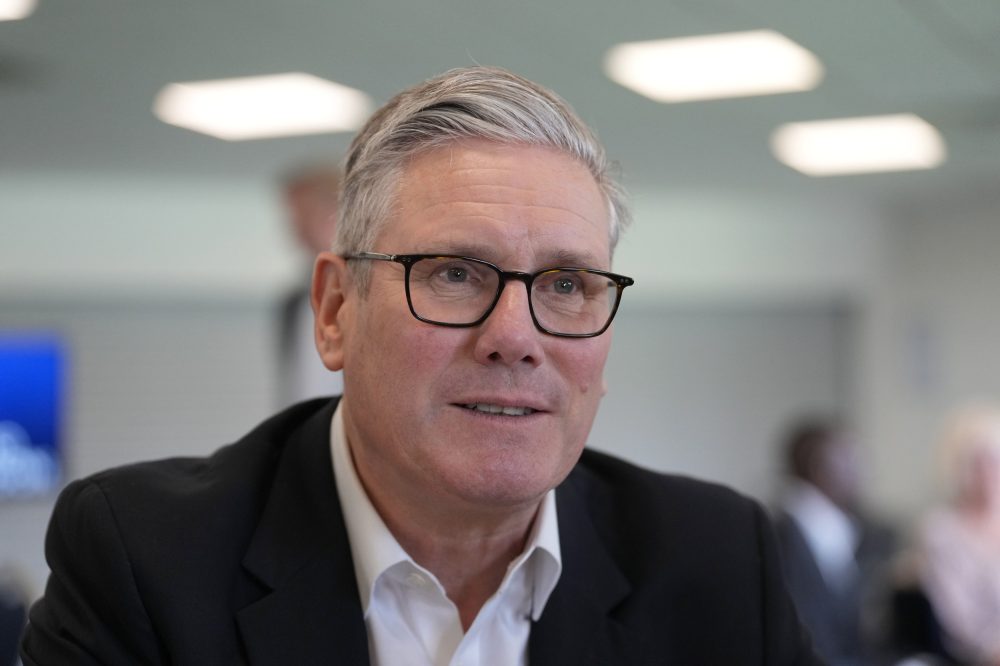

LONDON — British Prime Minister Keir Starmer faces mounting pressure to step down as dozens of lawmakers demand his resignation following crushing defeats for his Labour Party in recent local elections.
The embattled leader plans to deliver a critical speech Monday in an attempt to demonstrate he can shift course and restore his government’s standing. However, his position remains precarious as political rivals consider their next moves. Lawmaker Catherine West has threatened to initiate a leadership challenge if Starmer’s Monday address fails to meet her expectations.
Angela Rayner, the former Deputy Prime Minister who many view as a possible successor, stopped short of directly demanding Starmer’s departure but emphasized that the party “needs to change.”
“The prime minister must now meet the moment and set out the change our country needs,” Rayner stated.
The prime minister is attempting to rebuild support following significant defeats for his center-left party in English local elections and legislative races in Scotland and Wales. Political observers widely interpreted last week’s voting as an unofficial judgment on Starmer’s leadership, whose approval ratings have nosedived since his landslide victory less than two years ago.
His administration has failed to deliver on promises of economic expansion, improvements to struggling public services, and relief from rising living costs. The government has also been weakened by a series of blunders and policy reversals on matters including welfare changes. Starmer’s standing took another hit with his controversial choice to name Peter Mandelson, who has connections to Jeffrey Epstein, as Britain’s ambassador to the United States.
The recent elections showed Labour losing support from multiple directions, with voters abandoning the party for both the anti-immigration Reform UK party and the environmentally-focused Green Party. This demonstrates the growing political fragmentation in Britain, historically controlled by Labour and Conservative parties.
Despite the turmoil, Starmer expressed to The Observer newspaper Sunday his intention to remain in power for ten years. He’s counting on Monday’s address and an extensive legislative agenda that King Charles III will outline Wednesday during the State Opening of Parliament.
A central element of his strategy involves strengthening relationships with the European Union, which Britain departed in 2020 following a narrow “leave” victory in a 2016 referendum. Starmer’s administration has already begun reducing some trade barriers that have challenged British companies since Brexit, and he promises to negotiate a youth mobility agreement allowing young people to work throughout Europe for several years.
“Brexit has held back our young people,” Starmer told The Observer, stating that “we have to be closer to Europe.”
While Labour supported remaining in the EU during the 2016 campaign, the party has hesitated to restart a debate that deeply divided Britain. Starmer has rejected pursuing EU membership again or rejoining the EU’s customs union or single market, moves that would significantly benefit UK businesses.
High-profile Labour figures viewed as potential rivals to Starmer — including Rayner, Health Secretary Wes Streeting, and Greater Manchester Mayor Andy Burnham — have not demanded his resignation.
However, increasing numbers of Labour legislators are urging the prime minister to establish a departure timeline. British political system permits parties to replace leaders during their term without requiring new elections.
Josh Simons, a previously loyal Labour representative, wrote in the Times of London that Starmer “has lost the country” and “should take control of the situation by overseeing an orderly transition to a new prime minister.”
West, a former junior minister, is attempting to accelerate the process by threatening to initiate a leadership contest unless Starmer delivers an exceptional speech Monday. West admitted she lacks support from the 81 colleagues required to force such a contest, and her action appears designed to pressure more prominent contenders to act.
“Working people sent us a message,” West declared. “We have to listen to that, and we have to change and we have to do it quickly.”