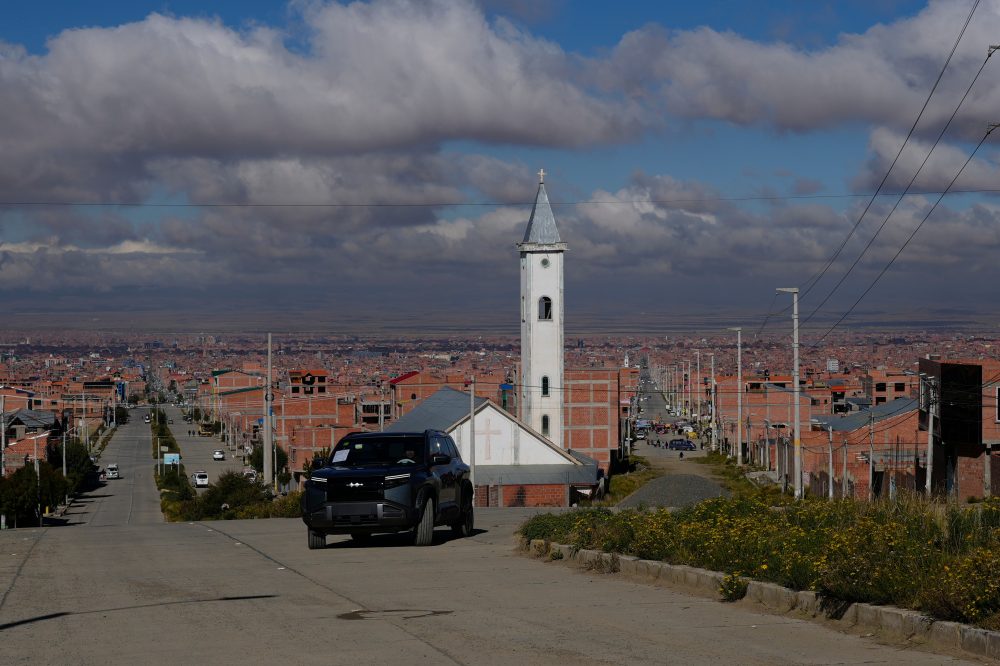

LA PAZ, Bolivia — Fed up with fuel shortages and rising gas prices, Simón Huanca decided to take action.
The 53-year-old Indigenous craftsman purchased a Chinese electric vehicle to get around El Alto, Bolivia’s highest-elevation city, using it to transport his family and alpaca wool for his textile business.
Huanca even put in his own charging station at home for convenience, since only three public charging points exist for the entire metropolitan region of El Alto and nearby La Paz — an area with over 1.6 million residents.
“Since last year, I’ve been trying to get an electric car to save on costs,” Huanca said while driving his electric SUV through a working-class district.
Huanca represents a small but increasing group of Bolivians switching from gas-powered vehicles to electric ones as the South American nation faces fuel shortages and a presidential order that eliminated longtime fuel subsidies, essentially doubling gasoline costs.
Bolivia’s energy problems intensified in 2023 during former President Luis Arce’s administration, which maintained government subsidies where the nation bought fuel at world prices but sold it domestically at half the cost.
However, Bolivia — which brings in 80% of its diesel and 55% of its gasoline from other countries — slowly exhausted its foreign currency reserves to buy fuel, with the subsidy costing the government over $2 billion annually.
Extended lines of cars at gas stations became routine.
In December — just one month after assuming office — President Rodrigo Paz eliminated the subsidy, causing energy costs to nearly double and severely impacting Bolivians.
Several weeks afterward, transportation workers complained that inferior gasoline was harming their vehicles. The administration blamed sabotage, with Paz stating that fuel distributed by state oil company Yacimientos Petrolíferos Fiscales Bolivianos contained gum and manganese residue left in storage tanks from the previous Arce government.
The contaminated fuel controversy sparked widespread strikes and demonstrations among transport workers and led to two senior officials at the state oil company stepping down.
The final breaking point for many Bolivians was the Iran conflict. Confronted with potential additional fuel price increases, some exchanged their gasoline vehicles for electric alternatives.
“The investment exceeds $36,000, but I no longer waste valuable working hours searching for fuel or managing vehicle repairs,” said Ever Vera, a 54-year-old attorney.
Electric vehicle registrations in Bolivia increased from 500 to 3,352 over the past five years, based on Single Registry for Tax Administration data tracking tax-registered vehicles. The biggest jump occurred in the last two years during the fuel crisis. These still represent only a small portion of approximately 2.6 million vehicles in the nation of nearly 12 million people.
Most of these vehicles came from China, with the United States as the second-largest source.
“The growth is exponential,” said Freddy Koch, an electric mobility specialist with nonprofit organization Swisscontact. While noting these vehicles are currently purchased by wealthier buyers, he anticipates broader market appeal and projects the electric vehicle total could triple within two to three years.
Paz also removed import duties on all automobile types, increasing the number of importers competing to bring these vehicles into Bolivia at reduced prices.
The growing electric vehicle market has opened new business prospects for 38-year-old electrician Marcelo Laura. A month ago, he discovered a profitable specialty installing home and business charging stations.
“There aren’t many public charging stations,” he said. “A year ago, I thought it was practically impossible to think that people would actually be bringing in electric cars.”