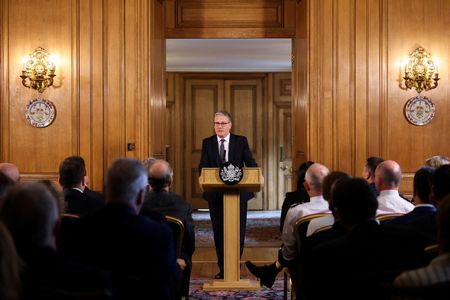

LONDON – British Prime Minister Keir Starmer is mounting a desperate effort to save his political career, planning to announce Monday that strengthening ties with Europe will become the cornerstone of his administration’s new direction amid escalating demands for his resignation.
The Labour Party leader finds himself in serious jeopardy following devastating defeats in last week’s local elections, which marked the worst performance by a ruling party in over thirty years. More than 30 members of parliament from his own party have demanded either his immediate resignation or a clear timeline for his departure.
According to advance excerpts from his upcoming address, Starmer plans to acknowledge that “incremental change won’t cut it” and will admit the scope of necessary reforms for economic recovery, military reconstruction, and energy independence exceeds his initial expectations.
While the speech preview contains no specific new policy announcements, Starmer intends to declare his administration “will be defined by rebuilding our relationship and by putting Britain at the heart of Europe” – a significant shift nearly ten years after the Brexit vote.
This European focus could resonate well with Labour parliamentarians and younger demographics, as recent polling indicates approximately 60% of British citizens now view the EU departure as an error.
Nevertheless, such efforts to restore European connections would create complex challenges, including potential agreements to increase European immigration in exchange for enhanced EU market access. This approach would likely draw fierce resistance from conservative Eurosceptic movements and certain media organizations.
Starmer secured one of the most commanding parliamentary victories in recent British political history during 2024, campaigning on promises to stimulate economic growth, reduce unauthorized immigration, and eliminate healthcare waiting periods in the national health system.
His administration’s progress has stalled due to policy reversals, internal party criticism regarding his reluctance to make tough choices, and multiple political controversies, resulting in approval numbers among the lowest recorded for any British leader.
In his forthcoming remarks, Starmer will concede his government has sometimes fallen short of delivering the transformation voters expected, stating that “people need hope” while expressing readiness to “face up to the big challenges” confronting the nation.
The crisis intensified when former deputy prime minister Angela Rayner issued a rare public warning Sunday that the Labour Party might be approaching its “last chance” for course correction.
Additionally, Catherine West, a relatively unknown former junior minister, demanded over the weekend that cabinet members remove the prime minister. She threatened that if they refuse by Monday and she finds his speech unsatisfactory, she will personally attempt to initiate leadership proceedings.
However, the Labour Party has never successfully ousted one of its prime ministers throughout its 125-year existence.
Party regulations require 20% of parliamentary members – totaling 81 lawmakers – to unite behind a single alternative candidate to launch a leadership challenge.
Thus far, none of Starmer’s primary potential successors have acted against him. Andy Burnham, Greater Manchester Mayor and considered a leading replacement candidate, lacks parliamentary membership and cannot mount a challenge.
This threat to Starmer’s leadership, occurring less than two years following his electoral triumph, exemplifies Britain’s growing governance difficulties.
Should Starmer face removal in coming weeks, Britain would experience its seventh prime minister within the past decade, representing unprecedented political instability in nearly 200 years.
Political experts attribute this pattern to multiple factors: sluggish economic expansion since the 2007-2009 financial crisis, stressed government budgets particularly after extensive pandemic borrowing, and deep political divisions following Brexit.