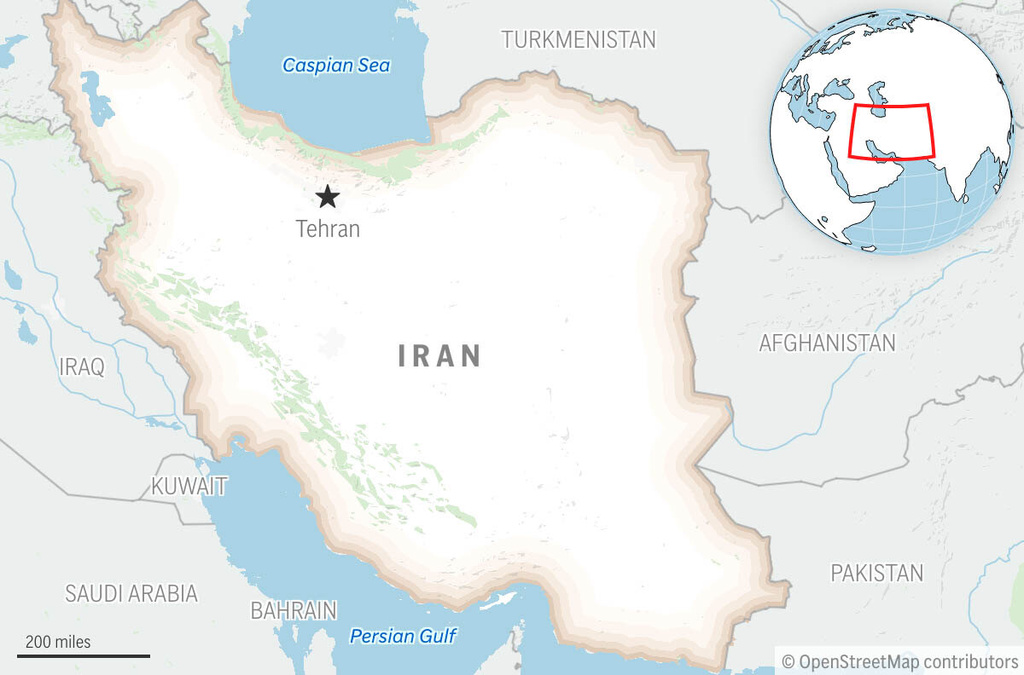

DUBAI, United Arab Emirates — Iran’s Revolutionary Guard naval forces issued stark warnings on Saturday, threatening massive retaliation against U.S. military installations in the region and enemy vessels if Iranian commercial ships or oil tankers face any strikes, despite an ongoing fragile truce that appears to be maintaining stability.
UK Sends Naval Vessel to Middle Eastern Waters
The British defense ministry announced plans to dispatch a warship to Middle Eastern waters as part of preparations for a possible mission safeguarding commercial vessels traveling through the Strait of Hormuz after current hostilities conclude.
Officials stated that the HMS Dragon would establish a strategic position in the area, prepared to participate in a security initiative spearheaded by the United Kingdom and France. This week, France declared it was repositioning its aircraft carrier battle group to the Red Sea as part of these preparations.
The UK and France have organized discussions with dozens of nations regarding an alliance aimed at restoring safe passage through the waterway. However, officials emphasize that operations will not commence until a lasting truce is established and shipping companies feel confident about vessel safety in the strait.
Round-the-Clock Diplomatic Efforts Continue
President Donald Trump has restated warnings about resuming comprehensive bombing campaigns unless Iran agrees to reopen the strait and scale back its nuclear activities. On Friday, Iranian foreign ministry representative Esmail Baghaei stated through state media IRNA that the nation was disregarding imposed “deadlines.”
Diplomatic negotiations persist. Pakistani Prime Minister Shehbaz Sharif revealed his nation has maintained continuous communication with both the United States and Iran “day and night” while working to extend the current truce and achieve a comprehensive peace settlement.
Russia’s foreign ministry announced that both Russia and Saudi Arabia are advocating for diplomatic initiatives to establish a “sustainable, long-term agreement” that would conclude the conflict.
In a separate development, Putin informed Moscow reporters that removing enriched uranium from Iran as part of settlement negotiations would provide transparency regarding “how much of it there is, and where it is located,” adding that “all of this would be placed under the control of the IAEA,” referring to the United Nations nuclear monitoring agency.
Senior diplomats from Egypt and Qatar emphasized that diplomatic solutions represent the only viable path forward, according to an official summary of a telephone conversation between both nations’ foreign ministers.
Iran’s new Supreme Leader Mojtaba Khamenei has remained absent from public view and has not made any public statements since hostilities began, generating questions about his current situation.
On Friday, a senior Iranian official confirmed that Khamenei was in “complete health” and would eventually make public appearances. Mazaher Hosseini, connected to the office of Iran’s former supreme leader, Ayatollah Ali Khamenei, who died when the war started, spoke at a government-supporting event. Hosseini explained that Mojtaba, the late Khamenei’s son, sustained knee and back injuries during the conflict’s initial attacks but has mostly recovered.