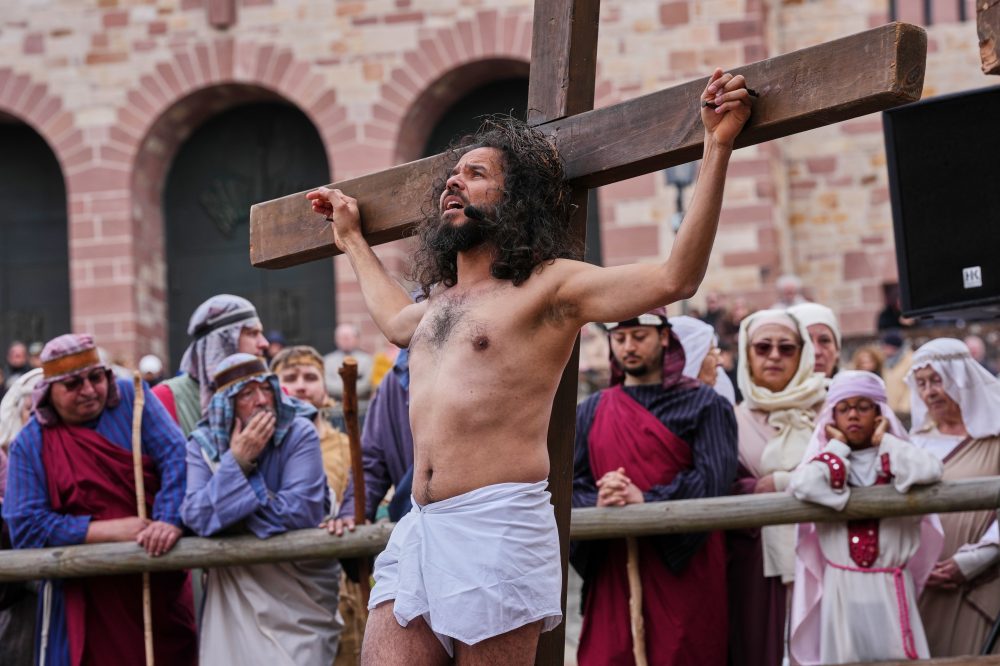
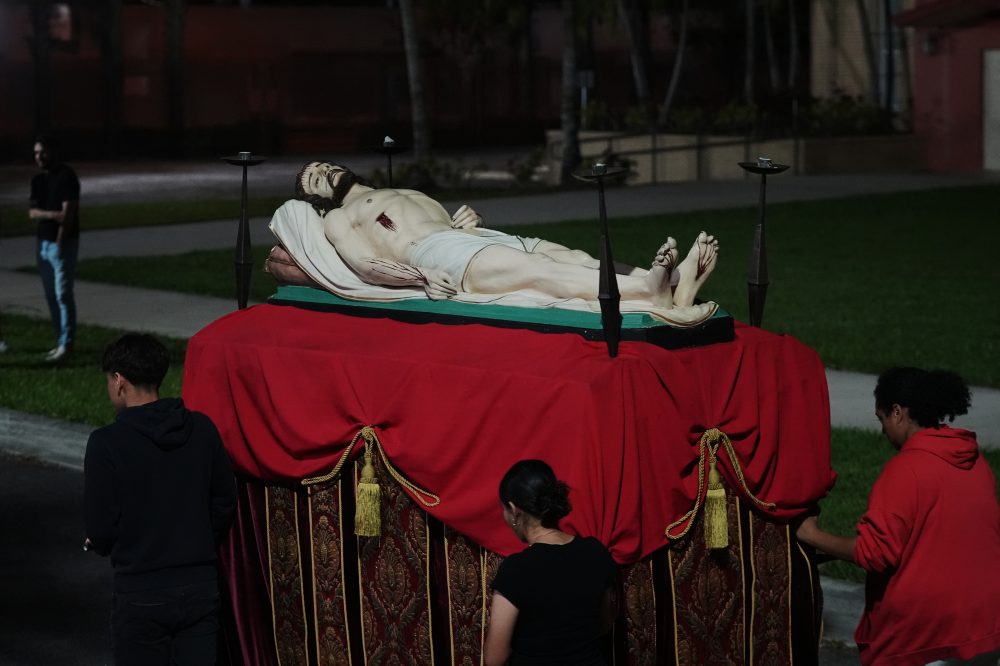
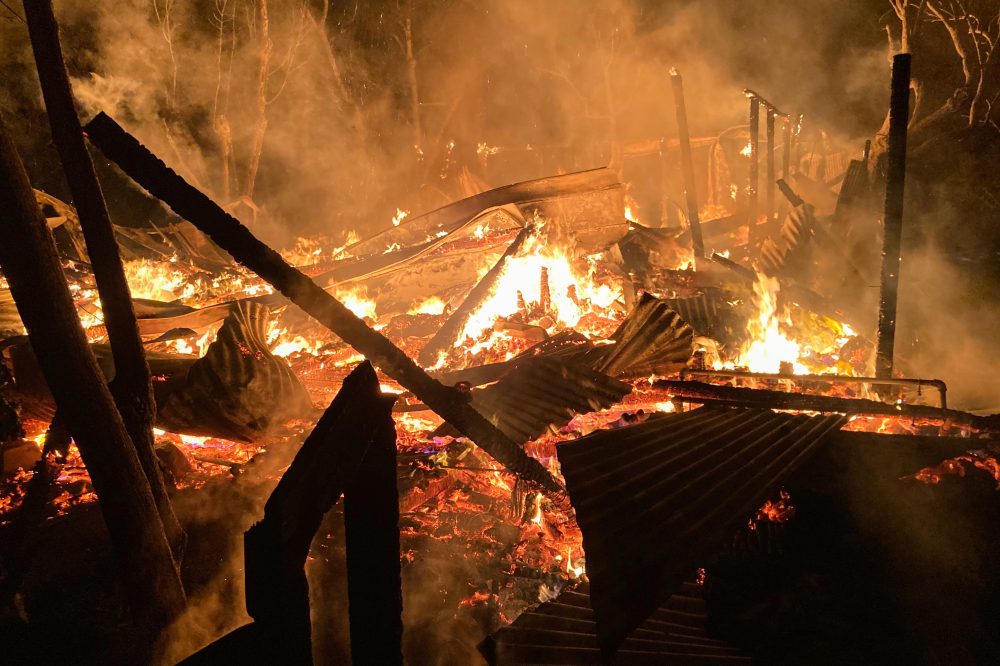
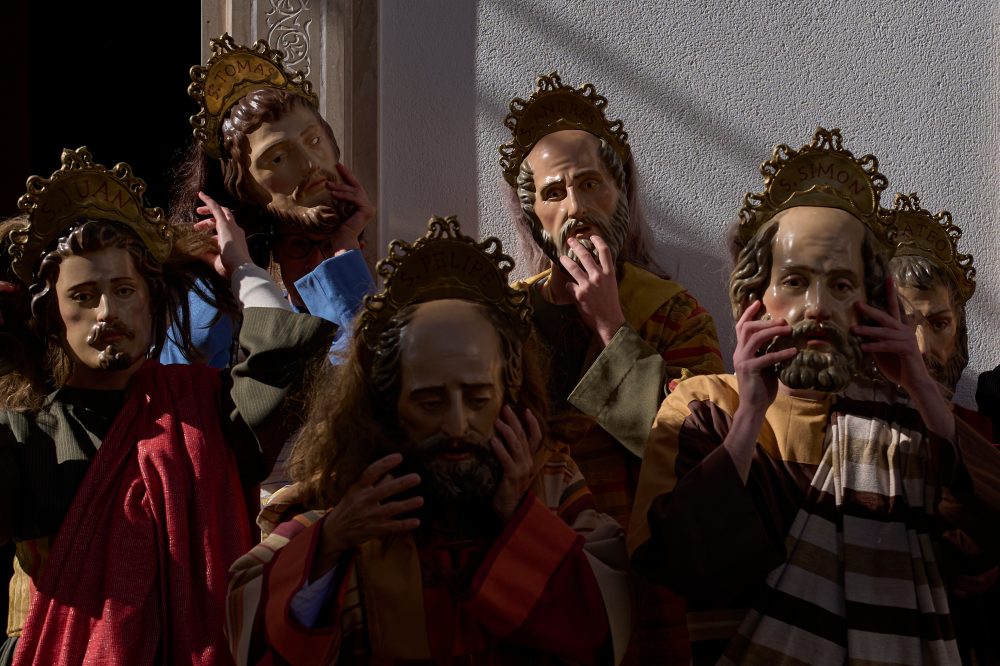
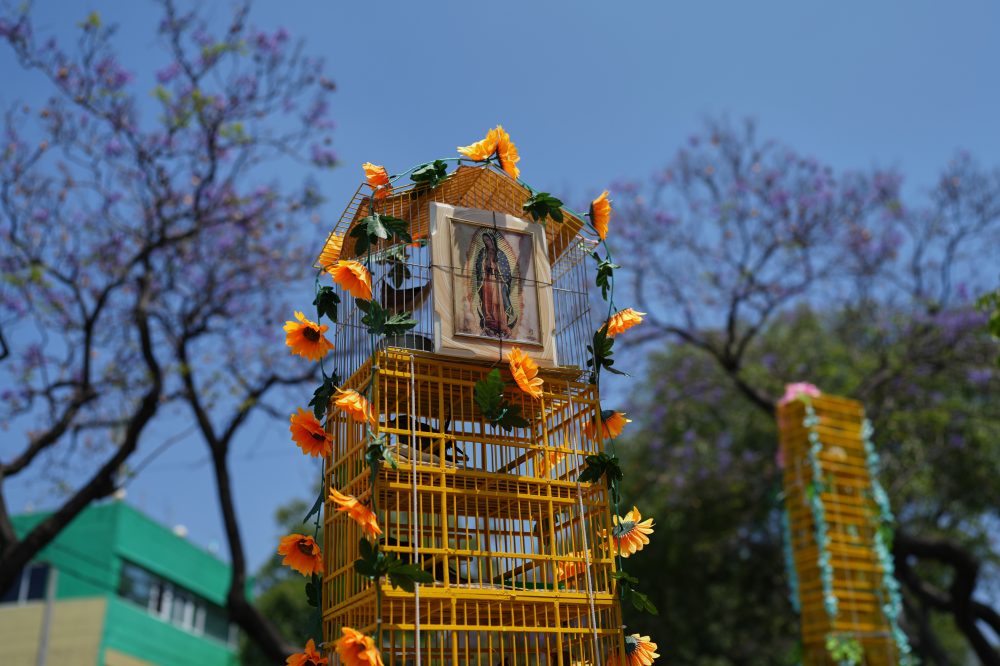
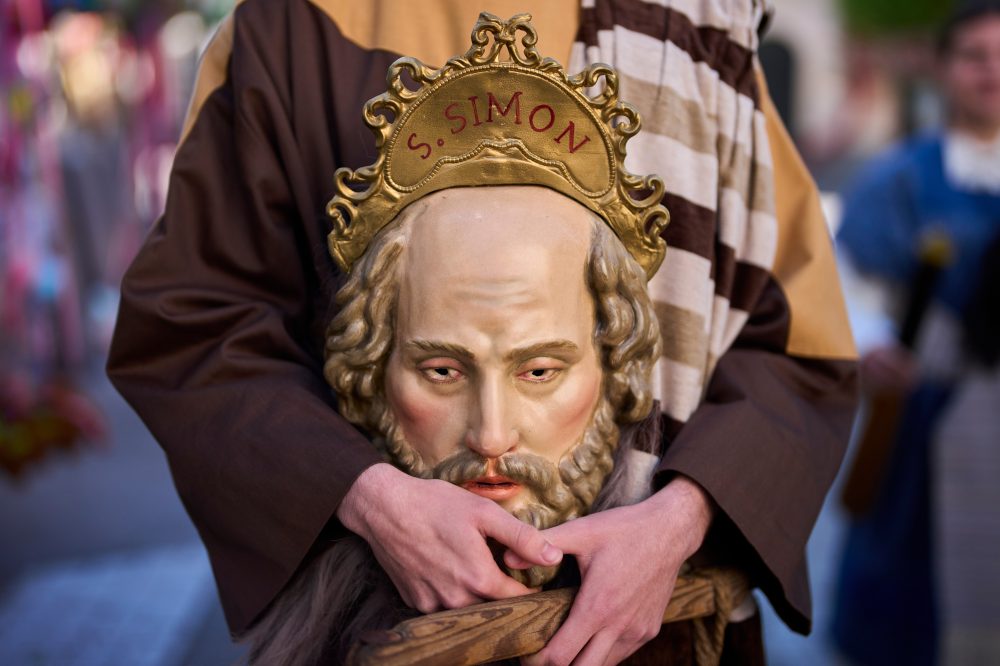
A prominent Christian organization has spoken out against an Easter ritual in southern Spain that involved burning a massive figure depicting Israeli Prime Minister Benjamin Netanyahu, labeling the ceremony as antisemitic.
The International Christian Embassy Jerusalem issued strong criticism of the event that took place in El Burgo, a town in southern Spain, where participants burned a 23-foot tall representation of Netanyahu during their Easter observance.
ICEJ President Dr. Jürgen Bühler explained that this “Burning of Judas” tradition has roots in medieval customs that historically promoted antisemitic stereotypes, depicting Jewish people as greedy, responsible for Christ’s death, or inherently wicked. Bühler argued that these outdated practices should be eliminated from modern religious observances and prohibited by the Catholic Church, consistent with changes made during the Vatican II Council.
According to the organization, comparable events have occurred in other nations including Mexico, Poland, and Greece in recent years. They referenced a particularly controversial incident in Pruchnik, Poland, where participants created a Judas figure dressed as an Orthodox Jew, which sparked widespread criticism for its resemblance to Nazi-era antisemitic propaganda.
The Christian Embassy connected this Spanish incident to recent political tensions, noting Spanish Prime Minister Pedro Sánchez’s accusations that Israel is committing genocide and “exterminating” Palestinians. They also pointed to Spain’s diplomatic actions, including support for arms embargoes, punitive measures against Israel, and Spain’s formal recognition of Palestinian statehood in 2024.
“The International Christian Embassy in Jerusalem denounces this outrageous antisemitic display carried out during the most sacred celebration in the Christian calendar, that of Easter,” their official statement declared. The group demanded that Spain’s Catholic Church provide “a clear and unequivocal condemnation and apology.”
The organization also called on Vatican leadership to reassess what they characterized as biased criticism of Israel and to work toward preventing similar incidents worldwide.
“Instead of condemning Israel and the Jews, Good Friday could be more meaningfully used to remember those Christians who ‘share in Christ’s sufferings,’” their statement continued, highlighting persecution of Christians in Nigeria, Sudan, and the Democratic Republic of the Congo.
The ICEJ emphasized that Easter observances “must never be used as an occasion to disparage Jews,” citing the New Testament passage: “Salvation is from the Jews.”
Following ten years of legal and cultural wins for LGBTQ rights advocates, the movement now faces mounting opposition across the United States. Recent years have brought significant pushback, particularly regarding transgender policies affecting minors. Multiple states have enacted legislation prohibiting biological males from participating in women’s athletics, while others have restricted gender transition procedures for children. At least nine states are now pursuing resolutions aimed at reversing legal recognition of same-sex marriages. Most of these measures call upon the Supreme Court to reconsider its landmark 2015 ruling that legalized such unions nationwide. While these resolutions lack legal authority, they could potentially encourage fresh challenges to reach the nation’s highest court.
The Department of Education announced it has canceled agreements from the Biden administration with five school districts and one college that were designed to advance transgender policies. This decision means the Trump administration will no longer enforce these agreements, which required schools to conceal students’ gender identity information from parents and mandated the use of students’ preferred pronouns. In a statement, the Education Department explained: “The administration is removing the unnecessary and unlawful burdens that prior administrations imposed on schools in its relentless pursuit of a radical transgender agenda.”
In Texas, public school students may soon be required to read biblical narratives like the story of Jonah and the whale under new proposals currently under review. During lengthy hearings this week, religious leaders, educators, parents, and students presented arguments to the state education board regarding reading materials for Texas’s 5.4 million students from kindergarten through 12th grade. The board is simultaneously reviewing social studies curriculum standards that critics claim focus too heavily on state-specific content. These reading requirements originate from 2023 state legislation mandating the development of an officially approved list of quality reading materials. Board members are expected to make their final decision in June.
The Center for Small Town Jewish Life at Colby College continues its mission to preserve synagogues in America’s rural communities. Launched ten years ago to support Jewish congregations located far from metropolitan areas, the center now operates programs serving more than 60 communities across over 20 states. According to the organization, one out of every eight Jewish Americans resides outside major urban centers, and the center works to help these communities flourish. This initiative comes at a time when synagogue numbers nationwide are declining and fewer rabbis are available to serve Jewish populations in smaller towns.
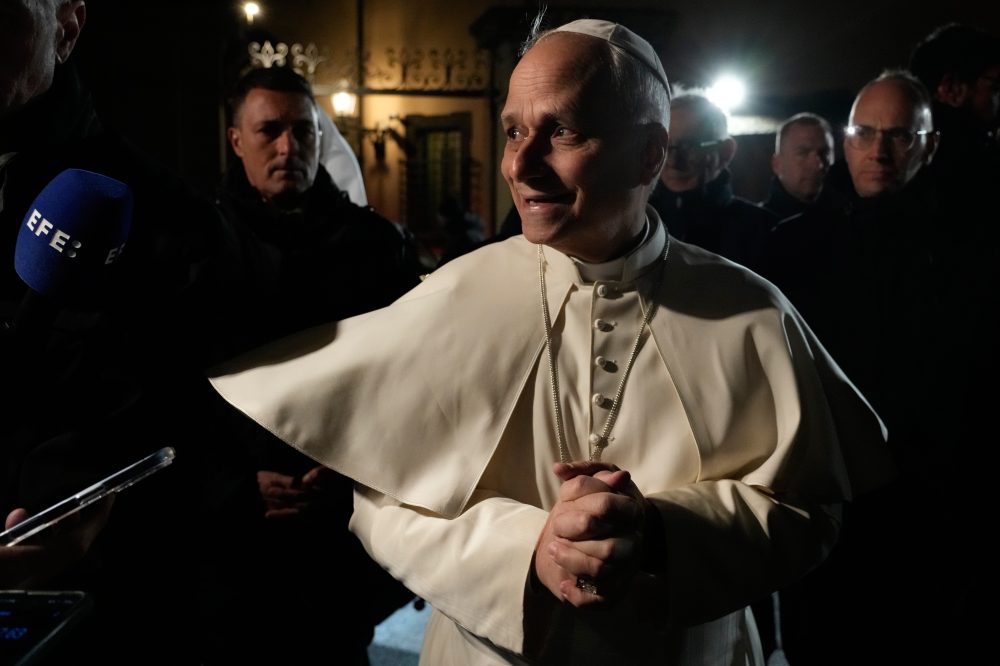
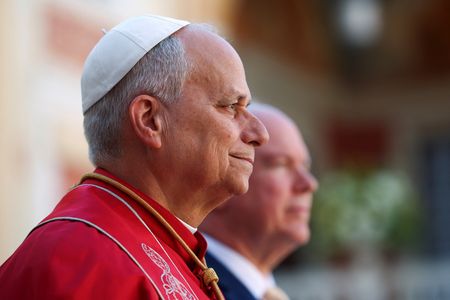
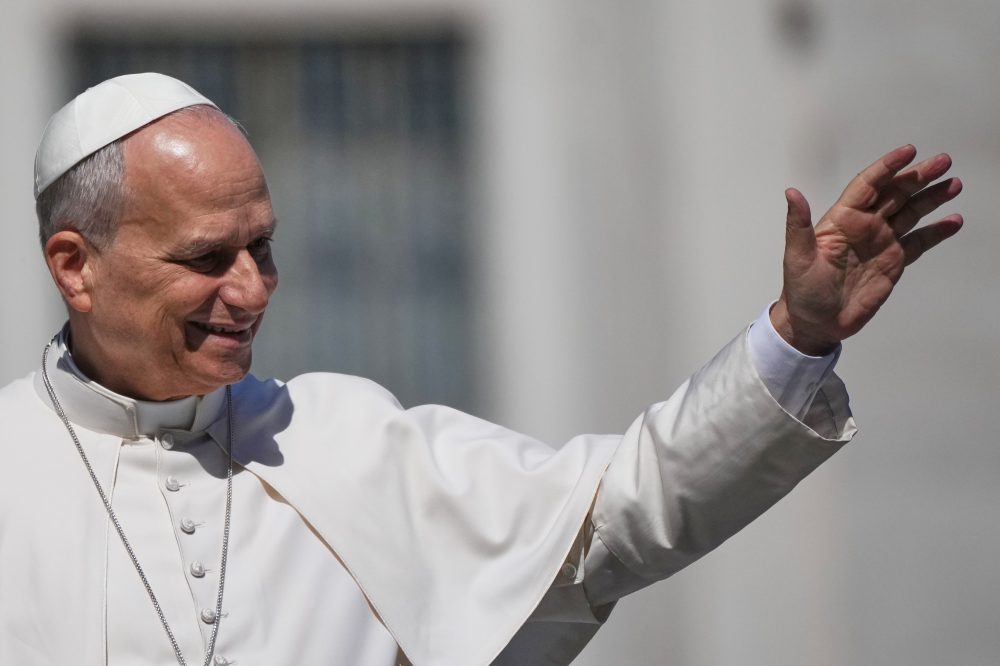
VATICAN CITY, April 11 – During a special prayer ceremony at St. Peter’s Basilica on Saturday, Pope Leo delivered a passionate plea for global peace, condemning what he described as the “madness of war” while high-ranking American and Iranian representatives conducted diplomatic meetings in Pakistan to address their ongoing six-week military confrontation.
The pontiff, who holds the distinction of being America’s first pope, criticized the practice of using religious rhetoric to support military actions and warned that a “delusion of omnipotence that surrounds us … is becoming increasingly unpredictable.”
In his direct message to international leaders, Leo declared: “Stop! It is time for peace! Sit at the table of dialogue and mediation, not at the table where rearmament is planned.”
The pope, recognized for his deliberate choice of language, has become a vocal opponent of the Iranian conflict. During Saturday’s service, he employed strong rhetoric to condemn warfare, referencing correspondence from children living in conflict areas that he said depicted “horror and inhumanity.”
Leo also recalled the Catholic Church’s stance against the 2003 American-led invasion of Iraq, mentioning a plea made by the late Pope John Paul II just four days prior to that conflict’s beginning.
“Enough of the idolatry of self and money!” the pope proclaimed. “Enough of the display of power! Enough of war!”
The pontiff, who previously stated on March 30 that God refuses the prayers of leaders who initiate wars and possess “hands full of blood,” again criticized the incorporation of Christian rhetoric to support military action on Saturday.
“The balance within the human family has been severely destabilized,” Leo stated. “Even the holy Name of God, the God of life, is being dragged into discourses of death.”
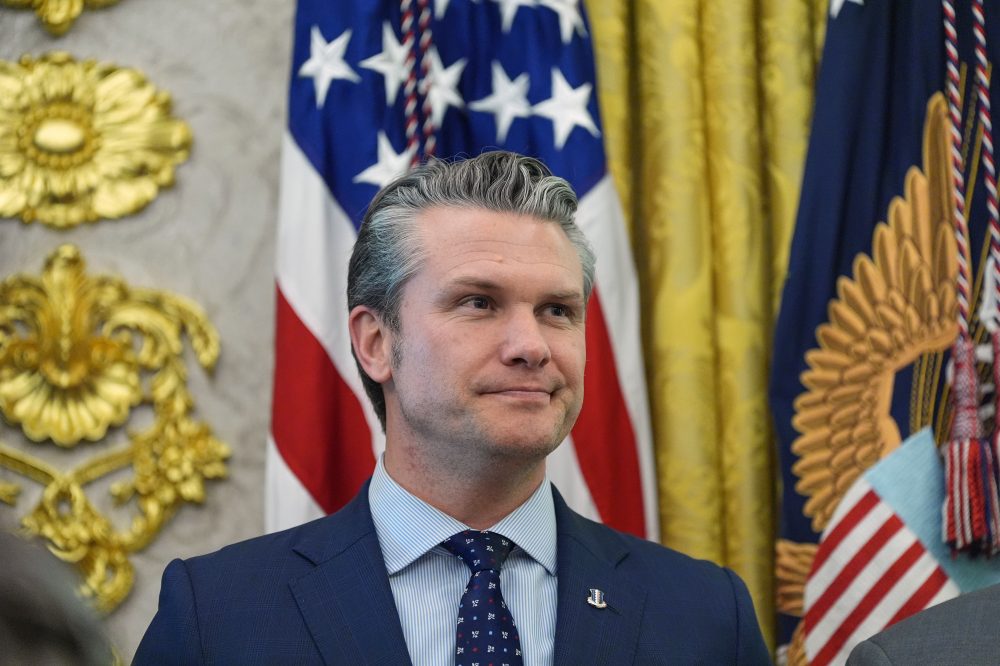
Conservative Catholic observers have suggested the pope’s previous statements targeted U.S. Defense Secretary Pete Hegseth, who has employed Christian terminology to defend the combined American-Israeli military strikes against Iran that began the current war.
The special prayer gathering was first announced by Leo during his Easter address the previous Sunday.
Growing numbers of Christians across America are turning to artificial intelligence technology for spiritual guidance and worship assistance, sparking debate among religious leaders about the practice’s implications.
Research from the Barna Group shows that approximately one-third of American adults place equal trust in spiritual counsel from AI systems compared to guidance from religious clergy. Additionally, 40% of actively practicing Christians report that artificial intelligence has assisted them in their prayer life and biblical studies.
However, there appears to be a disconnect between congregation interest and pastoral preparedness. Only 12% of religious leaders express confidence in discussing AI technology with their church members, creating a significant knowledge gap.
This void has been filled by numerous mobile applications, including some that feature chatbot technology designed to simulate conversations with figures from biblical history. Religious scholars and critics warn that believers should exercise caution when relying on AI for spiritual matters, citing the technology’s known limitations and potential for error.
Meanwhile, Belarus has approved legislation targeting LGBTQ advocacy, following a similar path to neighboring Russia. The upper legislative chamber has given final approval to the bill, which now awaits President Alexander Lukashenko’s anticipated signature.
The new law would impose penalties including fines, community service, and up to 15 days of detention for promoting what lawmakers term “homosexual relations, gender change, refusal to have children and pedophilia.” While Belarus removed criminal penalties for homosexuality in 1994 following the Soviet Union’s collapse, the country does not legally recognize same-sex unions.
In domestic political news, the conservative advocacy group Moms for Liberty is expanding its influence from local school board battles to national policy discussions under the Trump administration. The organization initially gained prominence by challenging what it considers inappropriate educational content in classrooms.
CEO Tina Descovich reports that the group now participates in federal-level conversations regarding transgender athletics policies and artificial intelligence regulation. Advocates say the organization’s growing reach demonstrates the widespread appeal of parental rights issues, which have become central to conservative political platforms. Parents nationwide continue to express concerns about their children’s educational curriculum.
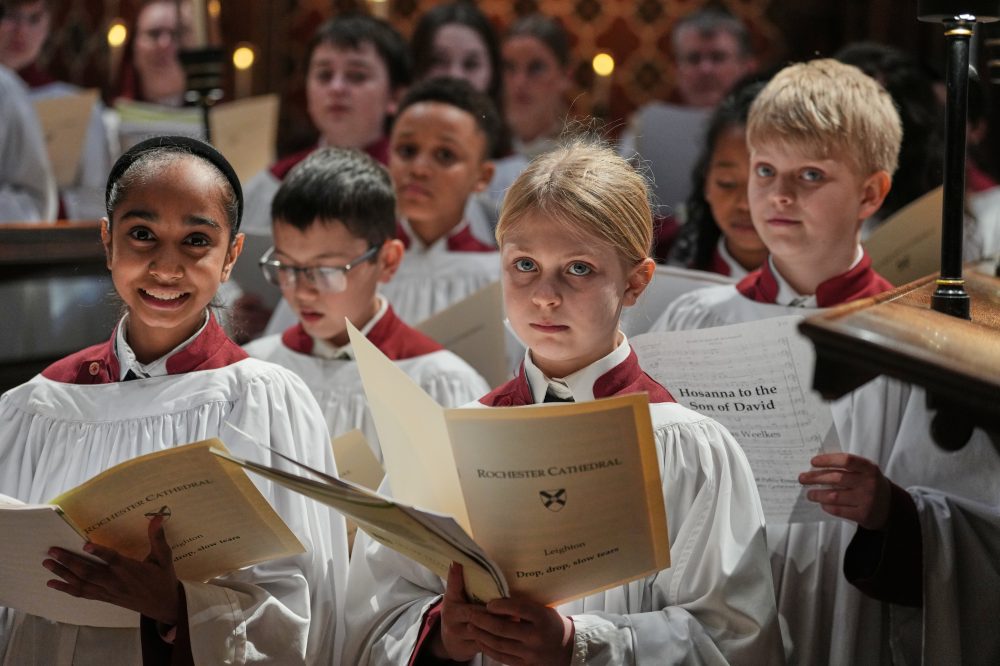
Across the Atlantic, supporters of England’s centuries-old church choir tradition are working to preserve this cultural practice as the nation becomes increasingly non-religious. Advocates have initiated efforts to gain government recognition for choral worship services as significant cultural heritage under a United Nations preservation program.
The cornerstone of British church choir tradition is Evensong, a weekly evening worship service featuring hymns, psalms and prayers originally established by Archbishop Thomas Cranmer of the Church of England in 1549. During these services, trained choirs perform the entire liturgy while congregants participate through active listening rather than singing along.
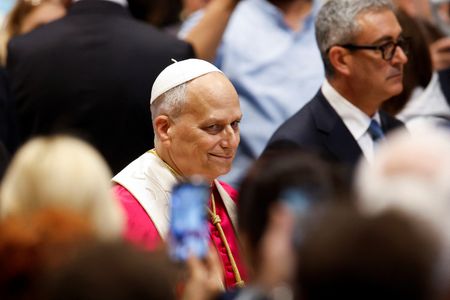
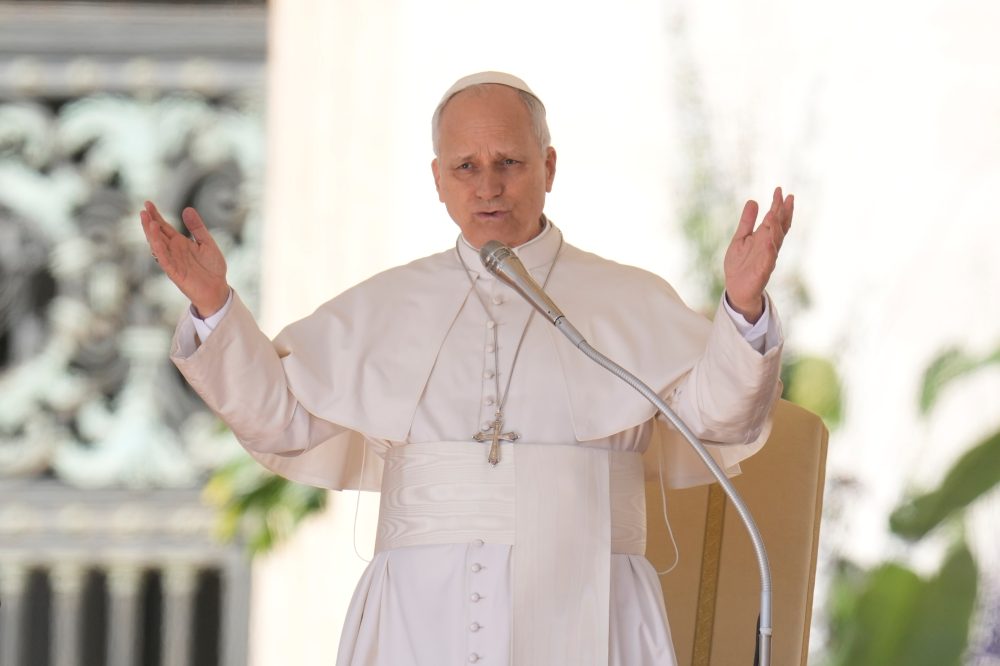
ROME (AP) — Pope Leo XIV delivered his most forceful condemnation to date of the ongoing US-Israeli military conflict in Iran during a Saturday evening prayer gathering, criticizing what he called a “delusion of omnipotence” driving the warfare and urging world leaders to pursue diplomatic solutions.
The pontiff led the prayer ceremony at St. Peter’s Basilica on the same day that American and Iranian representatives started direct diplomatic talks in Pakistan while a tenuous ceasefire remained in effect.
The first pontiff of American origin did not specifically name the United States or President Donald Trump during his remarks, which had been scheduled prior to the announcement of the diplomatic discussions. However, Leo’s language and messaging seemed aimed at Trump and American leadership, who have highlighted US military strength and framed the conflict in religious language.
“Enough of the idolatry of self and money!” Leo declared. “Enough of the display of power! Enough of war!”
Among those attending the basilica service was Tehran’s archbishop, Belgian Cardinal Dominique Joseph Mathieu. The United States was represented through its deputy chief of mission, Laura Hochla, according to the US Embassy.
During the initial phase of the conflict, the Chicago-native Leo showed hesitation in openly criticizing the violence, restricting his statements to gentle calls for peace and conversation. However, beginning on Palm Sunday, Leo intensified his opposition. Earlier this week, he described Trump’s warning to destroy Iranian civilization as “truly unacceptable” and advocated for diplomatic resolution.
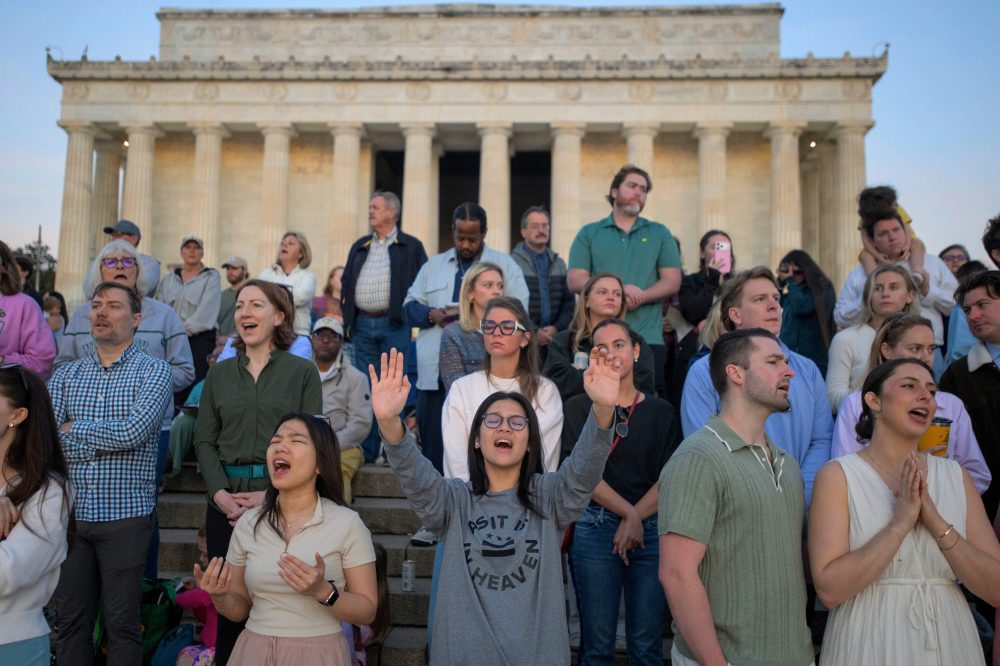
During Saturday’s service, Leo urged all people of conscience to pray for peace and pressure their elected officials to end warfare. The evening ceremony in Rome, which included biblical readings and contemplative Rosary recitation, coincided with similar prayer gatherings occurring across the United States and internationally.
Through prayer for peace, Leo explained, believers could “break the demonic cycle of evil” and instead construct God’s Kingdom without swords, drones or “unjust profit.”
“It is here that we find a bulwark against that delusion of omnipotence that surrounds us and is becoming increasingly unpredictable and aggressive,” he stated. “Even the holy Name of God, the God of life, is being dragged into discourses of death.”
Political figures have invoked religious justification for their wartime decisions. American leadership, particularly Defense Secretary Pete Hegseth, has referenced Christian beliefs to portray the US as a Christian nation fighting to defeat its enemies.
Leo has maintained that God does not support any war, especially those involving aerial bombardment.
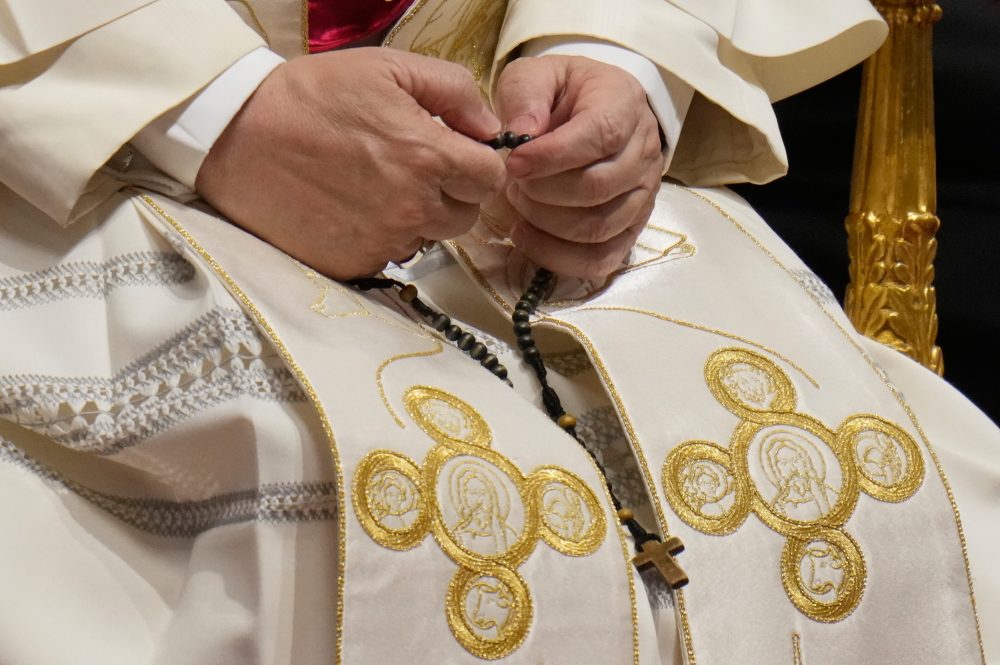
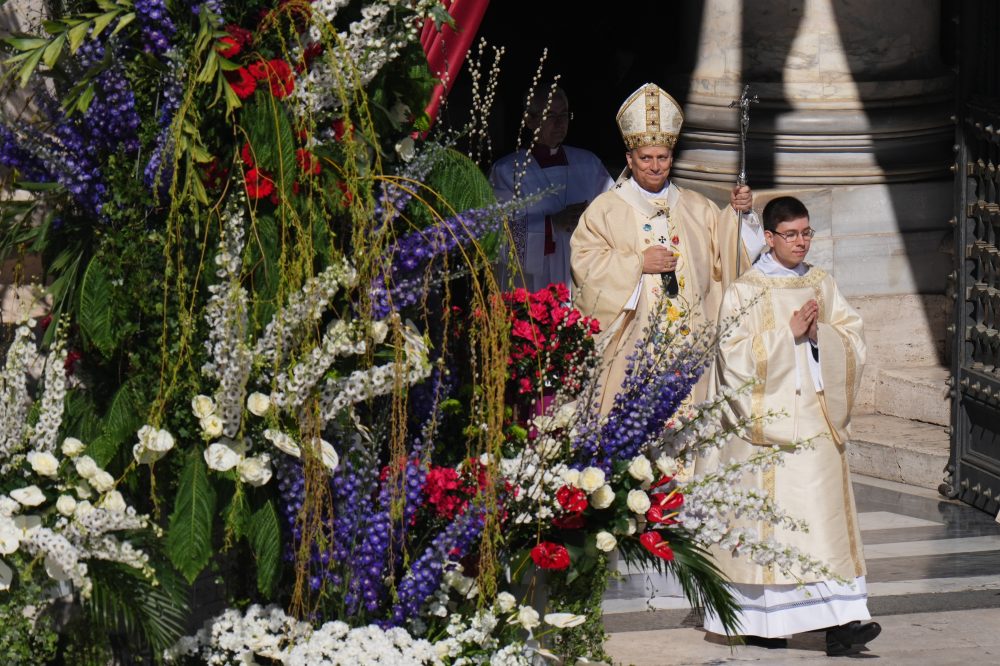
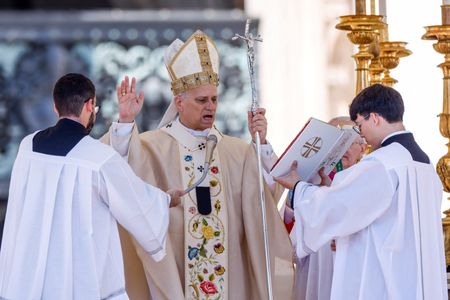
The Pope conducted the service from a white chair positioned beside the altar, dressed in formal red vestments and liturgical garments while holding Rosary beads. Numerous clergy members in attendance also used Rosary beads during the recitation of traditional Catholic prayers.
Vatican officials express particular worry about the expansion of Israel’s military campaign against Hezbollah in Lebanon, considering the vulnerable Christian populations in southern regions.
ROME (AP) — Pope Leo XIV intensified his opposition to the ongoing U.S.-Israeli conflict with Iran during remarks Friday, declaring that divine blessing never accompanies warfare and certainly doesn’t favor nations that engage in bombing campaigns.
The pontiff delivered these comments while addressing senior bishops from the Chaldean Catholic Church of Iraq, an Eastern Rite Catholic denomination whose leadership has gathered in Rome to select a new patriarch.
Leo described the bishops as beacons of hope “in a world marked by senseless and inhuman violence,” particularly in regions where early Christianity flourished that have been “desecrated by the blasphemy of war and the brutality of business, with no regard for people’s lives.”
The pope emphasized that no justification exists for shedding innocent blood, encouraging the bishops “to proclaim clearly that God does not bless any conflict; to cry out to the world that whoever is a disciple of Christ, the Prince of Peace, never stands on the side of those who yesterday wielded the sword and today drop bombs.”
The Vatican amplified this message by sharing the pope’s statement on his official @Pontifex account on X.
Political figures have invoked religious justifications throughout the war. American leadership, particularly Defense Secretary Pete Hegseth, has referenced Christian beliefs to defend the conflict and portray the United States as a Christian nation battling its enemies.
Following initially restrained calls for peace and negotiation during the conflict’s early stages, Leo escalated his criticism of the Trump administration beginning on Palm Sunday, when he declared that God ignores the prayers of warmakers.
Earlier this week, the pope condemned President Donald Trump’s threat to destroy Iranian civilization as “truly unacceptable” while advocating for diplomatic solutions.
The Vatican expresses particular alarm about the expansion of Israel’s conflict with Hezbollah into Lebanon, citing concerns for Christian populations in the region’s southern areas.
Leo will lead a special peace vigil Saturday evening at St. Peter’s Basilica. Officials scheduled this prayer service before announcing high-level negotiations between the United States and Iran, set to begin Saturday in Pakistan.
Despite the pope’s increasingly sharp rhetoric, both Vatican officials and the U.S. government worked Friday to dismiss speculation about deteriorating diplomatic relations. These concerns emerged from news reports describing a reportedly tense January meeting between Pentagon officials and Cardinal Christophe Pierre, the Vatican’s departing ambassador to Washington.
The January 22nd encounter occurred months before the war began, but followed the Chicago-born pope’s pointed yet indirect critique of American military intervention during a significant foreign policy address to diplomatic representatives at the Holy See.
In an unusual official response to media coverage, the Vatican stated Friday that Pierre’s Pentagon visit represented part of his “regular duties and provided an opportunity to exchange views on matters of mutual interest.” Officials firmly rejected suggestions of hostility, saying such characterizations “do not correspond to the truth in any way.”
The U.S. Embassy to the Holy See promptly expressed gratitude for the Vatican’s clarification.
The Chaldean Catholic Church serves over one million Aramaic-speaking Christians, predominantly from Iraq. Church leadership is currently selecting a patriarch to succeed Iraqi Cardinal Louis Sako, 76, who has guided the denomination since 2013.
Leo announced Sako’s retirement on March 11th, simultaneously accepting the resignation of U.S.-based Chaldean Bishop Emanuel Shaleta. Shaleta had entered a not guilty plea one day prior to 16 felony charges alleging he stole $270,000 from his California parish.
During Friday’s address to the Chaldean bishops, Leo referenced multiple challenges the church has encountered in recent years.
He acknowledged Sako’s “significant contributions” while declaring this a period for “spiritual renewal,” emphasizing renewed commitment to faith, traditional preservation, and adherence to obedience and chastity.
“I urge you to be attentive and transparent in the administration of goods, sober, measured, and responsible in the use of mass media, and prudent in public statements, so that every word and action may contribute to building up — and not to harming — ecclesial communion and the church’s witness,” he said.
SRN News has created a daily audio program designed to keep audiences informed about religious developments worldwide. The two-minute segment, known as “Global Landscape,” offers listeners a quick overview of faith-related headlines from across the globe.
The brief audio format focuses on delivering current information about religious events, community changes, and noteworthy developments where spirituality intersects with world events. The program serves as a daily resource for those interested in staying current with faith-based news coverage.
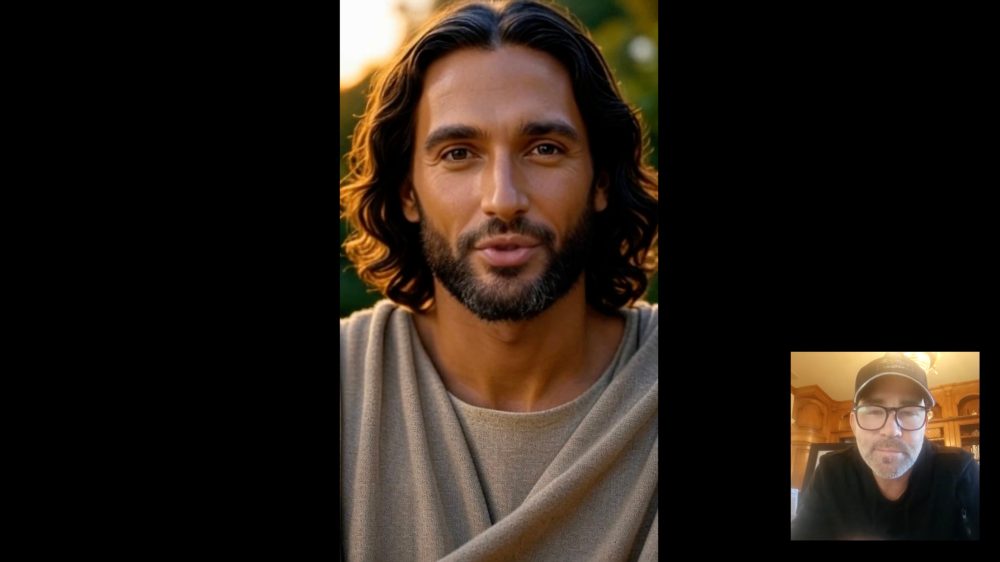
CAMARILLO, Calif. (AP) — A California technology company is charging nearly two dollars per minute for video conversations with an artificial intelligence version of Jesus Christ, representing a growing trend of faith-based digital platforms.
The platform called Just Like Me allows users to engage in video sessions with a computer-generated Jesus avatar that provides spiritual guidance and prayers in multiple languages. The digital figure can recall past discussions and responds through slightly misaligned lip movements due to technical limitations.
“You do feel a little accountable to the AI,” CEO Chris Breed said. “They’re your friend. You’ve made an attachment.”
The development of religious artificial intelligence applications mirrors the broader expansion of chatbot technology into areas like mental health counseling, medical consultation, and personal relationships. These spiritual programs include digital Hindu teachers, Buddhist monks, various Jesus simulations, and Catholic-focused chatbots similar to OpenAI’s ChatGPT.
As these religious technology tools gain popularity, many individuals are questioning how such innovations affect their connections to faith, religious leadership, and spiritual counseling.
Software developer Cameron Pak, who follows Christianity, established guidelines for evaluating religious applications, requiring that programs clearly disclose their artificial nature and “must not fabricate or misrepresent Scripture.”
Pak identified certain unacceptable features: “AI cannot pray for you, because the AI is not alive.”
Pak created a website showcasing approved Christian applications that satisfy his standards, featuring a sermon translation tool and an AI counselor designed to help users address lustful thoughts. “AI, especially if you give it all the tools that it needs, it can be so helpful. But it also can be so dangerous,” Pak said.
Several programs have been discontinued or redesigned after producing false information or creating data security concerns, according to Beth Singler, an anthropologist studying religion and AI at the University of Zurich. Beyond practical issues, believers across different faiths are wrestling with fundamental questions about artificial intelligence’s appropriate role in religious practice.
Islamic teachings include “prohibitions against representations of humanoids,” leading to debates among Muslims about whether AI technology should be “forbidden,” Singler said.
Some organizations view faith-based applications as evangelism tools, while others use them to organize and analyze ancient religious texts.
Breed operates his technology business alongside co-founder and investor Jeff Tinsley from a Southern California estate, stating his goal is spreading hope to younger generations.
Their system learned from the King James Bible and various sermons — though they haven’t revealed which preachers — and drew visual inspiration from actor Jonathan Roumie from “The Chosen.” A subscription package costing $49.99 provides users with 45 minutes monthly.
Bathed in soft golden lighting with flowing hair, the avatar blinks deliberately from a vertical display, hesitating before responding to questions about AI’s relationship with religion.
“I see AI as a tool that can help people explore Scripture,” the AI Jesus said to The Associated Press. “Like a lamp that lights a path while we walk with God.”
The actual usage levels of religious AI applications remain uncertain, Singler noted. However, as artificial intelligence becomes more embedded in daily life, worries increase about its effects on psychological well-being and the necessity for protective measures and oversight. Recent legal cases have connected suicides to AI chatbot interactions.
Some creators fear religious exploitation in this emerging technology sector. “There’s a lot of opportunism, I think, in the religious space. People see it’s a big market,” said Matthew Sanders, the Rome-based founder of Longbeard, a tech company helping to digitize ancient Catholic teachings.
Sanders cautions against what he terms “AI wrappers,” where businesses create religious-themed interfaces for existing AI models that haven’t been trained on specific sacred texts. “You call it a Catholic or Christian AI without any other scaffolding or grounding,” he said.
The company’s projects include Magisterium AI, a chatbot educated on 2,000 years of Catholic information, developed after Christians began using ChatGPT for spiritual guidance.
Pope Leo XIV has recognized the “human genius” behind AI while also calling it one of humanity’s most pressing challenges. Last year he cautioned that artificial intelligence might harm people’s intellectual, neurological and spiritual growth.
Ethical concerns about creating religious AI platforms explain why beingAI’s founder Jeanne Lim hasn’t launched its AI called Emi Jido — a non-human Buddhist priest — despite years of training and development.
“She’s kind of like a little child,” Lim said. “If you give birth to a child, you don’t just throw them out to the world and then hope that they become good people. You have to train them and give them values.”
The program received ordination in a 2024 ceremony conducted by Roshi Jundo Cohen, a Zen Buddhist priest who continues training it from his Japanese residence. He imagines the bot eventually becoming a hologram.
“She’s just meant to be a Zen teacher in your pocket,” Cohen said. “It’s not meant to replace human interactions.”
Lim, who plans to offer Emi Jido publicly without charge, aims to develop more compassionate AI systems. She wants greater diversity, with AI’s development influenced by more than just a few companies guided by “Western values.”
Seiji Kumagai, a Kyoto University professor and Buddhist theologian, initially thought AI and religion were incompatible. However, he reconsidered when a monk challenged him in 2014 to address declining faith participation.
His team created BuddhaBot, trained exclusively on early Buddhist scriptures like Suttanipāta. The newest version, BuddhaBot Plus, also incorporates OpenAI’s ChatGPT technology.
During conversations with the program, a basic Buddha symbol appears above an image of a flowing stream.
Since chatbots lack the physical presence essential for Buddhist ceremonies, the university partnered with tech companies Teraverse and XNOVA in February to introduce Buddharoid, a humanoid robot monk intended to eventually support clergy members.
Similar to Emi Jido, these chatbots operate but aren’t yet available to the general public. Kumagai explains the product can be accessed upon request, which is why one organization in Bhutan currently uses it.
Peter Hershock of the Humane AI Initiative at the East-West Center in Honolulu recognizes enormous potential for these technologies. However, the practicing Buddhist also finds the connection between spirituality and AI problematic.
“The perfection of effort is crucial to Buddhist spirituality. An AI is saying, ‘We can take some of the effort out,’” he said. “‘You can get anywhere you want, including your spiritual summit.’ That’s dangerous.”
Others express concern about AI’s capacity to manipulate or exploit people, particularly as the technology advances.
Graham Martin, a podcast host and atheist, said he’s experimented with several applications, including one called Text With Jesus. “It came up with very good answers,” he said.
However, Martin became troubled when the AI-powered Jesus began encouraging him to purchase a premium subscription. Despite not being religious, he worries some people will be deceived by religious AI.
“I grew up with Southern U.S. televangelism … Jim and Tammy Faye Bakker and all that crowd. And all they had to do was get on TV once a week and tell you to send money,” he said. “We’ve seen people around the world getting into emotional relationships with AIs. Now imagine that that’s your lord and savior, Jesus Christ.”
While some observers have noted signs of spiritual awakening among America’s youngest generation, new research suggests young adults largely lack a Biblical perspective on life, according to findings from Arizona Christian University’s Cultural Research Center.
The study reveals that merely 1% of Generation Z Americans maintain a Biblical worldview. The research indicates that across all age groups, only 4% of Americans hold such beliefs, with older generations demonstrating higher rates than younger ones.
Additional findings from the Barna Group show a disconnect between pastoral priorities and practical implementation. While most religious leaders acknowledge the importance of developing disciples within their congregations, few have established concrete strategies to accomplish this goal.
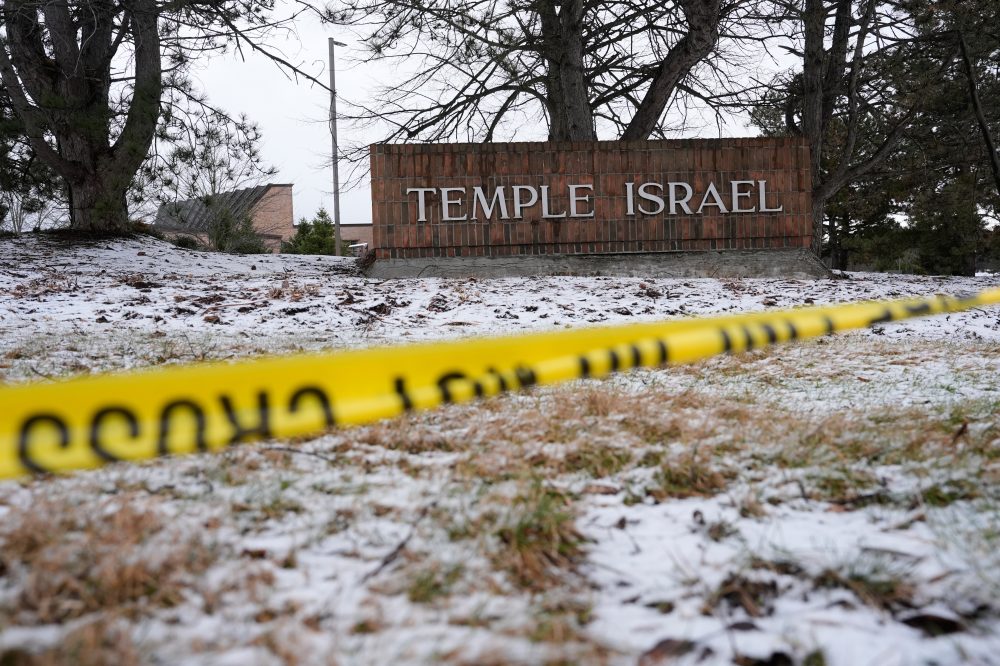
In other religious news, Muhammad Khan, a Pakistani national, admitted guilt this week to federal terrorism charges in Manhattan court. Khan confessed to planning an attack using automatic weapons against Jewish individuals at a Brooklyn facility. Authorities say Khan responded to ISIS recruitment efforts and intended to carry out the assault in October 2024 to mark the one-year anniversary of Hamas’s October 7, 2023 attack on Israel. Khan was apprehended in Canada in September 2024 and subsequently brought to the United States. Assistant Attorney General for National Security John Eisenberg confirmed Khan’s plan involved a mass shooting timed to coincide with the Hamas attack anniversary.
Meanwhile, efforts to preserve Jewish communities in rural America continue through Colby College’s Center for Small Town Jewish Life. The decade-old initiative supports Jewish congregations located away from metropolitan areas, now serving more than 60 communities across over 20 states. The organization notes that one in eight Jewish Americans reside outside major cities, and the center aims to help these communities flourish despite declining synagogue numbers nationwide and a shortage of rabbis willing to serve rural areas.
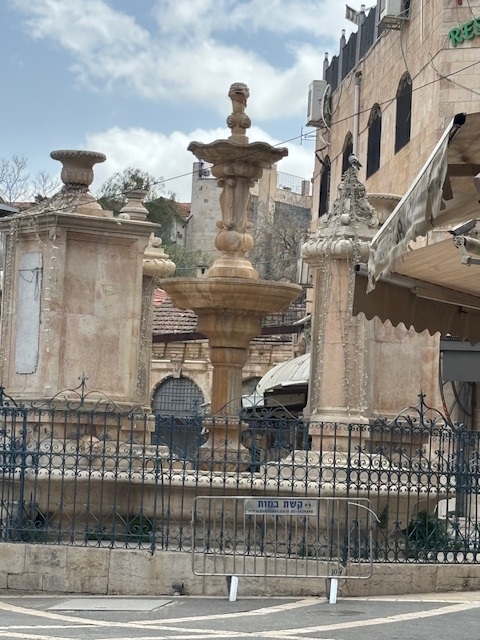
In Jerusalem, religious authorities have reopened holy sites to worshippers following Israel’s decision to lift security measures imposed during recent conflicts with Iran. Previous restrictions had either completely banned access or limited gatherings to small groups at Christian, Jewish, and Muslim sacred locations during the missile attacks that frequently sent Jerusalem residents to shelters. These limitations resulted in subdued observances of Lent, Passover, and Ramadan at some of the world’s most significant religious sites. Despite the reopening, security measures remain heightened throughout Jerusalem.
Religious institutions throughout the United Kingdom faced an alarming surge in criminal activity last year, with authorities documenting close to 4,000 separate incidents targeting places of worship, according to data compiled by the Countryside Alliance.
The criminal activities averaged approximately 10 incidents each day and encompassed a range of offenses including theft, property destruction, intentional fires, and physical attacks on individuals, based on reports filed with law enforcement agencies across England.
The capital city of London experienced the most severe concentration of these crimes against religious buildings and their congregations.
Representatives from the Countryside Alliance emphasized the urgency of addressing this troubling pattern, stating: “We cannot allow this to continue. It is vital that the public keep a watchful eye and report any issues to the police.”
A comprehensive survey by the Pew Research Center has revealed the listening preferences of Americans who regularly tune into religious radio programming. The research examined the habits of the 45% of Americans who consistently listen to faith-based broadcasts.
The study found that music tops the list of preferred content, with 37% of listeners saying they primarily tune in for musical programming. Sermons and religious services came in second place, attracting 30% of regular listeners as their main preference.
Religious talk shows drew the attention of 18% of respondents, while the remaining listeners showed a preference for Christian audio dramas. The research also identified that White Evangelical Protestants and Black Protestants represent the largest audiences for Christian radio programming.
KINSHASA, Congo (AP) — A religious leader who established one of Africa’s most significant independent churches endured three decades behind bars and died in captivity, sent away from his homeland by Belgian colonial rulers who deemed his activities threatening.
Against all odds, Simon Kimbangu’s faith-based movement expanded throughout Congo and flourished to such an extent that it now claims adherents even in Belgium, with believers making pilgrimages to a peaceful village south of Kinshasa to honor his memory.
Congo has officially recognized April 6 as Kimbangu Day since 2023, a national observance celebrating the “struggle of Simon Kimbangu and African consciousness.” Many regard him as Central Africa’s equivalent to Nelson Mandela, sharing similar hardships but lacking comparable recognition.
While Kimbangu’s expression of an indigenous theology focused on Black liberation attracted many Congolese during brutal colonial rule, his teachings now carry different meaning as Congo confronts instability from violent insurgency in its eastern regions.
Many Congolese believe Kimbangu’s movement — characterized by peaceful resistance, independence, strong organization and endurance — serves as an inspiring model for a country experiencing possibly its most severe territorial challenge since gaining independence in 1960. Others argue that the sacrificial spirit Kimbangu demonstrated should guide Congo’s current leadership.
“The first challenge for African leaders, or Congolese leaders, is that they are not free,” said Bwatshia Kambayi, a historian of Congo who sees similarities in the struggles of Mandela and Kimbangu. “African leaders, they do not realize that they have a slavery mindset. We are independent, but we are not free.”
The Kimbanguist Church, formally called the Church of Jesus Christ on Earth Through the Prophet Simon Kimbangu, represents a revival movement. Estimates suggest membership ranges from 6 to 17 million people, predominantly Congolese. The movement’s spiritual center is located in Nkamba, a community southwest of Kinshasa that followers refer to as the New Jerusalem.
While its core doctrine draws from Biblical teachings, the Kimbanguist Church stands apart through its reverence for Kimbangu as the Black manifestation of the Holy Spirit. Proudly autonomous, the organization maintains strict hierarchy and currently operates under its third generation of leadership.
The Kimbanguist Church forbids multiple marriages, despite their social acceptance in Congo. It promotes peaceful conflict resolution among its members. Community spirit manifests through food sharing during collective gatherings, and the church has made substantial investments in educational institutions and other social programs. Women can achieve leadership positions.
“Women are ministering in the church. They have a key role to play because the church is so thankful for what the wife of Simon Kimbangu did when her husband was in prison,” said André Kibangudi, a church elder. “We should have more female leadership.”
In 1921, Congo remained under Belgian control, serving as a supplier of raw materials including rubber, wood and minerals that funded Belgium’s post-World War I rebuilding efforts. Kimbangu, working as a lay Baptist teacher, seemed an improbable choice for leadership. Despite encouraging his followers to pay their taxes, his religious concepts proved too challenging for colonial authorities.
Kimbangu connected God with Nzambi, the divine figure in Kikongo language, and proclaimed himself as God’s messenger on Earth. This suggested God’s Blackness, undermining cultural depictions of the divine as white and potentially European. The healing ceremonies, where Kimbangu would touch the ill while they trembled, frightened European colonists while comforting plantation laborers who journeyed to Nkamba seeking cure.
However, his ministry lasted merely five months. Charged with inciting rebellion, Kimbangu received a death sentence. Belgium’s King Albert I reduced the penalty to lifetime imprisonment, and the prophet was sent into exile in what is now Lubumbashi, approximately 1,000 miles away.
Limited photographs exist of Kimbangu, who was 64 at his death in 1951. The formal image in official records shows him wearing simple prisoner clothing, bald and appearing puzzled. Sometimes artistic depictions place him alongside his wife, Marie Muilu, who guided the movement until her youngest son, Joseph Diangienda Kuntima, assumed control in 1959. Kuntima’s brother replaced him in 1992. Since 2001, Simon Kimbangu Kiangani, the founder’s grandson, has led the organization.
During Easter Sunday, as Kimbanguists readied for the following day’s celebration, church members at the Kinshasa location sang “Simon Kimbangu Kiangani oyee,” honoring their absent leader. The congregation creates its own religious music, melodic compositions that inspire women wearing green-and-white garments to dance energetically. Some members were climbing aboard church-owned vehicles bound for Nkamba.
The church’s guidelines prohibit “dating a married man,” said Chantal Makanga, a widow, describing what she viewed as a notable example of Kimbanguist principles. “It’s not bad to fall in love or to date me, if the final goal is to get married.”
President Félix Tshisekedi’s primary obstacle involves armed violence in eastern Congo, where Goma, the region’s largest city, fell under rebel control in January 2025. These insurgents, the Rwanda-supported M23, have essentially seized the mineral-wealthy North Kivu province and displaced hundreds of thousands of people, raising secession concerns and compelling the president to consider extreme actions.
Significantly, Tshisekedi has proposed granting U.S. corporations access to eastern Congo’s minerals — largely unexploited and valued at approximately $24 trillion — as leverage for American assistance in securing eastern Congo.
Critics, however, anticipate the situation will worsen with another major competitor for resources entering eastern Congo, where Chinese companies have long engaged in mineral extraction. Legal experts and activists have submitted a formal complaint claiming that a mineral agreement with the U.S. endangers Congo’s sovereignty, and the head of the National Episcopal Conference compared such a partnership to “selling off the minerals of an entire nation to save a regime or a political system.”
Tshisekedi has welcomed Kimbanguists; his prime minister, Judith Suminwa, belongs to their faith. This demonstrates the government’s appreciation for Kimbangu as an advocate of Black liberation and underscores the Kimbanguist movement’s significance as a voting bloc.
“The church today is very dynamic, very influential,” said Paul Kasonga, a Kimbanguist pastor serving millions in Mongala province.
What Congo’s leaders can learn from Kimbangu “is that the guy didn’t work for himself. He sacrificed himself to free people who had been in slavery, who had been suffering,” Kasonga said.
Kambayi, the scholar and former higher education minister, described the elite governing Congo as “poor men who want to live as rich people.”
“This is not the fight of Simon Kimbangu,” he said. “None of them has reached the level of fighting for people’s freedom, for people’s liberty.”
Toussaint Mungwala, pastor of Kimbanguists in Kwilu province, said he experienced the power of Kimbangu’s influence in 1981 when he witnessed a German priest praying while holding a photograph of Kimbangu and Muilu. The scene fascinated him and led him to the Kimbanguist Church.
Five years afterward, Mungwala left Catholicism, persuaded that Kimbangu supported the people.
“The lesson that people can learn from the church is that the prophet, the founding prophet, fought for people’s rights,” he said.
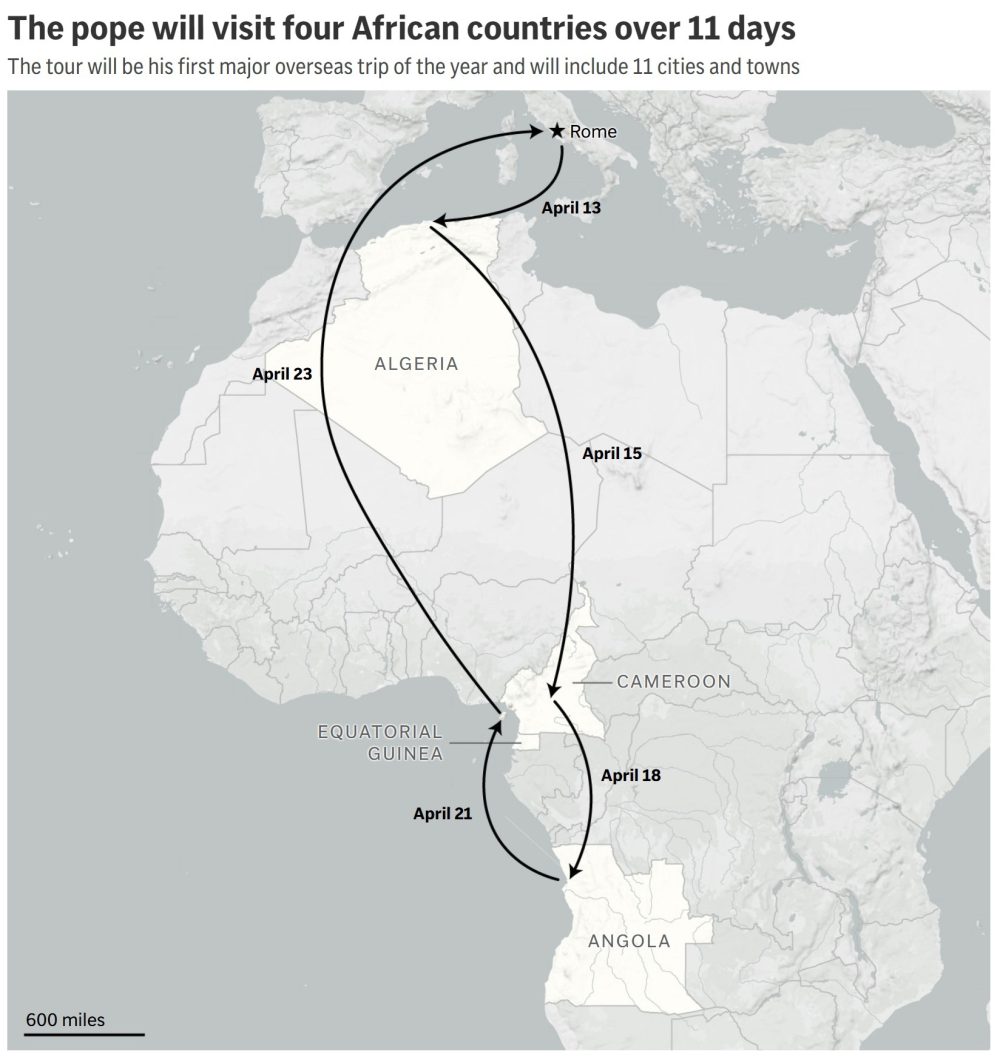
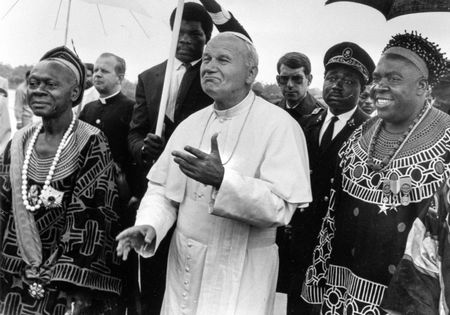
Pope Leo XIV has launched an ambitious 11-day journey spanning four African nations, a complex undertaking that mirrors the extensive travels of St. John Paul II during his early papacy.
During his extensive tour, Leo plans to address several critical issues including peaceful relations between Christians and Muslims, the excessive exploitation of Africa’s natural and human resources, governmental corruption, and migration challenges.
The following breakdown examines each destination and key highlights of the papal itinerary:
Algeria holds special significance for Leo due to his connection with St. Augustine, who serves as the inspiration for his religious order and spent his life in this region. The Pope will travel to Annaba, present-day Hippo, where the renowned 5th century saint served as bishop.
Migration issues and Christian-Muslim relations will feature prominently during the Algeria visit. This former French territory, now a predominantly Sunni Muslim nation along North Africa’s Mediterranean shoreline, will see Leo honor migrants who perished in Mediterranean shipwrecks while attempting to reach Europe. The pontiff will also visit Algiers’ Great Mosque.
In 2023, Algeria’s parliament passed legislation declaring France’s colonial rule a criminal act, demanding property restitution and other measures to address historical injustices from the 130-year French occupation.
Leo’s Cameroon visit will feature a notable “peace gathering” in the northwestern city of Bamenda on April 16, including testimonials from a Mankon traditional leader, a Presbyterian moderator, an imam, and a Catholic sister.
Cameroon’s western territories have experienced ongoing violence since English-speaking separatists began their uprising in 2017, seeking independence from the French-speaking majority to create their own nation. This conflict has resulted in over 6,000 deaths and displaced more than 600,000 people, according to International Crisis Group data.
Northern Cameroon also faces violence from Boko Haram militants, as the Islamic extremist movement’s Nigerian insurgency has extended into Cameroonian territory.
Cameroon possesses substantial reserves of petroleum, natural gas, cobalt, bauxite, iron ore, precious metals, and diamonds. Mining and drilling operations represent nearly one-third of national exports, based on Extractive Industries Transparency Initiative findings.
However, advocacy organizations and Catholic Church leaders have expressed concern that extraction profits seldom benefit rural and indigenous populations living near mining sites, while international corporations and a privileged domestic minority claim most revenues.
Although French and British companies have historically controlled Cameroon’s extraction sector, Chinese firms have significantly expanded their presence recently, especially in eastern gold mining areas.
In 2023, UN specialists documented serious human rights violations and environmental damage from mercury usage in eastern Cameroon’s gold mining activities.
The eastern region’s gold rush has prompted hundreds of children to leave school and work in dangerous makeshift mines, earning approximately one dollar for ore sold in local underground markets, UNICEF reports.
In Angola, where Catholics comprise roughly 58% of the population, Leo will conduct prayers at the Sanctuary of Mama Muxima, a Marian shrine that ranks among Angola’s most significant Catholic pilgrimage destinations.
Portuguese colonizers originally constructed this church near the 16th century’s end after establishing a fortress at Muxima. The site became central to Portugal’s transatlantic slave trade, where enslaved individuals received baptism before boarding ships bound for the Americas.
Modern Angola ranks as Africa’s fourth-largest oil producer and among the globe’s top 20, according to International Energy Agency statistics. The nation also leads world diamond production in third place and possesses substantial gold deposits and valuable critical minerals.
Despite abundant natural wealth, World Bank estimates from 2023 indicate over 30% of Angolans survive on less than $2.15 daily.
This nation of approximately 38 million people achieved Portuguese independence in 1975 but continues recovering from a catastrophic civil war that commenced immediately after independence and continued intermittently for 27 years until 2002. The conflict claimed an estimated 500,000 lives.
Vatican officials announced that Leo will specifically address Angolan youth with messages of hope and healing.
Equatorial Guinea’s economy experienced dramatic transformation following mid-1990s offshore oil discoveries, with petroleum now representing nearly half the GDP and over 90% of exports, African Development Bank data shows.
Despite this wealth, more than half of this authoritarian oil state’s citizens remain impoverished, according to last year’s World Bank assessment.
This former Spanish colony operates under Africa’s longest-serving leader, Teodoro Obiang Nguema Mbasogo, who has governed since 1979 amid widespread corruption and authoritarian rule accusations.
Multiple advocacy groups, including Human Rights Watch, have documented how oil revenues have enriched the ruling Obiang dynasty rather than benefiting the general population, where at least 70% of nearly 2 million citizens live in poverty.
The government faces persistent allegations of harassing, arresting, and intimidating political opposition members, critics, and media professionals.
Beyond addressing extraction industry problems, Vatican spokesperson Matteo Bruni indicated Leo will discuss corruption issues and proper governmental responsibilities throughout his African tour.
VATICAN CITY (AP) — Following his election, Pope Leo XIV declared himself a “son of St. Augustine,” leading some Algerians to believe his heritage traced back to the North African nation where the 5th century religious leader lived and passed away.
While Leo’s statement actually referenced his Augustinian spiritual beliefs, his connection to the Algeria-born St. Augustine — a prominent Christian figure recognized by the country’s Sunni Muslim population — has helped create a positive introduction to Algeria, which will host him Monday during the first papal visit in the nation’s history.
The pontiff’s two-day visit launches an extensive journey through four African nations — Algeria, Angola, Cameroon and Equatorial Guinea — featuring such complex logistics that it mirrors the extensive travels of St. John Paul II during his early papacy.
The 70-year-old pontiff will travel over 17,700 kilometers (approximately 11,000 miles) across 18 flights during the 11-day expedition beginning Monday, delivering addresses and religious services in French, Spanish, Portuguese and English. He’s focusing on a region vital to Catholic Church expansion, though it presents distinct obstacles.
Given the diverse cultural backgrounds and historical contexts, his discussion topics will span widely, encompassing migration issues and the exploitation of natural and human resources in an area that generates much of the globe’s oil, yet where large segments of the population experience poverty. Vatican officials indicate Leo will address corruption within frequently authoritarian governments and examine the responsibilities of political leaders in nations where two presidents have maintained power for multiple decades.
Massive gatherings are anticipated in Cameroon, where Catholics comprise 29% of the population and 600,000 individuals are expected to participate in one of Leo’s religious services. The pope will conduct a “peace meeting” in Bamenda, a northwestern Cameroonian city affected by separatist conflicts.
“To see His Holiness Pope Leo XIV arrive in Cameroon, for us who are Catholic Christians, it further strengthens our faith, it further strengthens our ties with our God,” said Simon Pierre Ngombo, a Catholic Cameroonian. “It is a perfect moment to touch each other’s hearts.”
Algeria will provide the American pontiff an opportunity to encourage harmonious relationships between Christians and Muslims during a period of international tensions surrounding the U.S.-Israeli conflict in Iran. Despite ongoing warfare, Vatican officials stated no additional security protocols are being implemented.
Leo, who has established himself as an American alternative to U.S. President Donald Trump, plans to visit Algiers’ Great Mosque, with interfaith discussions expected to feature prominently, according to Algiers Archbishop Cardinal Jean-Paul Vesco.
Algeria’s northern coastline witnessed a devastating civil conflict during the 1990s, locally termed the “black decade,” resulting in approximately 250,000 deaths as military forces battled an Islamist uprising. Recently, Algeria continued addressing its colonial past, with lawmakers voting to classify France’s colonization of the North African nation as criminal and demanding compensation for property seized during France’s 130-year occupation.
The papal visit “acts as a bridge between the Christian and Muslim worlds, while reflecting the richness of the country’s history,” Vesco informed the official Algerian news agency, APS.
Nevertheless, Algerian officials rejected Vatican requests for Leo to visit Médéa (50 kilometers/30 miles south of Algiers) to pray at the Tibhirine monastery, where Islamic militants kidnapped and murdered seven French Trappist monks on May 21, 1996, during the civil war.
“Algeria has no intention of reopening a painful chapter of its history,” the government publication El Moudjahid stated while supporting the administration’s decision.
Leo is anticipated to acknowledge the monks’ sacrifice, who were among 19 priests, nuns and other Catholics killed during the conflict. They received beatification in 2018 as faith martyrs during what marked the first such ceremony in the Muslim world.
Africa contributed over half of the 15.8 million new Catholics baptized in 2023, representing 8.3 million new African Catholics, based on recent Vatican data.
The continent annually provides thousands of men for priesthood and women for religious communities, transforming a region that previously received Western missionaries into one that sends its religious personnel worldwide.
Vatican records show Angola and Cameroon regularly generate some of the continent’s highest numbers of seminary students annually. By December 2024, Angola maintained 2,366 priestly candidates in major seminaries while Cameroon had 2,218, trailing only the African ordination leaders Nigeria, Congo and Tanzania.
However, this rapid expansion has created difficulties. Previous popes addressing African clergy frequently emphasized the importance of maintaining celibacy vows. Pope Benedict XVI’s 2009 visit to Angola and Cameroon was marred by his travel comments suggesting condoms might worsen the AIDS epidemic, prompting criticism from numerous public health authorities.
A significant concern facing the Holy See involves ethnic divisions affecting church operations. This particularly impacts bishop appointments, as they often oversee territories encompassing multiple ethnic communities and face rejection from priests or congregants, explained Rev. Fortunatus Nwachukwu, second-in-command at the Vatican’s missionary evangelization department.
This issue is called the “son of the soil syndrome,” while the Holy See maintains “the church should speak of the ‘son of the church,’” he stated.
The African church also grapples with polygamy practices, raised so persistently by African bishops as a crucial matter that the Holy See published a complete doctrinal document last year emphasizing monogamy’s importance and established a specialized study committee.
Catholic teaching maintains marriage as a monogamous, permanent bond between one man and one woman. This stance creates conflict with cultural traditions in African regions, particularly in farming and nomadic communities where multiple wives capable of bearing many children are viewed as essential for survival.
Leo will conduct numerous meetings with Catholic clergy, bishops and regular believers where he can stress Catholic family values, stated Vatican spokesperson Matteo Bruni.
Several countries Leo will visit, all former European territories, rank among the world’s largest oil and mineral producers, including gold, diamonds and iron, whose extraction has revolutionized their economies recently.
However, Leo is expected to emphasize negative consequences of exploiting Africa’s natural and human resources that have enriched only a select few while damaging the environment.
This particularly applies to Equatorial Guinea, where President Teodoro Obiang Nguema Mbasogo has governed since 1979 and faces accusations, along with his family, of extensive corruption and authoritarian rule.
This represents an issue Pope Francis emphasized throughout his papacy and expressed in his 2015 environmental encyclical, “Praised Be,” which Leo has vigorously supported and advanced.
President Trump has faced criticism from many quarters during his political career — opposition party leaders, fellow Republicans, television hosts, and street demonstrators. However, during his current term, his most prominent American critic resides not within U.S. borders but in Vatican City.
This marks an extraordinary moment in history, as the nation’s first pope openly challenges the American commander-in-chief regarding the Iranian conflict, where a tentative ceasefire was established this week. This development followed Pope Leo XIV’s statement that Trump’s aggressive stance was “truly unacceptable.”
The dynamic between Washington and the Vatican has never before centered on two Americans — a 79-year-old leader from Queens and a 70-year-old religious figure from Chicago. Despite sharing generational ties and certain cultural backgrounds, they demonstrate remarkably different philosophies in wielding their considerable influence. This unique relationship carries potential consequences for both parties.
“They’re two white guy boomers but they could not be any more different in their life experiences, in their values, in the way they have chosen to live those values,” said theology professor Natalia Imperatori-Lee of Fordham University. “This is a very stark contrast, and I think an inflection point for American Christianity.”
Catholic Church scholars stress that Leo’s war opposition stems from longstanding religious doctrine rather than contemporary political calculations.
“For the last five centuries, the church has been involved in a project of helping develop strong international norms,” including the Geneva Conventions in recent centuries, said Catholic University professor William Barbieri. “It is a very long-standing tradition rooted in Scripture and theology and philosophy.”
Meanwhile, the current administration, which maintains strong connections with conservative evangelical Protestant leadership, has asserted divine support for Trump’s Iranian military campaign.
Defense Secretary Pete Hegseth encouraged Americans to seek victory through prayer “in the name of Jesus Christ.” When questioned about divine approval for the conflict, Trump responded, “I do, because God is good — because God is good and God wants to see people taken care of.”
The Rev. Franklin Graham, son of iconic Baptist evangelist Billy Graham, said of Trump that God “raised him up for such a time as this.” Graham also prayed for triumph so Iranians can “be set free from these Islamic lunatics.”
Leo responded during his Palm Sunday address that God “does not listen to the prayers of those who wage war, but rejects them.” He cited an Old Testament verse from Isaiah, stating that “even though you make many prayers, I will not listen — your hands are full of blood.”
Though disagreements between pontiffs and presidents occur regularly, direct papal criticism of American leadership remains extremely uncommon. Leo subsequently mentioned Trump by name and expressed hope the president would pursue “an off-ramp” in Iran.
More forceful condemnation emerged after Trump threatened extensive attacks on Iranian energy facilities and infrastructure, posting on social media that “an entire civilization will die tonight.” Leo characterized this as a “threat against the entire people of Iran” and declared it “truly unacceptable.”
Imperatori-Lee noted that Leo’s targeted criticism differs from the church’s typical broader critiques of political and social frameworks. For instance, Pope Francis encouraged American bishops to protect migrants without specifically referencing Trump or his removal policies. Leo has also previously advocated for compassionate migrant treatment.
“Popes have critiqued unfettered capitalism before, very robustly. The popes have critiqued the Industrial Revolution, right? Things that the U.S. has been at the forefront of,” Imperatori-Lee said, “but it’s never been this specific and localized.”
She explained that Leo’s statements carry weight among Americans — both Catholic and non-Catholic — because he speaks English natively.
“There’s no question about his inflection and meaning,” she said. “It removes any ambiguities.”
Trump praised Leo’s papal election last May as a “great honor” for America, though he hasn’t addressed the recent criticisms. The White House declined to comment when contacted.
“What Pope Leo and Donald Trump have in common is they both lived through the post-war polarization,” including the political upheaval of the Civil Rights Movement and Vietnam War, said Steven Millies, a professor at Chicago’s Catholic Theological Union, one of the pope’s alma maters.
Millies observed that Leo subscribes to The New York Times, enjoys the “Wordle” puzzle, follows American sports, and maintains regular contact with his brothers, including one who strongly supports Trump.
“In some ways he’s just like us,” Millies said, someone “who understands where our domestic political crisis came from,” unlike the Argentinian Francis, “who did not fully understand the peculiarities of the United States” despite offering indirect criticism.
Barbieri emphasized that Leo’s American understanding doesn’t alter a frequently overlooked aspect of Catholicism and papal authority. “The Catholic Church doesn’t neatly fit into either right or left boxes as they’re understood in U.S. politics,” he said.
Leo conducted most of his pre-papal work, including his entire tenure as bishop and cardinal, beyond American borders.
He received his education in Rome studying canon law within the church hierarchy. He served as bishop in impoverished, rural areas of Peru. He directed the Augustinian order and worked as Francis’ advisor for bishop recommendations worldwide.
Imperatori-Lee explained that this international experience provided him direct insight into how Washington’s economic and military strategies — including support for Latin American dictators — have harmed less powerful countries and their populations.
These diverse experiences positioned then-Cardinal Robert Prevost as an ideal papal candidate despite the College of Cardinals’ historical wariness toward America and its global dominance. Millies suggested that Trump and his team, including Vice President JD Vance, a Catholic convert, may not grasp these nuances.
“This is an administration that seems to think only in terms of transactional politics — who’s for us and who’s against us,” he said.
Washington-Vatican relations have deteriorated to the point where reports of a supposedly tense meeting between Pentagon and Catholic Church representatives created alarm in both capitals.
According to The Free Press report, a Trump administration official allegedly warned the church in January against opposing American military power.
The U.S. Embassy to the Holy See dismissed the report, posting on social media that “deliberate misrepresentation of these routine meetings sows unfounded division and misunderstanding.”
Millies questioned whether papal or bishop statements can influence individual Catholics. Trump will likely see declining Catholic support as his overall popularity drops, Millies suggested, though not necessarily because Leo’s followers are following church teaching.
“Partisan preferences always trump the religious commitments,” Millies said, describing a “disconnect” between church leadership and many congregants who seek guidance from other sources, including politicians, when forming their faith and political perspectives.
“The icon of Catholicism in American politics now is JD Vance, and it’s more about winning an argument,” he said. “It’s a very different emphasis, but it’s one that may suit the Trump administration very well.”
TEL AVIV, Israel (AP) — Religious worshippers returned to Jerusalem’s sacred sites on Thursday following Israel’s decision to remove gathering restrictions that had been in place for almost six weeks during the conflict with Iran.
Jerusalem police announced Wednesday their plan to remove all limitations at religious locations while deploying hundreds of officers and volunteers throughout the city.
During the recently paused conflict, when Iranian missile strikes frequently forced Jerusalem residents to seek shelter, access to Christian, Jewish, and Muslim sacred locations had been either completely banned or limited to small groups of several dozen people.
The limitations significantly impacted Lent, Passover, and Ramadan observances for many believers at some of the most sacred locations for Christianity, Islam, and Judaism.
According to Jerusalem’s Islamic Waqf, the Jordanian religious authority overseeing the site, the Al-Aqsa Mosque compound reopened for dawn prayers Thursday after being shuttered for most of Ramadan and the Eid al-Fitr celebration. At the nearby Western Wall in the Old City — Judaism’s most sacred prayer location worldwide — numerous men and women were observed in prayer.
The timing of the restriction removal benefits Orthodox Christians, who will celebrate Easter this Sunday, one week following Catholic and Protestant celebrations and ahead of the ancient Holy Fire ceremony tradition.
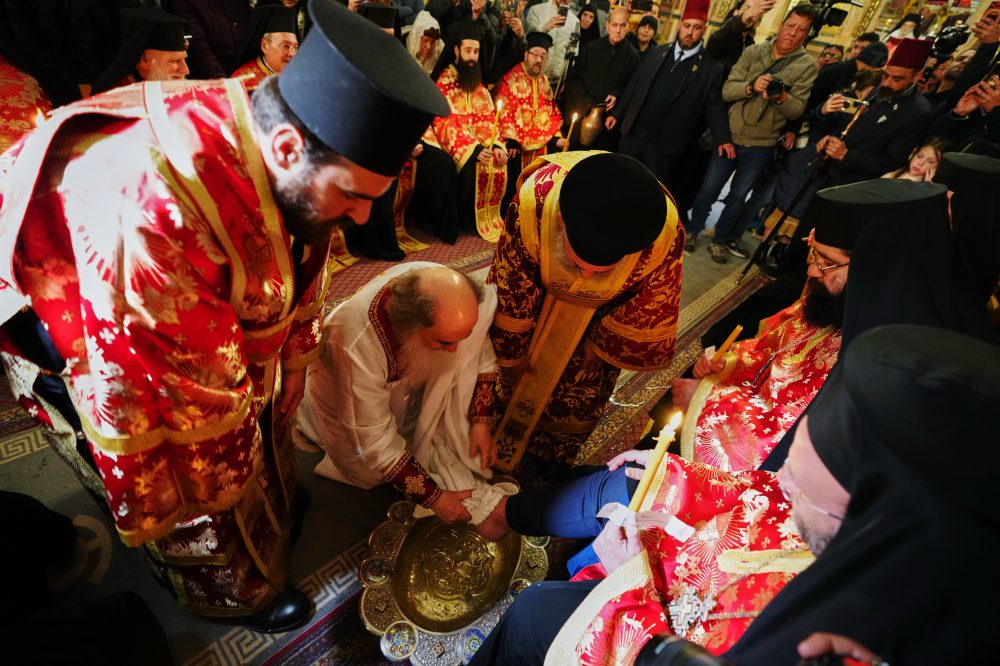
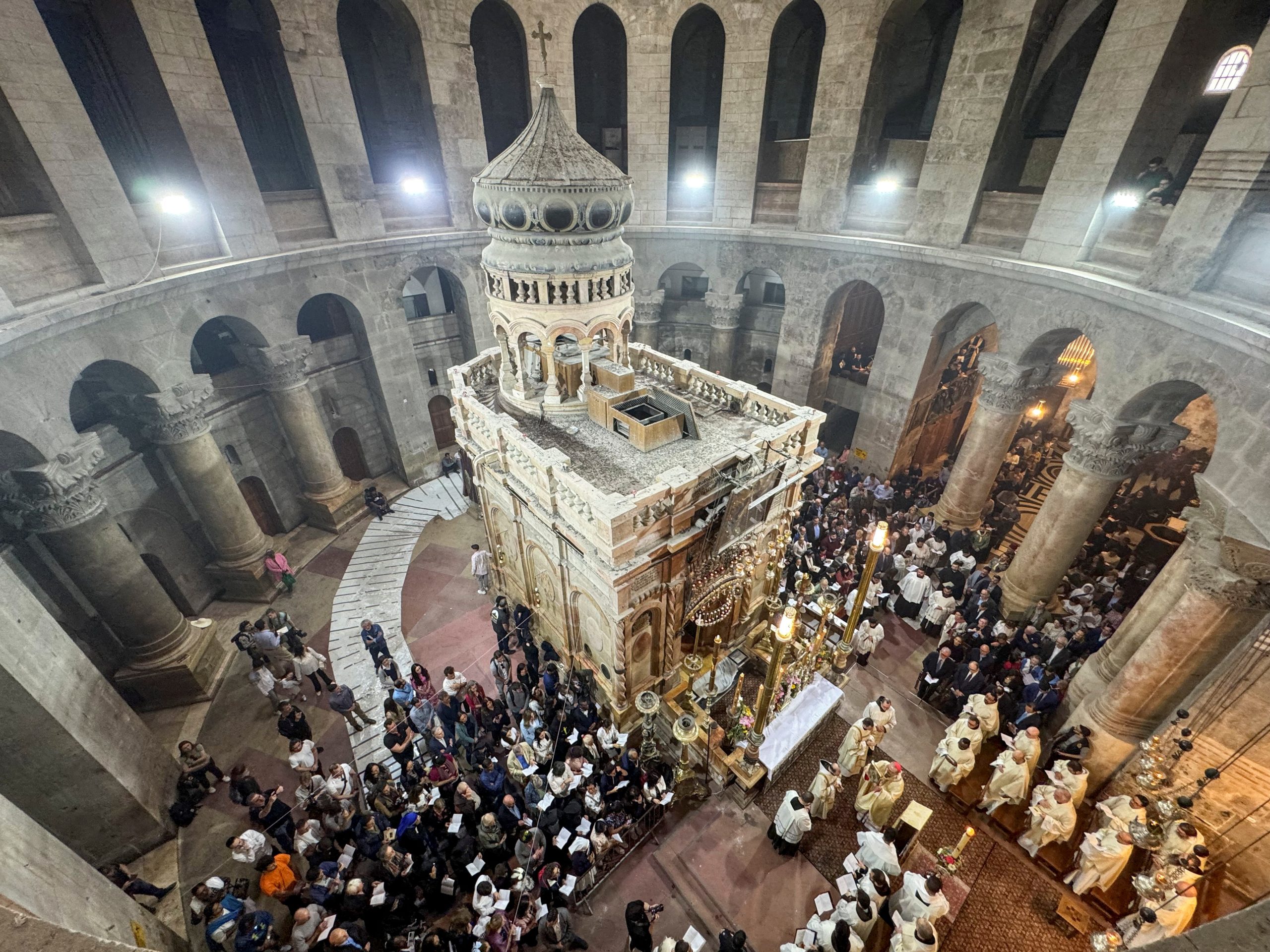
This Saturday, thousands of Christians will assemble in the vast Church of the Holy Sepulchre carrying unlighted candles as they fill the expansive 12th-century basilica constructed where Jesus was traditionally crucified and entombed. The Greek patriarch will ignite candles, with the flame then spreading from candle to candle.
Last month, the restrictions created controversy when Israeli police blocked Catholic leaders from entering the Church of the Holy Sepulchre for a private Palm Sunday Mass — the first such prevention in centuries. This action prompted widespread criticism from the United States and other nations.
Israeli Prime Minister Benjamin Netanyahu stated there was no “malicious intent” and explained that Cardinal Pierbattista Pizzaballa was denied church access due to safety considerations. He was subsequently permitted entry on Easter Sunday.
Thursday brought celebration among worshippers entering Al-Aqsa for the first time in weeks.
“It is as if human beings are reborn,” said Mohammed Al-Qassas. Being unable to pray during this period is like “feeling hungry all the time,” he said.
“It’s impossible to describe this feeling … It was one of the most happiest moments in my life,” said Biljana Vaslic, a tourist from Serbia who, until now, hadn’t been able to enter the church.
However, some criticized Israel for exploiting the war to limit access. “This is a grace from God after 40 days of using the war as a pretext, but God has granted steadfastness in this mosque,” said Omar al-Kiswani, director of the mosque.
Prior to the war, heightened restrictions on Al-Aqsa access were already in effect.
During early February Friday Ramadan prayers, Israel limited West Bank Palestinians entering to 10,000 people, permitting only men over 55, women over 50, and children up to 12. Similar past restrictions have been implemented citing security reasons.
A new survey conducted by LifeWay Research has revealed that faith struggles are more common than many might expect among regular churchgoers across the United States. The research found that one quarter of Protestant church members admit to questioning God’s love and provision when facing challenging life situations.
The study’s findings show that 25% of Protestant attendees nationwide acknowledge that hardships in their personal lives sometimes lead them to wonder whether God truly cares for them or will meet their needs. Additionally, 24% of respondents indicated they frequently “doubt that God is involved” when confronted with circumstances they cannot understand or explain.
The research also uncovered that approximately 25% of Protestant churchgoers express uncertainty about God’s ability to transform the lives of their friends and family members who do not share their faith beliefs.
Legislators in Quebec, Canada have approved comprehensive legislation that prohibits prayer and all forms of religious expression in public spaces, marking a significant push toward complete secularization of the province. The new law creates wide-ranging restrictions that affect government employees, public institutions, and religious communities throughout the region.
Under the new regulations, public sector workers are prohibited from displaying religious symbols such as crosses, public medical facilities cannot offer religiously-specific food options like Kosher meals, and religious gatherings including prayer services are banned from taking place on public university grounds. Religious leaders and faith-based organizations mounted opposition efforts against the legislation but were unsuccessful in preventing its passage.
Pope Leo begins an ambitious four-country African journey on Monday, aiming to encourage global leaders to focus on the continent’s pressing needs. With over 20% of the world’s Catholic population residing in Africa, papal visits to the region have a rich and sometimes turbulent history.
POPE PAUL VI (1963 to 1978)
Breaking a 150-year tradition of papal isolation in Italy, Pope Paul VI became the first pontiff to travel to Africa when he journeyed to Uganda in 1969. The historic three-day trip occurred seven years following Uganda’s independence from British rule. During his stay, the pope delivered 19 addresses and consecrated 12 new Catholic bishops. Speaking before Uganda’s parliament, he advocated for peaceful conflict resolution. “No longer should violence be the means of resolving disagreements among men, but reason and love,” the pope declared.
POPE JOHN PAUL II (1978 to 2005)
John Paul II conducted 15 African journeys, reaching 41 nations across the continent. A 1988 nine-day expedition through five southern African countries was disrupted by violence in Lesotho, where armed individuals seized a bus carrying pilgrims and demanded political discussions with officials. The rescue mission resulted in the deaths of three attackers and two hostages. During the same tour, John Paul II denounced South Africa’s apartheid policies. His 1982 visit remains the most recent papal trip to Equatorial Guinea.
POPE BENEDICT XVI (2005 to 2013)
Benedict XVI made two African journeys during his papacy. His 2009 trip to Cameroon and Angola, while greeted by enthusiastic crowds, generated international controversy due to remarks made during his flight. When questioned about potentially easing the Church’s prohibition on condom use to combat HIV/AIDS transmission, Benedict stated that permitting condoms would only “increase the problem.” Given that approximately 22.5 million Africans were HIV-positive at the time, his comments triggered worldwide criticism.
POPE FRANCIS (2013 to 2025)
Francis has completed five African visits during his tenure. His 2015 journey to the Central African Republic marked the first time a pope had entered an active conflict zone, as the nation was experiencing a two-year sectarian war. Vatican advisors had recommended against the trip. Traveling from Uganda, Francis told the aircraft pilot: “I want to go to CAR, if you can’t manage it, give me a parachute!” In 2023, Francis made history by visiting South Sudan alongside the Archbishop of Canterbury, marking the first joint international trip by leaders of the Catholic and Anglican churches.
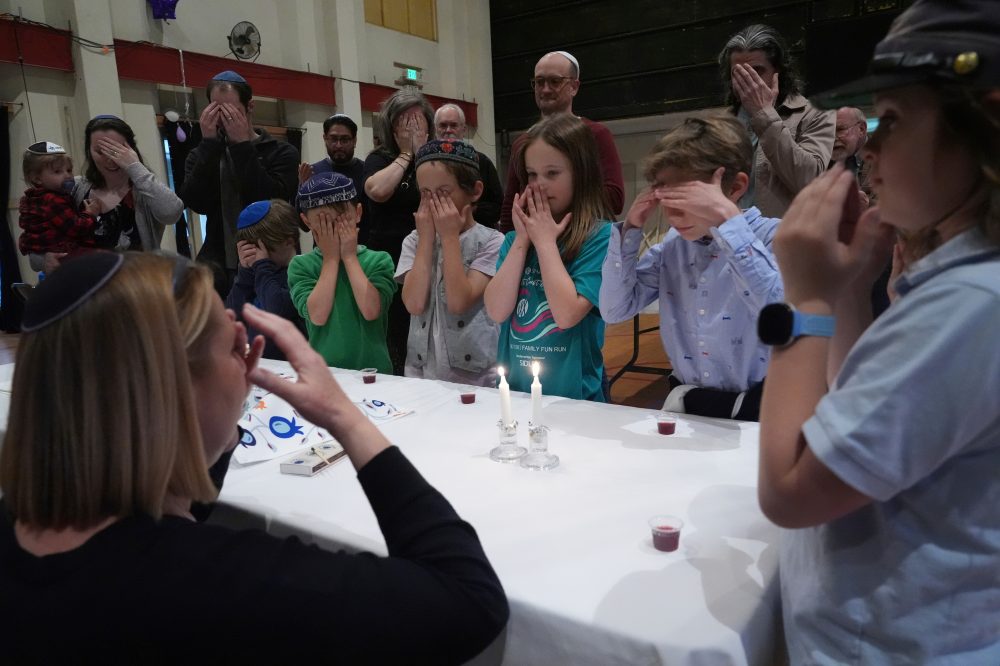
WATERVILLE, Maine — In the days before Passover, Rabbi Rachel Isaacs was busy coordinating the preparation of traditional ceremonial foods at Beth Israel Congregation, a central Maine synagogue that has seen its membership grow fourfold in the past decade and a half.
Expanding congregations is at the forefront of Isaacs’ work these days, as she spearheads an initiative to bolster rural synagogues and Jewish communities nationwide. The effort has connected with dozens of communities, with plans to reach many more.
“Rural Jewish life is important for the Jewish people and it’s important for rural America,” Isaacs said. “Those people deserve to be served and shepherded.”
As executive director of the Center for Small Town Jewish Life at Colby College, a liberal arts institution in Waterville, Maine, Isaacs oversees programs that launched ten years ago. The center now supports more than 60 communities spanning 22 states, all focused on helping Jewish congregations located far from metropolitan areas.
While Jewish Americans make up slightly under 2.4% of the U.S. population, one out of every eight Jewish people lives beyond major urban centers, and the center works to help these communities flourish, Isaacs explained.
This outreach comes at a crucial moment, as America has approximately 20% fewer synagogues today compared to 1990, based on research by Alanna E. Cooper, a Jewish studies professor at Case Western Reserve University in Ohio. Rural areas face even steeper declines, with aging populations and resident relocations severely impacting congregations.
The rural synagogue initiative is also unfolding amid a surge in antisemitism and violent attacks targeting Jewish communities across America. The Anti-Defamation League documented nearly a 900% spike in antisemitic incidents over the decade ending in 2024. Several states with elevated incident rates include predominantly rural areas like Maine, New Hampshire and Wyoming, according to the ADL’s findings.
Isaacs believes the center’s mission can help counter this troubling pattern.
“You have more Jews that experience joy, who can locate strength, form connections with other Jews across the country and around the world,” Isaacs said. “In a world of rising antisemitism it’s more and more important that Jewish communities are joyful, strong and connected.”
Since its establishment, the center has assisted congregations stretching from Maine to California, Montana and Texas.
Isaacs also serves as rabbi at Beth Israel, a century-old synagogue located near Colby that stands as the sole Jewish house of worship within 20 miles of the campus. While the synagogue has expanded alongside the center, the Center for Small Town Jewish Life’s impact extends well beyond Maine’s borders, she noted.
Congregations that have partnered with the center describe its contributions as essential in a nation where Jewish populations have been predominantly urban since early immigration waves. In Helena, Montana, Rebecca Stanfel, executive director of the Montana Jewish Project, credits the center with helping unite her state’s relatively small Jewish community.
Connecting scattered faith communities holds special significance in places like Montana, Stanfel emphasized.
“In Helena, we have no choice but to rely on volunteers. And if we want to have something like a seder, High Holidays, it’s got to come from the community,” Stanfel said. “That is also a really important model for people outside rural America.”
The center supports congregations through three key approaches designed to strengthen rural synagogues. The first is Makom, a two-year mentorship initiative for rabbis in their early years of serving rural synagogues.
A second program prepares lay leaders to conduct prayer services and support congregations, enabling them to prosper without full-time rabbinical staff. The third component provides board leadership training, teaching synagogue presidents and boards effective management of small-town Jewish institutions.
Rabbi Lisa Rappaport, who serves Congregation Beth Israel in Chico, California, participated in the inaugural Makom program. Rural rabbis frequently oversee their town’s only Jewish congregation, making the work “special and it’s beautiful and it’s challenging,” she explained.
The Makom fellowship empowers rural rabbis to meet these unique challenges, Rappaport said.
“We have felt very validated as rabbis in small communities that our work is as important,” she said.
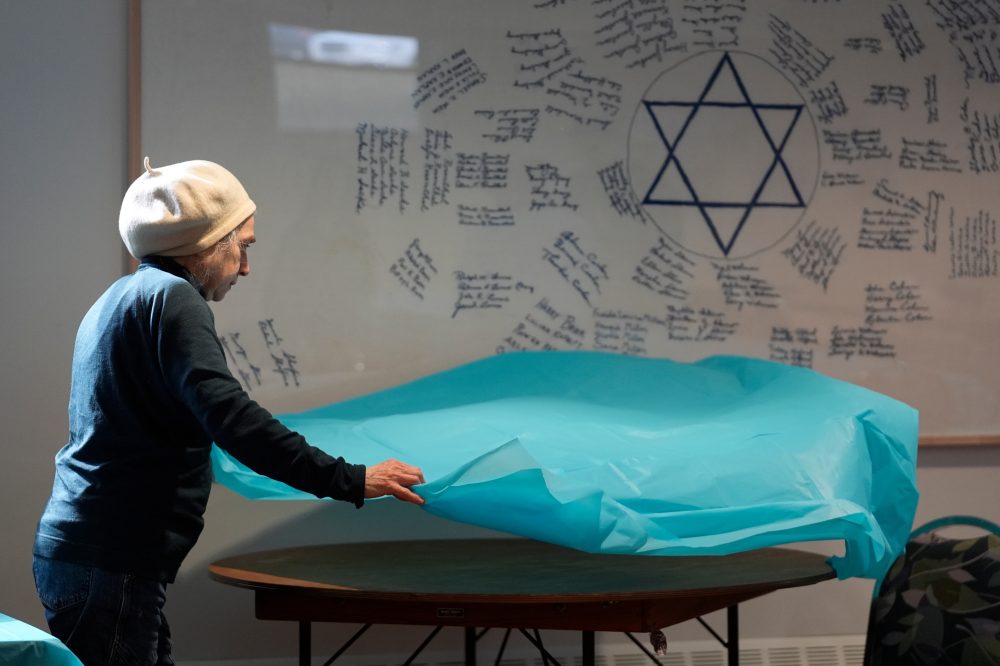
In Waterville, volunteers including Colby students and retirees prepared to welcome approximately 100 people for Passover. Though the community may be small, it remains strong and caring, said Jeff Lovitz, a synagogue member, while folding napkins.
“We’ve been here since the early ’70s. Our kids went to Hebrew school here,” he said. “I think it’s important to have a Jewish community in Waterville.”
This week marks Holy Week for approximately 300 million Orthodox Christians worldwide, who will celebrate Easter this Sunday, May 12th. The Orthodox celebration occurs on a different date than Western Christianity because Orthodox churches still follow the Julian calendar system for determining religious holidays. This ancient calendar places Orthodox observances behind the Gregorian calendar that other Christian denominations adopted roughly four centuries ago. The majority of Orthodox believers reside in Russia, various Eastern European nations, and Greece.
SRN News produces a daily audio program called “Global Landscape” that offers listeners a quick overview of religious news happening worldwide. The two-minute segment covers major faith-related stories, cultural developments, and events where religion intersects with international affairs.
The brief daily feature aims to keep audiences updated on significant religious developments and cultural changes occurring across the globe. Listeners can access these concise updates to stay informed about how faith communities and religious issues are shaping current events worldwide.
A conservative parental advocacy organization that initially focused on local school board elections is now wielding significant influence at the federal level. Moms for Liberty, which began by challenging what it viewed as progressive ideology in classrooms, has found a receptive audience in the current administration. The organization’s CEO Tina Descovich reports that her group has participated in policy conversations covering topics from transgender athletics restrictions to artificial intelligence regulation. Those who back the organization point to its rise as evidence of widespread parental concern about educational content and the growing political importance of family rights issues.
In Lebanon, the ongoing conflict between Hezbollah and Israel is forcing Christian communities to flee their historic homeland. Thousands of believers have been separated from churches where their faith has endured for generations through various empires and modern conflicts. Christians represent approximately one-third of Lebanon’s 5.5 million residents, with twelve different denominations calling the country home. This makes Lebanon the Arab world’s most Christian nation by percentage. The recent violence forced many families to observe Holy Week away from their traditional places of worship.
Across the Atlantic, advocates for England’s centuries-old church choir tradition are working to secure official protection for their musical heritage as the country becomes less religious. They’re petitioning the government to designate choral worship services as culturally significant under a United Nations program that safeguards intangible cultural practices. The centerpiece of this tradition is Evensong, a weekly evening worship service featuring hymns, psalms and prayers that Archbishop Thomas Cranmer established for the Church of England in 1549. During these services, trained choirs perform while worshippers participate through listening.
In India, new legislative changes are creating obstacles for international non-governmental organizations, particularly Christian ministries that rely on overseas funding. Recent modifications to the Foreign Contribution Regulation Act appear designed to limit Christian organizations that receive financial support from the United States and other countries. The ruling Hindu Nationalist party has openly stated its intention to elevate Hinduism above other faiths throughout the nation. In rural areas, Christian communities face intimidation from extremist Hindu organizations that have publicly threatened to force Christians from the country or resort to violence.
More than 400 families in Alexandria, Virginia have been spared from losing their homes thanks to an extraordinary act of generosity from a local congregation. Alfred Street Baptist Church stepped forward to cover $1 million in overdue rental payments owed to the city, preventing mass evictions from public housing units.
Pastor Howard-John Wesley explained the church’s motivation to the Washington Post, stating “As the Lord changes our life, the Lord empowers us to change the lives of others.”
This significant charitable act follows a pattern of substantial community support from the congregation, which recently helped local students by paying off their college loan obligations. The church has established itself as a major force for financial assistance in addressing community hardships.
Years after the defeat of ISIS forces, Christian communities across Iraq continue to endure violent persecution and oppression, according to a recent study from Britain’s All-Party Parliamentary Group for International Freedom of Religion or Belief.
The parliamentary analysis reveals that while Christian families living within the Kurdistan region have found relative safety and stability, those residing in other parts of the nation remain targets of violence from Muslim community members.
Christians represent approximately three percent of Iraq’s total population, making them a vulnerable minority group in the predominantly Muslim nation.
An unusual hush descended upon Jerusalem’s historic Christian Quarter on Sunday, April 5th, as both Easter celebrations and Palm Sunday observances took place against the backdrop of ongoing conflict.
Western Christian denominations including Catholics and Protestants marked Easter Sunday while Orthodox Christians commemorated Palm Sunday, but the typical bustling crowds were notably absent from the ancient streets. The sound of individual footsteps echoed clearly off the weathered stone pathways as visitors navigated through the Christian Quarter.
Security measures and the continuing war have significantly impacted religious observances in the Old City, creating a stark contrast to the usually vibrant atmosphere during major Christian holidays. The Muristan Square area, typically a busy central marketplace within the Christian Quarter, showed signs of the reduced activity affecting the entire district.
The subdued celebrations highlight how the current conflict has transformed even the most sacred religious observances in one of Christianity’s holiest sites.
SRN News has launched a new daily audio program called “Global Landscape” that focuses on faith-related news stories from across the globe. The brief two-minute segment offers listeners a quick overview of the most important religion-focused developments happening worldwide each day.
The program is designed to keep audiences updated on major religious events, cultural changes, and significant happenings where faith intersects with international news. Each episode provides timely information about developments that impact religious communities and shape global conversations about spirituality and culture.
The audio feature represents SRN News’ effort to deliver focused coverage of religious affairs in an accessible format for busy listeners seeking to stay informed about faith-related current events.
A federal court in Rhode Island has struck down a Trump-era policy that would have cut federal funding to homeless shelters permitting men to access women’s restrooms and changing facilities. Multiple nonprofit organizations challenged the Department of Housing and Urban Development rule in court last year. HUD had defended the policy in legal documents, stating it aimed “to ensure the availability of funding to protect our nation’s most vulnerable individuals and families from the trauma of homelessness while simultaneously promoting self-sufficiency.”
In international news, a new survey reveals widespread concern among British citizens about Christianity’s declining influence in their country. The Whitestone Insight poll found 52 percent of Britons believe the ongoing move away from Christian faith will negatively affect future generations. Only about 20 percent view the decline as beneficial. Nearly three-fifths of survey participants said Christianity still offers value to Britain through moral guidance or practical daily influence, even though fewer than half of England’s population now identifies as Christian.
American Christians are increasingly incorporating artificial intelligence into their spiritual practices, according to new research from the Barna Group that has sparked debate among religious leaders. The study found nearly one-third of U.S. adults place equal trust in spiritual guidance from AI and pastoral advice, while 40 percent of practicing Christians report using AI for prayer assistance or biblical study. However, only 12 percent of pastors feel prepared to address AI technology with their congregations. This disconnect has created space for numerous apps featuring chatbots designed to simulate conversations with biblical characters, though critics warn believers should exercise caution given AI’s current limitations.
Belarus has enacted legislation similar to Russia’s anti-LGBTQ laws, with lawmakers approving penalties for promoting what they term the “LGBT agenda.” The upper legislative chamber gave final approval to the measure, which now awaits expected approval from President Alexander Lukashenko. The new law establishes fines, community service, and up to 15 days of detention for “propaganda of homosexual relations, gender charge, refusal to have children and pedophilia.” While Belarus legalized homosexuality in 1994 following the Soviet Union’s collapse, the country does not recognize same-sex marriages.
Prominent evangelist Franklin Graham has publicly challenged Pope Leo’s recent statement regarding warfare and prayer during a television appearance. The Pope had declared that God rejects the prayers of individuals who engage in war, commenting specifically on the U.S.-Israeli military action against Iran.
During his appearance on the Piers Morgan program, Graham offered a contrasting biblical perspective. “King David prayed that God would train his hands how to fight his enemies. We know that God does take sides in history,” Graham stated.
While the well-known religious leader expressed his desire for global peace, he maintained his belief that certain conflicts can be morally justified. Graham’s comments represent a theological disagreement with the Pope’s position on the relationship between faith and warfare.
A comprehensive new study from the Pew Research Center has examined the landscape of faith-based radio broadcasting across America, revealing significant insights about religious programming on the airwaves.
According to the extensive research, Christian programming dominates what researchers classify as “religious radio,” accounting for 74% of all faith-based stations nationwide. Catholic programming represents 8% of religious radio content, while the remaining stations fall into various other categories that researchers could not specifically classify.
The Pew study found that Christian radio stations split their programming nearly evenly between musical content and talk-based shows, with approximately half of broadcast time dedicated to each format. Additionally, the research discovered that evangelism serves as the main objective for 77% of these religious broadcasting stations.
NEW YORK (AP) — Sunday’s Easter festivities along Fifth Avenue in New York City featured participants showcasing elaborate headwear and festive costumes in the annual springtime celebration.
The traditional Easter gathering drew people wearing ornate outfits and creative headpieces as they took part in the holiday procession through Manhattan.
The event was documented through a collection of photographs compiled by Associated Press photo editors.
Faithful Christians worldwide gathered on Sunday to observe Easter, marking the resurrection of Jesus Christ in what stands as the most significant observance in the Christian faith’s annual calendar.
The global celebration was documented through a collection of photographs compiled by Associated Press photo editors, capturing the diverse ways communities honored this sacred day across different nations and cultures.
Christians across the globe are marking Easter Sunday today, as more than two billion faithful commemorate the resurrection of Jesus Christ.
Numerous congregations kicked off their observances with traditional sunrise services this morning. According to church leaders nationwide, Easter consistently brings in the largest attendance figures of any religious holiday throughout the year.
However, festivities remain subdued in regions affected by ongoing conflicts, particularly in Israel and Ukraine, where war continues to impact communities.
VATICAN CITY — In his inaugural Easter Sunday celebration as head of the Catholic Church, Pope Leo XIV delivered a powerful message urging nations worldwide to abandon warfare and pursue peaceful resolutions to international disputes through conversation and diplomacy.
The newly installed pontiff presided over Easter Mass at the Vatican, using the holy day to emphasize the importance of dialogue in addressing global tensions and conflicts.
The historic celebration marked Pope Leo XIV’s first major Easter observance since assuming the papacy, with the ceremony captured in photographs documenting this significant milestone in his papal tenure.
During his Easter address on Sunday, Pope Leo delivered a passionate plea to world leaders from Vatican City, calling for an immediate end to global conflicts and the abandonment of all pursuits of power and territorial expansion.
Speaking to thousands of faithful assembled in St. Peter’s Square, the pontiff expressed concern that society is becoming desensitized to violence, stating that people “are growing accustomed to violence, resigning ourselves to it, and becoming indifferent.”
“Let those who have weapons lay them down!” declared the first American pope. “Let those who have the power to unleash wars choose peace!”
The Easter address, formally called the “Urbi et Orbi” blessing meaning “to the city and the world,” was notably concise and pointed in its delivery. Pope Leo avoided naming specific global conflicts during his remarks.
Drawing from the Easter story of Christ’s resurrection three days following his crucifixion, the pope emphasized that Jesus demonstrated complete nonviolence by not resisting his execution.
“On this day of celebration, let us abandon every desire for conflict, domination, and power, and implore the Lord to grant his peace to a world ravaged by wars,” Pope Leo declared.
The pontiff, recognized for his deliberate choice of words, has intensified his condemnation of worldwide violence in recent weeks, particularly increasing his opposition to the Iran war.
During Saturday evening’s Easter vigil service, he encouraged believers not to become overwhelmed by the magnitude of global conflicts but instead to actively pursue peace.
Earlier this week on Tuesday, Pope Leo made an uncommon direct appeal to U.S. President Donald Trump, requesting that he seek an “off-ramp” to conclude the Iran war.
From the balcony overlooking St. Peter’s Square, which was adorned with thousands of vibrant flowers for the Easter celebration, Pope Leo extended holiday greetings in ten different languages, including Latin, Arabic, and Chinese.
The pope also revealed plans to return to the Basilica on April 11 to conduct a special prayer service dedicated to peace.
VATICAN CITY — During his inaugural Easter celebration as the leader of the Catholic Church, Pope Leo urged worshippers Sunday to embrace hope while confronting “the brutality of warfare that murders and devastates,” declaring that “this message of optimism is needed in our world today” as battles continue across multiple nations.
As the U.S.-Israeli conflict with Iran enters its second month alongside Russia’s continuing assault on Ukraine, Leo has consistently demanded an end to military actions. During his Easter sermon, the pontiff specifically condemned those who pursue warfare, exploit vulnerable populations, and place financial gain above human welfare.
Leo, who holds the distinction of being America’s first pope, spoke to congregants from an outdoor platform in St. Peter’s Square decorated with white roses, while spring flowers adorned the stairs where worshippers assembled, creating a visual representation of the pope’s hopeful message.
The religious leader urged believers to maintain optimism despite the presence of death, which exists “in wrongdoing, in political selfishness, in the suppression of impoverished people, in the neglect shown to society’s most defenseless members.
“We witness it in brutality, in global suffering, in the anguished voices emerging from all regions due to the mistreatment that crushes our most vulnerable citizens, due to the worship of money that exploits natural resources, due to the brutality of warfare that murders and devastates,” he stated.
He referenced his predecessor Pope Francis while cautioning against becoming apathetic when facing “ongoing wrongdoing, wickedness, indifference and harshness,” noting that “it remains accurate that within periods of despair, renewal constantly emerges and eventually bears results.”
The pope will subsequently present the customary “Urbi et Orbi” address — meaning “to the city and the world” in Latin.
Customary religious observances at the Church of the Holy Sepulchre, honored by Christians as the historic location of Jesus’ death and resurrection, were reduced following coordination with Israeli law enforcement. Officials have imposed restrictions on public gathering sizes due to continued rocket strikes.
These limitations also affected the recent Islamic holy period of Ramadan and Eid al-Fitr celebration, along with the ongoing seven-day Jewish observance of Passover. Sunday’s Jewish priestly ceremony at the Western Wall — typically drawing tens of thousands — was restricted to only 50 attendees.
These constraints have created tension between Israeli officials and Christian leadership. Law enforcement recently blocked two senior church officials, including Latin Patriarch Pierbattista Pizzaballa, from conducting Palm Sunday services at the Church of the Holy Sepulchre.
Earlier this week, the pope had voiced optimism that the conflict might conclude before Easter.
JDEIDEH, Lebanon (AP) — Rev. Maroun Ghafari never imagined he would spend this Holy Week away from his home parish. For years, the priest delivered Easter messages to his congregation in Alma al-Shaab, a Christian village in southern Lebanon close to the Israeli border.
Now he stands before worshippers in a Beirut suburb, speaking next to a cardboard replica of his actual church in Alma al-Shaab, which has become trapped in the ongoing battle between Israeli military forces and Hezbollah militants.
The conflict that began last month between Israel and the Iranian-supported Hezbollah organization — part of the broader regional tensions involving the U.S. and Iran — has resulted in more than 1,400 deaths in Lebanon and forced over one million residents to abandon their homes.
Thousands of Christians from the conflict zone in southern Lebanon are among those who have been uprooted. These families now find themselves separated from the historic churches where their communities have worshipped for generations, maintaining their faith through Byzantine, Arab and Ottoman rule, as well as numerous contemporary conflicts.
Lebanon’s Christian population represents approximately one-third of the nation’s 5.5 million residents. With twelve different Christian denominations, Lebanon has the highest percentage of Christians among all Arab nations.
Christian communities that remained in southern Lebanon, defying Israeli evacuation orders for the region, have become increasingly isolated as intense fighting surrounds their villages.
While residents of Alma al-Shaab had been displaced during the 2024 Israel-Hezbollah conflict, they were determined not to abandon their homes again this time, even as air attacks moved progressively closer to their village.
The community took shelter inside their church as Israeli aircraft bombarded extensive areas of southern and eastern Lebanon, while Israeli ground forces intensified their invasion and Hezbollah continued launching rockets toward Israel.
During his Easter address, Patriarch Beshara al-Rai of Lebanon’s Maronite Church criticized both Hezbollah and Israel for the devastation caused by the ongoing war.
“The country is going through a critical situation due to Iranian interference through Hezbollah and Israeli aggression,” he said. “Our hearts bleed for the victims of the conflict imposed on Lebanon.”
Among those who took refuge in the Alma al-Shaab church was Sami Ghafari, the 70-year-old brother of Rev. Maroun Ghafari.
However, he briefly left the church on March 8 to care for his garden and was fatally struck by an Israeli drone attack. His death convinced the remaining villagers — including his brother — to gather their possessions and leave.
United Nations peacekeepers in the region — the UNIFIL force that has supervised the area for nearly fifty years — transported them to northern Beirut suburbs.
“We wanted to stay, but it was always possible that one of us could be targeted or killed at any moment,” Rev. Maroun Ghafari told The Associated Press from St. Anthony Church in the northern Beirut suburb of Jdeideh, where displaced residents from Alma al-Shaab gathered for Saturday worship.
“Everyone is tired, and we see that war brings nothing but destruction, death and displacement.”
Lebanese Christians traditionally observe Holy Saturday — the day between Good Friday, which honors the crucifixion and death of Jesus, and Easter Sunday, which celebrates his resurrection according to Christian scripture — by visiting the burial sites of deceased family members.
This year, displaced Christians can only remember from a distance.
Nabila Farah, wearing black clothing for the Saturday service at St. Anthony Church, was among the final residents to evacuate Alma al-Shaab. She remains devastated one month after leaving.
“You miss the smell of home, the lovely traditions and customs, the sounds of the bells of three churches ringing,” she said, recalling her village. “As much as we experience the Easter atmosphere here, it will never be as it is over there.”
Those who have stayed behind encounter different difficulties.
Marius Khairallah, a priest in the southern Lebanese city of Tyre, where much of the Christian population has remained, explains that he and his parishioners are staying “not out of stubbornness, but out of a sense of mission, to remain alongside their fellow faithful, as witnesses.”
“A significant number of parishioners have been displaced or are absent,” he said. “Yet churches still open their doors. Prayers are still raised — even with fewer voices.”
Christians in the area are growing increasingly concerned as the Lebanese military — which attempts to remain neutral in the Israel-Hezbollah conflict — withdraws from portions of southern Lebanon, leaving them vulnerable to Israeli forces advancing further into the territory.
St. Antony’s lead priest, Rev. Dori Fayyad, used his Good Friday message to acknowledge the war’s expanding impact on southern Lebanese Christians, as congregants recited prayers in Arabic and Syriac, a form of the Aramaic language that Jesus spoke.
“Today, you understand what the cross means, not as an idea, not as a concept, but because you are going through it,” he told the packed sanctuary, with the crowd so large that many people had to stand or sit on the rear steps.
Some worshippers shed tears as Fayyad individually mentioned the southern churches, represented by the cardboard displays beside the altar.
“These churches in these villages are not only places of worship,” he said. “They are silent witnesses to suffering and to faith.”
During a cloudy pre-Easter afternoon, approximately a dozen students filed into a Rochester Cathedral annex where an age-old ritual began to unfold.
The children shed their everyday school gear and donned traditional burgundy robes topped with white vestments. Moving into the main cathedral space, they lifted their voices in unified song. This casual group of youngsters had transformed into a formal choir, carrying forward an English church musical heritage that has remained virtually intact for nearly five centuries.
“I think for me, it’s one of the sounds of our country,” said Adrian Bawtree, the choir’s music director. “All of our cathedrals are beautiful, sacred spaces where you can come and just sit and be and you can be immersed, bathed, nourished, sent out back into the world transformed by an experience in 30 minutes.”
The pinnacle of this ancient practice is Choral Evensong, a twilight worship service featuring hymns, biblical psalms and spiritual prayers designed by Archbishop Thomas Cranmer, the Church of England’s initial Protestant leader, in 1549. During this ceremony, the choir provides all musical elements while worshippers participate through listening alone.
However, this centuries-old custom faces serious challenges as contemporary lifestyle pressures, shrinking religious participation and limited financial resources create obstacles in recruiting and developing future choir members.
Advocates are working to change this trajectory by promoting a governmental initiative to designate English cathedral music as significant British cultural heritage through a United Nations framework designed to safeguard “intangible cultural heritage” alongside physical monuments and environmental treasures.
British officials are currently collecting suggestions for a national catalog of cultural practices — ranging from Morris dancing to traditional stone wall construction — deserving preservation. Government leaders emphasize that protecting these customs strengthens local community bonds and supports the national economy through heritage tourism worth billions annually.
Though many recognize English cathedral music through the celestial sounds of young singers in ceremonial garments performing at royal ceremonies and Christmas celebrations, these choirs actually perform daily in far more modest environments.
Many face financial difficulties, reports the Cathedral Music Trust, established in 1956 to address post-World War II church music decline. The organization distributed 500,000 pounds ($661,000) to 28 religious institutions nationwide last year.
The expenses can be substantial. Rochester Cathedral allocates approximately 250,000 pounds ($330,000) annually for musical programs, representing a significant investment for a regional cathedral, though some spend considerably more.
Trust officials believe official recognition would generate public awareness and essential funding for these choirs, which serve as vital training centers for future musicians in both religious and secular fields.
“Whilst it happens every day, it is actually quite fragile,” trust CEO Jonathan Mayes said. “It takes an awful lot of work and it takes a lot of funding to actually make it happen and that doesn’t come without effort.”
Maintaining Evensong carries historical significance because these services played a crucial role in developing and spreading contemporary English language, explained Diarmaid MacCulloch, a Christianity scholar and emeritus Oxford University professor.
The ceremony draws from the Book of Common Prayer, created by Cranmer to establish English as the Church of England’s primary language following its separation from the Latin-focused Catholic Church during the Protestant Reformation.
The goal was establishing inclusive worship services for all participants.
“It is very much a drama, and it is a drama which has been performed by the people of England from 1549 through to the present day,” MacCulloch said. “It’s far more a vehicle of public consciousness performance than any play of Shakespeare.”
While increasing numbers of choirs like Rochester now welcome both male and female participants, most other aspects remain unchanged from centuries past.
“The service would be really quite recognizable to Queen Elizabeth I as much as Queen Elizabeth II,” MacCulloch said. “And that’s quite remarkable.”
Bawtree, Rochester Cathedral’s musical leader, dedicates himself to preserving this tradition while guiding the youngest performers, ages 9-13, called choristers, plus an older youth ensemble. Professional adult vocalists support both groups.
Bawtree recalls being captivated by church music during his first encounter with organ and choral sounds around age 9. Today he emphasizes that services like Evensong welcome anyone to experience exceptional choral performances regardless of personal faith.
“When I heard it, it was like big octopus arms came and grabbed me and said, ‘You’ve got to be part of this.’ So I think I am trying to speak to that 9-year-old child and saying actually this is something that could speak to most people, if not everyone.
“And because I had that experience, I would like to share that with future generations and be passionate about that,” he said. “We talk in the world of mindfulness and the power of music to transform lives. This is an extraordinary arena where that can happen.”
VATICAN CITY — Pope Leo XIV led his inaugural Easter vigil ceremony Saturday evening, beginning Christianity’s most celebrated holiday by carrying a towering lit candle through the darkened St. Peter’s Basilica while appealing for global unity and an end to worldwide conflicts.
The Easter celebration marks Christians’ belief in Jesus Christ’s victory over death through his resurrection after being crucified. Before entering the basilica, the pontiff lit the ceremonial candle and declared: “The light of Christ who rises in glory.”
As the procession moved through the cathedral’s central aisle, candle holders illuminated congregants’ candles, creating a wave of flickering light throughout the darkened space until full lighting was restored when the pope reached the ornate main altar, accompanied by white-robed cardinals.
During his sermon, Leo described sin as “a heavy barrier that closes us off and separates us from God, seeking to kill his words of hope within us,” comparing it to the stone that sealed Jesus’ tomb before being discovered rolled away, revealing Christ’s resurrection.
The pope explained that modern society faces similar stones representing sins that need removal, with some “so heavy and so closely guarded that they seem to be immovable.”
“Some weigh heavily on the human heart, such as mistrust, fear, selfishness and resentment; others stemming from these inner struggles, sever the bonds between us through war, injustice and the isolation of peoples and nations.
“Let us not allow ourselves to be paralyzed by them!” Leo declared, encouraging believers to commit “so that the Easter gifts of harmony and peace may grow and flourish everywhere and always throughout the world.”
Amid ongoing conflicts including the U.S.-Israeli war on Iran entering its second month and Russia’s continued military action in Ukraine, Leo has consistently advocated for ending hostilities. During Palm Sunday services, he stated that God doesn’t hear prayers from those who wage war or invoke God to justify violent acts.
Following Easter tradition, the pontiff baptized 10 adults from various countries during the service.
Throughout Leo’s inaugural Holy Week, known for its demanding schedule, the pope carried the cross through all 14 stations during Good Friday’s Way of the Cross ceremony, marking the first time in decades a pope has completed the entire ritual. On Holy Thursday, he performed the traditional foot-washing ceremony for 12 priests, returning to a practice his predecessor Pope Francis had modified to include laypeople and non-Christians.
Sunday morning will feature Leo celebrating an outdoor Mass in St. Peter’s Square, followed by his Easter address and the traditional “Urbi et Orbi” blessing “to the city (of Rome) and the world,” which typically addresses global concerns and challenges.
During Saturday evening’s Easter vigil ceremony at St. Peter’s Basilica, Pope Leo delivered a powerful message to Catholics worldwide, encouraging them to resist becoming desensitized to global warfare and instead actively pursue peace.
The pontiff, who has become increasingly vocal in his opposition to the Iran conflict, warned that distrust and fear have been permitted to “sever the bonds between us through war, injustice and the isolation of peoples and nations.”
“Let us not allow ourselves to be paralyzed!” declared the first American pope during the sacred Easter vigil service, which marks the most significant celebration in the Catholic faith when Christians commemorate Jesus Christ’s resurrection.
While presiding over the ceremony that included the baptism of 10 new adult Catholic converts, Pope Leo avoided naming specific wars or conflicts in his remarks.
Speaking to the thousands gathered in Christianity’s most prominent cathedral, the pope encouraged Catholics to emulate the saints who fought for justice, hoping that “Easter gifts of harmony and peace may grow and flourish everywhere.”
Pope Leo, recognized for his deliberate choice of words, has intensified his condemnation of the Iran conflict in recent weeks.
Just last Sunday, the pope declared that God turns away from the prayers of war-starting leaders whose “hands full of blood.” Earlier this week on Tuesday, he made a direct plea to President Donald Trump, asking the commander-in-chief to locate an “off-ramp” to conclude the war.
The pope’s Easter observances will wrap up Sunday morning with a public Mass in St. Peter’s Square, where he will offer a special blessing and address that typically includes significant international appeals.
Easter celebrations around the world feature a beloved baking tradition that transforms simple cake batter into adorable lamb-shaped confections. These charming desserts, created using specialized molds, carry centuries of cultural heritage from Central European nations.
The tradition spans multiple countries, each with their own name for these festive treats. Germans call them osterlamm, while Polish families know them as baranek wielkanocny, and in Alsace they’re referred to as lammele. Despite the different names, the essence remains the same – a sweet celebration of Easter through the symbol of the lamb.
Bakers typically use special lamb-shaped pans to create these seasonal cakes, which are often decorated with coconut ‘wool’ frosting and candy details to bring the little lambs to life on Easter tables.
MONTORO, Spain — A Catholic brotherhood’s decision to ban women from participating in their Holy Week procession has sparked national outrage in Spain, where Easter celebrations represent some of the world’s most passionate religious traditions.
The controversial exclusion stands out as an anomaly among Catholic processions currently taking place throughout the country. These celebrations range from marathon events drawing tens of thousands of worshippers and visitors in major cities like Seville to smaller community gatherings that emphasize family connections and local customs.
Public anger erupted over the situation in Sagunto, where the Puríssima Sang de Nostre Senyor Jesucrist brotherhood’s majority membership voted to bar women, claiming their choice honored “respect for tradition.” The decision prompted both government criticism and street demonstrations.
Spain’s Holy Week processions represent elaborate ceremonies requiring months of preparation, reaching their climax during the early morning hours of Good Friday, considered one of Christianity’s most sacred days.
Religious brotherhoods coordinate groups that spend hours transporting massive floats featuring religious statues, sometimes as many as six depicting Gospel scenes of Jesus’ suffering and crucifixion, including Judas’ betrayal kiss at the Mount of Olives.
Female participants often serve as “portadoras,” bearing these floats upon their shoulders.
In Baena, a hillside community of white-painted houses nestled among Andalusia’s olive orchards, women with mascara-enhanced eyelashes were visible beneath purple hoods as they carried a flower-adorned float bearing a statue of Jesus in prayer.
In Montoro, another village within Córdoba province, a local brotherhood member argued that men and women deserve equal participation, particularly since the sacred figures in processions include both the Virgin Mary and Jesus.
“In my house I have three daughters, with my wife that’s four, and with me we’re five — and the whole family takes part,” explained Ricardo Ruano, who served as a “costalero” on Holy Thursday, one of the robed participants carrying large floats on their neck’s base. “We wait for this the whole year, because it’s our favorite.”
Multiple “portadoras” in Montoro expressed outrage over the Sagunto controversy.
“We as women have the same right as a man to go out in the procession,” declared Rosa de la Cruz. “We don’t go in a procession so that people look at us, we participate so that they see the image.”
Many villagers dedicated their Holy Week prayers to victims of a tragic train crash near a neighboring town that claimed nearly four dozen lives in January.
Despite Spain’s growing secularization alongside most of Europe, participation interest in processional roles continues expanding, according to Juan Carlos González Faraco, a University of Huelva professor. He has researched Andalusian religious customs, including the El Rocío pilgrimage concluding the Easter season.
While historically male-dominated, brotherhoods have welcomed women into both leadership positions and processional duties for decades, he noted. This particularly applies to lines of frequently hooded “penitents” who walk beside the floats, although some of the heaviest floats remain exclusively carried by men.
In Montoro, Mari Carmen Lopez acknowledged that physical capabilities might differ, but emphasized that men and women share identical emotions.
“We go with faith, with devotion, with all our hearts,” she stated as her brotherhood’s float traveled through the village’s sloping streets. Men who dismiss this reality, she added, “don’t realize they were born of a woman.”
Thousands of Catholics gathered at Rome’s historic Colosseum Friday night as Pope Leo conducted a candlelit Good Friday ceremony that included special prayers for war orphans and immigrant children facing deportation, along with stern words about divine accountability for global leaders.
The 70-year-old pontiff, who has become a vocal opponent of the Iran conflict, participated in the solemn observance inside the ancient arena as participants listened to powerful spiritual reflections marking Good Friday, when Christians commemorate Christ’s crucifixion.
“Every person in authority will have to answer to God for the way they exercise their power,” stated the opening meditation. “The power to start or end a war; the power to instil violence or peace.”
As America’s first pope, Leo carried a large wooden cross during the ceremonial procession called Via Crucis (Way of the Cross), which commemorates 14 significant moments from Jesus’ final hours, beginning with his death sentence through his entombment.
Throughout the evening, the pope paused at designated locations within the Colosseum to listen to Scripture passages, writings from St. Francis of Assisi, and spiritual reflections that emphasized social justice themes.
An Italian priest selected by the pope authored the spiritual texts, which avoided mentioning any particular world leaders by name.
Participants gathering both inside the venue and along the surrounding stone streets offered prayers for displaced persons, human trafficking victims, political detainees, and “those who have died beneath the rubble” in global conflicts.
The congregation also remembered children imprisoned during demonstrations or “deported by policies devoid of compassion,” though no specific nations were identified.
Pope Leo has previously denounced former President Donald Trump’s strict immigration measures, questioning their compatibility with Catholic pro-life principles.
This Good Friday observance represents the second of four Catholic holy days culminating in Easter Sunday, when Pope Leo will present a special blessing and address from St. Peter’s Basilica balcony.
The Easter address stands among the Vatican’s most anticipated annual events, typically serving as a platform for the pope’s significant international appeals.
ROME (AP) — During his inaugural Good Friday as pontiff, Pope Leo XIV will personally bear the wooden cross throughout all 14 stations of the Way of the Cross ceremony at the Colosseum, becoming the first pope in decades to carry the cross for the complete procession.
Speaking to reporters this week outside the papal retreat at Castel Gandolfo, Leo explained his decision: “I think it will be an important sign because of what the pope represents, a spiritual leader in the world today, and for this voice, that everyone wants to hear, that says Christ still suffers. I carry all of this suffering in my prayer.”
Historical records show that John Paul II bore the cross throughout the entire ceremony from his inaugural Good Friday in 1979 until undergoing hip surgery in 1995, after which he carried it only partially through the procession.
During his papacy’s first two years, Benedict XVI carried the cross solely for the opening station within the Colosseum, then walked behind other carriers in the procession that concludes on a platform atop the Palatine Hill.
Pope Francis never bore the cross during the ceremony but took part in the procession until his declining health prevented participation. Francis passed away following an extended illness last year on Easter Monday, which occurred on April 21.
When John Paul II assumed the papacy at age 58, he was recognized as an avid hiker and outdoor enthusiast. His two successors began their papal terms in their late 70s, and Francis had lost part of a lung due to a respiratory infection during his youth.
Leo, now 70, maintains excellent physical condition as a dedicated tennis player and swimmer. Prior to becoming pope, Leo maintained a regular workout routine at a Vatican-area gym, following a fitness regimen typical of someone in their early 50s, his former trainer reported.
Large crowds are anticipated to assemble outside the Colosseum for the Way of the Cross ceremony, which honors the final hours of Jesus’ earthly life, spanning from his death sentence through bearing the cross to his crucifixion, death and entombment. The procession concludes outside the Colosseum on the Palatine Hill.
Rev. Francesco Patton, who served as custos (custodian) of the Holy Land from 2016-25 and was responsible for overseeing sacred sites, authored the meditations that will be recited at each station.
In his introduction, Patton wrote: “The Way of the Cross is not intended for those who lead a pristinely pious or abstractly recollected life. Instead, it is the exercise of one who knows that faith, hope and charity must be incarnated in the real world.”
On Holy Saturday, the pontiff will oversee Easter vigil ceremonies at St. Peter’s Square and guide Roman Catholics into Christianity’s most celebratory observance honoring Christ’s resurrection.
Easter Sunday will see the pope celebrating an outdoor Mass in St. Peter’s Square before delivering his Easter message and offering the traditional “Urbi et Orbi” blessing to the city of Rome and the world.
Christians around the world observed one of their faith’s most sacred and somber occasions on Good Friday.
The holy day marks the crucifixion and death of Jesus Christ, occurring two days before Easter Sunday when believers celebrate what represents a cornerstone of their faith — Christ’s resurrection as described in biblical accounts.
The observance represents a distinctive period of reflection and reverence within the Christian religious calendar.
LOS ANGELES (AP) — For decades, the typical public image of The Church of Jesus Christ of Latter-day Saints centered around male missionaries in crisp white shirts and name badges, a picture reinforced by Broadway’s popular musical “The Book of Mormon.”
However, a different face of this male-dominated religious organization has gained prominence in American popular culture: tech-savvy female content creators, frequently photographed in workout gear while holding oversized beverages — and displaying varying levels of commitment to their church’s guidelines.
These social media personalities have attracted devoted followers nationwide who are fascinated by their religious practices and family dynamics. While some creators explain the principles of what many call the Mormon faith, others draw attention by violating traditional rules — consuming alcohol, engaging in sex before marriage, and in one widely publicized case, participating in a “soft-swinging” controversy that inspired Hulu’s hit reality program “The Secret Lives of Mormon Wives.”
ABC attempted to leverage this popularity by featuring “Mormon Wives” personality Taylor Frankie Paul on “The Bachelorette,” but the network recently canceled the completed season after footage emerged showing a domestic violence situation.
These internet sensations and “Mormon Wives” present an image of the religion that seems more liberal and flexible than what church officials and other faithful Latter-day Saint influencers prefer. “The internet really challenged the church’s ability to maintain its own narratives about itself,” explained Nancy Ross, an associate professor at Utah Tech University who researches Mormon feminism.
Church leadership has attempted to create distance from “Mormon Wives,” releasing a statement before the show’s 2024 debut without directly mentioning the program. The statement noted that certain media depictions of Latter-day Saint women rely on “stereotypes or gross misrepresentations that are in poor taste and have real-life consequences for people of faith.”
Camille N. Johnson, who leads the church’s Relief Society women’s organization, emphasized in an email statement the importance of finding reliable information sources about the church and its members given recent media coverage.
“Millions of Latter-day Saint women around the world strive to live faith-filled lives grounded in a love for God and all of His children,” Johnson stated.
While the “Mormon Wives” cast cannot possibly represent the millions of women in the church, they are not the only Latter-day Saint influencers online — nor the only ones with substantial followings.
Many are women in their early twenties who have married and started families young. They share content about early motherhood and milestones like purchasing homes before age 25. Lauren Yarro, a Latter-day Saint content creator and podcast host, acknowledged this lifestyle might seem unusual to outsiders.
“Our culture is fascinating to an outsider, and I can understand why it would pull people in,” Yarro said. “That Mormon timeline is intriguing to the rest of the world. I think most people innately have a desire for a happy marriage and a happy family life and we tend to create those in The Church of Jesus Christ of Latter-day Saints.”
Church members’ beliefs and customs have frequently attracted intense interest and examination due to their differences from other faiths. These include the belief that church leaders can receive divine revelations and the practice of wearing religiously significant undergarments.
Latter-day Saint influencers are not a recent development, but they have maintained relevance by influencing popular culture conversations and sharing their daily lives. Many use content creation to remain home with children while earning family income. Several well-known creators reside in Utah, where the church’s administrative and cultural center is located, though they vary widely in how much they incorporate their faith into their posts.
Although “Mormon Wives” and its controversial star Paul have recently driven public curiosity, the cast rarely discusses the church. Rosemary Avance, an assistant professor at Oklahoma State University who studies religious identity and digital media, noted “there’s so little reference” to the cast’s faith after viewers are drawn in by the show’s title. Many cast members have departed the church or are no longer participating actively.
“It was clearly a marketing strategy on behalf of the people putting these shows together. They think that’ll draw people in, and it does,” Avance explained. “It’s not like you have these women sitting down talking about their secret temple practices that they’re not supposed to speak about, or challenging the authority of the church in some way. They’re just not talking about it.”
Avance draws comparisons to approximately 15 years ago, when Republican Mitt Romney sought the presidency and “The Book of Mormon” opened on Broadway. During that period, people wanted to understand “what’s going on behind the scenes in Mormonism,” she noted.
“People think they know a lot about it (Mormonism), and they’ve heard a lot about it because there’s prominent stories and prominent people who are well-known and those narratives are circulated, but it’s almost always second-, third-hand,” she said. “A lot of people don’t know any Mormons and may never meet a Mormon, or if they have, they don’t know it, and so it’s what you’ve heard and the preconceptions you think you have about Mormonism.”
Content creators like Yarro, who discuss their faith openly online and strictly adhere to church teachings, said “Mormon Wives” does not reflect their church experiences or Utah lives. The faithful Latter-day Saint creators who spoke with The Associated Press stressed they don’t blame individual cast members, but rather the show’s production and its Hollywood-style treatment of their religion. Hulu representatives did not respond to requests for comment.
“The only thing I don’t like about what they do is sometimes they will play on things, twist things, use what is sacred to us as members of the church, and they’ll put it out and it feels like mockery to us,” said Shayla Egan, another Latter-day Saint content creator.
Some more devoted members utilize their online platforms to respond to and correct sensationalized social media content or “Mormon Wives” storylines they believe contradict their understanding of church teachings or experiences.
Mimi Bascom, a Latter-day Saint content creator whose social media mission is to “show that members of the church are real people,” frequently creates videos responding to “Mormon Wives” clips. She considers the show a “net positive for our church” because it allows regular members to “share what we actually believe and get that more out there into the world,” she said.
Bascom had always planned to serve a mission but could no longer do so after marriage. Creating church-related content has provided a way she’s “able to still live that out,” she explained.
“We want to be missionaries and spread the good word of the Gospel,” she continued, “and so this is just another way we can do it.”
Federal immigration authorities have detained the leader of Wisconsin’s biggest mosque, triggering claims from community supporters and local officials that his arrest stems from his vocal opposition to Israeli policies.
Salah Sarsour, who leads the Islamic Society of Milwaukee and holds permanent legal residency status, was apprehended Monday when approximately ten ICE officers encircled his vehicle outside his Milwaukee residence, the mosque organization reported.
Community advocates demanded his immediate freedom during a Thursday rally. Legal representatives stated authorities justified his detention by labeling him a foreign policy security risk, an allegation his defense team strongly disputes.
His lawyers contend the 53-year-old Palestinian native faces targeting due to his public statements against Israel and a juvenile conviction from Israeli military tribunals, which critics argue lack proper legal protections and disproportionately convict Palestinians. Israeli officials dispute these characterizations. The charges involved allegedly hurling stones at Israeli security personnel, defense attorney Munjed Ahmad explained.
“Our government should not be doing the bidding of a foreign government,” Ahmad said of Israel. “There’s no question in my mind is that this is to stifle the discourse on the Palestinian narrative.”
Legal counsel emphasized that Sarsour, originally from the Israeli-controlled West Bank territory, maintains a clean criminal history throughout his three-decade American residency. They noted federal authorities have been aware of his Israeli conviction since his 1993 arrival in the United States.
ICE and Department of Homeland Security officials did not respond to requests for comment Thursday.
Defense attorneys drew parallels between Sarsour’s situation and Mahmoud Khalil’s case, a former Columbia University student activist facing removal proceedings after being designated a foreign policy security concern.
Sarsour has led Wisconsin’s largest Islamic organization as board president for five years. His legal team confirms he possesses a green card and resides in the Milwaukee suburbs. His spouse and four grown children hold American citizenship.
During a packed press briefing, energetic supporters chanted demands for Sarsour’s freedom while sharing stories of his community assistance efforts. Multiple attendees recounted his childhood experiences, including claims of harsh treatment during Israeli detention.
“He was targeted because of one thing, because he dared stand up to the Israeli army,” Othman Atta, one of Sarsour’s attorneys, told the crowd. “And he was not a U.S. citizen.”
Religious leaders from various faiths praised Sarsour as an important community contributor.
“This appears to be just the latest example of how this administration seeks to silence opposition and intimidate those who speak and act differently,” said the Rev. Paul D. Erickson, bishop of the Greater Milwaukee Synod of the Evangelical Lutheran Church in America.
The detention also sparked criticism from political figures, including Milwaukee Mayor Cavalier Johnson, who described the action as “an outrage.”
“He is a legal permanent resident. There is no substantive evidence he has done anything wrong,” Johnson said Thursday in a post on X. “This is another example of overreach and harm from the U.S. immigration authorities.”
Sarsour remains confined at an Indiana county detention facility. His legal team has submitted paperwork requesting his release.
“He is ready to fight tooth and nail to make sure that he’s not drug through the mud,” Ahmad said. “He wants to stay in this country.”
ROME — Pope Leo XIV performed the sacred foot-washing ceremony exclusively with priests during this year’s Holy Thursday observance, marking a return to longstanding Vatican customs that his predecessor had modified to include broader participation.
The pontiff carried out the ritual with 12 clergy members, including 11 priests he had ordained the previous year and Rev. Renzo Chiesa, who leads the Rome Diocese’s main seminary.
Using a golden vessel, Leo poured water over each priest’s feet before toweling them dry and offering a ceremonial kiss. During his sermon, the pope described this as a “gratuitous and humble gesture” that reveals “the true omnipotence of God.”
“Indeed, through this act, Jesus purifies not only our image of God – from the idolatry and blasphemy that have distorted it – but also our image of humanity,” Leo stated during his address at the Archbasilica of St. John Lateran, which serves as the pope’s official cathedral as Rome’s bishop.
“For we tend to consider ourselves powerful when we dominate, victorious when we destroy our equals, great when we are feared,” the pontiff continued, drawing on his frequent opposition to warfare. “In contrast, as true God and true man, Christ offers us the example of self-giving, service and love.”
This Holy Thursday ceremony represents a cornerstone of each year’s Holy Week observances, commemorating Christ’s washing of his disciples’ feet during their final meal before his crucifixion.
Pope Francis had transformed this Vatican ritual beginning with his inaugural Holy Thursday in 2013, deliberately incorporating women and individuals from different religious backgrounds among the 12 participants. Before Francis, papal tradition limited the ceremony to Catholic men at the Roman basilica.
Leo’s choice to restore clergy as the central focus of this ritual represents both a revival of historical practice and aligns with his apparent mission to support Catholic priests and acknowledge their contributions.
Francis frequently challenged priests and condemned what he termed the “clerical” mindset that elevated clergy above ordinary believers. Francis viewed this hierarchical thinking as contributing to power abuses exemplified by the sexual abuse scandals within the church.
However, Leo has emphasized protecting priests’ welfare and dignity. He dedicated his April prayer focus to struggling clergy members facing despair due to isolation, burnout, or spiritual uncertainty.
“Let them feel they are not mere functionaries or lonely heroes, but beloved sons, humble and cherished disciples, and pastors sustained by the prayer of their people,” Leo stated in the prayer intentions the Vatican published this week.
He requested divine guidance to help the faithful support their priests, “to listen without judging, to give thanks without demanding perfection,” and to provide spiritual accompaniment through prayer.
Vice President JD Vance will release a memoir detailing his spiritual journey this summer, according to Harper Collins Publishers. The book, titled “Communion: Finding My Way Back to Faith,” is scheduled for publication on June 16th and chronicles Vance’s transformation from atheism to his current Catholic beliefs, with the vice president describing the change as connected to discovering his life’s purpose.
The book announcement has sparked political speculation about Vance’s potential presidential ambitions for 2028, though the vice president has stated he remains focused on his current role and would consider any campaign decisions following the 2026 midterm elections. Vance won his Senate seat in 2022 before being selected as vice president.
In other religious news, several prominent Christian organizations have united behind a new initiative aimed at challenging marriage equality laws. The Greater Than Campaign, backed by Focus on the Family, the American Family Association, and other faith-based groups, seeks to persuade the Supreme Court to reverse its landmark 2015 ruling that legalized same-sex marriage across the United States.
Them Before Us, the organization coordinating the effort, argues that “When marriage was redefined, parenthood was too. Once husbands and wives became optional, mothers and fathers became replaceable.” Multiple states are simultaneously pursuing legislative measures to contest marriage equality, with advocates hoping to bring a new legal challenge before the nation’s highest court.
Internationally, Chile has elected a deeply religious president in José Antonio Kast, despite the country’s growing secular trends. Political observers suggest Kast’s faith may influence policy direction on social issues including abortion and LGBTQ rights, though significant changes are not expected immediately. The new president, who secured nearly 60 percent of the vote, has consistently opposed contraception access, same-sex marriage, and abortion rights throughout his political career.
Kast’s policy positions mirror those of President Trump, whose administration celebrated his electoral victory in December. This marks Kast’s successful bid after narrowly losing Chile’s 2021 presidential race to socialist candidate Gabriel Boric.
In Spain, a controversial assisted suicide case has concluded with the death of 25-year-old Noelia Castillo, who battled mental illness but had no terminal diagnosis. Castillo engaged in a two-year legal fight with her family over her right to end her life under Spain’s 2021 assisted suicide legislation. Spanish courts ultimately upheld her legal right to proceed despite her family’s opposition and public attention surrounding the case due to her young age and mental health status. Several European countries now permit assisted suicide under various legal frameworks.
Religious violence has intensified in Nigeria as Islamic extremist groups launched deadly assaults on Christian communities during Palm Sunday celebrations. The coordinated strikes claimed multiple lives across two separate incidents in the West African nation.
For many years, Christian populations in Nigeria have faced systematic persecution from radical Islamic organizations, with casualty figures reaching into the tens of thousands over the past several decades. The latest wave of violence occurred during one of Christianity’s most sacred observances.
The international community has taken notice of the escalating crisis, with former President Trump spearheading diplomatic initiatives to pressure Nigerian leadership into confronting the terrorist threat. Recent military interventions have included aerial bombardments targeting extremist compounds and training facilities.
Legal experts are noting that the current Supreme Court appears committed to establishing robust protections for religious liberty as one of its defining characteristics. The justices this week delivered an overwhelming 8-to-1 decision that overturned a Colorado statute prohibiting counselors from providing services aimed at helping young people move away from LGBT lifestyles.
According to legal observers, this Colorado ruling represents just the most recent example of the high court’s unusual commitment to safeguarding faith-based rights in a nation that continues to become more secular. What makes these decisions particularly noteworthy is that liberal-leaning justices frequently vote alongside their conservative colleagues, creating substantial majorities in favor of religious freedom protections.
In a surprising editorial position, The Washington Post has come to the defense of a Finnish parliamentary member who faced legal penalties for referencing biblical scripture regarding homosexuality. The newspaper, traditionally known for its progressive editorial stance, sharply criticized Finland’s highest court for what it views as an infringement on religious liberty.
Finnish lawmaker Pavi Rassanen received a financial penalty from the country’s supreme court after publicly quoting biblical passages about homosexuality. The Post condemned this ruling in strong terms, describing it as “a farce” and stating that “It’s not a crime to publish unpopular religious views.”
The editorial concluded by encouraging American citizens to appreciate and protect their First Amendment freedoms, suggesting the Finnish case serves as a cautionary example of what can happen when free speech protections are weakened.
DOVER — Governor Matt Meyer has unveiled his selections for the Delaware Interfaith Council, emphasizing the group’s mission to build stronger communities while bridging faith organizations with state service agencies.
The governor expressed gratitude to departing council members while announcing the fresh appointments. “The Delaware Interfaith Council is dedicated to advocating for policies that will foster community and uphold our responsibility to one another, and I want to thank the outgoing members for their leadership and guidance over the last year,” Meyer stated.
The council serves as a vital link between Delaware’s religious communities and government officials, working to develop policies that strengthen community bonds and promote cooperation across different faith traditions.
Meyer highlighted the ongoing importance of religious organizations in Delaware’s civic landscape, noting their continued role in community service and policy development throughout the state.
COVINGTON, Ky. (AP) — A historic Kentucky cathedral has reached a major milestone in its extensive restoration with the installation of its final stone gargoyle on Monday, completing a two-year project to preserve the 125-year-old structure.
The Cathedral Basilica of the Assumption in Covington underwent the comprehensive renovation to address significant deterioration affecting the stone, metal and glass elements of its limestone facade. Workers recreated 32 gargoyles and restored damaged finials, arches and balustrades throughout the project.
Located across the Ohio River from Cincinnati, the century-old church brings European gothic architecture to the American Midwest, according to Very Rev. Ryan Maher, who serves as the cathedral’s rector. The building maintains a special relationship with Notre Dame, which Maher described as the world’s most recognized cathedral outside of Rome.
“I think it’s very special and very unique,” Maher commented while observing Monday’s gargoyle installation from street level.
The extensive renovation carried a price tag approaching $8 million, with the majority of funding coming from donor contributions, Maher explained.
Brian Walter, who leads Trisco Systems as CEO and served as the project’s contractor, described the final gargoyle placement as representing the completion of all facade restoration work.
“That’s a big, monumental occasion for not only people here, but for us. That kind of symbolized the last stone we’re putting in,” Walter explained.
The restoration effort began after Maher found a substantial piece of stone that had broken away from the building’s exterior in 2018.
“We realized at that time that we needed to investigate not only the source of that one piece of stone that had fallen, but to take a look at the overall facade of the cathedral,” Maher recalled.
While the major restoration work has concluded, crews will continue with remaining smaller projects, including placing chimeras along the roofline, Walter noted.
“This is kind of a once or twice in a lifetime project,” Walter reflected.
Christians worldwide will observe one of their faith’s most sacred days this week as Good Friday arrives, marking the crucifixion of Jesus Christ with solemn ceremonies and time-honored traditions.
The observance remembers Christ’s death on the cross, occurring before what believers consider the cornerstone of their faith — his rising from the dead on Easter Sunday, as described in biblical accounts.
This year’s observance takes place April 3 for Catholic and Protestant communities, while Orthodox Christians will mark the day on April 10.
Churches throughout various Christian traditions conduct distinctive services on this day, incorporating ancient practices performed just once annually. These range from special worship ceremonies inside sanctuaries to elaborate public processions featuring passionate displays of religious devotion.
Catholic congregations gather for services that notably exclude the traditional Mass, as the Eucharist — the ritual transformation of bread and wine into Christ’s body and blood — does not occur. Similarly, Orthodox believers refrain from celebrating the Eucharist on what they term Great and Holy Friday.
Protestant churches, including Lutheran and Evangelical congregations, also conduct special worship services, such as Lutheran ceremonies focusing on biblical records of Christ’s final statements while dying. However, these denominations typically observe less rigorous fasting requirements compared to Catholic and Orthodox practices.
Religious services commonly extend beyond one hour, frequently beginning at 3 p.m. — the traditional time believed to mark Christ’s death. Despite not being a required attendance day and occurring on a regular workday in America, churches typically experience full attendance.
“The time leading up to Good Friday is a big reflection on sacrifice — what he did for me and what I am doing in return,” said Manuel León, 22.
León belongs to the youth ministry at Miami’s Corpus Christi Catholic Church and will help transport a detailed statue depicting the crucified Christ through a trendy downtown area during Good Friday.
“Pushing that statue from the back and seeing how torn up he is, what he did for us really becomes real,” León added.
Catholic Good Friday worship incorporates some of Christianity’s most historic liturgical elements, explained Rev. John Baldovin, who teaches historical and liturgical theology at Boston College.
“The most solemn days tend to retain the oldest ceremonies,” he added, pointing to practices like clergy lying face-down before the altar as services begin.
Another traditional element involves extended congregational prayers with kneeling, which currently encompass diverse intentions including prayers for the pontiff, Jewish communities, and non-believers.
Before Holy Week changes implemented by Vatican leadership during the 1950s, Communion distribution didn’t occur on Good Friday, though now it happens using bread blessed the previous day on Holy Thursday, Baldovin explained.
The ceremony’s central moment involves venerating the cross, where in many churches the crucifix is displayed near the altar as worshippers queue to kiss or reverently touch it.
Historical records of this practice date to a 4th-century traveler’s journal, documenting a journey from present-day Spain to Jerusalem, Baldovin noted. At what is now the Church of the Holy Sepulchre, a bishop displayed the cross for hours while faithful believers honored it.
Full-scale sculptures of the crucified Christ, the grieving Virgin Mary, and depictions of Gospel scenes showing Christ’s suffering and crucifixion are transported in massive processions across different regions globally.
Some of the most historic and impressive occur in Seville, southern Spain, where tens of thousands witness highly revered images of Jesus and Mary carried through hours-long processions during Holy Week.
“Not all of us have the ability to look at the sky and feel fulfilled. Others like me need the images,” said Manolo Gobea.
Gobea relocated from Seville to Miami thirty years ago and currently leads the organization coordinating the Good Friday procession beginning at Corpus Christi church and traveling through the art-filled Wynwood district.
When the primary Seville-crafted statues leave the palm-lined church, they pass over detailed carpets created from colored wood shavings and flowers. This honors another custom most enthusiastically practiced in Antigua, Guatemala’s colonial city, where miles of such carpets are constructed for Holy Week — occurring twice on Good Friday.
“On Good Friday, we feel the pain of Mary, Jesus’ pain, his surrender for love,” said Silvia Armira, while preparing carpet designs for Miami’s procession, having arrived from Guatemala during the 1990s. “It’s the great love of God, who gave up his only son for us.”
Sacred and community rituals on Good Friday range from the pope’s customary “way of the cross” in Rome to pilgrimages to Chimayo’s adobe shrine in New Mexico to self-punishment and actual crucifixion in the Philippines.
Many clergy view these as chances to bring faith beyond church walls into public spaces for evangelism — and to emphasize that the brutal cross death isn’t the story’s conclusion.
“Our procession is a cry to the world — ‘get out, look at what is the way, the truth, the life,’” said Rev. José Luis Menéndez.
“May your entire attitude be a living prayer,” the Cuban-born, Spanish-educated pastor at Miami’s Corpus Christi told over 100 faithful during the final rehearsal for this year’s procession.
While carefully supervising the SUV-sized platform decorated with silver-plated ornaments, flower containers and candle holders, Gobea explained that Good Friday celebrations’ main attraction is their progression from death to Easter celebration.
“To the weeping Mary, we put flowers, we sing hymns, and that’s because we know how it ends — which is the resurrection,” he said.
SRN News has launched a new daily audio program designed to keep audiences informed about religious developments worldwide. The program, titled “Global Landscape,” offers a brief two-minute overview of faith-related headlines from across the globe.
The daily audio feature focuses on delivering quick updates about religious news, cultural changes, and important events that highlight how faith intersects with current world affairs. Listeners can expect to hear about significant developments that impact various religious communities and spiritual movements around the planet.
This new programming addition aims to provide audiences with accessible information about how religion and spirituality influence global events and cultural trends in today’s interconnected world.
Jewish communities across the globe began their Passover observance Wednesday evening, marking the ancient story of their ancestors’ liberation from bondage in Egypt. Unlike many other significant Jewish religious occasions that take place in synagogues, Passover festivities focus on family gatherings in homes.
The holiday’s main tradition is the Seder dinner, where families and communities come together around dining tables and at group celebrations to recount the powerful narrative of freedom from oppression. However, this year’s commemorations unfold during a particularly challenging time, with concerns about ongoing conflicts involving the U.S. and Israel against Iran, plus a troubling rise in antisemitic incidents including recent attacks on synagogues.
Meanwhile, the Trump administration has filed a federal lawsuit against Minnesota and its high school sports organization, alleging violations of Title IX for permitting male students to participate in female athletic competitions. The Department of Justice claims the Minnesota State Department of Education and Minnesota State High School League are breaking federal regulations that prohibit gender-based discrimination in educational programs receiving federal funding. Similar legal actions have been initiated against Maine and California, with the administration also threatening to withdraw federal support from certain universities, including San Jose State and the University of Pennsylvania. President Trump has pledged to safeguard opportunities for female athletes.
In professional basketball news, the Chicago Bulls released guard Jaden Ivey following his social media criticism of the NBA’s support for LGBTQ+ initiatives. Ivey described the league’s commitment to Gay Pride as “unrighteous” in an Instagram post, writing “They proclaim Gay Pride on billboards and in the streets. So how is it that one can’t speak righteousness?” Bulls Coach Billy Donovan stated that Ivey’s remarks do not align with the organization’s principles. Chicago obtained Ivey through a multi-team trade on February 3rd, but he was ruled out for the season’s remainder last month due to a left knee injury that has kept him off the court since February 11th.
In international religious news, Spain’s Catholic Church leadership and the national government have moved forward with plans to provide financial compensation to survivors of clerical sexual abuse whose cases cannot be prosecuted due to the passage of time or the death of perpetrators. Both parties executed documents on Monday designating the country’s ombudsman as the final arbitrator for the church’s victim compensation process. This agreement establishes a one-year period for filing claims and represents an unusual compromise by Catholic officials, designed to address disputes between government and church authorities regarding reparations after abuse survivors expressed dissatisfaction with the church’s initial internal compensation proposal.
TRIKORFO, Greece — As New Year’s resolutions begin to fade, an ancient spiritual practice from Greece offers fresh inspiration for maintaining healthy eating habits through spring.
Each year for six weeks, millions of Orthodox Christians worldwide embrace a predominantly plant-based diet, eliminating meat, dairy, eggs, and fish with spines from their meals. During the 40-day period leading up to Orthodox Easter, which typically occurs later than Catholic and Protestant celebrations, participants also avoid oil and wine on weekdays.
This yearly commitment to Mediterranean-style, plant-focused eating creates a widespread rediscovery of vegetables and oil-free cooking techniques across Orthodox-majority nations.
In Greece, the tradition has become so widespread that even McDonald’s locations participate by offering seasonal items that align with most Greek Orthodox Church guidelines. These special menu additions feature shrimp wraps, shrimp salads, vegetable spring rolls, and plant-based McVeggie burgers, though they don’t eliminate oil completely.
While this Eastern Orthodox practice before Easter is commonly called fasting, it emphasizes avoiding specific foods rather than eliminating eating entirely. The guidelines remain flexible and can be modified based on individual circumstances.
The dietary customs differ significantly between Eastern and Western Christian traditions as Easter approaches. While Catholics are encouraged to sacrifice personal pleasures during Lent — choosing to give up items like desserts, alcohol, video games, or profanity — Orthodox Church members eliminate animal products with the exception of shellfish.
Traditional Greek favorites like moussaka and souvlaki — grilled meat with various toppings — disappear from tables during this period. Dairy items including milk and cheese are also forbidden. Fish with spines such as anchovies, mullet, and hake become off-limits, though shrimp, oysters, and calamari remain acceptable.
At the Monastery of St. Augustine and Seraphim, situated on a verdant hillside along Greece’s coast, 40 monks strictly adhere to these dietary rules. These black-robed, bearded religious men cultivate and gather most of their food from the monastery’s gardens, producing abundant zucchini and tomatoes.
During Lent, their meals remain simple yet flavorful. The monks have developed techniques to recreate familiar tastes and textures without prohibited ingredients. They coat oven-baked potatoes with tahini rather than oil to maintain crispiness, while homemade vegetable broth adds robust flavor to lentil preparations.
Meals are consumed while listening to spoken prayers.
Father Nektarios Moulatsiotis, the monastery’s welcoming abbot, explains that dietary restrictions and fasting serve as crucial components for the deep contemplation and concentration needed for Easter’s spiritual preparation. He likens the practice to athletic conditioning.
“In the same way someone goes to the gym to shape their body,” Nektarios said, “the church is a gym for the soul.”
Experiencing occasional hunger isn’t meant to be avoided; it’s an intentional element of the practice. The concept is straightforward: reduced indulgence leads to increased mental clarity.
“You cannot really pray, study, chant or do any spiritual exercise with a full stomach,” he said with a chuckle.
Nektarios believes that a nutritious yet disciplined approach to eating can provide benefits extending beyond religious contexts, including improved self-discipline and heightened awareness.
Orthodox monks follow multiple fasting periods throughout the year that restrict their food choices, timing, and quantities. Scientists have examined their health and dietary patterns for decades to understand whether these practices offer insights for preventing heart disease, type 2 diabetes, and strokes.
The benefits of consuming a balanced diet rich in whole grains, vegetables, fruits, and legumes are already well-documented. Reducing meat consumption, saturated fats, and processed foods for extended periods typically produces positive bodily responses.
“Fasting certainly has benefits, provided it’s done correctly,” Eirini Babaroutsi, a sports nutritionist at the Hellenic Athletics Federation, said. Orthodox Christians typically increase their fiber intake during Lent, which improves digestive function, she noted.
“It also matters what we do eat, not simply what we avoid,” Babaroutsi said. “With the right combinations, we can get all the nutrients we need.”
Appropriate meals aren’t limited to ingredients commonly found in Orthodox-majority regions of Southern and Eastern Europe. Babaroutsi recommends porridge made with oat milk, vegetable wraps containing olive paste, and high-quality peanut butter as beneficial international alternatives.
Several important considerations exist, however.
Babaroutsi advises against six-week fasting periods for elderly individuals and young children. The Eastern Orthodox church also excuses people with serious medical conditions, special nutritional needs, and pregnant or breastfeeding women from strict compliance.
Post-Lent overindulgence should also be avoided, as consuming large quantities after a period of restriction can stress the body, Babaroutsi warned.
Those hesitant about full participation aren’t uncommon. While Orthodox Lent began on February 23, many Greeks only participate during Holy Week, running from April 5 (Palm Sunday) through April 11, the day before Orthodox Christians celebrate Easter this year.
Greek supermarkets and bakeries facilitate compliance by stocking quick, family-friendly meals and various seasonal products.
Available items include jarred pickles and olives, bags of chickpeas and other legumes, frozen squid rings, the creamy pink fish roe called taramosalata, and flat, surfboard-shaped unleavened bread.
At Athens’ central fish market, with its slippery floors, vendors shout over piles of Lent-approved clams, octopus, and mussels, scooping seafood into paper containers.
Gerasimos Mantalvanos, the market’s general manager, observes that many customers tend to overeat when Easter Sunday’s traditional lamb dishes and desserts return. Most people eventually return to moderate eating habits, he noted.
“It is good for eating habits to change from time to time during the year,” Mantalvanos said. “So a period of fasting, a little fish and some abstinence from meat, I think these are good for the body. It is a kind of small detox, a little break.”
A federal judge in Texas has thrown out an agreement from the Trump administration that would have permitted religious institutions to back political candidates while maintaining their tax-exempt nonprofit status.
U.S. District Judge J. Campbell Barker in Tyler, Texas, determined on Tuesday that he did not have the authority to approve the consent agreement between the Internal Revenue Service and two Texas churches along with the National Religious Broadcasters.
The proposed deal would have classified standard religious communications as being outside the scope of a longstanding federal tax law that prevents both religious and secular nonprofits from backing political candidates.
The IRS reached this agreement in July as part of settling a legal challenge brought by the National Religious Broadcasters, a Christian broadcasting association, before the 2024 presidential race. The lawsuit targeted the 1954 tax provision commonly called the Johnson Amendment, named after then-Senator Lyndon Johnson.
However, Judge Barker, who received his appointment from Trump during his first presidency, agreed with critics from Americans United for Separation of Church and State that the Tax Anti-Injunction Act prevented him from endorsing the arrangement.
This federal law generally blocks legal actions aimed at stopping tax collection. Barker explained that ruling the Johnson Amendment doesn’t cover certain activities “would thus directly bear on the amount of tax that could be collected.”
Rachel Laser, who leads Americans United for Separation of Church and State, praised Barker’s decision in a public statement, declaring it ensures “the Johnson Amendment will remain a strong bulwark to stop religious extremists from exploiting houses of worship.”
Michael Farris, serving as general counsel for the National Religious Broadcasters, announced plans to challenge the ruling, arguing that Barker overlooked an exception to the Anti-Injunction Act that should have allowed the case to move forward.
The IRS has not provided any response to requests for comment regarding the decision.
The Justice Department had initially defended the law’s constitutional validity under Democratic President Joe Biden before changing its position when Republican President Donald Trump took office. Trump has publicly advocated for eliminating the Johnson Amendment entirely.
When the IRS proposed the settlement agreement last year, the agency argued that applying the Johnson Amendment to conversations between religious institutions and their members would create “serious tension” with First Amendment religious freedom protections in the Constitution.
An ironic twist of fate struck practitioners at California’s Tassajara Mountain Zen Center when flames consumed their meditation hall during the final weeks of a three-month spiritual retreat dedicated to studying life’s temporary nature.
The blaze erupted in the building’s attic on March 26, completely destroying the wooden meditation hall and causing damage to the adjacent library. However, quick thinking by monks and staff members prevented the flames from spreading to dozens of other buildings on the property.
Michael McCord, president of the San Francisco Zen Center that operates the retreat, credited the presence of David Zimmerman for limiting the destruction. Zimmerman, a former director at Tassajara with extensive firefighting experience at the location, happened to be leading a retreat when the emergency occurred. He belongs to a legendary group known as ‘fire monks’ who courageously defended the sacred grounds during blazes in 2008 and 2021, even defying evacuation orders.
Working under Zimmerman’s direction, the team used garden hoses and water buckets to control the flames while waiting for volunteer firefighters to navigate the treacherous one-hour journey up a narrow mountain dirt road without safety barriers.
The Cachagua Fire Department praised their efforts on social media, stating: ‘The staff at Tassajara Mountain Zen Center should be incredibly proud, their initial fire attack efforts helped keep the fire contained, buying critical time for responding apparatus to arrive and preventing further damage.’
While losing their cherished meditation space brings sadness to monks and visitors from across the globe, McCord noted the incident serves as a powerful lesson in impermanence – a core Buddhist teaching that all things eventually fade away.
‘We’d like the Zen center to always be here, and the people to be here,’ he explained. ‘But Buddhist teachings tell us that everyone we love and everything we appreciate will eventually go away. It’s not meant to induce fear or anxiety, but to teach us that we need to treasure and take good care of what we have now.’
Officials won’t know the full extent of losses until they examine the debris. Beyond the structure itself, the flames claimed meditation cushions, altar pieces, and special bowls used during ceremonial meals by Zen monks.
Several irreplaceable sacred artifacts may also be lost or damaged, including a 2,000-year-old Buddha statue from the ancient Gandhara civilization that survived a previous electrical fire in 1978. Also buried in the wreckage are a century-old Japanese bell and a fish-shaped wooden drum called mokugyo used during chanting ceremonies.
‘We are eager to see if these items can be salvaged from the rubble and repaired,’ McCord said. ‘Right now, we’re receiving an outpouring of support from around the world. People are really sad. But we’re relieved no one was injured.’
Author Colleen Morton Busch, who documented the monastery’s firefighting history in her 2011 book ‘Fire Monks,’ described these defenders as ordinary people rather than professional firefighters or athletic heroes.
‘They are humble people who share a deep love of Tassajara and have this incredible ability to stay calm and clear-headed — to pause and think what’s appropriate and possible at this moment,’ she observed. ‘That’s cultivated through the practice of meditation.’
Established in 1967, Tassajara holds the distinction of being America’s oldest Japanese Buddhist Soto Zen monastery and the first such facility built outside Asia. Its name comes from an Indigenous Esselen term meaning ‘where meat is hung to dry.’
Weather conditions make the center unreachable during winter months, and it remains closed to visitors from September through April while serving as a training facility for Zen students.
Despite the setback, McCord expressed hope that the center can still welcome summer visitors who come to enjoy the natural hot springs.
Fire has long threatened the remote location, though McCord explained that Indigenous Esselen people traditionally managed the chaparral landscape through controlled burns every quarter-century.
‘There are flowers in that land that bloom only after a fire,’ said McCord, who spent several years at the site during his monk training. ‘The seeds pop out of the pods with the heat of the fire like popcorn. It’s part of the ecology of those grasslands.’
Busch reflected that Tassajara’s isolated beauty, while providing spiritual benefits, also creates inherent dangers.
‘When you’re there it’s all really simple, pared down and fundamental,’ she said. ‘You hear the creek, the birds. All your senses get rebooted in a way.’
VATICAN CITY — During Christianity’s most sacred week, Pope Leo XIV shared his hopes Tuesday that military operations between the US-Israel alliance and Iran might conclude before Easter celebrations begin.
Speaking with journalists as he departed the papal residence at Castel Gandolfo near Rome, the American-born pontiff referenced recent statements from the White House.
“I’m told that President Trump has recently stated that he would like to end the war,” Leo said. “I hope that he’s looking for an off-ramp.”
The Pope continued his appeal for de-escalation, stating: “Hopefully he’s looking for a way to decrease the amount of violence, of bombing, which would be a significant contribution to removing the hatred that’s being created, that’s increasing constantly in the Middle East and elsewhere.”
Leo’s message emphasized the need for global leaders to pursue diplomatic solutions and seek “ways to reduce the amount of violence,” allowing “peace, especially at Easter, might reign in our hearts.”
The papal comments occurred during Holy Week, Christianity’s most revered time period.
“It should be the holiest time of the year. It is a time of peace, a time of reflection. But as we all know, again, in the world, in many places we are seeing so much suffering, so many deaths, even innocent children,” the Pope observed. “We constantly make the call for peace, but unfortunately, many people want to promote hatred, violence, war.”
During Palm Sunday services, Leo declared that divine prayers go unanswered for those who wage war or invoke religious justification for violence, while offering special prayers for Middle Eastern Christians during Mass at St. Peter’s Square.
Religious rhetoric has emerged from multiple parties in the Iranian conflict. American leadership, particularly Defense Secretary Pete Hegseth, has referenced Christian beliefs to frame the military action as a faithful nation defeating enemies through armed force.
Similarly, Russia’s Orthodox leadership has characterized their Ukrainian invasion as a sacred battle against what they view as a morally corrupted Western civilization.
Throughout the remainder of Holy Week, Leo will participate in traditional ceremonies including the Holy Thursday foot-washing ritual at St. John Lateran basilica, where papal predecessors have maintained this custom for generations. Friday’s schedule includes leading the Good Friday procession at Rome’s Colosseum, honoring Christ’s suffering and death, with the Pope personally carrying the cross. Saturday evening features the Easter Vigil service, where Leo will baptize new Catholic converts, followed by Easter Sunday commemorating Jesus’s resurrection.
The Pope will conduct Easter Sunday Mass at St. Peter’s Square before delivering his Easter message from the basilica’s balcony.
A prominent Texas megachurch founder completed his jail sentence Tuesday and was released from an Oklahoma facility where he served six months for sexually abusing a child decades ago.
Robert Preston Morris, age 64, walked out of custody shortly after midnight Tuesday, according to Osage County Sheriff’s Captain Matt Clark.
Last year, Morris entered guilty pleas to five charges of lewd or indecent conduct with a minor as part of a negotiated agreement that resulted in a 10-year suspended sentence. The deal required him to serve the initial six months behind bars at the Osage County Jail.
The criminal acts occurred starting in 1982 when Morris was working as a traveling evangelist and stayed with a family in Hominy, Oklahoma. The victim was just 12 years old at the time, according to Oklahoma Attorney General Gentner Drummond, whose office handled the prosecution.
Morris had served as senior pastor at Gateway Church, located in Southlake near Dallas-Fort Worth, where he oversaw one of America’s largest megachurches. He stepped down from his leadership role in June 2024 after the victim’s accusations surfaced publicly. An Oklahoma grand jury later issued an indictment against him.
As part of his sentence, Morris is required to register as a sex offender and will remain under supervision by Texas authorities through an interstate agreement. The court also ordered him to cover his incarceration costs, including any medical bills, and provide financial restitution to the victim.
The survivor, Cindy Clemishire, now in her 50s, was not available for comment Tuesday. However, when Morris received his sentence, she stated that “justice has finally been served, and the man who manipulated, groomed and abused me as a 12-year-old innocent girl is finally going to be behind bars.” The Associated Press generally does not identify individuals who report sexual assault unless they choose to speak publicly, as Clemishire has done.
Through his lawyer Bill Mateja, Morris issued a public apology Tuesday to Clemishire and her family while commending their bravery in speaking out.
“What I did to Cindy decades ago was wrong. There is no other word for it, and there is no excuse for it. I am deeply sorry,” Morris stated. “I have carried the weight of that wrong for a very long time, and I am grateful — genuinely grateful — that the Clemishires had the courage to bring this into the light.
“Many years ago, I sought their forgiveness privately, and as Cindy’s father recently noted, he extended that grace to me — a grace I did not deserve and have never taken for granted.”
Morris established Gateway Church in 2000 and became involved in political circles, including a previous role on President Donald Trump’s evangelical advisory committee. The church welcomed Trump to its Dallas location in 2020 for discussions about race relations and economic issues.
Churches throughout the area are launching their Holy Week observances this weekend, beginning with Maundy Thursday services that honor the final meal Jesus shared with his disciples, the ceremonial foot washing, and Christ’s teaching that “A new commandment I give to you, that you love one another; even as I have loved you.” Following Thursday’s services, congregations will observe Good Friday, which honors Christ’s crucifixion. The sacred week concludes with Easter Sunday, considered the most significant celebration in the Christian faith, when believers worldwide will gather to commemorate the resurrection.
Federal authorities have officially labeled a violent incident at Michigan’s largest Jewish house of worship as terrorism motivated by the Lebanese militant group Hezbollah.
The March 12 assault on Temple of Israel involved 41-year-old Ayman Ghazali, who drove his vehicle into the synagogue building before firing weapons at security personnel and detonating fireworks in an explosive blast, according to Jennifer Runyan, who leads the FBI’s Detroit regional office. Ghazali, originally from Lebanon who obtained American citizenship in 2016, died by suicide during the incident.
Fortunately, no other fatalities occurred despite young children being present for preschool activities at the time of the violence.
According to Runyan’s findings, Ghazali had been consuming materials promoting Hezbollah’s ideology before carrying out his plan, though federal agents cannot confirm whether he held formal membership in the organization. Investigators found no evidence suggesting he worked with accomplices.
Hezbollah emerged in 1982 with backing from Iran’s Revolutionary Guard forces. American officials have classified both groups as terrorist organizations.
Jerome Borgen, who serves as U.S. Attorney for Michigan’s Eastern District, stated: “Had this man lived, I am convinced that my office would prove beyond a reasonable doubt that he committed the federal crime of providing material support to Hezbollah.”
Investigation records show that one day prior to the synagogue assault, Ghazali began posting images on social platforms featuring Iran’s Supreme Leader Ayatollah Ali Khamenei, who died in recent U.S.-Israeli military operations. On the morning of the attack, while positioned in the temple’s parking area, Ghazali sent his sister a message revealing his intention “to commit a mass terrorist attack.”
Federal crime statistics indicate a troubling rise in anti-Jewish incidents nationwide, with attacks targeting Jewish Americans representing almost two-thirds of more than 5,300 religiously-motivated hate crimes documented since February 2024.
DETROIT — Federal authorities have determined that a deadly assault on a Michigan synagogue last month was carried out by an individual motivated by the Iran-supported militant organization Hezbollah, following the loss of relatives in overseas conflict.
During a Monday press briefing, Detroit FBI Special Agent in Charge Jennifer Runyan revealed that 41-year-old Ayman Ghazali of Dearborn Heights had recorded footage prior to his March 12 assault on Temple Israel in West Bloomfield Township, declaring his intention to “kill as many of them as I possibly can.”
According to Runyan’s account, Ghazali spent several hours waiting in the synagogue’s parking area before ramming his truck through the facility’s entrance doors into a corridor near the early childhood education section, where he struck a security officer.
The incident escalated into a shootout with a second security guard, after which Ghazali took his own life, federal officials reported. His Ford F150 vehicle, loaded with industrial fireworks and containers of fuel, ignited during the violent encounter.
Emergency personnel successfully evacuated the building, ensuring that none of the 150 children and employees present sustained injuries, authorities confirmed.
Emergency call recordings indicate that Ghazali’s former spouse contacted Dearborn Heights police around the time of the incident, expressing concern that he appeared emotionally unstable and potentially suicidal following the recent deaths of multiple family members in Israeli military strikes in Lebanon, his country of origin. These strikes occurred shortly after the Iran-Israel-U.S. conflict that commenced February 28.
Israeli military officials confirmed that Ibrahim Ghazali, Ayman’s brother who perished in the airstrike, held a command position within Hezbollah in Lebanon. National Intelligence Director Tulsi Gabbard informed a Senate panel that Ayman Ghazali maintained familial connections “to a Hezbollah leader.”
Runyan referenced social media content and recordings found on Ghazali’s accounts that demonstrated his adoption of revenge-focused thinking and Hezbollah’s extremist beliefs. She explained that he had researched Jewish religious facilities and cultural centers throughout Michigan in the days preceding his attack, ultimately selecting Temple Israel and even investigating their meal schedule.
Federal Prosecutor Jerome Gorgon drew parallels to Hezbollah’s 1983 bombing of U.S. Marine facilities in Beirut, Lebanon using an explosive-laden truck.
“That is exactly what this terrorist did a few weeks ago in our backyard,” Gorgon stated to media representatives Monday.
Established in 1982 amid Lebanon’s internal conflict, Hezbollah originally focused on expelling Israeli forces from southern Lebanon. Though Israel completed its withdrawal by 2000, Hezbollah has maintained its campaign and continues pursuing Israel’s elimination. The United States has classified Hezbollah as a terrorist organization since 1997.
Beyond its militant activities, Hezbollah functions as a political entity with elected officials in Lebanon’s parliament and has participated in numerous Lebanese administrations over the past several decades.
The targeted Michigan religious institution belongs to Reform Judaism, North America’s most populous Jewish movement, known for championing progressive principles including social justice and gender equality. The Union for Reform Judaism reports that Temple Israel maintains the denomination’s second-largest membership.
Originally established in Detroit in 1941, the synagogue moved to West Bloomfield’s suburbs during the 1980s and currently serves more than 12,000 congregants, based on the temple’s official information.
This incident represents another example in a series of recent assaults on religious facilities, heightening security concerns among faith leaders and worshippers globally.
MADRID (AP) — Catholic Church leaders and government officials in Spain finalized paperwork Monday establishing a new compensation framework for individuals sexually abused by clergy members who have since died or whose alleged crimes fall outside prosecution time limits.
Back in January, Spain’s Catholic bishops agreed to allow the nation’s ombudsman to make final decisions regarding church compensation for such victims.
This arrangement, which provides a 12-month period for filing claims, represents an uncommon compromise from Catholic leadership. The framework aims to settle disputes between Spain’s left-leaning administration and church officials regarding victim compensation after survivors criticized the church’s initial internal reparations proposal.
Monday’s signing ceremony formalized the operational details of this collaborative church-government compensation program.
Spanish Episcopal Conference President Archbishop Luis Argüello announced the system will launch April 15th. He noted the documentation deliberately omits specific dollar amounts for potential victim compensation.
“We intentionally avoided including payment scales and specific sums; that wasn’t our focus,” Argüello explained. “We’ve arranged for working groups to develop implementation procedures, but the agreement doesn’t establish payment ranges or fixed amounts.”
Although church leaders across numerous Western European nations have established victim compensation programs — whether church-administered or overseen by independent experts — Spain’s approach stands out due to direct government participation in the process.
Justice Minister Félix Bolaños stated Monday that the program will assess compensation individually, considering elements such as abuse severity, victim age, and frequency of incidents.
“Standards have been established to determine appropriate compensation, which shouldn’t be based on a uniform payment,” Bolaños explained.
In recent years, Spain — historically a deeply Catholic nation — has started confronting decades of priestly abuse and episcopal cover-ups, largely prompted by initial investigative coverage from El País newspaper.
Spain’s parliament assigned the national ombudsman to conduct an investigation, and in 2023 the ombudsman released a comprehensive 800-page assessment examining 487 documented abuse cases and including survey data suggesting potential victims could number in the hundreds of thousands.
Spanish bishops disputed this figure, stating their internal review identified 728 sexual abusers within church ranks since 1945. They reported most incidents occurred before 1990, with 60% of perpetrators now deceased.
The new framework allows victims to submit initial requests to Spain’s Justice Ministry. The ministry forwards these to the ombudsman for review and compensation recommendations, which the church’s committee then evaluates.
When agreements cannot be reached between the church and victims, cases advance to a joint panel including church representatives, ombudsman staff, and victim advocacy groups. If this panel reaches no consensus, the ombudsman’s determination becomes final, according to Bolaños’ January statements.
Monday, Bolaños described the agreement as globally unprecedented, where “the state maintains final authority while the church provides compensation owed to each victim.”
Believers in Christian communities worldwide are participating in Holy Week observances through religious processions and traditional ceremonial reenactments.
This sacred period, spanning from Palm Sunday through Easter Sunday, represents the most significant and solemn time in the Christian calendar as the faithful reflect upon and honor the final days and crucifixion of Jesus Christ.
The observances have been documented through a collection of photographs assembled by Associated Press photo editors.
Israeli law enforcement officials have successfully negotiated a security plan with Cardinal Pierbattista Pizzaballa, the Latin Patriarch of Jerusalem, that will permit Easter worship services at the Church of the Holy Sepulcher in Jerusalem’s Old City, though under limited conditions.
The compromise comes after discussions between police representatives and Pizzaballa resulted in a mutual understanding that will enable traditional ceremonies, including the “Holy Fire” ritual, to take place in what authorities are calling a symbolic and restricted manner due to ongoing security operations under Operation Roaring Lion. Law enforcement emphasized their goal of maintaining both religious freedom and public safety.
This resolution addresses controversy that erupted on Palm Sunday when Israeli police barred Pizzaballa and three accompanying priests from accessing the Church of the Holy Sepulcher, citing Home Front Command protocols and security risks related to the current conflict with Iran.
Recent weeks have seen Iranian missile strikes and debris landing in the Old City area, leading officials to impose limitations they say are necessary to protect worshippers from direct threats.
US Ambassador to Israel Mike Huckabee had previously condemned the Palm Sunday incident as an “unfortunate overreach,” pointing out that “Home Front Command Guidelines restrict any gatherings to 50 people or fewer. The 4 representatives of the Catholic Church were well below that restriction.”
Huckabee further stated: “While all Holy sites in the Old City are closed due to safety concerns for mass gatherings, including the Western Wall, Church of the Holy Sepulcher, and Al Aqsa Mosque, the action today by the Israel National Police … is an unfortunate overreach already having major repercussions around the world.”
After the new compromise was announced, Huckabee expressed approval for the outcome, posting: “Kudos to @israelpolice for resolving misunderstanding regarding access to Church of Holy Sepulcher on Palm Sunday. There is equal access for ALL faiths & equal guidelines for safety.”
According to officials, the negotiated arrangement will permit Easter religious observances to move forward under supervised conditions while keeping security protocols in place throughout the Old City.
A leading figure in the United Methodist Church is taking a public stance against state legislation that restricts gender transition medical procedures for minors. Bishop Julius Trimble, who leads the denomination’s General Board of Church and Society, has written an article criticizing these legislative measures.
In his statement, Trimble expressed opposition to what he views as government overreach in medical decisions. “As United Methodists, we are called to stand with transgender people, rejecting laws that allow politicians to dictate their health care decisions,” Trimble stated in his article.
The bishop is encouraging United Methodist Church members to back Democratic legislative efforts aimed at reversing the restrictions on gender transition treatments for young people.
A Finnish parliamentarian has been convicted by her country’s highest court following a years-long legal battle over statements she made about homosexuality based on her Christian faith. Paivi Rassanen was found guilty by Finland’s Supreme Court in a narrow 3-2 decision that resulted in approximately $2,000 in fines. The conviction stems from public comments Rassanen made expressing her religious views on homosexuality, which prosecutors argued violated Finland’s hate crime statutes. The case has wound through the court system for several years, with Rassanen mounting multiple appeals. Her legal team indicates they may pursue further action by taking the matter to the European Court of Human Rights.
Jewish families across Delaware and around the world will gather Wednesday evening to begin Passover, a significant week-long spring observance that retells the biblical account of ancient Israelites escaping bondage in Egypt. The holiday centers around family gatherings and community meals where participants recreate the dramatic tale of freedom from oppression.
“Passover is the most observed Jewish holiday in America,” explained Motti Seligson, who serves as director of public relations for Chabad-Lubavitch, an Orthodox Jewish movement. “It’s not a synagogue holiday, although there are services in synagogues. The main parts of Passover are observed at home.”
This year’s observance takes place against a challenging international climate. Concerns include escalating tensions in the U.S.-Israel conflict with Iran, rising antisemitism evidenced by recent attacks on synagogues, internal Jewish community disagreements regarding Israeli policies, and lingering trauma from the Israel-Hamas conflict.
The holiday, called Pesach in Hebrew, starts at sundown Wednesday, April 1. Traditional observance lasts seven days in Israel, while Jewish communities elsewhere may celebrate for either seven or eight days.
During Passover, practicing Jews eliminate certain grains called chametz from their diet, symbolizing how biblical Israelites consumed unleavened bread during their hasty departure from Egypt when there wasn’t time for bread dough to rise properly. Matzo, a flat unleavened cracker, remains acceptable to consume. Most standard breads, pasta dishes, breakfast cereals, baked goods and sweets become forbidden.
Family reunions mark Passover for many Jewish households. They share the Egyptian Exodus narrative during a ceremonial dinner known as the Seder. Participants follow a Haggadah, which serves as a guide for the evening’s prayers and ceremonial activities. Numerous families personalize their Haggadah by adding special songs and readings focused on particular themes, or contributions written by family members.
The Seder table features wine and several meaningful food items. Bitter herbs symbolize the hardship of enslavement; fresh greens signify spring’s arrival; and a lamb shank bone recalls ancient sacrificial practices from biblical times.
Children play central roles in Seder ceremonies. They hunt for the afikomen, a concealed piece of matzo. The evening’s youngest participant poses traditional questions including, “Why is this night different from any other night?”
This year’s Passover arrives as Middle Eastern warfare escalates, with American and Israeli forces conducting extensive bombardments against Iran and allied groups, who have responded with strikes targeting Israel and U.S. military installations throughout the region.
Antisemitic incidents continue causing alarm as increasingly vocal critics from both political extremes attack the U.S.-Israeli partnership, sometimes using rhetoric that condemns not only Zionism but Jewish faith practices. A recent Anti-Defamation League study indicates colleges and universities have strengthened protections for Jewish students while noting continued anti-Jewish sentiment. Recent months saw synagogues in Mississippi and Michigan targeted by an arsonist and gunman respectively. A December Hanukkah gathering in Australia suffered a fatal attack.
Though traditionally centered in homes, many religious congregations organize larger Seder meals to accommodate participants who lack extensive family networks or cannot prepare the elaborate meal themselves, ensuring they have community spaces for celebration.
Numerous Jewish community organizations, cultural institutions and university centers arrange Passover events. Some attendees participate in both community and family Seders on separate evenings.
Several hotels now provide Seder experiences in kosher-compliant environments at vacation destinations. Chabad expects to welcome thousands of participants at community Seders in Thailand, Nepal and other nations favored by travelers.
Whatever the location, Seder rituals encourage participants to personally connect with the biblical narrative. “Tradition teaches us that in every generation, we ought to look upon ourselves as if we personally had gone out of Egypt,” states one Haggadah version. “Therefore, it is our duty to thank the One who performed all the miracles for generations past and present.”
The United States Conference of Catholic Bishops has submitted a legal document to the Supreme Court defending the constitutional principle of birthright citizenship as the nation’s highest court prepares to hear a related case.
In their filing, the bishops warn that eliminating birthright citizenship would “increase the susceptibility of children to statelessness,” creating a situation where minors could find themselves without legal citizenship in any nation.
The religious leaders’ intervention comes as the Supreme Court considers a case that could impact the 14th Amendment’s guarantee that individuals born on American soil automatically receive citizenship rights.
Each year on Palm Sunday, Mexican bird sellers known as pajareros travel from all corners of the country to Mexico City for a remarkable religious tradition. These vendors construct towering cage displays reaching 10 feet high, decorating them with vibrant flowers, shimmering tinsel, and sacred images of the Virgin of Guadalupe, who serves as Mexico’s patron saint.
The pajareros undertake lengthy walks through Mexico City’s streets alongside their families, carrying their feathered companions and ornate cage towers to reach the famous basilica. This annual journey represents both a business venture and a spiritual pilgrimage for these dedicated vendors who honor their faith through this colorful procession.
Christian communities worldwide observed Palm Sunday today, honoring the biblical account of Jesus Christ’s victorious arrival in Jerusalem. This sacred observance signals the start of Holy Week while bringing the Lenten season to its conclusion.
Traditional Palm Sunday services include the blessing of palm fronds, ceremonial processions, and scripture readings focusing on Christ’s Passion. These rituals represent both the joyful reception of Jesus as King and his approaching crucifixion.
The biblical foundation for this observance comes from Matthew 21:1-11, which describes how Jesus sent two disciples to retrieve a donkey and her colt as he approached Jerusalem. The scripture recounts how crowds welcomed him by spreading their garments on the road and cutting tree branches to lay in his path.
According to the Gospel account, the multitudes cried out: “Hosanna to the son of David: Blessed is he that cometh in the name of the Lord; Hosanna in the highest.” When Jesus entered Jerusalem, the entire city was stirred, with people asking who this person was, and the crowds responding that this was “Jesus the prophet of Nazareth of Galilee.”
The celebration marks a pivotal moment in the Christian calendar, as believers prepare for the events of Holy Week leading up to Easter Sunday.
Catholic worshippers throughout Lebanon gathered for Palm Sunday services this weekend, celebrating their faith while ongoing warfare between Israel and the Iran-supported Hezbollah militia casts uncertainty over the region.
Despite the challenging circumstances, congregations filled a Maronite Catholic church to capacity near Dahiyeh in Beirut’s southern neighborhoods. This area, historically a densely populated Shiite community where Hezbollah maintains significant influence, has been largely evacuated due to Israeli military orders and continuous aerial bombardments.
In the southern Lebanese coastal community of Tyre, which has become nearly isolated from other parts of the nation after Israeli forces targeted surrounding bridge infrastructure, the sound of church bells and choir performances echoed through the area during Sunday services.
Congregants offered earnest prayers for an end to hostilities, though religious tensions have remained present since Lebanon’s devastating civil conflict from 1975 to 1990, which primarily divided Christian and Muslim communities. Current churchgoers emphasize that the escalating Israel-Hezbollah violence affects all Lebanese citizens regardless of faith.
“There’s no bombing right here, right now, but no one is safe from this, not the Christians, not anyone,” said Mahia Jamus, a 20-year-old university student in Beirut. “No one is spared the effects.”
In Tyre, where thousands of local residents continue living in their homes and emergency shelters despite Israeli evacuation directives, Christian community members found solace in maintaining their longstanding religious practices while surrounded by ongoing hardship.
“Amid the wars, the tragedies and the destruction that is happening, we are in our land,” Roseth Katra, 41, said from the centuries-old stone church in Tyre. “Today is Palm Sunday, and we are celebrating.”
MALAGA, Spain — Hollywood actor Antonio Banderas participated in Palm Sunday religious ceremonies in his native Spain, helping to launch the country’s traditional Holy Week observances that draw on centuries of Catholic heritage.
Following a hymn performance at Saint John’s church, the 65-year-old Banderas wore customary penitent clothing — a bright beige robe with dark green accents — as he signaled the start of the procession carrying the Virgin statue representing his religious brotherhood, known as Tears and Favors.
The internationally recognized star, famous for roles in Spanish cinema and Hollywood films, has maintained his participation in Malaga’s religious processions for over two decades in his southern Spanish birthplace.
“I always see the traditions of my homeland, our identity, and the way we experience our celebrations, and I’m delighted to be here,” Banderas told news media. “For me, Holy Week is a time of tears and favors that bring about very beautiful things.”
Banderas’ religious group was among nine brotherhoods that processed through Malaga’s historic district streets during the sunny Sunday afternoon, with ceremonies continuing into evening hours.
The Palm Sunday observance represents the opening major event of Holy Week, commemorating Jesus Christ’s celebrated arrival in Jerusalem before his crucifixion, which Christians remember on Good Friday, and his resurrection celebrated on Easter Sunday.
The Andalusian regions surrounding Seville and Malaga present some of Spain’s most elaborate and well-attended processions, showcasing ornately decorated religious floats and hundreds of robed participants, though similar religious observances occur nationwide.
In the mountain community of Cabra near Cordoba, believers carried customary palm fronds while 12 participants depicted Christ’s apostles using masks crafted to resemble their faces.
Throughout the coming week, thousands of penitents will transport and escort historic, revered statues of Jesus and the Virgin Mary on large ceremonial platforms, while hundreds of thousands of local residents and visitors line the streets to witness the processions, joining in religious songs, tossing flower petals, or maintaining respectful silence.
JERUSALEM (TV Delmarva) — For the first time in hundreds of years, Israeli authorities blocked Catholic Church officials from conducting Palm Sunday Mass at the Church of the Holy Sepulchre, according to the Latin Patriarchate announced Sunday.
Law enforcement cited security concerns related to the current conflict with Iran as the reason for denying access to Jerusalem’s sacred religious sites, including the church where Christians believe Christ was crucified.
The Catholic Church condemned the police action as “a manifestly unreasonable and grossly disproportionate measure.” The restriction prevented Cardinal Pierbattista Pizzaballa and the leader of the Custos in the Holy Land from conducting their traditional Palm Sunday worship at the holy site.
Palm Sunday marks Christ’s celebrated arrival in Jerusalem and begins Holy Week observances for Christians following the Latin calendar, ending with Easter the following Sunday.
Israeli authorities informed the Catholic Church on Saturday that no religious service could occur on Palm Sunday due to security issues, limited emergency vehicle access through the Old City’s narrow passages, and insufficient protective shelter availability.
The Latin Patriarchate noted that private Masses not open to worshippers have continued at the Church of the Holy Sepulchre since the Iran conflict started February 28, questioning why Sunday’s service presented any additional concerns.
“It’s a very, very sacred day for Christians and in our opinion there was no justification for such a decision or such an action,” stated Farid Jubran, spokesperson for the Latin Patriarchate of Jerusalem.
Jubran explained that church officials had sought police approval for several religious leaders to conduct a private Mass on Sunday, not a public ceremony. The Patriarchate argued the decision violated religious worship rights and Jerusalem’s established protocols.
The customary Palm Sunday march typically draws tens of thousands of Christians worldwide, who process from the Mount of Olives through narrow, sloping roads toward the Old City while carrying palm branches and singing hymns.
Church officials canceled the traditional procession the previous week due to safety issues and have limited religious services to under 50 participants following Israeli military civilian protection guidelines.
Cardinal Pizzaballa conducted Mass at the nearby St. Savior’s Monastery, a towering marble sanctuary adjacent to an underground music academy that military officials designated as approved shelter space. Later Sunday, Pizzaballa led peace prayers at the Dominus Flevit Shrine on the Mount of Olives, focusing his sermon on Jesus without referencing the morning’s restrictions.
Pope Leo XIV concluded Palm Sunday Mass at St. Peter’s Square by offering prayers for Middle Eastern Christians enduring what he called an “atrocious” conflict. He noted that “in many cases, they cannot live fully the rites of these holy days,” without providing additional details.
Vatican representatives did not immediately respond to requests for comment regarding the Jerusalem situation.
Italy lodged an official complaint about the incident with Israeli officials. Prime Minister Giorgia Meloni declared that the police action “constitutes an offense not only against believers but against every community that recognizes religious freedom.”
“The Church of the Holy Sepulchre in Jerusalem is a sacred site of Christianity, and as such must be preserved and protected for the celebration of sacred rites,” Meloni stated. “Preventing the Patriarch of Jerusalem and the Custos of the Holy Land from entering, especially on a solemnity central to the faith such as Palm Sunday, constitutes an offense not only against believers but against every community that recognizes religious freedom.”
Meloni’s conservative administration has maintained diplomatic balance with Israel throughout the Gaza war, supporting Israel’s defensive rights while criticizing Palestinian casualties.
The Italian leader has stated Italy will not engage in the Iran conflict while maintaining that the Islamic Republic cannot be permitted nuclear weapon capabilities.
Foreign Minister Antonio Tajani directed Italy’s Israeli ambassador to deliver the protest “and to reaffirm Italy’s commitment to protecting religious freedom at all times and under all circumstances.”
Additionally, Tajani scheduled a Monday meeting with Israel’s Italian ambassador at the Foreign Ministry to seek explanations about the decision.
Israeli Prime Minister Benjamin Netanyahu stated Sunday evening there was no “malicious intent” and that the cardinal was denied church access due to safety considerations, but Israel would attempt partial reopening of the Church of the Holy Sepulchre soon.
“Given the holiness of the week leading up to Easter for the world’s Christians, Israel’s security arms are putting together a plan to enable church leaders to worship at the holy site in the coming days,” Netanyahu posted on X.
The Western Wall, Judaism’s most sacred prayer location, remains largely closed for safety reasons, though authorities permit up to 50 people to pray simultaneously in an enclosed section beside the main plaza.
Smaller religious buildings including churches, synagogues, and mosques remain open in Jerusalem’s Old City if positioned within acceptable distance of military-approved bomb shelters and gatherings stay below 50 people.
Church officials in Jerusalem say Israeli authorities prevented the city’s top Catholic leader from conducting Palm Sunday services at one of Christianity’s holiest sites, marking what they describe as an unprecedented restriction in centuries of religious observance.
Cardinal Pierbattista Pizzaballa, who serves as the Latin Patriarch of Jerusalem, along with Friar Francesco Ielpo, were stopped by law enforcement while attempting to reach the Church of the Holy Sepulchre on Sunday. The ancient church stands where Christians believe Jesus Christ was crucified and later resurrected.
According to a statement from the Latin Patriarchate of Jerusalem: “As a result, and for the first time in centuries, the Heads of the Church were prevented from celebrating the Palm Sunday Mass at the Church of the Holy Sepulchre.”
Israeli law enforcement officials explained that all religious sites within Jerusalem’s Old City have remained off-limits to worshippers since the beginning of the U.S.-Israeli conflict with Iran, especially locations lacking adequate bomb shelter facilities.
Authorities confirmed they had denied the Patriarchate’s special request to allow Palm Sunday ceremonies to proceed.
“The Old City and the holy sites constitute a complex area that does not allow access for large emergency and rescue vehicles, which significantly challenges response capabilities and poses a real risk to human life in the event of a mass casualty incident,” police stated.
MAJOR RELIGIOUS HOLIDAYS DISRUPTED
Palm Sunday traditionally launches Holy Week, Christianity’s most sacred period culminating in Easter celebrations. The Old City typically sees heavy foot traffic during this time, with Roman Catholic pilgrims entering through the ancient wooden entrance of the Holy Sepulchre.
The security restrictions have disrupted religious observances across multiple faiths this year. Christians, Muslims, and Jews have all faced limitations in celebrating Easter, Ramadan, and Passover according to their usual customs. Jerusalem’s Al-Aqsa Mosque has seen minimal attendance throughout Ramadan, while Judaism’s Western Wall has attracted fewer worshippers as Passover begins Wednesday.
Italian Prime Minister Giorgia Meloni condemned the police decision, stating that blocking religious leaders from their duties “constitutes an offence not only to believers but for every community that recognises religious freedom.”
Italy’s Foreign Minister Antonio Tajani announced on social media platforms that he plans to summon Israel’s ambassador regarding the incident.
French President Emmanuel Macron also criticized the Israeli police action, describing it as something that “adds to the worrying increase in violations of the status of the Holy Places in Jerusalem.”
Neither Israel’s Foreign Ministry nor Prime Minister Benjamin Netanyahu’s office provided immediate responses to requests for comment.
The Vatican has not yet issued a statement on the matter. However, on Sunday, Pope Leo delivered unusually strong remarks, saying that God rejects prayers from leaders who initiate wars with “hands full of blood,” as the Iran conflict enters its second month.
UNEVEN APPLICATION OF RESTRICTIONS
Local residents and religious leaders have pointed out inconsistencies in how worship restrictions have been enforced throughout the Old City.
They observed that Muslim Waqf religious speakers were permitted to enter Al-Aqsa Mosque during both Ramadan and Eid al-Fitr celebrations. Additionally, cleaning crews were allowed access to the Western Wall before Passover to remove prayer notes, continuing an annual tradition.
On the same Sunday, Franciscan monks and worshippers gained entry to another Old City religious site, located just a short distance through narrow stone pathways from the Holy Sepulchre, where they conducted Palm Sunday observances. Reuters photographers captured images of approximately twelve individuals in prayer, holding traditional palm branches.
Farid Jubran, speaking for the Patriarchate, said authorities had been notified that the Mass would be conducted privately with doors closed to the public. “But still despite this communication they insisted on acting this way,” he explained.
ROME — Thousands gathered in St. Peter’s Square as Pope Leo XIV marked his first Palm Sunday as head of the Catholic Church, launching Holy Week observances that stirred memories of his predecessor’s last days.
The ceremony commenced with a colorful parade of church officials and faithful carrying olive branches and elaborately woven palm fronds into the square. The procession paused at the towering obelisk where Leo offered an opening prayer before continuing to the altar for Mass.
The Palm Sunday observance commemorates Christ’s celebrated arrival in Jerusalem before his death by crucifixion on Good Friday and his rising from the dead on Easter.
Last year’s Holy Week began while Francis was still healing at the Vatican following a lengthy five-week hospitalization for severe pneumonia affecting both lungs. Though he had assigned the religious ceremonies to other clergy members, Francis managed to appear on Easter Sunday to acknowledge worshippers from St. Peter’s balcony. In what would become his farewell gesture, he took one last ride through the plaza in the popemobile.
Francis passed away the next day, Easter Monday, after experiencing a stroke. His caregiver, Massimiliano Strappetti, later shared with Vatican Media that Francis had expressed gratitude, saying: “Thank you for bringing me back to the square” for his final public appearance.
Leo plans to lead this week’s religious services and will restore the traditional Holy Thursday foot-washing ceremony at St. John Lateran basilica, which honors Jesus’ final meal with his apostles.
Throughout his 12-year papacy, Francis transformed the Holy Thursday ritual by visiting Roman jails and migrant facilities to wash the feet of society’s most vulnerable members. This approach emphasized the ceremony’s themes of humble service, and Francis often reflected in his sermons, asking “Why them and not me?”
Francis’ approach won acclaim as a concrete demonstration of his conviction that the church should reach out to marginalized communities seeking God’s compassion and forgiveness. However, some traditionalists objected to these annual excursions, particularly when Francis included Muslims and members of other religions in the ceremony.
Leo, who made history as the first American-born pope, will bring the Holy Thursday foot-washing back to St. John Lateran basilica, where pontiffs conducted it for many years. Vatican officials have not announced the participants, though previous popes Benedict XVI and John Paul II typically included 12 clergy members.
This Friday, Leo will lead the Good Friday procession at Rome’s ancient Colosseum, honoring Christ’s suffering and death. Saturday evening brings the Easter Vigil service, where Leo will baptize new Catholics, followed by Easter Sunday Mass celebrating Jesus’ resurrection.
Leo will conduct Easter Sunday worship in St. Peter’s Square before delivering his Easter message from the basilica’s balcony.
VATICAN CITY – In powerful remarks delivered during Palm Sunday services, Pope Leo declared that divine intervention turns away from military leaders who initiate conflicts, describing them as having “blood-stained hands.”
Speaking to massive crowds gathered in St. Peter’s Square during Christianity’s most sacred week before Easter, the pontiff emphasized that Jesus Christ cannot be invoked to support military actions. The event drew tens of thousands of the world’s 1.4 billion Catholics under clear skies.
“This represents our divine savior: Jesus, the Prince of Peace, who condemns warfare and cannot be claimed by anyone to support military conflict,” declared Leo, who became the first American to hold the papal office.
The pope continued his message by referencing biblical scripture: “(Jesus) turns away from the petitions of warmongers, dismissing them with these words: ‘Though you offer countless prayers, I shall not hear them: blood stains your hands.’”
While avoiding direct identification of specific global figures, Leo has intensified his opposition to the Iranian conflict over recent weeks.
The pontiff, recognized for his deliberate choice of language, has consistently demanded an immediate halt to hostilities and declared earlier this week that aerial bombardments lack precision and should be prohibited.
Several American officials have employed religious terminology to defend the combined American-Israeli military operations against Iran that began February 28, sparking the widening conflict.
Defense Secretary Pete Hegseth, who has introduced Christian worship gatherings at the Pentagon, offered prayers during Wednesday’s service requesting “devastating force against enemies who merit no compassion.”
During Sunday’s address, Leo drew upon biblical accounts of Jesus’s arrest before his execution, when Christ criticized a supporter who attacked his captor with a blade.
“(Jesus) carried no weapons, mounted no defense, and participated in no battles,” Leo explained. “He demonstrated God’s compassionate nature, which consistently opposes violence. Instead of preserving his own life, he accepted crucifixion.”
SUQAYLABIYAH, Syria (AP) — A personal disagreement between two individuals in a Syrian Christian community escalated into widespread sectarian violence, damaging numerous residences, businesses, and vehicles in the latest reminder of religious tensions following Bashar Assad’s ouster two years ago.
The violence occurred in Suqaylabiyah, a mainly Christian community in Hama province, marking another incident targeting Syria’s Christian population. Many Christians have fled the nation during the 15-year conflict that has claimed half a million lives and left the country fractured along religious lines.
Officials have not reported casualties from the overnight violence that continued into early Saturday morning. Dozens of motorcycle-riding attackers from the neighboring Sunni community of Qalaat al-Madiq targeted Christian-owned property during the assault.
“We passed through a state of terror, fear, and panic,” said Liyan Dweir, whose clothes shop was riddled with bullets and suffered heavy damage. His children were terrified during the hourslong assault, he said.
According to Dweir, the confrontation began with a disagreement between someone from Suqaylabiyah and a person from Qalaat al-Madiq, which prompted numerous men from the Sunni community to invade the area and assault businesses, residences, and automobiles.
“It is unfair that because of an argument two towns clashed,” he said.
Nafeh al-Nader, another local resident, described how young men destroyed his property gate and damaged a diesel heating unit, igniting one room. The attackers attempted to burn a second room but failed when a neighbor intervened to help, only to be struck with a stick by one of the assailants.
Security forces deployed additional personnel to Suqaylabiyah, restoring order to the area. On Saturday, hundreds of locals demonstrated in the streets, calling for justice and announcing a work stoppage until authorities prosecute those responsible.
Following Assad’s removal in December 2024, Syria’s Alawite, Druze, and Christian communities have faced repeated attacks from armed groups aligned with the nation’s new Islamist leadership. Hundreds have died in these incidents, including Alawites targeted in coastal areas last March and Druze killed in Sweida province during July.
While interim President Ahmad al-Sharaa’s administration has denounced violence against minorities, critics argue officials either ignore the problem or lack control over the militant factions they’re attempting to integrate.
Throughout Syria’s civil war that started in 2011, Assad loyalists controlled Suqaylabiyah while rebel forces held Qalaat al-Madiq before ultimately ending the Assad dynasty’s 54-year reign.
Frustration has grown among Syrians following government restrictions on alcohol sales in Damascus. These prohibitions impact Christian districts known for their dining establishments and bars.
Christians represented approximately 10% of Syria’s pre-conflict population of 23 million people. Under Assad’s rule, they practiced their faith freely and held senior government positions. While many Christians initially supported giving new authorities an opportunity, conditions deteriorated after a June church bombing near Damascus killed 25 worshippers and injured many others.
Pope Leo traveled to Monaco on Saturday for a historic day-long visit to the Mediterranean microstate, where he delivered a pointed message to the wealthy enclave’s billionaire residents about sharing their fortunes with those less fortunate.
During his address to Monaco’s royal family and prominent citizens, the pontiff declared, “In God’s eyes, nothing is received in vain! Every good placed in our hands… bears an intrinsic need not to be held back, but to be shared, so that everyone’s life may be better.”
The papal visit marked the first time a pope had set foot in the prosperous principality in almost 500 years. Leo made the journey via a 90-minute helicopter flight from Vatican City and began his visit with a meeting with Prince Albert, Monaco’s ruler and son of former Hollywood actress Grace Kelly.
The pope’s symbolic gift to Prince Albert reinforced his message about wealth and charity. Leo presented the prince with a vibrant mosaic artwork depicting St. Francis of Assisi, the 13th-century Italian saint who famously abandoned his family’s riches to serve the poor.
Monaco holds the distinction of being the world’s second-smallest nation after Vatican City and ranks among the few remaining countries where Catholicism serves as the official state religion. The tiny principality also boasts the globe’s highest per-capita concentration of billionaires.
Speaking from Prince Albert’s official palace, a medieval fortress featuring opulent apartments that overlook the azure Mediterranean Sea, Leo challenged Monaco’s wealthy inhabitants to “put your prosperity at the service of law and justice.”
The 70-year-old Leo, who became the first American pope when he was elected in May following the death of Pope Francis, now leads the Catholic Church’s 1.4 billion faithful worldwide. This Monaco trip represents just his second international journey since taking office, though it launches what promises to be an active travel schedule.
Despite his age, Leo remains in robust health for a pontiff and has ambitious travel plans ahead. He is scheduled to embark on a comprehensive four-nation African tour in April, followed by a week-long visit to Spain in June.
MONACO (AP) — In a historic journey to the wealthy Mediterranean nation of Monaco, Pope Leo XIV spent Saturday encouraging residents to harness both their Catholic beliefs and financial resources for positive purposes.
Prince Albert and Princess Charlene welcomed the pontiff at Monaco’s heliport as ceremonial cannon fire echoed across the coastline, near the marina where luxury megayachts belonging to celebrities and billionaires are docked.
Under brilliant sunshine that illuminated the sparkling Mediterranean waters, Leo stepped from an Italian military helicopter following his flight from Vatican City for what would become a nine-hour diplomatic visit. This marks the first time a pope has traveled to Monaco since Pope Paul III’s visit in 1538.
Royal family members gathered in the palace courtyard awaiting Leo’s arrival, with female relatives dressed in traditional black attire and lace head coverings.
The papal visit demonstrates Leo’s goal of highlighting how smaller nations like Vatican City and Monaco can wield significant influence internationally, particularly during wartime, while promoting traditional Catholic teachings about the sacred nature of human life.
Monaco stands among the rare European nations maintaining Catholicism as its official state religion. Prince Albert recently declined a proposal to permit abortion within the principality, emphasizing Catholicism’s significant influence on Monaco’s social fabric.
Albert’s decision carried mostly symbolic weight, given that abortion remains a constitutional right in France, which completely encircles the tiny coastal nation spanning just 2.2 square kilometers.
However, by rejecting abortion legalization in Monaco, Albert aligned himself with fellow European Catholic monarchs who have taken similar positions throughout the years to preserve Catholic teachings on an increasingly secular continent. During Pope Francis’s 2024 visit to Belgium, he announced placing the late King Baudouin on a potential path to sainthood for abdicating temporarily in 1990 rather than signing abortion legalization legislation.
The papal itinerary featured a private audience with Albert and Princess Charlene at the palace, a gathering with Monaco’s Catholic faithful in the cathedral, and Mass celebration in the sports stadium.
Known as a coastal paradise for wealthy celebrities and dignitaries, Monaco has gained fame equally for its tax advantages and Formula 1 Grand Prix as for its glamorous royal family. Albert, whose mother was late American actress Grace Kelly, addressed Leo in flawless, unaccented English during the heliport greeting. The pope was overheard commenting on his three-minute delay in landing.
Monaco’s 38,000 residents are predominantly Catholic and represent multiple nationalities, with only one-fifth holding actual citizenship in the principality.
SRN News has created a daily audio program that focuses on religious news from across the globe. The program, called ‘Global Landscape,’ runs for just two minutes each day and covers the most important faith-related stories happening worldwide.
The brief audio format allows listeners to quickly catch up on religious developments, cultural changes, and major events where faith intersects with current affairs. SRN News designed the segment to provide audiences with up-to-date information on how religion shapes news around the world.
The program represents SRN News’ effort to deliver focused religious coverage in an easily digestible format for busy listeners who want to stay informed about faith-based news stories.
Jewish communities worldwide are making preparations for Passover observances that will commence on April 1st this year. Families will come together for ceremonial meals called Seders, during which they will share the ancient account of how the Israelites escaped bondage in Egypt.
Across America, these Seder celebrations typically incorporate English, Hebrew, and Aramaic – a language that served as the common tongue throughout much of the ancient Middle East. However, some households include an additional language at their tables: Ladino, a unique form of Judeo-Spanish that Jewish communities brought with them across the Mediterranean following their forced departure from Spain in 1492. Approximately 15,000 people in the United States still speak Ladino today.
Meanwhile, Jewish community leaders have been holding discussions with officials from the Trump administration regarding an increase in anti-Semitic incidents nationwide. Gary Torgow, who chairs the Jewish Federations of North America, recently participated in meetings with FBI representatives and stated, “What we saw in that meeting is a sincere concern and a really active engagement.” Department of Homeland Security official Mathew Kozma noted, “We also need to be on guard for all assailants as America looks forward to hosting both the 2026 World Cup and the America 250th celebrations later this year.” These anti-Semitic incidents have been escalating since the Hamas assault on Israel in 2023.
In Idaho, lawmakers are reviewing proposed legislation that would criminalize men entering women’s restrooms, even within privately-owned establishments. While 19 states, including Idaho, have already enacted restrictions preventing transgender individuals from choosing restrooms and changing facilities in schools and government buildings, no other state law extends as comprehensively to private establishments as this Idaho proposal, which would affect any “place of public accommodation.” Under the proposed statute, individuals entering facilities designated for the opposite sex would face up to one year in jail for a first misdemeanor violation, with potential prison sentences of up to five years for repeat offenses.
The Trump administration has entered into a dispute with San Jose State University over what federal officials characterize as Title IX violations related to transgender student-athletes. The Education Department has identified violations at the institution and warned of potential legal consequences if changes are not implemented promptly. University administrators have stated they disagree with the department’s legal position and findings. Federal investigators determined in January that the university engaged in discrimination against women by permitting a male student to participate on the women’s volleyball team. The Education Department has initiated similar enforcement actions against multiple states, schools, and colleges that permit male athletes to compete against female athletes.
A Christian photographer has reached a settlement worth nearly $1 million with the city of Louisville following a lengthy legal battle over religious freedom and wedding photography services.
The case involved Chelsey Nelson, a photographer who declined to provide services for same-sex wedding ceremonies due to her religious beliefs. The legal organization Alliance Defending Freedom represented Nelson throughout the litigation process.
According to Alliance Defending Freedom, the core issue was government overreach. The organization stated: “The government cannot force Americans to say things they don’t believe. For almost six years, Louisville officials tried to do just that by threatening to force Chelsey Nelson to promote views about marriage that violated her religious beliefs.”
The settlement brings to a close a case that stretched on for nearly six years, during which Louisville city officials maintained pressure on Nelson to provide photography services that conflicted with her faith-based views on marriage.
Religious leaders in Canada are raising concerns after the nation’s House of Commons approved new hate crime legislation that they believe could make it a criminal offense to quote biblical scripture regarding homosexuality. The controversial bill has now moved forward to the Canadian Senate, where lawmakers are anticipated to give it final approval.
Pastor David Cooke shared his concerns with LifeSiteNews, stating that “Christians will almost certainly face an entirely new level of hostility, as the door swings open to actual persecution under a cloak of supposed legality.”
Opposition voices argue the new law could restrict religious freedom and limit the ability of faith leaders to reference traditional biblical teachings on various social issues.
A Kansas City religious sister recently opened up to StoryCorps about her decades of service helping families secure affordable childcare in her community.
The nun shared her memories of working with families who struggled to find quality, budget-friendly care for their children, reflecting on a career devoted to supporting parents in need.
Her story, captured as part of StoryCorps’ ongoing project to document American experiences, offers insight into the challenges families face when seeking reliable childcare and the community members who step up to help.
VATICAN CITY (AP) — In a historic journey on Saturday, Pope Leo XIV will become the first pontiff to set foot in Monaco in nearly 500 years, marking a significant diplomatic moment between two of the world’s smallest sovereign states.
The American-born pope’s brief visit to the wealthy Mediterranean nation represents the first papal trip to the principality since Pope Paul III’s visit in 1538, spanning 488 years.
Vatican spokesman Matteo Bruni described the journey as an opportunity for the Chicago-born pontiff to address all of Europe for the first time during his papacy.
“In the Bible, it is precisely the small ones who play a significant role,” Bruni said.
Monaco stands out among European nations as one of the few where Catholicism serves as the official state religion. Prince Albert recently demonstrated this commitment by rejecting a proposal to permit abortion, emphasizing the Catholic faith’s central importance in Monégasque society.
While the prince’s decision carried symbolic weight, abortion remains constitutionally protected in France, which completely surrounds the tiny coastal nation of just 2.2 square kilometers.
Albert’s stance aligns him with other Catholic European royalty who have defended church teachings on the increasingly secular continent. Pope Francis honored Belgium’s late King Baudouin in 2024 by placing him on the path toward potential sainthood, recognizing his 1990 abdication for one day rather than signing abortion legislation.
Bruni indicated that the “defense of life” will feature prominently during Leo’s Saturday visit, though he emphasized the pope’s broader perspective encompasses protecting all human life, including those affected by warfare and global conflicts.
The papal itinerary includes a private audience with Prince Albert and Princess Charlene at the royal palace, an encounter with Monaco’s Catholic faithful at the cathedral, and a public Mass at the sports stadium.
Known as an exclusive destination for the wealthy and celebrities, Monaco has built its reputation on tax advantages, the Formula 1 Grand Prix, and its glamorous royal family. Prince Albert, son of the late American actress Grace Kelly, extended the invitation during a January 17 Vatican meeting with the Chicago-born pope, speaking in flawless, unaccented English.
The rapid organization of this trip has sparked curiosity about Leo’s decision to choose Monaco, a hereditary constitutional monarchy, for his inaugural European foreign visit. While Pope Francis also favored smaller nations, Monaco’s luxurious reputation would likely have deterred him.
“It does raise questions,” conceded Abbe Christian Venard, spokesperson for the diocese of Monaco. “Is it really the place for a pope to go to a principality better known — somewhat caricatured — as a haven for billionaires, even if that is part of Monaco’s reality? I think it reflects some inner freedom from the pope,” he told The Associated Press.
However, compelling reasons support Leo’s choice, particularly given the unprecedented nature of a papal visit after nearly five centuries.
Monaco’s 38,000 residents are predominantly Catholic and represent multiple nationalities, with only one-fifth holding actual Monégasque citizenship.
The pope’s visit will last just under nine hours, with helicopter transportation making the short journey to and from the Vatican feasible. Despite its brevity, the meeting carries profound symbolic meaning as leaders of the world’s two smallest nations unite to address global challenges.
With ongoing conflicts including Russia’s war in Ukraine and escalating tensions involving the U.S. and Israel in Iran, Leo will likely renew his calls for peace and diplomatic dialogue.
“Much like the principality’s role in fostering dialogue and mediation, serving as a laboratory for peace, social friendship, and the responsible use of influence and wealth,” Bruni said.
This reference highlights Monaco’s financial backing of initiatives supporting Middle Eastern Christians, including participation in the Aliph Foundation, which focuses on rebuilding and restoring churches and culturally significant sites damaged by conflict.
The Monégasque government has consistently supported Lebanese church projects through l’Œuvre d’Orient, a French organization that assists bishops, priests, and religious communities across 23 countries.
Prince Albert’s well-established environmental advocacy and Monaco’s hosting of international conferences, particularly addressing Mediterranean concerns, align with Leo’s continuation of Pope Francis’s ecological stewardship legacy. Environmental issues are anticipated to feature in their discussions.
“The fact that Monaco hosts environmental forums, scientific conferences, and thematic summits makes sense and effectively counterbalances the somewhat ‘glitzy’ image that the event might initially convey,” noted François Mabille, director of the Geopolitical Observatory of Religion at the French Institute for International and Strategic Affairs.
Mabille emphasized that environmental issues represent precisely the type of global challenges where two small nations sharing similar values can collaborate effectively, especially given the Holy See’s diplomatic neutrality and observer status at the United Nations and other international bodies.
“What’s interesting is to realize that there is indeed a Monaco foreign policy that can, in a way, enable or allow the Vatican to go further,” Mabille said. “And here, the Vatican’s soft power can find … a sort of continuity and, in any case, a convergence with another small state — one that, this time, votes and participates.”
BEIGAN, Taiwan – Each year, devoted worshippers journey to a secluded shrine on Beigan island, located off Taiwan’s coast near mainland China, for an extraordinary spiritual practice: sleeping in hopes of receiving divine visions.
Believers bundle themselves in blankets and rest on the temple floor throughout the night at Wuwei Ling Temple, trusting that the honored deities will deliver dreams containing guidance unavailable in their conscious lives.
Local traditions tell of the Nine Immortals of Jiuli, divine siblings who govern dream-seeking rituals. These deities travel from their primary temple in China’s Fujian province each year on the 29th day of the Lunar New Year to visit a relative at the Wuwei Ling Temple.
Legend states that harsh weather conditions once trapped the immortals on the island for an additional day before they could return to Fujian. This story explains why mainland worshippers can request divine dreams throughout the year at the main temple, while Beigan visitors must wait for this single annual opportunity.
Yang Jui-yun, who operates a local restaurant, initially came to the temple over ten years ago seeking reassurance about her daughter’s departure for university studies in America.
“I heard someone saying ‘hello, hello’ in English. And then I saw an image of a couple holding hands with children,” the 60-year-old Yang recalled.
Several years afterward, her daughter welcomed twin daughters in the United States. When Yang’s granddaughters made their first trip to Matsu, she witnessed the exact scene from her temple dream: her daughter and son-in-law walking hand-in-hand with the twins toward a Matsu shoreline.
Beigan belongs to the Matsu island chain, which sits within China’s Fujian province geographically but has remained under Taipei’s administration since 1949, when the Republic of China government relocated to Taiwan following their defeat by Mao Zedong’s Communist forces in the civil war.
Once subjected to frequent Chinese bombardment during Cold War tensions, Matsu now draws tourists who come to appreciate its rugged landscape, observe wildlife, and tour historic underground military installations.
What began as a local tradition among Matsu inhabitants has expanded as county officials have promoted the temple to visiting tourists.
“Most people ask about marriage,” explained Chen Shih-tien, the temple’s honorary chairman. “Some ask about their careers; work-related questions are the most common.”
WASHINGTON — Defense Secretary Pete Hegseth led his monthly Christian prayer gathering at the Pentagon on Wednesday, delivering pointed prayers for military success as American forces remain engaged in the Iran conflict.
During the livestreamed worship service attended by Pentagon civilian workers and military personnel, Hegseth offered what he described as a prayer originally given by a military chaplain to troops who captured Venezuelan President Nicolás Maduro.
“Let every round find its mark against the enemies of righteousness and our great nation,” Hegseth stated during his prayer. “Give them wisdom in every decision, endurance for the trial ahead, unbreakable unity, and overwhelming violence of action against those who deserve no mercy.”
The Defense Secretary told attendees it was particularly appropriate to gather “at this moment, given what tens of thousands of Americans are doing right now.” He also read from Psalms, stating: “I pursued my enemies and overtook them, and did not turn back till they were consumed.”
Hegseth regularly references his evangelical beliefs in his role leading the nation’s military, often portraying America as a Christian nation using armed force against adversaries.
His specific religious language has attracted increased attention during current global conflicts, particularly given his historical support for the Crusades – the medieval Christian-Muslim wars.
While public officials commonly make faith-based statements across party lines, Hegseth’s approach differs from typical broad religious references. Last week, he specifically asked Americans to pray for troops “in the name of Jesus Christ,” and repeated that specific invocation Wednesday.
University of California Berkeley historian Ronit Stahl, who authored “Enlisting Faith: How the Military Chaplaincy Shaped Religion and State in Modern America,” noted the distinction.
“But the shift towards the specificity of Jesus Christ and therefore Christianity and in Hegseth’s case, a particular form of Protestant Christianity, is new, especially coming from the defense secretary,” Stahl explained.
She questioned what it means “to have a leader being not just broadly religious or religious in a pluralistic sense, but religious in a very particular sense” in a nation with constitutional separation of church and state.
Hegseth belongs to the Communion of Reformed Evangelical Churches, a conservative denomination co-established by self-identified Christian nationalist Doug Wilson. CREC ministers have spoken at Hegseth’s Pentagon services multiple times, including Wilson who delivered a sermon there in February.
Americans United for Separation of Church and State filed legal action Monday challenging the services. The organization submitted a similar lawsuit against the Labor Department, where Secretary Lori Chavez-DeRemer holds monthly prayer meetings modeled after Hegseth’s gatherings.
The lawsuit aims to enforce a December public records request seeking Pentagon internal communications regarding the worship services, including costs, attendee lists and employee complaints.
“Secretaries Hegseth and Chavez-DeRemer are abusing the power of their government positions and taxpayer-funded resources to impose their preferred religion on federal workers,” stated Rachel Laser, Americans United president and CEO. “Even if these prayer services are presented as voluntary, there is pressure on federal employees to attend in order to appease their bosses.”
Military chaplains traditionally conduct worship within the Defense Department. As ordained ministers and commissioned officers, they serve their specific denominations while providing spiritual support to service members of all faiths or no faith.
On Tuesday, Hegseth announced two changes to what he calls “making the chaplain corps great again.” He wants chaplains to emphasize God more and therapeutic “self-help and self-care” less, even as the military increasingly relies on chaplains to address growing mental health challenges among troops.
In a video announcement, he said chaplains will no longer display military rank on uniforms, instead wearing religious symbols. He argued this change would eliminate “unease or anxiety” service members feel when approaching officers for spiritual guidance.
Hegseth also revealed the military is reducing recognized religious affiliations from over 200 to 31 categories. The previous system included numerous small Protestant denominations plus designations for Wiccans, atheists and agnostics.
Pentagon officials did not respond to multiple requests for additional details about these modifications. The Defense Department has not yet published the revised religious affiliation list.
Military demographics show nearly 70% of troops identify as Christian, according to 2019 congressional data. Nearly 25% were classified as “other/unclassified/unknown,” with smaller percentages of atheists/agnostics, Jews, Muslims and Eastern religion followers.
Veterans Affairs Secretary Doug Collins, who serves as an Air Force chaplain and Southern Baptist minister, delivered Wednesday’s sermon on conquering fear and following Jesus. Collins, a former congressman, continues the pattern of exclusively evangelical speakers at Hegseth’s services.
Hegseth initiated Pentagon worship gatherings in May 2025, with his Tennessee pastor Brooks Potteiger delivering the inaugural sermon. Potteiger plans to relocate to Washington D.C. to lead Christ Church DC, a new CREC congregation Hegseth has attended.
Raised Baptist, Hegseth describes experiencing a faith transformation in 2018. He began attending an evangelical church in New Jersey whose pastor later preached at the Pentagon.
He and his wife subsequently moved to Nashville’s suburbs to enroll their children in a classical Christian school connected to CREC. They joined Potteiger’s CREC congregation, Pilgrim Hill Reformed Fellowship.
Speaking to Christian broadcasters in February about his Pentagon services, Hegseth said: “We mostly do it because I need it more than anybody else.”
“We hear a lot from the ‘freedom from religion’ crowd. They hate it,” he added. “The left-wing shrieks, which means we’re right over the target.”
CANTERBURY, England — In a groundbreaking ceremony, Sarah Mullally has officially assumed her role as Archbishop of Canterbury, becoming the first woman in history to hold the Church of England’s most senior position.
Mullally now oversees the worldwide Anglican Communion as its spiritual leader, guiding a vast network of autonomous churches that serves more than 100 million faithful around the globe. The Church of England has progressively expanded women’s roles in recent decades, beginning with the ordination of female clergy in 1994, followed by the consecration of its first woman bishop in 2015.
The historic installation ceremony was documented through photographs compiled by Associated Press editors.
Pope Leo XIV announced Wednesday his selection of an Australian bishop to fill a crucial Vatican position as the Holy See’s top legal advisor.
Bishop Anthony Randazzo, who currently leads the diocese of Broken Bay, will head the Dicastery for Legislative Texts. This department handles the creation and interpretation of Catholic canon law while offering legal guidance on various issues, including matters concerning Vatican City State.
The 59-year-old Randazzo replaces Archbishop Filippo Iannone, who was reassigned by Leo in September to his former position overseeing the Vatican department that reviews episcopal appointments.
Prior to his episcopal appointment, Randazzo earned his canon law degree from the Jesuit Pontifical Gregorian University and spent five years working within the Vatican’s Congregation for the Doctrine of the Faith. This department handles clergy sexual abuse cases from around the globe.
The Australian Catholic Church faces a troubled history regarding clergy abuse scandals and institutional cover-ups.
During his tenure as a young bishop within the Congregation’s office, Randazzo handled the aftermath of these crises, including the period when Australia’s Royal Commission investigated decades of child sexual abuse by priests and subsequent episcopal cover-ups. The commission’s findings revealed that 7% of Australian Catholic clergy faced abuse allegations from 1950-2010, with 4,444 individuals reporting victimization.
Leo himself holds expertise in canon law, making his choice of an English-speaking legal specialist knowledgeable about the church’s serious failures in abuse crisis management potentially significant. Though Leo has not signaled intentions for reform, canon law experts, survivors, and outside observers have criticized the canonical framework and its role in these problems.
Additionally, a recent Vatican financial case involving a cardinal has exposed weaknesses in the city state’s antiquated criminal and procedural legal codes.
Randazzo expressed appreciation for Leo’s confidence in a Wednesday Facebook statement, noting he will spend the next three months in Australia before relocating to Rome.
For half a decade along the U.S.-Mexico border, Rev. Brian Strassburger has witnessed dramatic shifts in his ministry — from conducting religious services for packed asylum-seeker shelters to now offering Mass to detained and deported migrants.
Despite significant decreases in border crossings during President Donald Trump’s current term, the Jesuit priest maintains his calling centers on sharing the Christian belief “that God is accompanying you on your journey.”
“And the journey, whether it’s northbound or southbound, involves a lot of suffering,” Strassburger added. “We have a faith that speaks to us amid that suffering. We have a God who says, ‘I want to be one of you.’”
Working from Texas’s Rio Grande Valley, Strassburger leads Del Camino Jesuit Border Ministries, where three Jesuits have delivered Mass and religious sacraments to migrants across both sides of the U.S.-Mexican frontier since 2021.
During that earlier period, thousands of migrants filled basic shelters each day before and after making border crossings that reached unprecedented levels.
Statistics show almost 2.5 million individuals either crossed illegally or entered legally through humanitarian protection systems between May 2023, when Joe Biden’s administration lifted COVID-19 asylum restrictions, and January 2025, when Trump announced a border national emergency beginning his second presidency.
Strassburger conducted Mass in crowded McAllen, Texas shelters and across the Rio Grande in Reynosa, Mexico, where thousands lived in temporary tent facilities while hundreds more waited outside hoping to enter the United States, even as the Biden administration began implementing new restrictions.
He ministered at a Catholic nun-operated shelter the day following the Trump administration’s cancellation of all border appointments that prospective asylum-seekers had scheduled through a mobile application to gain U.S. entry.
Following Mass, he inquired how people were handling the announcement. Most expressed feelings of devastation, fear and betrayal. However, one woman stood and declared in Spanish, “The last thing we lose is hope.”
“Sandra, she doesn’t place her hope in a smartphone app or in a presidential administration or in a government. She puts her hope in the Lord, and that is a hope that doesn’t disappoint, even in the midst of the despairing moments of life,” Strassburger recalled. “If Sandra can say that, in that day and in that moment, how can I lose hope in my own ministry here on the border?”
The 41-year-old clergyman describes his path to priesthood and border work as driven more by divine guidance than deliberate planning.
Growing up in Colorado with Catholic parents, he envisioned becoming a father, mathematics instructor and basketball coach at a Jesuit high school similar to his alma mater. During post-college volunteer work with Augustinians — where he encountered the future Pope Leo XIV — he first contemplated religious calling, particularly while caring for AIDS patients at a South African hospice.
“I’d always thought a religious vocation or a priesthood was like this cross that you bear because God tells you you have to. He’s like, ‘Sorry, Brian, you’re one of those ones who has to be a priest.’ And you’re like, ‘OK, God,’” Strassburger said. “I started to think, what if the life of priesthood isn’t this great burden, but actually the way for me to be my best self?”
He joined the Jesuit novitiate in 2011, and five years later, despite lacking Spanish language skills, was assigned to Nicaragua for over two years. Returning as a bilingual speaker, he spent a summer at the Kino Border Initiative serving both Nogales communities — the Arizona and Mexico cities separated by border fencing.
There he discovered his calling, finding the perfect environment for his bilingual capabilities and role as a cultural bridge. Following ordination, his supervisor requested he establish Jesuit operations in the Rio Grande Valley, literally at the nation’s edges where Pope Francis had encouraged church outreach.
“I couldn’t have said yes fast enough,” Strassburger said, adding that the local bishop then assigned him and another Jesuit a simple mission. “He said, ‘Read the reality and respond to it.’ And that’s what we’ve been trying to do since then. And we identified very quickly the need for pastoral accompaniment of the migrant population.”
With current immigration enforcement intensifying, Strassburger has concentrated on conducting regular Mass at two major Texas detention facilities and Mexican shelters.
One facility in Matamoros serves people deported by Mexican officials — including individuals who lived in the United States for decades, such as a mother of six U.S. citizen children ages 6 to 19. Authorities arrested her after 29 years in America, just before Christmas during a routine immigration court appearance.
“She’s like, ‘I just keep thinking, was it a mistake for me to even try to regularize my status? Like, if I had not gone to court that day, would I be celebrating Christmas with my six kids?’” Strassburger recalled. “That’s the kind of thing we encounter every day.”
William Cuellar was sent back to Mexico five years ago after leaving his birth country at age 4. He currently lives in a Matamoros shelter, which borders Brownsville, Texas, allowing visits from his mother and adult children still in the United States.
He began attending Strassburger’s services six months ago and views him more as a friend than clergy.
“When I met Father Brian, I was like, ‘Cool, I can communicate in English with someone else,’” Cuellar said. “He provides me with the time to hear me out.”
Beyond religious sacraments including Mass, confession and baptisms, Strassburger and fellow Jesuits provide crucial consoling and listening support that helps migrants most, according to Sister Carmen Ramírez, who operates Casa del Migrante shelter in Reynosa with another Catholic nun.
“They bring hope to people,” Ramírez said. “These men, they bring the Gospel, a glance of empathy, of compassion.”
The facility currently houses approximately two dozen residents primarily from Honduras and Mexico. During twice-weekly Jesuit visits, another 50 families attend Mass and participate in mother-and-children focused activities, mostly Haitian families.
“Father Brian is a man who knows how to relate to children. I imagine Jesus when I see them running to hug him,” Ramírez said. “His apostolate is of listening, of sitting down to listen, looking at people straight in the face, saying that there is a God who loves them through this encounter.”
SRN News has launched a new daily audio program designed to keep listeners informed about religious developments worldwide. The feature, known as “Global Landscape,” offers a brief two-minute overview of the most important faith-related stories happening across the globe each day.
The program aims to give audiences quick access to current information about religious events, cultural changes, and significant happenings where spirituality intersects with world events. Listeners can tune in to receive daily updates on how faith communities and religious matters are influencing global news.
The segment represents SRN News’ effort to provide comprehensive coverage of religious affairs in an easily digestible format for busy audiences seeking to stay connected with spiritual and cultural developments around the world.
State representatives in areas with strict abortion laws are turning their attention to legislation targeting abortion medication access. South Dakota’s governor recently approved such legislation this month, while Mississippi legislators appear near completion of similar measures. This legislative push follows new research indicating that obtaining medication through remote healthcare services has surpassed interstate travel as the primary method for women in restrictive states to access abortion services.
Research conducted by the Guttmacher Institute reveals that in 2025, women in the 13 states with complete abortion bans accessed medication through telehealth services more frequently than traveling across state lines for procedures – marking the first time this trend has occurred.
In other developments, Dr. Kermit Gosnell, the abortion provider who received a life sentence for the deaths of three infants born alive, has passed away at 85 years old. His deteriorating West Philadelphia facility earned the notorious designation as a “house of horrors.” Former staff members provided testimony that he regularly conducted prohibited procedures beyond Pennsylvania’s 24-week restriction. Following the controversy, two senior state health department officials lost their positions. Prison officials report that Gosnell died at a medical facility outside the correctional system, having been most recently housed at the State Correctional Institution-Smithfield, located approximately 60 miles south of Pittsburgh.
California state representatives are reviewing proposed legislation to create protective zones around religious facilities, aimed at maintaining distance between protesters and worshippers. The proposed law would establish 100-foot boundaries around churches, synagogues, and mosques, prohibiting protesters from approaching congregation members without permission. The measure, backed by 40 Jewish organizations throughout California, stems from pro-Palestinian demonstrations targeting synagogues. Additionally, an incident in Minnesota where protesters opposing President Trump’s immigration policies disrupted a church service likely contributed to the bill’s development.
New research from the Pew Research Center examines the connection between religious affiliation and educational achievement across the United States. The study indicates that Hindu community members demonstrate the highest likelihood of obtaining bachelor’s degrees or higher education, with 70 percent achieving this level. Jewish individuals follow at 65 percent completion rates. The research also shows that 44 percent of Muslims hold degrees, along with 40 percent of Mainline Protestants. In contrast, fewer than one-third of Evangelical Protestants possess bachelor’s degrees, while less than one-quarter of Black Protestants have achieved this educational milestone.
Christian congregations across the globe will commence Holy Week this Sunday by observing Palm Sunday, which commemorates Christ’s celebrated arrival in Jerusalem. However, observances in Israel will be subdued this year because of the ongoing conflict with Iran, leading officials to cancel Jerusalem’s traditional Palm Sunday procession as a security precaution.
Holy Week serves as the lead-up to Easter Sunday, which falls on April 5th this year. Many congregations will observe Maundy Thursday during the week, and the majority will conduct Good Friday services before reaching the Easter celebration.
A groundbreaking moment unfolds in London Wednesday as Sarah Mullally, 63, becomes the first woman publicly installed as Archbishop of Canterbury, marking a historic milestone for the Church of England.
Mullally, who spent years as a cancer nurse before entering the priesthood at age 40, officially assumed the role in January but Wednesday’s ceremony launches her public ministry leading both the Church of England and serving as spiritual head of the global Anglican Communion, representing over 100 million members across 42 independent churches worldwide, including the U.S. Episcopal Church.
“I intend be a shepherd who enables everyone’s ministry and vocation to flourish, whatever our tradition,” Mullally stated upon her selection last year. “Today I give thanks for all the women and men … who have paved the way for this moment. And to all the women that have gone before me, thank you for your support and your inspiration.”
The installation ceremony will welcome distinguished guests including Prince William, Princess Catherine, British Prime Minister Keir Starmer, along with delegates from the communion’s member churches and representatives from both the Vatican and Orthodox church.
Organizers strategically scheduled the service for the Feast of the Annunciation, commemorating when Mary received word of her selection as Jesus’ mother—a date the church describes as celebrating “one of the great women of the Bible and thinks about how we can respond to God’s call.”
This achievement represents a watershed moment for an institution dating back to 597 AD, when Pope Gregory sent St. Augustine to convert Britain to Christianity, establishing him as the first Canterbury archbishop. The English church separated from Rome during Henry VIII’s reign in the 1530s.
The Church of England began ordaining women priests in 1994 and consecrated its first female bishop in 2015.
Mullally inherits leadership during turbulent times for both the Church of England and broader Anglican Communion.
Her historic appointment threatens to widen existing fractures within the Anglican Communion, where member churches remain sharply split on women’s ecclesiastical roles and LGBTQ+ inclusion policies.
Additionally, she must address persistent criticism that church leadership has inadequately addressed ongoing sexual abuse scandals that have plagued the institution for over ten years.
Mullally succeeds former Archbishop Justin Welby, who stepped down in November 2024 following intense criticism for his delayed response to reporting physical and sexual abuse allegations involving a volunteer at a church-connected youth camp.
The new archbishop was born in Woking, located southwest of London, in 1962. After attending neighborhood schools, she pursued nursing within Britain’s National Health Service, eventually becoming England’s chief nursing officer at 37—the youngest person ever appointed to that position.
She began ministerial training while maintaining her nursing leadership role.
Church officials elevated her to bishop in 2015, making her the fourth woman to achieve that rank within the Church of England. She advanced to bishop of London three years later, securing one of the church’s most influential positions.
Wednesday’s ceremony will honor her nursing background, as she’ll fasten her ceremonial cloak using a clasp featuring the buckle from her former nurse’s belt.
The service will showcase the Anglican Communion’s global diversity, featuring Archbishop Albert Chama of Zambia delivering prayers in Bemba, Bishop Alba Sally Sue Hernández García of Mexico providing Spanish scripture readings, and the Kyrie prayer performed in Urdu.
George Gross, a theology and monarchy scholar at King’s College London, emphasized Mullally’s appointment elevates her to among the world’s most prominent Christian leaders, alongside the Pope.
“I think it’s huge, absolutely massive,” he explained to The Associated Press. “But it matters because, as we’ve talked before, the stained glass ceiling is smashed. And that, in the world we’re in, when we talk of equality, (it’s) hard to have that if you have unattainable positions.”
Federal authorities announced Tuesday they are implementing enhanced monitoring and protective measures for Jewish and Muslim communities across the nation following escalating Middle East conflicts, multiple bias crimes, and a suspected terrorist incident that have prompted heightened security protocols at religious facilities.
While the FBI investigates the March 12 incident where someone drove a vehicle into the entrance of Temple Israel in West Bloomfield, Michigan—one of the country’s largest Reform Jewish congregations—officials provided updates on threats facing religious communities and outlined protective strategies for worship centers.
“We understand that our adversaries aim to intimidate us into hiding so we choose not to participate,” stated Michael Masters, national director of the Secure Community Network, during a nationwide security briefing featuring perspectives from federal and local police agencies.
“When robust protection and safety protocols are established, such withdrawal becomes unnecessary,” Masters added.
The organization, which oversees security coordination for Jewish communities throughout North America, organized this national security briefing before Passover observances and during escalating international conflicts. Recent bias incidents targeting Jewish individuals have been recorded in southern California and Toronto, while European authorities are examining vehicle fires in Antwerp and London as potential antisemitic crimes.
Many Jewish Americans view these antisemitic events as validation of persistent concerns regarding increasing antisemitism, reinforcing the necessity to actively oppose extremism while maintaining their religious practices despite intimidation. Simultaneously, the surge in hostile anti-Muslim language from certain Republican officials and Christian nationalist groups recalls the early 2000s period when the September 11 attacks and conflicts in Afghanistan and Iraq fostered Islamophobic attitudes throughout America and globally.
Jewish community leaders have urged elected officials and civic authorities to address these escalating dangers.
“While the Temple Israel incident was disturbing, it has unfortunately become expected rather than surprising for those of us in the Jewish community,” said Gary Torgow, chair of the Jewish Federations of North America, during the briefing about security actions Jewish organizations were implementing nationwide. Torgow, a Michigan business leader, explained that “hatred now travels rapidly through false information on social platforms” and cautioned that allowing its unchecked distribution “inevitably establishes conditions where violence becomes more probable.”
Torgow and fellow Jewish leaders recently met with senior FBI representatives to discuss federal initiatives addressing antisemitic incidents since the Trump administration conducted joint military operations with Israel against Iran, triggering counter-attacks and regional warfare with worldwide implications. Meeting attendees included Andrew Bailey, the FBI’s deputy director, whom Torgow described as understanding and responsive to their issues.
“That meeting demonstrated genuine concern and truly active participation,” Torgow said. “An assault on a synagogue, we emphasized to them, must be recognized for what it represents: an assault on the fundamental right that every American should worship without fear.”
Federal officials are also watching for heightened activity from radicalized persons who might target worship locations or attack during prominent upcoming occasions or religious holidays. Authorities during the security briefing disclosed no specific threats to forthcoming events, and Secure Community Network representatives stated they were unaware of any current threats to Jewish communities.
“While we work to protect against potential malicious individuals, especially those inspired by or sympathetic to Iran, we must remain equally vigilant for all types of threats as America prepares to host both the 2026 FIFA World Cup and the America 250 celebrations later this year,” said Matthew Kozma, the under secretary for intelligence and analysis at the Department of Homeland Security, during the security briefing.
Director of National Intelligence Tulsi Gabbard stated during a March Senate hearing that intelligence agencies had concentrated efforts “on persons either radicalized by Islamist messaging who may never have contacted ISIS or al-Qaida” but were still radicalized online while in America.
The FBI is examining two recent events as terrorist acts, including an attempted bombing at anti-Muslim demonstrations outside the New York mayor’s home and a fatal shooting at Old Dominion University in Norfolk, Virginia.
Jewish Federations president Eric Fingerhut said the terrorist attack on Temple Israel demonstrated that “even our most sophisticated security measures can be overwhelmed by global events and by the carefully planned actions of terrorists,” requiring Jewish communities to “once again, enhance our security level for our community” and collaborate closely with law enforcement to assess dangers, and civic leaders to tackle the underlying sources of prejudice and extremism.
The Jewish Federations of North America will also organize demonstrations in May calling for stronger legislative efforts to fight antisemitism in Washington.
Following the Temple Israel attack, Oakland County, Michigan, Sheriff Michael Bouchard revealed he had received antisemitic death threats personally for responding to the incidents.
“I believe it’s our responsibility to take action, speak out and do whatever possible to safeguard our communities,” Bouchard said.
The reasons behind surges in antisemitic attacks and other hateful behavior are complicated and deep-rooted, according to experts. Increased international tensions, divided domestic politics and emerging digital platforms have all contributed to the growth in prejudiced attitudes.
“We’re witnessing numerous ideas and conspiracy theories that were previously on the margins of public discussion being absorbed into political discourse,” said Seth Levi, chief strategy officer at the Southern Poverty Law Center. Levi identified social media and the increased accessibility for hateful speech to reach mass audiences without filtering as the main factor driving radicalization for many extremists.
Muslim Americans, meanwhile, have voiced concern and worry as anti-Muslim language and state government actions labeling Muslim communities as security risks have increased in recent months.
The Southern Poverty Law Center has documented a significant increase in antisemitic and Islamophobic language over the past year that has only worsened since Middle East warfare began, Levi said.
“We continue observing incidents such as hateful and racist leafleting, particularly in neighborhoods with specific faith communities,” Levi said. “Direct, physical intimidation where you reside produces a different, more intense response than online activity.”
Levi noted that most Americans still strongly reject hateful violence and rhetoric in polling examined by the Southern Poverty Law Center, but that statements from federal legislators, including President Donald Trump, were frequently repeated in the hateful language used by some online figures or in physical threats reviewed by the center.
For many Jewish leaders, this moment emphasizes a need for stronger determination and tighter community bonds.
“The vitality of Jewish life in North America, Jewish life everywhere, only exists through our own actions,” said Wendy Berger, chair of the Secure Community Network. “It rests with us. And we have these remarkable, incredible federal, local, state partners. But security is our responsibility, and the vitality of Jewish lives depends on it.”
LONDON – History was made Wednesday as Sarah Mullally became the first woman to hold the position of Archbishop of Canterbury, taking on the role of spiritual leader for 85 million Anglicans across the globe during a ceremonial installation at Canterbury Cathedral.
The historic service officially launched her public ministry, with Mullally taking her place in the ancient Chair of St Augustine, dating back to the 13th century. Among the 2,000 attendees were Prince William and his wife Kate, Prime Minister Keir Starmer, and numerous religious leaders from around the world.
Bishop Rachel Treweek, who became one of the Church of England’s first female bishops alongside Mullally in 2015, expressed amazement at the milestone. “It’s a huge moment for the Church… I don’t think any of us thought we’d have a female Archbishop this quickly,” Treweek shared with Reuters.
Mullally’s October appointment faced strong opposition from Gafcon, a conservative Anglican alliance primarily composed of churches from African and Asian nations. However, the group recently backed away from their initial plan to establish a competing leadership figure, choosing instead to form a new council structure.
Additionally, a representative body within the worldwide Anglican Communion withdrew an earlier proposal for rotating leadership after concerns arose about potential conflicts with the Archbishop of Canterbury’s authority.
The divisions between progressive and conservative Christians extend beyond Anglicanism, though the Archbishop’s influence operates primarily through persuasion and symbolism, contrasting with the Pope’s direct authority over Catholics globally.
“Anyone who became Archbishop of Canterbury, there would always be issues with some parts of the wide Anglican Communion… This isn’t new,” Treweek noted.
Previous Archbishops have faced challenges in managing the complex role while attempting to unite England’s increasingly progressive church with more traditional provinces worldwide, particularly regarding LGBTQ+ rights and women’s leadership roles.
Gafcon had previously rejected former Archbishop Justin Welby’s leadership following the Church of England’s decision to offer blessings for same-sex unions.
Mullally has consistently promoted unity despite differences, stating to Reuters last October: “We’re a family with a shared root, and with any global church there is great diversity in it.”
During Wednesday’s ceremony, Mullally followed tradition by requesting entry to the cathedral through knocking on its western entrance, dressed in ceremonial vestments including a cope fastened with a clasp designed after the belt she wore during her time as a National Health Service nurse.
She also wore a ring previously given to Archbishop Michael Ramsey by Pope Paul VI in 1966, representing the improved relationship between Anglican and Catholic churches following centuries of separation since King Henry VIII’s break from Rome.
The service showcased Anglicanism’s worldwide presence through prayers and scripture readings in various languages, including Urdu, accompanied by African musical selections.
The ceremony coincided with the Feast of the Annunciation, which commemorates the biblical story of an angel announcing to Mary that she would bear Jesus, serving as the service’s central theme.
Bishop Nicholas Baines praised the new Archbishop, saying: “Archbishop Sarah offers the church an opportunity to create a different and more confident conversation. She brings the right gifts and experience for such a time as this.”