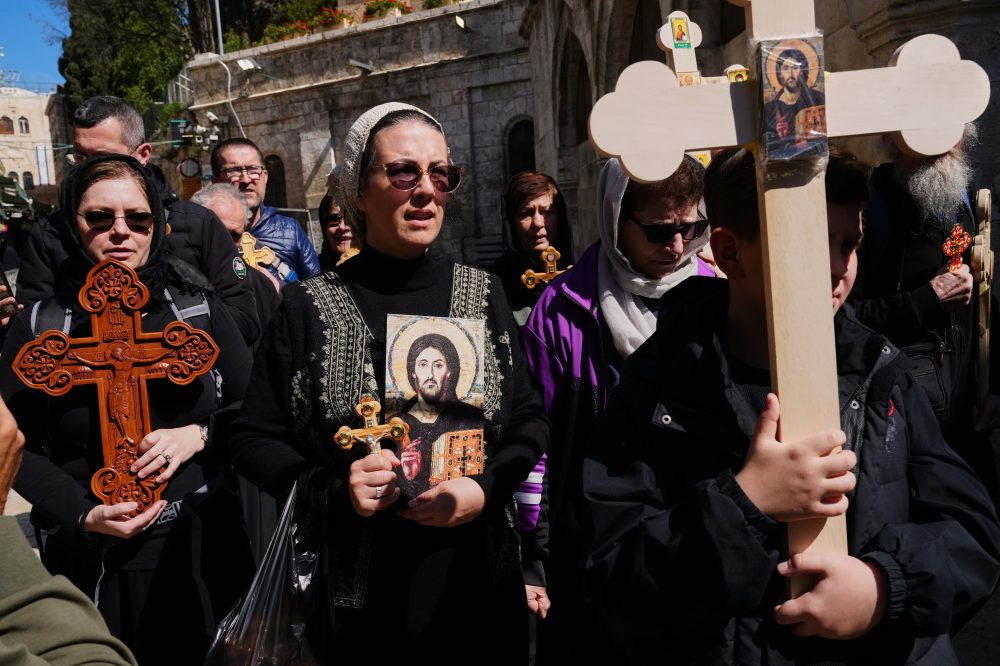
RAMALLAH, West Bank — Authorities in Israel have detained a 36-year-old suspect captured on camera assaulting a nun in the most recent incident of violence against Christians in the vicinity of Jerusalem’s Old City, police announced Friday.
The unidentified individual was taken into custody following Wednesday’s assault near David’s Tomb — a sacred location outside Zion’s Gate on the Old City’s southern perimeter — “on suspicion of a racially motivated attack,” and continues to be held by authorities.
Video footage released by police revealed the nun with visible injuries and showed the perpetrator dressed in tzitzit, a religious fringed garment typically worn by devout Jewish men.
The victim works as a researcher at the French School of Biblical and Archaeological Research, according to the institution’s director, Olivier Poquillon. In a social media post, he characterized the assault as an “act of sectarian violence.”
The walled Old City district in Israel-controlled east Jerusalem represents a historic enclave spanning thousands of years and houses sacred locations for Jewish, Christian, and Muslim faiths. The area frequently becomes a source of conflict as questions of access and control over these religious sites remain deeply connected to the historical and political disputes central to the Israeli-Palestinian crisis.
Various religious organizations have recorded increasing incidents of intimidation and attacks against Christian visitors, religious leaders, and Palestinian Christian locals, including physical assaults and spitting, frequently perpetrated by ultra-Orthodox Jewish seminary students.
According to Wadie Abunassar, who coordinates the Holy Land Christian Forum, violence directed at Christians represents an escalating trend. He suggested the swift police action in this case resulted from the availability of video evidence.
“I feel great anger on the system and great sadness because I feel that this will not end anytime soon,” he stated. Among the challenges, he cited insufficient deterrent measures against such attacks.
“Many times in such cases there are no arrests and if there are arrests, sometimes after one or two days, (suspects) are released,” he explained. “In some cases, the police do not recommend the prosecution to file charges or to indict them. And in some cases, when there is indictment, the indictment is mild.”
This detention occurs amid increased examination of Israel’s treatment of religious minorities, following recent police restrictions on holiday worship access for Muslims and Christians, including Latin Patriarch’s Cardinal Pierbattista Pizzaballa.
Israel faced global condemnation after a soldier photographed himself destroying a fallen crucifix statue with an ax in southern Lebanon. Israeli officials subsequently condemned the action and announced disciplinary measures.
“In a city sacred to Jews, Christians, and Muslims alike, we remain committed to protecting all communities and ensuring those responsible for violence are held accountable,” Israeli police stated in their social media announcement regarding the arrest.
A biblical verse from Proverbs 22:6 states “Train up a child in the way he should go and when he is old he will not depart from it.” New research from the Pew Research Center appears to validate this ancient wisdom, showing that children who experience positive religious environments during their upbringing have a significantly higher likelihood of maintaining their faith as adults.
The research findings demonstrate a clear correlation between the level of religious involvement in a child’s household and their likelihood to continue practicing faith later in life. According to the study, youngsters raised in more devoutly religious homes show greater tendencies to preserve their spiritual beliefs when they reach maturity.
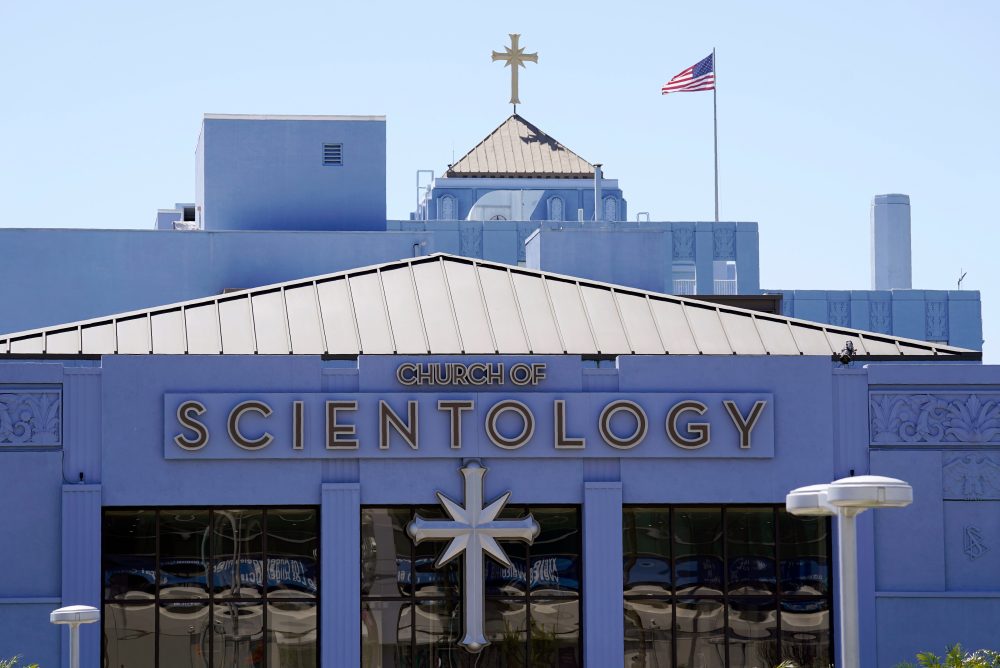
LOS ANGELES (AP) — While strolling down Hollywood Boulevard last Saturday, Ericka Buensuceso encountered an unusual sight: costumed individuals dressed as an alien, two hot dogs, and Jesus.
This diverse group in costumes had joined forces with several other people, all sharing the same objective of entering the Church of Scientology information center nearby and racing through as much of the facility as they could manage.
What Buensuceso observed was a live example of “Scientology speedrunning,” a popular social media phenomenon that has gained traction on TikTok over the past month — while simultaneously creating security issues for the religious organization. She and her companion had actually discussed this trend earlier that same day.
“I felt an adrenaline rush because I was like, ‘No way this is happening right now for me,’” she said. “I’m about to witness something that I thought that I would only see on social media.”
This phenomenon began gaining momentum in early April, with social media users sharing footage of themselves — often wearing unexplained costumes — entering various properties connected to the Church of Scientology. These participants record themselves “speedrunning” through the facilities, attempting to accomplish a mission as rapidly as possible using popular gaming terminology. Their objective? Document the church’s buildings and gather as much intelligence as they can about how the organization operates internally.
The Los Angeles Police Department has confirmed responding to several such incidents over the past month, including the event Buensuceso observed, which authorities investigated as a possible hate crime. This week, the church took action by removing all exterior door handles from its Hollywood Boulevard locations.
Although online audiences may find this entertaining, the church views these incidents as anything but harmless entertainment. Church representative David Bloomberg informed The Associated Press that one staff member sustained injuries during an incident and needed medical care.
“These are peaceful spaces designed to welcome parishioners, visitors and members of the public,” Bloomberg said in a statement. “Turning them into targets for viral stunts is not journalism, protest or civic activity. It is trespass, harassment and disruption of religious facilities.”
The group Buensuceso observed appeared to consist mainly of young males, and she estimated most were likely high school students or possibly even middle schoolers, based not only on their youthful looks but also because she viewed their actions as immature behavior.
Buensuceso shared a TikTok video capturing her viewpoint of the chaotic “raid,” as some participants label these events online. Her footage depicts more than a dozen young people pushing their way into the church’s Hollywood Boulevard building, which has emerged as a popular destination for those wanting to join this social media phenomenon.
The reasoning behind this trend remains somewhat mysterious, but similar to much of Gen-Z and Generation Alpha culture, the significance might stem from its apparent lack of meaning. Absurd “brain rot” content has taken over social media platforms recently, typically driven by younger users and often leaving older generations confused or searching for deeper significance in these trends. When someone commented on a recent TikTok speedrun video asking why people participate, another user simply responded, “because it’s fun.”
“If you’re on TikTok at all, you can see all the different videos,” said Charley Tenorio, a 20-year-old actor who lives in Hollywood. “All the jokes in the comments that if they get to the top, you’ll find Tom Cruise.”
Scientology attracts numerous celebrity followers, with Cruise being among its most well-known members. The faith encompasses a framework of beliefs, teachings and practices centered on spiritual improvement. Science fiction and fantasy writer L. Ron Hubbard’s 1950 publication “Dianetics: The Modern Science of Mental Health” serves as a cornerstone text.
Tenorio was dining at Taco Bell across from the building on Saturday when he witnessed the same incident as Buensuceso.
“I saw them go inside. They passed the security guard, they passed multiple of the workers,” he recalled. “That was all I saw until a couple seconds later when they were all kicked out quite angrily by this small horde of Scientology workers.”
Ahsem Kabir, a musician living in the area, visited the building on Wednesday to examine the removed door handles. He has been following this trend, which he believes enhances the church’s mysterious reputation.
“I do get entertainment out of the speedruns. I think it’s pretty funny,” he said. “I know that technically it’s not allowed, but I think it just kind of adds to the lore of this place.”
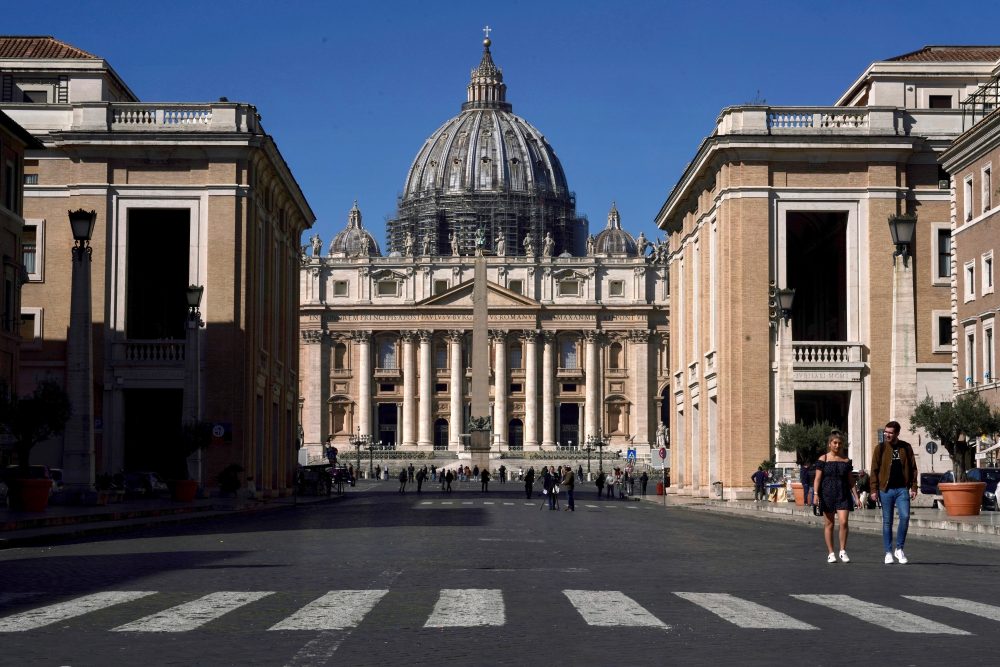
Vatican prosecutors have openly challenged an appeals court mandate to provide complete evidence files to defense teams in a major financial corruption case, potentially escalating tensions in the protracted legal proceedings.
In a three-page response submitted Thursday, prosecution officials stated they would permit appeals judges to review the disputed materials directly. However, they refused to file the documents with the court registry for defense access as commanded, claiming the evidence was “irrelevant” and could potentially damage Vatican interests.
The appeals court’s response to this defiance remains uncertain, with the next scheduled hearing set for June 22.
The contested evidence stems from prosecutors’ extensive probe into a 350-million-euro (approximately $410 million) property purchase in London made by the Vatican Secretariat of State. Following a two-year legal proceeding that concluded in December 2023, a cardinal and eight additional defendants received convictions on various financial crimes. However, the prosecution’s central allegation of a comprehensive conspiracy to defraud the Holy See was rejected.
Defense counsel maintained throughout the proceedings that their clients were denied fair representation due to crucial evidence being either heavily censored or completely withheld by prosecutors. They specifically highlighted the complete questioning sessions of a primary prosecution witness and materials from his confiscated electronic devices.
Prosecution teams justified their redactions as essential for protecting other active investigations and previously rejected a court directive from October 6, 2021, demanding the evidence release.
Defense lawyer Luigi Panella, representing financial manager Enrico Crasso, contended from the trial’s opening in July 2021 that the charges were invalid because prosecutors concealed evidence from defense teams.
After five years of legal wrangling, the appeals court sided with Panella and fellow defense attorneys on March 17. The court commanded prosecutors to file “all investigation acts and documents in their complete form” with the court registry by April 30.
In Thursday’s response, prosecutors reiterated their opposition to the ruling and maintained the materials were “irrelevant” to the proceedings. They argued releasing the evidence to defense lawyers “could pose a grave danger” to public interests. Prosecutors informed judges the materials remained in their offices and were accessible for judicial “consultation” through USB drives.
The appeals court had concluded that prosecutors’ refusal to share complete evidence with defense teams during the initial trial invalidated the original charges. The court declared a partial mistrial and mandated new proceedings.
Defense lawyers characterized the prosecutors’ response as contempt of court.
“In what country in the world can it be that the acts (of an investigation) are shown to the judge but not to the defense?” Panella questioned during a phone conversation. “What concept of ‘fair trial’ can this type of statement represent?”
Legal representatives Cataldo Intrieri and Massimo Bassi, defending former Vatican administrator Fabrizio Tirabassi, described the prosecutors’ actions as without precedent.
“We wonder how a fair judgment can be reached under these conditions,” they stated in a release urging the court to dismiss the entire case.
Lawyers Fabio Viglione and Maria Concetta Marzo, representing Cardinal Angelo Becciu, argued that prosecutors failed to follow the court’s directive.
“This is precisely the selective discretion that the court has ruled out: the prosecution cannot unilaterally decide which documents the defense has the right to access,” they explained. “The right to defense, the equality of the parties, and the adversarial process require full access to the documents.”
Swiss federal authorities closed their own investigation launched in 2020 after the Vatican Secretariat of State filed complaints against Crasso, their former financial manager, alleging embezzlement, fraud and breach of fiduciary duty. These accusations mirrored charges brought against Crasso in Vatican court.
Crasso had overseen the Secretariat of State’s financial portfolio while working at Credit Suisse Italia and Credit Suisse in Switzerland, before establishing his own firm and investment fund that assumed control of Vatican accounts.
In an April 23 decision, Swiss federal prosecutor Annina Scherrer observed that the Vatican tribunal had definitively cleared Crasso and his companies of identical charges, leading to the closure of the Swiss case.
However, in her 31-page decision, Scherrer expressed “a certain surprise” that Vatican prosecutors rejected her requests to interview key witnesses after the requests were clearly forwarded to the Vatican Secretary of State for review. She stated this demonstrated the Secretariat of State’s “influence” over the Vatican’s supposedly independent judicial system.
SRN News has launched a new daily audio program designed to keep listeners informed about religious developments worldwide. The program, called “Global Landscape,” offers a compact two-minute briefing covering the most important faith-related stories of the day.
The audio segment focuses on delivering quick updates about religious news, cultural changes, and major events that impact the relationship between faith communities and world affairs. Listeners can access this daily feature to stay current on how religious matters are influencing global developments.
The program represents SRN News’ effort to provide accessible coverage of religious topics in a format that fits busy schedules while maintaining comprehensive reporting on faith-based issues affecting communities around the globe.
Advocates pushing for assisted suicide legislation have encountered consecutive setbacks across the United Kingdom. British Parliament members this month voted down proposed legislation that would have permitted terminally ill adults in England and Wales to choose to end their lives. Similarly, Scottish Parliament representatives rejected comparable assisted suicide measures last month. While several European nations including Luxembourg, the Netherlands, Portugal and Spain have enacted such laws, pro-life organizations have strengthened their opposition efforts, as demonstrated by these recent victories in England, Scotland and Wales. Currently, 13 U.S. states have approved assisted suicide legislation.
The National Hockey League faces mounting pressure from LGBT advocacy groups demanding Commissioner Gary Bettman take stronger action to advance gay rights initiatives, even as players have recently resisted such efforts. Bettman has attempted to address the criticism by highlighting the league’s established partnership with You Can Play, an organization focused on LGBT inclusion in hockey. However, his push for all NHL teams to host Gay Pride Night celebrations has generated significant pushback. Many professional hockey players hail from Eastern Europe and practice Orthodox Christianity, leading most to decline participation in LGBT pride activities, with several teams canceling such events entirely.
A judicial panel in Brno, the Czech Republic’s second-largest city, has imposed a seven-year prison sentence on a man for his involvement in an anti-Semitic assault. The convicted individual was among two teenagers who attempted to ignite a Brno synagogue in January 2024 using a makeshift explosive device. Both were members of a five-person teenage group arrested last year following alleged online radicalization by ISIS. Global anti-Semitic incidents have increased in recent years and experienced a sharp rise following Hamas’s 2023 assault on Israel. The ongoing conflict with Iran has also triggered additional attacks on synagogues and Jewish institutions worldwide.
Restoration work has begun at Beth Israel synagogue in Jackson, Mississippi, following an arson fire that destroyed the building’s interior earlier this year. A Madison County resident faces trial for what authorities describe as an anti-Semitic assault, having entered not guilty pleas to three federal charges including arson, destruction of religious property, and using fire to commit a felony. Working alongside a local architect, synagogue leadership anticipates construction will commence by late summer, aiming to resume worship services in the rebuilt facility by the Jewish New Year in October 2027. The complete reconstruction cost remains undetermined.
A comprehensive study conducted by the Pew Research Center has revealed which Christian radio programs dominate airwaves across the nation, with several established shows maintaining strong presence on station lineups. The research shows that “Unshackled,” recognized as the longest-running radio drama in broadcasting history, takes the top spot by airing on half of all Christian radio stations nationwide. Close behind is “Turning Point,” a well-established program that broadcasts on 49 percent of stations surveyed. The daily lineup on 44 percent of Christian radio stations includes “Focus On The Family,” while “Grace To You” reaches listeners through 43 percent of participating stations.
Religious congregations across the world are facing a significant financial crisis due to internal theft, according to new research findings. LifeWay Research has discovered that congregations lose a staggering $70 billion annually to theft and embezzlement schemes.
These stolen funds represent resources that could otherwise support charitable work, community outreach programs, and religious missions. The United States is experiencing its share of this troubling trend, with Protestant churches particularly affected.
The research organization’s data shows a concerning pattern among American Protestant congregations. “One in 13 U.S. Protestant pastors say someone had embezzled funds from their congregation,” according to LifeWay’s findings.
This widespread issue highlights the vulnerability of religious institutions to financial crimes and underscores the need for better oversight and financial controls within faith communities.
Christian communities across Southeast Asia are experiencing escalating persecution according to a newly released study from International Christian Concern. The research organization’s findings reveal troubling patterns affecting religious minorities in the region.
The study characterizes the situation as multifaceted and deeply entrenched, stating that “The persecution of Christians in the region is complex, damaging, and deep-rooted. It includes direct, violent, and deadly attacks and incidents. But it also involves immense, complex, and indirect pressure, discrimination, threats, intimidation, problematic laws, and social isolation.”
The challenges facing Christian populations occur within a regional context where Muslims comprise the overwhelming majority, numbering approximately 250 million people across Southeast Asian nations, while Christians represent a small minority of the population.
Religious congregations across the United States are showing signs of recovery following attendance declines during the COVID-19 pandemic, according to new research from the Hartford Institute for Religion Research. The comprehensive study, which examined responses from 24,000 worshippers nationwide, reveals that the majority of congregations have successfully stabilized their membership numbers since the health crisis began five years ago, with numerous churches reporting growth in attendance figures. Despite these encouraging developments, researchers caution that the modest recovery has not reversed the broader, long-term pattern of declining religious service participation that continues to affect faith communities throughout the country.
Will Graham, the grandson of renowned evangelist Billy Graham, is preparing to travel to Japan for a two-day Christian outreach mission. Graham will deliver gospel messages on May 4th and 5th in the Shikoku region as part of the Love and Hope Celebration.
This upcoming visit represents Graham’s first return to Japan in a decade, with his last trip occurring in 2014. The evangelical event is part of an ongoing, multi-year initiative aimed at spreading Christianity throughout the island nation.
Christian evangelism in Japan faces significant challenges, as fewer than two percent of Japanese citizens identify as Christian. The country’s religious landscape is dominated by Buddhist and Shintoist traditions, along with practices centered on honoring ancestors, which has historically created barriers to Christian missionary work in the region.
Dark, curved marks outline where a tree once stood on the brick facade of Mississippi’s biggest synagogue.
A memorial brass plaque survived a deliberately set blaze that struck Beth Israel Congregation’s worship center in northeast Jackson earlier this year. Fire scorched the trunk, limbs and metal leaves that bore inscriptions marking members’ births, marriages and milestone celebrations.
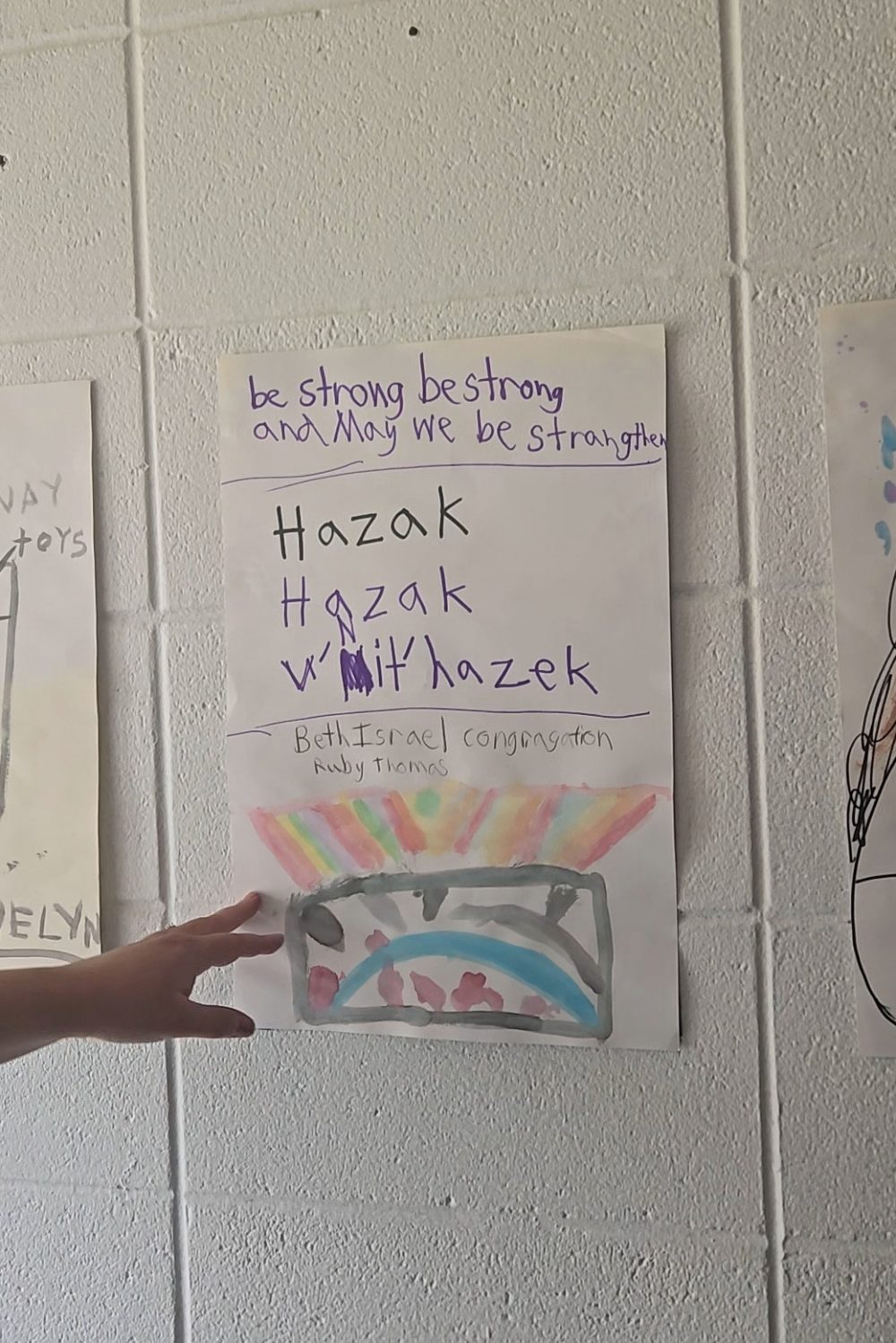
Restoration experts are now working to repair the plaque alongside five Torah scrolls and sacred fabric artwork from the synagogue. Meanwhile, Rachel Myers, a congregation leader who instructs the synagogue’s religious education program, has posted a child’s hand-drawn tree picture in its place.
“He wanted to make sure that we keep that Tree of Life going,” she said.
These artistic creations by young members demonstrate how Myers and fellow congregants have transformed the arson incident into a lesson about perseverance and spiritual strength.
Stephen Spencer Pittman, a Madison County resident, faces trial for what federal prosecutors describe as a hate-motivated assault. Pittman, who typically uses his middle name, has entered not guilty pleas to three federal counts including arson, destruction of religious facilities and using fire to commit a crime.
Authorities apprehended Pittman hours following the blaze at a nearby medical facility where he received treatment for serious burns. He reportedly admitted his actions to police and called Beth Israel the “synagogue of Satan,” according to federal court filings. Security footage from within the synagogue captured a man spreading liquid, and prosecutors claim Pittman contacted his father after igniting the fire and “laughed as he told his father what he did and said he finally got them.”
Myers believes the incident has actually strengthened congregation bonds. She notes it has even simplified her Hebrew instruction with younger students.
“We’re going to keep doing this, because someone wants us to stop,” she stated Sunday when synagogue leadership allowed local reporters inside.
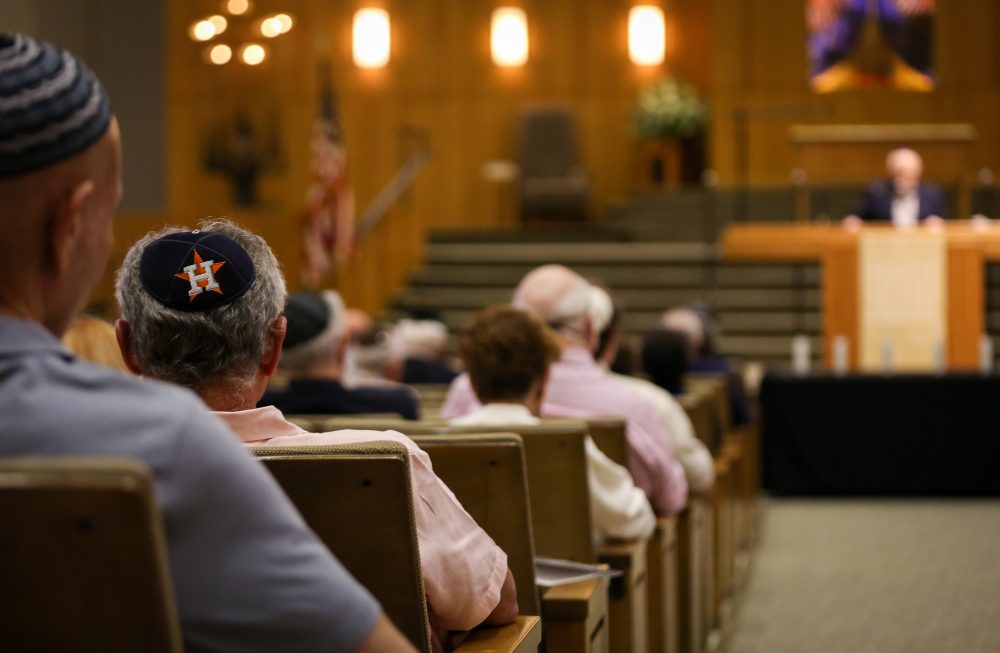
That morning, approximately 60 congregation members toured their synagogue for the first time since flames erupted during early morning hours on January 10. The scene differed dramatically from their familiar worship space, according to Sarah Thomas, the congregation’s first vice president and lifelong member of 37 years.
“It was a good chance to see what it is now and then start to dream and hope for what it will look like when we’re back in here as a community,” she explained.
Rather than walls adorned with tapestries and religious artwork, members encountered bare cinderblock surfaces, broken glass windows, and exposed ceiling beams – damage worsened by asbestos discovery during cleanup.
“All along all of these walls were holy scriptures, prayer books and other works of art you can’t find anywhere else,” stated Zach Shemper, the congregation president, while standing in the now-vacant library where security video showed the perpetrator entering and spreading accelerant.
The attack destroyed numerous irreplaceable items, including two Torah scrolls stored in the library where flames first ignited.
A lingering smoky odor remains detectable throughout the building since the ventilation system awaits remediation, Thomas noted. However, cleanup efforts are 95% finished.
Working alongside a local architect, congregation leaders anticipate construction beginning by late summer, aiming to resume worship services by the Jewish New Year in October 2027. Asbestos removal alone carries a $2 million price tag, though total reconstruction costs remain undetermined pending contractor estimates.
To lift spirits during the walkthrough, Myers displayed student artwork from her classes around the synagogue. Members spontaneously began discussing desired improvements to the facility – particularly additional freezer space in the kitchen, which serves a crucial function during their annual community bazaar featuring traditional Jewish cuisine.
“Our congregation is already thinking about ways to invite the public back here in the space,” Myers said.
Thomas felt especially moved seeing artwork created by her daughter Ruby. Below lyrics to a Hebrew song about strength that Myers taught the children, Ruby depicted bright blue water conquering red flames, creating a victorious rainbow.
“Whatever this one person thought he was going to do,” Myers concluded, “it only made us stronger.”
SRN News has unveiled a new daily programming feature designed to keep audiences informed about religious developments worldwide. The audio segment, titled “Global Landscape,” offers a brief two-minute overview of faith-related news stories each day.
The program aims to keep listeners updated on important religious developments, community changes, and major events that highlight how faith intersects with current affairs across the globe. The compact format allows audiences to quickly catch up on significant stories affecting religious communities and spiritual matters worldwide.
As the United States prepares to celebrate its 250th anniversary, researchers are drawing attention to the religious language woven throughout the Declaration of Independence. The founding document contains several references to divine authority, with Thomas Jefferson writing that “the Laws of Nature and of Nature’s God” provide humans with equal standing and justified America’s break from British rule. Historical records show Benjamin Franklin contributed the phrase indicating these rights were “endowed by their Creator,” while the document also references the Supreme Judge of the world.
Internationally, Kenya joins the global conversation on abortion rights as an appeals court reversed a previous decision that had supported abortion access. The ruling creates a legal battle expected to reach Kenya’s highest court. The appeals judges reinforced that abortion violates constitutional protections for children’s right to life and remains illegal except when maternal life is threatened. Under Kenyan criminal law, attempting or obtaining an abortion carries potential prison sentences of up to 14 years.
American voters will weigh in on reproductive rights across multiple states this November. Missouri legislators want citizens to eliminate the “right to reproductive freedom” amendment they added to their state constitution last year. Nevada voters must approve their 24-week abortion access constitutional amendment a second time for implementation, having passed it once in 2024. Virginia residents will consider a ballot initiative protecting reproductive freedom, including contraception access and abortion decisions during the first six months of pregnancy. Pro-choice organizations are investing heavily in campaigns across all three states.
The Trump administration has opened an inquiry into New York City’s education department following allegations of antisemitic practices. Federal education officials report receiving complaints about district employees organizing seminars titled “Palestine, Zionism, and Resistance” that allegedly encouraged teachers to promote pro-Palestinian viewpoints to students as young as kindergarteners. The Department of Education stated, “No child should be taught by his or her teachers to hate their peers. Neither should Jewish children be taught that being Jewish somehow makes them inherently guilty.”
Religious congregations across Virginia will find it simpler to develop affordable housing projects on their property thanks to recently passed legislation. The new measure comes as the state grapples with significant homelessness challenges, prompting faith communities to seek meaningful ways to address the crisis.
The legislation has garnered support from advocacy groups who see it as a practical solution to housing shortages. According to Sheila Hennessee from the Virginia Interfaith Center for Public Policy, who spoke with the Christian Post, the law “allows faith communities to care for neighbors and is the most meaningful policy addressing the housing shortage to pass this year.”
The partnership between religious organizations and housing development represents a collaborative approach to tackling one of Virginia’s most pressing social issues, with churches positioned to play a direct role in providing shelter for those in need.
An artificial intelligence application named ‘Text With Jesus’ has launched, offering users the ability to engage in digital conversations with biblical personalities through AI technology. The primary feature presents users with a Christ-like figure, complete with traditional religious imagery, and is designed to provide responses based on biblical teachings.
However, a review of the application’s Frequently Asked Questions reveals that the platform extends beyond conversations with Jesus. Users can also engage in text-based discussions with other biblical characters, including controversial figures such as Satan and Judas Iscariot, according to the app’s documentation.
Utah authorities have filed murder charges against a California man in connection with a fatal January shooting at a Salt Lake City church that claimed two lives during a funeral service, according to court records made public Monday.
John Vea Uasike Jr., 32, was arrested April 14 on six felony counts, including two murder charges and firearms violations, the Salt Lake County district attorney’s office announced.
An attorney representing Uasike could not be identified. The deadly incident occurred January 7 in the rear parking area of a Church of Jesus Christ of Latter-day Saints facility.
Authorities determined the violence stemmed from a confrontation among acquaintances who had gathered for a funeral service. Officials previously stated the attack appeared unrelated to religious hatred, noting all victims were adults.
The congregation primarily serves members of Tongan heritage, according to the church’s website. LDS missionaries first introduced their religion to Tonga, a South Pacific island nation, during the 1890s. Utah now houses over 25% of America’s Tongan community, near the church’s main headquarters.
The fatal victims were identified as Vaea Tulikihihifo, 46, and Sione Vatuvei, 38.
Court documents reveal eyewitnesses observed Uasike retrieving a firearm from a dark SUV before aiming it at another person’s head, according to newly released charging papers.
Bystanders attempted to defuse the situation and restrained Uasike’s gun hand, but he discharged two rounds skyward, causing people to take cover and flee, Salt Lake City detective Steven Bigelow stated in the court filing.
Uasike then moved around the vehicle and allegedly opened fire toward the church building and mourners, fatally wounding two individuals and injuring others, Bigelow documented.
One witness reported someone shot back at Uasike, who sustained a gunshot injury and received hospital treatment before traveling to California, Bigelow noted.
A federal grand jury separately indicted two additional men in February on gun-related charges connected to the shooting incident, which wounded six other people.
SRN News has launched a daily audio program that brings listeners up-to-date information about religious developments worldwide in just two minutes. The program, called “Global Landscape,” focuses on covering major faith-based news stories and cultural developments that impact communities across the globe.
The brief audio format allows audiences to quickly catch up on important religious news, including significant events and changes at the intersection of faith and international affairs. The program aims to keep listeners informed about how religious matters are influencing world events and cultural movements.
Authorities have taken two individuals into custody in connection with an alleged scheme to target a Texas synagogue. Court filings indicate the suspects apparently intended to ram a vehicle into the religious gathering with the goal of harming as many Jewish worshippers as possible.
The targeted location, Congregation Beth Israel, holds the distinction of being Texas’s oldest Jewish place of worship, established during the 1850s. The congregation also runs an educational facility serving students through fifth grade.
These arrests come in the wake of a recent incident at a synagogue in the Detroit metropolitan area. Jewish religious centers and community organizations across the globe have been forced to enhance their security measures since the current conflict with Iran began. The Trump administration has made special funding available to help cover these additional security expenses.
Meanwhile, Nassau Presbyterian Church in New Jersey is preparing to present the Samuel Adams Herr Series, consisting of five lectures commemorating the nation’s upcoming 250th birthday. Event planners say the series will also examine the distinctive contribution Presbyterians made in transforming New Jersey’s stance from neutrality to supporting independence.
Historical records show that during the Revolutionary War period, King George referred to the independence movement as “the Presbyterian Rebellion,” while those loyal to the crown held Presbyterians responsible for initiating the revolt. Nassau Presbyterian Church in Princeton was connected to two individuals who signed the Declaration of Independence and five Continental Congress members.
Religious congregations across America are facing challenges related to changing patterns in marriage and family formation. Historically, married couples and families with children have formed the backbone of church communities. Faith-sharing spouses typically demonstrate stronger religious commitment and frequently bring up their children within their religious tradition. However, current statistics show that 42 percent of American adults are neither married nor cohabitating—a record high. This trend shows little sign of reversing, with one-quarter of 40-year-olds remaining unmarried and projections suggesting one-third of Generation Z may never wed. Birth rates have also been dropping consistently for many years.
Some state governments are incorporating biblical teachings as a strategy to address student conduct issues. Texas has required the display of the Ten Commandments in all public school classrooms and has given approval to elementary curriculum that includes biblical content. A June ballot measure would add biblical narratives to mandatory reading assignments. Oklahoma has directed its public schools to integrate biblical teachings into coursework for grades five through twelve. However, the Oklahoma Supreme Court has prevented the state from establishing a taxpayer-funded religious charter school.
New research from the Pew Research Center reveals significant global patterns in how people change their religious affiliations. The study’s main conclusion shows that Catholic Church membership is declining worldwide, while Protestant denominations are experiencing growth.
According to the research, individuals who leave the Catholic faith typically join Protestant churches, though some abandon organized religion entirely. The pattern works differently in reverse – when people leave Protestant denominations, they seldom convert to Catholicism and instead usually choose to become religiously unaffiliated.
A new study from the Pew Research Center reveals what draws Americans to religious radio programming across the nation. According to the research, the primary motivation for listeners tuning into faith-based stations is to receive spiritual encouragement in their daily lives.
The survey findings indicate that the second most frequently cited reason people choose Christian radio is for its calming influence during stressful periods. Researchers note this benefit becomes particularly valuable during turbulent times when people seek peace and comfort.
Additionally, the Pew study discovered that Americans appreciate religious broadcasting as a source of practical guidance for navigating life’s challenges and decisions.
A prominent researcher who has spent decades tracking America’s spiritual health is sounding the alarm about what he sees as a crisis of faith across the nation. George Barna, director of the Cultural Research Center, has documented a dramatic shift in how Americans view the world through a biblical lens.
According to Barna’s research, the numbers paint a concerning picture of spiritual decline. “A quarter century ago, 12% of the adult population held a biblical worldview. Since then, we have seen a steady reduction in that incidence. We reached a low point—4%— in 2023,” Barna explained.
Despite these troubling statistics, Barna remains optimistic that this downward trend isn’t permanent. He suggests that religious congregations can turn things around by placing greater emphasis on teaching and mentoring believers in their faith practices.
A Washington-based ministry organization is demanding financial compensation from the Southern Poverty Law Center, claiming the civil rights group’s classification has endangered lives and damaged their reputation. The Family Research Council has been categorized as a hate organization by the Southern Poverty Law Center due to its opposition to same-sex marriage and broader LGBTQ+ policies. This designation became tragically relevant in 2012 when an armed individual stormed the FRC’s Washington D.C. headquarters and shot at staff members, injuring one person. Tony Perkins, who leads the Family Research Council, argues that the hate group label “doesn’t just damage reputations, it has put lives at risk.” Perkins is now calling on the Southern Poverty Law Center to provide financial restitution to his organization for the consequences of their classification.
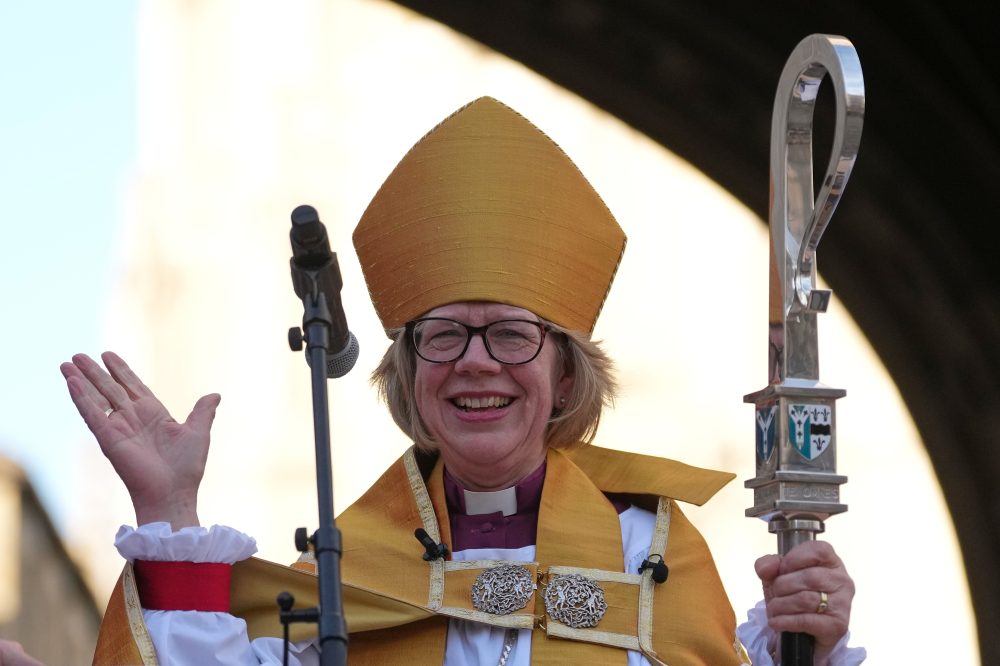
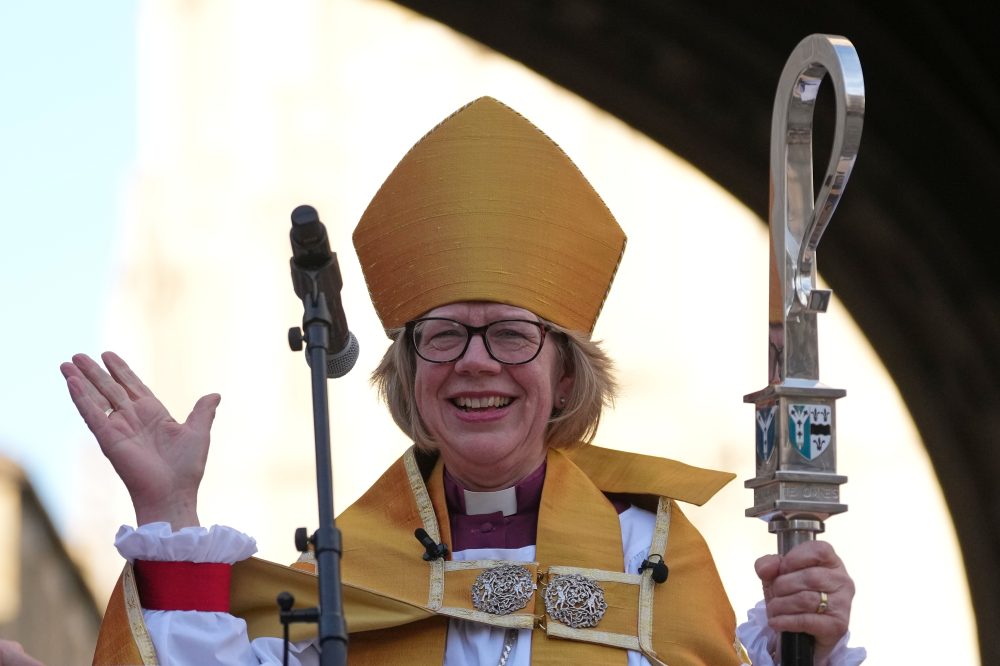
VATICAN CITY – Sarah Mullally, the newly appointed Archbishop of Canterbury and first woman to hold the position, conducted her inaugural international trip Monday with a significant meeting at the Vatican with Pope Leo XIV.
The groundbreaking visit began with a private meeting in the Pope’s library, followed by shared prayers in the Urban VIII Chapel within the Apostolic palace, according to Vatican officials.
Mullally’s appointment as the spiritual leader of the Church of England and millions of Anglicans worldwide has created divisions within the Anglican Communion. Her four-day religious journey to Rome has included stops at major papal basilicas, where she offered prayers at the burial sites of Saints Peter and Paul and conducted meetings with senior Vatican leadership.
According to Lambeth Palace, the visit seeks “to strengthen Anglican–Roman Catholic relations through prayer, personal encounter, and formal theological dialogue. It aims to deepen bonds of communion, affirm a shared witness, and encourage ongoing collaboration at both global and local levels.”
The Anglican Church broke away from Roman Catholic authority in 1534 after Pope Clement VII denied King Henry VIII’s request for a marriage annulment. While formal discussions between the denominations resumed in the 1960s, significant theological disagreements persist, particularly regarding women’s ordination – a practice the Catholic Church prohibits.
The Anglican Church began ordaining female priests in 1994, consecrated its first female bishop in 2015, and now has installed Mullally as its first female archbishop.
However, her historic appointment has deepened existing rifts within the Anglican Communion’s 100 million members across 165 nations, who remain divided on women’s roles and LGBTQ+ issues. While many in England and Western nations celebrated her selection as shattering religious barriers, conservative opposition has emerged from African churches.
The Global Anglican Future Conference, representing the communion’s largest and most rapidly expanding African congregations, has strongly opposed Mullally’s appointment and threatened complete separation. Similarly, the Anglican Church in North America, which split from more progressive U.S. and Canadian Episcopal churches, has endorsed the Gafcon position against her leadership.
Pope Leo XIV and Mullally have previously corresponded, with the Pope offering congratulations on her installation while acknowledging the “challenging” circumstances and persistent divisions between their churches.
“We also know that the ecumenical journey has not always been smooth,” Leo wrote. “Despite much progress, our immediate predecessors, Pope Francis and Archbishop Justin Welby, acknowledged frankly that new circumstances have presented new disagreements among us.”
Despite these challenges, Leo committed to continuing interfaith dialogue. In October, he hosted King Charles III and Queen Camilla at the Vatican, where they participated in prayers within the Sistine Chapel. Charles serves as the ceremonial head of the Church of England.
The October 25 gathering marked the first occasion since the Reformation that leaders of both Christian denominations had prayed together in the same location.
This year commemorates the 60th anniversary of the initial formal ecumenical agreement between Anglican and Roman Catholic Churches, established in 1966 at St. Paul’s Outside the Walls basilica by Archbishop Michael Ramsey and Pope Paul VI.
Mullally has publicly supported Leo’s peace initiatives, particularly after the American-born pontiff faced criticism from President Donald Trump regarding his calls for peace in Iran.
ROME, April 26 – During his Sunday remarks following the Angelus prayer, Pope Leo condemned warmongers and those who exploit natural resources as criminals robbing humanity of its peaceful future, while also cautioning against nuclear technology misuse on the 40th anniversary of the Chornobyl disaster.
Ukraine marked four decades since the catastrophic nuclear accident on Sunday, with ongoing concerns that Russia’s ongoing four-year conflict could trigger another similar catastrophe.
Speaking during his weekly address, the Pope noted that the Chornobyl incident had permanently impacted humanity’s shared memory.
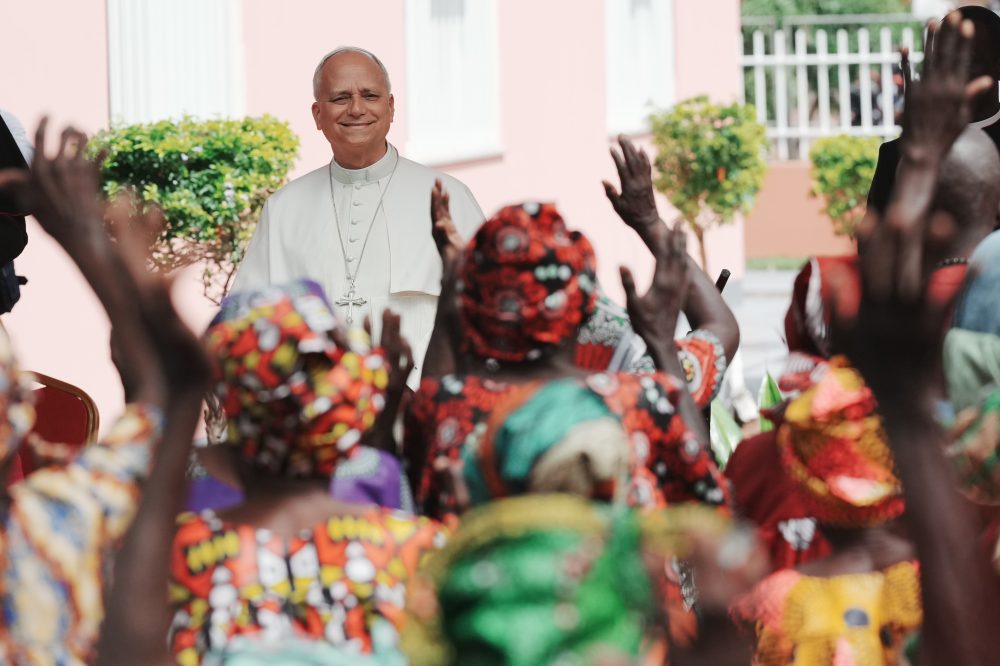
“It remains a warning over the use of ever more powerful technologies,” stated the Pope, who recently completed a 10-day journey through four African countries.
“I hope that at all decision-making levels, wisdom and responsibility always prevail, so that atomic power can always be used to support life and peace,” he continued.
Drawing from the day’s Gospel reading about sheep thieves, Pope Leo explained that criminals appear in various forms, citing examples such as “superficial lifestyles driven by consumerism,” bias, and false beliefs.
“And let’s not forget also those thieves who, by plundering the earth’s resources, by fighting bloody wars or feeding evil in whichever form, are simply taking away from all of us the chance of a future of peace and serenity,” he stated.
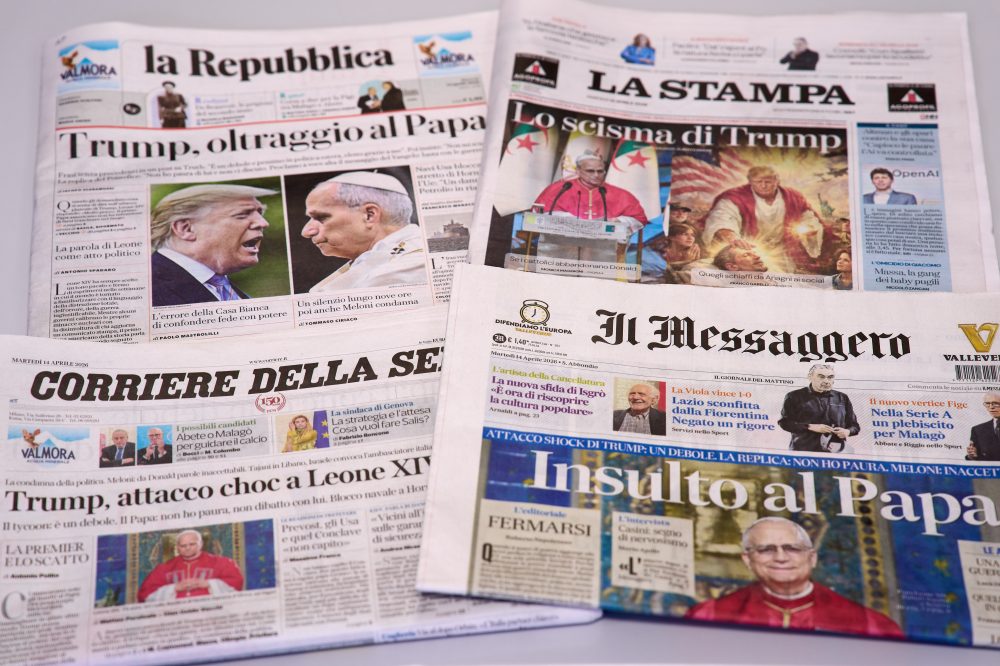
Leo, who became the first American pontiff, has drawn criticism from President Donald Trump following his increasingly vocal opposition to warfare and authoritarian rule.
The Vatican’s newly elected leader spoke out against capital punishment in a video statement released just hours after federal officials announced expanded execution methods for death row inmates.
Pope Leo XIV reinforced the Catholic Church’s position that capital punishment is “inadmissible,” delivering the message on the same day the Justice Department revealed it would permit the use of firing squads in federal executions.
The timing of the Pope’s statement created a stark contrast between the Vatican’s moral stance and the federal government’s decision to broaden execution protocols. The pontiff’s remarks emphasized the Church’s longstanding opposition to state-sanctioned killings.
This marks one of Pope Leo XIV’s first major public statements since taking the papal office, addressing what remains a contentious issue in American criminal justice policy.
A major Christian humanitarian organization reports it has delivered close to 300 million pounds of food assistance to Ukraine following the Russian invasion that began in 2022. Samaritan’s Purse continues its relief efforts in the war-torn nation where widespread infrastructure damage has created severe challenges for residents seeking basic necessities.
The ongoing conflict has particularly impacted elderly and vulnerable populations who find themselves cut off from essential services and unable to reach stores for food purchases. Military operations throughout the region have made travel extremely hazardous for civilians attempting to move around their communities.
Officials with Samaritan’s Purse are calling on American Christians to continue offering prayers for the Ukrainian people as the humanitarian crisis persists.
A federal judge in Washington state has denied the state’s motion to throw out a legal case brought by a Christian married couple seeking to become foster parents. Shane and Jennifer DeGross initiated their lawsuit after state officials turned down their application when they declined to accept new state requirements mandating foster families assist children who wish to transition to living as a different gender.
The couple’s legal representation comes from Alliance Defending Freedom, which argues that Washington state officials are prioritizing political beliefs over what’s best for children in the foster care system.
Law enforcement officials have apprehended two juveniles in connection with an alleged scheme to carry out a deadly assault on a synagogue in the Houston area.
According to authorities, the suspects had developed a plan to use a vehicle to ram into the religious facility during services, with the stated intention to “kill as many Jews as possible.”
The arrests highlight ongoing concerns about threats targeting Jewish communities and places of worship across the United States. Officials have not released additional details about the suspects’ identities due to their age or the specific timeline of the alleged plot.
The investigation remains active as law enforcement continues to examine the full scope of the planned attack.
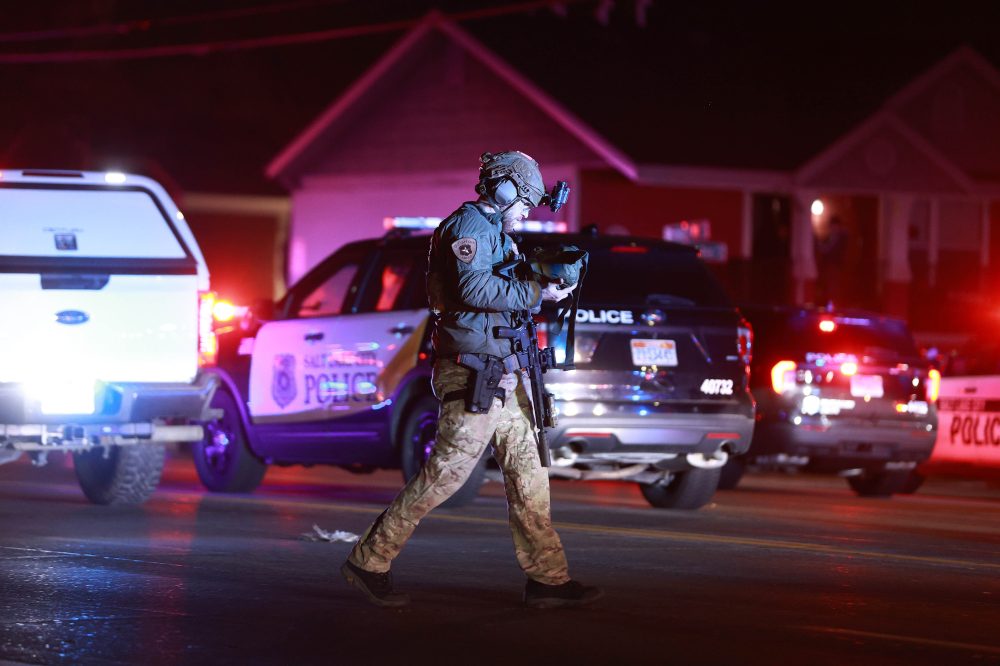
RALEIGH, N.C. — Federal and local authorities have taken two young suspects into custody for allegedly planning a violent assault on a Texas house of worship, with investigators saying the scheme involved ramming a vehicle into worshippers to “kill as many Jews as possible.”
The detentions occurred approximately one month following an incident where a gunman drove his truck into a prominent synagogue in the Detroit metropolitan area, marking another attack targeting Jewish communities. Religious institutions worldwide have heightened their security measures and protective protocols since the United States and Israel entered into conflict with Iran on February 28.
Davidson County jail records indicate that Angelina Han Hicks, age 18 from Lexington, North Carolina, remained in custody Thursday with bail set at $10 million. Wednesday’s arrest resulted in formal accusations that she collaborated with two “male subjects” in planning murder and assault charges against congregants at Congregation Beth Israel in Houston, scheduled for April 21, 2028, as detailed in arrest warrants outlining two felony charges.
The FBI’s Charlotte office announced Thursday through social media that a minor has been charged in connection with the conspiracy in Harris County, Texas, encompassing Houston. Officials have not yet confirmed whether this detained juvenile matches either of the two male accomplices named in Hicks’ arrest documents, which provided only first names while listing surnames as “unknown.”
Houston Police Department issued a Thursday statement revealing a 16-year-old’s arrest and charging with conspiracy to commit capital murder connected to “a threat directed towards certain Jewish institutions in our area” that authorities discovered Wednesday. The department avoided specifically naming Congregation Beth Israel. Both the FBI and Houston school district police contributed to the apprehension.
“At this time, there is no other known credible threat,” the release said.
District Court Judge Carlton Terry explained Wednesday why Hicks’ confinement was essential, writing partially that the suspected “conspiracy is to kill as many Jews as possible by driving through a congregation at a synagogue.”
“Allowing a co-conspirator a chance to communicate with either of those individuals or those who could relay a message puts lives at risk,” Terry added.
The FBI reported that its Charlotte Joint Terrorism Task Force initiated the probe Tuesday night following information provided to a North Carolina law enforcement organization.
Although Hicks’ arrest documents reference a possible attack scheduled two years ahead, Davidson County senior assistant district attorney Alan Martin explained during an interview that authorities had “some concern that there could be an imminent event” targeting the Houston synagogue. Court filings in North Carolina did not immediately reveal a potential reason for the planned violence. The probe remains active.
Phone contact attempts with Hicks’ court-appointed counsel proved unsuccessful Thursday. Attorney Chad Freeman informed the Houston Chronicle that proceedings were in preliminary phases and Hicks’ age might influence her legal defense.
“I anticipate getting numerous experts involved in the case to look at both investigatory and possible forensic matters,” Freeman told the newspaper. Her upcoming court appearance is scheduled for May 13.
Congregation Beth Israel holds the distinction of being Texas’ oldest Jewish worship facility, established during the 1850s. The institution also runs an elementary school serving students through fifth grade. Thursday’s social media announcement from the Charlotte FBI referenced a suspected planned assault on a Jewish educational facility.
The possible dangers communicated to synagogue leadership by Houston law enforcement led Beth Israel to shut down Wednesday “out of an abundance of caution,” according to a social media statement from the Jewish Federation of Greater Houston. The facility resumed operations Thursday, the federation reported.
“The safety and security of the Houston Jewish community is of utmost importance to all of us,” the federation wrote.
Lexington sits approximately 90 miles west of Raleigh.
Federal investigators stated that Ayman Ghazali intended to cause maximum harm to Jewish individuals when he crashed his pickup truck on March 12 into Temple Israel located in West Bloomfield, Michigan.
The 41-year-old Ghazali carried weapons when his vehicle broke through entrance doors and into a corridor of an early childhood education section, hitting a security officer. He subsequently engaged in gunfire with another guard before taking his own life. None of the other 150 children and employees sustained injuries.
Ghazali, born in Lebanon but holding U.S. citizenship, had discovered one week prior to his attack that four relatives died in an Israeli air strike in his homeland.
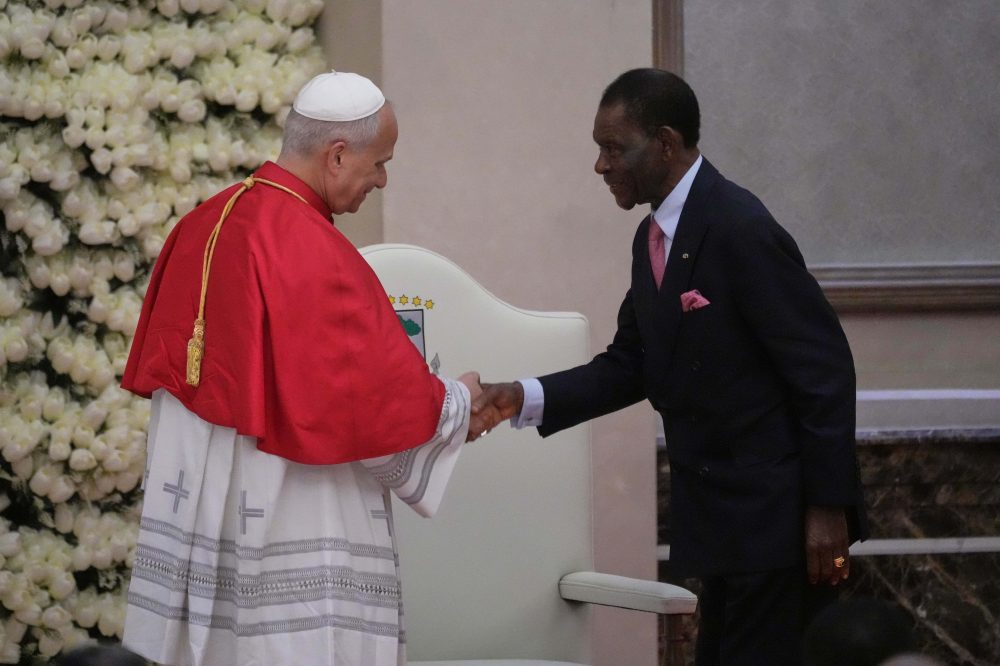
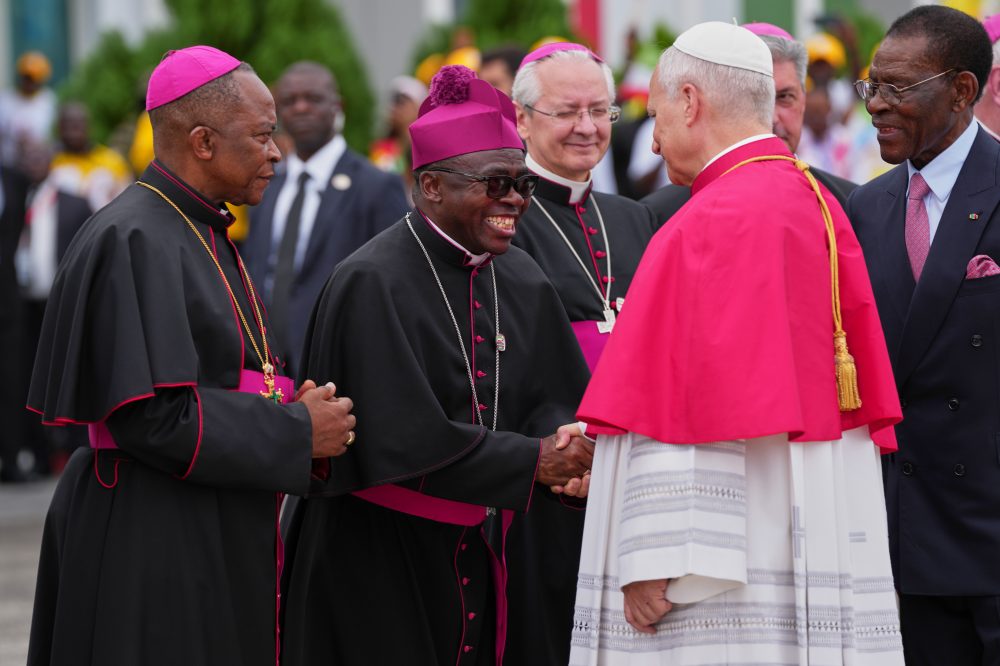
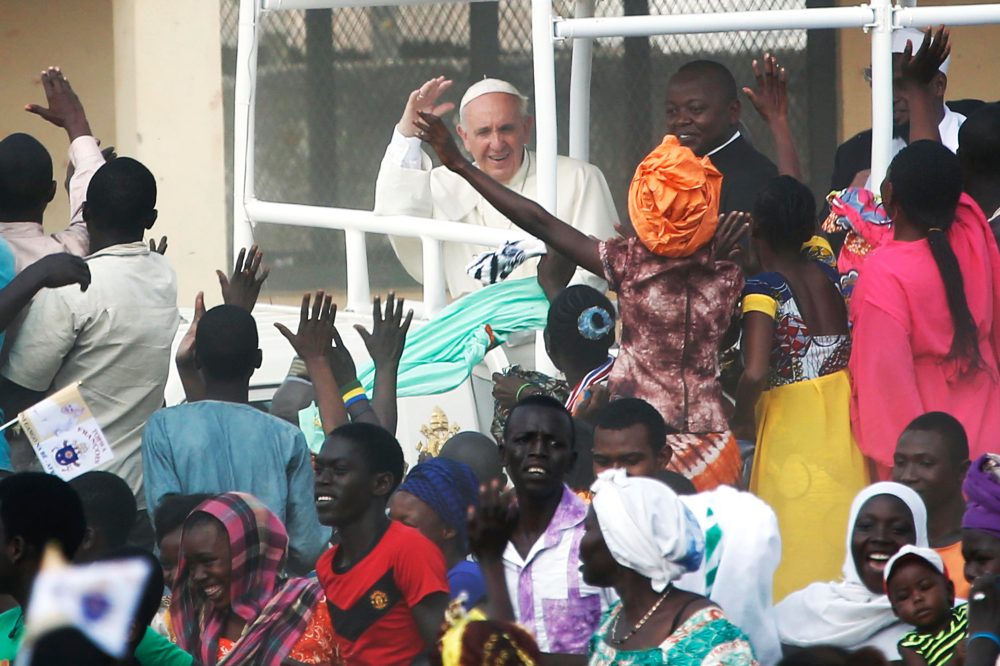
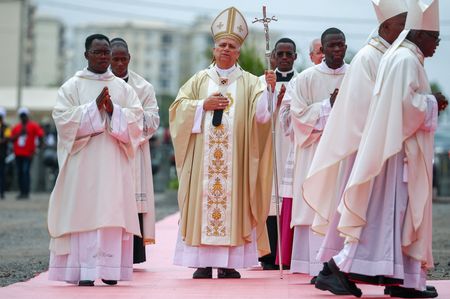
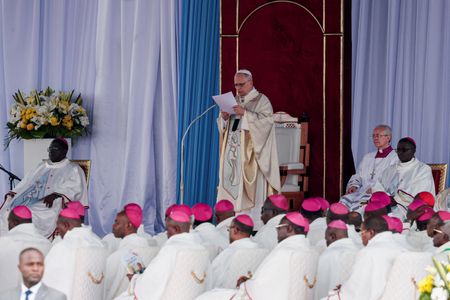
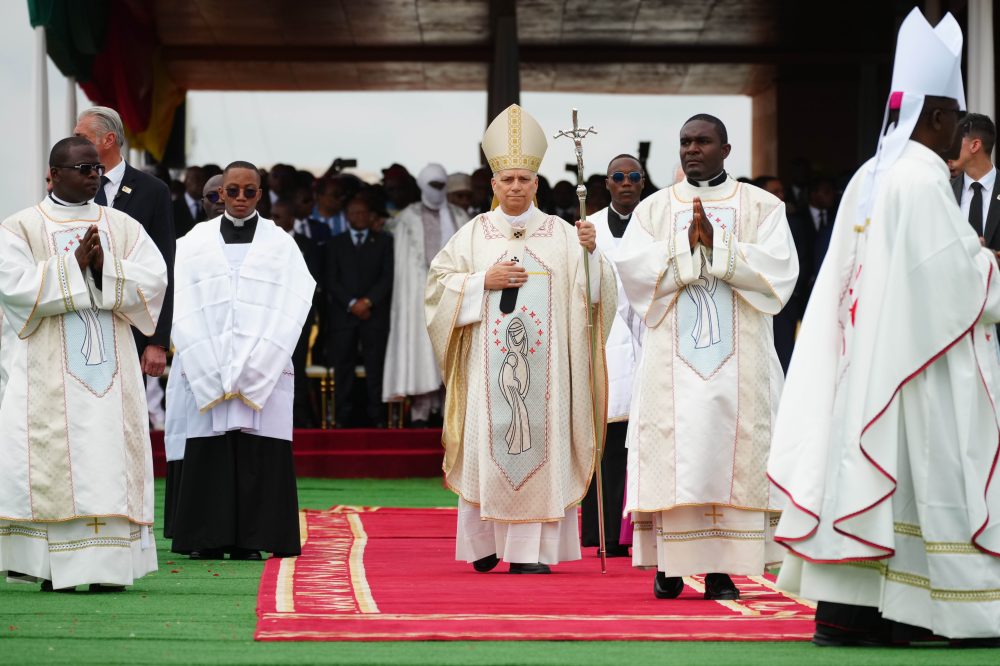
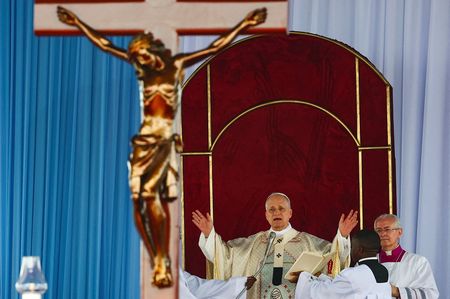
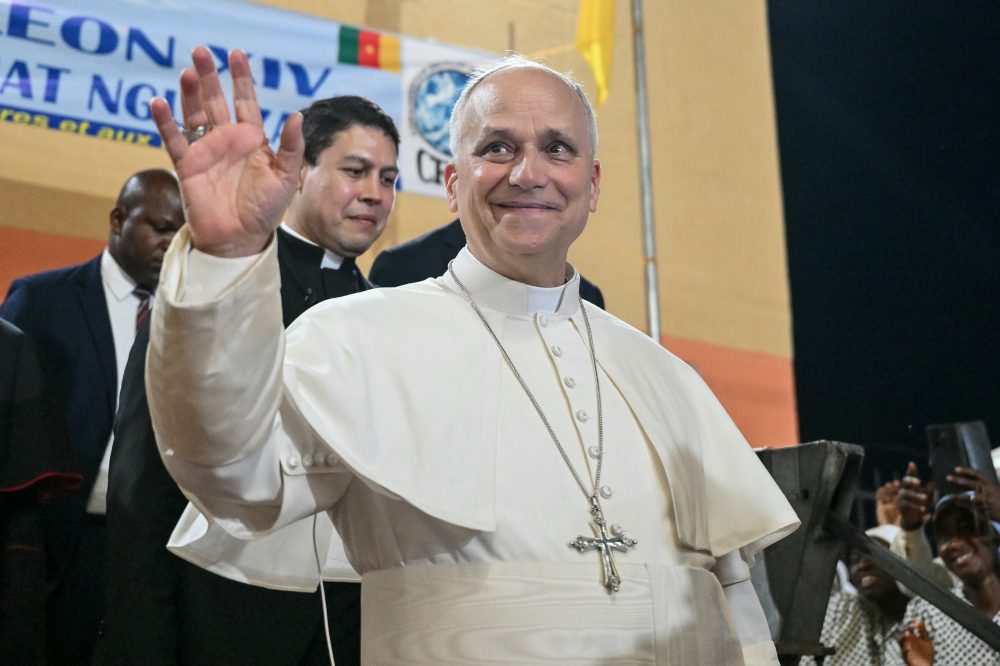
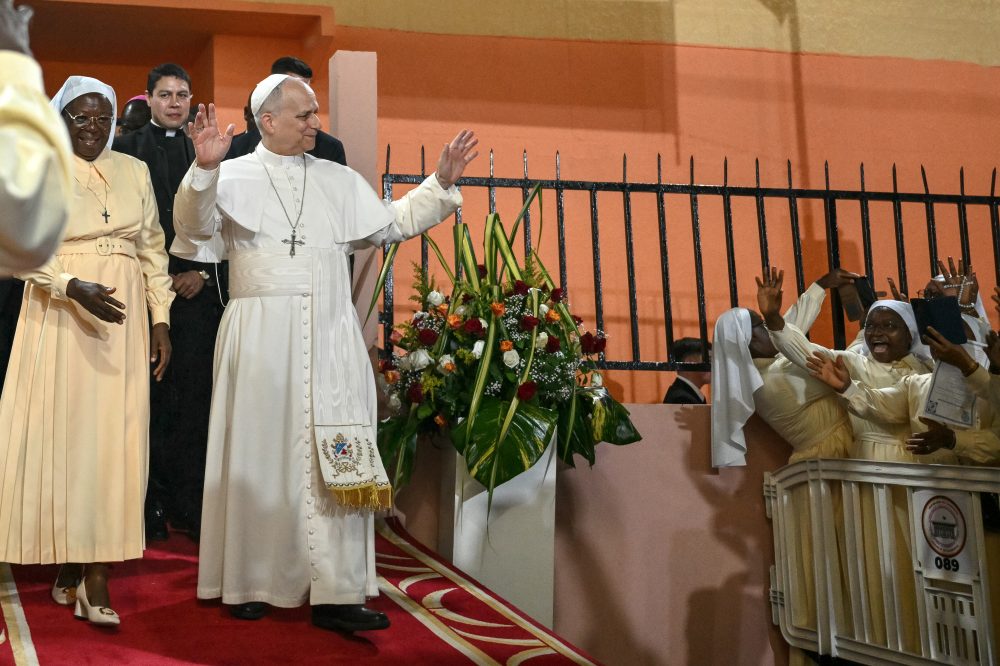
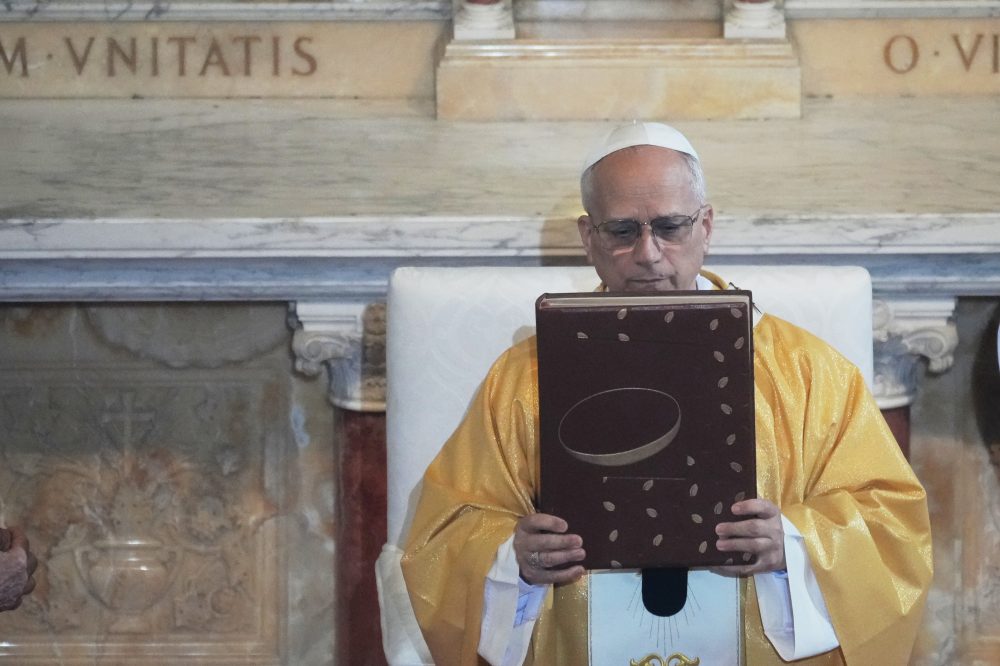
MALABO, Equatorial Guinea — Pope Leo XIV concluded his historic African journey Thursday with a final religious service in Equatorial Guinea, ending what many consider one of the most headline-grabbing papal visits ever due to his remarkable public dispute with President Donald Trump.
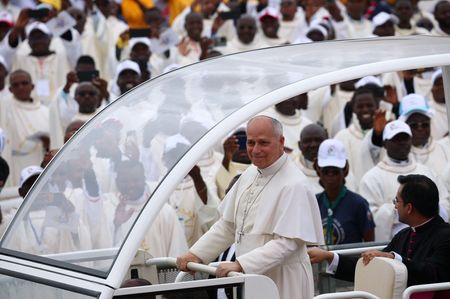
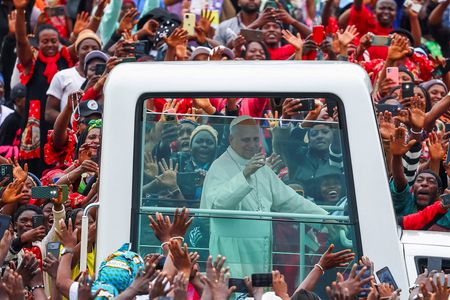
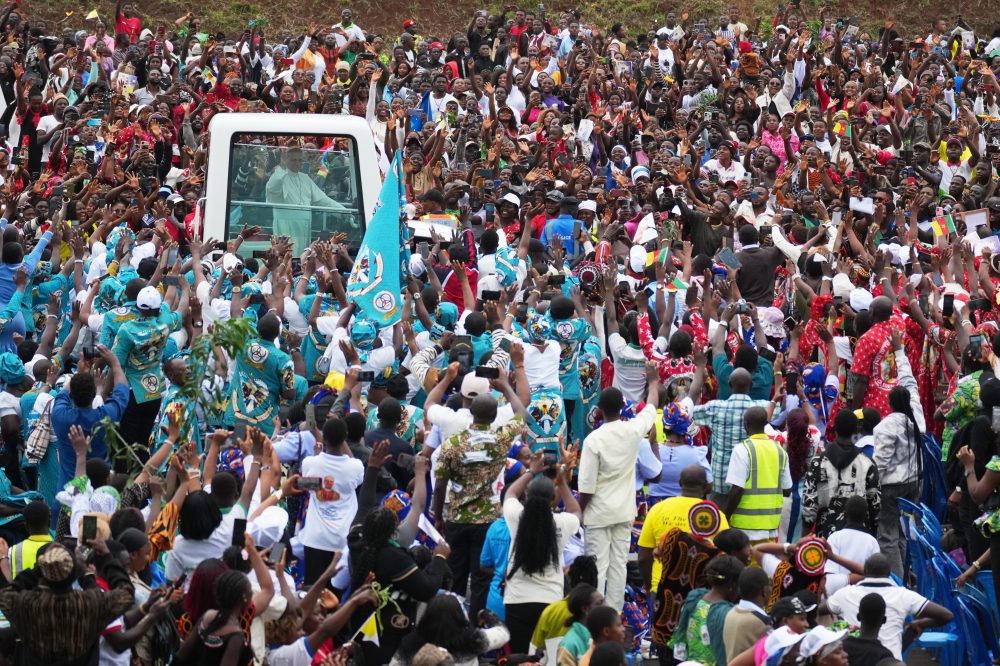
Heavy rains soaked the Malabo sports stadium and approximately 30,000 worshippers who had assembled before sunrise for Leo’s closing ceremony. However, the downpour subsided before Leo’s arrival in his enclosed papal vehicle for his procession through the enthusiastic crowd.
The pontiff departed following an extensive 11-day journey across four African nations, traveling from Algeria in northern Africa down to Angola in the south, with Cameroon included in his itinerary.
During this period, Leo traveled more than 17,700 kilometers (approximately 11,000 miles) across 18 separate flights, including three flights on Wednesday alone that had him traveling across Equatorial Guinea from the western coastline to the eastern border with Gabon and returning.
Throughout his journey, Leo, who became history’s first American pope, was greeted with enthusiastic receptions, particularly in remote locations that had never before hosted a papal visit.
While papal international travel began with Pope Paul VI’s inaugural modern foreign journey in 1964 to Jordan and Israel, it was St. John Paul II who transformed the papacy through his extensive worldwide travels, completing 104 international trips spanning 25 years, establishing the multi-country format that Leo’s recent journey appeared to follow.
During Leo’s closing Mass Thursday, sisters Michaela Mecha and Encarnacion arrived at the Malabo stadium during the heavy rainfall at 4 a.m. Both wore complete pope-themed clothing, including yellow umbrellas featuring Leo’s image.
“We feel very special and blessed that the pope has chosen our country,” said Michaela, who works as a nurse and brought her two young daughters with her. “This visit is bringing young people closer to God.”
During his sermon, Leo mentioned the April 17 death of Rev. Fr. Fortunato Nsue Esono Ayíambeng, who served on the trip’s organizing committee and held the position of vicar general of Malabo.
“May full light be shed on the circumstances of his death,” Leo said, in apparent reference to rumors that foul play might have been involved.
Nobody anticipated that Leo’s inaugural African papal visit would unfold amid Trump’s unprecedented criticism regarding the Iran conflict. However, the timing placed Leo in the media spotlight from the beginning, with the confrontation continuing for several days.
On the first day, Leo maintained he was simply sharing the Gospel of peace and expressed no fear of the Trump administration after Trump criticized him for being lenient on crime and aligned with liberal politics. As the criticism persisted and Vice President JD Vance entered the dispute, advising Leo to “be careful” when discussing theology, Leo attempted to calm tensions by blaming media misinterpretation of his statements.
This approach appeared successful, as both Leo and the Trump administration moved forward, allowing the pope to focus on his African mission. His agenda centered on encouraging Catholics with messages of hope while condemning what he termed the “colonization” of the continent’s natural resources by foreign powers.
The journey included emotionally charged moments, including when Leo departed from a planned visit to a psychiatric facility in Sampaka, Equatorial Guinea, to personally meet each patient and take photographs with them.
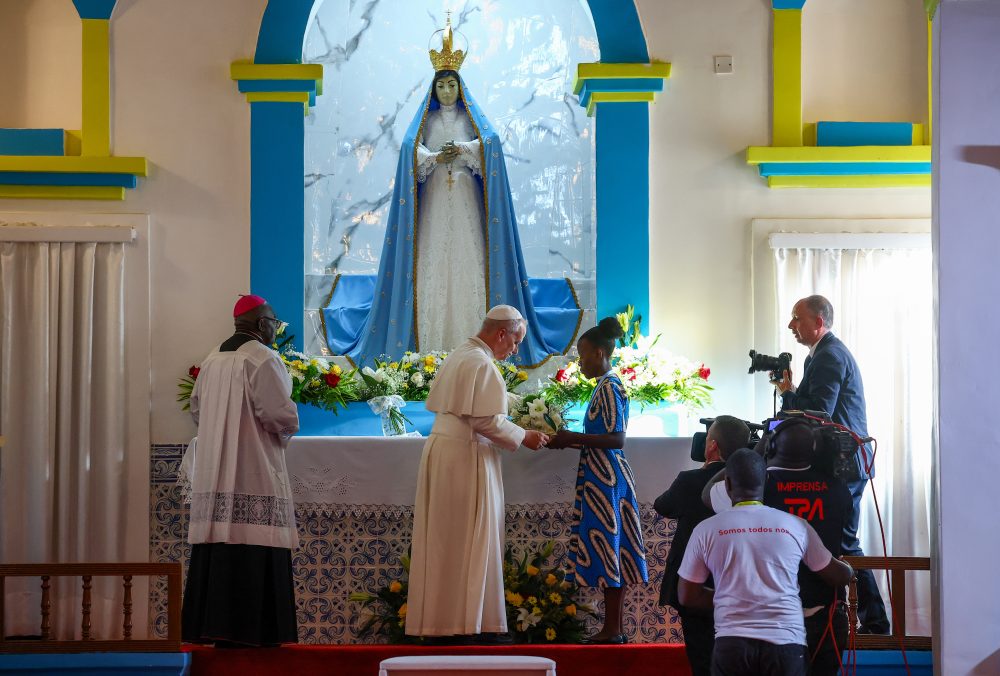
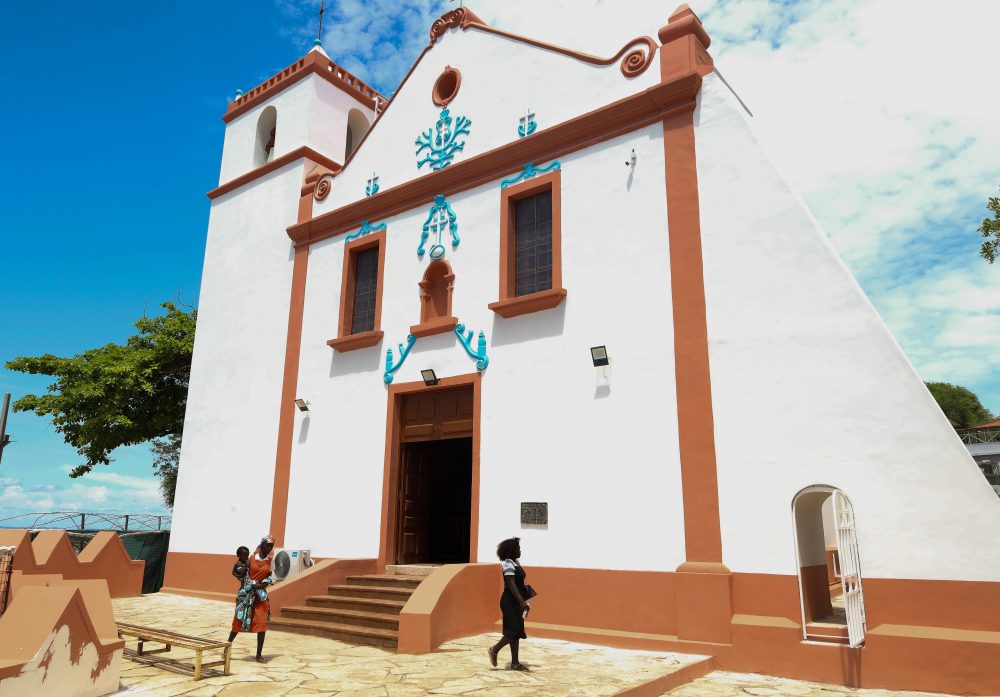
Another significant moment occurred when Leo, whose family history includes both enslaved individuals and slave owners, prayed the rosary in Muxima, Angola. This location, once a major center of the African slave trade, has become Angola’s primary pilgrimage destination following a reported Virgin Mary apparition around 1833.
Personal visits also occurred, such as when Leo met with nuns from his Augustinian religious community in Bab El Oued, Algeria, and examined jewelry crafted by local women. He selected a necklace with a tree of life pattern and told the superior, “It’s not for me, it’s for my niece.”
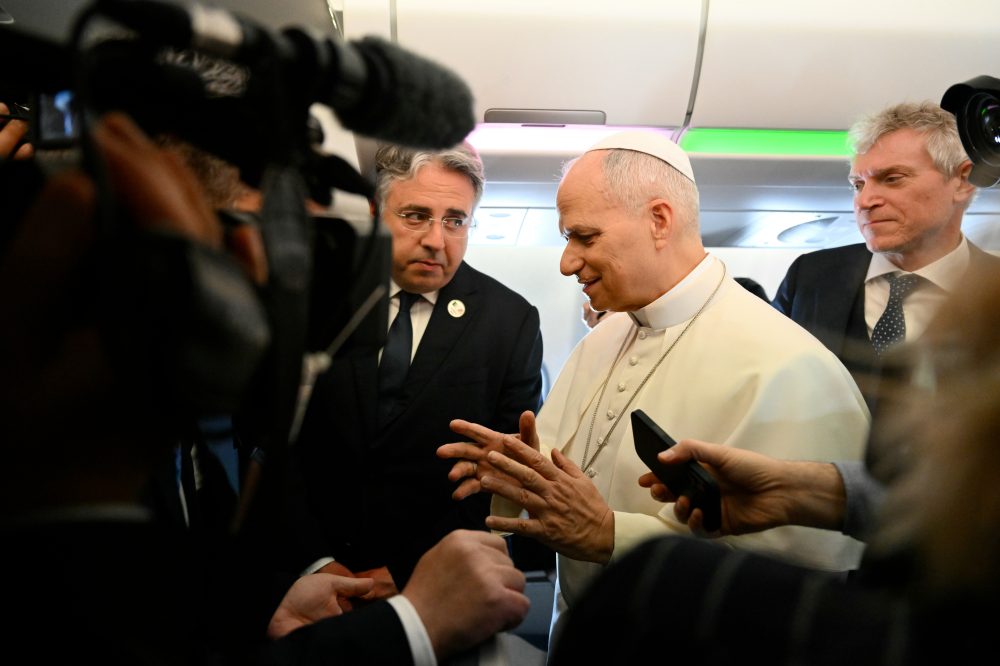
In Bamenda, Cameroon, he visited the center of a conflict that has lasted nearly ten years and pleaded for peace while criticizing the “handful of tyrants” destroying the planet. These comments prompted Leo to approach reporters on his plane days later to clarify he wasn’t referring to Trump.
One particularly concerning incident occurred in Bata, Equatorial Guinea, during Leo’s prison visit. All prisoners, with shaved heads, wore new bright orange or beige uniforms and new rubber shoes resembling Crocs. The facility had received fresh salmon pink paint with newly planted trees around its borders.
The prisoners stood quietly in apparently designated positions in the open yard awaiting Leo’s arrival. Upon his entrance, they performed a song about their wrongdoings. As Leo spoke about God’s love and their worth, they danced and waved Holy See flags in coordinated movements while heavy rain began falling on everyone.
Immediately after Leo’s departure, while the country’s justice minister remained in the courtyard, the prisoners abandoned their positions and began an energetic, dancing chant of “Libertad! Libertad! Libertad!” (Freedom! Freedom! Freedom!)
The extended journey allowed for several notable moments: Leo commemorated the first anniversary of Pope Francis’ death with an impromptu tribute from the papal aircraft, remembering Francis’ compassion and symbolic actions.
Leo also congratulated the few journalists who had birthdays during the trip, with each celebration including birthday cake distributed by the ITA Airways crew.
Leo’s informal comments to journalists while traveling between nations provided opportunities for local Vatican press pool members to ask questions relevant to their home audiences. One revelation that particularly pleased Angolans was Leo’s disclosure that Angola might receive its first cardinal, though not immediately but “a bit further on.”
SRN News has launched a daily audio program designed to keep audiences updated on religious developments worldwide. The program, titled “Global Landscape,” offers a compact two-minute format that covers the most important faith-based news stories each day.
The audio briefing focuses on delivering quick updates about religious events, cultural changes, and significant happenings where spirituality intersects with current affairs across the globe. The program aims to provide busy listeners with essential information about how faith communities and religious matters are influencing world events.
Federal prosecutors have brought fraud charges against the Southern Poverty Law Center, accusing the civil rights organization of secretly compensating informants who infiltrated extremist organizations while failing to inform donors about these expenditures. According to the Justice Department, the SPLC misled contributors by using their donations to financially support the very extremism the group claims to combat. The organization has rejected these allegations.
The SPLC has previously drawn criticism from Christian organizations for labeling groups that oppose LGBT policies as hate organizations. Among the groups receiving this designation are the Family Research Council and the American Family Association.
As midterm elections approach, Democratic Party leaders are wrestling with internal disagreements about how prominently LGBT issues should feature in their political messaging. Following the 2024 presidential race, party members have debated whether LGBT-related positions contributed to their electoral defeats. The Trump campaign targeted Vice President Kamala Harris with advertisements highlighting her support for gender transition procedures for incarcerated individuals and allowing biological males to participate in women’s athletics. While some centrist Democrats believe these positions alienate moderate voters and should be minimized, LGBT advocacy groups are resisting any retreat from these issues.
The International Olympic Committee has implemented new participation rules that bar male athletes from competing in women’s Olympic events, establishing a policy that coincides with President Trump’s executive directive regarding women’s sports before the 2028 Los Angeles Olympics. The IOC stated that “eligibility for any female category event at the Olympic Games, including individual and team sports, is now limited to biological females.” While the exact number of male athletes competing in women’s Olympic categories remains uncertain, no transgender women participated in the 2024 Paris Summer Olympics, though one weightlifter did compete in the Tokyo 2021 Games.
A continuous public Bible reading marathon is taking place in Washington, D.C., scheduled to conclude Saturday. The America Reads the Bible event is being broadcast live from the Museum of the Bible and featured President Trump reading from Chronicles on Tuesday. The event includes participation from Republican lawmakers and evangelical leaders, organized by Christians Engaged as part of a broader initiative linking America’s upcoming 250th anniversary with Christian themes. The complete reading covers the entire Bible from Genesis to Revelation and precedes the National Jubilee of Prayer, Praise, and Thanksgiving scheduled for May 17th.
A federal appeals court has ruled in favor of Texas lawmakers who want the Ten Commandments displayed in public school classrooms across the state. The 5th Circuit Court of Appeals determined that the Texas legislation requiring these religious displays does not breach First Amendment protections for religious liberty. This decision represents a significant win for Republican legislators who championed the measure, but legal experts suggest the controversy could eventually reach the U.S. Supreme Court. The appeals court concluded that mandating the Decalogue in classroom settings falls within constitutional boundaries regarding the separation of church and state.
Protestant congregations across the nation are divided on whether artificial intelligence belongs in sermon preparation, according to new research from Life Way Research. The study surveyed churchgoers about their comfort level with pastors incorporating AI technology into their weekly message development.
Results show a nearly even split in opinion, with 44 percent of respondents expressing comfort with AI-assisted sermon preparation, while 43 percent indicated they would be troubled by such technology use. The remaining 13 percent remained undecided on the issue.
Beyond sermon preparation, the research uncovered broader concerns about artificial intelligence’s role in faith communities. More than six out of ten survey participants – 61 percent – expressed anxiety about how AI technology could influence Christianity across the United States.
Religious liberty advocates are sounding the alarm about European legislation they believe could curtail religious expression, with potential consequences reaching American users. Organizations focused on protecting faith-based freedoms argue that hate crime statutes across Europe are creating new barriers for religious communities.
According to International Christian Concern, Europe’s Digital Services Act poses particular concerns because “it incentivizes companies to comply with its requirements and revise their worldwide content moderation policies. From politics to religion, online content is being classified as hate speech.” The organization warns that these European regulations could influence how social media platforms and other online services moderate content globally, potentially affecting American users’ ability to express religious viewpoints.
A federal appeals court decision this week has strengthened efforts by several states to mandate Ten Commandments displays in public school classrooms, marking a significant development in the ongoing debate over religion’s place in education.
The most extensive effort to place the Ten Commandments in every classroom started in Texas last year, where a federal appeals court on Tuesday rejected a legal challenge to the state’s requirement. Although the matter is far from resolved, the decision represents a win for conservative advocates who dismiss claims that such displays promote religion to students or infringe on parental rights, including those of non-Christian families.
The mandate has sparked both support and opposition, energizing school board discussions and leading to official guidance for educators on how to respond to student inquiries. Several teachers have chosen to resign rather than comply with posting the Ten Commandments in their rooms.
Southern Republican legislators have spearheaded this movement. Louisiana led the charge by becoming the first state to enact such a requirement in 2024, with Arkansas and Texas following suit.
Alabama represents the most recent addition, where Republican Governor Kay Ivey this month approved legislation mandating Ten Commandments displays in grades 5-12 public school classrooms where American history is regularly taught, plus shared spaces including cafeterias and libraries.
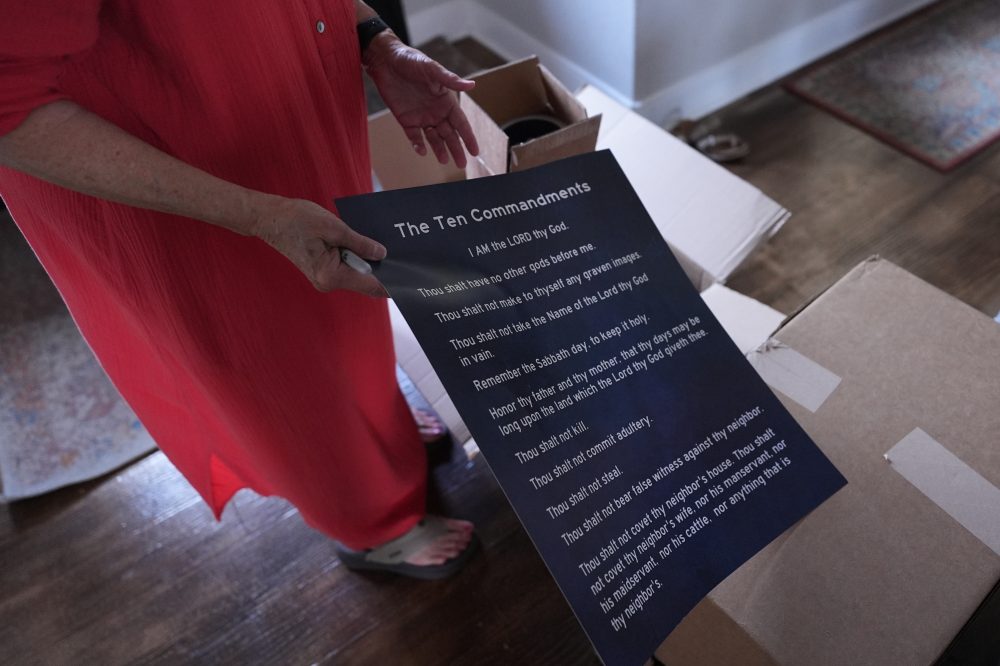
Texas Governor Greg Abbott signed his state’s measure, which mandates Ten Commandments postings in all public school classrooms and became effective in September. Since the legislation only obligates districts to display them when donated, conservative organizations and supporters began delivering boxes of posters to schools statewide as the academic year commenced.
An Associated Press review of state legislation using bill-tracking software Plural identified at least 30 proposed measures in current legislative sessions that would mandate displaying the document in schools. Republican lawmakers introduced all these bills, with nearly every one originating in states under GOP control.
Only a handful have received legislative committee approval. Additional bills in various states would either permit displays or mandate instruction incorporating the document.
For several months, a lower court decision prevented approximately twelve Texas school districts from installing the posters. However, the 5th U.S. Circuit Court of Appeals in New Orleans overturned that ruling in a narrow 9-8 vote, determining the requirement doesn’t violate student or parental rights.
“No child is made to recite the Commandments, believe them, or affirm their divine origin,” the ruling says.
The American Civil Liberties Union and other organizations that contested the Texas law representing parents expressed being “extremely disappointed” with the appeals court’s ruling.
“The First Amendment safeguards the separation of church and state, and the freedom of families to choose how, when and if to provide their children with religious instruction,” they said in a statement. “This decision tramples those rights.”
In February, the same appeals court authorized Louisiana to implement its own statute. Louisiana’s Republican Attorney General Liz Murrill praised the Texas case outcome, stating it “adopted our entire legal defense.”
Texas’s Ten Commandments requirement represents just one aspect of the broader struggle over religious content in classrooms. In 2024, the state authorized optional biblical curriculum for elementary schools, and a June proposal would incorporate Bible stories into mandatory reading assignments.
In adjacent Oklahoma, the former state education leader mandated that public schools integrate Bible content into lesson plans for grades 5-12, triggering legal action from parents and educators. Many schools simply disregarded the directive.
Last year, Oklahoma’s Supreme Court prevented the state’s attempt to establish the nation’s first publicly funded religious charter school. The case awaits consideration by the U.S. Supreme Court.
The ACLU and other groups challenging the Texas law indicated they plan to appeal the 5th Circuit’s decision to the U.S. Supreme Court.
A Christian broadcasting organization is taking their fight over church political speech restrictions to a federal appeals court after a Texas judge dismissed their initial lawsuit.
Michael Farris, General Counsel for the National Religious Broadcasters (NRB) and lead attorney in the NRB v. Bessent case, announced the formal appeal has been submitted to the Fifth Circuit Court of Appeals. The original lawsuit was thrown out on March 31 by the District Court for the Eastern District of Texas due to jurisdictional issues under the Anti-Injunction Act.
At the heart of the dispute is the Johnson Amendment, a federal law that prohibits churches and other tax-exempt organizations from publicly supporting or opposing political candidates.
Farris argues that religious organizations should be able to contest speech limitations without first breaking the law. “The Supreme Court has made it clear that no one has to violate a law in order to challenge its limitation on the freedom of speech or religion. The Anti-Injunction Act cannot be construed to force churches to violate the Johnson Amendment in order to challenge its chilling effect on their First Amendment freedoms,” he stated.
The NRB claims in their lawsuit that the Johnson Amendment is applied unevenly, suggesting conservative religious institutions face punishment while liberal churches and nonprofits receive more lenient treatment regarding political involvement.
The Johnson Amendment has remained a contentious issue in legal and political circles, creating ongoing debates about where to draw lines between religious freedom, free speech, and electoral activities for tax-exempt organizations.
The NRB describes itself as a nonpartisan international group representing Christian media professionals who reach millions through various platforms. The organization works to defend free speech protections while maintaining professional standards among its membership.
According to the NRB, the appeals process is expected to extend over several months as the case works its way through the federal court system.
A former resident of Equatorial Guinea who sought asylum in Spain is expressing concern about Pope Leo XIV’s current visit to his African homeland, fearing it may provide undeserved credibility to the nation’s controversial leadership.
Gutïn Bae Tongala, a 59-year-old chef originally from Annobon Island, departed Equatorial Guinea in 2002 seeking sanctuary in Spain. He cites governmental mistreatment of ethnic minorities and prolonged systematic persecution by the nation’s ruling dynasty as reasons for his departure.
Vatican statistics show approximately 75% of Equatorial Guinea’s citizens practice Catholicism, representing one of Africa’s highest Catholic populations. The nation serves as the final destination in the pope’s four-country African tour, following visits to Algeria, Cameroon and Angola.
During his stay in Equatorial Guinea, Leo has criticized the “colonization” of Africa’s natural resources and condemned the “hunger for authority,” calling on the nation to pursue justice and bridge the divide “between those with privilege and those without.”
Tongala and other refugees from Equatorial Guinea shared with The Associated Press their concerns that President Teodoro Obiang Nguema Mbasogo, who has ruled since 1982 as Africa’s most enduring head of state, might exploit the papal visit to legitimize his administration, which activists characterize as authoritarian.
“Obiang knows very well that the pope’s visit comes like a ring on his finger,” Tongala said from Spain. “Obiang will use the pope’s presence to clean up his image.”
According to Tutu Alicante, an American-based advocate who leads the EG Justice human rights organization, the president has attempted to earn international credibility through prominent events, such as welcoming the pope or hosting the Africa Cup of Nations soccer tournament in both 2012 and 2015.
While Equatorial Guinea maintains official secular status, the Catholic Church, inherited from Spanish colonial rule, remains central to the country’s political and social framework. Religious institutions operate educational facilities, medical centers and community gathering places for the nearly 1.9 million residents.
Government celebrations including presidential swearing-in ceremonies and Independence Day observances incorporate Catholic Mass. In 2011, Obiang took his oath of office in the massive neo-Gothic Basilica of Immaculate Conception located in his birthplace of Mongomo, designed after St. Peter’s Basilica and Square in Vatican City. This basilica stands as Central Africa’s largest religious structure and Africa’s second-largest, following the Basilica of Our Lady of Peace in Ivory Coast.
Church leadership “are very much interconnected intrinsically with the government,” Alicante said. “Part of it is the fear the government has instilled in everyone, including the church, and part of it is the monetary gains that the church derives from this government.”
Neither Catholic authorities in the nation nor government representatives responded to AP’s requests for commentary regarding reported violations in the country.
Nevertheless, Rev. Fortunatus Nwachukwu, second-in-command at the Vatican’s missionary evangelization department, explained to the AP on Tuesday that the Catholic Church operates in challenging political environments and must navigate them carefully.
“Should the church go to war against the government? Surely no,” Nwachukwu said. “Should the church swallow everything as if it were normal? No. The church has to continue preaching justice, always in defense of life, human dignity and the common good.”
The Catholic Church’s relationship with Equatorial Guinea’s government has a complex past. Former President Francisco Macias Nguema targeted Catholics, shuttered multiple churches and prohibited the church in 1978 to sever connections with Spain, the former colonial authority.
Obiang subsequently assumed control in 1979 by overthrowing his uncle, Nguema, and reversed the prohibition. Obiang became a civilian leader in 1982, the same year he welcomed St. John Paul II during a papal visit.
Obiang has maintained his position since then, securing six elections amid disputed circumstances.
World Bank data indicates more than half the population lives in poverty. Human rights organizations have charged the government with exploiting the country’s petroleum revenues primarily to benefit the president’s relatives. One presidential son serves as vice president and has faced conviction for financial crimes in France while being sanctioned by the United Kingdom for similar offenses.
A 2024 Amnesty International assessment documented what it termed “widespread use of arbitrary arrests, torture and other ill-treatment” throughout the country.
Carmelo Ovono Obiang, another presidential son, faced investigation in 2024 by Spain’s supreme court regarding alleged abduction and torture of two opposition figures holding Spanish citizenship.
Analysts and expatriate citizens indicate the president is leveraging Leo’s visit to seek legitimacy despite public frustration with his family’s concentrated control.
The AP previously reported on the government’s extended internet blackout on Annobon Island following demonstrations against harmful practices by a construction firm. The nation also participates in several African countries receiving millions through unclear agreements with the United States to accept migrants deported to nations other than their countries of origin.
“I would like the pope to speak out in defense of the Christians who live in Equatorial Guinea and who have to endure the abuses of human rights that occur day by day at the orders of Obiang Nguema,” said Jorge Awal, 27, who now works in the private sector in Spain.
British Christians are experiencing mixed feelings about their place in society, according to fresh research from the Evangelical Alliance. While the majority of faithful individuals express confidence that current laws protect their religious liberties, many are witnessing what they perceive as a cultural drift away from Christian values.
The study reveals that numerous believers now hesitate to voice their faith-based perspectives on social matters, feeling increasingly uncomfortable doing so in today’s environment. This growing unease has many questioning what the future holds for religious expression in British society.
The Evangelical Alliance highlighted a key finding in their research, stating: “This tension — between objective freedoms and subjective experience — sits at the heart of this report.”
The findings point to a complex situation where legal protections for religious freedom remain intact, yet the practical experience of many Christians suggests a changing social landscape that may be less welcoming to traditional faith perspectives.
Last Saturday marked a milestone for pro-life activists in Pittsburgh as the city hosted its inaugural March For Life demonstration. The event attracted approximately 1,000 participants who gathered near the University of Pittsburgh’s primary campus.
According to Lydia Davis from Students for Life of America, organizers deliberately selected the university setting for their demonstration. Davis explained to LifeSiteNews that the campus location was strategically chosen because “This is where the message needs to be heard. We’re hoping to reach especially Gen Z on this campus with the message that women don’t need abortion, that 28 percent of Gen Z were aborted.”
The rally represents the first time Pittsburgh has organized such an event, bringing together pro-life advocates from across the region to demonstrate their opposition to abortion rights.
MALABO, Equatorial Guinea (TV Delmarva) — Pope Leo XIV toured a controversial detention facility in Equatorial Guinea on Wednesday, bringing international attention to longstanding human rights violations that advocacy organizations have criticized for years, particularly following recent U.S. migrant deportation agreements.
The pontiff’s visit to the detention center in Bata, a coastal city in the Central African nation, follows the example set by Pope Francis, who prioritized correctional facility visits during his papacy. Francis sought to provide hope to incarcerated individuals and demonstrate church solidarity while highlighting judicial misconduct, facility overcrowding, and systemic inequities.
This visit concluded Leo’s final complete day in Africa, wrapping up an extensive 11-day journey across four countries that began in Algeria to the north and included stops in Angola to the south, with Cameroon as an intermediate destination.
The pope’s schedule included celebrating Mass in Mongomo, located in the country’s eastern region, before traveling to Bata, the nation’s largest population center along the Atlantic coast. His itinerary also featured a prayer service at a monument honoring those killed in a 2021 military facility explosion in Bata that authorities attributed to carelessness.
While the United Nations human rights division praised Equatorial Guinea’s 2022 elimination of capital punishment, the country’s correctional system and judicial framework continue facing criticism from UN officials, human rights organizations, and the U.S. State Department.
The State Department’s 2023 country assessment documented numerous violations including unauthorized killings and detentions, politically motivated imprisonment, physical abuse, dangerous incarceration conditions, and “serious problems” regarding judicial autonomy.
“Amnesty International has serious concerns about the human rights situation in Equatorial Guinea,” said Marta Colomer Aguilera, senior campaigner at Amnesty’s West and Central Africa office.
She explained that physical abuse has been employed to force admissions of guilt or as punishment, human rights advocates face intimidation, and compromised judicial independence undermines fair trial guarantees.
The nation operates under President Teodoro Obiang Nguema Mbasogo, who has maintained control since 1979 and faces allegations of extensive graft and authoritarian governance.
Equatorial Guinea has joined other African countries in accepting millions of dollars through disputed agreements with the Trump administration to accommodate migrants expelled from the United States to nations where they have no connections.
Associated Press investigations reveal that no fewer than 29 such migrants without country ties have been sent there. These individuals were not housed in the Bata facility. Some continue being held in Malabo with limited legal and healthcare access, while others have been forcibly repatriated to their home countries where they may face persecution.
Government officials in Equatorial Guinea have rejected abuse allegations and have not responded to inquiries regarding violations connected to the U.S. deportation arrangement.
Leo, who was born in the United States, has condemned the Trump administration’s broader migration deportation strategy as “extremely disrespectful.”
Before his correctional facility visit, 70 human rights organizations released a public appeal to Leo, requesting that he address U.S. deportation practices to their country and urge African nations to reject participation in such programs.
“These practices circumvent humanitarian protections, expose refugees to detention and coercion, and subject individuals to refoulement, in direct contravention of international law,” they wrote, referring to the legal concept that prohibits countries from sending people to places where their lives or freedoms are at risk.
“The conditions under which these deportations have been carried out have also reflected a very troubling disregard for human life and safety. We call for the intercession of Pope Leo XIV to discourage African countries from being complicit in these violations and instead to protect these individuals,” the groups said.
EG Justice, which has consistently condemned political prisoner detention in Equatorial Guinea, signed the letter and encouraged Leo to exercise his moral influence on the issue.
“There are individuals — prisoners of conscience, and human rights activists — in detention whose cases raise serious humanitarian and due process concerns,” said Tutu Alicante, a U.S.-based activist who runs the EG Justice group. “At moments like this, sentence review and a real commitment to reform the judiciary can send a powerful signal of a willingness to turn a page toward justice and reconciliation.”
Alicante noted that officials had implemented “cosmetic steps” in recent months to enhance certain detention facilities but characterized them as temporary measures.
“The real test will be whether humane conditions, access to medical care, and basic rights are sustained long after the papal visit concludes,” he said.
President Donald Trump and several prominent Republican leaders are participating in a weeklong Bible reading marathon designed to highlight America’s spiritual heritage as part of the nation’s upcoming 250th anniversary celebration.
The America Reads the Bible event features livestreamed segments from the Museum of the Bible in Washington and other venues throughout the week. Trump is scheduled to appear Tuesday evening via video from the Oval Office, where he will recite a biblical passage about national repentance from ancient Israel — text frequently referenced by advocates who believe America was founded as and should remain a Christian nation.
In a statement about the event, Trump declared the Bible is “indelibly woven into our national identity and way of life.” He referenced historical figures like Puritan leader John Winthrop as “imploring his fellow Christian settlers to stand as a beacon of faith for all the world to see.”
However, critics argue the event’s participant roster is heavily partisan and represents a broader effort to tie America’s 250th birthday to a Christian nationalist agenda that portrays the country’s founding as fundamentally Christian — a characterization many historians challenge. White Christians, especially evangelicals, form a core part of Trump’s political support.
Brian Kaylor, author of “The Bible According to Christian Nationalists: Exploiting Scripture for Political Power,” described the participant list as demonstrating this is “very much a right-wing MAGA, Christian nationalist effort,” referencing Trump’s “Make America Great Again” movement.
“If they wanted this to be a unifying American project, there would have been a whole lot more attention to getting political diversity and ideological diversity,” said Kaylor, who serves as president and editor-in-chief of Word&Way, a progressive publication covering faith and politics.
Historian Jemar Tisby, whose writings have examined what he calls ongoing Christian involvement in racism, criticized the event on Facebook, stating: “You cannot quote the Bible while justifying violence, war and exclusion.”
Bunni Pounds, founder of Christians Engaged, emphasized that simply reading scripture isn’t sufficient. “Faith without works is dead,” she explained, adding: “We need the word first to bring faith into our life.”
The biblical event occurs just one week after Trump faced unusual criticism from his evangelical supporters for sharing a social media image showing himself in white robes as a Jesus-like healer surrounded by patriotic imagery. Trump later removed the post from his Truth Social platform while maintaining he was portrayed as a doctor, not Jesus.
The timing also follows Trump’s recent public disagreement with U.S.-born Pope Leo XIV regarding the Iran conflict.
Additional high-profile participants include Cabinet members Defense Secretary Pete Hegseth and Secretary of State Marco Rubio, along with House Speaker Mike Johnson and several other Republican congressional members. Notable evangelical Trump supporters taking part include evangelist Franklin Graham, pastor Jack Graham, and pastor Paula White-Cain, who leads Trump’s White House Faith Office.
According to Pounds, organizers extended invitations to Democratic Congress members and leaders from denominations that might be considered progressive, but those invitations were declined.
Participants are taking turns reading through all 66 books of the Protestant Bible. While Jews recognize the Hebrew scriptures that Christians call the Old Testament, they don’t acknowledge the New Testament books focused on Jesus. Catholics and Orthodox Christians include additional biblical books not part of this reading. The event does feature some Catholic participation, including the president of CatholicVote, which endorsed Trump in 2024.
The marathon encompasses the complete Bible, from well-known verses (“Let my people go,” “The Lord is my shepherd”) to more obscure passages. The readings span from creation stories to violent battles and apocalyptic visions, from calls to love God, neighbors and the needy to accounts of Jesus’ life, death and resurrection.
Christians Engaged, a nonprofit organization whose mission includes “discipling Americans on biblical worldview and their responsibilities to pray, vote and engage,” is organizing the event.
Trump’s segment will feature him reading from 2 Chronicles chapter seven, which describes King Solomon’s temple dedication in ancient Jerusalem. The passage includes God’s promise of forgiveness if future generations rebel then repent: “If my people, which are called by my name, shall humble themselves, and pray, and seek my face, and turn from their wicked ways; then will I hear from heaven, and will forgive their sin, and will heal their land.”
This verse has been frequently cited at conservative Christian gatherings and political events, including the 2024 Republican National Convention.
Pounds noted the Chronicles passage has been a central theme at annual National Day of Prayer events for decades, and organizers specifically asked Trump to read from it. “It’s a powerful statement that he decided to read that passage,” she observed.
The Bible reading marathon precedes a May 17 event titled “National Jubilee of Prayer, Praise, and Thanksgiving” planned for the National Mall. This represents the culminating event of “America Prays,” an initiative Trump announced last year in partnership with America 250, calling for national prayer and to “rededicate ourselves to one nation under God.”
Many of the organizations and individuals involved in America Prays are also participating in this week’s Bible reading event.
Pope Leo XIV honored his predecessor Pope Francis during the one-year mark of his passing while aboard the papal aircraft traveling from Angola to Equatorial Guinea on Tuesday, highlighting Francis’ commitment to mercy and support for marginalized communities.
“We thank the Lord for the great gift of the life of Francis, to the church and the world,” Leo said.
The American pontiff spoke in Italian to journalists during his four-country African tour, reflecting on Francis’ legacy and ministry.
Francis passed away at age 88 on Easter Monday of last year following a stroke. He had been recuperating at the Vatican after spending five weeks hospitalized with double pneumonia, though he managed one final public appearance driving through St. Peter’s Square in the popemobile during Easter celebrations.
His passing triggered the papal conclave that selected Leo several weeks afterward. New revelations suggest Francis had deliberately positioned the former missionary priest Robert Prevost, describing him as “a saint,” for potential succession.
During his remembrance, Leo specifically referenced Francis’ most impactful sermons and messages, noting how he “gave so much to the church with his life, with his witness, with his word and with his gestures.”
“So many times what he did was live truly being close to the poorest, the smallest, the sick, children, the elderly,” he said.
Leo highlighted Francis’ advocacy for human brotherhood and “authentic respect” among all peoples, along with the special Holy Year declared in 2015 focusing on divine mercy and forgiveness. Francis notably launched that year in the Central African Republic, over which Leo’s plane was flying during his tribute.
The current pope remembered Francis’ initial Sunday prayer as pontiff and a Mass celebrated before his official inauguration, where he preached about an unfaithful woman “and how he spoke from the heart of the mercy of God.”
“Let us pray that he is still enjoying the mercy of the Lord,” Leo said.
Rome hosted various memorial events for the anniversary, including publication of commemorative volumes about Francis and his legacy, plus an evening Mass at St. Mary Major basilica where Francis rests.
Among the memorial publications, one by Salvatore Cernuzio provides unique insight into how Francis viewed his eventual successor.
Cernuzio, a Vatican Media journalist who developed a personal friendship with Francis and frequently accompanied him on travels, authored “Padre” (Father), revealing private conversations from visits to Francis’ Santa Marta residence.
“Him? He’s a saint,” Francis told Cernuzio regarding then-Cardinal Robert Prevost, whom Francis had brought to Rome in 2023 to lead the Vatican’s bishop selection department.
Francis made this assessment in 2023 after announcing Prevost’s inclusion among new cardinals, strengthening speculation that Francis envisioned Prevost as a potential successor.
According to Cernuzio, when Francis called someone a saint, he typically meant “to describe people who are able to handle conflicts, tensions, and complex situations with composure, and who are able to foster a sense of community.”
Evidence supporting Francis’ strategic planning for Prevost’s election appears substantial, given Francis’ early attention to Prevost and admiration for his two-decade missionary work in Peru.
Following Prevost’s completion of his second term leading the Order of St. Augustine, Francis appointed him in 2014 as bishop of the challenging Chiclayo diocese in Peru, where he advanced through leadership positions within Peru’s bishops conference.
Francis subsequently promoted Prevost to head the crucial Vatican position as prefect of the Dicastery for Bishops, providing essential Vatican administrative experience and connections with cardinals who would eventually select Francis’ replacement.
This background made Prevost a credible candidate for papal election, overcoming the traditional obstacle of his American nationality. The church had historically avoided selecting a U.S. pope due to America’s existing geopolitical influence.
The two men, who developed a close friendship, first met when Prevost served as Augustinian prior general while the future Pope Francis was Cardinal Jorge Mario Bergoglio, archbishop of Buenos Aires.
Prevost has shared that Bergoglio once sought to assign an Augustinian priest to a particular position in his archdiocese.
“And I, as prior general, said ‘I understand, Your Eminence, but he’s got to do something else’ and so I transferred him somewhere else,” Prevost told parishioners in his native Illinois in 2024.
Prevost admitted he “naively” assumed Francis wouldn’t remember him after becoming pope in 2013, thinking “he’ll never appoint me bishop” because of their earlier disagreement.
Instead, Bergoglio not only appointed him bishop but established the foundation for Prevost to become his successor.
SRN News has launched a new daily audio program designed to keep audiences informed about religious developments worldwide. The program, called “Global Landscape,” offers a brief two-minute overview of faith-related headlines from across the globe.
The daily audio feature focuses on delivering quick updates about religious news, cultural changes, and important events that highlight how faith intersects with international affairs. According to SRN News, the segment aims to give audiences current information about significant happenings in the world of religion.
The program represents SRN News’ effort to provide comprehensive coverage of religious topics that impact communities around the world. Listeners can access the daily feature as part of SRN’s regular programming schedule.
The American Library Association has published its yearly report on the most frequently contested books in libraries nationwide, with the majority featuring LGBTQ themes or containing adult material deemed inappropriate for minors. Among the titles facing the most challenges are Maia Kobabe’s graphic memoir “Gender Queer,” John Green’s boarding school story “Looking for Alaska,” and Jennifer Armentrout’s paranormal romance “Storm and Fury.” Parents nationwide are increasingly scrutinizing the reading materials available to their children through libraries and schools.
New legislation in Kansas will give college students the right to take legal action against their institutions for violations of free speech rights. Meanwhile, Tennessee has enacted a law encouraging educators to highlight religion’s positive contributions to American history. Both measures are part of more than 60 proposed bills across over 20 states aimed at advancing the ideology of Charlie Kirk, who was killed while delivering a speech last year. Kirk had gained significant influence among young people through his promotion of Christian faith and conservative political principles.
London authorities are examining whether a string of arson incidents targeting Jewish locations may be connected to Iranian operatives. The Metropolitan Police’s counterterrorism unit is investigating attacks on synagogues and other Jewish community facilities, along with an assault on a Persian-language media outlet. While no injuries have occurred in these fires, the most recent incident caused minor damage to a synagogue in north London over the weekend. Britain’s chief rabbi has warned that the Jewish community faces an ongoing campaign of violence and intimidation, while Prime Minister Keir Starmer expressed his shock at the attacks.
A recent study by the Conference on Jewish Material Claims Against Germany found that 48 percent of Americans between ages 18 and 29 are unable to name any Nazi concentration camp. The survey also discovered that 53 percent of all Americans have come across Holocaust denial or misinformation on social media platforms. Jewish organizations worry that awareness of the Nazi genocide will diminish as Holocaust survivors age and pass away. Given current demographics, approximately 70 percent of living Holocaust survivors are expected to die by 2035.
A recent survey conducted by the Pew Research Center shows varying levels of support among religious communities regarding President Trump’s advocacy for their faith-based values. The research indicates that two-thirds of White Evangelical Protestants, specifically 67%, believe the president defends their religious convictions.
Among White Catholics, just over half at 51% share this sentiment, while 46% of White Mainline Protestants express similar views about the president’s support for their faith. The study found that individuals identifying as atheists, agnostics, or those without specific religious affiliations were the most unlikely group to believe the president champions their spiritual perspectives. The survey also noted that Republican respondents were more inclined than their Democratic counterparts to view the president as supportive of their religious beliefs.
LUANDA, Angola (AP) — Pope Leo XIV travels Tuesday to Equatorial Guinea to conclude his four-country tour of Africa, entering what may be the most diplomatically sensitive stop of his entire journey and papacy thus far.
Teodoro Obiang Nguema Mbasogo, 83, has governed the former Spanish colony on Africa’s western shores since 1979, making him the continent’s longest-ruling leader. His administration faces allegations of extensive corruption and authoritarian control.
When offshore oil reserves were found in the mid-1990s, Equatorial Guinea’s economic landscape changed dramatically almost instantly. Oil revenues now comprise nearly half the nation’s GDP and over 90% of all exports, the African Development Bank reports.
Despite this wealth, more than half the nation’s approximately 2 million citizens remain impoverished. Human Rights Watch and other advocacy organizations, along with legal proceedings in France and Spain, have shown how oil profits have benefited the Obiang family instead of ordinary citizens.
Throughout his first papal visit to Africa, Leo has demonstrated a willingness to speak directly about difficult issues, and Catholic doctrine clearly condemns social inequality and corruption. His recent comments in Cameroon suggest he may deliver similarly pointed remarks in Equatorial Guinea.
During his arrival in Yaounde, Cameroon last week, Leo encountered President Paul Biya, the world’s oldest head of state at 93. Similar to Obiang, Biya has maintained power for decades since 1982 and faces accusations of authoritarian governance.
Standing beside Biya in the presidential palace, Leo delivered uncompromising words during his arrival address.
“In order for peace and justice to prevail, the chains of corruption — which disfigure authority and strip it of its credibility — must be broken,” Leo said. “Hearts must be set free from an idolatrous thirst for profit.”
While Equatorial Guinea maintains official secular status, the Catholic Church holds central importance in its political and social framework.
Religious leaders “are very much interconnected intrinsically with the government,” explained Tutu Alicante, a U.S.-based advocate who leads the EG Justice rights organization. “Part of it is the fear the government has instilled in everyone, including the church, and part of it is the monetary gains that the church derives from this government.”
The Rev. Fortunatus Nwachukwu, second-in-command at the Vatican’s missionary evangelization department, noted that the Catholic Church operates in challenging political environments while continuing its mission.
“Should the church go to war against the government? Surely no,” Nwatchukwu said. “Should the church swallow everything as if it were normal? No. The church has to continue preaching justice, always in defense of life, human dignity and the common good.”
These challenges intensify in Equatorial Guinea, where approximately 75% of residents are Catholic, ranking it among Africa’s most Catholic nations.
However, it also ranks among the most repressive. Beyond official corruption, the administration regularly faces accusations of harassing, detaining and intimidating political opposition members, critics and media professionals.
Transparency International consistently places the country among the bottom 10 nations in its yearly corruption perception rankings, though the government has recently implemented some reform measures, according to Samuel Kaninda, the organization’s regional advisor for Africa.
Officials have enacted anti-corruption legislation and are working to establish an anti-corruption commission. However, these initiatives will only succeed if the commission operates with genuine independence for investigations and the judicial system maintains independence as well, he explained.
Kaninda expressed hope that the papal visit would highlight these deficiencies and provide encouragement to Equatorial Guinea’s people. Even if government officials use the visit to suggest papal approval of their leadership, historical papal visits to authoritarian nations have typically benefited citizens overall, he noted.
“The risk is there, but at the same time, we see more of the opportunity to shed more light on a lot more that is happening there,” he said.
The first papal visit since St. John Paul II arrived in 1982 has at minimum provided substantial business for seamstress Tumi Carine, who creates dresses using fabric featuring Leo’s image.
“The coming of the pope brought us many customers,” Carine said. ” We are really grateful for the coming of the pope, so, we are really happy.”
Leo faces a busy itinerary in Equatorial Guinea. Upon arrival, he will meet with Obiang before delivering two separate addresses: one to government officials and diplomatic representatives, followed by another at the national university.
Beyond celebrating Mass services, his schedule includes visits to a psychiatric facility and correctional institution, plus meetings with youth and their families. Before departing Thursday, he will offer prayers at a memorial honoring victims of a 2021 explosion at military barracks in Bata that claimed over 100 lives. Officials attributed the blasts to careless dynamite storage at barracks near civilian neighborhoods.
During a religious service in Angola on Monday, Pope Leo delivered sharp criticism of global leadership, stating that countless individuals worldwide are being “exploited by authoritarians and defrauded by the rich.” This marks another instance of the increasingly bold rhetoric the pontiff has employed throughout his extensive four-country African journey.
Speaking to congregants at a religious ceremony in Saurimo, located close to the border with the Democratic Republic of Congo, the first American pontiff emphasized that brutality and oppression contradict fundamental Christian teachings. His outspoken stance has created tension with President Donald Trump.
“Every form of oppression, violence, exploitation and dishonesty negates the resurrection of Christ,” the pope declared, referencing Christianity’s central doctrine that Jesus returned to life following his crucifixion.
The Angola visit represents the third portion of an extensive 10-day African journey, considered among the most complex papal trips ever undertaken. The tour encompasses 11 urban centers across four nations, covering approximately 18,000 kilometers through 18 separate flights.
Since assuming leadership of the Catholic Church’s 1.4 billion members last May, Leo maintained a measured public presence during his initial 10 months as pope. However, his African tour has featured strong condemnations of armed conflict and social inequality.
The 70-year-old religious leader has consistently criticized global leadership without specifically identifying individuals.
During Saturday’s events, the pontiff condemned the exploitation of Africa’s natural wealth by “despots and tyrants.” Last Thursday, he declared the world was “being ravaged by a handful of tyrants.”
Speaking with media representatives on Sunday, the pope explained that his tour speeches were prepared weeks in advance and were not specifically targeting Trump. He has voiced strong opposition to U.S. and Israeli military actions against Iran that commenced February 28.
Angolan residents, where 80% identify as Christian and approximately half practice Catholicism, have shown tremendous enthusiasm for Leo’s visit. Citizens have gathered along his travel routes, celebrating with dancing and cheering as he passes.
Two Sunday gatherings – a religious service in an open field and prayers at a former slave trade location – attracted roughly 130,000 attendees.
Monday marks Leo’s final complete day in Angola before departing Tuesday for Equatorial Guinea, concluding his African tour.
In Equatorial Guinea, he will address the nation’s political leadership following a meeting with President Teodoro Obiang Nguema Mbasogo, who has governed since 1979, making him the world’s longest-serving head of state.
Equatorial Guinea faces widespread criticism as among the region’s most oppressive nations. Government officials reject accusations of human rights violations and corruption.
The nation’s highest court announced Monday it will take up a significant case involving religious freedom and LGBTQ rights, examining whether Catholic institutions can avoid Colorado’s anti-discrimination rules for state-funded early childhood education.
The justices will review a challenge brought by Denver’s Catholic Archdiocese and other faith-based organizations seeking exemption from Colorado’s mandate that publicly funded preschools provide “equal opportunity” enrollment to all children, regardless of students’ or parents’ sexual orientation and gender identity.
Denver’s Archdiocese operates 34 Catholic preschool facilities affected by the state’s funding requirements.
The case will likely be heard during the court’s upcoming session starting in October. The Trump administration has expressed support for the Catholic organizations’ position.
Catholic representatives argue Colorado’s policy forces families toward schools that “share the government’s views on these issues,” effectively punishing religious institutions and families with traditional beliefs.
In court documents, attorneys for the faith-based plaintiffs referenced the Supreme Court’s 2015 marriage equality decision, noting the court had indicated “that religious groups would be protected when they dissent from secular orthodoxies about marriage and sexuality.”
The legal team emphasized First Amendment religious freedom protections, writing: “The Free Exercise Clause simply cannot do that important work — which this court has described as ‘at the heart of our pluralistic society’ — if it can be so easily evaded.”
Colorado officials maintain their equal access standards don’t violate religious liberty because the rules are neutral and uniformly applied to all participating organizations.
The two sides disagree about whether Colorado’s preschool initiative allows exceptions for certain secular goals, like prioritizing low-income children or those with special needs, while denying religious accommodations.
A federal district court judge in Colorado ruled in favor of state officials in 2024. The 10th U.S. Circuit Court of Appeals in Denver affirmed that decision last year, leading to the current Supreme Court appeal.
LUANDA, Angola (AP) — During his African journey, the pontiff’s message resonated powerfully across the continent.
Some observers argue that Pope Leo XIV, known for his cautious and reserved Midwestern Augustinian approach, discovered his strongest voice during his extensive African tour, condemning what he called a “handful of tyrants” and “chains of corruption” that have plagued portions of the continent for generations.
However, Leo has been delivering similar messages for some time, including regarding the U.S.-Israeli conflict in Iran. It wasn’t until President Donald Trump’s unprecedented attack and Vice President JD Vance’s assertions of theological authority that many began listening closely, particularly American Catholics.
“Certainly, Pope Leo may appear to be actively engaging in his understated manner with authority, and this is the perception among global media and social platforms,” Cardinal Michael Czerny, a senior Vatican official and Leo’s advisor, explained to The Associated Press.
“However, the Holy Father’s sermons and addresses in Africa were prepared well beforehand, focusing on local African circumstances and the church,” Czerny stated. “Therefore, if they appear connected to current conflicts and controversies, this brings to mind Jesus’s words, ‘Whoever has ears to hear, let them hear!’”
Leo attempted to clarify this point when he addressed reporters aboard Air Pope One on April 18, traveling from Cameroon to Angola, expressing frustration that “a certain narrative” had emerged suggesting he was feuding with Trump regarding the Iran conflict and that his African peace messages targeted the president.
Leo maintained his statements about tyrants and religious justifications for warfare had been misunderstood, emphasizing he was addressing only African situations, specifically a separatist struggle in western Cameroon.
Nevertheless, Leo appeared to be taking both positions. While he was indeed discussing the separatist conflict during a peace gathering in Bamenda and preaching Gospel messages of peace and brotherhood, he has also been addressing Trump frequently.
“Pope Leo’s distancing from certain interpretations represented an effort to defuse a very precarious situation,” explained Massimo Faggioli, a theology professor at Trinity College Dublin. “The Vatican requires the United States to establish some form of peaceful framework — not necessarily order — but a vision of peace, hope for peace.”
Leo had criticized Trump directly before arriving in Africa. In one notable statement two weeks prior, he urged believers to contact their congressional representatives demanding an end to the conflict.
The major story from the April 7 meeting outside Leo’s country residence in Castel Gandolfo was Leo describing Trump’s threat to destroy Iranian civilization as “truly unacceptable.”
However, his subsequent message carried greater significance. “I would encourage citizens from all involved nations to reach out to authorities, political leaders, congressmen, asking them, telling them to pursue peace and reject warfare,” Leo declared.
Faggioli described this statement as “the Vatican’s nuclear option,” representing a direct appeal to American voters to take action, driven by genuine concern that Trump might escalate the Iran conflict catastrophically.
The Holy See had never issued such an explicitly political papal message, even during the Cuban Missile Crisis when Catholic president John F. Kennedy faced potential nuclear confrontation with the Soviet Union, Faggioli noted.
During that crisis, Pope John XXIII did make a public appeal — his renowned October 25, 1962, radio broadcast — with an urgent, direct peace plea including to “those bearing the responsibility of power” to “do everything possible to preserve peace.”
That pope also sent private correspondence to Kennedy and Soviet Premier Nikita Khrushchev while working diplomatically behind the scenes to reduce tensions. However, he didn’t encourage U.S. voters to essentially choose between their president and their pope.
“What’s at stake currently is that during wartime, Catholic loyalties face particular testing,” Faggioli observed. He noted that regardless of how the situation resolves, this tension will affect future political ambitions of Catholics seeking high office, whether Vance on the Republican side or California Governor Gavin Newsom for Democrats, as long as an American-born pope leads in Rome.
Kathleen Sprows Cummings, director of the Global Catholic Research Initiative at the University of Notre Dame, said Leo has consistently functioned “on a higher plane,” but American Catholics typically encounter church moral discussions regarding sexuality, gender and abortion, making foreign policy through a moral framework unsettling.
“So JD Vance can say the pope should stick to morality,” she noted, “but war and peace are ancient moral issues.”
The Reverend Antonio Spadaro, under-secretary in the Vatican’s culture department, said Leo continues the tradition of previous popes preaching Gospel peace messages. What changed, he said, was Trump’s response.
“The forceful reaction came from America,” he stated. “It was America responding to Leo’s words, not the reverse.”
Despite Leo’s direct Trump comments, he wasn’t launching an attack, Spadaro emphasized.
“It’s extremely dangerous to think the pope is battling Trump, because it reduces the pope to a confrontational level, one against another, which Trump might desire but the pope has no intention of pursuing,” he explained.
Spadaro added that from his perspective, Leo remains unchanged from when he was known as Robert Prevost, the Chicago-born missionary priest.
“I observe the same Prevost I’ve always known,” Spadaro said. “The setting has transformed, so his composed yet very direct approach contrasts sharply with a chaotic environment, which makes it remarkable.”
For better or worse, the extraordinary drama involving Trump, warfare and geopolitics seems distant from Leo’s daily ministry to his African congregations, who have gathered in massive numbers to welcome the American pope at each location during his four-nation journey.
The multilingual pope has facilitated communication with his audiences, delivering addresses, sermons and prayers in local languages: French in Algeria, English and French in Cameroon, Portuguese in Angola and, beginning Tuesday, Spanish in Equatorial Guinea.
Lucineia Francisco left her family Sunday to witness Leo at the Shrine of Mama Muxima, Angola’s most beloved pilgrimage site. Approximately 30,000 people attended Leo’s rosary prayer service.
“My children were crying to accompany me, but I refused,” Francisco said. “This is a spiritual journey I’m truly undertaking alone.”
WASHINGTON — The nation’s highest court announced Monday it will examine claims from Catholic preschools in Colorado who believe their constitutional rights were trampled when state officials blocked them from participating in a publicly funded early childhood program.
St. Mary Catholic Parish has petitioned the Supreme Court with backing from the previous Trump administration, claiming discrimination based on their religious beliefs.
Working alongside the Archdiocese of Denver, these educational facilities contend that blocking their participation in Colorado’s taxpayer-supported universal preschool initiative violates the Constitution, particularly since the exclusion stems from their faith-driven policies regarding enrollment of children from LGBTQ+ households.
Colorado officials maintain that faith-based institutions can join the program but must comply with anti-discrimination requirements. Voters approved the initiative through a 2020 ballot measure, establishing public financing for no-cost preschool education at facilities chosen by families.
This marks another religious freedom dispute before the conservative-leaning Supreme Court, which has previously sided with religious discrimination claims while showing less support for LGBTQ+ rights arguments.
The justices will also examine potentially limiting a significant 1990 ruling involving religious peyote use, where the hallucinogenic cactus was central to spiritual practices. That decision, authored by the late conservative Justice Antonin Scalia, determined that religious activities don’t automatically exempt followers from laws that apply to everyone.
The court rejected requests from the schools and a Catholic family in Colorado to completely overturn that precedent.
SRN News has launched a new daily audio program called “Global Landscape” that focuses on faith-related news stories from across the globe. The brief two-minute broadcast offers audiences a quick overview of the most important religion-focused headlines each day.
The program aims to keep listeners informed about major developments, cultural changes, and significant events where religion and world affairs intersect. The feature is designed to provide timely updates on how faith communities and religious issues are impacting global news.
Despite ongoing conflict in Iran, Christian organizations operating from overseas continue their evangelical efforts, with television broadcasting playing a crucial role in their mission. For the past twenty years, Christian television programming produced in America and Europe has been accessible to Iranian viewers through satellite technology.
Countless satellite receivers are visible across Tehran and other major Iranian cities, capturing broadcasts that originate well outside the country’s borders, even as the Iranian government opposes such programming. While measuring actual viewership remains challenging, content creators have gathered evidence suggesting these Christian television programs are contributing to the growth and support of underground house churches throughout Iran.
Recent polling data from Gallup reveals that religious interest is growing among certain segments of Generation Z Americans, specifically those between ages 14 and 29. This increase in religious engagement is particularly notable among young Republican voters. Since 2022, statistics indicate that worship service attendance has grown among young Republican men and women, while showing decline among their Democratic counterparts. Weekly attendance at churches, synagogues, mosques, and temples among young Republican men has been climbing since 2019, contrasting with decreased participation among young Democratic men. A comparable trend appears among young women across party lines.
The U.S. Commission on International Freedom has issued a report stating that while minor improvements have occurred recently, the situation for Christians in Cuba remains dire. According to the Commission, “The Cuban government maintains its comprehensive legal framework for suppressing freedom of religion or belief, under which religious leaders and communities are continually harassed and threatened. Authorities also reneged on limited relief that was briefly granted to wrongfully imprisoned victims.” The Commission is urging the Trump administration to redesignate Cuba as a country of particular concern regarding religious freedom violations.
Research from the Pew Research Center reveals significant differences between young American men and women on various moral issues. Approximately 40 percent of men under 30 consider divorce morally unacceptable, while only about 20 percent of young women share this view. An even larger percentage of men under 30 – roughly half – believe abortion is morally wrong, compared to approximately one-third of women in the same age group. Young men also show higher rates of viewing homosexuality as morally wrong compared to young women, though both demographics are considerably more accepting than older generations. Generation Z men also demonstrate greater likelihood of holding conservative political views than their female peers.
A recent study by Global Christian Relief has documented alarming trends in the kidnapping of Christians worldwide, revealing that abduction has become a significant form of religious persecution alongside physical violence and murder. The organization’s findings show that while some victims are taken for ransom money from their families, many cases involve young Christian women who are subsequently forced into unwanted marriages. According to the relief organization’s data covering the past two years, Mexico recorded the highest number of these kidnapping incidents, with Nigeria ranking second and India third in reported cases. The perpetrators are frequently identified as radical Muslims, the report states.
A school district in Indiana has reached a settlement agreement worth $200,000 with a former counselor who lost her job over a dispute involving transgender student policies.
Kathy McCord was terminated by the South Madison County School Corporation after she declined to follow district guidelines that prevented school staff from informing parents when their children were presenting as a different gender at school.
The legal advocacy group Alliance Defending Freedom took on McCord’s case and secured the financial settlement. A representative from the organization stated that “No American should be fired for expressing her beliefs.”
The case highlights ongoing tensions between school policies regarding transgender students and employees who object to those policies on religious or personal grounds.
A federal court has sided with Oregon Right to Life in a legal dispute over mandatory abortion coverage requirements for employee health benefits. The judge’s decision means the pro-life organization will not be compelled to include abortion services in their worker insurance plans.
The controversy stems from legislation enacted by Oregon’s state legislature in 2017, which mandated that employers provide abortion coverage through their health insurance offerings. The law included provisions allowing religious organizations to seek exemptions from this requirement.
However, when Oregon Right to Life submitted their application for the religious exemption, state officials denied their request, determining the organization did not meet the criteria for being sufficiently religious in nature.
Following the federal court’s favorable ruling, Oregon Right to Life has characterized the decision as a triumph for pro-life advocates throughout the state of Oregon.
MUXIMA, Angola (TV Delmarva) — During a visit to Angola on Sunday, Pope Leo XIV acknowledged the “sorrow and great suffering” experienced by Angolans throughout history as he conducted prayers at a Catholic sanctuary that once served as a central location in the African slave trade under Portuguese colonial control.
The American pontiff visited the Sanctuary of Mama Muxima, situated among Angola’s baobab tree savannas along the Kwanza River’s banks. The location became a significant pilgrimage site following reported Virgin Mary apparitions around 1833.
However, Portuguese colonizers originally constructed the Church of Our Lady of Muxima in the late 1500s as part of a fortress system, and it evolved into a slave trade center. Enslaved Africans were assembled there for baptism by Portuguese clergy before being compelled to march more than 110 kilometers (70 miles) north to Luanda’s port for transport to the Americas.
Pope Leo, whose family lineage includes both enslaved individuals and slave owners, conducted Rosary prayers at the simple white church with blue accents housing a Madonna statue. Speaking Portuguese, he reflected on how “for centuries, many men and women have prayed in times of joy and also in moments of sorrow and great suffering in the history of this country.”
The pope avoided directly mentioning slavery. Following his review of basilica construction plans for the location, Leo encouraged approximately 30,000 gathered attendees to work toward building “a better, more welcoming world, where there are no more wars, no injustices, no poverty, no dishonesty.”
Muxima’s past represents the Catholic Church’s involvement in slave trading, forced baptisms of enslaved people, and what scholars describe as the Vatican’s ongoing reluctance to completely acknowledge and make amends for this history.
“For Black Catholics, Pope Leo’s visit to the Muxima shrine is an important moment of healing,” stated Anthea Butler, senior fellow at the Koch Center, Oxford University.
Butler observed that numerous Black Catholics practice the faith due to slavery and the “Code Noir,” which mandated baptism in the church for slaves bought by Catholic owners.
“Others were already Catholic when they were trafficked from Angola to slave-holding colonies,” explained Butler, a Black Catholic scholar whose mother’s family originated from Louisiana, where the pope’s ancestors also had roots.
Portuguese colonizers in Angola received support from 15th-century Vatican directives authorizing the enslavement of non-Christians.
In 1452, Pope Nicholas V issued the papal bull Dum Diversas, granting the Portuguese king and successors authority “to invade, conquer, fight and subjugate” and seize all possessions—including territory—from “Saracens, and pagans, and other infidels, and enemies of the name of Christ” globally, according to Rev. Christopher J. Kellerman, a Jesuit priest and author of “All Oppression Shall Cease: A History of Slavery, Abolitionism, and the Catholic Church.”
The document also authorized Portuguese forces “to reduce their persons to perpetual slavery.”
This bull, along with Romanus Pontifex issued three years afterward, established the foundation for the Doctrine of Discovery, justifying colonial-era land seizures in Africa and the Americas.
While the Vatican formally rejected the Doctrine of Discovery in 2023, it has never officially rescinded or nullified the original bulls. Vatican officials maintain that a subsequent 1537 bull, Sublimis Deus, confirmed that Indigenous peoples should retain their freedom and property rights without enslavement.
Angola ultimately became the departure point for over 5 million people on trans-Atlantic slave routes—more than any other nation and representing nearly half of approximately 12.5 million African slaves transported across the ocean.
Kellerman noted that most victims were sold into slavery by other Africans rather than captured by Europeans.
“That being said, at the time of the building of Muxima, the Portuguese were doing both — buying enslaved people and colonizing/slave raiding. So they were fully using their papal permissions during this time,” Kellerman explained in email comments to The Associated Press.
He identified Pope Leo XIII, the current pope’s namesake, as the first pontiff to condemn slavery directly through two encyclicals in 1888 and 1890, after most nations had already abolished the practice. However, Kellerman said that pope and subsequent leaders have maintained the “false narrative” that the Holy See consistently opposed slavery, contradicting historical evidence.
Although Leo’s Muxima visit commemorated its shrine status, Kellerman expressed hope that Leo had also learned about its slave trade connections.
“The popes repeatedly authorized Portugal’s colonization efforts in Africa and Portuguese participation in the slave trade, but the Vatican has never fully admitted this,” he said. “It would be so powerful if at some point Pope Leo were to apologize for the popes’ role in the trade.”
During a 1985 Cameroon visit, St. John Paul II sought African forgiveness for Christian participation in slave trading, though not for papal involvement specifically. In 1992 at Goree Island, Senegal—West Africa’s largest slave-trading center—he condemned slavery’s injustice, calling it a “tragedy of a civilization that called itself Christian.”
Genealogical research published by Henry Louis Gates Jr. indicates that 17 of Leo’s American ancestors were Black, recorded in census documents as mulatto, Black, Creole, or free people of color. Gates wrote in the New York Times that the pope’s family tree includes both slaveholders and enslaved individuals.
Gates, a Harvard University professor hosting the PBS series “Finding Your Roots,” presented his findings to Leo during a July 5 Vatican audience. The Harvard Gazette reported that “The pope asked about ancestors, both Black and white, who were enslavers.”
Leo has remained publicly silent regarding his family background or the genealogical findings, and some Black Catholic scholars hesitate to impose identity narratives he hasn’t personally addressed.
“It’s important that we tell our own stories,” said Tia Noelle Pratt, a religion sociologist and professor at Villanova University, the pope’s alma mater.
“We haven’t heard anything from him about what he thinks about it, and so to impose anything on him, I think would be completely inappropriate,” stated Pratt, author of “Faithful and Devoted: Racism and Identity in the African American Catholic Experience.”
Cardinal Wilton Gregory, retired Washington archbishop and the first African American cardinal, said he arranged the Gates-Leo meeting and felt “delighted” to facilitate it.
“It’s one of the things that I think for many African Americans and people of color, they identify with great pride that the pope has roots in our own heritage,” Gregory told AP. “And I think he’s happy about that too, because it’s another link to the people that he tries to serve and is called to serve.”
Federal dollars are headed to Memphis to restore two churches with deep connections to civil rights history and Martin Luther King Jr.’s final visit to the city. Mason Temple, where the civil rights leader gave his last public address, will receive $1.2 million in federal funding for renovations as part of a broader $18 million appropriations package for Memphis-area projects approved through the annual congressional budget process.
The funding package also allocates $3 million toward rebuilding the historic Clayborn Temple, which served as headquarters for the 1968 sanitation workers’ strike that originally brought King to Memphis. Fire investigators determined that Clayborn Temple was deliberately set ablaze in April of last year, causing extensive damage to the structure. Mason Temple was originally constructed in 1945.
Meanwhile, a transgender athlete from the Netherlands is vowing to continue challenging new restrictions in professional darts competition. Noa-Lynn van Leuven stated she is “not done fighting” following the Darts Regulation Authority’s decision to prohibit male-born players from competing in women’s events. According to the DRA’s official statement, the organization conducted an academic review and sought extensive legal counsel before concluding that “to achieve fair competition in darts, only biological females should be eligible to compete in women’s tournaments regulated by DRA Rules.”
School board races across the nation are drawing unprecedented attention and voter interest after years of being largely overlooked by both the public and media outlets. These local elections have transformed into battlegrounds for heated discussions about transgender policies, LGBTQ-themed literature in schools, and religious liberty concerns. States including Wisconsin, Missouri, Alaska, and Oklahoma are seeing particularly competitive school board campaigns centered around parental rights issues. Historically, these races have seen minimal voter participation, with research indicating that nearly 40 percent of school board positions went completely unchallenged in recent election cycles.
A recent study from Tel Aviv University reveals that 2024 marked the deadliest year for anti-Semitic violence globally in more than thirty years, with 20 fatalities recorded in attacks targeting Jewish individuals. The research points to a significant surge in anti-Jewish incidents following Hamas’s assault on Israel in 2023, including a fatal attack during Hanukkah festivities in Australia. Two of the deadly incidents occurred within the United States, while Britain experienced a tragic shooting at a Manchester synagogue during Yom Kippur, Judaism’s most sacred holiday. The university’s findings are compiled from data provided by law enforcement agencies, government authorities, and Jewish community organizations worldwide.
Close to 500 people are participating in a seven-day biblical Scripture reading marathon at Washington D.C.’s Museum of the Bible, celebrating two and a half centuries of biblical influence in American history.
The program, called “America Reads the Bible,” takes place from April 18-25, with continuous readings scheduled from 9 a.m. to 9 p.m. each day after an opening ceremony on Saturday evening. Over 100 ministries along with prominent figures from government, media, and entertainment are participating in this comprehensive effort.
Christians Engaged, a nonprofit organization dedicated to advancing biblical knowledge and civic engagement, is coordinating the event. The group’s founder and president, Bunni Pounds, explained that this project has been in planning stages for over two years and aims to inspire Americans to reconnect with biblical teachings.
Readers representing various sectors including government, academia, business, arts, and religious communities are taking part in the public Scripture presentations, which are being amplified through national television coverage, ministry partnerships, and local community events.
Former President Donald Trump is scheduled to provide a pre-recorded reading of 2 Chronicles 7:11-22, filmed from the Oval Office. Event coordinators noted this particular biblical passage was chosen specifically for Trump because of its historical significance as a prayer appeal within American tradition.
During the opening ceremony, actress Patricia Heaton addressed the audience, making reference to the October 7 terrorist attack in Israel and advocating for stronger bonds between Christian and Jewish communities.
“Two years later, October 7 happened, and I looked out and said, ‘Why isn’t the whole world in an outrage about what happened?’” Heaton said.
She explained that the attack motivated her to join forces with others in taking action.
“We created this organization … helping Christians and Jews come together and stand up for Judeo-Christian values,” she said.
Event organizers characterize this initiative as both a national Scripture-reading gathering and a wider movement designed to strengthen faith’s presence in American public discourse as the country approaches its 250th birthday.
BUENOS AIRES, Argentina — A year following Pope Francis’ passing, the beloved pontiff’s presence was felt once again in his homeland’s capital city — not through divine intervention, but via the musical talents of an unconventional Catholic cleric.
Guilherme Peixoto, a Catholic priest from Portugal now in his fifties, has gained international recognition in electronic dance music circles. On Saturday, he performed at a massive outdoor dance event in Buenos Aires, paying tribute to the Argentina-born church leader who passed away in April 2025.
While people of all ages and religious backgrounds moved to the rhythms controlled by Peixoto from his mixing station, massive video displays showed footage of the deceased Popes Francis and John Paul II alongside imagery of white doves.
“God bless you, and let’s dance,” announced a recorded voice before Peixoto emerged wearing traditional clerical clothing and DJ headphones at the famous Plaza de Mayo. He then began operating his equipment, spending the following two hours blending electronic beats with spiritual music.
“This is a unique opportunity to see him, and it’s free,” said Jesús Martín, a 54-year-old Spaniard and electronic music fan. “In Ibiza, you have to pay 150 euros, and up to 2,000 euros for VIP.”
Known professionally as Padre Guilherme, Peixoto has achieved worldwide fame, entertaining massive crowds globally while building an Instagram following of 2.8 million and generating over 220,000 monthly Spotify plays. He received his ordination in 1999, driven both by spiritual calling and to honor a pledge his mother made to God during his childhood battle with a serious illness.
Electronic music started as a personal interest while he served in ministry. During the 2000s, he began performing at colleges and hosting fundraising events for his parish, though he requested no photography due to concerns about criticism from church leadership.
These worries faded when Monsignor Jorge Bergoglio became Pope Francis in 2013.
“He often said, ‘Don’t be afraid,’ that we had to go out to the peripheries and that ‘We shouldn’t be afraid to use our hands.’ These messages were an inspiration,” Peixoto recalled in an interview with The Associated Press ahead of his performance in Buenos Aires.
Following this encouragement, he attended DJ training courses, connected with electronic music creators, and started producing original compositions. Soon, opportunities to perform at festivals and nightclubs throughout Portugal began emerging.
The cleric gained global attention following his performances during World Youth Day in 2023, prior to the outdoor Mass led by Pope Francis.
“I will never lose this connection with Pope Francis,” Peixoto said. “He was the one who touched my heart with this facet of music.”
Many who attended Saturday’s dance event had limited knowledge about the priest-turned-DJ.
“I learned about him when the tribute to Francis was first announced. I came to remember the Pope, but I think what he does is very original, as long as it’s done respectfully,” Silvia Garaggiola, 60, said.
Saturday’s musical selection featured Peixoto’s popular track “El Grano de Mostaza” along with electronic versions of Bad Bunny and Queen songs.
From Spain’s Medusa Festival in Cullera to Mexico’s Dreamfields, or the renowned Hï Ibiza venue — located in the Spanish resort destination often called electronic music’s “Vatican” — Peixoto shares messages of harmony and unity with thousands of young attendees, most of whom don’t actively practice Catholicism.
Surrounded by smoke from tobacco and marijuana, several teenage groups danced and copied the DJ priest’s gestures, while laser displays transformed Plaza de Mayo into what resembled a nightclub atmosphere.
“It sounds really good,” commented 17-year-old Ileana González. “I have zero religion, but I’m having fun.”
The Church hierarchy’s opposition to modernization, its stance against sexual diversity, and scandals involving child abuse have created distance between the Catholic Church and younger people — a divide that Pope Francis worked to bridge during his groundbreaking leadership.
Drawing inspiration from English musician Carl Cox and Italian American artist Anyma, Peixoto aims to continue that mission from his DJ platform.
“I believe it is incredibly important to make young people smile, to help them feel happy with themselves, rather than associating happiness with merely possessing this or that material thing,” he said.
LUANDA, April 19 – During a massive religious gathering in Angola on Sunday, Pope Leo condemned the escalating conflict in Ukraine and urged “for the weapons to fall silent and for the path of dialogue to be followed.”
The pontiff delivered these remarks following an outdoor Mass near Angola’s capital city of Luanda, which attracted approximately 100,000 worshippers.
Pope Leo, who is the first American to hold the papacy, also expressed optimism about the recent ceasefire agreement between Israel and Lebanon that halted combat between Israeli military forces and the Iran-supported Hezbollah organization, describing it as a “reason for hope.”
LONDON – Jewish community security officials report that a north London synagogue has been targeted in what appears to be part of an escalating series of arson attempts against Jewish facilities throughout Britain’s capital city.
The Community Security Trust, which handles security matters for Britain’s Jewish population, confirmed the incident in a Sunday statement. “We are aware of another attempted arson, this time targeting a synagogue in north London, following similar recent incidents targeting the Jewish community in Finchley, Golders Green and Hendon,” the organization announced.
“On this occasion there was minor smoke damage to an internal room, but there were no injuries and no significant structural damage,” the trust added.
London police have not yet issued a statement regarding the incident at Kenton United Synagogue.
The attack follows Friday evening’s attempted arson at a Jewish-connected business, and comes after police detained two individuals suspected in another synagogue arson attempt earlier in the week.
Security concerns have also extended to diplomatic facilities, with authorities establishing a security perimeter around London’s Israeli embassy after online reports claimed it was attacked by drones carrying “dangerous substances.” Police later determined that recovered materials posed no threat.
Last month, attackers burned several ambulances owned by Hatzola, a Jewish volunteer emergency service, while the vehicles were stationed near a Golders Green synagogue.
Britain’s Chief Rabbi Ephraim Mirvis expressed alarm about the pattern of incidents. “Last night yet another synagogue, this time in Kenton, was targeted in a cowardly arson attack,” Mirvis wrote on X. “A sustained campaign of violence and intimidation against the Jewish community of the UK is gathering momentum.”
A pro-Iranian organization calling itself Harakat Ashab al-Yamin al-Islamiyya, or Movement of the Companions of the Right Hand of Islam, has taken credit for most of these incidents. The group posted claims about the Kenton attack on social media, along with video footage allegedly showing the incident.
The same organization has declared responsibility for various attacks on American, Israeli and Jewish targets throughout Europe.
Law enforcement officials announced Saturday they have increased patrols in affected areas, deploying armed response units and counter-terrorism personnel.
Detective Chief Superintendent Luke Williams, who oversees policing in the region, acknowledged community concerns. “We recognise the feeling of concern among local people and do not underestimate the impact of incidents of this nature – particularly our Jewish communities,” Williams stated.
“We continue to work with our colleagues from Counter Terrorism Policing who are leading the investigations into all of these incidents due to the similar circumstances and online claims of responsibility,” he added.
Massive crowds estimated at 200,000 people assembled Sunday in Kilamba, near Angola’s capital city of Luanda, to participate in Mass celebrated by Pope Leo during what officials describe as a centerpiece event of his African tour.
The Vatican projected that roughly 200,000 attendees would fill the Kilamba district, an extensive urban development outside the capital, to listen to remarks from the pontiff, who has gained attention for his bold statements regarding conflict and social inequality, drawing criticism from U.S. President Donald Trump.
Many Angolans began arriving in the early morning hours despite sweltering, muggy weather to secure their opportunity to witness the pope firsthand.
“The pope coming here is a joy,” said Sister Christina Matende, who arrived around 6 a.m. (0500 GMT). “We are living in a moment of a lot of difficulties and we are waiting for the blessing of the pope.”
While Angola ranks among sub-Saharan Africa’s top oil producers, its 36.6 million residents continue facing severe poverty, with over 30% surviving on less than $2.15 daily, based on World Bank data.
Catholic believers comprise more than half the nation’s population.
During his African journey, Pope Leo, America’s first pontiff, made Angola his third stop on a four-country visit. Speaking to the nation’s political leadership Saturday, he condemned the exploitation of the continent’s natural wealth.
The pope criticized “despots and tyrants” whom he accused of promising prosperity while failing to fulfill commitments, resulting in hardship and loss of life.
He additionally called on government officials to prioritize serving all citizens rather than focusing solely on business interests.
“History will then vindicate you, even if in the near term some may oppose you,” he said.
Anielka Caliata, 25, waiting among the Sunday crowd in Kilamba, expressed appreciation for the pope’s bold messaging throughout his African tour.
“Our country needs a lot of this message and I think the pope will help us to think and reflect about that, knowing that all of us need to work together and do our best to have peace,” she said, as she stood with her fiancé and parents.
ABOARD THE PAPAL PLANE (AP) — During his ongoing African visit, Pope Leo XIV told journalists Saturday that engaging in a public argument with President Donald Trump regarding the Iran conflict holds no appeal for him, though he plans to maintain his Gospel-centered peace advocacy.
The pontiff made these remarks while speaking with reporters during his flight from Cameroon to Angola, as part of an 11-day African journey.
Leo addressed the escalating exchange following Trump’s recent criticisms of his peace-focused messaging, which has captured significant media attention this week. The American-born pope also worked to clarify his position, emphasizing that his spiritual teachings target no specific individual but rather reflect Christianity’s fundamental peace principles.
“There’s been a certain narrative that has not been accurate in all of its aspects, but because of the political situation created when, on the first day of the trip, the president of the United States made some comments about myself,” he said.
“Much of what has been written since then has been more commentary on commentary, trying to interpret what has been said.”
The controversy began April 12 when Trump used his Truth Social platform to attack Leo’s peace advocacy amid the ongoing Iran war, which started with combined U.S.-Israeli military action on February 28, followed by Iranian counter-strikes. Trump characterized Leo as weak on crime and too aligned with liberal politics, while claiming credit for the first American pope’s election.
Leo has maintained steady appeals for peace and diplomatic solutions, while condemning the use of faith to justify warfare. He specifically labeled Trump’s threats to destroy Iranian civilization as “truly unacceptable.”
Vatican officials have emphasized that Leo’s peace messages address global conflicts broadly, not solely the Iran situation. The Russian Orthodox Church, for instance, has characterized Moscow’s Ukrainian invasion as a “holy war.”
During Saturday’s media session, Leo referenced his earlier remarks this week at a peace gathering in Bamenda, Cameroon. That city sits at the center of a separatist struggle that has consumed the country’s western, English-speaking areas for almost ten years.
Leo explained that his speech condemning the “handful of tyrants” wreaking havoc through warfare and oppression was prepared two weeks prior, well before Trump’s public attacks began.
“And yet as it happens, it was looked at as if I was trying to debate again the president, which is not in my interest at all,” he said.
Moving forward, he affirmed his commitment to continuing Gospel teachings.
“I primarily come to Africa as a pastor, as the head of the Catholic Church to be with, to celebrate with, to encourage and accompany all the Catholics throughout Africa,” he said.
He highlighted upcoming religious readings focusing on Christian discipleship and following Christ’s example, promoting brotherhood “but also looking for ways to promote justice in our world, promote peace in our world,” he said.
During his flight to Angola on Saturday, Pope Leo addressed recent tensions with former President Donald Trump, clarifying that media coverage of his statements during his African journey “has not been accurate in all its aspects.”
The pontiff, who hails from Chicago and is the first American to hold the papal office, told reporters in English that remarks he delivered in Cameroon earlier this week condemning how the world was being “ravaged by a handful of tyrants” were not targeting Trump specifically.
According to Leo, the controversial speech “was prepared two weeks ago, well before the president ever commented on myself and on the message of peace that I am promoting.”
The exchange began when Trump criticized the pope on Truth Social as he prepared for his African journey, labeling him “WEAK on Crime, and terrible for Foreign Policy.” Trump also shared an AI-created image depicting himself in a Christ-like manner, which sparked backlash from religious conservatives and was subsequently deleted.
Trump’s attacks appeared to stem from Pope Leo’s increasing vocal opposition to the U.S.-Israeli conflict with Iran in recent weeks.
When Pope Leo indicated on Monday that he would continue addressing the war publicly, Trump doubled down on his criticisms the following day.
During Thursday’s address, the pope condemned world leaders for allocating billions toward warfare and declared that “a handful of tyrants” were devastating the planet, though he avoided naming Trump directly.
“As it happens, it was looked at as if I was trying to debate the president, which is not in my interest at all,” the pontiff explained on Saturday.
The Chicago native maintained a relatively quiet public presence during his initial 10 months as pope, but has adopted a more assertive approach during his African visit, delivering strong condemnations of warfare, social disparity, and international leadership.
His current African journey represents one of the most logistically challenging papal trips ever organized, featuring visits to 11 urban centers across four nations and covering approximately 18,000 kilometers through 18 separate flights over 10 days.
YAOUNDE, Cameroon (AP) — Pope Leo XIV concluded his Cameroon visit on Saturday by urging the creation of “structures of solidarity” to support marginalized populations before departing for Angola as part of his ongoing four-country African tour.
The pontiff conducted Mass at Yaounde Airport before thousands of attendees, including 93-year-old President Paul Biya, currently the globe’s eldest head of state. The energetic and celebratory crowd highlighted the enthusiasm that the third papal visitor has generated in this former French territory, where approximately one-third of citizens practice Catholicism.
Among the congregation were individuals with mobility challenges who arrived at the service in wheelbarrows operated by relatives.
Throughout his Cameroon stay, Leo focused on inspiring hope among youth facing discouragement while condemning elite groups for exploiting the nation’s resources and people for financial gain.
During Saturday’s French-language sermon, Leo emphasized that respecting human dignity forms the foundation of all societies.
“For this reason, every community has the obligation to create and sustain structures of solidarity and mutual aid in which, when faced with crises — be they social, political, medical or economic — everyone can give and receive assistance according to their own capacity and needs,” he said.
Following the Mass, Leo departed for Luanda, Angola’s capital city, where meetings with President Joao Lourenco and his inaugural address to Angolan officials awaited.
Angola, home to roughly 38 million people in southern Africa, achieved independence from Portugal in 1975. However, the nation continues recovering from a brutal civil conflict that erupted immediately after independence and persisted intermittently for 27 years until concluding in 2002. Estimates suggest over half a million lives were lost.
The prolonged conflict became a Cold War battleground, with the United States and apartheid South Africa supporting one faction while the Soviet Union and Cuba backed the opposition.
“I would like to hear a message of peace, a message of reconciliation,” said Luanda resident Sergio Jose. “I would also like to hear good political messages and I would also like to hear that the pope would also talk about the upcoming elections in Angola.”
Modern Angola ranks as Africa’s fourth-largest oil producer and sits among the world’s top 20, according to International Energy Agency data. The country also holds the position of the globe’s third-largest diamond producer and possesses substantial gold reserves plus valuable critical minerals.
Despite this wealth of natural resources, World Bank data from 2023 indicated that over 30% of Angolans survive on less than $2.15 daily.
During his Cameroon visit, Leo condemned the “chains of corruption” blocking development and criticized the “handful of tyrants” devastating Earth through warfare and exploitation. Similar themes are anticipated during his Angola visit.
Former President Jose Eduardo dos Santos, who governed Angola for 38 years from 1979 to 2017, faced accusations of redirecting billions in public funds to his family, primarily from oil revenues, while millions endured poverty.
When Lourenco assumed the presidency, his government calculated that dos Santos had stolen or misused at least $24 billion. Lourenco’s administration has pledged to combat corruption and has pursued recovery of funds allegedly taken during the dos Santos period.
However, critics point to Angola’s persistent corruption issues and question whether Lourenco’s efforts target political opponents to strengthen his own authority.
As a Portuguese colony, Angola served as the central hub of the transatlantic slave trade. More than 5 million of approximately 12.5 million enslaved Africans departed from Angolan ports, exceeding any other nation, though not all were native Angolans.
Leo’s Angola visit will culminate Sunday with his trip to Muxima, located south of Luanda. This significant Catholic pilgrimage site attracts believers in a country where roughly 58% of the population follows Catholicism.
Portuguese colonizers constructed the Church of Our Lady of Muxima in the late 16th century as part of a fortress and it became central to slave trading operations. The site serves as a lasting symbol of the historical connection between Catholicism and African exploitation centuries ago.
Leo, the first American-born pope in history, descends from both Black and white ancestors including enslaved individuals and slave owners, genealogical studies reveal. His Muxima visit will include praying the Rosary, acknowledging the location’s transformation into a popular pilgrimage destination after reported Virgin Mary appearances around 1833.
Pope Leo arrived in Angola Saturday afternoon, continuing his ambitious tour across Africa where he has emerged as an increasingly bold voice on global issues.
The pontiff, who hails from Chicago and is the first American to hold the papacy, landed in the capital city of Luanda around 3 p.m. local time. He’s scheduled to meet with President João Lourenço and speak to the nation’s political leadership about pressing social issues.
Before departing Cameroon earlier Saturday, Pope Leo delivered a farewell Mass in Yaounde, offering words of encouragement to those facing the Central African nation’s ongoing struggles, including deadly violence in English-speaking regions that has claimed thousands of lives.
“In moments when we seem to be sinking, overcome by adverse forces, when everything appears bleak … Jesus is with us always, stronger than any power of evil,” the pope told Mass attendees.
“In every storm, he comes to us and repeats: ‘I am here with you: do not be afraid’,” Pope Leo added.
The papal visit to Angola comes as the nation grapples with severe economic inequality despite its status as a major oil producer in sub-Saharan Africa. While petroleum exports make up roughly 95% of the country’s foreign sales, more than 30% of Angola’s 36.6 million residents survive on less than $2.15 daily, World Bank statistics show.
Catholics represent more than half of Angola’s population, making this visit particularly significant for the faithful there.
During his time in Cameroon, Pope Leo drew enthusiastic crowds, including an estimated 120,000 people who gathered for Friday’s Mass in Douala. Supporters lined roadways wearing colorful clothing decorated with the pope’s image.
The pontiff has faced criticism from President Donald Trump this week following papal statements condemning the Iran conflict. On Thursday, Pope Leo declared that the world was “being ravaged by a handful of tyrants.”
This marks a notable shift for Pope Leo, who maintained a relatively quiet public presence during his initial 10 months in office. However, his current 10-day African journey has featured increasingly direct commentary on warfare and social injustice.
CAPE TOWN, South Africa — A historic church in Angola that once served as a central location in the Atlantic slave trade will welcome Pope Leo XIV this Sunday, creating a moment rich with symbolic meaning given recent revelations about the pontiff’s own ancestry.
The Church of Our Lady of Muxima, constructed by Portuguese colonists in the late 1500s as part of a military fortress, stands as a stark reminder of the deep connections between the Catholic faith and the exploitation of Africa centuries ago.
Pope Leo XIV’s scheduled appearance at the Muxima church recognizes its transformation into a beloved Catholic pilgrimage destination following reported sightings of the Virgin Mary around 1833.
However, the whitewashed structure beside the Kwanza River previously functioned as a gathering point where enslaved Africans received baptism from Portuguese clergy before enduring a brutal 90-mile march to Luanda’s main harbor, where ships waited to transport them to the Americas.
Portuguese colonizers drew justification from 15th-century Vatican decrees that gave them permission to enslave non-Christian populations.
Angola became the departure point for more than 5 million enslaved people during the trans-Atlantic trade, representing nearly half of the approximately 12.5 million Africans forced across the ocean and exceeding any other nation’s totals.
Whether Leo will directly address slavery during his African journey remains uncertain, unlike previous papal visits when St. John Paul II confronted the topic in Cameroon during 1985 and Senegal in 1992. Former President Joe Biden addressed slavery as America’s “original sin” during his 2024 visit to Angola in his presidency’s final months.
Many African Catholics view the moment as deeply meaningful when the Church’s leader — himself an American — conducts prayers at the riverside plaza adjacent to the fortress and ancient chapel in Muxima, according to Leo’s planned itinerary.
“For me, the pope going there to pray the Rosary … he will give that place a new significance,” said Rev. Celestino Epalanga, a priest with the Catholic Bishops’ Conference of Angola. “We have to give it a new sense. To make this place sacred instead of being a place of evil.”
The visit carries additional weight following discoveries about Leo’s personal background.
Research conducted by a U.S. genealogist last year revealed that the first American pope — born Robert Prevost — possesses Creole ancestry, with maternal great-grandparents identified as people of color in Louisiana census documents. The investigation showed Leo’s lineage includes both Black and white ancestors, encompassing enslaved individuals and those who owned them.
Historical records indicate some of Louisiana’s earliest enslaved people came from Angola.
Leo has remained silent regarding his heritage publicly. However, Mariana Candido, an Emory University history professor in Atlanta, finds compelling complexity in how a location connected to such moral wrongs transformed into an Angolan pilgrimage destination, and how Leo might understand this when reaching out to younger African Catholics.
“I can see how this is a way of connecting to Catholics in Angola, and making the Church more in sync with how people are practicing Catholicism in Angola and in African countries,” she said.
Candido noted Leo’s background serving Chicago’s substantial African American community positions him well for this outreach.
Rev. Stan Chu Ilo, a Nigerian priest and DePaul University professor in Chicago, has observed the pontiff building African connections by promoting African church leaders, including the recent advancement of Nigeria’s Monsignor Anthony Ekpo to a senior Vatican role.
“This pope is actively cultivating African presence within the church and trying to, I think, heal this policy or program of seeing Africa as just making up the numbers,” said Chu Ilo.
Leo announced at his trip’s beginning that he decided in May following his election that Africa would be his first papal journey. While other travels intervened, he called this African visit “very special for several reasons.”
Angola carries particularly deep wounds from slavery and colonial rule. Portuguese control lasted until 1975, followed immediately by a devastating civil war that turned newly freed Angolans against each other. The intermittent conflict continued for 27 years, claiming over half a million lives.
Both African priests Epalanga and Chu Ilo acknowledge colonialism’s damage while emphasizing Leo’s opportunity to energize Angola’s Catholic Church — originally imposed by colonial oppressors — to become a positive force addressing contemporary challenges.
Vatican officials indicate Leo will discuss themes including natural and human resource exploitation, corruption, and authoritarian governance during his African tour.
These messages resonate with Olivio Nkilumbo, an opposition member of Angola’s Parliament who argues the country still lacks true democracy serving its 37 million citizens more than 50 years after independence. Nkilumbo pointed to decades of authoritarian leadership and economic disparity leaving millions impoverished despite Angola’s oil, diamond, and mineral wealth.
“We still don’t have democracy, don’t have freedom,” said Nkilumbo, who expressed hope for the pope to serve as a peace and reconciliation pilgrim while delivering strong social justice messages. “In my view, the pope knows the real situation of Angola.”
Though not Catholic himself, Nkilumbo commended Angola’s Catholic Church, the nation’s largest religious group, for leading equality efforts.
Epalanga exemplifies this role. Beyond his priestly duties, he serves as executive secretary for Angola’s Catholic Commission for Justice and Peace, actively promoting democracy and addressing poverty and inequality while frequently challenging government authorities.
Epalanga said he was among numerous church members invited to meet with Pope Leo in Angola. If given the opportunity to speak with the pope, Epalanga said he would “thank him for coming and ask him to tell the bishops they should be more committed to the poor and to social justice.”
DOUALA, Cameroon – Massive crowds assembled early Friday morning in Cameroon’s economic center of Douala for what’s anticipated to be the most significant gathering during Pope Leo’s extensive African journey.
Vatican officials project approximately 600,000 attendees will pack the areas surrounding Japoma Stadium to participate in the religious service and listen to the pope’s remarks. Leo has gained attention for his bold statements regarding global conflicts and social disparities, drawing criticism from U.S. President Donald Trump.
Under tight security measures, Cameroonian faithful started entering the stadium Thursday evening, spending the night there to secure their opportunity to hear Leo’s sermon firsthand.
During Thursday’s events, the first American pontiff delivered sharp criticism of political leaders who allocate billions toward warfare. In particularly strong language while in Cameroon, he declared the world was “being ravaged by a handful of tyrants.”
The pope’s schedule called for arrival in Douala at approximately 9:55 a.m. local time following a one-hour helicopter journey from the nation’s capital, Yaounde. His four-hour stay in the city includes a stop at a Catholic medical facility before returning to Yaounde.
Throughout his 10-day African journey, Leo has condemned international law violations by “neocolonial” global powers and stated that “the whims of the rich and powerful” pose threats to worldwide peace.
The oil and cocoa-producing nation confronts serious security issues, including an ongoing English-speaking regional conflict that has claimed thousands of lives since 2017.
Enthusiastic crowds have welcomed the pontiff during his stay, gathering along his travel routes and displaying vibrant textiles bearing his image.
Bishop Léopold Bayemi Matjei described Leo’s presence as “a moment of great joy” and expressed hope that it would bring divine favor to Cameroon.
“Our country needs a lot of blessing, a powerful blessing, so that hope will come to rise again,” stated the bishop, who oversees the Church in Obala, located roughly one hour north of Yaounde.
YAOUNDE, Cameroon — Pope Leo XIV reached the midpoint of his extensive African journey on Friday, dedicating the day to inspiring Cameroon’s youth through a massive public Mass followed by a university visit.
The pontiff traveled to Douala, the nation’s primary port city, where Vatican officials anticipated approximately 600,000 attendees for the religious service — marking the largest gathering expected during his 11-day continental visit, which represents the inaugural African trip by the first American pope in history.
Following the Mass, Pope Leo XIV returned to the capital city of Yaounde for a scheduled meeting with faculty, students, and leadership at the Catholic University of Central Africa. Such gatherings have traditionally served as platforms for papal leaders to inspire young populations in developing nations to overcome obstacles including poverty and governmental corruption.
Within Cameroon’s population of 29 million, Catholics comprise roughly 29 percent. The nation demonstrates remarkably youthful demographics, with a median age of just 18 years.
The Pope has already delivered encouraging messages to Cameroon’s younger generation, notably during his initial address to President Paul Biya, who at 93 holds the distinction of being the world’s most senior head of state. During that speech, Leo XIV called for breaking the “chains of corruption” in Cameroon and emphasized that the nation’s youth embody its future prospects and hope.
However, with Biya maintaining power since 1982, Cameroon exemplifies the stark contrast between Africa’s young population and the continent’s numerous elderly political leaders.
Although the country produces oil and experiences moderate economic expansion, young citizens report that financial benefits remain concentrated among elite groups rather than reaching broader society.
“Of course, when unemployment and social exclusion persist, frustration can lead to violence,” Leo warned in his opening address to Biya and government authorities earlier this week. “Investing in the education, training, and entrepreneurship of young people is, therefore, a strategic choice for peace. It is the only way to curb the outflow of wonderful talent to other parts of the world.”
World Bank statistics indicate Cameroon’s unemployment rate sits at 3.5 percent, yet 57 percent of workers between ages 18 and 35 are employed in informal sectors.
The challenging economic conditions have triggered substantial brain drain, particularly impacting the healthcare system as medical professionals seek better-paying positions in Europe and North America.
Data from the Ministry of Higher Education reveals that approximately one-third of newly graduated doctors departed Cameroon in 2023.
Public dissatisfaction with Biya’s lengthy tenure and governance record escalated during October’s contentious presidential election, where Biya won an eighth consecutive term.
When opposition leader Issa Tchiroma Bakary challenged the election results, violent demonstrations broke out across the country.
LONDON — The leader of the Church of England voiced her support Thursday for Pope Leo XIV’s efforts to promote peace in Middle Eastern conflicts.
Archbishop Sarah Mullally, who took over leadership of the Church of England in January, announced her backing of the pope’s “courageous call for peace.” The pontiff’s recent statements have sparked criticism from U.S. President Donald Trump, who attacked the pope over the weekend as being “terrible for foreign policy.”
“As innocent people are killed and displaced, families torn apart, and futures destroyed, the human cost of war is incalculable,” Mullally said in a statement. “It is the calling of every Christian – and of all people of faith and goodwill – to work and pray for peace.”
While avoiding direct mention of Trump, Mullally emphasized that Christians must “urge all those entrusted with political authority to pursue every possible peaceful and just means of resolving conflict.”
Beyond her role with the Church of England, the Archbishop of Canterbury serves as the spiritual head of the global Anglican Communion. This association includes various Christian denominations, such as the Episcopal Church in the United States, representing over 100 million believers worldwide.
Fresh polling data released Thursday reveals a striking shift in religious attitudes among America’s youngest adults, with men aged 18-29 now expressing stronger religious convictions than women in their age group for the first time in a quarter-century.
The latest Gallup survey found that 42% of young men describe religion as very important in their daily lives, representing a substantial jump from the 28% recorded in 2022-2023. Meanwhile, young women’s religious commitment has remained relatively unchanged at approximately 30%.
This development represents a complete reversal from historical patterns documented since 2000, when Gallup began tracking these trends through biennial surveys designed to provide reliable data. Previously, young women consistently demonstrated higher levels of religious devotion than their male peers.
Decades earlier, the gap between young women and men regarding religious importance was even more pronounced, with women showing much stronger faith commitments. The recent surge in male religiosity stands in sharp contrast to older demographics, where minimal changes occurred between 2022-2023 among both men and women over 30.
The polling data indicates this gender reversal exists exclusively among adults under 30. For Americans aged 30 and above, women continue to demonstrate greater religious attachment than men.
Political affiliation appears to drive much of this transformation. Since 2022-2023, young Republicans of both genders have shown increased religious participation compared to their Democratic counterparts. Weekly attendance at churches, synagogues, mosques, and temples among young Republican men has climbed steadily since 2019, while young Democratic men’s participation has generally declined.
Young women show similar political divisions regarding faith. Currently, roughly 25% of Democratic women under 30 attend religious services at least monthly, while approximately 60% of young Republican women maintain regular attendance.
Ryan Burge, a political scientist at Washington University in St. Louis who specializes in religious research and serves as a longtime American Baptist Church pastor, described the gender gap reversal among Generation Z as representing “a seismic change in society and the future of the church.”
“It could change the way children are raised,” Burge explained, noting potential impacts on America’s religious future if more fathers emphasize faith in child-rearing.
According to Burge, young men find religion appealing because it offers acceptance in an environment where other institutions are “less interested in white men compared to women and people of color.”
“It’s the only place where you don’t have to apologize for being a white man,” Burge stated. “American religion is very white male dominated and young men are drawn to institutions that elevate them and give them influence and power.”
Additional research suggests young men and women hold differing views on moral issues. Pew Research Center data from March 2025 shows approximately 40% of men under 30 consider divorce morally wrong, compared to only 20% of young women. About half of young men view abortion as morally wrong, while only one-third of women share this perspective. Young men also more frequently consider homosexuality morally wrong, though both groups hold this view less than older generations.
While young men uniquely oppose divorce morally—only 20% of adults under 65 share this view—young women are less likely than other demographic groups to see abortion as morally problematic.
Separate Gallup research shows young women increasingly identify as politically liberal compared to previous generations. This political shift coincides with growing female skepticism toward organized religion, Burge observed.
“Women are viewing religion as patriarchal,” he noted. “Abortion is illegal in many states because of Christianity and young women tend to be progressive on issues such as abortion and LGBTQ rights. It feels repressive to them.”
However, some young women continue embracing traditional faith structures. Rabbi Nicole Guzik, who serves alongside her husband Erez Sherman as co-senior rabbi at Sinai Temple in Los Angeles, leads a Conservative Judaism congregation of 5,000 members that has experienced steady, significant growth since the pandemic and Hamas’ October 7 attack on Israel.
Guzik reports no gender disparities in religiosity or attendance at her temple, but welcomes increased religious interest because “faith has a role to play in shaping people’s identities, especially in an increasingly dark and polarized world.”
“It’s about being in a place of belonging and inspiration,” she said. “People are seeking something right now. There’s a crisis of loneliness and mental health. Social media and AI are not helping. I’m glad that religious institutions are able to provide some semblance of light in these times.”
Frank Newport, Gallup’s senior scientist who has studied religious gender gaps for decades, highlighted that church attendance rates remain roughly equal between genders as another significant finding.
“One of the dominant trends we’ve observed in recent years has been a decline in religiosity among Americans,” Newport explained. “Now, in young people, we’re seeing that decline beginning to stop. That’s pretty significant.”
The survey data reveals that while age doesn’t significantly impact male church attendance patterns, young women attend services much less frequently than older women, with monthly attendance rates showing substantial generational differences.
Gallup compiled these findings from two-year averages of monthly telephone surveys conducted among approximately 1,000 American adults. The 2024-2025 religious importance data encompasses 4,015 adults, including 295 men and 145 women aged 18-29. The margin of error stands at plus or minus 7 percentage points for young men and plus or minus 10 percentage points for young women.
Officials in Ravenswood, West Virginia have decided to eliminate prayer from the start of their city council meetings after receiving legal threats from the Freedom From Religion Foundation. The well-known secular organization focuses its efforts on removing Christian references from government settings, using the threat of litigation to pressure compliance with their demands. Rather than risk expensive court costs, numerous smaller municipalities choose to accommodate these demands instead of fighting them in court.
Delaware’s Christian community appears divided when it comes to artificial intelligence, with new research showing believers hold seemingly contradictory views about the emerging technology.
Fresh polling data from the Barna Group reveals that two-thirds of Christian respondents believe artificial intelligence is making positive changes in their daily lives. However, more than half of those same believers simultaneously view the technology as potentially dangerous.
Perhaps most surprising, the research shows younger Christians – typically the demographic most willing to adopt new technologies like AI – are actually more concerned about potential risks than their older counterparts.
The findings suggest Delaware’s faith community is grappling with the complex implications of artificial intelligence, recognizing both its practical benefits and potential downsides as the technology becomes increasingly prevalent in everyday life.
A marathon reading of the complete Bible will kick off this Sunday at Washington D.C.’s Museum of the Bible, with volunteers taking turns to recite every passage from the first verse of Genesis through the final chapter of Revelation. The ambitious week-long event will run daily from 9 a.m. to 9 p.m., requiring a steady rotation of readers to complete the entire scripture in seven days. The volunteer lineup includes notable participants such as cabinet members from President Trump’s administration, congressional representatives, state governors, and prominent religious leaders who will each take brief turns at the podium.
Pope Leo made a significant visit Thursday to Bamenda, the largest city in Cameroon’s violence-plagued English-speaking territory, continuing his extensive four-nation African journey while weathering continued criticism from former U.S. President Donald Trump.
The papal visit comes as Trump has repeatedly attacked Leo for his outspoken opposition to the Iran war, creating concern across Africa where over 20 percent of the world’s Catholic population resides.
Speaking to Reuters earlier this week, Leo declared he would continue voicing his concerns about the conflict and has chosen not to directly address Trump’s criticisms since making that statement.
Upon his Wednesday arrival in Cameroon’s capital city Yaounde, the pontiff challenged the Central African country’s leadership to eliminate corruption and stand against “the whims of the rich and powerful.” The nation is currently governed by 93-year-old President Paul Biya, making him the globe’s eldest head of state.
Leo’s Thursday journey to the English-speaking city of Bamenda has sparked cautious optimism that progress might be made toward resolving the regional violence, which stems from the nation’s complicated colonial past and its aftermath.
The territory that is now Cameroon was originally under German control before being divided between British and French administration following the First World War. The French-controlled section gained independence in 1960, with the smaller English-speaking western region joining the following year.
Fighting between government troops and English-speaking separatist organizations has resulted in more than 6,500 deaths and forced over half a million people from their homes, data from the International Crisis Group shows.
Religious leaders have become frequent targets, with priests regularly taken hostage for money and some murdered. A separatist coalition announced it would implement a three-day halt to hostilities, allowing civilians and visitors safe passage during the papal visit.
President Biya has not made any trips to the English-speaking regions since the violence started.
Previous attempts at negotiating peace have yielded minimal results, though Leo expressed encouragement Thursday that the crisis “has not degenerated into a religious war” and voiced optimism that Christian and Muslim leaders might help broker an end to the bloodshed.
YAOUNDE, Cameroon — Pope Leo XIV has arrived in Bamenda, a western Cameroon city at the heart of a devastating separatist war that aid organizations describe as among the globe’s most overlooked humanitarian disasters.
The pontiff will lead a Thursday peace gathering featuring religious leaders from multiple faiths, including a traditional Mankon chief, a Presbyterian moderator, an Islamic imam, and a Catholic nun. This interfaith summit aims to showcase ongoing efforts by religious communities to resolve the deadly conflict and provide support for countless trauma survivors.
Leo XIV will also conduct a special Mass for Bamenda residents, whose city sits close to Cameroon’s western boundary with Nigeria.
The pope touched down in Cameroon Wednesday as part of his four-country African tour, marking the inaugural continental visit by America’s first pope. During his welcome address, he called for dismantling the “chains of corruption” plaguing this resource-rich nation and challenged President Paul Biya about the proper use of governmental power.
Biya, age 93 and currently the world’s eldest head of state, has governed since 1982 and maintains he secured victory in a controversial election last year, granting him an eighth presidential term.
The turmoil in Cameroon’s two English-speaking provinces stems from the nation’s colonial past, when French and British authorities split control following World War I. These English-speaking territories eventually united with French Cameroon through a 1961 United Nations-supported referendum, though separatist groups claim they’ve faced systematic political and economic discrimination ever since.
English-speaking rebels initiated an armed uprising in 2017, declaring their intention to separate from the French-speaking majority and form their own nation. According to International Crisis Group data, this violence has resulted in more than 6,000 deaths and forced over 600,000 people from their homes.
Before Leo XIV’s arrival, separatist forces declared a three-day combat suspension. Unity Alliance spokesman Lucas Asu explained the temporary halt “reflects a deliberate commitment to responsibility, restraint and respect for human dignity, even in the context of ongoing conflict.”
Asu emphasized that the papal visit should maintain its “spiritual” focus without appearing to support any particular political faction.
While fatal separatist attacks have diminished in recent years, no resolution appears imminent. International mediation efforts have stalled, with opposing sides blaming each other for negotiating dishonestly.
TRAVELING WITH THE POPE (AP) — Covering Pope Leo XIV from within the Vatican’s official press corps creates a strange feeling of detachment from reality. Moving between locations with police escorts that cut through even the worst traffic, journalists enjoy exclusive access and numerous perks.
However, during Leo’s historic journey across four African nations, traveling within the Vatican’s protective “bubble” has felt almost dreamlike, as an extraordinary public confrontation unfolds between President Donald Trump and the first American pontiff in history.
Each day this week, reporters have awakened to fresh developments from Washington the night before, wondering: Would Leo respond? How might he address the latest attacks while staying focused on his planned African agenda?
These questions were particularly relevant Wednesday when Leo, Vatican officials and approximately 70 credentialed journalists climbed aboard their ITA Airways charter for the trip’s second segment — traveling from Algiers, Algeria to Yaounde, Cameroon during his 11-day journey.
Reporters were thrilled when Leo directly confronted Trump’s criticisms at the trip’s beginning, speaking candidly with traveling journalists on April 13 during their departure from Rome to Algiers. He addressed questions about Trump’s Truth Social message from the previous day, where the president called him weak on crime, too close to liberals and claimed credit for Leo’s papal election.
Trump’s comments came after Leo urged peace regarding the Iran conflict and called Trump’s threats to destroy Iranian civilization “truly unacceptable.”
Leo told journalists on the papal aircraft that he was simply sharing Gospel teachings when advocating for peace and condemning warfare, adding that he felt no fear of the Trump administration.
Wednesday brought a different approach from Leo, who avoided reporter questions and concentrated his comments on his recently completed Algeria visit, where he celebrated the legacy of St. Augustine of Hippo, his spiritual mentor.
Speaking briefly to reporters gathered at the front of the economy section, Leo avoided mentioning warfare or Trump directly. However, his words seemed to acknowledge that the latest overnight attacks from Washington had certainly registered. Notably, he delivered his entire statement in English.
Trump had continued his social media criticism, while Catholic convert Vice President JD Vance warned that Leo should “be careful” when discussing theological matters.
Leo highlighted the “goodness,” “generosity,” and “respect” demonstrated by Algeria’s government in welcoming him for the nation’s first papal visit. He mentioned that Algerian officials provided a complete military air escort for the papal plane while crossing their airspace.
He also reflected on his Great Mosque visit in Algiers, calling it an important demonstration that “although we have different beliefs, we have different ways of worshipping, we have different ways of living, we can live together in peace.”
He emphasized that St. Augustine’s teachings about seeking God, pursuing truth, constructing bridges and promoting unity and fellowship “is something which the world needs to hear today and that together we can continue to offer in our witness as we continue on this apostolic voyage.”
Similar to other world leaders, the pope travels internationally accompanied by Vatican media staff and external news organizations that pay substantial fees to place their reporters on the papal aircraft and secure special coverage access.
Working within the Vatican bubble offers both journalistic benefits and drawbacks. Reporters receive optimal access while traveling under Vatican security protection, eliminating complications with local security arrangements. The Vatican handles visa processing and local phone service in advance, plus organizes accommodations and transportation, letting journalists concentrate on news gathering rather than logistics.
Bubble journalists receive papal speeches beforehand and sometimes access delegation members, along with real-time updates from Vatican spokespersons.
However, news organizations invest thousands of dollars per journalist per trip for papal plane access primarily for the pope’s press conferences. Popes only conduct such journalist briefings while flying at 35,000 feet altitude.
Many remember Pope Francis’ memorable comment during his first papal trip in 2013 to Rio de Janeiro, when he said “Who am I to judge” regarding questions about an allegedly gay priest.
The Vatican bubble’s disadvantages mirror its benefits: Journalists become disconnected from local conditions, whether in Algeria or elsewhere, and rarely have opportunities for ground-level reporting that creates balanced news coverage.
Well-resourced news organizations deploy ground teams for such content, or bubble journalists venture out independently, creating a beneficial mix of official Vatican information and local perspectives.
Yet when the major papal news develops thousands of miles and multiple time zones away, the Vatican bubble experience becomes somewhat disorienting. The stories everyone wants aren’t necessarily what appears on the pope’s schedule.
Still, for this journey — the first African visit by an American pope — being inside the Vatican bubble definitely offered unique advantages.
Chinese officials are ramping up efforts to force underground Catholic communities into the government-controlled church while expanding surveillance and imposing travel restrictions on the nation’s approximately 12 million Catholics, according to a Human Rights Watch report released Wednesday.
The comprehensive report indicates this intensified campaign is part of a broader decade-long initiative to ensure religious groups and independent churches demonstrate allegiance to the officially atheist Communist Party.
China’s Catholic population has historically been split between a government-sanctioned church that rejected Vatican authority and a clandestine church that maintained loyalty to Rome despite facing years of persecution.
In 2018, Pope Francis attempted to reduce tensions between the Vatican and China through an agreement that granted the state-controlled church input in selecting bishops — a responsibility traditionally held exclusively by the pope.
However, despite this arrangement, “Catholics in China face escalating repression that violates their religious freedoms,” stated Yalkun Uluyol, a China researcher at Human Rights Watch. “Pope Leo XIV should urgently review the agreement and press Beijing to end the persecution and intimidation of underground churches, clergy, and worshippers.”
Vatican spokesman Matteo Bruni did not provide an immediate response Wednesday when asked about the report. China’s Foreign Ministry also did not respond to Associated Press inquiries.
Human Rights Watch noted that its researchers cannot enter China, explaining that the report draws from individuals outside China “who had firsthand knowledge of Catholic life in China,” along with religious freedom experts and Catholic scholars.
The 2018 agreement allows Beijing to suggest bishop candidates that the pope may reject, though the complete text remains confidential.
Last June, one month after assuming the papacy, Leo made his initial Chinese bishop appointment under this agreement. In a later interview, Leo indicated he would maintain the agreement “in the short term.”
“I’m also in ongoing dialogue with a number of people, Chinese, on both sides of some of the issues that are there,” Leo explained. “It’s a very difficult situation. In the long term, I don’t pretend to say this is what I will and will not do, but after two months, I’ve already begun having discussions at several levels on that topic.”
Since 2018, Human Rights Watch reports that Chinese authorities have coerced underground Catholic communities to join the state-controlled Chinese Catholic Patriotic Association “by arbitrarily detaining, forcibly disappearing … and subjecting underground Catholic bishops and priests to house arrest.”
The report detailed several of these incidents, citing accounts from unnamed individuals who had departed China.
According to Human Rights Watch, the government has also strengthened ideological oversight, monitoring, limitations on religious practices, and foreign connections within official churches. Recent regulations implemented in December require state approval for international travel by Catholic clergy.
The Chinese government formally acknowledges five religions — Buddhism, Taoism, Catholicism, Protestantism and Islam — while maintaining strict supervision over them.
In 2016, President Xi Jinping announced plans to “Sinicize” the nation’s religions — expanding oversight and ideological control to align religious practices with Communist Party ideology and authority.
Following this announcement, Human Rights Watch claims authorities have destroyed hundreds of church structures or their crosses, blocked believers from meeting in unofficial churches, limited Bible access, and seized unauthorized religious materials.
The Sinicization initiative has also resulted in harsh suppression of Tibetan Buddhism and Islam, Human Rights Watch reported.
In October, authorities detained a pastor from a prominent underground Christian church, according to his daughter, a church pastor, and a religious monitoring organization.
They reported that Pastor Ezra Jin Mingri of Zion Church was arrested at his residence in Guangxi province, alongside dozens of other church leaders throughout China.
Zion Church ranks among the largest unregistered “underground” or house churches. These congregations violate government requirements mandating worship only in registered facilities.
Last month, ChinaAid — a U.S.-based organization promoting religious freedom in China — called on President Donald Trump to demand Mingri’s release before his scheduled May meeting with Xi.
“The Chinese Communist Party has escalated its systematic campaign to eradicate independent religious life,” said Bob Fu, ChinaAid’s president. “The United States must respond with consequences — not just concern.”
Pope Leo XIV has launched an extensive African tour that represents his most significant international journey of the year, traveling across four countries over an 11-day period.
The comprehensive papal visit will take the pontiff to 11 different cities and towns throughout the African continent.
This collection of photographs has been assembled by Associated Press photo editors to document the historic journey.
Religious scholars are describing President Trump’s public confrontations with Pope Leo XIV as historically unprecedented in the relationship between American presidents and Vatican leadership, according to a new NPR report.
Experts in religious affairs emphasize that while previous pontiffs have occasionally weighed in on political matters, the current dynamic between Trump and Pope Leo XIV represents a dramatic departure from established diplomatic norms.
The ongoing tension between the White House and the Vatican has drawn attention from religious historians who note that past American presidents have generally maintained respectful dialogue with papal authorities, even during periods of policy disagreement.
According to the religious experts interviewed by NPR, the public nature of Trump’s criticism toward Pope Leo XIV stands in stark contrast to how previous administrations have handled differences with Vatican leadership.
The situation has prompted discussion among scholars about the evolving relationship between American political leadership and the Catholic Church’s highest authority.
ABOARD THE PAPAL PLANE (AP) — During his flight to Cameroon on Wednesday, Pope Leo XIV reinforced his commitment to promoting peace and dialogue, even as President Donald Trump’s public attacks against the pontiff persist without pause.
Speaking with reporters while traveling as part of his ongoing African tour, Leo XIV emphasized that his message of harmony represents what “the world needs to hear today.” The pope refrained from directly addressing Trump’s most recent social media attacks or Vice President JD Vance’s warning that the pontiff should “be careful” when discussing theological matters.
Rather than taking questions from the press, Leo XIV concentrated on discussing his recent stop in Algeria and the teachings of St. Augustine of Hippo, who serves as both the foundation of his religious order and his personal spiritual guide.
However, the pope’s remarks appeared to acknowledge the Trump administration’s disapproval of his appeals for peace regarding the U.S.-Israeli conflict with Iran.
Throughout this week, Trump has launched multiple attacks against the first pontiff born in the United States, claiming Leo XIV lacks strength on criminal justice issues, serves leftist interests, and owes his papal position to Trump’s influence. The president also briefly shared, then removed, an artificially generated image depicting himself in a Christ-like manner, which drew widespread criticism from supporters and opponents alike.
In his latest overnight social media activity, Trump responded with “Not good!!!” to a post highlighting Leo XIV’s pre-papal criticisms of the former president. Trump also wrote: “Will someone please tell Pope Leo that Iran has killed at least 42,000 innocent, completely unarmed, protesters in the last two months, and that for Iran to have a Nuclear Bomb is absolutely unacceptable.”
Leo XIV highlighted his Tuesday visit to Annaba, historically known as Hippo, where St. Augustine served as bishop for over three decades and established himself as a major theological and philosophical figure in early Christianity.
“His writings, his teaching, his spirituality, his invitation to search for God and to search for truth is something that is very much needed today, a message that is very real for all of us today as believers in Jesus Christ, but for all people,” Leo XIV stated.
Through his pilgrimage to Hippo, the pope explained his intention to present both the church and global community with St. Augustine’s vision of pursuing “unity among all peoples and respect for all people in spite of the differences.”
Leo XIV noted that while Algeria’s population is predominantly Muslim, its people still revere St. Augustine as “one of the great sons of their land.” He described this perspective as instrumental in creating connections between Christian and Muslim communities while encouraging meaningful dialogue.
The pope also referenced his time at Algiers’ Great Mosque, where he participated in quiet prayer.
“I think the visit to the mosque was significant to say that although we have different beliefs, we have different ways of worshiping, we have different ways of living, we can live together in peace,” he explained.
“And so I think that to promote that kind of image is something which the world needs to hear today.”
The conflict between Trump and Leo XIV began after the pope criticized warfare and declared that God does not support those who use bombs. Leo XIV also described Trump’s promise to destroy Iranian civilization as “truly unacceptable.”
Pope Leo delivered a call for global harmony and peaceful coexistence on Wednesday while traveling between African nations, making his statements just hours following President Donald Trump’s recent social media criticism of the Catholic leader.
During his journey from Cameroon to Algeria as part of his ongoing African tour, the Pope – who is the first American to hold the position – emphasized the importance of showing respect to all people worldwide. He highlighted how his current tour demonstrates the value of maintaining dialogue between diverse communities.
The pontiff’s message of unity comes as tensions continue between the Vatican and the Trump administration over various policy disagreements.
Bible sales across the United States are experiencing unprecedented growth, with consumers increasingly drawn to premium editions despite the widespread availability of free digital alternatives, according to findings published by the New York Times. Retail outlets and collectors report that scripture copies with price tags reaching $400 have been in high demand for multiple years running. The phenomenon stands out particularly because it contradicts expectations in an era where numerous electronic Bible applications can be downloaded and accessed at no cost.
Pope Leo arrived in Cameroon on Wednesday as part of his ambitious 10-day journey across four African nations, where he plans to advocate for peace amid ongoing tensions in the country’s English-speaking territories.
The 70-year-old pontiff, who hails from Chicago, continues to face harsh criticism from President Donald Trump following his vocal opposition to the Iran conflict. Trump recently labeled the pope “terrible” on social media platforms and has maintained his attacks despite widespread criticism from American Christians of all political backgrounds.
The papal aircraft touched down in Yaounde, Cameroon’s capital city, at approximately 3:20 p.m. local time after departing from Algeria earlier that morning. Leo’s schedule includes meetings with President Paul Biya and addresses to the nation’s leadership.
Cameroon, once under German colonial rule before being split between British and French control following World War One, has experienced significant unrest over the past ten years. Thousands have perished in clashes between government troops and separatist movements operating in the two regions where English is predominantly spoken.
In a gesture of goodwill, a separatist coalition announced Monday it would implement a three-day “safe travel passage” allowing civilians and visitors unrestricted movement during the papal visit.
Leo assumed leadership of the world’s 1.4 billion Catholics in May following the passing of Pope Francis. While maintaining a reserved public presence during his initial ten months in office, he has recently become increasingly vocal on various global issues and emerged as a strong opponent of the U.S.-Israeli military action against Iran.
When speaking with Reuters on Monday, the pope indicated his intention to continue condemning the war despite Trump’s public criticisms.
The extensive African tour represents one of the most logistically challenging papal journeys organized in recent decades. Leo will cover nearly 18,000 kilometers across 18 separate flights, visiting 11 cities and towns throughout Cameroon, Angola, and Equatorial Guinea.
Thursday’s itinerary includes travel to Bamenda, the largest city in Cameroon’s English-speaking region, where the pope will celebrate Mass and participate in a “meeting for peace” at the local cathedral.
The tour’s most significant event is scheduled for Friday in the coastal city of Douala, where Vatican officials anticipate approximately 600,000 people will attend the papal Mass.
Pope Leo XIV is traveling to Cameroon with a peace mission as the central African nation grapples with separatist violence and political tensions under 93-year-old President Paul Biya, who recently secured his eighth term in an election widely questioned by critics.
Vatican officials indicate that addressing corruption in the resource-rich nation and emphasizing proper use of political power will be central themes during Leo’s visit, which begins Wednesday when he arrives in the capital city of Yaounde. The pope is coming from Algeria, the opening stop of his four-country African tour.
Church leadership has clearly stated that Catholic social doctrine opposes the kind of authoritarian governance Leo is witnessing during this historic trip – the first African visit by the church’s first American pontiff.
Biya, who has governed the central African country since 1982, holds the distinction of being the world’s oldest sitting leader.
Upon landing in Yaounde, Leo will have an audience with Biya at the presidential palace. His schedule includes speaking to government officials, civil servants and diplomatic representatives, followed by a visit to a Catholic-run orphanage operated by nuns.
Opposition parties in Cameroon have challenged the October 12 election results that gave Biya another victory. His main challenger, Issa Tchiroma Bakary, maintains he actually won and has urged citizens to reject the official outcome.
Earlier this week, Leo released a separate statement about the proper responsibilities of political leaders and the importance of “authentic democracy” to validate their power and serve as a “guardrail against the abuse of power.”
In his message to a Vatican social science academy, Leo emphasized that democratic systems stay healthy only when guided by moral principles and a humanitarian outlook that honors everyone’s dignity.
“Lacking this foundation, it risks becoming either a majoritarian tyranny or a mask for the dominance of economic and technological elites,” he cautioned in the April 1 message, which wasn’t aimed at any specific country or official.
Leo has scheduled two significant events during his Cameroon visit, with the centerpiece being a “peace meeting” Thursday in Bamenda, a northwestern city affected by separatist conflict.
Anglophone separatists began their uprising in 2017, seeking to break away from Cameroon’s French-speaking majority and create an independent English-speaking nation. The International Crisis Group reports that this conflict has claimed over 6,000 lives and forced more than 600,000 people from their homes.
Before Leo’s arrival, the English-speaking rebels declared a three-day suspension of hostilities to ensure “safe travel” during the papal visit.
The Unity Alliance, representing multiple separatist organizations, announced Monday evening that the pause recognizes the “profound spiritual importance” of the visit and aims to protect civilians, pilgrims and officials traveling in the area.
Leo’s second major Cameroon event will be a Mass Friday in Douala, where organizers expect approximately 600,000 attendees. Catholics make up about 29% of Cameroon’s population.
The pope will continue to Angola on Saturday for his trip’s third segment, concluding next week in Equatorial Guinea.
BAMENDA, Cameroon — Caro Bih endured kidnapping, chains, and ransom demands at the hands of separatist militants who have battled government forces across regions of Cameroon for years. Multiple family members have died, been imprisoned, or taken captive. Flames consumed her family’s home.
Today, she places her faith in Pope Leo XIV for bringing peace.
Bih joins millions of Cameroonians awaiting the pontiff’s Wednesday arrival during his four-country African journey. The visit occurs while the Central African country continues recovering from a contentious presidential race that claimed dozens of lives as 93-year-old Paul Biya, the globe’s eldest head of state, prolonged his lengthy presidency.
The papal mission, emphasizing peace, is anticipated to spotlight the insurgency within Cameroon’s two English-speaking provinces. Thousands have perished in what aid organizations describe as among the planet’s most overlooked wars.
Separatist forces announced Tuesday they would halt hostilities for three days to ensure secure passage for the pope, citizens, and officials.
Government representatives have positioned Leo’s journey as an opportunity for national reconciliation in the country, governed by French-speaking leadership and split across ethnic boundaries.
“We have been praying ceaselessly for the conflict to end, to no avail,” said Bih, a 52-year-old mother of six and a nurse by training. She spoke to The Associated Press from Bamenda, the epicenter of the violence. “We want the pope to intercede for us. I strongly believe his coming will help heal my wounds.”
Western Cameroon has suffered ongoing warfare since English-speaking rebels initiated an uprising in 2017, aiming to separate from the French-speaking population and form their own nation.
The pontiff will oversee a reconciliation gathering Thursday in Bamenda with community representatives and conduct Mass at the regional airport.
Government opponents fear the papal appearance may appear as support for Biya’s leadership, which faces accusations of committing violations during the fighting and rejecting negotiations.
“I would caution the pope against allowing the regime to exploit his presence to mask the pain of profound historical injustices with empty appeals to peace and unity,” said Benjamin Akih, a U.S.-based Cameroonian activist and member of the Council for the Sovereignty of Cameroon, a civil society group.
Eric Chinje, who leads the Project Cameroon diaspora democracy group, suggested the pope might avoid criticizing leaders determined to maintain power indefinitely, referencing Biya’s extended tenure.
“The visit has more to do with the pope’s global evangelical mission than with the fate and future of Cameroon,” Chinje said.
The Rev. John Berinyuy Tatah, a Catholic priest, was abducted by rebels in November along with five other clergy members and detained for two weeks in wilderness areas, “cut off from the world.”
He expressed confidence that the pope will plant hope that could restore Cameroon if properly cultivated.
“The cry of every Cameroonian is for the pope to help us to mediate for dialogue in the ongoing crisis,” said Tatah, who plans to attend a pope-led Mass.
The nation also confronts Boko Haram extremists conducting raids from neighboring Nigeria, frequently striking military installations and villages.
Over 3.3 million conflict-affected Cameroonians face food insecurity, with households missing meals, selling animals, or borrowing money for survival, according to the U.N.’s World Food Program.
“My hope is that the pope touches the soft spot of our collective wounds,” said Yeeika Desmond Nangsinyuy, a spoken-word artist who uses his art to speak out against violence.
Nangsinyuy revealed separatists captured him in 2024 and demanded he cease his performances. He refused to comply.
“I want him to speak directly to the pain of families torn apart by conflict, and to inspire renewed hope that peace is possible,” he said of Leo.
The rebel warfare has devastated local communities.
Bih reported only two of her children attend classes. One stays with friends to ease her caregiving burden. Others labor on farms, construction projects, or washing clothing to support the household.
Combined with earnings from vegetables she grows and markets, the family’s monthly earnings equal approximately $53, barely sufficient for food.
In 2024, Bih stopped physiotherapy and medication for a stroke she sustained while repeatedly fleeing violence. She now depends on traditional plant-based treatments.
“I had dreamt of seeing my children become doctors, magistrates and so on,” she said quietly. “Now their future is uncertain.”
The children’s father, 60-year-old Ngwa Manases, lives separately and also suffers from the conflict’s impact. He abandoned his position as a Catholic missionary educator due to dangerous conditions.
Their 9-year-old daughter, Lydiane, left school to help care for her siblings.
“I miss school,” the girl said. She had wanted to become an accountant.
Bih expressed hope the papal visit will transform their circumstances.
“We believe he will be a turning point,” she said.
A leading religious freedom advocate has strongly criticized comments made on Japanese television suggesting that former presidential advisor Jared Kushner was unsuitable for diplomatic talks with Iran due to his Jewish heritage.
Rabbi Abraham Cooper, who serves as Associate Dean and Director of Global Social Action for the Simon Wiesenthal Center and previously chaired the United States Commission on International Religious Freedom, denounced remarks made by television personality Toru Tamagawa during a Friday morning program on TV Asahi.
During an appearance on the “Hatori Shinichi Morning Show,” Tamagawa raised questions about Kushner’s religious background affecting his diplomatic role. “It just looks like he’s there as a representative of the Trump family, and moreover, he’s Jewish, isn’t he?” Tamagawa stated on air. “Regarding these talks with Iran, I feel like he’s someone who would be better off not being there, and I’ve always wondered what kind of person he is, coming in as the son-in-law.”
The timing of these comments particularly troubled Cooper, as they occurred during Yom HaShoah, the annual Holocaust remembrance period. “This week Jews commemorate Yom HaShoah, Holocaust Memorial Day, when we remember 6 million innocent Jews murdered by the Nazis during World War II and those few brave souls, such as Japanese diplomat Chinue Sugihara, who saved thousands of Jewish refugees from certain death,” Cooper stated in his response.
The rabbi characterized the incident as part of a troubling global trend and called for stronger action from Japanese officials. “Antisemitism is raging the world over. Japan is a friend and ally. We expect better from friends and allies. I would welcome the opportunity to appear on TV Asahi and other media outlets to explain to the Japanese public how much such comments damage world Jewry,” Cooper declared.
Cooper also expressed disappointment with how the television program handled the situation during the broadcast. “Tamagawa should have immediately been criticized on the air for inserting persons religion and ethnicity into the discussion over Iran,” he said.
When addressing TV Asahi’s subsequent response to the controversy, Cooper found their explanation inadequate. “TV Asahi’s later statement asserts that there was no intention to discriminate. The impact of that not-so-subtle statement was to open the gates to discriminate against a person because of their identity,” he explained.
Cooper also drew connections between this incident and Japan’s diplomatic relationship with Iran, suggesting economic interests influence the country’s public stance. “We have been told for decades that Japan has a special relationship and respect for Iran because it represents an ancient civilization,” he noted. “As a result, criticism by Japan of Iran has been muted or absent altogether when the ayatollahs and their thugs murdered and maimed their own young citizens and built an empire of terrorism. But the real reason for Japan’s silence is because of Iranian oil.”
Rabbi Jonathan Markovitch serves as Kyiv’s chief rabbi and senior Chabad representative, where Holocaust remembrance carries deeply personal meaning. His family’s tragic history intertwines with his current mission of helping a war-torn community rebuild Jewish life in Ukraine.
During an interview with The Media Line on Yom HaShoah, Holocaust Remembrance Day, Markovitch described his connection to the tragedy as a personal responsibility. “This is something I live with,” he explained. “Something I feel.”
His grandmother survived Auschwitz, and he recalls seeing the tattooed number on her arm during his youth in Israel. “She was in Auschwitz,” he remembered. “I remember the number tattooed on her arm.” As a young person, he admits the full impact didn’t register initially. “I understood less. I thought less about it, like many young people,” he said, noting that his grandmother rarely discussed her experiences even when asked.
Later, Markovitch learned about an even more horrific chapter of his family’s story. His grandfather’s relatives weren’t deported to camps but were murdered by neighbors in their Ukrainian village. “They were burned alive,” he recounted. “They put them inside a wooden building and burned them.”
“I am talking about the neighbors,” he emphasized.
His grandfather escaped that massacre but was later captured and sent to Auschwitz. After the war ended, he and Markovitch’s grandmother rebuilt their lives and started a family. This journey from devastation to renewal became the foundation for Markovitch’s own life philosophy.
Growing up in Israel, the educational message was clear about preventing future atrocities. “They taught us that we must do everything so that it will not happen again,” he said. This conviction influenced his military service. “When I enlisted, I thought I need to do everything I can so that it will not happen again, and that we must be strong.”
More than ten years later, Markovitch chose a different approach to honoring that legacy. Instead of remaining in Israel, he relocated to Ukraine, where Jewish communities had been nearly destroyed. His grandfather had served as chief rabbi in what is now western Ukraine. “We decided to come back to continue the family tradition,” he said. The choice was intentional. “It was a very thought-out decision.”
The Ukraine he found wasn’t empty of Jewish residents, but their connection to their heritage had been severed. “Dozens of thousands of Jews lived in Kyiv,” he said, estimating approximately 50,000 currently reside there. “But most of them did not know anything about Judaism. Not religion, just basic identity.” He attributed this disconnection to decades of Soviet policies designed to eliminate Jewish cultural and historical identity.
“The communist period tried to erase everything,” he explained. “If we do not support each other and rebuild, then the Nazis won. Because they erased the memory.”
His work in Kyiv today focuses on restoring what was lost, extending beyond religious practice to cultural identity.
This erasure also affected how Holocaust sites were commemorated. At Babyn Yar, one of Europe’s largest mass killing locations where Nazis and collaborators murdered 33,000 Jews over two days in September 1941, victims weren’t officially recognized as Jewish for decades. “They did not say this was a place where Jews were murdered,” Markovitch said. “They said it was a burial place of Soviet citizens.”
This pattern extended throughout Ukraine and the former Soviet Union, where mass graves were acknowledged but not described in Jewish terms.
Local residents still remember disturbing discoveries from that era. When Babyn Yar became a park, children playing in the area would sometimes uncover human remains without understanding their significance. “People tell me that when they were children, they played there,” he said. “They found bones, skulls. They did not understand what it was.”
Official recognition has evolved gradually and inconsistently. For years, government commemorations characterized Babyn Yar as a general tragedy affecting Soviet citizens. “Only gradually did it change,” he said, noting that even recently, political leaders resisted acknowledging responsibility. “There were cases where they were asked to apologize to the Jewish people, and they refused,” he said.
This reluctance reflects a broader pattern of avoiding accountability. “I do not hear public figures say, ‘We made a mistake,’” he said. “It is always someone else’s fault.” However, he notes recent improvements, with officials now participating more actively in Babyn Yar commemorations.
The ongoing war adds another layer to his community’s challenges. While many initially fled Kyiv, others have arrived from heavily contested areas. “At the beginning of the war, many people left,” he said. “Later, many came to Kyiv from the fighting areas.” He described families arriving from cities like Mariupol and Kharkiv with virtually nothing. “Some people left in slippers,” he said, highlighting how suddenly they were displaced.
Many remain in Ukraine due to family obligations and military conscription. “There are families where the husband was drafted, or a son was taken to the army,” he said. “They will not leave without him.” For elderly residents especially, psychological barriers can be as significant as practical ones. “It is easier to stay with something that is not good but familiar than something that might be better but unknown,” he observed.
His community responds by transforming synagogues into aid distribution centers. “We distribute thousands of food packages every month,” he said, describing a system entirely dependent on donations. “When someone gives, we say thank you, because they are literally saving lives.”
Community centers also provide daily meals, medical care, and social activities, particularly for elderly residents. “They come for a hot meal, and there is also a doctor,” he said, describing efforts to maintain both physical and social stability during disruption.
The connection between current warfare and Holocaust memory isn’t straightforward or consistent. “At the beginning, maybe people felt a connection,” he said. “But today, unfortunately, much less.” Instead, he points to a concerning trend of rising antisemitism.
“Antisemitism has increased,” he said. “It continues to grow.” He described how global narratives get absorbed locally, often without distinguishing between political criticism and broader hostility toward Jewish people. “They say Israel kills children, that Israel is an apartheid state,” he said. “And from that, they draw conclusions about Jews everywhere.”
These narratives sometimes develop into conspiracy theories. “They say Jews control the world, that Jews are responsible for the war here,” he said, noting the disconnect from reality. “They forget that Jews here are also fighting.”
He shared a recent conversation with a Ukrainian official who viewed Israel’s actions against Iran as harmful to Ukraine because they diverted global attention. Markovitch challenged that perspective directly. “I told him the opposite,” he said. “Iran supports Russia. If Iran is weakened, it helps Ukraine.” The official reconsidered his position. “He said, ‘Now I think you are completely right.’”
Holocaust commemoration dates differ between Jewish communities and the Ukrainian state. While Jewish communities observe Yom HaShoah, state ceremonies typically occur at different times, usually around Babyn Yar closer to Yom Kippur. “There is no official state event today,” he said.
Despite challenges, he sees encouraging developments, particularly in education. “The Ministry of Education is starting to include what happened to the Jews,” he said. “This is a complete change in approach.” For Markovitch, this shift is crucial for ensuring memory is both preserved and understood.
His message for Yom HaShoah avoids both oversimplification and despair. “We must never forget the events that were done to us,” he said. “But we must not live inside it.” This distinction, he suggests, is essential for maintaining both memory and forward progress.
“We have to move forward, to learn from it, so that it will not happen again,” he said.
For him, the focus extends beyond the past to present actions. In Kyiv, this manifests in practical ways. People continue arriving in the city from other regions. Some simply try to maintain daily routines. The war remains ever-present. Simultaneously, the past stays close. Residents know the locations and understand what occurred there.
For Markovitch, this represents reality. Moving forward becomes necessary because alternatives don’t exist. “Everything depends on us,” he said. “On our strength, and on our understanding of what we must do, not to wait for someone else to do it for us.”
VATICAN CITY — Tourists visiting St. Peter’s Square on Tuesday delivered sharp criticism of President Donald Trump following his recent social media attacks on Pope Leo XIV over the pontiff’s appeals for peaceful dialogue.
The unprecedented public feud between the American-born pope and the U.S. president has captured global attention. Trump labeled Leo as “weak” and influenced by the “radical left” in posts this week, responding to the pope’s statement that Trump’s threatening language toward Iran was “truly unacceptable.”
While Pope Leo continues his 10-day African journey, Vatican visitors rallied to defend his message of peace.
Swiss visitor Joerg Soler dismissed Trump’s comments as nonsensical. “It’s just ridiculous, because if the pope is not speaking about peace, and is not taking care about every people in the world, he’s not the pope,” Soler explained.
French tourist Mariella Acciaioli called the president’s behavior unacceptable. “It’s completely inappropriate,” she stated. “Things are getting too much. We need to mobilize everyone, especially our leaders, to deal with this behavior that is going beyond every limit.”
American visitor Paul Sarauskas expressed shock at the president’s unprecedented attack on the pontiff. “I think he needs to keep his nose out of religion. He’s telling the pope what to do. He’s telling the pope how to do his job,” Sarauskas said. “Where the pope just wants to do good things, right? He wants to talk about peace, about helping other people, whereas the current administration is doing something completely opposite. They’re just tearing people apart. They’re talking about division and war and hate.”
Italian journalist Massimo Franco, author of “Popes, Dollars and Wars” examining U.S.-Vatican diplomatic relations, suggested Trump anticipated the American pontiff would defer to U.S. interests.
“A pope must be a pope. He must respond to a wider community. And if he sees that Trump’s policy risks to give a distorted view of the United States, I think the pope is helping the United States as well, not just the United States, to find the right path,” Franco explained.
The Rev. Antonio Spadaro, a respected Italian Jesuit theologian serving as undersecretary to the Vatican’s Dicastery for Culture and Education, interpreted Trump’s anger as evidence of presidential weakness.
“He can’t bring the pope to the same terrain where he has brought everyone else, where he can dominate with language,” Spadaro told Italian Radio 24. “In this sense, the moral force of the church is evident. It is not a counter-power but a space in which power is being judged by criteria that power itself cannot control.”
A Catholic priest who has survived three kidnappings during Cameroon’s brutal civil war is placing his hopes in Pope Leo’s upcoming visit to help bring peace to the war-torn nation.
Rev. Killian Ndonui Nshamikara, 40, was most recently taken hostage in January when armed rebels carrying pistols and an AK-47 stopped his vehicle in a western Cameroon village, demanding more than $25,000 for his release. Like his previous two abductions, he successfully negotiated his freedom.
The Pope’s journey to Cameroon’s English-speaking regions represents part of an extensive 10-day African tour that officials hope will draw international attention to a conflict often overshadowed by other regional crises, including jihadist violence in the Sahel and rebel activity in eastern Congo.
Pope Leo is set to arrive in the Central African country on Wednesday, with plans to spend Thursday in Bamenda, the largest English-speaking city, where he will conduct Mass and participate in a peace gathering at a local cathedral.
The Catholic Church serves as the primary Christian faith in the English-speaking areas. In recognition of the papal visit, a separatist coalition announced a three-day ceasefire to ensure safe movement for civilians and visitors.
Father Ndonui is among those who believe Leo’s presence could reinvigorate dormant peace negotiations, despite significant obstacles rooted in the nation’s complicated colonial past.
“Cameroon is a nation in need of healing,” he said.
The country’s history traces back to German colonial rule before being divided between Britain and France following World War One. The French territory gained independence in 1960, with the smaller British-controlled English-speaking western region joining one year later.
Many residents of the British territory had desired their own independent nation, but this option was not provided during a United Nations-supervised referendum. These separatist feelings have persisted ever since.
The present-day violence began in 2016 when English-speaking lawyers and teachers organized protests against what they viewed as systematic discrimination. Demands for establishing a new nation called Ambazonia intensified, leading to the formation of the Ambazonia Defence Forces, which began targeting government forces. Numerous additional armed groups subsequently emerged to attack both military personnel and civilians.
Nearly ten years into the fighting, the situation has deteriorated into a vicious stalemate. The International Crisis Group reports that over 6,500 people have lost their lives, with more than half a million forced from their homes.
Religious institutions have not escaped the violence. Father Ndonui reports that hundreds of clergy members have been abducted and at least five murdered, including a missionary from Kenya.
In August 2018, armed attackers killed Akiata Gerald, a 22-year-old seminary student who shared living quarters with Ndonui. The gunmen invaded the parish and shot him at point-blank range.
“His life, full of promise and dedication to God, was cut short in a senseless act of violence,” Ndonui said.
While he attributes the killing to rebel forces, he acknowledged not knowing which particular group carried out the attack.
Previous attempts to negotiate peace agreements have largely failed. Key separatist leaders were absent from a government-organized national dialogue in 2019, and mediation efforts involving Switzerland and Canada have reached deadlock.
The impact is visible throughout Bamenda, a formerly thriving regional hub now transformed by years of fighting, with military checkpoints and general strikes disrupting everyday activities.
Political analyst Enowbachem Agbortanyi, based in Yaounde, expressed skepticism about the Pope’s ability to single-handedly generate meaningful peace progress.
“The pope can propose, but he cannot enforce,” he said.
“That responsibility lies primarily with the government, which holds legitimate authority.”
Government officials have characterized the violence in English-speaking Cameroon as a “socio-political crisis” that remains largely controlled. A government representative did not provide comment regarding the potential impact of the papal visit.
Lucas Asu, speaking for the Ambazonia Governing Council, a major separatist organization, told Reuters he expects President Paul Biya’s administration will “try to spin the pope’s visit as an indication of the end of the conflict and a return to normalcy.”
Although he emphasized the visit would not influence the ongoing fighting, he noted it would provide an opportunity for local Catholics to celebrate.
“The Ambazonia Governing Council calls on the Ambazonian Christians, and especially the Catholics, to turn up in the millions and joyfully welcome their pope,” he said.
Two members of the prominent Graham evangelistic family are preparing for overseas ministry trips this spring. Franklin Graham is set to deliver gospel messages on May 30th and 31st at Madrid’s Festival de la Esperanza, a religious gathering coordinated by local Spanish congregations that will also feature musical performances by Michael W. Smith and other well-known Contemporary Christian artists.
At the same time, Franklin’s son Will Graham has plans to conduct evangelistic services on May 4th and 5th in Shikoku, Japan. The younger minister expressed his excitement about the spiritual climate in the country, stating: “God is doing something wonderful in Japan. I believe that God’s heart is for the next generation of Japanese that will choose to follow Him and lead others to Him.”
While Iran’s nuclear capabilities have drawn international military attention from the United States and Israel, religious freedom advocates point to another troubling aspect of the regime: its severe persecution of Christian believers. According to Open Doors’ yearly ranking of nations where practicing Christianity poses the greatest risks, Iran holds the tenth position worldwide. Religious freedom organizations express hope that any potential regime change could bring relief to persecuted believers in the country. Prior to the Islamic Revolution that swept through Iran during the 1970s, Christian communities represented a minority population but did not face execution for practicing their faith. The decades following that political transformation have brought continuous and often fatal persecution for religious minorities.
ALGIERS, Algeria (AP) — The first American pope is making history this week with an unprecedented papal journey to Algeria, where he’s paying tribute to the 5th-century Christian scholar who has shaped his entire pontificate.
Pope Leo XIV traveled to Annaba, formerly known as Hippo, on his second day in the North African nation. The pilgrimage represents a deeply personal mission for the pontiff, who has repeatedly called himself a follower of St. Augustine, the legendary theologian who lived, ministered and died in this ancient city.
The papal visit comes during a turbulent period marked by the ongoing U.S.-Israel conflict in Iran, with Leo’s peace advocacy creating tensions with U.S. President Donald Trump back home.
Since his election, Leo has consistently referenced Augustine’s teachings and declared himself “a son of St. Augustine” on the evening he became pope. For this groundbreaking trip, he’s highlighting Augustine’s role as someone who brought different communities together.
The journey also shines light on Augustine’s African heritage, which scholars say has often been overshadowed by European perspectives on his legacy. Despite spending just five years in Italy, Augustine is frequently viewed through a Western lens as one of Christianity’s greatest intellectual giants for his profound writings on truth, evil, creation and divine grace.
Augustine entered the world in 354 in Thagaste, now the Algerian town of Souk Ahras near Tunisia’s border. His mother was Berber and his father Roman, living when this region belonged to the Roman Empire. He studied and taught public speaking in Carthage, located in present-day Tunisia.
In 383, Augustine departed for Rome, then Milan, where he embraced Christianity. He soon returned home, established a monastery at Hippo, rose to bishop, and penned masterworks including “Confessions” and “The City of God.”
Catherine Conybeare, who studies Augustine at Bryn Mawr College in Pennsylvania, has written “Augustine the African,” examining the scholar from his North African viewpoint. She describes someone who saw Rome as his world’s center but felt self-conscious about his Punic-influenced Latin.
“One of the most important thinkers in the Western intellectual tradition actually came from Africa, spent almost his whole life in Africa,” Conybeare explained to The Associated Press. “How does that change things?”
“Of course, because his successors — the people who carried on his heritage — were in Europe, they got to tell the story,” she noted. Europe also claimed his remains: following his death in Hippo, Augustine’s body was eventually moved to Pavia, Italy, though one forearm stays in Annaba’s basilica.
Algerian President Abdelmadjid Tebboune welcomed Leo by expressing the “immense pride” his people feel regarding St. Augustine. He described the saint as “a cherished son of this land, which having been his first cradle, proudly became his initial resting place.”
During his flight to Algeria and in speeches to government officials, Leo emphasized how personally meaningful this visit is due to his spiritual bond with Augustine. He had previously visited twice as head of the Augustinian religious order.
“This journey, which is very special for several reasons, was supposed to be the first of my pontificate,” Leo explained to journalists aboard the papal aircraft. “As early as last May, I had said that on my first journey, I would like to visit Africa. Several people immediately suggested Algeria because of St. Augustine.”
Though other travels took precedence, he maintained his commitment to this trip.
The saint represents “a very important bridge in interreligious dialogue” that today’s world desperately needs, he explained.
“We must always seek bridges to build peace and reconciliation,” he stated. “This journey, then, truly represents a valuable opportunity to continue with the same voice, with the same message, that we wish to convey: to promote peace, reconciliation, respect and consideration for all peoples.”
During his time in Annaba, Leo toured the archaeological remains of ancient Hippo, including its amphitheater, marketplace and public baths. Vatican officials noted the site contains remnants of the basilica where Augustine delivered sermons and the connected baptistry.
The pope also met with a community of nuns and local Augustinian friars in Annaba. He concluded his day leading Mass at the Basilica of St. Augustine, constructed in the 1890s, which houses the saint’s relic. The basilica welcomes thousands of visitors annually, including Muslim pilgrims.
Despite winning support from a majority of Catholic voters in his 2024 election victory, President Donald Trump now faces widespread criticism from religious leaders following his verbal attack on Pope Leo XIV, America’s first pontiff.
The controversy has united Catholics across political lines, with both conservative bishops and progressive leaders expressing outrage over what historians call an unprecedented assault on papal authority by a U.S. president.
Pope Leo XIV maintains he is simply delivering the Gospel message through his calls for peace and his criticism of attitudes that contribute to ongoing conflicts, without targeting Trump or any specific individual.
Archbishop Paul Coakley, who leads the U.S. Conference of Catholic Bishops, joined Minnesota’s Bishop Robert Barron in condemning the president’s comments. Bishop Barron, who recently praised Trump during his Easter White House visit, described the president’s statements as “entirely inappropriate and disrespectful” while calling for a public apology.
The backlash extended beyond Catholic leadership to include conservative evangelical Christians, many of whom were horrified when Trump posted a Truth Social image portraying himself in a Christ-like manner.
David Brody, a well-known Trump supporter from the Christian Broadcasting Network, responded forcefully: “TAKE THIS DOWN, MR. PRESIDENT. You’re not God. None of us are. This goes too far. It crosses the line.”
The controversial image disappeared from Truth Social by Monday afternoon. During a White House appearance, Trump denied any intention to compare himself to Jesus Christ.
“How did they come up with that?” Trump questioned. “It’s supposed to be me as a doctor, making people better. And I do make people better. I make people a lot better.”
Regarding his conflict with the pope, Trump remained unapologetic: “There’s nothing to apologize for. He’s wrong.”
This religious controversy emerges six months before midterm elections, as Trump deals with declining approval ratings and internal MAGA base disagreements over the Iran conflict. Religious right voters have historically formed one of Trump’s most dependable support groups.
Some Trump supporters believe the dispute will fade quickly. Ralph Reed, a member of the president’s faith advisory board, expressed optimism to The Associated Press.
“There is a deep reservoir of appreciation for the president and his faith-based policies that transcends and eclipses any disagreement over a social media post,” Reed stated.
While previous presidents have disagreed with papal policies, Vatican and religious historians cannot recall any similar exchange between a U.S. leader and a pope over America’s military involvement.
University of Notre Dame political science professor David Campbell emphasized the historic nature of these events in an email statement: “This is unprecedented criticism of a Pope from a US president.”
Campbell noted that many Catholic laypeople have recently supported Trump despite episcopal criticism. “If this attack on the pope does not shift that dynamic in a marked way it will truly be a watershed moment… with American Catholics choosing a Catholic-baiting president over their own pope,” he added.
Notre Dame professor Kathleen Sprows Cummings placed Trump’s actions in historical context, noting that powerful leaders have long attempted to intimidate popes.
“Emperors, monarchs, and despots have long threatened popes in an effort to force them to bend to their will,” she explained via email. “In an American context, however, Trump’s invective does represent a historic reversal.”
She observed how the traditional dynamic has shifted: “For most of this country’s history, Americans viewed the pope as war-mongering, money-grubbing, anti-democratic menace who had designs on the White House. Today, the menace is in the White House, and the pope is the one defending the ideals of liberty and human dignity.”
Vice President JD Vance, a Catholic convert who has previously clashed with church leaders over immigration policies, has not commented on the papal dispute.
Catholics Vote Common Good, a progressive nonprofit organization, urged Vance to take a public stance through national co-chair Denise Murphy McGraw.
“At a moment when the Holy Father is being attacked and the dignity of the Church is being undermined, silence is not neutrality. It is complicity,” McGraw declared.
Several prominent evangelical Trump supporters criticized the Christ-like imagery while maintaining their overall support for the president.
Willy Rice, a Southern Baptist Convention presidential candidate and Clearwater, Florida pastor, called the situation clear-cut.
“It isn’t hard to condemn this outright,” Rice wrote on X. “Many Christians appreciate the President’s administration and have supported him in meaningful ways, but this is wrong.”
Doug Wilson, who co-founded the Communion of Reformed Evangelical Churches, a conservative Calvinist denomination with administration ties including Defense Secretary Pete Hegseth, also weighed in.
“I was very grateful to see how many conservative Christians immediately denounced the blasphemous Jesus/Trump image,” Wilson posted on X.
Conservative evangelical commentator Megan Basham supported Trump’s criticism of Leo as “Weak on crime, and terrible for Foreign Policy” but condemned the imagery as “OUTRAGEOUS blasphemy,” urging Trump to “ask for forgiveness from the American people and then from God.”
Such public evangelical criticism of Trump remains unusual. White evangelical Protestants formed a crucial part of Trump’s 2024 victory, with AP VoteCast showing 34% of Trump voters identifying as white evangelical or born-again Christians, compared to just 8% of Harris supporters. White evangelicals represented about 20% of all voters, with 79% supporting Trump.
A February AP-NORC poll revealed that approximately two-thirds of white born-again Protestants approve of Trump’s presidential performance, while one-third disapprove.
Catholic approval ratings were significantly lower, with only about 40% approving of Trump’s presidency, similar to national averages.
The Catholic Association, a national advocacy group promoting “faithful Catholic voice in the public square,” joined calls for a papal apology.
Senior fellow Ashley McGuire criticized the approach: “Insulting the Pope, and all Catholics by extension, with the hope of making the Church bend to American political agendas, is discouraging and counterproductive.”
Catholic author and Marine Corps veteran Phil Klay suggested Pope Leo would maintain a long-term perspective during a Georgetown University panel Monday.
“The church’s role is not to win a news cycle or a social media slap fight, but to calmly articulate timeless truths,” Klay explained. “I think that’s what Pope Leo is doing and I think we should listen and pray.”
Clad entirely in white garments, approximately 1,500 Ethiopian Orthodox believers gathered at Washington DC’s DSK Mariam Church for their Easter observance, chanting hymns in the traditional Ge’ez language and maintaining an all-night prayer vigil.
Known as Fasika in the Amharic language, this celebration of Christ’s resurrection takes place one week following the Catholic and Protestant Easter observances.
“We dress in white so that we are groomed for heaven,” said Archdeacon Getahun Atlaw.
Within the Ethiopian Orthodox faith, Fasika represents the most sacred period of their religious calendar. Religious ceremonies intensify throughout Holy Week, reaching their peak with an eight-hour overnight worship service that concludes with ending a 55-day period of fasting from meat and dairy products.
This year brought additional challenges for some congregation members as Ethiopian communities across America confronted Trump administration attempts to eliminate temporary protected status affecting more than 5,000 Ethiopian nationals. A federal court has since prevented this action.
“It takes a grind and courage to get to where they’re at,” said 18-year-old deacon Jonathan Melaku of the members who founded the church. “Our people will always stay resilient.”
Ethiopian families have migrated to America over five decades, and the Washington congregation now includes both first and second-generation Ethiopian Americans.
“Ethiopians are hard workers, disciplined, mannered, and they know how to come together,” Atlaw said. “We’re not here merely, we bring values.”
The church, officially called Re’ese Adbarat Debre Selam Kidist Mariam Church, belongs to the Ethiopian Orthodox Tewahedo tradition, representing one of Christianity’s most ancient denominations.
Situated in the DC metropolitan region, which hosts America’s largest Ethiopian immigrant population, the congregation ministers to approximately 4,000 weekly attendees.
During this Easter season, roughly 1,500 people participated in the overnight worship that concluded at 3 a.m. Sunday morning.
“The climax is the resurrection because if there was no resurrection, there would be no Christianity. It would just be an empty philosophy,” said Abraham Habte-Sellassie, a “kesis” or priest — who helped lead the Divine Liturgy from midnight to 3 a.m., representing the three hours they believe Christ was on the cross.
Sebawit Yirsaw, who became a church member 16 years ago following her arrival from Ethiopia, explains that worshippers experience profound spiritual connection during Fasika because of their desire for redemption.
“The salvation is always something that we feel like much needed because we all go through a lot of hardship in life,” she said.
During Good Friday services earlier that week, clergy members gathered under dark purple and gold vestments symbolizing Christ’s victory over evil and offering of salvation. The religious leaders chanted together, “Lord have mercy upon me.”
At one moment during the ceremony, church officials extinguished a flame, symbolizing Satan’s defeat.
Throughout these services, both congregation members and clergy performed numerous prostrations.
“We’re living Christ-like as much as we can,” said Atlaw. “The prostration is a passion to Christ’s love. What he has done for us, the sacrifice.”
During the Easter midnight service, lighting is reduced while long, thin wax candles known as tuaf are illuminated to symbolize the resurrection moment when Christ’s light overcame darkness.
The sanctuary filled with voices as religious leaders and worshippers chanted together: “Your resurrection is for us who believe. Send your light upon us, send your light upon us.”
“The celebration is so joyful that you don’t even feel that you’re tired,” said 21-year-old Deacon Amanuel Argaw.
Following the Easter worship, congregation members hurried into the quiet pre-dawn streets, with birds singing softly, attracted by the aroma of doro wat, a traditional Ethiopian spicy chicken dish cooking with aromatic spices.
Standing in small clusters on the sidewalk, worshippers consumed small portions to end their fast before returning home to rest.
Throughout the day, families and friends assembled for Easter meals and completely ended their fast together while sharing doro wat and other customary Ethiopian cuisine.
Preserving these historic traditions in America and passing them to younger generations remains essential for community members.
“This history and value can go wherever Ethiopians go. This is our history. How can we take it lightly? … This is who we are,” said Atlaw. “We have to pass it from generation to generation.”
For Selamawit Tekola, ending the Easter fast alongside her extended Ethiopian family is non-negotiable.
“When Selama says, take off work and show up, it’s not optional,” joked Tekola’s niece, Adey Thomas, as they sat together in a house full of friends and family.
“In the States, it’s very, you know, rush to go, go, go especially in the D.C. area,” Thomas. “This is the one time to stop and celebrate with family.”
On a pleasant Easter Sunday in Virginia, the family gathered as requested. Wearing traditional attire, they assembled around homemade dishes and offered prayers. They shared traditional honey wine called Tej and later enjoyed Ethiopian coffee.
“I was born Orthodox and I respect it, I love it. So that means a lot for us.” said Tekola. “That’s what we are teaching our children.”
During his flight to Algeria on Monday, Pope Leo informed Reuters that he remains committed to his anti-war stance despite facing direct criticism from President Donald Trump regarding his leadership of the world’s 1.4 billion Catholics.
The pontiff made these remarks while beginning a 10-day journey across four African nations, marking the first such papal visit by an American pope. Leo expressed concern that Christian teachings are being misappropriated for inappropriate purposes.
“I don’t want to get into a debate with him,” Leo stated to Reuters. “I don’t think that the message of the Gospel is meant to be abused in the way that some people are doing.”
The pope emphasized his determination to maintain his peace advocacy efforts. “I will continue to speak out loudly against war, looking to promote peace, promoting dialogue and multilateral relationships among the states to look for just solutions to problems,” he declared in English.
Leo highlighted the human cost of global conflicts, stating: “Too many people are suffering in the world today. Too many innocent people are being killed. And I think someone has to stand up and say there’s a better way.”
Pope Leo XIV begins a groundbreaking journey to Algeria on Monday, becoming the first pontiff in history to visit the North African nation as he seeks to foster harmony between Christian and Muslim communities during a period of worldwide tensions.
The historic two-day visit marks the beginning of an ambitious 11-day African journey that will take the first American-born pope to Algeria, Cameroon, Angola, and Equatorial Guinea, regions representing the expanding center of global Catholicism.
Algerian President Abdelmadjid Tebboune will welcome Leo XIV at Algiers’ main airport before hosting him at the El Mouradia presidential palace for official discussions.
The pope’s Monday schedule includes addressing government officials and touring the city’s Great Mosque. His day concludes with an event at Our Lady of Africa basilica, followed by prayers at a memorial dedicated to migrants who perished attempting sea crossings to Europe.
The basilica gathering, held at the Roman-Byzantine church constructed during French colonial control in the late 1800s, will showcase testimonials from a Catholic sister, a Pentecostal worshipper, and a Muslim representative, along with papal remarks.
Vatican officials describe the trip’s theme as promoting peace and interfaith cooperation, centered around Leo’s signature greeting of “Peace be with you,” which serves as the visit’s official slogan.
Algeria’s Catholic population comprises roughly 9,000 individuals, predominantly foreigners, within a predominantly Sunni Muslim nation of approximately 47 million residents, Vatican data shows.
French Cardinal Jean-Paul Vesco, who serves as Algiers’ archbishop, noted that Muslim visitors represent nine-tenths of daily basilica attendance.
“It’s wonderful to be able to show that we can be brothers and sisters together, building a society despite our different religions,” Vesco told The Associated Press before Leo’s arrival. “And that is what our church has been doing since this country gained independence.”
However, the United States has included Algeria on its monitoring list for “having engaged in or tolerated severe violations of religious freedom.” While Algeria’s constitution acknowledges “religions other than Islam” and permits individual worship within public order guidelines, converting Muslims to other faiths remains illegal, and authorities have shuttered some Christian churches.
“I imagine it’s a good thing that a pope is visiting Algeria,” said Selma Dénane, a student from coastal Annaba. “But what will it change afterward? Will Christians be able to say, ‘I am a Christian’ without fear or stigmatization?”
Algeria endured devastating civil conflict during the 1990s, known domestically as the “black decade,” claiming approximately 250,000 lives as government forces battled Islamic militants three decades after achieving independence from France.
The violence claimed 19 Catholic lives, including seven Trappist monks from Tibhirine monastery near Algiers, who were abducted and murdered by Islamic fighters in 1996. Two Augustinian nuns from Leo’s own religious order were also among the victims.
During his initial day, Leo XIV will honor these 19 martyrs and meet with surviving Augustinian sisters who operate community assistance programs from the Algiers basilica, serving people regardless of religious background.
“They gave their lives for God, for Jesus, for the church, for the Algerian people because they didn’t want to leave the country, even in the difficult moments,” said Sister Lourdes Miguelez.
The Catholic Church beatified all 19 individuals as faith martyrs in 2018, marking the first such ceremony within the Muslim world.
Archbishop Vesco frequently mentions that Leo’s papal election occurred on May 8, coinciding with the Catholic commemoration of the 19 martyrs. Vesco extended his invitation for a papal visit immediately following the election.
Leo XIV shares additional ties with the murdered Trappist monks through his adoption of a phrase from Christian de Chergé, the martyred monastery leader, who advocated for “unarmed and disarming peace.” The pope has referenced this concept since his election night.
“Obviously he will speak a lot about peace, it’s urgent and current,” Vesco said.
Beyond pastoral duties, Leo’s Algerian journey holds deep personal significance. His Augustinian religious community draws inspiration from St. Augustine of Hippo, the influential 5th-century theological scholar born in present-day Algeria, where he spent nearly his entire life.
Tuesday’s itinerary includes visiting Annaba, the contemporary location of ancient Hippo where St. Augustine served as bishop for thirty years, allowing Leo to retrace the saint’s path.
From his earliest papal statements, Leo has identified himself as a “son of St. Augustine,” consistently incorporating the church father’s teachings throughout his first year in office.
“I don’t know if I have seen a statement, a homily, an apostolic letter or exhortation that doesn’t reference Augustine,” said Paul Camacho, associate director of the Augustinian Institute at Villanova University, Leo’s former Augustinian university near Philadelphia.
“The shadow that he casts on Western thought, not just the Roman Catholic Church but on Western thought more broadly, is very, very long indeed,” he said.
A historic Memphis church that holds deep significance in civil rights history will receive major federal funding for preservation efforts. Mason Temple, where Dr. Martin Luther King Jr. delivered his powerful final address, has been awarded $1.2 million in federal grants for facility improvements and technology upgrades, officials plan to announce Monday.
The funding represents a portion of approximately $18 million allocated for Memphis historical projects through the congressional appropriations process.
Additional funding of $3.1 million will support restoration work at Clayborn Temple, another historically significant site that served as headquarters for the 1968 sanitation workers strike that drew King to Memphis. That building sustained significant damage from what investigators determined was an intentional fire in April 2025.
Church Of God in Christ leadership and U.S. Representative Steve Cohen, a Memphis Democrat who initially revealed the grant in February, will provide additional details about the Mason Temple funding during a Monday afternoon press conference. The money will support long-term building improvements and technology infrastructure enhancements.
Both churches sit in proximity to the former Lorraine Motel, the location where King was shot and killed on the evening of April 4, 1968. Despite battling illness, King appeared at Mason Temple the previous evening to deliver what would become his final address, the memorable “I’ve Been to the Mountaintop” speech.
During that powerful address, the 39-year-old civil rights leader reflected on his life’s work and appeared to predict his own fate.
“I’ve seen the Promised Land. … I may not get there with you. But I want you to know tonight, that we, as a people, will get to the Promised Land,” King said.
According to a 2018 Associated Press report commemorating the 50th anniversary of King’s death, those present described how King mesmerized the crowded congregation as a thunderstorm raged outside.
“It’s a tin roof, so that’s banging. There’s rafters up there above us, and the rafters are blowing with the wind and hitting each other and hitting the walls from the fierceness of the wind and the rain,” said the Rev. James Lawson, a prominent civil rights activist.
After concluding his remarks, King collapsed into a chair. Mike Cody, one of King’s attorneys, later described him as looking like a “toy that had the air taken out of it.”
“Ministers, men were crying,” the Rev. Jesse Jackson told the AP in the 2018 story.
Mason Temple was constructed in 1945 after fire destroyed the original structure. The building currently functions as global headquarters for the Church Of God in Christ.
More recently, the temple hosted memorial services in January 2023 for Tyre Nichols, the 29-year-old Black man who died following a severe beating by Memphis police officers after he ran from a traffic stop.