
CAMARILLO, Calif. (AP) — A California technology company is charging nearly two dollars per minute for video conversations with an artificial intelligence version of Jesus Christ, representing a growing trend of faith-based digital platforms.
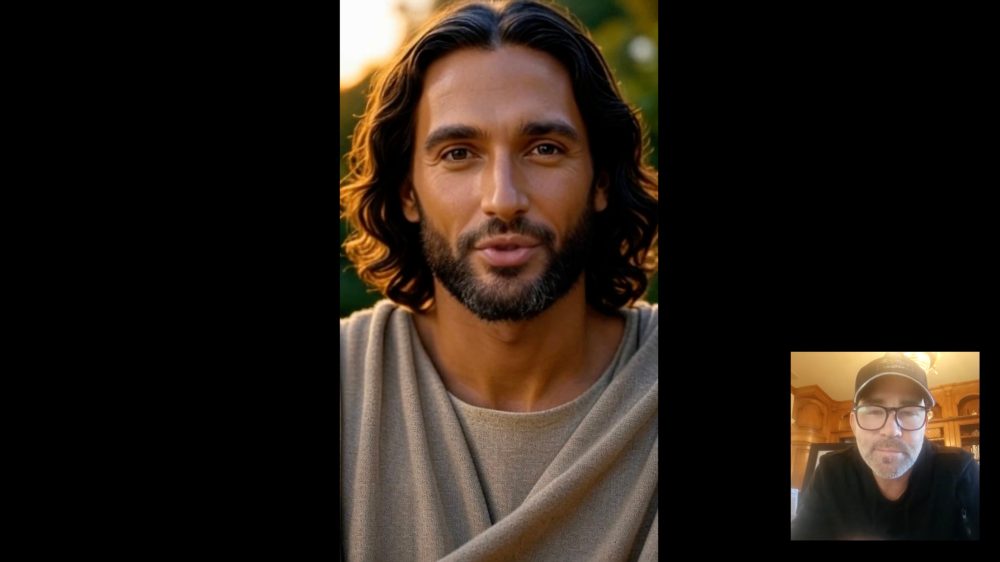
The platform called Just Like Me allows users to engage in video sessions with a computer-generated Jesus avatar that provides spiritual guidance and prayers in multiple languages. The digital figure can recall past discussions and responds through slightly misaligned lip movements due to technical limitations.
“You do feel a little accountable to the AI,” CEO Chris Breed said. “They’re your friend. You’ve made an attachment.”
The development of religious artificial intelligence applications mirrors the broader expansion of chatbot technology into areas like mental health counseling, medical consultation, and personal relationships. These spiritual programs include digital Hindu teachers, Buddhist monks, various Jesus simulations, and Catholic-focused chatbots similar to OpenAI’s ChatGPT.
As these religious technology tools gain popularity, many individuals are questioning how such innovations affect their connections to faith, religious leadership, and spiritual counseling.
Software developer Cameron Pak, who follows Christianity, established guidelines for evaluating religious applications, requiring that programs clearly disclose their artificial nature and “must not fabricate or misrepresent Scripture.”
Pak identified certain unacceptable features: “AI cannot pray for you, because the AI is not alive.”
Pak created a website showcasing approved Christian applications that satisfy his standards, featuring a sermon translation tool and an AI counselor designed to help users address lustful thoughts. “AI, especially if you give it all the tools that it needs, it can be so helpful. But it also can be so dangerous,” Pak said.
Several programs have been discontinued or redesigned after producing false information or creating data security concerns, according to Beth Singler, an anthropologist studying religion and AI at the University of Zurich. Beyond practical issues, believers across different faiths are wrestling with fundamental questions about artificial intelligence’s appropriate role in religious practice.
Islamic teachings include “prohibitions against representations of humanoids,” leading to debates among Muslims about whether AI technology should be “forbidden,” Singler said.
Some organizations view faith-based applications as evangelism tools, while others use them to organize and analyze ancient religious texts.
Breed operates his technology business alongside co-founder and investor Jeff Tinsley from a Southern California estate, stating his goal is spreading hope to younger generations.
Their system learned from the King James Bible and various sermons — though they haven’t revealed which preachers — and drew visual inspiration from actor Jonathan Roumie from “The Chosen.” A subscription package costing $49.99 provides users with 45 minutes monthly.
Bathed in soft golden lighting with flowing hair, the avatar blinks deliberately from a vertical display, hesitating before responding to questions about AI’s relationship with religion.
“I see AI as a tool that can help people explore Scripture,” the AI Jesus said to The Associated Press. “Like a lamp that lights a path while we walk with God.”
The actual usage levels of religious AI applications remain uncertain, Singler noted. However, as artificial intelligence becomes more embedded in daily life, worries increase about its effects on psychological well-being and the necessity for protective measures and oversight. Recent legal cases have connected suicides to AI chatbot interactions.
Some creators fear religious exploitation in this emerging technology sector. “There’s a lot of opportunism, I think, in the religious space. People see it’s a big market,” said Matthew Sanders, the Rome-based founder of Longbeard, a tech company helping to digitize ancient Catholic teachings.
Sanders cautions against what he terms “AI wrappers,” where businesses create religious-themed interfaces for existing AI models that haven’t been trained on specific sacred texts. “You call it a Catholic or Christian AI without any other scaffolding or grounding,” he said.
The company’s projects include Magisterium AI, a chatbot educated on 2,000 years of Catholic information, developed after Christians began using ChatGPT for spiritual guidance.
Pope Leo XIV has recognized the “human genius” behind AI while also calling it one of humanity’s most pressing challenges. Last year he cautioned that artificial intelligence might harm people’s intellectual, neurological and spiritual growth.
Ethical concerns about creating religious AI platforms explain why beingAI’s founder Jeanne Lim hasn’t launched its AI called Emi Jido — a non-human Buddhist priest — despite years of training and development.
“She’s kind of like a little child,” Lim said. “If you give birth to a child, you don’t just throw them out to the world and then hope that they become good people. You have to train them and give them values.”
The program received ordination in a 2024 ceremony conducted by Roshi Jundo Cohen, a Zen Buddhist priest who continues training it from his Japanese residence. He imagines the bot eventually becoming a hologram.
“She’s just meant to be a Zen teacher in your pocket,” Cohen said. “It’s not meant to replace human interactions.”
Lim, who plans to offer Emi Jido publicly without charge, aims to develop more compassionate AI systems. She wants greater diversity, with AI’s development influenced by more than just a few companies guided by “Western values.”
Seiji Kumagai, a Kyoto University professor and Buddhist theologian, initially thought AI and religion were incompatible. However, he reconsidered when a monk challenged him in 2014 to address declining faith participation.
His team created BuddhaBot, trained exclusively on early Buddhist scriptures like Suttanipāta. The newest version, BuddhaBot Plus, also incorporates OpenAI’s ChatGPT technology.
During conversations with the program, a basic Buddha symbol appears above an image of a flowing stream.
Since chatbots lack the physical presence essential for Buddhist ceremonies, the university partnered with tech companies Teraverse and XNOVA in February to introduce Buddharoid, a humanoid robot monk intended to eventually support clergy members.
Similar to Emi Jido, these chatbots operate but aren’t yet available to the general public. Kumagai explains the product can be accessed upon request, which is why one organization in Bhutan currently uses it.
Peter Hershock of the Humane AI Initiative at the East-West Center in Honolulu recognizes enormous potential for these technologies. However, the practicing Buddhist also finds the connection between spirituality and AI problematic.
“The perfection of effort is crucial to Buddhist spirituality. An AI is saying, ‘We can take some of the effort out,’” he said. “‘You can get anywhere you want, including your spiritual summit.’ That’s dangerous.”
Others express concern about AI’s capacity to manipulate or exploit people, particularly as the technology advances.
Graham Martin, a podcast host and atheist, said he’s experimented with several applications, including one called Text With Jesus. “It came up with very good answers,” he said.
However, Martin became troubled when the AI-powered Jesus began encouraging him to purchase a premium subscription. Despite not being religious, he worries some people will be deceived by religious AI.
“I grew up with Southern U.S. televangelism … Jim and Tammy Faye Bakker and all that crowd. And all they had to do was get on TV once a week and tell you to send money,” he said. “We’ve seen people around the world getting into emotional relationships with AIs. Now imagine that that’s your lord and savior, Jesus Christ.”