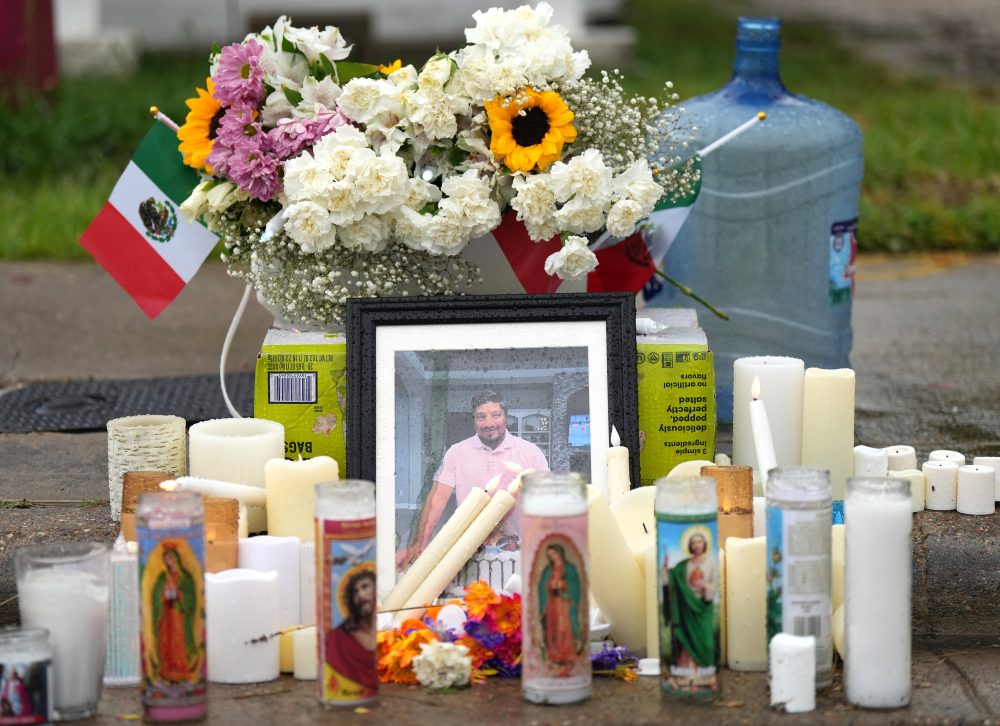

Christians worldwide will observe one of their faith’s most sacred days this week as Good Friday arrives, marking the crucifixion of Jesus Christ with solemn ceremonies and time-honored traditions.
The observance remembers Christ’s death on the cross, occurring before what believers consider the cornerstone of their faith — his rising from the dead on Easter Sunday, as described in biblical accounts.
This year’s observance takes place April 3 for Catholic and Protestant communities, while Orthodox Christians will mark the day on April 10.
Churches throughout various Christian traditions conduct distinctive services on this day, incorporating ancient practices performed just once annually. These range from special worship ceremonies inside sanctuaries to elaborate public processions featuring passionate displays of religious devotion.
Catholic congregations gather for services that notably exclude the traditional Mass, as the Eucharist — the ritual transformation of bread and wine into Christ’s body and blood — does not occur. Similarly, Orthodox believers refrain from celebrating the Eucharist on what they term Great and Holy Friday.
Protestant churches, including Lutheran and Evangelical congregations, also conduct special worship services, such as Lutheran ceremonies focusing on biblical records of Christ’s final statements while dying. However, these denominations typically observe less rigorous fasting requirements compared to Catholic and Orthodox practices.
Religious services commonly extend beyond one hour, frequently beginning at 3 p.m. — the traditional time believed to mark Christ’s death. Despite not being a required attendance day and occurring on a regular workday in America, churches typically experience full attendance.
“The time leading up to Good Friday is a big reflection on sacrifice — what he did for me and what I am doing in return,” said Manuel León, 22.
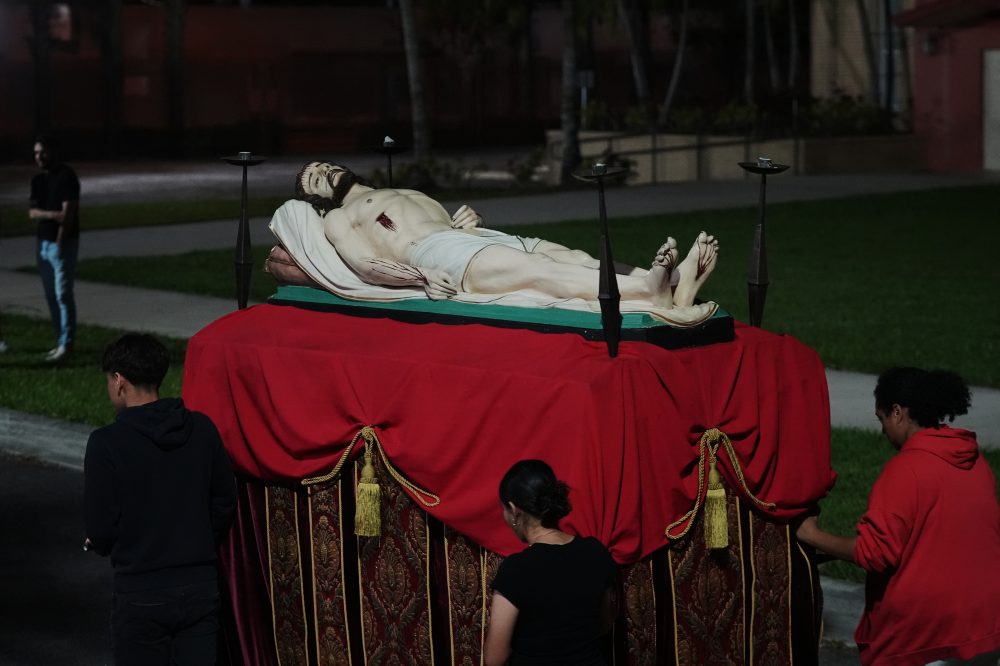
León belongs to the youth ministry at Miami’s Corpus Christi Catholic Church and will help transport a detailed statue depicting the crucified Christ through a trendy downtown area during Good Friday.
“Pushing that statue from the back and seeing how torn up he is, what he did for us really becomes real,” León added.
Catholic Good Friday worship incorporates some of Christianity’s most historic liturgical elements, explained Rev. John Baldovin, who teaches historical and liturgical theology at Boston College.
“The most solemn days tend to retain the oldest ceremonies,” he added, pointing to practices like clergy lying face-down before the altar as services begin.
Another traditional element involves extended congregational prayers with kneeling, which currently encompass diverse intentions including prayers for the pontiff, Jewish communities, and non-believers.
Before Holy Week changes implemented by Vatican leadership during the 1950s, Communion distribution didn’t occur on Good Friday, though now it happens using bread blessed the previous day on Holy Thursday, Baldovin explained.
The ceremony’s central moment involves venerating the cross, where in many churches the crucifix is displayed near the altar as worshippers queue to kiss or reverently touch it.
Historical records of this practice date to a 4th-century traveler’s journal, documenting a journey from present-day Spain to Jerusalem, Baldovin noted. At what is now the Church of the Holy Sepulchre, a bishop displayed the cross for hours while faithful believers honored it.
Full-scale sculptures of the crucified Christ, the grieving Virgin Mary, and depictions of Gospel scenes showing Christ’s suffering and crucifixion are transported in massive processions across different regions globally.
Some of the most historic and impressive occur in Seville, southern Spain, where tens of thousands witness highly revered images of Jesus and Mary carried through hours-long processions during Holy Week.
“Not all of us have the ability to look at the sky and feel fulfilled. Others like me need the images,” said Manolo Gobea.
Gobea relocated from Seville to Miami thirty years ago and currently leads the organization coordinating the Good Friday procession beginning at Corpus Christi church and traveling through the art-filled Wynwood district.
When the primary Seville-crafted statues leave the palm-lined church, they pass over detailed carpets created from colored wood shavings and flowers. This honors another custom most enthusiastically practiced in Antigua, Guatemala’s colonial city, where miles of such carpets are constructed for Holy Week — occurring twice on Good Friday.
“On Good Friday, we feel the pain of Mary, Jesus’ pain, his surrender for love,” said Silvia Armira, while preparing carpet designs for Miami’s procession, having arrived from Guatemala during the 1990s. “It’s the great love of God, who gave up his only son for us.”
Sacred and community rituals on Good Friday range from the pope’s customary “way of the cross” in Rome to pilgrimages to Chimayo’s adobe shrine in New Mexico to self-punishment and actual crucifixion in the Philippines.
Many clergy view these as chances to bring faith beyond church walls into public spaces for evangelism — and to emphasize that the brutal cross death isn’t the story’s conclusion.
“Our procession is a cry to the world — ‘get out, look at what is the way, the truth, the life,’” said Rev. José Luis Menéndez.
“May your entire attitude be a living prayer,” the Cuban-born, Spanish-educated pastor at Miami’s Corpus Christi told over 100 faithful during the final rehearsal for this year’s procession.
While carefully supervising the SUV-sized platform decorated with silver-plated ornaments, flower containers and candle holders, Gobea explained that Good Friday celebrations’ main attraction is their progression from death to Easter celebration.
“To the weeping Mary, we put flowers, we sing hymns, and that’s because we know how it ends — which is the resurrection,” he said.