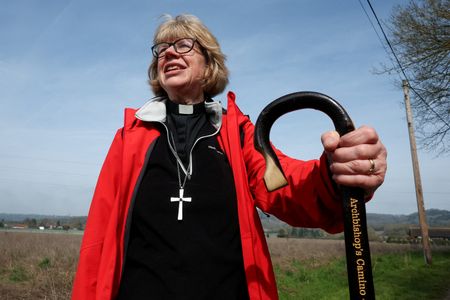

LONDON – History was made Wednesday as Sarah Mullally became the first woman to hold the position of Archbishop of Canterbury, taking on the role of spiritual leader for 85 million Anglicans across the globe during a ceremonial installation at Canterbury Cathedral.
The historic service officially launched her public ministry, with Mullally taking her place in the ancient Chair of St Augustine, dating back to the 13th century. Among the 2,000 attendees were Prince William and his wife Kate, Prime Minister Keir Starmer, and numerous religious leaders from around the world.
Bishop Rachel Treweek, who became one of the Church of England’s first female bishops alongside Mullally in 2015, expressed amazement at the milestone. “It’s a huge moment for the Church… I don’t think any of us thought we’d have a female Archbishop this quickly,” Treweek shared with Reuters.
Mullally’s October appointment faced strong opposition from Gafcon, a conservative Anglican alliance primarily composed of churches from African and Asian nations. However, the group recently backed away from their initial plan to establish a competing leadership figure, choosing instead to form a new council structure.
Additionally, a representative body within the worldwide Anglican Communion withdrew an earlier proposal for rotating leadership after concerns arose about potential conflicts with the Archbishop of Canterbury’s authority.
The divisions between progressive and conservative Christians extend beyond Anglicanism, though the Archbishop’s influence operates primarily through persuasion and symbolism, contrasting with the Pope’s direct authority over Catholics globally.
“Anyone who became Archbishop of Canterbury, there would always be issues with some parts of the wide Anglican Communion… This isn’t new,” Treweek noted.
Previous Archbishops have faced challenges in managing the complex role while attempting to unite England’s increasingly progressive church with more traditional provinces worldwide, particularly regarding LGBTQ+ rights and women’s leadership roles.
Gafcon had previously rejected former Archbishop Justin Welby’s leadership following the Church of England’s decision to offer blessings for same-sex unions.
Mullally has consistently promoted unity despite differences, stating to Reuters last October: “We’re a family with a shared root, and with any global church there is great diversity in it.”
During Wednesday’s ceremony, Mullally followed tradition by requesting entry to the cathedral through knocking on its western entrance, dressed in ceremonial vestments including a cope fastened with a clasp designed after the belt she wore during her time as a National Health Service nurse.
She also wore a ring previously given to Archbishop Michael Ramsey by Pope Paul VI in 1966, representing the improved relationship between Anglican and Catholic churches following centuries of separation since King Henry VIII’s break from Rome.
The service showcased Anglicanism’s worldwide presence through prayers and scripture readings in various languages, including Urdu, accompanied by African musical selections.
The ceremony coincided with the Feast of the Annunciation, which commemorates the biblical story of an angel announcing to Mary that she would bear Jesus, serving as the service’s central theme.
Bishop Nicholas Baines praised the new Archbishop, saying: “Archbishop Sarah offers the church an opportunity to create a different and more confident conversation. She brings the right gifts and experience for such a time as this.”