
TRIKORFO, Greece — As New Year’s resolutions begin to fade, an ancient spiritual practice from Greece offers fresh inspiration for maintaining healthy eating habits through spring.
Each year for six weeks, millions of Orthodox Christians worldwide embrace a predominantly plant-based diet, eliminating meat, dairy, eggs, and fish with spines from their meals. During the 40-day period leading up to Orthodox Easter, which typically occurs later than Catholic and Protestant celebrations, participants also avoid oil and wine on weekdays.
This yearly commitment to Mediterranean-style, plant-focused eating creates a widespread rediscovery of vegetables and oil-free cooking techniques across Orthodox-majority nations.
In Greece, the tradition has become so widespread that even McDonald’s locations participate by offering seasonal items that align with most Greek Orthodox Church guidelines. These special menu additions feature shrimp wraps, shrimp salads, vegetable spring rolls, and plant-based McVeggie burgers, though they don’t eliminate oil completely.
While this Eastern Orthodox practice before Easter is commonly called fasting, it emphasizes avoiding specific foods rather than eliminating eating entirely. The guidelines remain flexible and can be modified based on individual circumstances.
The dietary customs differ significantly between Eastern and Western Christian traditions as Easter approaches. While Catholics are encouraged to sacrifice personal pleasures during Lent — choosing to give up items like desserts, alcohol, video games, or profanity — Orthodox Church members eliminate animal products with the exception of shellfish.
Traditional Greek favorites like moussaka and souvlaki — grilled meat with various toppings — disappear from tables during this period. Dairy items including milk and cheese are also forbidden. Fish with spines such as anchovies, mullet, and hake become off-limits, though shrimp, oysters, and calamari remain acceptable.
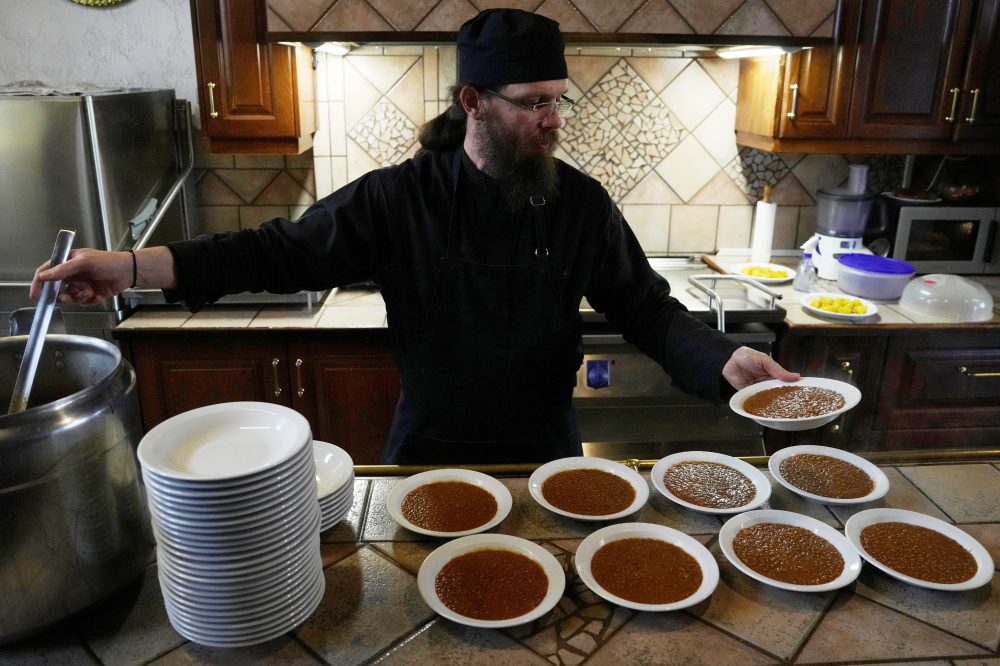
At the Monastery of St. Augustine and Seraphim, situated on a verdant hillside along Greece’s coast, 40 monks strictly adhere to these dietary rules. These black-robed, bearded religious men cultivate and gather most of their food from the monastery’s gardens, producing abundant zucchini and tomatoes.
During Lent, their meals remain simple yet flavorful. The monks have developed techniques to recreate familiar tastes and textures without prohibited ingredients. They coat oven-baked potatoes with tahini rather than oil to maintain crispiness, while homemade vegetable broth adds robust flavor to lentil preparations.
Meals are consumed while listening to spoken prayers.
Father Nektarios Moulatsiotis, the monastery’s welcoming abbot, explains that dietary restrictions and fasting serve as crucial components for the deep contemplation and concentration needed for Easter’s spiritual preparation. He likens the practice to athletic conditioning.
“In the same way someone goes to the gym to shape their body,” Nektarios said, “the church is a gym for the soul.”
Experiencing occasional hunger isn’t meant to be avoided; it’s an intentional element of the practice. The concept is straightforward: reduced indulgence leads to increased mental clarity.
“You cannot really pray, study, chant or do any spiritual exercise with a full stomach,” he said with a chuckle.
Nektarios believes that a nutritious yet disciplined approach to eating can provide benefits extending beyond religious contexts, including improved self-discipline and heightened awareness.
Orthodox monks follow multiple fasting periods throughout the year that restrict their food choices, timing, and quantities. Scientists have examined their health and dietary patterns for decades to understand whether these practices offer insights for preventing heart disease, type 2 diabetes, and strokes.
The benefits of consuming a balanced diet rich in whole grains, vegetables, fruits, and legumes are already well-documented. Reducing meat consumption, saturated fats, and processed foods for extended periods typically produces positive bodily responses.
“Fasting certainly has benefits, provided it’s done correctly,” Eirini Babaroutsi, a sports nutritionist at the Hellenic Athletics Federation, said. Orthodox Christians typically increase their fiber intake during Lent, which improves digestive function, she noted.
“It also matters what we do eat, not simply what we avoid,” Babaroutsi said. “With the right combinations, we can get all the nutrients we need.”
Appropriate meals aren’t limited to ingredients commonly found in Orthodox-majority regions of Southern and Eastern Europe. Babaroutsi recommends porridge made with oat milk, vegetable wraps containing olive paste, and high-quality peanut butter as beneficial international alternatives.
Several important considerations exist, however.
Babaroutsi advises against six-week fasting periods for elderly individuals and young children. The Eastern Orthodox church also excuses people with serious medical conditions, special nutritional needs, and pregnant or breastfeeding women from strict compliance.
Post-Lent overindulgence should also be avoided, as consuming large quantities after a period of restriction can stress the body, Babaroutsi warned.
Those hesitant about full participation aren’t uncommon. While Orthodox Lent began on February 23, many Greeks only participate during Holy Week, running from April 5 (Palm Sunday) through April 11, the day before Orthodox Christians celebrate Easter this year.
Greek supermarkets and bakeries facilitate compliance by stocking quick, family-friendly meals and various seasonal products.
Available items include jarred pickles and olives, bags of chickpeas and other legumes, frozen squid rings, the creamy pink fish roe called taramosalata, and flat, surfboard-shaped unleavened bread.
At Athens’ central fish market, with its slippery floors, vendors shout over piles of Lent-approved clams, octopus, and mussels, scooping seafood into paper containers.
Gerasimos Mantalvanos, the market’s general manager, observes that many customers tend to overeat when Easter Sunday’s traditional lamb dishes and desserts return. Most people eventually return to moderate eating habits, he noted.
“It is good for eating habits to change from time to time during the year,” Mantalvanos said. “So a period of fasting, a little fish and some abstinence from meat, I think these are good for the body. It is a kind of small detox, a little break.”