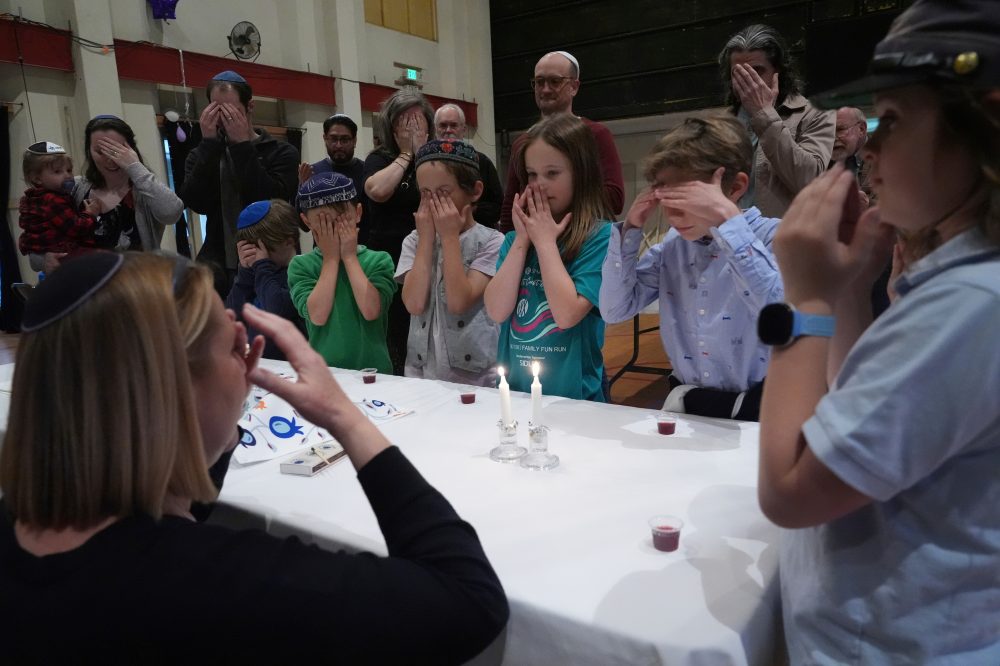

Jewish families across Delaware and around the world will gather Wednesday evening to begin Passover, a significant week-long spring observance that retells the biblical account of ancient Israelites escaping bondage in Egypt. The holiday centers around family gatherings and community meals where participants recreate the dramatic tale of freedom from oppression.
“Passover is the most observed Jewish holiday in America,” explained Motti Seligson, who serves as director of public relations for Chabad-Lubavitch, an Orthodox Jewish movement. “It’s not a synagogue holiday, although there are services in synagogues. The main parts of Passover are observed at home.”
This year’s observance takes place against a challenging international climate. Concerns include escalating tensions in the U.S.-Israel conflict with Iran, rising antisemitism evidenced by recent attacks on synagogues, internal Jewish community disagreements regarding Israeli policies, and lingering trauma from the Israel-Hamas conflict.
The holiday, called Pesach in Hebrew, starts at sundown Wednesday, April 1. Traditional observance lasts seven days in Israel, while Jewish communities elsewhere may celebrate for either seven or eight days.
During Passover, practicing Jews eliminate certain grains called chametz from their diet, symbolizing how biblical Israelites consumed unleavened bread during their hasty departure from Egypt when there wasn’t time for bread dough to rise properly. Matzo, a flat unleavened cracker, remains acceptable to consume. Most standard breads, pasta dishes, breakfast cereals, baked goods and sweets become forbidden.
Family reunions mark Passover for many Jewish households. They share the Egyptian Exodus narrative during a ceremonial dinner known as the Seder. Participants follow a Haggadah, which serves as a guide for the evening’s prayers and ceremonial activities. Numerous families personalize their Haggadah by adding special songs and readings focused on particular themes, or contributions written by family members.
The Seder table features wine and several meaningful food items. Bitter herbs symbolize the hardship of enslavement; fresh greens signify spring’s arrival; and a lamb shank bone recalls ancient sacrificial practices from biblical times.
Children play central roles in Seder ceremonies. They hunt for the afikomen, a concealed piece of matzo. The evening’s youngest participant poses traditional questions including, “Why is this night different from any other night?”
This year’s Passover arrives as Middle Eastern warfare escalates, with American and Israeli forces conducting extensive bombardments against Iran and allied groups, who have responded with strikes targeting Israel and U.S. military installations throughout the region.
Antisemitic incidents continue causing alarm as increasingly vocal critics from both political extremes attack the U.S.-Israeli partnership, sometimes using rhetoric that condemns not only Zionism but Jewish faith practices. A recent Anti-Defamation League study indicates colleges and universities have strengthened protections for Jewish students while noting continued anti-Jewish sentiment. Recent months saw synagogues in Mississippi and Michigan targeted by an arsonist and gunman respectively. A December Hanukkah gathering in Australia suffered a fatal attack.
Though traditionally centered in homes, many religious congregations organize larger Seder meals to accommodate participants who lack extensive family networks or cannot prepare the elaborate meal themselves, ensuring they have community spaces for celebration.
Numerous Jewish community organizations, cultural institutions and university centers arrange Passover events. Some attendees participate in both community and family Seders on separate evenings.
Several hotels now provide Seder experiences in kosher-compliant environments at vacation destinations. Chabad expects to welcome thousands of participants at community Seders in Thailand, Nepal and other nations favored by travelers.
Whatever the location, Seder rituals encourage participants to personally connect with the biblical narrative. “Tradition teaches us that in every generation, we ought to look upon ourselves as if we personally had gone out of Egypt,” states one Haggadah version. “Therefore, it is our duty to thank the One who performed all the miracles for generations past and present.”