
Federal authorities announced Tuesday they are implementing enhanced monitoring and protective measures for Jewish and Muslim communities across the nation following escalating Middle East conflicts, multiple bias crimes, and a suspected terrorist incident that have prompted heightened security protocols at religious facilities.
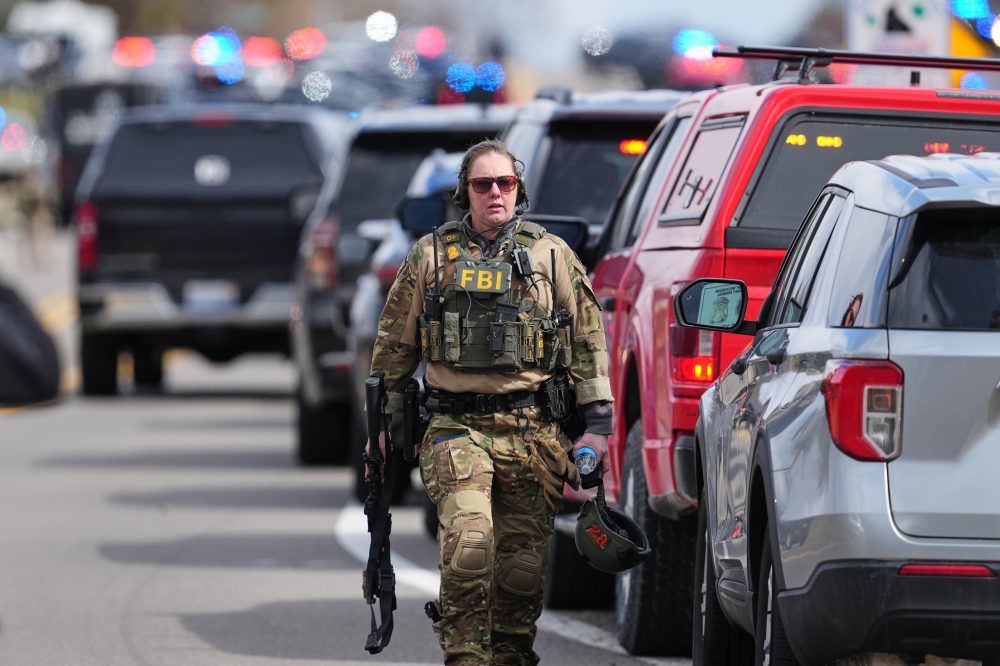
While the FBI investigates the March 12 incident where someone drove a vehicle into the entrance of Temple Israel in West Bloomfield, Michigan—one of the country’s largest Reform Jewish congregations—officials provided updates on threats facing religious communities and outlined protective strategies for worship centers.
“We understand that our adversaries aim to intimidate us into hiding so we choose not to participate,” stated Michael Masters, national director of the Secure Community Network, during a nationwide security briefing featuring perspectives from federal and local police agencies.
“When robust protection and safety protocols are established, such withdrawal becomes unnecessary,” Masters added.
The organization, which oversees security coordination for Jewish communities throughout North America, organized this national security briefing before Passover observances and during escalating international conflicts. Recent bias incidents targeting Jewish individuals have been recorded in southern California and Toronto, while European authorities are examining vehicle fires in Antwerp and London as potential antisemitic crimes.
Many Jewish Americans view these antisemitic events as validation of persistent concerns regarding increasing antisemitism, reinforcing the necessity to actively oppose extremism while maintaining their religious practices despite intimidation. Simultaneously, the surge in hostile anti-Muslim language from certain Republican officials and Christian nationalist groups recalls the early 2000s period when the September 11 attacks and conflicts in Afghanistan and Iraq fostered Islamophobic attitudes throughout America and globally.
Jewish community leaders have urged elected officials and civic authorities to address these escalating dangers.
“While the Temple Israel incident was disturbing, it has unfortunately become expected rather than surprising for those of us in the Jewish community,” said Gary Torgow, chair of the Jewish Federations of North America, during the briefing about security actions Jewish organizations were implementing nationwide. Torgow, a Michigan business leader, explained that “hatred now travels rapidly through false information on social platforms” and cautioned that allowing its unchecked distribution “inevitably establishes conditions where violence becomes more probable.”
Torgow and fellow Jewish leaders recently met with senior FBI representatives to discuss federal initiatives addressing antisemitic incidents since the Trump administration conducted joint military operations with Israel against Iran, triggering counter-attacks and regional warfare with worldwide implications. Meeting attendees included Andrew Bailey, the FBI’s deputy director, whom Torgow described as understanding and responsive to their issues.
“That meeting demonstrated genuine concern and truly active participation,” Torgow said. “An assault on a synagogue, we emphasized to them, must be recognized for what it represents: an assault on the fundamental right that every American should worship without fear.”
Federal officials are also watching for heightened activity from radicalized persons who might target worship locations or attack during prominent upcoming occasions or religious holidays. Authorities during the security briefing disclosed no specific threats to forthcoming events, and Secure Community Network representatives stated they were unaware of any current threats to Jewish communities.
“While we work to protect against potential malicious individuals, especially those inspired by or sympathetic to Iran, we must remain equally vigilant for all types of threats as America prepares to host both the 2026 FIFA World Cup and the America 250 celebrations later this year,” said Matthew Kozma, the under secretary for intelligence and analysis at the Department of Homeland Security, during the security briefing.
Director of National Intelligence Tulsi Gabbard stated during a March Senate hearing that intelligence agencies had concentrated efforts “on persons either radicalized by Islamist messaging who may never have contacted ISIS or al-Qaida” but were still radicalized online while in America.
The FBI is examining two recent events as terrorist acts, including an attempted bombing at anti-Muslim demonstrations outside the New York mayor’s home and a fatal shooting at Old Dominion University in Norfolk, Virginia.
Jewish Federations president Eric Fingerhut said the terrorist attack on Temple Israel demonstrated that “even our most sophisticated security measures can be overwhelmed by global events and by the carefully planned actions of terrorists,” requiring Jewish communities to “once again, enhance our security level for our community” and collaborate closely with law enforcement to assess dangers, and civic leaders to tackle the underlying sources of prejudice and extremism.
The Jewish Federations of North America will also organize demonstrations in May calling for stronger legislative efforts to fight antisemitism in Washington.
Following the Temple Israel attack, Oakland County, Michigan, Sheriff Michael Bouchard revealed he had received antisemitic death threats personally for responding to the incidents.
“I believe it’s our responsibility to take action, speak out and do whatever possible to safeguard our communities,” Bouchard said.
The reasons behind surges in antisemitic attacks and other hateful behavior are complicated and deep-rooted, according to experts. Increased international tensions, divided domestic politics and emerging digital platforms have all contributed to the growth in prejudiced attitudes.
“We’re witnessing numerous ideas and conspiracy theories that were previously on the margins of public discussion being absorbed into political discourse,” said Seth Levi, chief strategy officer at the Southern Poverty Law Center. Levi identified social media and the increased accessibility for hateful speech to reach mass audiences without filtering as the main factor driving radicalization for many extremists.
Muslim Americans, meanwhile, have voiced concern and worry as anti-Muslim language and state government actions labeling Muslim communities as security risks have increased in recent months.
The Southern Poverty Law Center has documented a significant increase in antisemitic and Islamophobic language over the past year that has only worsened since Middle East warfare began, Levi said.
“We continue observing incidents such as hateful and racist leafleting, particularly in neighborhoods with specific faith communities,” Levi said. “Direct, physical intimidation where you reside produces a different, more intense response than online activity.”
Levi noted that most Americans still strongly reject hateful violence and rhetoric in polling examined by the Southern Poverty Law Center, but that statements from federal legislators, including President Donald Trump, were frequently repeated in the hateful language used by some online figures or in physical threats reviewed by the center.
For many Jewish leaders, this moment emphasizes a need for stronger determination and tighter community bonds.
“The vitality of Jewish life in North America, Jewish life everywhere, only exists through our own actions,” said Wendy Berger, chair of the Secure Community Network. “It rests with us. And we have these remarkable, incredible federal, local, state partners. But security is our responsibility, and the vitality of Jewish lives depends on it.”