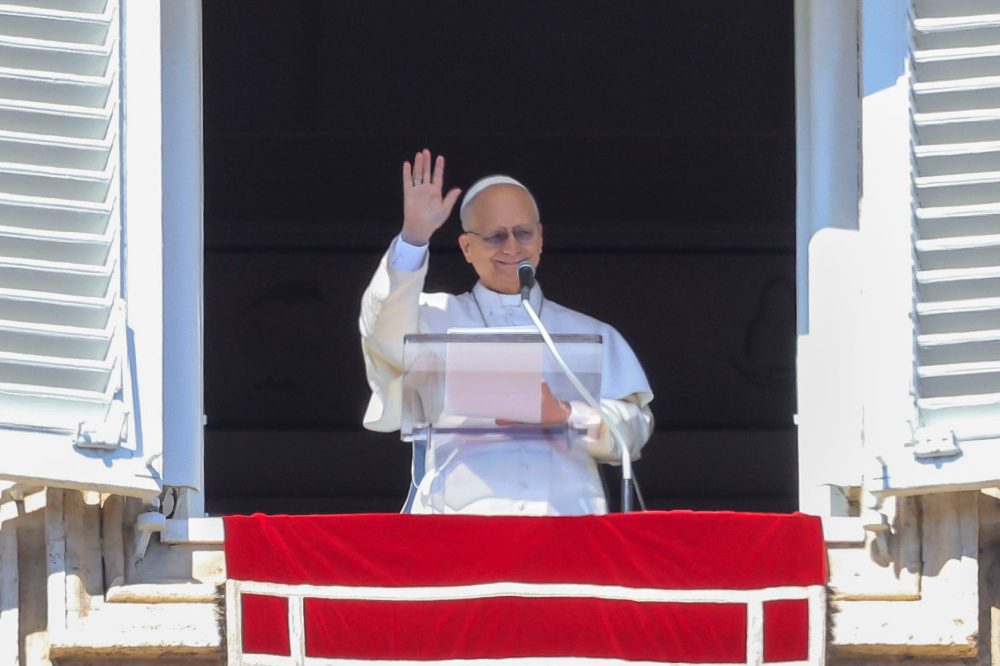
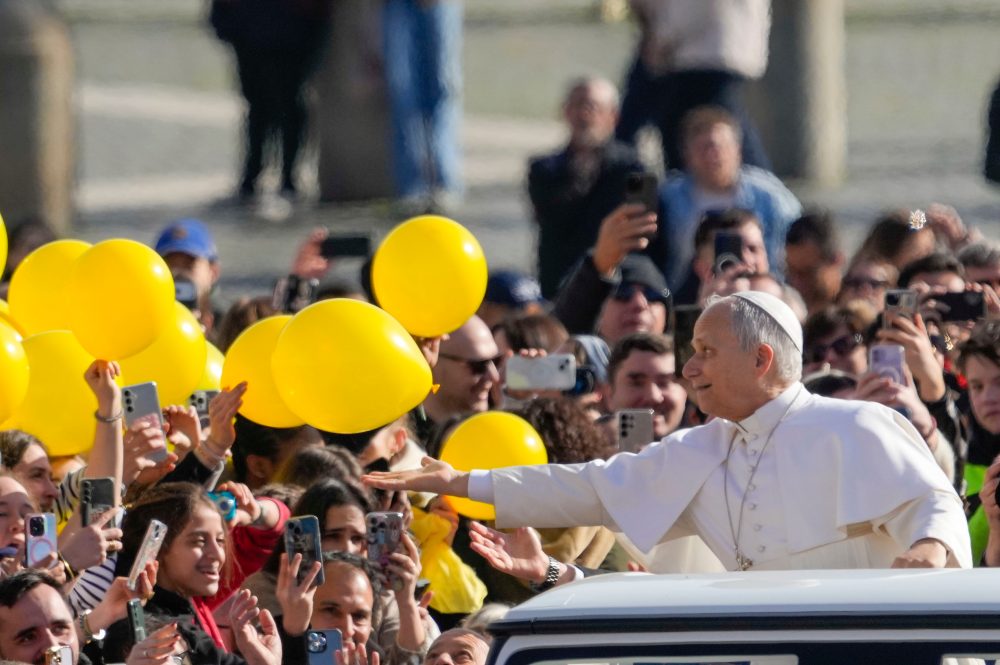
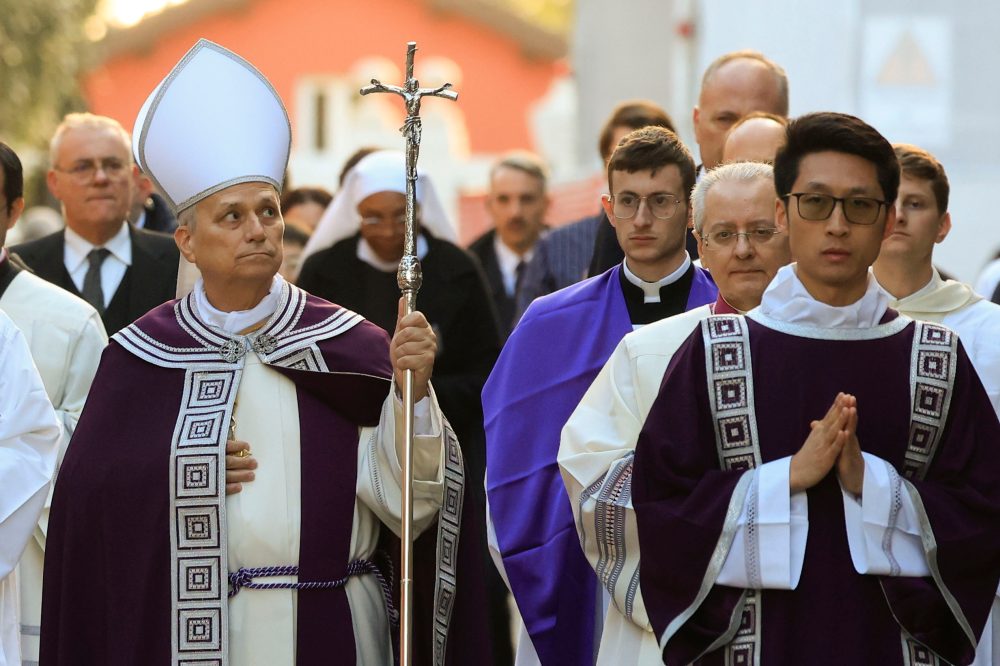
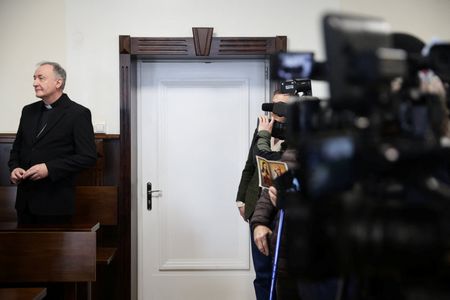
The Vatican announced Saturday that Pope Leo XIV has selected a seasoned diplomatic veteran to serve as the Holy See’s new representative to the United States, taking on one of the Church’s most critical international relationships during a challenging period marked by disagreements over immigration policies and military action in Iran.
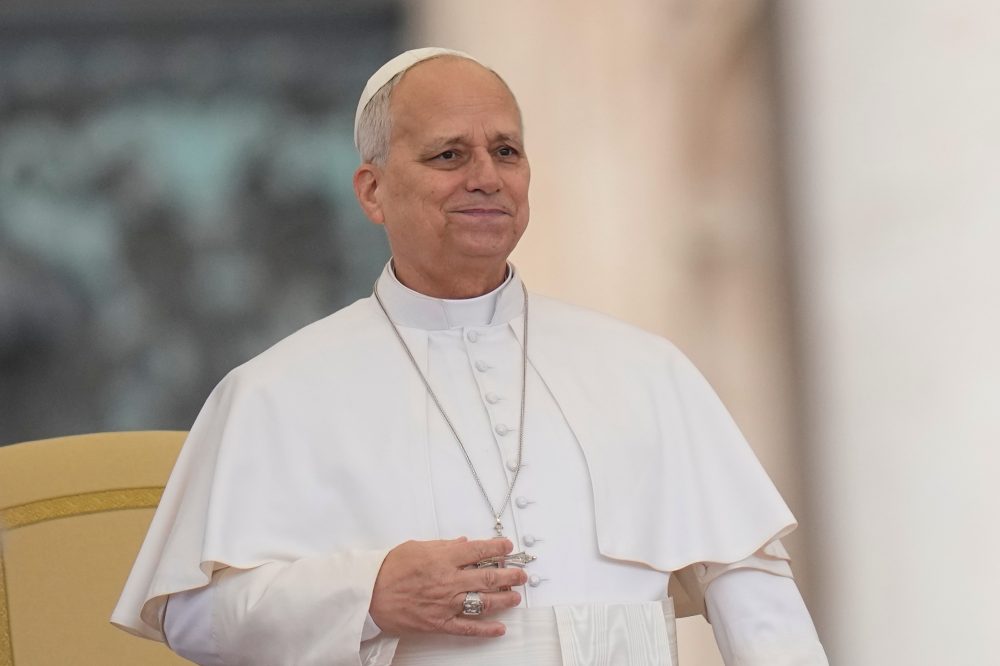
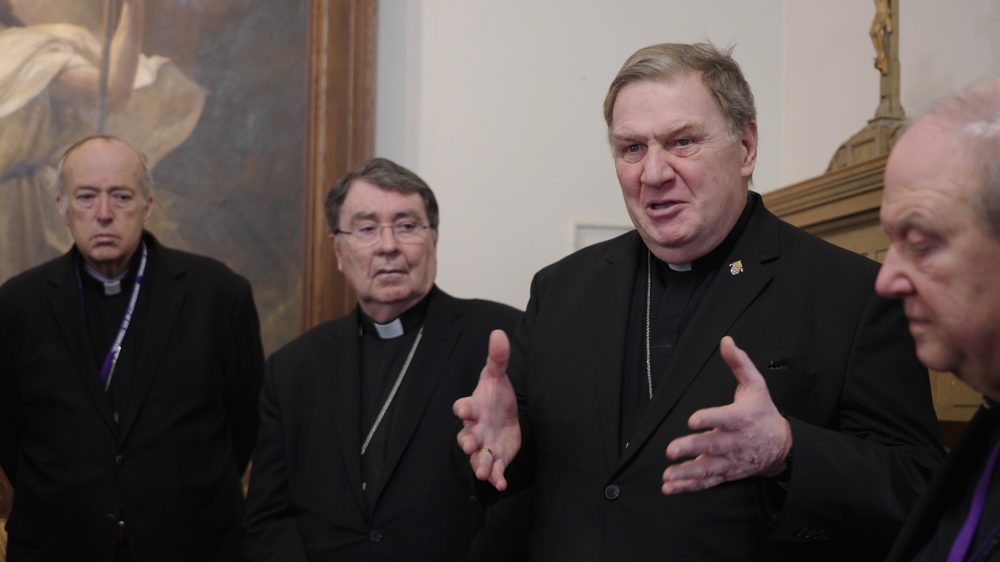
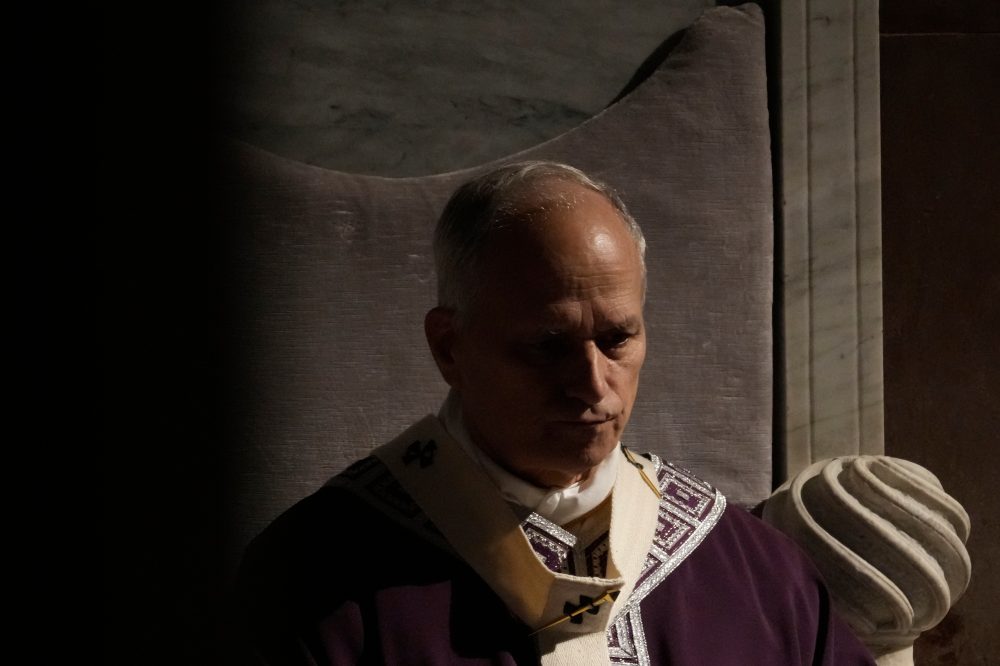
Archbishop Gabriele Caccia, a 68-year-old Italian diplomat currently serving as the Vatican’s representative to the United Nations in New York, will assume the role of apostolic nuncio in Washington. He takes over from Cardinal Christophe Pierre, the French-born ambassador who is stepping down at age 80.
The incoming ambassador brings extensive international experience, having previously represented the Holy See in Lebanon and the Philippines before his 2019 assignment to the United Nations. After his ordination as a priest in Milan in 1983, Caccia held the influential position of assessor within the Vatican’s secretariat of state, one of the most significant administrative roles in the Church’s central government.
Caccia steps into a position fraught with challenges on multiple fronts, dealing with both American Catholic Church leadership and U.S. government relations during a period of worldwide instability.
During Pierre’s time as ambassador, tensions became apparent between the conservative-leaning U.S. Conference of Catholic Bishops and the more liberal agenda championed by Pope Francis throughout his papacy.
The Vatican considers its relationship with the United States and American Catholics particularly vital, especially given that U.S. Catholic donations represent a major source of funding for the Holy See’s operations.
Pope Leo, who made history as the first American-born pontiff, understands these complexities well, having worked closely on U.S. bishop appointments for two years under Francis before his 2025 election. Throughout his papacy, Leo has consistently promoted messages of reconciliation and Church unity.
Diplomatic friction between the Vatican and the first Trump presidency centered largely on immigration issues, and these tensions have persisted into Leo’s tenure and Trump’s second term. While Leo has consistently called on the Trump administration to uphold migrant dignity, he has also recognized the nation’s sovereign right to control its borders.
Recently, Leo has voiced “profound concern” regarding the ongoing U.S.-Israeli conflict in Iran, calling on all parties to “stop the spiral of violence before it becomes an irreparable abyss.”
During remarks last Sunday, Leo advocated for renewed diplomatic efforts, stating that weapons only create “destruction, pain and death.”
In a significant foreign policy address this year, Leo also criticized America’s aggressive military stance, seemingly referencing Washington’s actions in Venezuela and threats regarding Greenland. He condemned nations that use force to expand their influence globally and “completely undermine” peace and the international legal framework established after World War II.
Responding to his appointment Saturday, Caccia expressed gratitude for Leo’s confidence in selecting him to represent the Vatican in his homeland.
“I receive this mission with both joy and a sense of trepidation,” Caccia stated according to Vatican News. He described his assignment as a mission “at the service of communion and peace,” noting the timing coincides with America’s 250th independence anniversary.
Archbishop Paul S. Coakley, who leads the U.S. bishops’ conference, praised Caccia’s selection and extended the American Church hierarchy’s “warmest welcome and our prayerful support.”
While the Vatican maintains its longstanding policy of diplomatic neutrality, Leo has been vocal in condemning the humanitarian consequences of Israel’s Gaza operations and Russia’s Ukrainian invasion.
VATICAN CITY – Pope Leo announced Saturday his selection of Italian Archbishop Gabriele Caccia as the Vatican’s new ambassador to the United States, choosing a seasoned diplomat who previously navigated challenging political waters in the Philippines.
The 68-year-old Caccia spent two years representing the Holy See in Manila before taking on the role of Vatican ambassador to the United Nations in 2020. His new assignment comes at a time when Vatican-U.S. relations have grown tense over foreign policy disagreements.
The appointment follows recent Vatican condemnation of U.S.-Israeli military actions against Iran. Cardinal Pietro Parolin, the Vatican’s chief diplomat, stated Wednesday that such military operations violated international law.
Pope Leo, who is the first American pontiff, has also publicly criticized several of President Trump’s conservative policies, calling the administration’s immigration enforcement measures “inhuman” as they have disrupted communities nationwide.
Caccia brings extensive diplomatic experience to Washington, where he’s regarded as one of the Vatican’s most skilled foreign service officers. His arrival coincides with growing criticism of the Trump administration from American Catholic bishops.
The new ambassador will take over from Cardinal Christophe Pierre, 80, who is stepping down after serving as the Vatican’s U.S. representative since 2016.
Earlier this year, three prominent American cardinals publicly questioned the nation’s foreign policy direction, expressing concern about America’s “moral role in confronting evil around the world.”
During his tenure in Manila, Caccia became known for defusing conflicts between local Catholic leadership and then-President Rodrigo Duterte, who regularly launched verbal attacks against Church officials during public addresses.
Duterte, who completed his term in 2022, currently faces proceedings at The Hague related to killings that occurred during his anti-drug campaign.
The Washington posting ranks among the Vatican’s most significant diplomatic positions worldwide, as the Holy See operates approximately 110 embassies globally. The ambassador must advocate for Church interests with the White House, and Vatican representatives have historically challenged various American administrations’ policies.
Beyond international diplomacy, the Vatican’s U.S. ambassador holds considerable influence within America’s Catholic Church. The position includes recommending American clergy for bishop appointments to the Pope, affecting the spiritual lives of the nation’s 72 million Catholics.
A Milan native, Caccia previously served as Vatican ambassador to Lebanon and held a senior position for seven years in the Vatican’s influential Secretariat of State.
Formal diplomatic ties between the Vatican and United States began in 1984 during Ronald Reagan’s presidency. Caccia will be the first Vatican ambassador to Washington who previously served at the United Nations.
SRN News has launched a new daily audio program designed to keep audiences updated on religious developments worldwide. The two-minute segment, called “Global Landscape,” focuses on delivering current information about faith-related stories from across the globe.
The brief audio feature aims to inform listeners about important religious developments, changes in cultural practices, and major events where faith intersects with international news. The program offers audiences a quick way to stay current on how religious matters are influencing world events.
SRN News presents this daily segment as part of their commitment to covering the role of faith in contemporary global affairs.
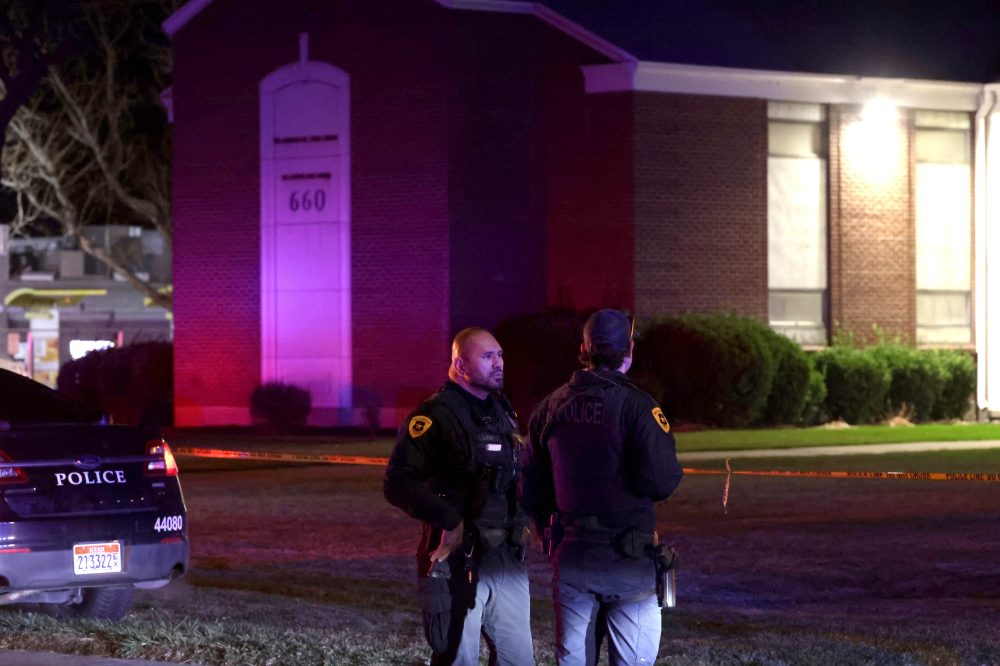
Gunfire struck a Toronto synagogue this week, with approximately 20 bullets hitting Temple Emanuel’s building. The shooting occurred after evening worship services had concluded, and fortunately no one was hurt in the attack.
Temple Emanuel’s leadership issued a public statement following the incident: “We are working closely with law enforcement and security partners. We remain united and resilient. Our building is damaged; our congregation is not.” Toronto law enforcement officials have stepped up surveillance around Jewish houses of worship and community centers, particularly following escalating tensions involving the United States, Israel, and Iran. These religious institutions have also enhanced their own protective measures.
In New York, Attorney General Letitia James has directed NYU Langone, one of Manhattan’s major medical centers, to restart gender transition surgeries for minors. The hospital had suspended these operations due to potential funding restrictions from the Trump administration. James wrote to hospital officials, stating their decision breaks state anti-discrimination regulations by “jeopardizing access to medically necessary healthcare for some of the most vulnerable New Yorkers.” The Trump administration has committed to preventing federal funding for medical treatments that help children transition to live as a different gender.
Despite ongoing conflict with Iran, Israeli communities are maintaining their observance of Jewish religious holidays. This week’s Purim festivities, typically celebrated with lively public processions and costume celebrations, were relocated to underground shelters for safety. In Tel Aviv, residents dressed in traditional Purim attire gathered in a shopping center’s basement parking area, which doubles as a protective shelter, for the ceremonial reading of the Purim narrative. This holiday commemorates how Jewish people in the Persian Empire were saved from destruction following the fall of the First Temple, as told in the biblical book of Esther. These events occurred in 356 BC.
A man who repeatedly crashed his vehicle into the Chabad Lubavitch global headquarters in New York City has entered a not guilty plea to federal accusations of deliberately vandalizing religious property. Law enforcement arrested him on bias crime charges after the January 28th incident, which caused structural damage to an entryway of the important Jewish site but resulted in no physical injuries. These new federal accusations are in addition to several state-level bias crime charges, including attempted assault. The attack disturbed New York’s substantial Jewish population, which has experienced rising antisemitic incidents in recent years.
A recent Gallup survey reveals that spiritual beliefs play a diminished role in the daily lives of Americans compared to previous generations. The polling data shows that just 47% of adults consider faith to be very significant in their everyday experiences.
This marks a substantial decrease from decades past, when three-quarters of Americans said religion was very important to them in 1952. Even as recently as 2003, 61% of respondents indicated faith held major significance in their lives.
The survey findings indicate that religious devotion remains strongest among specific demographic groups. Women, senior citizens, Republican voters, individuals without college education, Protestant believers, and people living in Southern states are most likely to view faith as central to their daily existence.
Meanwhile, Americans who identify as non-religious now represent nearly a quarter of the nation’s population at 24%, according to the Gallup data.
A fire department chaplain in Austin, Texas has reached a $78,000 settlement with city officials after being terminated for his comments regarding transgender participation in women’s athletics. Andrew Fox lost his position following his public statement that biological males should not compete against female athletes in sporting events.
Fox pursued legal action against the City of Austin following his dismissal. The substantial financial settlement resolves the lawsuit without admitting wrongdoing by either party.
The legal advocacy group Alliance Defending Freedom provided representation for Fox throughout the case. The organization issued a public statement emphasizing the importance of free speech protections. “Everyone should be able to speak freely without fear of punishment just for expressing a view with which the government disagrees,” the group declared.
The Brownsburg Community Schools Corporation in Indiana has reached a $650,000 settlement with former teacher John Kluge, who departed from his position following his refusal to use preferred pronouns for transgender students. Kluge’s legal representation came from Alliance Defending Freedom, which argued the case centered on religious liberty protections for educators. According to the organization, “This settlement confirms what the law has always said: Public schools cannot force teachers to violate their religious beliefs. Schools should learn that refusing to accommodate religious employees can be expensive.” The substantial financial agreement highlights ongoing tensions between school policies regarding transgender students and some educators’ religious convictions.
A major coalition of conservative Anglican churches issued a strong call Friday for members to withdraw from leadership meetings and stop providing financial support to current church authorities, intensifying ongoing tensions within the global Anglican community.
The Global Anglican Future Conference (GAFCON) — representing conservative congregations predominantly across Africa and Asia that claim to speak for most of the world’s Anglicans — made the declaration following their decision to form a competing council that challenges existing leadership structures.
The announcement came during a three-day gathering of GAFCON representatives in Nigeria, highlighting significant divisions within the Anglican Communion regarding theological positions and social matters, particularly concerning female ordination and LGBTQ+ inclusion.
This development occurs shortly before the Communion prepares to install Sarah Mullally as the first woman to serve as Archbishop of Canterbury, the spiritual head of approximately 85 million Anglicans across 165 nations worldwide.
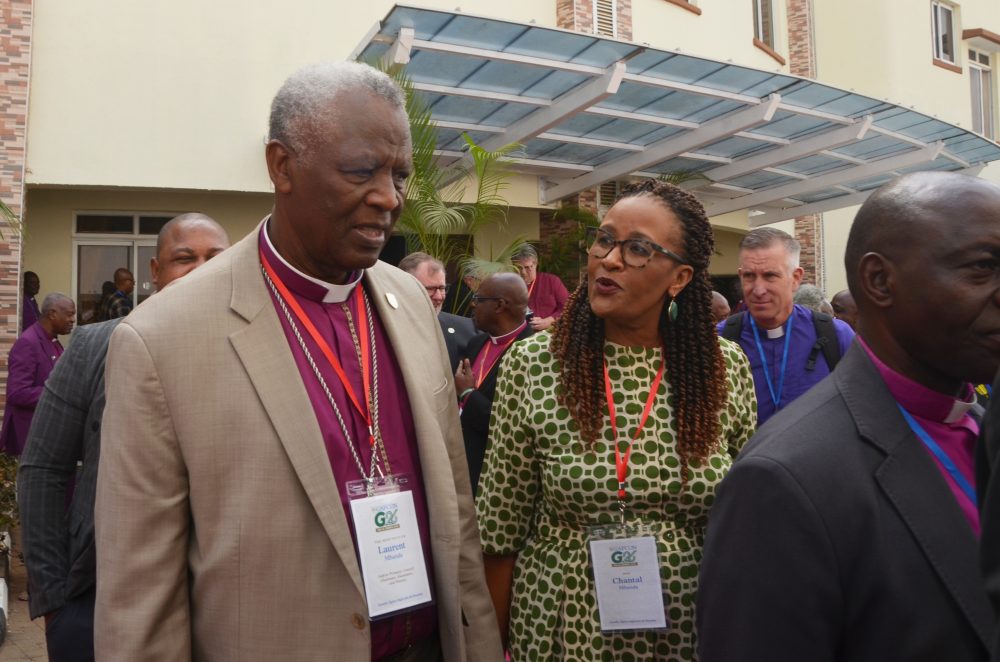
Laurent Mbanda, who assumed leadership of the newly formed rival council Thursday, delivered a statement declaring that the Global Anglican Communion needed “a principled disengagement” from organizations connected to the Church of England.
“Leaders who hold office in the Global Anglican Communion must not attend future Primates’ meetings called by the Archbishop of Canterbury, nor attend the Lambeth Conference, nor attend ACC meetings or participate in Commissions of the ACC,” the statement said.
The declaration further specified that leaders “should not personally approve financial contributions to the ACC. It is also expected that they will not receive financial assistance from compromised sources.”
The exact financial implications of this boycott remain unclear at this time.
Church of England officials have not yet responded to requests for comment.
HISTORIC DIVISION
The Anglican Communion traces its origins back approximately 500 years to when the Church of England separated from papal authority in Rome, eventually expanding throughout much of the world, especially in former British territories.
Recent decades have witnessed progressive changes within portions of the Church. GAFCON emerged in 2008 as a response to these developments, drawing support from regions opposing such reforms, particularly in Africa and Asia where Anglican membership continues growing rapidly.
Thursday brought a statement from an Anglican Communion Office spokesperson in London, who said GAFCON was dismissing years of constructive dialogue focused on church reform efforts.
When asked whether this represented a formal church split, Diarmaid MacCulloch, emeritus professor of church history at the University of Oxford, told Reuters: “Of course it’s a schism.”
However, MacCulloch suggested the division might not be irreversible.
“Schisms do eventually get healed, when both sides see that the issues that caused the schism don’t seem that important any longer,” he said.
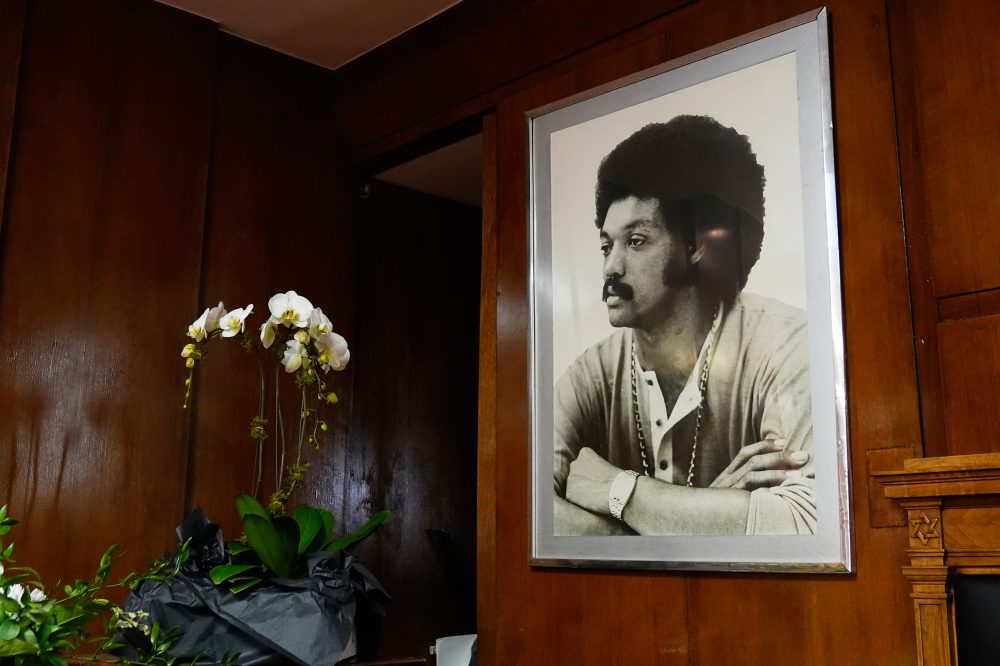
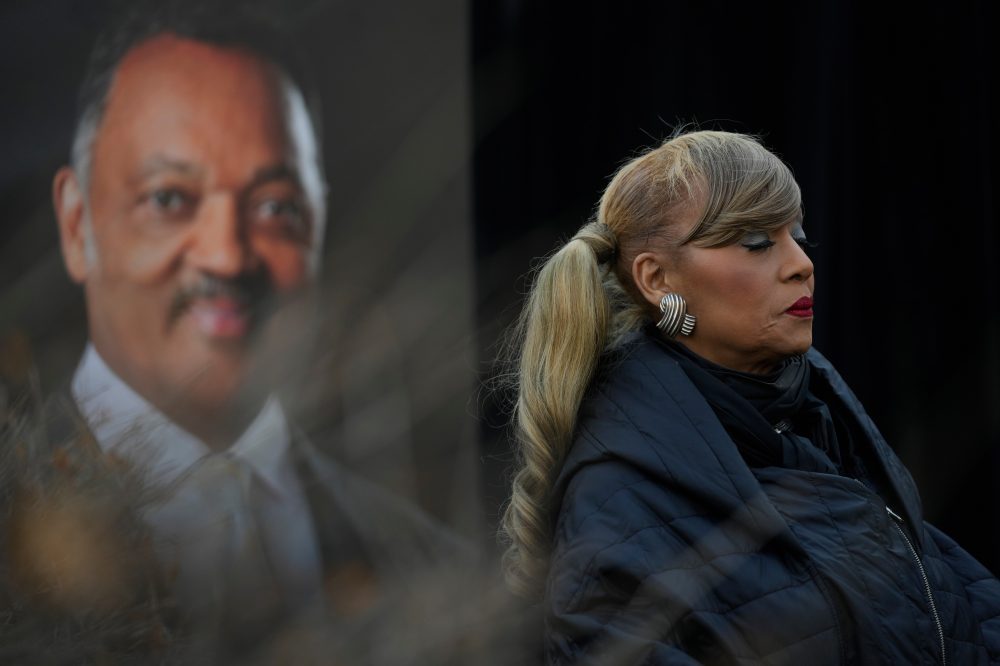
Civil rights leader Reverend Jesse Jackson was remembered and celebrated during his funeral service held Friday at the House of Hope in Chicago, drawing tributes from an array of distinguished guests including family members, former U.S. presidents, and a Hall of Fame athlete.
Throughout the memorial service, multiple speakers honored Jackson’s enduring legacy by referencing the inspirational phrases he made famous during his decades of activism. Those in attendance repeatedly invoked his well-known rallying cries “Keep hope alive” and “I am somebody,” messages that became synonymous with Jackson’s work in the civil rights movement.
The ceremony served as a final tribute to Jackson’s lifelong dedication to social justice and equality, bringing together prominent figures from across the political and social spectrum to pay their respects to the influential religious and civil rights leader.
The click of a metal door. Golden light filtering through colored glass. Childhood tears and morning anxiety about boarding the school bus.
These haunting recollections stay with clergy abuse survivors for decades after their traumatic experiences.
This week’s release of a comprehensive Rhode Island attorney general’s investigation exposed extensive abuse within the Catholic Diocese of Providence, naming 75 religious officials who sexually victimized more than 300 minors beginning in 1950. The probe examined thousands of diocesan documents and conducted extensive interviews with survivors and witnesses over multiple years. Investigators believe the actual victim count significantly exceeds these documented cases.
However, survivors emphasize that statistics tell only a fraction of their stories. Each documented incident represents childhood trauma that emerges years later — accompanied by lengthy journeys toward understanding their experiences.
Numerous survivors dedicated decades to seeking answers and urging officials to launch investigations. Today, some are publicly sharing their ordeals and outlining their expectations moving forward: expanded survivor support services, church-funded therapy and counseling assistance, and responsibility from Catholic hierarchy.
“That metal door’s hardware clicking still echoes in my mind today,” stated Dr. Herbert “Hub” Brennan, an internal medicine physician practicing in his East Greenwich, Rhode Island birthplace, where he was raised in a deeply Catholic household.
Brennan experienced sexual abuse during elementary school at the hands of Rev. Brendan Smyth, an Irish clergyman who came to the area during the 1960s. Brennan served as an altar boy at Our Lady of Mercy Parish when the abuse commenced in the church’s sacristy.
According to Brennan, a nun would remove him from classroom instruction and direct him to wait in the principal’s office until Smyth’s arrival, who would then escort him to the nurse’s quarters.
“People say rape stands among the rare crimes where victims bear the shame,” Brennan explained. “The shame feels overwhelming. The subsequent secrecy meant to conceal that shame becomes an obstacle to recovery.”
Brennan faced his trauma years afterward when a 1995 newspaper landed on his doorstep. The front-page story about Smyth’s Irish arrest declared: “Diocese has no complaints about jailed priest.”
Smyth eventually received conviction for attacking children no fewer than 100 occasions across four decades.
When Brennan subsequently attempted discussing his abuse with a parish clergyman, he received assurance that no complaints existed, only discovering later that this priest had shared living quarters with Smyth.
This discovery motivated Brennan’s pursuit of accountability. He eventually collaborated with attorney Mitchell Garabedian and reached a settlement through Massachusetts Superior Court.
“I felt compelled to ensure others understood exactly what transpired within this diocese — whether others suffered similar experiences, who bore responsibility, and how they concealed it,” Brennan explained.
This week’s report felt like the culmination of his efforts, he noted: “This enabled my transition from survivor-victim to advocate.”
For Claude Leboeuf, amber illumination streaming through stained-glass windows continues triggering distressing recollections.
Leboeuf, who endured abuse by a priest during childhood in nearby Massachusetts and currently advocates for Rhode Island victims, described the report as a crucial step toward dismantling the church’s “wall of secrecy.”
Leboeuf said his memories only resurfaced recently, motivating him to pursue legal remedies and speak openly about his experiences.
“These individuals need genuine assistance: financial support, educational funding, therapeutic services,” he emphasized. “The consequences are real and endure extensively.”
In a recorded statement, Providence Bishop Bruce Lewandowski characterized the report as describing a “tragic history” of abuse that inflicted permanent damage on victims and their families. He expressed “extreme sadness” and “intense shame” while reviewing it and offered apologies to survivors for church leadership’s historical failures in child protection. Lewandowski stated the diocese has established protective measures designed to address allegations promptly and prevent abuse.
Leboeuf disputes this characterization.
“This isn’t ancient history. This represents justice withheld for over 60 years for some individuals,” he stated. “These are people who brought their concerns to the diocese as children during the 1960s, and they faced dismissal, mockery, even punishment.”
Ann Hagan Webb recalls the anxiety she experienced each morning before her school bus’s arrival. Webb was merely a kindergarten student when her parish priest initiated sexual abuse at her Rhode Island school.
The abuse occurred from 1957 through 1965, during which Webb — victimized from ages 5 to 12 — remembers pre-school emotional breakdowns, sometimes requiring physical assistance onto the bus.
Only decades later, at age 40, did Webb seek therapeutic help to process these memories. When she felt prepared to report the abuse, Webb encountered hostility.
Initially, she requested only reimbursement for therapy expenses. Nevertheless, she faced doubt, with Diocese of Providence officials demanding her medical documentation and challenging her claims’ truthfulness.
Webb shifted toward advocacy, establishing herself as a prominent voice for clergy abuse survivors. In 2019, she successfully lobbied the Rhode Island Legislature to pass legislation called “Annie’s Law,” enabling civil accountability for child sexual abusers.
The advocacy work has proven draining, Webb noted, and she continues facing stigma during public appearances. Her abuse often gets overlooked, she explains, because many people assume clergy abuse only affected male victims.
“For 32 years, the diocese has labeled me not credible. I cannot describe that feeling,” Webb said.
The attorney general investigation’s release has rekindled her optimism that change and justice remain achievable.
“This feels like vindication,” she declared.
“I hope the public demands their church transform,” she continued.
The Rhode Island investigation arrives during a period when examining potential clergy abuse has become commonplace.
This represents a dramatic change from 2002, when The Boston Globe revealed the Boston Archdiocese’s practice of transferring abusive priests between parishes without alerting parents or law enforcement, sparking worldwide investigations.
This reckoning required decades longer in Rhode Island. With among the nation’s highest per-capita Catholic populations — approaching 40% — the Diocese of Providence preserved secrecy surrounding clergy abuse despite emerging accusations and litigation over the years.
Attorney Tim Conlon, who has extensively represented sexual abuse victims in Rhode Island, explained that when he initially filed lawsuits against the Diocese of Providence, many people refused believing such allegations could occur in their own parishes. During the late 1990s, he recalled, even his mother questioned whether he was pursuing the correct path.
State legislation has also complicated victims’ justice-seeking efforts, Conlon noted, referencing strict limitations on civil litigation against institutions like the Catholic Church and restrictive statutes of limitations for second-degree sexual assault.
“There’s clearly a demand for reform,” Conlon stated. “The need’s magnitude is thoroughly documented.”
A fundamental Christian declaration proclaiming Jesus as divine sovereign has transformed into a divisive political statement across the United States, sparking debates about religious expression and hate speech.
The traditional proclamation “Christ is king” represents a cornerstone belief for Christians worldwide, with Catholics and numerous Protestant denominations marking Christ the King Sunday annually. However, this sacred declaration has evolved into something far more contentious based on its context and usage.
Political rallies, social media platforms, and public speeches by right-wing figures have increasingly featured this religious phrase in recent years. Sometimes it appears as support for establishing America as explicitly Christian or pledging national loyalty to Christian beliefs. Several current Cabinet members and former congressional representatives have incorporated the phrase into their public statements and online posts.
However, political activists have also combined the religious declaration with anti-Jewish rhetoric and harmful stereotypes targeting Jewish communities.
Far-right personalities and their supporters have embraced the phrase with growing frequency. Conservative commentator Candace Owens, known for promoting antisemitic conspiracy theories, markets merchandise featuring “Christ is King” branding on coffee mugs and clothing.
This trend reflects broader divisions within conservative politics, as traditional conservatives confront an increasingly outspoken faction whose criticism of Israel often includes overt antisemitism, according to critics. While some insist they oppose Zionism rather than Jewish people, this represents a significant departure from historically strong Republican support for Israel.
Research from the Rutgers University-affiliated Network Contagion Research Institute confirms that the phrase sometimes serves as clear hostility toward Jewish people, according to their 2025 findings.
Their analysis of social media content from 2021 through 2024 revealed dramatic growth in using “Christ is king” as hateful messaging targeting Jews. Researchers expressed concern about this departure from the phrase’s traditional role as an uplifting, sacred statement rooted in scripture.
“The weaponization or hijacking of ‘Christ is King’ represents a disturbing inversion of its original intent. Rather than sacralizing shared values, extremists have exploited this religious expression to justify hatred,” the report said.
A recent gathering of President Donald Trump’s Religious Liberty Commission brought these controversies into sharp focus during discussions about antisemitism.
During the February 9 hearing, witness Seth Dillon described frequently encountering people who follow the religious phrase immediately with offensive slurs against Jewish people.
“This should offend every Christian,” said Dillon, the CEO of the conservative satirical site The Babylon Bee.
Commission participant Carrie Prejean Boller repeatedly questioned witnesses about whether opposing Zionism constitutes antisemitism. She explained that her Catholic faith leads her to reject Zionism while denying any antisemitic intent. She directly asked Dillon whether he considered “saying ‘Christ is king’ is antisemitic.”
Dillon responded negatively, explaining that as a Christian, he regularly affirms that “Christ is my king” while emphasizing that circumstances matter significantly.
He described how followers of far-right personality Nick Fuentes, known as Groypers, have appropriated the phrase despite Fuentes spreading antisemitic viewpoints.
This represents “using the Lord’s name in an abusive manner,” Dillon said.
Supporters of Fuentes shouted “Christ is king” during the Million MAGA March in November 2020, a demonstration rejecting Republican Trump’s electoral loss to Democrat Joe Biden.
Texas Lieutenant Governor Dan Patrick, the Republican commission chairman, announced Prejean Boller’s dismissal from the panel following the meeting. He claimed she attempted to “hijack” the proceedings for personal purposes.
After her removal, Prejean Boller has posted extensively on X, condemning “Zionist supremacists” while repeatedly using “Christ is King.” She has also criticized military actions by the United States and Israel against Iran.
As a recent Catholic convert, she rejects the popular evangelical belief that contemporary Israel fulfills biblical prophecy.
The commission hearing represented just one venue for these ongoing “Christ is king” debates.
The Network Contagion Research Institute’s 2025 analysis found that while many social media references to “Christ is king” remain purely religious, extremist figures have “systematically co-opted” the phrase.
Researchers reported that Fuentes and similar extremists employ the declaration as a “white supremacist mantra publicizing their antisemitic beliefs.”
Fuentes has claimed Holocaust exaggeration, condemned “organized Jewry in America,” and described battling “satanic, globalist elites,” echoing antisemitic conspiracy theories.
The religious phrase “Christ is king” lacks inherent political meaning, according to Brian Kaylor, president and editor-in-chief of Word&Way, a progressive publication covering faith and politics.
However, this characteristic provides “deniability” for those using it politically, he explained.
“We’re at a dangerous point with the phrase ‘Christ is king’ because of the heavy activity and use of it on the far right in very fascist, antisemitic ways,” said Kaylor, a Baptist minister and author of several books on religion and politics. “We’re at the danger of that phrase losing its meaning to where this new antisemitic use is the dominant definition.”
The phrase has also gained traction among some Catholic and evangelical conservatives who strongly support Israel and consistently oppose antisemitism, including Defense Secretary Pete Hegseth and Secretary of State Marco Rubio.
Kaylor described the phrase as frequently serving as “a declaration of Christian nationalism” asserting that “the nation should be brought under the dictates of Christ.”
These controversies have exposed both religious and political divisions.
The Vatican maintains diplomatic relationships with Israel while recognizing Palestinian statehood. Pope Leo XIV has advocated for a two-state solution while condemning antisemitism. Throughout the Israel-Hamas conflict, popes Francis and Leo criticized both Hamas’s October 7, 2023, attacks and Israel’s extensive military response, with Leo demanding an end to Israel’s “collective punishment” of Gaza residents.
Other Catholics on the Religious Liberty Commission emphasized that Jesus and his disciples were Jewish, referencing a pivotal 1965 Vatican document that condemns antisemitism and rejects blaming all Jews, including contemporary ones, for Jesus’s crucifixion.
Patrick, the commission leader, characterized his dispute with Prejean Boller as reflecting “a real problem with a very small group in our Republican Party.” He warned that failing to reject antisemitism could “destroy our party,” speaking on “The Mark Levin Show” podcast.
Nevertheless, Prejean Boller has attracted support from Catholics for Catholics, a conservative lay organization describing itself as “militant organization dedicated to the evangelization of this great country.”
The group plans to present Prejean Boller with a Catholic Champion Award at a March 19 Washington event featuring speakers including Owens.
Prejean Boller has shared event announcements on X, including a Spanish-language statement translating to “We will not rest until we convert the USA into a Catholic nation.” The post concluded in English with “Christ is King!”
As Ramadan reaches its midpoint, Muslim communities throughout the United States are struggling to preserve the sacred month’s balance of spiritual devotion and celebration while facing mounting challenges.
Federal immigration enforcement actions have impacted numerous Muslim neighborhoods, while hostile anti-Muslim language grows more prevalent. Adding to these concerns, ongoing warfare in the Middle East has left many families worried about relatives in affected regions.
In Paterson, New Jersey, which boasts one of America’s highest concentrations of Muslim residents per capita, 18-year-old Haneen Alatiyat observes how fear and worry are preventing community members from participating in Ramadan’s traditional group activities.
“The meaning of the holiday is to be together with the people you love,” said Alatiyat, whose heritage is half Palestinian and half Jordanian.
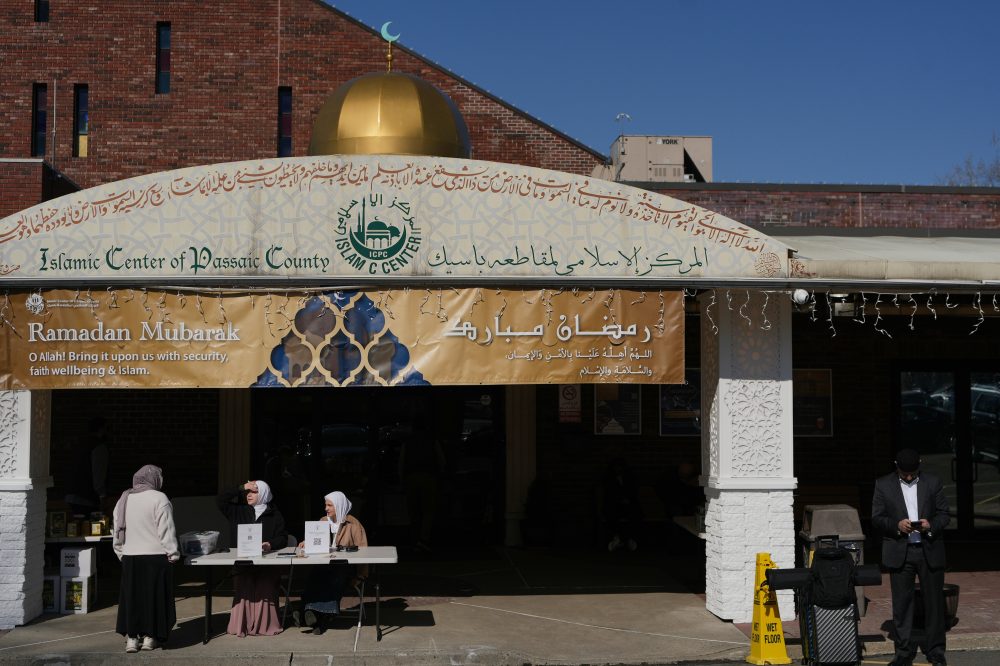
“Unfortunately, because of the ICE raids that are happening, people don’t want to do that,” she explained while standing outside the Islamic Center of Passaic County in Paterson, referencing Immigration and Customs Enforcement operations under President Donald Trump’s administration. She attends this mosque annually with her family during Ramadan.
Paterson houses one of the world’s largest Palestinian communities outside the Middle East, and residents had already been mourning losses and supporting survivors from the Israel-Hamas conflict in Gaza before these recent developments added new stress.
“This Ramadan has already been heavy for many families in our community with the immigration crackdowns,” explained Rania Mustafa, who serves as executive director of the Palestinian American Community Center in Clifton, New Jersey.
“Now, as the war on Iran started, many people here are experiencing another layer of fear and grief,” she continued.
In Minnesota, where residents are still recovering from recent extensive immigration enforcement operations, Ramadan arrived accompanied by complex emotions, according to Imam Yusuf Abdulle, executive director of the Islamic Association of North America.
Community members feel “blessed that we are alive and well,” Abdulle noted. “Also, we feel like we’re … bruised, affected, devastated economically, psychologically.”
Abdulle leads an umbrella organization that oversees multiple Islamic centers, including several in Minnesota.
He reported that the Abubakar As-Saddique Islamic Center in Minneapolis, where he serves on the board, has discontinued hosting group iftar meals that traditionally break the daily fast at sunset, now offering only dates and water instead. He blamed this change on the financial impact to local businesses that normally sponsor these gatherings, as customers avoided the area during enforcement operations.
“Eating together and sharing stories while eating, it was beautiful,” he reflected. “I hope that comes back.”
Despite the departure of most of the approximately 3,000 immigration officers, some community members continue to exercise caution about leaving home, including mosque attendance, particularly asylum-seekers and refugees, Abdulle reported.
“The fear … is very much there and it will be there for a while.”
However, family nurse practitioner Munira Maalimisaq finds reasons for gratitude despite the difficulties. She leads Inspire Change Clinic as CEO, serving marginalized populations in Minnesota.
“Even with the challenges, there’s a strengthened sense of community, resilience, and hope alongside the usual spiritual reflection, prayer, and charity that Ramadan brings,” she observed.
During this Ramadan period, several Muslim organizations have distributed guidance on handling interactions with immigration enforcement, including advice for mosques. The Muslim Public Affairs Council created a comprehensive safety resource.
MPAC representative Dahlia M. Taha explained that their guidance helps religious leaders address congregation concerns without creating panic or spreading false information.
Common questions from imams include: Are religious buildings vulnerable to enforcement actions? How can leaders provide comfort without offering legal counsel? How can immigration anxiety be addressed while maintaining Ramadan’s spiritual focus?
“There is a deep sense of community and peace that always comes with Ramadan,” Taha stated, noting that many mosques maintain strong attendance and families continue gathering.
Still, “people are carrying fear, anxiety, and uncertainty alongside our faith,” she acknowledged. “Devotion and concern are existing side by side. I think everyone is just exhausted.”
Ibrahim Dyfan, who directs Masjid Al Shareef, a 2,000-member mosque in Long Beach, California, said his congregation faces stress from increasing Islamophobia, immigration enforcement, and Middle Eastern conflicts, similar to other Muslim communities.
His mosque has enhanced security measures for Ramadan prayer services, he reported.
“All we can do is continue praying and fasting,” he stated. “This, like everything else, will pass. At the same time, we also need to pay attention to what is happening around us, and take the necessary precautions.”
Anti-Muslim rhetoric has escalated in Republican campaigns during this election cycle, particularly visible in Texas, which conducted primaries Tuesday. Governor Greg Abbott, who secured the GOP nomination for a fourth term, spearheaded efforts to block a Muslim-focused planned community near Dallas.
Congressional representatives have recently proposed multiple bills targeting Shariah, the religious framework guiding Muslim prayer and ethical behavior. Representative Randy Fine, R-Florida, posted social media content comparing Muslims unfavorably to dogs, prompting the Council on American-Islamic Relations and Democratic lawmakers to demand his resignation.
Muslim American leaders interpret this hostility as election-year fear tactics, more severe than previous campaign periods. Recent electoral wins for Muslim candidates, including Zohran Mamdani’s mayoral victory in New York, have only partially reduced their concerns.
“Every election year, you see an increase in anti-Muslim bigotry in certain parts of the country, where politicians see Muslims Americans a useful political football,” stated Edward Ahmed Mitchell, CAIR’s national deputy director. “We expect that — but it’s so much worse than usual this time.”
In Paterson, Rania Mustafa reports that numerous families maintain concern for relatives in conflict-affected areas of North Africa and the Middle East, including Gaza residents struggling with food shortages.
Nevertheless, she takes pride in her community’s determination.
“Despite what’s going on in the world, Ramadan reminds us of the strength and resilience of our community,” she declared. “People are still gathering for prayer, sharing meals, checking on one another, and supporting families who are struggling.”
As evening approached on a portion of Paterson’s Main Street renamed “Palestine Way” and decorated with Palestinian and American flags, residents arrived at homes and restaurants to end their daily fast recently. Some hurried to bakeries while others visited the Palestine Hair Salon.
Raed Odeh, the salon’s owner and lead barber, expressed disappointment that Middle Eastern conflicts and domestic immigration enforcement were diminishing what should be a celebratory month.
“This is not only affecting those who don’t have documents, this is also affecting everyone else around,” explained Odeh, who serves as Paterson’s deputy mayor, while trimming a customer’s beard.
Along with other municipal leaders, he advocates for the release of Leqaa Kordia, a Palestinian woman and Paterson resident detained in immigration custody for one year following her participation in a New York protest. Kordia recently reported suffering a seizure, which she attributed to “inhumane” detention conditions.
During these turbulent times, Odeh expressed a hope shared by many people of all backgrounds during Ramadan: “Of course, everybody is hoping for peace.”
SRN News has rolled out a new daily programming feature designed to keep audiences informed about religious developments worldwide. The audio segment, titled ‘Global Landscape,’ offers a brief two-minute overview of faith-related headlines from across the globe.
The daily feature focuses on delivering quick updates about religious developments, community changes, and important events where spirituality intersects with current affairs. According to SRN News, the segment aims to provide audiences with current information about how faith communities and religious issues are making headlines internationally.
The compact format allows listeners to stay connected with religion-focused news stories without requiring a significant time investment, making it accessible for busy schedules while covering meaningful developments in the world of faith and spirituality.
A Berlin court has sentenced a 20-year-old Syrian man to 13 years behind bars for attacking a Spanish tourist with a knife at the city’s Holocaust Memorial more than a year ago.
The young defendant faced charges of attempted murder and seeking membership in a foreign terrorist group. Court officials determined he made the journey from Leipzig to Berlin on February 21st, 2025, with the intention of launching an assault in support of ISIS.
The attacker had arrived in Germany as an unaccompanied minor in 2023 and had received asylum approval. Germany has welcomed over one million Muslim immigrants in recent years.
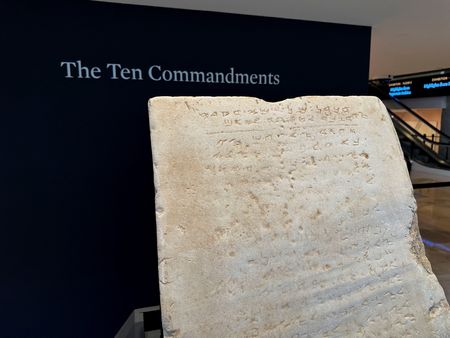
Meanwhile, an independent art researcher claims to have identified a marble sculpture of Christ housed in a Roman church as an authentic work by Michelangelo. This represents the most recent alleged discovery of work by the Renaissance master, who remains among history’s most copied artists.
The Renaissance artist created many of his celebrated pieces around Biblical subjects, including the famous David sculpture in Florence and his masterwork on the Sistine Chapel ceiling. Valentina Salerno made the unconfirmed assertion regarding the bust located in a Roman basilica, coming after a drawing believed to be by Michelangelo sold for $27 million at auction. Art specialists indicate they will examine Salerno’s claim, though reaching a definitive answer may prove challenging.
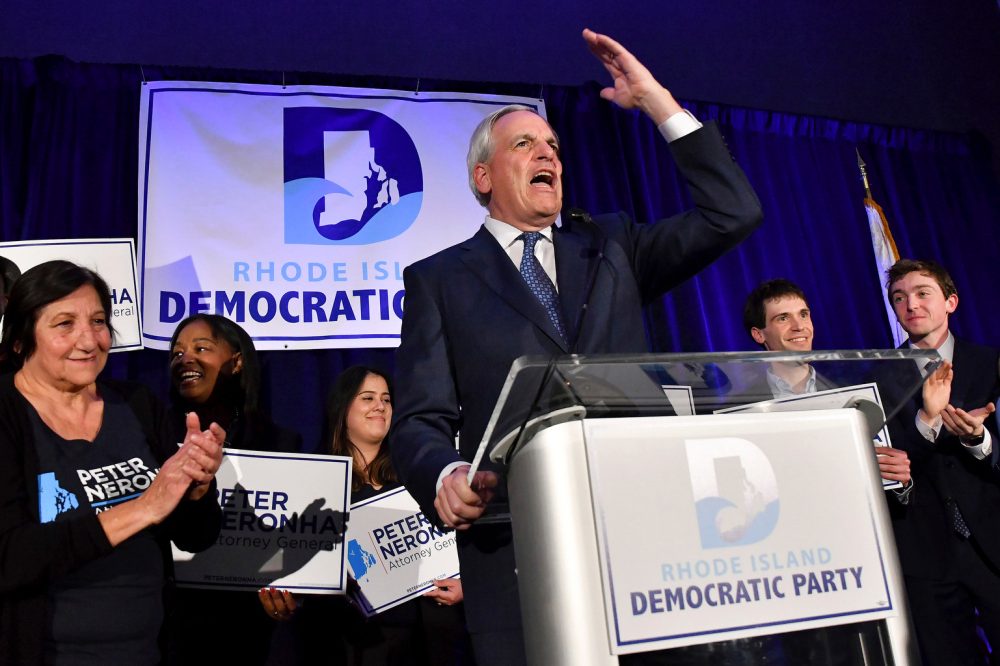
In Rhode Island, a comprehensive investigation reveals that Catholic clergy sexually abused hundreds of minors over multiple decades while church leadership downplayed the crisis. Attorney General Peter Neroha published the findings following years of investigation. The report documents that no fewer than 75 religious officials molested over 300 victims beginning in 1950. Neroha stated that diocese officials provided records but refused to make important individuals available for questioning. The diocese responded by saying the report shows their cooperation while giving the public false impressions that these issues continue today. Three priests, both current and former, face upcoming trials.
Christian persecution is increasing throughout Southeast Asia as Islamic influence expands, according to a recent study. International Christian Concern’s new analysis states that “The persecution of Christians in the region is complex, damaging, and deep-rooted. It includes direct, violent, and deadly attacks and incidents. But it also involves immense, complex, and indirect pressure, discrimination, threats, intimidation, problematic laws, and social isolation.” Southeast Asia is home to approximately 250 million Muslims, concentrated mainly in Indonesia, Malaysia, Brunei and the Philippines. Indonesia currently holds the distinction of having the world’s largest Muslim population.
A millennium after ancient Norse deities like Odin and Thor dominated religious life in Nordic regions, these pre-Christian beliefs are experiencing an unexpected comeback across Scandinavia.
The Swedish municipality of Mokam has approved plans for establishing a pagan cemetery, marking a significant milestone for followers of ancient Norse traditions. Additionally, supporters are actively collecting funds to build a dedicated pagan temple in another location.
This religious revival coincides with Christianity’s rapid decline throughout Scandinavian nations, which is occurring at a faster pace compared to other European regions. Current statistics reveal that fewer than 3% of Danish citizens regularly participate in church services, while an estimated 15% of Swedish churchgoers report they do not hold belief in Christ.
A young Indiana man will spend nearly a year behind bars after being found guilty of defacing a local Baptist church with satanic imagery. The 21-year-old defendant received a 10-month prison sentence for using spray paint to vandalize Maple Grove Baptist Church located in Plainfield.
Federal prosecutor Tom Wheeler, who serves as U.S. Attorney for the Southern District of Indiana, emphasized the serious nature of faith-based hate crimes. “Targeting any house of worship because of its faith is an attack on the fundamental freedoms that define our nation,” Wheeler stated.
According to authorities, incidents involving vandalism and attacks against religious institutions have been increasing across the United States in recent years, making this case part of a concerning national pattern.
ABUJA, Nigeria — Traditional Anglican church leaders have formed a new governing body, marking a dramatic departure from four centuries of established church structure as they work to reshape the global religious organization.
The Global Anglican Future Conference, known as Gafcon, eliminated its existing Gafcon Primates Council and established the Global Anglican Council in its place.
According to Gafcon general secretary The Right Reverend Paul Donison, the restructured council will feature primates, advisers and guarantors — including bishops, clergy and lay members — all holding equal voting rights.
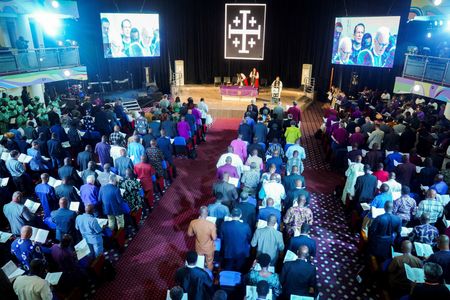
The restructuring was announced during a gathering of traditional church leaders in Nigeria’s capital, Abuja, which brought together 436 representatives from 48 nations, covering more than 180 dioceses worldwide.
“While the Chairman of the Council will be a Primate, he will not be primus inter pares (first amongst equals),” Donison stated. “Believing that the current Instruments of Communion no longer meet the needs of the majority of Anglicans around the world, the Global Anglican Communion is to be led by a conciliar structure.”
The Gafcon movement has consistently challenged progressive policies including same-sex marriage and the appointment of openly LGBTQ+ clergy within Anglican churches across Europe and North America, particularly targeting the U.S. Episcopal Church.
These theological disagreements have grown so intense in recent years that several national churches have withdrawn from traditional Anglican Communion meetings.
Rwanda’s Archbishop Laurent Mbanda, who received unanimous approval as chairman of the newly formed Global Anglican Council, spoke to Nigeria’s Advent Cable Network on Thursday, emphasizing that Gafcon leadership must “reject those instruments that have not worked for us in the past.”
The Anglican Church’s traditional leadership structure includes the Archbishop of Canterbury, currently Sarah Mullally, who serves as the church’s spiritual leader and holds the distinction of being the first woman in this role. Mullally has encountered resistance during her tenure as head of the church.
In the previous year, Mbanda advocated for separating from the established communion structure, stating that “the Anglican Communion will be reordered.”
Traditional Anglican churches have announced the formation of a new leadership structure that directly challenges the established authority of the Archbishop of Canterbury, according to announcements made Thursday during a conference in Nigeria’s capital city of Abuja.
The newly formed governing body will include bishops, clergy members, and laypeople, all holding equal voting rights in decision-making processes. Rwandan Archbishop Laurent Mbanda received unanimous selection to chair this council, though organizers emphasized he will operate within a shared power structure rather than as a singular leader.
Bishop Paul Donison addressed the gathering, explaining the rationale behind the organizational shift. “Believing the current instruments of communion no longer meet the needs of the majority of Anglicans around the world, the global Anglican Communion is to be led by a conciliar structure,” Donison stated.
“I am also pleased to announce that Archbishop Laurent Mbanda was unanimously elected chairman of the Global Anglican Council,” Donison added during his remarks to attendees.
The Global Anglican Future Conference, known as GAFCON, represents traditional churches primarily located across Africa and Asia. The organization maintains it now speaks for the majority of Anglican believers worldwide.
These churches have expressed strong opposition to progressive developments within certain parts of the Anglican Communion, particularly regarding women’s ordination and expanded acceptance of LGBTQ+ individuals. The group voiced sharp criticism following the Church of England’s historic decision last October to appoint Sarah Mullally as its first female Archbishop of Canterbury.
This weekend, renowned evangelist Franklin Graham, who leads the Billy Graham Evangelistic Association, is set to deliver his message to large gatherings at Lima’s National Stadium. The two-day religious event will feature performances by several well-known contemporary Christian recording artists alongside Graham’s preaching.
Graham’s visit comes during a period when surveys suggest Christian faith is declining across Peru. However, the same research reveals significant public interest in hearing the Christian message, evidenced by the participation of 700 Peruvian congregations who have volunteered to help coordinate the weekend revival meetings.
Indiana’s Governor Mike Braun, a Republican, has put his signature on new legislation that prevents state officials from severing contracts with religious adoption and foster care organizations. The measure was crafted by Indiana legislators who observed more progressive states excluding Christian organizations from child placement services due to those groups’ positions on LGBTQ+ issues. Additionally, the legislation includes provisions to shield Christian families from unfair treatment while navigating the foster care process.
SRN News has launched a daily audio program designed to keep audiences updated on religious developments worldwide. The two-minute broadcast, titled ‘Global Landscape,’ focuses on delivering current news stories related to faith communities and religious affairs from across the globe.
The brief daily segment offers audiences quick updates on important religious developments, changes in faith communities, and major events where religion intersects with world affairs. The program is designed to provide listeners with current information about how faith impacts global events and cultural movements.
The worldwide Anglican Church is approaching a potential breaking point as conservative leaders gather in Nigeria this week to discuss whether to maintain their connection to the archbishop of Canterbury. The Global Fellowship of Confessing Anglicans, known as Gafcon, strongly disagrees with progressive changes adopted by Western churches, particularly their acceptance of same-sex marriage and the ordination of LGBTQ+ clergy.
This development comes as the historic Anglican Communion leadership announced their own reorganization strategy on Monday, designed to preserve collaboration despite fundamental theological divisions.
In polling news, a recent Gallup survey reveals what Americans consider essential for living well. Nearly all respondents – 97 percent – identified adequate housing as the top requirement. Family relationships ranked second, followed by sufficient sleep, freedom from physical discomfort, and financial security. Religious freedom appeared much lower on the priority list, with only 60 percent of those surveyed describing the ability to practice their faith as important for a fulfilling life.
Texas school districts have largely passed on a new opportunity for daily prayer time in schools. Last year’s state legislation allowed districts to establish prayer periods, requiring local school boards to vote on implementation. Republican legislator David Spiller, who sponsored the measure, reports that roughly 15 out of Texas’s 1,200 school districts have adopted the program. The policy permits students to pray or study religious materials during non-academic time, with mandatory parental permission and attendance restrictions. Several districts that rejected the option noted that existing federal, state, and local policies already permit student-organized prayer activities.
A coalition of Christian advocacy groups has launched the Greater Than Campaign, seeking to challenge the Supreme Court’s 2015 ruling that legalized same-sex marriage across the United States. Focus on the Family, the American Family Association, and other religious organizations are supporting this effort, coordinated by the group Them Before Us. Campaign organizers argue that “When marriage was redefined, parenthood was too. Once husbands and wives became optional, mothers and fathers became replaceable.” The campaign aims to bring a new legal challenge before the Supreme Court, with multiple states developing legislation to contest marriage equality laws.
PROVIDENCE, R.I. — State Attorney General Peter Neronha plans to publish Wednesday the results of an extensive multi-year probe examining sexual abuse of children within the Diocese of Providence.
The attorney general’s office says the findings will outline how diocese leadership managed clergy abuse cases spanning multiple decades.
Despite being the nation’s smallest state by area, Rhode Island has the highest concentration of Catholics in the country, with close to 40% of residents identifying with the faith, data from the Pew Research Center shows.
The investigation began in 2019 under Neronha’s direction, launched roughly one year following a Pennsylvania grand jury’s findings that over 1,000 children suffered abuse at the hands of approximately 300 priests since the 1940s. That 2018 Pennsylvania investigation stands as among the most comprehensive examinations of child sexual abuse within the United States.
Neronha’s team worked under a special arrangement with the Diocese of Providence that provided investigators complete access to all abuse complaints and accusations involving clergy members from 1950 forward. Officials stated in 2019 that the investigation aimed to examine the diocese’s response to historical abuse reports, identify potential criminal cases, and verify that no clergy with credible accusations remained in active service.
The Rhode Island State Police provided assistance throughout the investigation process.
SRN News has launched a new daily audio program designed to keep audiences informed about religious developments worldwide. The program, called “Global Landscape,” offers a brief two-minute overview of faith-related news stories happening across the globe.
The daily feature focuses on providing listeners with current information about religious developments, cultural changes, and important events where faith intersects with world affairs. The compact format allows busy audiences to stay updated on significant religious news in just a few minutes each day.
This new offering represents SRN News’ effort to address the growing interest in how religious matters impact global events and cultural movements around the world.
The vibrant Hindu spring celebration known as Holi brings communities together each year through colorful traditions that mark the end of winter and embrace renewal and positive energy.
This ancient festival takes place annually in March throughout India, Nepal, neighboring South Asian nations, and Hindu communities worldwide. The 2024 celebration is scheduled for March 4, timed with the final full moon of Falgun in the Hindu calendar system.
The festival’s most recognizable custom involves participants dressed in white clothing gathering in streets and public spaces to toss brightly colored powders at one another, creating spectacular displays of pigment and celebration. These gatherings feature music, traditional dancing, and special holiday foods.
Many regions begin the festivities the evening before with large ceremonial fires that represent good triumphing over evil forces. These bonfires connect to several ancient stories from Hindu tradition.
One legendary tale tells of King Hiranyakashipu, who demanded worship from his subjects but faced defiance from his son Prahlad, a faithful follower of Lord Vishnu. The angry king commanded his fire-resistant sister Holika to carry the boy into flames, but Prahlad’s devotion shielded him from harm while Holika perished despite her supposed protection.
Southern Indian communities often call the celebration Kama Dahanam, honoring the story of Lord Shiva using his third eye to destroy Kamadeva, the deity of love. This represents releasing worldly desires for deeper spiritual connection before the colorful festivities begin.
Other traditions link Holi to Lord Krishna’s playful relationship with his beloved Radha and his devoted followers known as gopikas, celebrating their pure love and dedication.
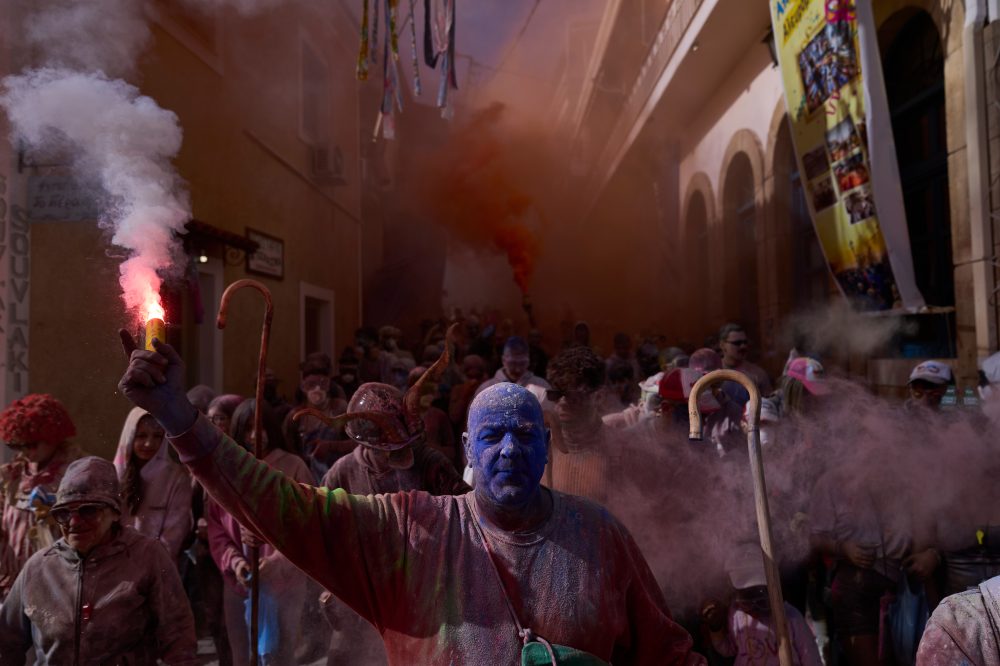
During the main celebration, entire neighborhoods fill with people launching colored powder skyward, dropping water-filled balloons from buildings, and using water guns for playful battles. Participants call out “Holi hai!” meaning “It’s Holi!” as they join the fun. Bollywood movies have helped spread awareness of these joyful scenes globally.
Each color carries special meaning during the festival. Blue honors Lord Krishna’s appearance, while green represents springtime and new beginnings. Red signifies marriage and fertility, and both red and yellow indicate good fortune in religious ceremonies.
Traditional holiday cuisine centers around gujia, a crispy fried pastry filled with sweetened milk curd, nuts, and dried fruit. Celebrants also enjoy thandai, a chilled beverage mixing almonds, fennel seeds, rose petals, poppy seeds, saffron, milk, and sugar.
Hindu communities across North America mark the occasion with Bollywood-themed parties, parades, and various public and private events. Several American temples will conduct Holika Dahan ceremonies on February 2 or 3 this year, coinciding with the full moon and a rare total lunar eclipse.
Local Hindu temples and community centers typically organize cultural programs, cricket tournaments, and other special activities to honor the holiday tradition.
Delaware residents can experience a patriotic musical celebration as the nation approaches its 250th birthday milestone. Historic Christ Church will host a special concert titled “Music of a New Nation” on Saturday, March 7, 2026, running from 3:00 PM to 5:00 PM.
The afternoon performance serves as a tribute to the upcoming semicentennial anniversary of the Declaration of Independence, featuring musical selections that capture the spirit of America’s founding era.
The two-hour event promises to blend historical significance with musical artistry, offering attendees an opportunity to reflect on the nation’s revolutionary heritage through song.
Those interested in attending the commemorative concert can visit Historic Christ Church during the scheduled time frame to participate in this patriotic celebration.
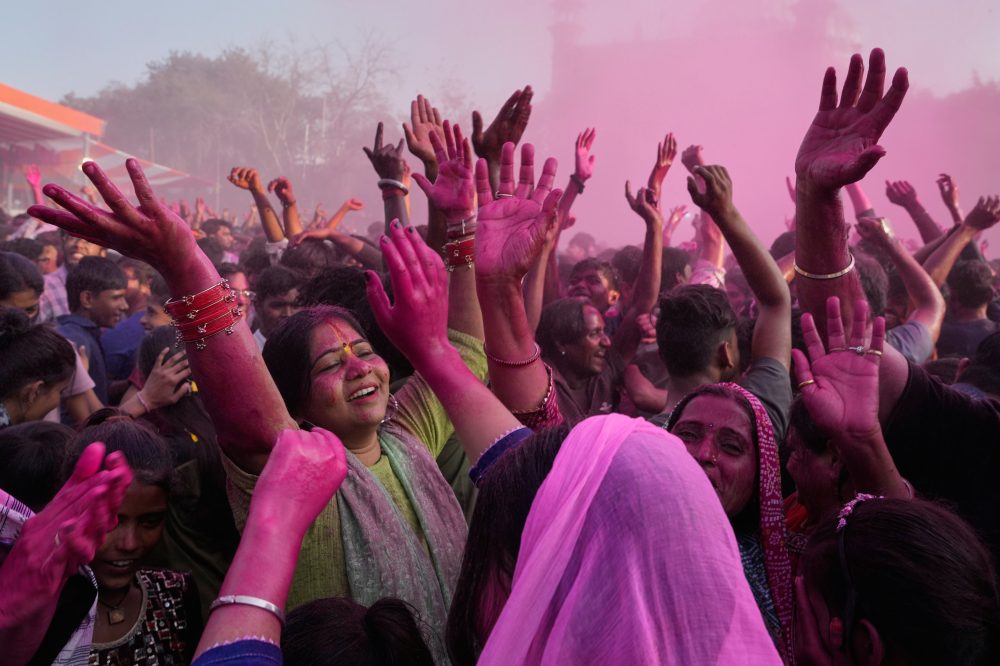
MATHURA, India — The ancient Indian town of Mathura erupted in vibrant celebration as hundreds of devotees marked Holi, the beloved Hindu spring festival known for its explosion of colors and joyful traditions.
Crowds of participants, both men and women, converged on a local temple in this northern Indian community, which holds special significance as the legendary birthplace of Lord Krishna, a deeply cherished deity in Hindu tradition who is intimately connected to this colorful celebration.
The festival-goers, their faces painted with brilliant colored powders and their damp clothing clinging to their bodies, moved rhythmically to pulsing music that filled the air. The vibrant hues symbolize the abundance of spring, while the festival serves as an opportunity to release past resentments and strengthen bonds of friendship.
Behind the celebrating crowd, a large performance stage featured traditional folk performers who brought to life stories from Krishna’s mythology, particularly focusing on his romantic and playful relationship with Radha, his beloved companion.
According to Hindu legend, the dark-complexioned Krishna would playfully apply colored powder to Radha’s lighter skin to make her appearance more similar to his own, establishing the cherished custom of applying colors to one another’s faces during this festive occasion. This divine romance has long been celebrated in traditional Indian miniature artwork.
The theatrical performances continued with additional episodes depicting the Krishna-Radha story, much to the enjoyment of the enthusiastic audience.
While Mathura and other locations connected to Krishna’s legendary life story host extended celebrations lasting multiple days, March 4 represents the primary day of Holi observance, with festivities taking place throughout India.
Leaders of traditional Anglican churches worldwide are wrestling with fundamental questions about their future: Should they remain united despite deep disagreements, or have their theological disputes damaged centuries-old bonds beyond healing?
The future of the Anglican Communion, representing one of Christianity’s most extensive church networks globally, hangs in the balance as key decisions may be reached before week’s end.
Traditional church leaders from multiple Anglican denominations began meeting Tuesday in Nigeria for a four-day conference. Their discussions center on a proposal that could trigger an unprecedented division within one of the world’s most significant Christian organizations.
Meanwhile, officials from the established Anglican Communion revealed Monday their own modified reorganization proposal. This alternative plan would shift leadership authority away from its traditional English headquarters and could allow collaboration despite deep theological divisions.
Whether this restructuring proposal will influence Gafcon members remains unclear. The Global Fellowship of Confessing Anglicans is convening in Abuja, Nigeria, bringing together multiple primates — top Anglican national leaders — alongside other bishops, ministers, and laypeople.
This coalition — primarily representing Global South nations and some of Anglicanism’s most populous church regions — forms a traditional alliance functioning independently of the official London-headquartered Anglican Communion, though most Gafcon churches maintain communion membership.
Gafcon leadership has resisted progressive developments including same-sex marriage and ordaining openly LGBTQ+ ministers within European and North American Anglican churches, particularly the U.S. Episcopal Church. These divisions have grown so severe in recent years that several national churches have boycotted Anglican Communion conferences.
Last year, Gafcon’s leader, Rwanda’s Archbishop Laurent Mbanda, released a declaration effectively demanding separation from the current communion structure, stating that “the Anglican Communion will be reordered.”
His vision outlined a restructured “Global Anglican Communion” governed by a new council headed by elected leaders from any nation. Traditionally — though churches operate independently and collaborate voluntarily — Canterbury’s archbishop in England has served as “first among equals,” providing symbolic spiritual guidance.
Although some Anglican leaders within Gafcon supported Mbanda’s blueprint last year, others stayed quiet or reconfirmed their dedication to maintaining traditional Anglican Communion connections. The Abuja conference could see Mbanda’s strategy accepted, altered, or dismissed.
Last year’s declaration was “not the final word,” stated Bishop Paul Donison, Gafcon’s general secretary. The proposal requires thorough consideration in Abuja, he explained in a conference website video.
“There is much to iron out, much to discern, much to structure carefully and faithfully,” he stated. “But we will do that work together.”
Despite widening Anglican divisions, tensions haven’t produced a complete separation. This situation could shift if church leaders approve a definitive Canterbury break, though Gafcon officials claim they’re proposing communion reform rather than creating something entirely new.
The Anglican tradition originated during the Reformation with the Church of England’s establishment, combining Protestant beliefs with Catholic-style ceremonies and sacraments. It expanded globally through British colonial influence and missionary work, followed by successful evangelistic efforts under local leadership, especially throughout Africa.
Anglican Communion Office data shows approximately 85 million members spanning 165 nations, encompassing over 40 independent provinces.
This conference occurs shortly after the Church of England appointed Archbishop Sarah Mullally as Canterbury’s first female archbishop.
While some traditional Anglican leaders internationally criticized her appointment based on gender, they primarily objected to her LGBTQ+ positions. Mullally has supported the Church of England’s current marriage definition as between men and women, but endorsed same-sex couple blessing ceremonies and acknowledged “the harm that we have done” to LGBTQ+ individuals as a church.
Homosexuality remains forbidden across many African nations, sometimes criminalized through colonial-era statutes or recent laws. Uganda passed 2023 legislation mandating death penalties for certain homosexual acts.
The Anglican Communion is pursuing its own decentralization strategy, becoming “less Canterbury-centric,” according to proposal summaries, acknowledging that most Anglicans now reside in the Global South, distant from England.
These proposals — developed over years with some Monday revisions — involve complex technical details. Essentially, Canterbury’s archbishop would share numerous leadership responsibilities with other national leaders. The plan faces Anglican Consultative Council review this summer, with representatives from throughout the communion participating.
Bishop Graham Tomlin, who leads the commission developing these changes, said he’s uncertain whether the proposal will influence Gafcon’s discussions. The objective is maintaining cooperation while “acknowledging the depth of the disagreements among us,” he explained during Monday’s online press conference.
“The history of the church tells us that when we do make radical breaks from one another, it’s very hard to mend those walls, and this is a way of hopefully keeping us together,” he stated.
Over 400 attendees — ministers and lay members plus bishops — are anticipated at the Gafcon meeting in Abuja, Donison reported.
Though Global South churches dominate Gafcon, other participants include the Anglican Church in North America, established by traditionalists who separated from the U.S. Episcopal Church and Anglican Church of Canada.
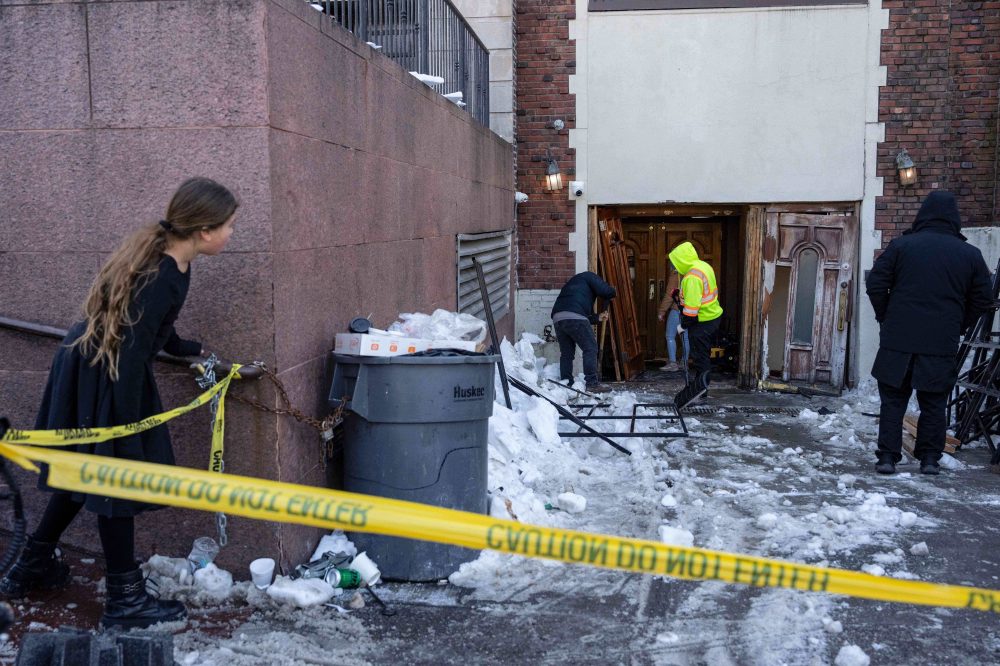
Federal prosecutors have filed charges against a 36-year-old man who deliberately crashed his vehicle into the world headquarters of Chabad Lubavitch in New York City last month.
Dan Sohail faced arraignment Monday afternoon in Brooklyn federal court on charges of intentionally damaging religious property following the January 28th incident. The crash caused damage to the entrance of the sacred Jewish site but resulted in no injuries.
Sohail’s legal representative did not respond to requests for comment on Monday.
New York City police had already taken Sohail into custody at the scene and local prosecutors filed hate crime charges against him.
According to the federal complaint made public Monday, Sohail later informed authorities that he had recently discovered his Jewish ancestry and had received an invitation to visit the headquarters that evening to explore the faith’s customs.
Multiple individuals close to Sohail, including relatives and Chabad religious leaders, have stated that he showed no animosity toward Jewish people and had actually expressed desire to convert to Judaism.
Police records indicate that just weeks prior to the incident, Sohail participated in a social event at the Chabad headquarters, where surveillance footage captured him dancing alongside Orthodox Jewish men.
Speaking to The Daily News, Sohail’s father described his son as having “mental problems” while maintaining “a very good friendship, relationship with the Jews.”
Initially, Sohail told police that his “clunky boots” had caused him to slip and lose control of his car.
However, federal authorities allege that surveillance showed him moving several barriers and clearing snow from the sidewalk before repeatedly driving into the building at least five times.
The federal charge could result in up to three years imprisonment if prosecutors prove the property damage exceeded $5,000.
Sohail has remained in custody since his arrest but was temporarily transferred to U.S. Marshals for Monday’s federal court appearance, according to online records. His next appearance in the state case is scheduled for March 31st.
Chabad representatives have not responded to inquiries regarding the federal charges.
The vehicle crash happened exactly 75 years after Rabbi Menachem Mendel Schneerson assumed leadership of the Lubavitch movement, raising immediate concerns throughout the city. Although Schneerson passed away in 1994, he continues to be honored worldwide.
Law enforcement has maintained a continuous presence around the Chabad Lubavitch world headquarters for many years.
The location became the focal point of the Crown Heights riots in 1991, during which Black neighborhood residents attacked Jewish community members following a child’s death involving a vehicle in Schneerson’s convoy. In 2014, a mentally disturbed individual entered the synagogue and stabbed a rabbinical student before police fatally shot the attacker.
A New York state court has convicted Skiboky Stora (pronounced skuh-BOH-kee) on charges of assault, stalking, and harassment in connection with a string of hate-motivated attacks targeting Jewish people, white individuals, and women during 2023 and 2024.
Court evidence included video footage showing Stora pursuing and threatening a Jewish couple while recording himself yelling hateful slurs at white pedestrians. During one incident, he chased the couple while screaming anti-Semitic slurs and shouting “Die, Jews, die!” according to prosecutors.
In business news, a financial technology company called Musaffa (pronounced moo-SAH-fah) has unveiled its Global Halal Investment Platform, targeting Muslim investors worldwide. Company leaders describe their service as a “fintech platform dedicated to Shariah-compliant investment research and Islamic finance education.” The platform aims to connect Muslim investors in 200 nations with U.S. stock markets while ensuring all investments meet Islamic law requirements. Industry analysts project global Islamic finance assets could reach $9.7 trillion by 2029.
The European Union has announced plans to use its social fund to subsidize abortion procedures for women, with particular focus on helping residents of countries with strict anti-abortion laws. The European Commission for Equality stated the 27-member union’s 147 billion euro social fund can cover abortion-related expenses. While most European nations permit abortion procedures, Poland, Malta, Liechtenstein, and Monaco maintain strong restrictions. Anti-abortion groups argue these restrictive countries shouldn’t have their contributions used to fund procedures that contradict their domestic policies.
Defense Secretary Pete Hegseth has demanded policy changes from Scouting America to maintain Pentagon backing, including a mandate that membership be determined by “biological sex at birth and not gender identity.” Hegseth has publicly criticized the organization’s 2024 name change from Boy Scouts and recent policy shifts allowing girls, transgender youth, and openly gay adult leaders. In a social media video, Hegseth announced the Defense Department will evaluate the organization’s compliance in six months and withdraw military support if changes aren’t implemented.
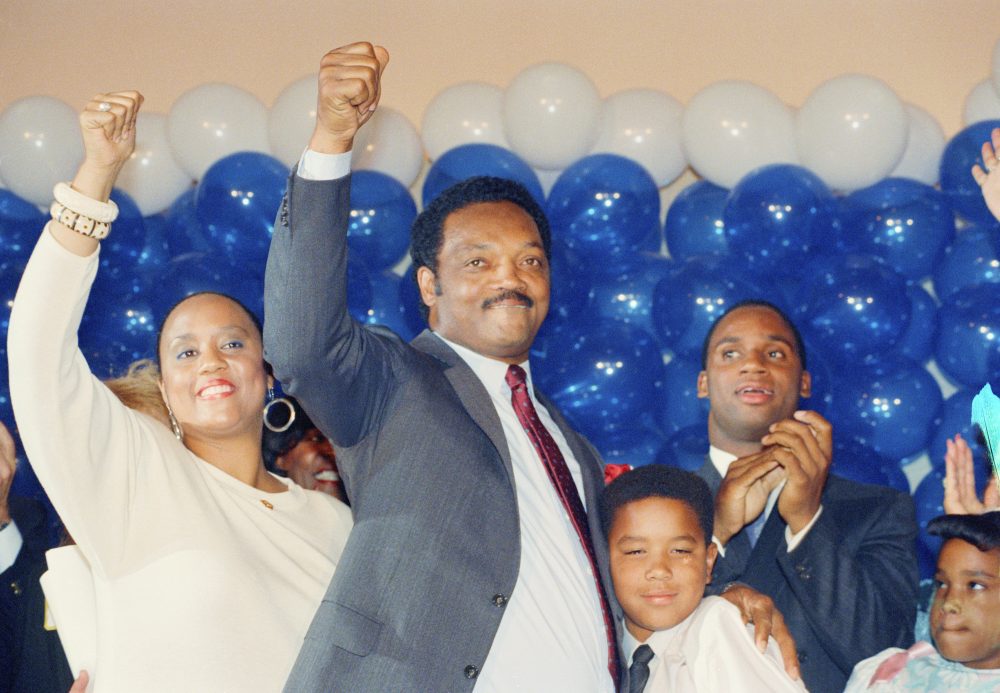
COLUMBIA, S.C. — Civil rights champion Rev. Jesse Jackson Sr. will receive final state honors Monday as he lies in state at South Carolina’s capitol building, marking a homecoming for the activist who launched his decades-long fight for equality in the Palmetto State.
The ceremony represents a remarkable journey from Jackson’s early days in segregated Greenville, where as a young man in 1960, he was barred from entering the well-funded whites-only section of the public library to borrow a book he required.
That moment sparked Jackson’s first act of defiance when he guided seven Black high school students into the segregated library section, where they quietly sat reading books and magazines before police took them into custody. The library branches subsequently shut down before quietly reopening to serve all residents.
This bold action marked the beginning of Jackson’s lifelong mission for equal rights, eventually drawing notice from Rev. Martin Luther King Jr. and leading to his participation in the historic voting rights march from Selma to Montgomery, Alabama.
Jackson passed away on February 17 at 84 years old following his battle with a rare neurological condition that impacted his movement and speech during his final years.
Monday’s South Carolina tribute represents one part of a two-week series of memorial events that started last week when Jackson’s body was displayed for public viewing at his Rainbow PUSH Coalition headquarters in Chicago.
Following the South Carolina ceremony, Jackson will return to Chicago for a major celebration of life service at a large church, followed by final memorial services at Rainbow PUSH headquarters. A planned Washington, D.C. service has been delayed to a future date.
Throughout his career, Jackson championed causes for America’s poor and marginalized communities, fighting for voting access, employment opportunities, educational advancement and healthcare access. He achieved notable diplomatic successes working with international leaders.
Using his Rainbow PUSH Coalition as a platform, Jackson transformed calls for Black empowerment and self-reliance into corporate pressure campaigns, demanding business leaders create a more inclusive and fair American society. Following King’s assassination, he emerged as a leading voice in the Civil Rights Movement and pursued the Democratic presidential nomination twice, in 1984 and 1988.
Jackson maintained strong ties to South Carolina throughout his life, pushing Greenville County in 2003 to recognize the federal Martin Luther King Jr. holiday and advocating in 2015 for the removal of the Confederate flag from the State House grounds following the racist massacre of nine Black church members in Charleston.
Jackson becomes only the second Black man to receive the honor of lying in state at South Carolina’s capitol. State Senator Clementa Pinckney received this distinction in 2015 after being murdered in the Charleston church attack.
VATICAN CITY – A stunning security violation disrupted the highly secretive papal election that chose Pope Leo as the Catholic Church’s leader last May, according to a new book published this Sunday.
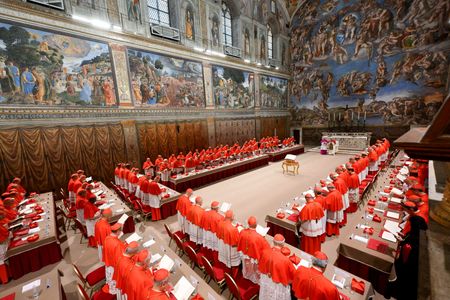
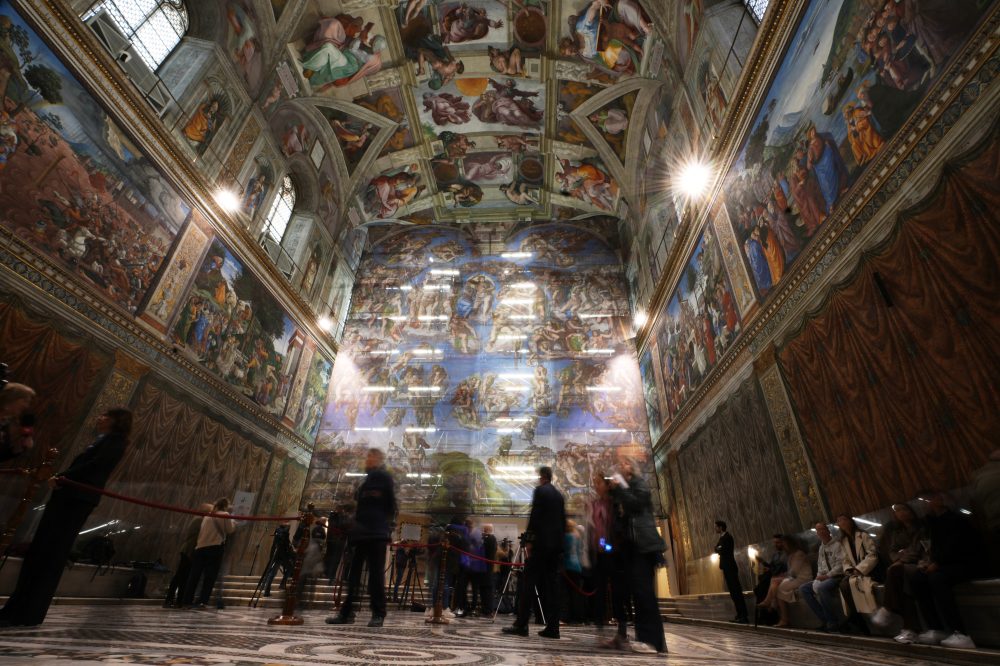
During the closed-door proceedings involving 133 cardinals, Vatican security systems detected an active mobile phone signal inside the Sistine Chapel, despite sophisticated jamming technology designed to block all outside communications.
The discovery occurred just as the religious leaders were about to cast their initial ballots. After security officials identified the breach, the cardinals looked around in disbelief until an elderly cleric realized he still had his device and surrendered it to authorities.
Authors Gerard O’Connell and Elisabetta Pique detail the incident in their new publication “The Election of Pope Leo XIV,” describing the unnamed cardinal as appearing “disoriented and distressed” by the discovery. The writers suggest no intentional wrongdoing occurred.
“The scene was unimaginable even for a film and never before seen in the history of modern conclaves,” the Vatican correspondents wrote in their account.
O’Connell told reporters that the real-life drama exceeded even Hollywood’s imagination, noting that “Reality (was) better than fiction” compared to the 2024 movie “Conclave” which depicted fictional papal election intrigue.
Vatican protocol requires all participating cardinals to pledge complete isolation from external contact and surrender all communication equipment before entering the conclave, which can extend for multiple days.
Vatican officials declined to comment on the book’s revelations about one of the world’s most closely guarded electoral processes.
The two-day selection process unfolded May 7-8 following Pope Francis’s death in April after leading the 1.4 billion-member church for twelve years. Global attention focused on whether cardinals might choose the first pope from Asia or Africa, given the conclave’s unprecedented geographic diversity with representatives from 70 nations.
However, the book reveals that candidates from those continents gained little traction during the actual voting, based on interviews with participating cardinals conducted afterward.
While cardinals are strictly prohibited from discussing conclave details without papal permission, journalists typically gather information through gradual interviews in subsequent years.
Two contenders quickly dominated the competition, according to the authors’ account. Italian Cardinal Pietro Parolin, widely considered a leading prospect by media outlets, faced off against U.S. Cardinal Robert Prevost, a relatively unknown figure outside church leadership who would become America’s first pope.
During the evening vote on May 7, Prevost surprisingly secured between 20-30 ballots, an exceptionally strong initial showing. Philippine Cardinal Luis Antonio Tagle, another pre-election favorite, never exceeded single-digit support throughout the process.
Prevost clinched victory on the fourth ballot May 8 afternoon with 108 votes. The book notes that Tagle, seated beside the future pontiff during final vote counting, offered Prevost a cough drop to ease his throat.
Federal prosecutors have brought weapons-related charges against two individuals connected to a deadly January shooting at a Salt Lake City church that claimed two lives and left six others wounded.
Court documents made public on Friday reveal that 32-year-old Ryan Toutai faces charges for illegally transferring a firearm, while 26-year-old Fineeva Maka is accused of possessing a weapon as a convicted felon, according to the U.S. Attorney’s Office for Utah’s District.
Federal investigators linked both men to a handgun found at the scene of the January 7th incident using evidence from mobile phone recordings, photographs, and GPS monitoring device data, prosecutors stated. Authorities believe both suspects have gang affiliations.
The deadly confrontation occurred in the rear parking area of a Church of Jesus Christ of Latter-day Saints facility. According to investigators, the gunfire stemmed from a conflict among acquaintances who had gathered for a funeral service. All those killed and wounded were adults. Authorities have not yet filed murder charges in connection with the deaths.
The congregation primarily serves members of Tongan heritage, according to the church’s online information. LDS missionaries first brought their religious teachings to the Pacific island nation of Tonga during the 1890s. Utah now houses more than one-quarter of America’s Tongan community, with the state serving as the Mormon church’s headquarters.
Both Toutai and Maka have court appearances scheduled for Tuesday. Legal representation for the defendants could not be confirmed, and attempts to contact them directly were unsuccessful. The federal public defender’s office was also unavailable for comment.
Law enforcement had previously taken Toutai into custody on felony charges of obstructing justice related to this case. He remained incarcerated as of Saturday. A third individual also faces similar obstruction charges.
VATICAN CITY — One of the world’s most celebrated Renaissance masterpieces is undergoing a delicate cleaning process as restoration specialists work to eliminate a crusty white salt layer that has built up on Michelangelo’s “The Last Judgment” over the past thirty years since its previous major restoration.
Vatican officials provided media access on Saturday to observe the restoration work, which requires extensive floor-to-ceiling scaffolding that currently blocks the massive fresco depicting heaven and hell on the chapel’s front wall.
The restoration project should wrap up by Easter during the first week of April. Tourists can still tour the chapel during the work, though they’ll view a digital reproduction displayed on a screen covering the scaffolding instead of the original artwork.
Vatican Museum representatives explained Saturday that this straightforward yet crucial cleaning addresses the white salt deposits formed by the approximately 25,000 daily visitors to the Vatican Museums.
“This salt is created because, above all, when we sweat, we emit lactic acid, and unfortunately lactic acid reacts with the calcium carbonate present on the wall,” said Fabio Moresi, in charge of the scientific research team at the Vatican Museums that is overseeing the cleaning.
Rising temperatures due to climate change worsen the problem, as visitors perspire more heavily, generating additional moisture that interacts with the artwork, Moresi explained.
Vatican Museums director Barbara Jatta compared the salt coating to a “cataract” that can be removed through a relatively simple process: restoration specialists soak Japanese rice paper sheets in distilled water, then gently press and wipe them across the fresco surface to lift away the salt layer.
The dramatic transformation becomes apparent when viewing the work up close from the scaffolding platform: untreated areas appear covered in chalky powder, while cleaned sections reveal brilliant colors and intricate details from the original painting. On the central figure of Christ, for instance, observers can now clearly see Michelangelo’s brushwork depicting hair texture and crucifixion wounds.
The chapel bears the name of Pope Sixtus IV, an arts supporter who directed construction of the primary papal chapel during the 1400s.
However, a subsequent pope, Julius II, hired Michelangelo to create the renowned ceiling artwork featuring “Creation of Adam” with God’s extended hand from 1508 to 1512. Later, Pope Clement VII brought Michelangelo back in 1533 to complete “The Last Judgment.”
Other Sistine Chapel frescoes, located where Pope Leo XIV was chosen in May, receive annual maintenance with workers using mobile lifts during overnight hours, removing equipment each morning before public tours begin.
Those mobile units cannot reach all portions of “The Last Judgment” because the fresco sits behind the altar, which stands elevated on marble steps. This access challenge necessitated installing permanent scaffolding to reach the entire artwork for proper cleaning.
The Sistine Chapel received comprehensive restoration from 1979 through 1999, eliminating centuries of accumulated smoke, dirt and wax residue. Vatican officials preserved small unchanged sections to demonstrate the contrast, now visible from upper scaffolding levels showing walls that were nearly black before treatment.
Instead of dramatically limiting visitor numbers to the Sistine Chapel, Vatican officials are exploring humidity control solutions through air filtration and other technologies to prevent future salt film formation.
A specialized news program from SRN News offers Delaware residents a quick way to stay informed about religious developments worldwide. The daily audio feature, known as “Global Landscape,” presents a compact two-minute overview of faith-related headlines from across the globe.
The program focuses on delivering current information about religious events, community changes, and noteworthy occurrences where spirituality intersects with international news. Listeners can access these brief but comprehensive updates to stay connected with significant religious and cultural movements happening around the world.
Religious freedom advocates are raising alarms about escalating persecution of Christians in Algeria, where government authorities have intensified their crackdown on non-Muslim faith communities. Peter Augustin, who monitors religious liberty issues in the North African nation, informed International Christian Concern that officials have “tightened restrictions on non-Muslim religious groups, making it more difficult for Christians to practice their faith, organize events, or even gather.” The predominantly Muslim country, where 98 percent of residents follow Islam, has shuttered dozens of churches during the past decade. Government forces have also targeted Christian online communities, including dissolving a social media group with approximately 50,000 Christian members in 2024.
Nearly four years following the Supreme Court’s decision to overturn Roe v. Wade, American attitudes toward abortion access have shown little change according to recent polling data. Survey results reveal that 63 percent of Americans believe abortion should remain legal under all or most circumstances, while 36 percent think it should be prohibited in all or most situations. Across 34 states plus Washington D.C., more residents favor legal abortion than oppose it. Religious affiliation significantly influences these views, with 86 percent of non-religious Americans supporting abortion rights compared to only 25 percent of Evangelical Protestant believers. Age, political ideology, and gender also play roles in shaping public opinion on the issue.
Israel’s legislative body has given initial approval to proposed legislation that would grant the country’s Orthodox chief rabbinate complete authority over Jerusalem’s Western Wall, sparking concern among liberal Jewish communities about potential restrictions on mixed-gender worship. The Western Wall represents Judaism’s most sacred prayer site globally. While the main courtyard currently restricts access to men only, a smaller area permits men and women to worship together. The proposed measure would classify any prayer activities at the wall that contradict the chief rabbinate’s guidelines as desecration, carrying potential prison sentences of up to seven years.
Following the 2022 Dobbs ruling, individual states continue determining their abortion policies, with many placing these decisions directly before voters through ballot measures. During 2024, citizens in seven states approved constitutional amendments protecting abortion access, while three states rejected similar proposals. Up to four additional states, potentially including Virginia and Nevada, may present abortion-related questions to voters this fall. These ballot initiatives represent one of the limited opportunities for Americans to directly influence policy formation, though approval requirements differ across jurisdictions. Citizen-initiated ballot measures remain available in approximately half of all states.
Syria’s Christian community has experienced another major exodus during 2025, according to new data from Global Christian Relief’s yearly assessment. The organization reports that the Middle Eastern nation, which previously housed more than one million Christian residents, has witnessed a fresh surge of people fleeing the country.
The devastating impact of Syria’s prolonged civil conflict has left the Christian population severely diminished, with current estimates showing less than 300,000 believers still living within the nation’s borders. This represents a dramatic reduction from the robust Christian community that once flourished there.
While Syria’s current leadership, composed of individuals with ties to a Muslim extremist organization, has publicly committed to upholding religious tolerance and diversity, these assurances have failed to convince many Christians to remain. The lack of trust in these governmental promises appears to be driving the continued migration of Christian families seeking safety and religious freedom elsewhere.
New research from the Pew Research Center reveals significant insights about how African-American families define their household units. According to the study, black Americans show a greater tendency than other racial demographics to embrace non-relatives as part of their family structure.
The research indicates that religious beliefs play a particularly important role in these family dynamics. Approximately 60% of black Christians report having at least one non-relative they regard as family, while 53% of black adults without religious affiliation share this perspective.
The findings suggest that common religious beliefs serve as a significant factor in determining who becomes included within African-American family circles, highlighting the intersection between faith and family relationships in these communities.
Commemorative ceremonies have started for Rev. Jesse Jackson Sr., the distinguished civil rights advocate who passed away on February 17 at the age of 84. The tribute events kicked off in Chicago and will continue with additional services planned for Washington, D.C., and South Carolina, his birthplace, celebrating his extensive contributions to the civil rights movement.
The series of memorial gatherings reflects the nationwide impact of Jackson’s decades-long dedication to advancing social justice and equality throughout America.
ST. PAUL, Minn. — High-ranking Catholic Church officials strongly criticized widespread deportation operations taking place in Minnesota, while simultaneously calling for unity and compassionate immigration policies during a special religious service on Friday.
Cardinal Robert McElroy from Washington spoke to growing worries about immigration enforcement during a Mass for migrants, which he conducted alongside fellow church leaders and the Twin Cities’ archbishop. McElroy emphasized the importance of promoting peace on this divisive topic.
McElroy characterized the winter’s enforcement operations as “almost a siege” that occurred in “literally the heartland of our country.”
“Catholic teaching supports the nation’s right to control its border and, in these cases, to deport those who’ve been convicted of serious crimes,” he stated. “Seeking to deport millions of men and women and children — families who often lived here for decades, many children who don’t know other countries — is contrary to Catholic faith and, more fundamentally, contrary to basic human dignity.”
The service brought together McElroy, Cardinal Joseph Tobin from Newark, New Jersey, Cardinal Christophe Pierre who serves as the apostolic nuncio to the United States, Archbishop Bernard Hebda of St. Paul and Minneapolis, and over two dozen additional Catholic bishops. The morning ceremony took place at the University of St. Thomas chapel as part of their demonstration of support for migrants during a conference they were attending.
“I’m very proud, personally, to see our church, you know, be on the side of those who suffer,” Pierre stated, noting that Pope Leo XIV supported the U.S. bishops’ advocacy for migrants.
During his sermon, Hebda expressed his frustration when immigrant communities became too afraid to attend church services while “masked men” — referring to federal law enforcement officers — patrolled neighborhoods and violent incidents occurred during the winter’s immigration enforcement in the Twin Cities area.
However, he encouraged those in attendance — including seminary students, university community members, and school administrators filling the seats — to practice compassion and prioritize peace.
“That ministry of reconciliation has to be ours, in the Twin Cities and around the world,” Hebda declared during his sermon.
Minnesota has become an international focal point for tensions surrounding arrests and deportations. A major enforcement operation brought thousands of federal agents into daily confrontations with activists and demonstrators, resulting in the deaths of two individuals — Renee Good and Alex Pretti, both American citizens — in Minneapolis this year.
Religious leaders from various denominations participated in the protests, including approximately 100 clergy members who were detained after refusing to leave Minnesota’s largest airport during one of the most significant mobilization efforts last month.
The regional Catholic leadership, however, adopted a more diplomatic approach.
Following both deadly incidents, Hebda stressed the importance of reducing “the temperature of rhetoric” and eliminating “the hatreds and prejudices that prevent us from seeing each other as brothers and sisters.” He specifically mentioned this applied equally to “our undocumented neighbors” and “the men and women who have the unenviable responsibility of enforcing our laws.”
During Friday’s event, the church leaders discussed praying for all those impacted — including families of the deceased, migrants and their supporters, and “the ICE men and women, too,” as McElroy put it when referencing Immigration and Customs Enforcement officers.
“We all need to engage in healing and reconciliation,” he continued. “It will take a long time.”
When questioned about whether Catholics — who predominantly supported President Donald Trump in 2024 — might view migrant advocacy as political involvement by the church, the cardinals explained that both religion and politics should focus on society’s welfare.
Tobin emphasized that while their primary loyalty belongs to God, Scripture commands caring for foreigners and welcoming strangers more frequently than loving one’s neighbor.
“The Creator figured that there was a better chance we’d love people who we thought looked like us. We had to be reminded frequently about everybody else,” Tobin explained.
Supporting migrants was a key focus for the late Pope Francis, who had disagreed with Trump regarding U.S. border policies since the former president first sought office ten years ago.
Under Pope Leo, the first American pontiff, the Catholic Church has maintained its calls for compassionate treatment of immigrants worldwide and immigration reform in the United States — an issue that has remained unresolved in Congress for many years.
“The longer we refuse to grapple with this issue in the political arena, the more divisive and violent it becomes,” Hebda had observed in January.
McElroy and Tobin, along with Cardinal Blase Cupich from Chicago, recently criticized the Trump administration regarding foreign policy ethics. In a January statement, they warned that U.S. military involvement in Venezuela, threats concerning Greenland, and reductions in foreign aid could lead to widespread suffering rather than peace.
Federal prosecutors have filed charges against 30 additional individuals connected to a January protest that disrupted services at a Minnesota church, Attorney General Pam Bondi revealed Friday.
Bondi disclosed through social media that authorities had taken 25 people into custody, with additional arrests planned for later that day.
“YOU CANNOT ATTACK A HOUSE OF WORSHIP. If you do so, you cannot hide from us — we will find you, arrest you, and prosecute you,” Bondi declared in her online statement. “This Department of Justice STANDS for Christians and all Americans of faith.”
The newly arrested individuals will face initial hearings before a magistrate judge who will determine their release conditions.
Previous arrests in the case included former CNN anchor Don Lemon, journalist Georgia Fort, and local community organizer Nekima Levy Armstrong. The White House previously shared an altered image showing Levy Armstrong in tears during her arrest. All three have entered not guilty pleas to federal civil rights violations.
The charges now encompass 39 individuals total, each facing accusations of conspiring against religious freedom and obstructing the exercise of religious rights.
The January 18 demonstration took place at Cities Church in St. Paul after activists discovered that one of the church’s ministers also holds a position with Immigration and Customs Enforcement. The disruption of Sunday worship services prompted immediate criticism from Trump administration representatives and conservative figures.
Federal prosecutors describe the incident as a “coordinated takeover-style attack” where “agitators” entered the building and engaged in threatening behavior toward worshippers.
“Young children were left to wonder, as one child put it, if their parents were going to die,” according to the federal charging document.
Church attorney Doug Wardlow commended the Justice Department’s decision to file additional charges.
“The First Amendment does not give anyone — regardless of profession, prominence, or politics — license to storm a church and intimidate, threaten, and terrorize families and children worshipping inside,” Wardlow stated.
The church incident occurred during a period of heightened tension in Minnesota, where federal authorities had deployed thousands of officers for Operation Metro Surge following multiple government fraud investigations primarily involving defendants of Somali heritage. Federal agents routinely used tear gas during confrontations with community activists in residential areas, frequently detaining both protesters and immigrants.
Federal officers fatally shot 37-year-old mother Renee Good in south Minneapolis on January 7. Another deadly shooting occurred one week following the church protest, when federal agents killed 37-year-old nurse Alex Pretti.
These incidents sparked nationwide protests, leading to leadership changes within Operation Metro Surge and the eventual conclusion of the immigration enforcement campaign in mid-February.
The Twin Cities continue to address the lasting effects on local communities and the regional economy. Minneapolis officials reported $203.1 million in damages from the operation, with tens of thousands of residents requiring emergency assistance.
A recent study conducted through a partnership between the Barna Group and Gloo has revealed striking findings about Americans’ attitudes toward artificial intelligence in matters of faith. The research shows that approximately one-third of adults across the United States now consider spiritual guidance provided by AI technology to be equivalent in value to counsel they would receive from religious clergy.
The data becomes even more pronounced when examining younger demographics. According to the study, 40% of Generation Z and Millennial respondents express belief that AI-generated spiritual advice holds the same worth as pastoral guidance. This trend is generating alarm among some religious leaders and observers as the nation continues adapting to artificial intelligence while the technology rapidly expands into various sectors of daily life.
Texas education officials have authorized nearly 2,000 corrections to a controversial religious curriculum that was rolled out in public schools this academic year, following the discovery of numerous mistakes by educators and administrators.
The instructional materials, part of what’s called the “Bluebonnet” program, represent one of several Republican-driven initiatives across the country aimed at bringing more faith-based content into public education. While school districts aren’t required to use the curriculum developed by Texas’ education department, they receive extra state money for doing so.
The program faced opposition before its approval, with religious experts arguing the reading materials showed bias toward Christian beliefs while minimizing other faiths, and advocacy organizations claiming the content emphasized religious messaging rather than educational instruction.
During a Wednesday meeting, the State Board of Education approved the extensive revisions by an 8-6 margin. The changes address factual mistakes, grammar problems, punctuation issues, and image replacements needed for licensing and copyright compliance. Several board members expressed concern about the substantial number of errors discovered.
Democratic board member Tiffany Clark voiced her worries, stating: “My concern is that we have failed students this school year who have been utilizing this product.”
Republican board chair Aaron Kinsey questioned Clark’s assessment, asking whether she believed that addressing seemingly minor issues like copyright problems could mean “we failed our students and they are not going to pass” the state’s yearly standardized testing.
Clark responded that even small mistakes can have significant impacts. “If we have been teaching incorrectly this is going to have an impact,” she explained, noting that something as basic as a typographical error in mathematical formulas could cause problems.
Republican board member Pam Little acknowledged the varying severity of the issues but maintained that accuracy matters. “I understand that some of these errors are minimal, some of them are for clarity and some of them are for accuracy. But still, an error is an error,” Little said.
Colin Dempsey, who oversees the instructional material evaluation process for the Texas Education Agency, admitted to the “high number of updates” required while maintaining that factual mistakes were “minimal,” though he didn’t specify an exact count.
Board members indicated that more than 4,000 corrections were necessary. However, Texas Education Agency spokesperson Jake Kobersky clarified to The Associated Press that roughly 1,900 modifications were actually implemented, explaining that the higher number included repeated corrections across teacher guides, student materials, and other documents.
According to Kobersky, most revisions were “proactive in response to teacher feedback or grammatical fixes, not a result of factual errors.”
The exact number of school districts using the curriculum during its inaugural year remains uncertain. By August, over 300 districts and charter schools had expressed interest in adopting the materials, representing approximately one-fourth of Texas’ 1,207 educational districts and charter schools.
Following Wednesday’s approval of the modifications, the education agency announced that digital curriculum resources would be refreshed within a month. Officials did not specify timelines for printing and distributing updated physical materials or estimate associated costs.
Little, who supported the proposed corrections, expressed concern that the board has “set a precedent for sloppy publishing.”
Dempsey announced that the agency has expanded its review team from five to eight members for future material assessments.
“I’m hopeful that will improve our process, where these are caught in the summer and not later on,” he stated.
The Vatican broke from its traditional approach to postage stamp design Thursday, releasing a commemorative stamp that directly references Ukraine’s wartime struggles through imagery of a darkened cathedral in Kyiv.
The stamp features the Cathedral of the Resurrection of Christ without electrical power, lit only by the orange glow of dusk behind it—a stark representation of the blackouts that have become routine for Ukrainians as Russian forces continue targeting the nation’s power infrastructure with missile and drone strikes.
This marks a departure from the Vatican Postal Service’s typical practice of avoiding political themes in favor of religious imagery like saints and Catholic celebrations when honoring national churches or marking religious occasions.
The timing of the stamp’s release coincides with the fourth anniversary of Russia’s invasion of Ukraine and celebrates both the 30th anniversary of Kyiv’s Catholic diocese being restored after the Soviet Union’s collapse and the cathedral’s 12th anniversary.
At Thursday’s Vatican unveiling ceremony, Archbishop Sviatoslav Shevchuk, who leads Ukraine’s four million Eastern-rite Catholics, described the stamp as creating “a great moment of consolation.”
“We really feel embraced by the Holy See for this particular attention to our history, to our life in this tragic moment of war,” Shevchuk stated in Italian.
The cathedral depicted on the stamp has served multiple roles during the conflict, functioning as both a place of worship and a bomb shelter. Shevchuk characterized it as a “centre of resistance.”
The Ukrainian Greek Catholic Church, which represents approximately 10% of Ukraine’s population, follows Eastern traditions while maintaining communion with Rome and recognizing papal authority. Most Ukrainians practice Eastern Orthodox Christianity.
Pope Leo recently made a passionate Sunday plea for Ukrainian peace, declaring that ending the Russian conflict “cannot be postponed.” American diplomatic efforts to facilitate a peace agreement between Moscow and Kyiv have not yet succeeded.
The Vatican’s daily tourist visitors, numbering in the tens of thousands, frequently purchase stamps from postal outlets including those in St. Peter’s Square, often using them to mail postcards.
This particular stamp is priced at 1.35 euros ($1.60), covering standard letter delivery throughout Europe. The Vatican has operated its own independent postal system since 1929 as a sovereign state within Rome.
SRN News has launched a daily audio program that focuses on religious developments worldwide. The brief two-minute broadcast, called “Global Landscape,” offers audiences a quick overview of the most important faith-based news stories each day.
The program aims to keep listeners informed about major religious events, cultural changes, and significant happenings where spirituality intersects with world events. Each episode provides current information about developments affecting faith communities across the globe.
The feature is designed to give busy listeners a quick but comprehensive look at how religious matters are influencing current events and society around the world.
The Southern Baptist Convention’s strong emphasis on religious freedom has deep historical roots, according to an expert who studies the denomination’s past. Dr. Christopher Schelin, a professor at California’s Starr King School for the Ministry, explains that this commitment stems from centuries-old struggles.
“Baptists faced legal obstacles and sometimes violent persecution in the 13 colonies with established churches. And so they became fierce advocates for religious liberty during the American Revolution and the framing of the Constitution,” Schelin stated. The professor, who authored “The Contestable Church: Dissent, Democracy and Baptist Ecclesiology,” notes that conservative Baptist groups remain at the forefront of conscience protection efforts today.
In Louisiana, House Speaker Mike Johnson celebrated a federal court ruling that permits the Ten Commandments to be displayed in the state’s public school classrooms. The Louisiana Republican emphasized that the legislation aims to recognize America’s “history and tradition” rather than establish religious doctrine.
The 5th U.S. Circuit Court of Appeals determined it was premature to rule on the law’s constitutional validity. Court officials noted uncertainty about how prominently schools will showcase the biblical text and whether additional historical documents like the Mayflower Compact or Declaration of Independence will accompany the displays.
Overseas, Sri Lankan authorities have detained the nation’s former intelligence director regarding the devastating Easter Sunday bombing attacks in 2019. Suresh Salley faces charges related to “lapses” that allegedly enabled terrorists to execute their deadly plan, which claimed nearly 270 lives across multiple churches and hotels. The ISIS-inspired assault targeted one Protestant congregation, two Catholic parishes during holiday services, and three tourist-filled hotels.
California Governor Gavin Newsom faces criticism from LGBT advocacy groups during his book promotion tour, which many view as preparation for a 2028 presidential campaign. The controversy stems from Newsom’s recent CNN interview where he argued the Democratic Party should be “more culturally normal and less prone to spending a disproportionate amount of time on pronouns and identity.” Critics question whether this represents a genuine shift or political positioning, given Newsom’s previous strong support for LGBT initiatives as governor.
A legal dispute in Vermont has concluded with state officials agreeing to settle a case involving foster care requirements and religious beliefs. The Alliance Defending Freedom filed the lawsuit on behalf of a Christian couple who objected to certain state mandates regarding transgender policies in foster care.
Under the settlement agreement, Vermont will no longer mandate that foster parents support transgender-related practices. The legal advocacy group issued a public statement following the resolution.
“No parent should be forced to lie to a vulnerable child about who they are, much less promote irreversible and life-altering procedures that don’t have any proven health benefits,” Alliance Defending Freedom stated.
This legal victory follows a similar successful case the organization won in Massachusetts during the previous year, suggesting a pattern of challenges to state foster care policies across New England.
A notorious Mexican cartel leader who terrorized religious communities across the region was killed this week during a violent confrontation with law enforcement in Tapalpa. Nemesio Cervantes, who headed the Jalisco New Generation Cartel, had forced more than 100 churches to shut their doors through a brutal extortion scheme.
Cervantes and his organization demanded substantial payments from local congregations, threatening violence and death against those who couldn’t meet his financial demands. Churches that failed to pay were forced to cease operations or face deadly consequences.
The incident highlights a growing crisis facing Christian communities throughout Mexico, where drug cartels have gained control over vast territories and increasingly target religious institutions. Extremist Catholic organizations have also contributed to the mounting persecution of faith-based groups in the country.
Dallas will host a gathering this Saturday that aims to bridge scientific discovery with religious belief, as the Discovery Institute presents its eighth annual Conference on Science & Faith at Park Cities Baptist Church.
According to the Discovery Institute, the event explores connections between modern scientific findings and foundational American principles. The organization states that “At the time of America’s Founding, the Declaration’s propositions drew support both from the Bible and the science of the era. Today the discoveries of science are once again pointing to the truths announced in the Declaration.”
The conference will feature former Secretary of Housing and Urban Development Dr. Ben Carson among its list of speakers addressing attendees on Saturday.
A California state legislator is pushing for stronger legal protections for houses of worship following a recent incident where demonstrators interrupted a religious service. Republican Senator Shannon Grove has drafted new legislation that would establish felony-level consequences for anyone who disrupts worship activities.
The proposed measure comes in response to an incident in Minnesota where protesters entered a church during services to demonstrate against former President Trump’s immigration policies. Grove’s legislation would establish serious criminal penalties for such disruptions, including potential jail sentences of up to 16 months and monetary fines reaching $5,000.
The California proposal is part of a broader trend, with lawmakers in multiple states now examining similar protective measures for religious institutions.
JERUSALEM — Israeli lawmakers have taken the first step toward approving legislation that would grant the country’s Orthodox chief rabbinate complete authority over Jerusalem’s Western Wall complex, sparking concerns among liberal Jewish communities that co-ed worship could soon become illegal at the sacred site.
The proposed legislation poses a threat to deepen tensions between Israel and America’s Reform Jewish community, which represents the nation’s largest Jewish denomination.
The Western Wall stands as Judaism’s most sacred location for prayer worldwide. Currently, the prominent main courtyard operates under rabbinate oversight with gender-separated worship areas, while a smaller egalitarian zone exists in a less visible location where men and women can worship side by side.
Should the legislation pass, any religious activities at the wall that don’t conform to the chief rabbinate’s guidelines would constitute “desecration,” carrying potential prison sentences of up to seven years. This development could effectively eliminate the wall’s co-ed prayer area.
“It’s criminalizing the way the vast majority of Jews pray in the heart of the holiest site of the capital of the Jewish state,” said Orly Erez-Likhovski, executive director of the Israel Religious Action Center, the social justice arm of Israel’s Reform movement.
While Reform Judaism dominates American Jewish religious life, it maintains limited influence in Israel, where Orthodox religious authorities control most religious matters including marriage ceremonies and burial practices.
“Wherever ultra-Orthodox have the upper hand or have control, they’re trying to force gender segregation. They are trying to make women disappear,” said Erez-Likhovski.
Her organization represents Reform and Conservative movements, along with the “Women of the Wall” advocacy group, in ongoing Supreme Court litigation aimed at compelling the government to maintain and restore the egalitarian prayer space.
The co-ed section remains largely hidden from view, accessible only through a narrow entrance.
Visitors to this area cannot directly touch the ancient stones due to protective barriers installed following a 2018 incident when a large stone broke away from the wall and crashed onto the prayer platform, forcing an immediate shutdown.
This situation contrasts sharply with the wall’s famous main plaza, featuring donor recognition plaques and bustling with worshippers who separate by gender to pray beside the historic stones.
Far-right legislator Avi Maoz sponsored the bill, which passed its initial reading Wednesday evening by a 56-47 margin.
According to the Israel Democracy Institute, a Jerusalem-based research organization, lawmakers fast-tracked the preliminary vote Wednesday to counter a February 19 Supreme Court decision ordering repairs to begin on the egalitarian section.
A decade ago, Prime Minister Benjamin Netanyahu’s administration committed to completing these repairs as part of an agreement to encourage religious diversity.
The timing for the bill’s final approval vote remains undetermined.
A contentious legislative proposal in Israel’s parliament is intensifying long-standing debates about religious authority and access to Judaism’s holiest prayer site. The measure, which received initial approval this week, would grant Israel’s Chief Rabbinate sole power to determine what constitutes improper conduct at sacred Jewish locations.
The Western Wall in Jerusalem has long functioned as both a place of worship and a symbol of Jewish national identity. Each year, the site hosts Israel’s Memorial Day ceremonies, countless bar and bat mitzvah celebrations, and serves as an essential destination for Jewish visitors from around the world. This dual significance as both religious shrine and national monument makes the current political battle particularly complex.
Knesset Member Avi Maoz, who heads the far-right Noam party, championed the proposed changes to Israel’s 1967 Law for the Protection of Holy Places. “We say to the High Court: Enough is enough!” Maoz explained to The Media Line, characterizing his legislation as pushback against what he sees as inappropriate court interference in religious matters that should remain under Orthodox control.
The amendment, which advanced through its preliminary vote and now heads to committee review, would explicitly define desecration as any behavior that violates Chief Rabbinate directives and rulings. Additionally, the proposal designates the chief rabbis as the sole official representatives of Judaism for purposes of enforcing the law.
While the legislative language may seem procedural, the potential consequences are significant. Advocates claim that clearly establishing the Chief Rabbinate’s role eliminates confusion and ambiguity. Opposition voices argue that directly linking the definition of desecration to Rabbinate decisions could restrict courts’ ability to mediate conflicts over prayer practices at the site.
The mixed-gender prayer area known as Ezrat Yisrael, located at the southern portion of the Western Wall complex, has once again become the center of legal disputes. Recently, Israel’s High Court has pressed the government about why accessibility improvements and construction projects in that section remain unfinished. Back in 2016, Prime Minister Benjamin Netanyahu’s administration endorsed a plan to officially recognize and expand that space as an egalitarian worship area. However, immediate opposition from coalition partners led to the plan’s suspension, though legal challenges have continued to bring the issue before the Supreme Court.
Maoz contends that this legal process has allowed judges to intrude into religious territory. “When the High Court took upon itself the authority to tell the government what to do, and even to take the authority of the Chief Rabbinate, I said it was time to put an end to this,” he stated. “Against the High Court’s decision, I am legislating this law.”
The lawmaker dismissed suggestions that his amendment creates new criminal penalties. “It’s all fake news,” Maoz declared. “I am not touching the penalties in the law. The penalties exist today.” For him, the core question centers on institutional authority. “Who defines desecration?” he asked. “The court, or the chief rabbis?”
After the preliminary vote, Maoz portrayed the moment as historically significant. “Today the Parliament set a clear boundary on High Court intervention in the sanctity of the Western Wall,” he announced in an official statement. “It cannot be that a court decides what constitutes desecration at the holiest site of the Jewish people.” He characterized the amendment as returning authority “to its natural and correct place” and stopping the court from continuing “to shape the character of the Wall contrary to halacha and the spirit of the legislator.”
The legislation received clear support from four coalition parties: Shas, United Torah Judaism, Otzma Yehudit, and Religious Zionism. Justice Minister Yariv Levin also endorsed the measure. Prime Minister Netanyahu chose not to impose coalition discipline, permitting lawmakers to vote freely without an official government stance on the proposal.
During internal party discussions, Finance Minister Bezalel Smotrich, who leads Religious Zionism, emphasized that the Wall has historically remained unified despite significant differences within Orthodox Judaism itself. In remarks to his faction, he noted that even within Orthodox practice there are countless traditions, yet the Wall was never divided accordingly. There is no “Lithuanian Wall” and no “Hasidic Wall,” he observed, despite the existence of hundreds of Hasidic courts. The site remained unified despite internal differences. Creating denominational distinctions now, he argued, introduces division that historically did not exist. He encouraged critics to “lower the emotions” and view the debate proportionally.
Heritage Minister Amichai Eliyahu, a member of Otzma Yehudit, emphasized demographic arguments. Speaking to The Media Line, he claimed that Reform Judaism represents “less than 0.3%” of Israel’s population. “Understand the proportions,” he said. “They have about 50 synagogues. Compare that to almost 12,000.” He maintained that Israeli society, including many who consider themselves traditional but not strictly observant, largely follows Orthodox customs. “When you come to the Western Wall,” he said, “you respect the custom of the place.”
Maoz spoke bluntly about international Jewish community influence. “With all due respect, I very much appreciate the help of American Jewry to the State of Israel,” he said. “But they cannot decide.” If diaspora Jews want to influence Israeli legislation, he added, “let them come here, run for the Parliament and legislate their own laws.” Authority, he insisted, belongs to those elected by “the majority of the people living in Zion.”
For Reform and Conservative movement leaders, this perspective strikes at the heart of their concerns. Outside Israel, these two denominations represent the majority of affiliated Jews, especially in the United States, where they form the foundation of organized Jewish community life. For many of their members, the Western Wall is not simply an Orthodox prayer space but a national symbol belonging to all Jewish people.
Rabbi Mauricio Balter, executive director of Masorti Olami and MERCAZ Olami, told The Media Line that egalitarian worship at the southern section has occurred for decades and that thousands of ceremonies take place there annually. “Why do we have to be hidden?” he questioned, referring to the physical location of the area. “Let us be separate from the classic section, but give us a reasonable place.”
Balter cautioned that the message sent by the amendment could have consequences beyond Israel’s borders. “The Wall belongs to the entire Jewish people,” he said. He also expressed concern about enforcement implications, noting that under the current Law for the Protection of Holy Places, violations classified as desecration can result in prison sentences of up to seven years. “Did you hear that? Seven years,” he emphasized. While the amendment doesn’t alter the penalty itself, Balter argued that expanding the Rabbinate’s power to define desecration could have serious ramifications for non-Orthodox worshippers. He described the possibility as deeply concerning, saying it risks marginalizing other Jewish denominations.
Knesset Member Michal Shir from the centrist Yesh Atid party told The Media Line that religion is “very delicate” and “very personal,” and that political leadership requires sensitivity to timing. “After the great massacre and after the biggest war in the history of the State of Israel,” she said, lawmakers should be reducing tensions rather than creating new ones.
She emphasized that the Western Wall carries symbolic importance far beyond domestic politics. “One of the most sensitive issues at the heart of Israeli Jewish identity here in the Land of Israel and in the world, including Diaspora Jewry that is deeply affected by this, is the Western Wall,” she said. She characterized the legislative effort as “a lack of leadership responsibility,” arguing that it risks widening the divide between Israel and significant portions of world Jewry at a time when unity is crucial.
Supporters acknowledge that the debate extends beyond prayer arrangements. It concerns institutional hierarchy and the judiciary’s role in religious affairs. Maoz maintains that the amendment simply restores proper balance. “It is not the role of a court to decide what is desecration at the holiest place of the Jewish people,” he said. “That authority belongs to the chief rabbis.”
The proposal now advances to committee preparation before its first formal reading. Sponsors have indicated their intention to push it forward during the current legislative session. If approved in subsequent votes, the amendment would formally establish the Chief Rabbinate’s interpretive authority within the 1967 law governing Jewish holy sites.
For supporters, the measure clarifies institutional boundaries between the judiciary and religious authorities. For critics, it establishes a formal hierarchy of religious recognition at one of Judaism’s most symbolically important sites. The upcoming committee deliberations will determine whether the preliminary majority support translates into final approval.
A United Nations investigation team has determined that Christians and other religious minorities in Sudan could be experiencing genocide at the hands of militant forces. The fact-finding mission recently returned from the African country with disturbing conclusions about the Rapid Support Forces, a rebel organization fighting for governmental control.
According to the UN report, this rebel group has conducted a “coordinated campaign of destruction against non-Arab communities in and around El-Fasher, the hallmarks of which point to genocide.” Sudan’s Christian population has endured persecution from Muslim groups for decades, with the nation currently holding the fourth position on Open Doors’ yearly ranking of countries with the most severe religious persecution.
In Australia, government officials have initiated a comprehensive investigation into the dramatic increase of anti-Semitic incidents throughout the nation in recent years. The inquiry follows the December killing of 15 individuals at a Sydney Jewish festival, reportedly carried out by two Muslim attackers with ISIS connections.
Prime Minister Anthony Albanese (al-buh-NEE-see) has authorized a royal commission, Australia’s most extensive form of public investigation. Anti-Semitic incidents have risen significantly in Australia following Hamas’s assault on Israel three years ago. The government appointed a special anti-Semitism envoy in 2024 to address the growing problem.
The World Council of Churches has issued a strong condemnation of violence occurring in Myanmar, where both government forces and rebel groups have attacked Christian communities. A village with a predominantly Mennonite population in the country’s western region was subjected to bombing earlier this month.
WCC General Secretary Jerry Pillay stated, “These ongoing attacks are grave violations of international law, of human dignity and the sanctity of life. We express our deep solidarity with the Mennonite church and with all the suffering communities in Myanmar.” Myanmar remains under the control of a military junta that violently overthrew civilian leadership five years ago.
As anti-Semitic sentiment increases globally, the Auschwitz Jewish Center Foundation recently welcomed delegates from 26 countries for an educational program. The representatives participated in a multi-day visit to Poland this month, focusing on Holocaust education and combating prejudice.
The delegation visited Auschwitz, the former Nazi concentration and death camp where hundreds of thousands of Jewish people were killed during World War Two. Anti-Semitic incidents have increased in virtually every nation worldwide since Hamas executed its large-scale assault on Israel in 2023.
A group of parents from Montgomery County has been awarded $1.4 million by a federal judge following a legal battle over their children’s education. The court ruled in favor of the mothers and fathers who challenged the school district’s decision to prevent them from withdrawing their kids from LGBT-related curriculum and coursework.
The families took legal action against the county, and their case ultimately reached the nation’s highest court. In a victory for the parents, the Supreme Court determined last year that they possess the authority to remove their children from such educational content.
Attorney Eric Baxter, representing the Becket Fund, emphasized the broader implications of the decision. “Public schools nationwide are on notice: running roughshod over parental rights and religious freedom isn’t just illegal — it’s costly,” Baxter stated.
Protestant ministers across the country are making global Christian persecution a priority topic in their churches, according to new research from LifeWay Research. The study reveals that an overwhelming 86% of Protestant pastors have specifically asked their congregations to offer prayers for Christians facing persecution in other countries.
The survey data shows that two-thirds of ministers have dedicated entire sermons to addressing the mistreatment and abuse that believers encounter worldwide. Some pastors have gone further by inviting specialists and knowledgeable speakers to educate their congregations about the challenges facing Christians in various nations.
The findings indicate that American Protestant leaders are actively working to raise awareness among their church members about the difficulties their fellow believers face internationally.
The Vatican revealed Wednesday that Pope Leo XIV has scheduled an ambitious series of international trips for the first half of 2026, including journeys to Monaco, Spain, and four African nations: Algeria, Cameroon, Angola, and Equatorial Guinea.
This announcement marks one of the most extensive papal travel agendas in recent years, as Leo XIV will simultaneously conduct a comprehensive tour of Italy beginning in May, featuring multiple single-day visits throughout the country.
Following Leo’s historic election last May as the first American-born pontiff, international papal travel had been suspended. The new pope dedicated his time to serving the 33 million pilgrims who traveled to the Vatican during the 2025 Holy Year celebration.
With the Jubilee period now concluded, the 70-year-old pontiff has greater freedom to travel and connect with Catholics worldwide. He is currently making similar outreach efforts during Lent by visiting different Roman parishes each Sunday.
The pontiff, formerly known as Robert Prevost, spent two decades serving as a missionary in Peru and has expressed his passion for travel. During his 12-year tenure as Augustinian superior, he frequently traveled to visit religious communities across the globe.
His inaugural international journey as pope occurred late last year, when he traveled to Turkey and Lebanon. These visits completed commitments originally made by Pope Francis, who was unable to fulfill them due to declining health.
Leo XIV’s upcoming travels begin with a single-day visit to Monaco scheduled for March 28.
His most ambitious journey follows shortly after Easter: a 10-day expedition from April 13 to April 23 covering Algeria, Cameroon, Angola, and Equatorial Guinea. Such extensive foreign travel has rarely been undertaken in recent years, with only Francis completing a comparable journey when he visited Indonesia, Papua New Guinea, East Timor, and Singapore in 2024. The Algeria visit holds special significance for Leo XIV due to its connection to St. Augustine of Hippo, the 5th-century saint who inspired his religious order.
Unlike Francis, who largely avoided major Catholic European nations during his 12-year papacy while focusing on smaller peripheral Catholic communities, Leo XIV will spend nearly a week in Spain from June 6 to June 12.
Expectations are high that he will appear in Barcelona on June 10 to mark the centennial of Antoni Gaudí’s death, the renowned architect behind the famous Sagrada Familia basilica. The massive cathedral recently achieved a major milestone with the installation of its towering central spire, reaching its maximum planned height.
Although the Vatican has not confirmed additional foreign travel plans, Leo XIV is anticipated to visit Peru, his former missionary home, and potentially Argentina and Uruguay during the latter half of 2026. The Vatican has confirmed he will not travel to the United States this year, despite the nation’s 250th independence celebration.
On July 4th, America’s anniversary date, Leo will instead be visiting Lampedusa, the southern Italian island that serves as the primary entry point for migrants smuggled from North Africa to Europe.
SRN News has launched “Global Landscape,” a daily audio program that offers listeners a quick overview of religious news from across the globe. The two-minute segment focuses on delivering current information about faith-based developments and their impact on communities worldwide.
The program aims to keep audiences informed about important religious events, cultural transformations, and noteworthy occurrences that influence how faith intersects with international events. Each episode provides a brief but comprehensive look at the day’s most significant religion-related headlines.
The feature serves as a resource for those seeking to stay current on religious affairs and their broader implications in today’s global context.
VATICAN CITY – For more than four centuries, a specialized team of artisans has maintained the vibrant mosaic artwork adorning St. Peter’s Basilica, continuing an ancient craft that transforms tiny colored tiles into stunning religious displays.
The Vatican Mosaic Studio employs twelve skilled artists who not only care for the basilica’s extensive tile work but also craft smaller pieces that serve Pope Francis in what could be called “mosaic diplomacy” – presenting these handmade treasures to visiting world leaders and during papal travels abroad.
Creating each mosaic requires months of painstaking labor, as craftspeople carefully arrange minuscule colored pieces to form religious imagery of Jesus and Mary, or secular scenes like Rome’s famous Colosseum.
“It is very important today to use the mosaic technique because we are saving the ancient tradition,” studio director Paolo Di Buono explained to reporters.
The artists approach their craft with permanence in mind, knowing their creations will endure for generations. “We have the idea that we are working for something that (is) … almost eternal,” Di Buono noted.
Within the basilica itself, the workshop oversees an impressive 90,000 square feet of mosaic surfaces, including the artwork in the central dome. Church officials chose mosaics over traditional paintings specifically because the tile work better withstands smoke from candles and incense during religious ceremonies.
Among the studio’s recent accomplishments is a papal portrait now displayed at Rome’s Basilica of St. Paul Outside the Walls. Three artists collaborated for five months to complete the image, which incorporates approximately 16,000 separate tiles.
“It is meticulous work because the tiles are very small,” explained Nicoletta Marino, one of the studio’s artists. “It takes a lot of patience.”
Artist Adriano Galise proudly displayed photographs showing his mosaic creations being presented by the late Pope Benedict XVI to former U.S. Presidents George W. Bush and Barack Obama during their official Vatican visits.
“The fact that our mosaics are used as a gift by the pope is one of the most important traditions in the Vatican,” Di Buono emphasized.
Each artist in the workshop employs unique techniques when beginning new projects. Galise typically starts with black-and-white images marked with potential tile placement locations, creating something resembling a complex puzzle blueprint. Other craftspeople prefer beginning with colored photographs or sketches.
Beyond serving as an active workshop, the studio functions as a remarkable historical archive. The facility maintains a collection of 27,000 different colored tile varieties, organized within a massive 9,000-drawer filing system that spans two complete floors.
Approximately 23,000 of these tiles represent historical artifacts – color stockpiles from previous centuries that cannot be reproduced and will eventually be depleted. Some of these antique pieces were manufactured using toxic materials no longer permitted in modern production.
When creating Pope Francis’s portrait, studio artists accessed these archived materials to achieve more accurate facial shading effects.
Currently, team members are working inside St. Peter’s Basilica to restore mosaics in the Clementine Chapel dome, located in one of the church’s most sacred and ancient areas. This grotto sits near the burial site of St. Peter, Christianity’s first pope.
“We preserve the works made by our predecessors,” Di Buono reflected on the studio’s role in maintaining these artistic treasures. “We are connected in a sort of long chain, of which we are the last part.”
MILAN (AP) — Just before disabled athletes prepare to compete on the world stage at the Winter Paralympics in Milan Cortina, a musical group from northern Italy delivered a powerful message about acceptance and unity during a special church performance.
Approximately 70 choir members, ranging from teenagers to adults in the Terzo Tempo ensemble, made the journey from nearby Abbiategrasso to Milan’s Sant’Antonio church on February 18th for their concert called “Like Yeast in the Dough.” The title draws inspiration from biblical imagery representing a quiet force that helps everyone grow from within.
The musical event was part of a broader effort by Milan’s archdiocese to use the Olympic and Paralympic Games as an opportunity to promote Christian principles.
“The Olympics and the Paralympics are not something that simply passes over our heads, but something that also touches our lives,” explained Rev. Stefano Guidi, director of the Archdiocese of Milan’s Service for Oratories and Sport.
Three years ago, Milan’s Catholic Church established a specialized department dedicated to promoting awareness about inclusion. The initiative works across neighborhood parishes and communities to create welcoming spaces for people of all abilities.
“If we focus on organizing things only for people with disabilities, we risk segregation,” noted Rev. Mauro Santoro, who oversees the program with 13 volunteers. “Instead, we try to bring everyone together — children’s catechism, sports, the simplest activities — because this is true inclusion.”
Italy’s Catholic Church relies heavily on oratories — parish facilities where young people gather after school for athletics and social activities. According to Santoro, these venues host training sessions on disability involvement and discussions about Paralympic values.
“There are testimonies from athletes, including Paralympians,” he explained. “The real challenge is to change the game so everyone can play well and participate.”
The Sant’Antonio concert embodied this philosophy through its diverse musical selection. The choir performed pieces in Italian, English, and featured a Congolese samba — choices designed to celebrate diversity and embody Olympic ideals.
“We tried to choose songs that speak about the desire to achieve something and about constant commitment because that is what really matters beyond the result,” shared choir director Silvia Gatti. “These are values that athletes believe in, but they should concern everyone.”
Operating under the motto “Where singing is unity, passion, freedom and joy,” the choir embraces members from diverse backgrounds and creates opportunities for children to perform alongside participants in their seventies.
The group has previously tackled social issues including peace advocacy and campaigns against domestic violence, highlighting their commitment to community engagement.
GALAXIDI, Greece (AP) — In a vibrant display of tradition, people in the Greek coastal community of Galaxidi engage in an exuberant custom of pelting each other with colorful flour sacks, creating a lively spectacle of chaos and celebration.
This spirited tradition serves as the finale to carnival celebrations while simultaneously welcoming the solemn period of Lent. The festive flour battle transforms the seaside community into a rainbow of colors as both locals and tourists participate in the joyous mayhem.
The images showcase this unique cultural celebration curated by Associated Press photographers.
SRN News has launched a new daily audio program designed to keep listeners updated on religious developments worldwide. The two-minute segment, called “Global Landscape,” offers a brief overview of the day’s most important faith-related headlines from across the globe.
The compact audio feature focuses on delivering quick updates about religious developments, cultural changes, and major events where faith intersects with world affairs. Listeners can access current information about significant happenings in the religious community through this streamlined format.
The program represents SRN News’ effort to provide accessible coverage of spiritual and religious topics that impact communities around the world in an easy-to-digest format.
Despite nearly half of U.S. states banning executions, Americans still largely favor the death penalty, new research reveals. The Public Religion Research Institute found approximately two-thirds of adults consider it appropriate for states to execute convicted murderers, with 47 people executed nationwide last year.
Religious communities show varying levels of support, with White Evangelicals leading at nearly 80 percent approval. White Mainline Protestants follow at 71 percent, White Catholics at 66 percent, and Black Protestants at around 60 percent backing capital punishment.
In other religious news, the leader of Jewish Federations of North America delivered a stark warning during a Washington D.C. address this month. Eric Fingerhut declared, “The state of the Jewish union in America is strong, but it is being tested. We are worried about the real threats of violence and the growing acceptance of anti-Semitic rhetoric.”
Fingerhut urged Congressional action to strengthen FBI and law enforcement capabilities against domestic terrorism. The organization also demands social media platforms be held responsible for giving anti-Semites a voice online.
Pope Leo confronts his initial major Catholic Church challenge as a traditionalist faction spurns Vatican diplomatic efforts. The Society of Pius the Tenth’s refusal sets up a potential showdown with the pontiff regarding unauthorized bishop consecrations planned for July 1st.
With more than 700 priests and 264 seminarians, the SSPX represents a significant challenge to Vatican authority by operating as an alternative church structure. The Pope offered negotiations only if the group canceled their planned bishop ceremonies, amid broader Catholic unrest over progressive papal leadership.
On a positive note, Kosovo witnessed both Christian and Muslim communities peacefully beginning their respective periods of spiritual devotion last week. The rare alignment of Ramadan’s start with the Christian Lenten season offers hope in the predominantly Muslim nation still recovering from its 1998 independence war against Orthodox Christian Serbia.
Kosovo authorities have committed to fostering religious and ethnic harmony following the devastating conflict that claimed over 13,000 lives, as the nation works to heal divisions between its communities.
A conservative Methodist denomination that emerged from divisions within the United Methodist Church has reached a significant membership milestone, officials announced.
The Global Methodist Church, established four years ago during upheaval over LGBTQ+ policies including same-sex marriage and ordination of gay clergy, now includes over 7,000 congregations worldwide.
A representative for the GMC shared with the Christian Post that reaching this benchmark “reflects the faithfulness of God and the willingness of His people to boldly follow the Holy Spirit’s leading and God’s call.”
The denomination formed as the traditional United Methodist Church experienced fractures over its acceptance of homosexual marriage ceremonies and the ordination of LGBTQ+ ministers.
Fresh research from the Pew Research Center shows striking differences in higher education achievement across America’s religious communities. According to the study, Hindu Americans top the list for college completion, with seven out of ten members holding at least a bachelor’s degree.
Jewish Americans rank second in educational attainment at 65 percent, the survey data indicates. Muslim Americans follow with 44 percent holding college degrees, while Mainline Protestant communities report a 40 percent graduation rate.
The research reveals lower college completion rates among Protestant evangelical groups, where 29 percent have earned bachelor’s degrees. Black Protestant communities showed the lowest rate in the study at 24 percent with four-year degrees.
ASSISI, Italy — In an unprecedented religious event, the skeletal remains of St. Francis of Assisi were unveiled to the public for the first time on Sunday, marking the end of an eight-century mystery surrounding his physical remains and demonstrating the continued significance of sacred relics among Christians worldwide.
Close to 400,000 individuals pre-registered for the opportunity to view these bone fragments, which are housed within a thin, bulletproof Plexiglas container located in the lower section of the Basilica of St. Francis in this hilltop Umbrian community that the medieval monk helped make renowned.
The Franciscan order chose to showcase these remains for a month-long period, concluding March 22, in recognition of the 800th anniversary of St. Francis’ passing in 1226. Their goal is to reinvigorate his teachings of peace and brotherhood that established him as among Christianity’s most cherished saints and motivated Pope Francis to adopt his name, becoming the first pontiff to do so.
The public presentation of his physical remains is especially significant considering the complex history surrounding St. Francis’ body. Born in 1182 as the son of a prosperous merchant, he abandoned all worldly goods to embrace the life of a begging friar.
Near his life’s end, St. Francis’ body reportedly developed the stigmata, marking the first recorded instance of a saint receiving Christ’s crucifixion wounds.
Following his death, his body disappeared for centuries after being secretly interred by a devoted follower who worried it might be taken during the medieval period’s widespread competition for sacred relics.
This historical account is detailed in an exhibit housed within the Franciscan monastery, located next to the basilica, which visitors can explore as part of their scheduled viewing of the remains.
Brother Giulio Cesareo, the Franciscan spokesperson in Assisi, emphasized that this display wasn’t a morbid celebration of death. Instead, he explained, it continues the longstanding Christian practice of honoring saints’ physical remains to connect with the spirit that once inhabited them.
“It is not so much about venerating Francis, but rather encountering Francis by venerating the Holy Spirit who filled that humanity and made it capable of giving itself,” he said. “And it is, at least for a believer, a way to renew oneself in this one life.”
Throughout history, the attraction to relics has certainly resulted in misconduct, including theft, counterfeiting, and currently online commerce, all forming part of their legacy. However, this doesn’t reduce their influence on believers, according to Sean Pilcher, who operates Sacra: Relics of the Saints, offering consultation and verification services to the Catholic Church.
If saints represent our spiritual siblings in heaven, “then it makes sense that we’re going to have things that we hold on to,” he said. “And what the church does is just take this natural desire that we all have for connection and belonging and direct it in a way that leads us toward Christ.”
What strikes contemporary observers is St. Francis’ small physical size: Known for experiencing poor health and inadequate nutrition, the fragile, delicate skeletal structure appears to validate his petite build.
For Fiorella Farina, a resident from northern Reggio Emilia whose devotion to St. Francis led her to purchase a countryside home in Assisi and name her children Francesco and Francesca, this exhibition represents an extraordinary opportunity.
“Just talking about it gives me goosebumps,” she said outside the basilica. “It’s an event I couldn’t miss.”
St. Francis, she explained, challenged all social conventions to live according to the Gospel’s message of peace, caring for the impoverished and protecting the environment.
“In this historic moment, we need him,” she said.
Security measures were extensive yet unobtrusive on Sunday morning as initial pilgrims passed through metal detection systems before entering the basilica. Law enforcement officials declined to share specifics but confirmed that additional officers, detection dogs, undercover personnel, surveillance cameras, and other protective protocols were implemented to safeguard the relics.
Considering St. Francis’ body’s history, such precautions appear entirely justified.
Even prior to his death, St. Francis had developed such a reputation for holiness that he required armed protection during his final journey back to Assisi, according to Brother William Short, professor of Christian spirituality at the Franciscan School of Theology at the University of San Diego.
Contemporary records also describe people attempting to grab pieces of his robe as he passed by on horseback, believing his relics possessed healing powers or could ward off disaster, Short explained during an interview at the Franciscan residence in Rome, where he leads an international Franciscan research center.
When St. Francis passed away on October 3, 1226, he was first interred in a modest Assisi church called San Giorgio. Within two years, Pope Gregory IX had declared him a saint and established the foundation for a basilica to contain his burial site.
However, on the night before the planned transfer, St. Francis’ loyal assistant, Brother Elias, removed the body and secretly buried it within the basilica, concerned about potential theft, Short noted. The body stayed there, concealed within a column without identification, until 1818. At that time, excavation work uncovered the remains, and Pope Pius VII verified the bones as belonging to St. Francis.
“It was a matter of safety and economics,” Short explained. “If you have a big saint, a new saint — and this guy had the potential to be a really big saint — whoever gets the body gets the pilgrims.”
And Assisi currently has numerous visitors.
Some individuals registered to view the relics when the exhibition was initially announced in October, receiving assigned time slots of 10 minutes beginning Sunday morning.
Silvanella Tamos journeyed to Assisi from Pordenone, located north of Venice, accompanied by a group of 54 people from her diocese. They secured one of the earliest appointments on Sunday at 9:30 a.m.
“It’s a body that’s alive,” she said. “It’s not a dead body. He still has a lot to tell us today,” she said.
ASSISI, Italy (AP) — The skeletal remains of St. Francis of Assisi are now being exhibited to the public for the first time, giving visitors to the historic Italian hilltop community a new attraction to experience.
The medieval saint, who has served as inspiration for Pope Francis and countless Christians throughout history, lived in this Umbrian town where his bones are now on display.
The exhibition marks the first time these sacred relics have been made available for public viewing, potentially drawing even more pilgrims to the already popular religious destination.
The Winter Olympic and Paralympic Games taking place in Italy this year are occurring during Ramadan, the sacred Muslim month of fasting from sunrise to sunset, spiritual contemplation, and community gatherings. This timing presents unique challenges and opportunities for Muslim visitors and residents in the predominantly Catholic nation.
The two Olympic venues present contrasting experiences for Muslim worshippers. Milan, known for its diverse and international character, features numerous Islamic centers and mosques throughout the metropolitan area where faithful can congregate for prayers. Several of these locations are extending invitations to people of all backgrounds to join iftar meals, the evening gatherings when Muslims end their daily fast.
However, in the mountainous region surrounding Cortina d’Ampezzo, finding appropriate worship spaces proves more difficult. Despite these obstacles, local Muslim residents have gradually established their own religious communities in recent years.
The Al-Wahid mosque in Milan has extended an open invitation throughout Ramadan, welcoming visitors to participate in fast-breaking ceremonies and evening worship services. Located near the popular Navigli area, this mosque has held official recognition from city authorities as a legitimate house of worship since 2000.
Each Friday, which serves as the primary congregational prayer day in Islamic tradition, brings increased attendance to local mosques. Throughout recent Ramadan seasons, Al-Wahid has hosted representatives from municipal government, community organizations, Catholic Church leadership, and various faith communities during these Friday gatherings. Such interfaith iftar celebrations have gained popularity worldwide, from Muslim-majority nations like Indonesia and Pakistan to countries where Muslims represent smaller populations, including Australia and the United States.
While these open community gatherings weren’t designed specifically for Olympic attendees, they continue weekly until March 14, which falls one day before the Paralympic Games conclude.
“The Olympics are a symbolic moment,” Imam Yahya Pallavicini, vice president of a national Islamic religious association known by its acronym COREIS, told The Associated Press. “Sport, culture and art can help reduce prejudice and fear toward a particular culture or religious identity.”
During one recent evening on February 20, several dozen Muslim worshippers gathered closely together under decorative hanging lights. They awaited the traditional call to prayer before ending their fast with dates served on elegant silver trays. Following this ritual, participants sat together on the floor sharing lentil dishes, rice, meat, and water before concluding with communal prayers.
Research conducted in 2025 by ISMU, a Milan-based migration studies organization, indicates nearly 400,000 Muslims reside in Lombardy, the Italian region containing the highest immigrant population and including Milan, the nation’s second-largest city. The study identifies Moroccan and Egyptian communities as the largest Muslim groups in the area.
According to Pallavicini, the broader Muslim community also encompasses individuals from Bangladesh, Pakistan, Bosnia, and numerous other countries.
In Cortina, the second Olympic host city situated approximately 1,220 meters (4,000 feet) above sea level, eight Muslim individuals interviewed by the AP described significant difficulties locating prayer facilities.
This exclusive mountain resort, nicknamed the Queen of the Dolomites, houses slightly more than 5,000 residents. Roughly half the population belongs to Italy’s Ladin ethnic minority, whose ancestors established the mountain settlement of Anpezo one thousand years ago.
Rabah Boubegtiten, who came to work as a driver for Qatari security during the Olympics, described his journey to Brunico — where he discovered the closest mosque — as taking more than an hour on challenging roads. He located the facility through social media after unsuccessful Google searches.
“There are many nationalities here, many Muslims from various countries: Algerians, Tunisians, other Africans, and many Qataris, because we are working with them during the Winter Olympic Games. They look everywhere to find a place to pray, but it’s almost impossible,” Boubegtiten, 52, who lives in Paris and is originally from Algeria, said. “For us, it’s really difficult. Sometimes, even if we want to come, we simply can’t.”
While interfaith prayer rooms exist at athlete residential facilities throughout the Games venues, these spaces remain off-limits to general public access.
Throughout other parts of the Dolomites region, residents have created their own worship areas. Local Muslims report adequate religious facilities around Brunico, which serves approximately 17,000 people, along with halal meat markets and specialty stores catering to the Muslim population.
Approximately 120 worshippers gathered for Friday prayers in Brunico, seated closely together on the floor in a curtain-enclosed room while listening to sermons delivered in Italian. Following services, attendees were asked to contribute donations toward covering rental costs and utility expenses for the space.
“In Italy, Ramadan is not an impossible thing. It is possible to practice Ramadan, it’s possible to pray,” said Kreem Wardi, whose father is Muslim from Morocco and mother is from Italy and Catholic. “It is not easy to find a mosque everywhere in Italy. But in this area, we are fine for now, inshallah.”
Wardi, a 20-year-old student, observed that in Brunico it remains unusual to invite non-Muslims to iftar dinners or share Ramadan customs with the broader community.
“They maybe don’t want to talk about Islam. It’s not that they hate us Muslims, but it’s just that they are maybe not interested, so we don’t want to force it upon them,” he explained.
Although the overwhelming majority of Italy’s 59 million citizens received Catholic baptism, approximately three-quarters currently identify with that faith, while significantly fewer participate in regular church attendance. Muslims total 1.7 million people, representing more than 30% of the foreign resident population for the first time, according to ISMU’s July research findings.
Immigration patterns over the past decade have fueled right-wing, anti-immigrant political movements across parts of Europe. Italian Prime Minister Giorgia Meloni, leader of the far-right Brothers of Italy party, promised stricter migration policies upon taking office in 2022, aiming to discourage potential refugees from paying smugglers for dangerous Mediterranean Sea crossings.
While many of Italy’s current Muslim residents are immigrants, Pallavicini noted in Milan that growing numbers include second-generation Italian Muslims, religious converts, and people born within Italy’s borders.
When the evening call to prayer finally resonated throughout the Al-Wahid mosque near 7 p.m., men and women prostrated themselves in synchronized worship, their foreheads touching the floor.
Amina Croce, 28, participated in these prayers. Born to Italian Catholic parents who embraced Islam and raised her within the Muslim faith, she described the mosque as having “been a very significant part of who I am.”
Beyond religious practice, Croce views her faith as integral to Europe’s historical narrative.
“We believe this diversity is part of Italy’s broader cultural heritage,” said Croce, who directs the youth division of COREIS. “It may still be underappreciated, but we hope it will be recognized more in the future.”
Governor Jenniffer González of Puerto Rico has enacted new legislation that legally defines unborn children as human beings within the territory’s criminal justice system. The Republican governor, who supports President Trump, explained that “the legislation aims to maintain consistency between civil and criminal provisions by recognizing the unborn child as a human being.”
This new provision has been incorporated into Puerto Rico’s Penal Code as part of the murder definition section. Officials state that this change works in conjunction with existing legislation that already treats the intentional killing of a pregnant woman – resulting in the death of her unborn child at any point during pregnancy – as a first-degree murder offense.
In other religious freedom news, former U.S. Ambassador-at-Large for International Religious Freedom Sam Brownback recently warned Congress about escalating global persecution of religious communities. During his testimony before a congressional panel this month, Brownback identified China as the driving force behind worldwide religious oppression, citing Beijing’s distribution of surveillance equipment to authoritarian leaders across Asia and Africa who deploy these tools to suppress religious practices.
“There’s an alliance of nations that sees religious freedom as the greatest internal threat to their dictatorial control,” Brownback stated. “The community of faith has become the target of this dark alliance and China is the puppet master behind all of it.”
A recent survey by the Public Religion Research Institute reveals varying levels of support among religious groups for legislation prohibiting gender transition procedures for minors. White Evangelical Protestants showed the strongest backing for such restrictions at 67 percent, while support decreased among other denominations: White Mainline Protestants at 51 percent, White Catholics at 50 percent, and Black Protestants at 44 percent.
Meanwhile, in Italy, a centuries-old religious artifact has found temporary new quarters after restoration. The Bearded Saint with Book, a 15th-century sculpture previously displayed at Milan’s famous Duomo cathedral, is now housed at FNM, an Italian transportation company. The relocation occurred through the cathedral’s “Adopt a Statue” initiative, established in 2020 by the historic organization responsible for the cathedral’s preservation. This program allows donors to fund statue restoration in exchange for loan agreements permitting occasional display away from the Duomo, typically starting with one-year terms that may be extended.
ASSISI, Italy (AP) — For the first time in history, the skeletal remains of St. Francis of Assisi are being exhibited publicly, drawing massive crowds to the medieval Italian town that bears his name. The unprecedented display marks 800 years since the beloved friar’s passing and has already attracted nearly 400,000 registered visitors.
The month-long exhibition presents both opportunities and challenges for Assisi’s Mayor Valter Stoppini, local residents, and the Franciscan brothers overseeing the event. Officials predict visitor numbers could reach half a million before the sacred remains return to their resting place on March 22.
City officials have mobilized 400 volunteers to guide the massive crowds through Assisi’s narrow cobblestone pathways to the lower Basilica of St. Francis, where the bones rest within a bulletproof glass enclosure.
The prolonged event will strain the historic city center’s infrastructure, with its cramped souvenir-lined alleys and basic amenities. Local residents, accustomed to periodic pilgrim surges lasting only days, face a month-long test of endurance.
“We’re used to this kind of event, but that lasts for one, two or three days,” Stoppini said. “This is something prolonged, for a month, so I’m a bit worried, but calm.”
Perched on an Umbrian hillside, Assisi already ranks among Christianity’s premier pilgrimage sites worldwide. The town’s distinctive pink limestone construction creates a magical luminescence, particularly during evening hours.
Each year, millions journey here to visit St. Francis’ burial site and the magnificent basilica above it, adorned with Giotto’s masterful frescoes depicting the saint’s remarkable life story.
Born into prosperity in 1182, St. Francis abandoned his family’s wealth to embrace poverty as a wandering monk, following what he described as a divine calling to restore and reform the Catholic Church.
His enduring legacy centers on messages of peace, environmental stewardship, and compassion for society’s most vulnerable members — principles that profoundly influenced Pope Francis, who became the first pontiff to adopt the saint’s name.
Though Franciscan monks have periodically examined St. Francis’ remains for preservation purposes throughout history, this marks their inaugural public presentation.
Religious leaders explain the decision to remove the remains from their crypt and welcome pilgrims serves to perpetuate his spiritual teachings while offering believers an intimate prayer experience.
Mayor Stoppini indicated that one month represents the maximum duration his community could reasonably accommodate, given the city already experienced substantial pilgrim increases during 2025.
While St. Francis remains Assisi’s primary draw, a newly canonized saint is attracting younger generations of faithful visitors: Carlo Acutis, whom Pope Leo XIV declared the Catholic Church’s first millennial saint following his canonization last year.
Acutis, who succumbed to leukemia at just 15 years old, lies buried in a separate Assisi basilica. His extraordinary appeal among young Latin American Catholics has transformed the town into a major destination for Catholic youth organizations touring Italy.
“When we go out onto the piazza, we find many people who ask us ‘Where’s Carlo? Where’s Carlo?’” said Brother Marco Moroni, the custodian of the convent of St. Francis.
Pilgrim numbers jumped 30% last year alone, likely reflecting both Acutis’ canonization and the Holy Year celebration that brought 33 million visitors to Rome, many continuing their journey to Assisi.
“The beautiful thing is that saints don’t go to war against one another, thanks be to God,” he added.
“Many who come to the basilica go to see Carlo, and many who go to Carlo Acutis come to the basilica, creating an osmosis and a growing movement that does though create some problems for the city.”
Local souvenir vendors, whose livelihoods depend on religious tourism and pilgrim traffic to the scenic community, welcome the extended event duration.
“Other people will see what we see every day,” with Francis’ spirit imbuing the town, said shopkeeper Arianna Catarinelli, who works in a souvenir shop in the main drag of town leading to the basilica.
Her store stocks Assisi-branded clothing, pens featuring Acutis’ photograph, St. Francis-themed coffee cups, and brightly colored rosaries.
“For residents, finding parking isn’t easy. But for businesses, I think it’s positive that there are so many people,” she said.
To manage the visitor surge, municipal authorities established additional parking facilities beyond the city center and implemented shuttle transportation into town.
Local resident Riccardo Bacconi, employed at a neighborhood bank branch, expressed hope that the temporary parking additions will become permanent fixtures that continue benefiting residents long-term.
Following his Saturday morning exercise routine, Bacconi recognized that tourism drives the town’s economy and anyone choosing to live there must accept the accompanying challenges.
“I don’t judge it negatively, economically it’s important,” he said. “There are more advantages than disadvantages.”
A federal appeals court has removed legal obstacles preventing Louisiana from implementing a controversial education law that mandates public schools display the Ten Commandments in their classrooms.
The 5th U.S. Circuit Court of Appeals issued a ruling that allows the Louisiana legislation to move forward, eliminating previous court challenges that had blocked the measure from taking effect.
The Louisiana statute requires public school districts throughout the state to post displays of the biblical Ten Commandments in classroom settings, a move that has generated significant debate over the separation of church and state in public education.
This appeals court decision represents a significant development in the ongoing legal battle over religious displays in government-funded educational institutions.
A federal appeals court has removed a legal obstacle blocking Louisiana from implementing its requirement for Ten Commandments displays in public school classrooms.
The 5th Circuit Court of Appeals decided 12-6 on Friday to remove an injunction that a district court had imposed on the legislation in 2024. The majority opinion stated that determining the law’s constitutional validity was premature at this stage.
The court explained that crucial details remain unclear, including how conspicuously schools might exhibit the religious text, whether educators will reference the Ten Commandments during instruction, or if additional historical documents such as the Mayflower Compact or Declaration of Independence will accompany the displays.
The panel determined these missing specifics prevented them from evaluating potential First Amendment concerns. The majority stated in their decision that insufficient facts were available to “permit judicial judgment rather than speculation.”
However, the six dissenting judges authored multiple opposing opinions, with some contending the matter was ready for judicial examination and others maintaining the legislation subjects students to government-sanctioned religion in mandatory attendance settings, creating an obvious constitutional violation.
Circuit Judge James L. Dennis stated the law “is precisely the kind of establishment the Framers anticipated and sought to prevent.”
This decision follows the complete court’s hearing of case arguments in January 2026, after a three-judge panel previously determined Louisiana’s legislation was unconstitutional. Arkansas has enacted comparable legislation that faces federal court challenges.
Texas implemented its version on September 1st, representing the nation’s most extensive effort to install Ten Commandments displays in public schools. Although federal judges blocked multiple school districts through injunctions in two lawsuits, many classrooms statewide already feature the posters as districts either funded printing costs directly or accepted donated materials.
These measures represent part of Republican initiatives, including those supported by President Donald Trump, aimed at introducing religious elements into public education. Opponents claim this breaches church-state separation, while supporters maintain the Ten Commandments hold historical significance and helped establish American legal foundations.
Families from diverse religious backgrounds, including Christianity, Judaism, and Hinduism, along with clergy and non-religious households, have challenged these laws.
In 1980, the Supreme Court determined a comparable Kentucky statute violated the Constitution’s Establishment Clause, which prohibits Congress from “making any law respecting an establishment of religion.” The court concluded the law lacked secular purpose and served purely religious objectives.
The Supreme Court ruled in 2005 that similar displays in Kentucky courthouses were unconstitutional. Simultaneously, the court permitted a Ten Commandments monument to remain on Texas state Capitol grounds in Austin.
A federal appeals court decision on Friday has enabled Louisiana to move ahead with implementing a controversial law mandating Ten Commandments displays in every public school and university classroom throughout the state.
The 5th U.S. Circuit Court of Appeals in New Orleans reversed a lower court’s constitutional challenge by an 11-7 margin, determining that the law’s legality should be evaluated based on how individual school districts choose to carry it out.
The decision represents a significant defeat for families who filed suit against the Republican-controlled state’s legislation, claiming it violated their First Amendment religious freedoms. Legal representatives for these parents declined to provide immediate commentary.
Republican Governor Jeff Landry enacted the legislation, designated as H.B. 71, in 2024. The measure mandates that poster or framed displays of the Ten Commandments be placed in all K-12 schools and publicly funded higher education institutions.
According to Christian and Jewish traditions, the Ten Commandments were divine revelations given to the Hebrew prophet Moses.
This legislation made Louisiana the initial state to mandate such religious displays since the U.S. Supreme Court invalidated a comparable Kentucky statute in 1980. Both Arkansas and Texas enacted similar legislation in 2025, though both faced legal challenges resulting in court orders blocking their implementation.
A lower court judge initially halted the law’s implementation in November 2024, and a three-member 5th Circuit panel supported that decision in October. However, the complete appeals court subsequently decided to review the case, resulting in Friday’s reversal.
In their unsigned decision, the 5th Circuit majority explained that since the law provides school districts with implementation flexibility, it cannot be declared unconstitutional across all potential applications, emphasizing that circumstances would be significant.
“We do not know, for example, how prominently the displays will appear, what other materials might accompany them, or how—if at all—teachers will reference them during instruction,” the majority wrote. “More fundamentally, we do not even know the full content of the displays themselves.”
The court’s majority, composed entirely of judges appointed by Republican presidents, characterized their decision as limited in scope, noting that future legal challenges based on actual implementation remain possible.
U.S. Circuit Judge James Dennis authored a dissenting opinion supported by five colleagues appointed by Democratic presidents, describing the majority’s decision as a “calculated stratagem” designed to circumvent Supreme Court precedents.
“By placing that text on permanent display in public school classrooms, not in a way that is curricular or pedagogical, the State elevates words meant for devotion into objects of reverence, exposing children to government‑endorsed religion in a setting of compulsory attendance,” Dennis stated in his dissent.
The legal case is identified as Roake et al v Brumley et al, 5th U.S. Circuit Court of Appeals, No. 24-30706.
MILAN (AP) — While Olympic crowds pack Milan’s famous Duomo, dedicated young volunteers are guiding visitors to discover the city’s hidden religious treasures through an innovative program that showcases sacred art and architecture.
The program, called ‘The Path of Beauty’ or ‘La Via della Bellezza’ in Italian, launched in 2020 through the archdiocese’s youth ministry department. While tours normally happen on weekends, organizers expanded to weekday schedules during the Olympic Games, continuing through March 15.
‘The concept focuses on welcoming people into these sacred spaces and encouraging them to reconnect with artistic magnificence passed down through generations, yet remains meaningful today,’ Sara Cainarca, who oversees the visiting team, explained to The Associated Press on Wednesday.
The archdiocese program involves 15 to 20 participants, with each volunteer becoming an expert on one or two Milan churches. These brief tours cover a dozen Catholic churches throughout the metropolitan area.
Volunteers position themselves inside their designated churches, clarifying they aren’t professional tour guides but offer complimentary introductions to each building’s historical significance and religious artwork.
Throughout the Olympic period, volunteers report hosting guests from the United States, France, Germany and Spain, including some attending the Games and others simply eager to explore beyond Milan’s famous attractions.
Giovanna Giuditta Mazza, an art history student who began participating two years ago, conducts tours in English, French and Italian, primarily at the Basilica of San Lorenzo Maggiore, dating to the late 4th and early 5th centuries and ranking among Milan’s most ancient churches.
‘Visitors entering the church typically arrive without expectations,’ explained Mazza, 22. ‘However, upon departure, I notice excitement in their expressions, which means everything to me.’
These interactions provide volunteers opportunities to discuss their personal faith.
‘True beauty encompasses more than artistic expression,’ stated Víctor Ortíz, a 22-year-old cultural heritage student. ‘It includes God’s message as well.’
The Santa Maria presso San Satiro church gains recognition for Renaissance architect Donato Bramante’s visual trick, creating a trompe-l’oeil apse to overcome space limitations.
Ortíz, who frequently leads tours there, describes how the location connects to a 13th-century miracle, where a Virgin Mary image reportedly bled after being attacked.
‘The increasing religious devotion from that incident ultimately resulted in the church’s construction during the 16th century,’ he noted.
‘La Via della Bellezza’ originated as educational workshops where Lombardy region university students examined connections between artistic expression and spiritual life. Volunteers later expanded to cities including Brescia and Bergamo, where churches and basilicas feature renowned Romanesque and Baroque artwork.
‘Our goal involves guiding visitors as they transform from sightseers into spiritual seekers discovering deeper personal longing,’ said Cainarca, 26.
Volunteers gather monthly with specialists providing advanced instruction in art history and related subjects. The group also visits regional destinations to enhance understanding of both artistic legacy and underlying spiritual customs. Their next trip heads to Ravenna, featuring Christian monuments celebrated for mosaics recognized as UNESCO World Heritage sites.
However, Milan remains Cainarca’s preferred working location. She believes the city’s churches define its character, noting patron Saint Ambrose established ideals of community cooperation.
‘Currently, Milan represents fashion, retail, banking and modern architecture,’ she observed. ‘These churches provide opportunities for reflection, meditation and exploration.’
COLOMBO, Sri Lanka (AP) — A peaceful demonstration took place Friday in Sri Lanka’s capital as hundreds of Buddhist monks gathered to voice concerns about what they describe as government neglect of their religious traditions and diminished consultation in state matters.
The demonstration concluded without incidents of violence being reported.
Sri Lanka’s constitution designates Buddhism as the official religion for the island nation’s approximately 22 million residents, while simultaneously guaranteeing religious freedom for all citizens. The founding document also establishes government responsibility to safeguard and promote Buddhist practices.
Buddhist adherents comprise over 70% of Sri Lanka’s population, with their religious leaders wielding considerable influence across social, cultural and political spheres. Hindu, Muslim and Christian minorities also call the island home.
During the Colombo demonstration, participating monks presented a formal petition they announced would be delivered to President Anura Kumara Dissanayake.
The petition declared that government leadership on the island should ground its principles in Buddhist teachings, which originated in ancient India during the 5th century B.C., while acknowledging clergy rights to provide guidance on state issues.
Additional demands included barring non-Buddhist individuals from senior government positions, integrating Buddhist teachings throughout educational institutions and curricula, and ensuring protection of all religious archaeological locations.
The formal request appears to represent ongoing efforts by religious leaders to influence government policy and decision-making processes.
BARCELONA, Spain — After more than 140 years of construction, Barcelona’s famous Sagrada Familia cathedral has achieved its maximum height with workers installing the final piece of a cross on its tallest spire.
Construction crews used a crane to position the upper portion of the cross on the “Tower of Jesus Christ,” bringing the cathedral’s central spire to a height of 566 feet above the Spanish city, church officials announced.
The milestone brings the world-renowned basilica one step closer to completion, cementing its status as the globe’s tallest religious building.
Construction on the massive project began in 1882 under the vision of renowned Catalan architect Antoni Gaudí. The architect never anticipated seeing the finished product during his lifetime, and only a single tower had been completed when Gaudí died in 1926 at age 73 after being struck by a streetcar.
Construction has accelerated significantly in recent years as the cathedral became a must-see destination for international visitors drawn to Barcelona specifically to witness Gaudí’s unique architectural style, which blends religious imagery with natural, flowing designs.
While workers continue construction on the interior of the central tower, which remains surrounded by cranes and temporary structures, completing the exterior was prioritized for upcoming June celebrations marking 100 years since Gaudí’s death.
Church officials expect to remove the scaffolding around the central spire by June in preparation for the official dedication of the “Tower of Jesus Christ.”
According to the cathedral’s rector, Rev. Josep Turull, the cross features four arms designed to be visible from every angle, just as Gaudí originally envisioned. The architect’s original design also called for light beams to shine from each arm, creating a spiritual beacon effect, though that addition requires city approval, Turull explained.
Annual visits from millions of tourists provide the primary funding source for ongoing construction through admission fees.
The cathedral plans multiple events this year honoring the Catalan Modernist architect’s contributions, which include several other notable structures throughout Barcelona and Spain.
Last October, the Sagrada Familia officially became the world’s tallest church when it surpassed Germany’s Ulmer Münster, a Gothic Lutheran cathedral that reaches 530 feet and took 347 years to complete starting in 1543.
The rector noted that a prayer verse from the Gloria, commonly recited during Catholic mass services, was inscribed at the base of the cross installed on the central tower.
The inscription reads: “You alone are the Holy One, you alone are the Lord, you alone are the Most High.”
SRN News presents a daily audio program called “Global Landscape” that offers listeners a brief overview of religious news happening worldwide. The two-minute broadcast focuses on faith-related stories and cultural developments from across the globe.
The compact news segment is designed to give audiences quick updates on important religious events, spiritual movements, and how faith intersects with current world events. Each episode provides a streamlined look at the day’s most significant religion-focused headlines.
The program serves as a resource for those wanting to stay current on how religious matters are influencing global affairs and cultural changes around the world.
Quarries located outside Rome that once supplied building materials for ancient emperors continue operating today, furnishing travertine stone for contemporary religious structures across the globe. This durable material attracts architects due to its strength, abundance, and ability to endure harsh weather conditions and environmental challenges. The longevity of ancient structures built with this stone serves as a 2,000-year testament to its durability for modern buyers. Religious congregations, including churches and some Jewish temples, are increasingly choosing travertine for construction projects, drawn to its range of colors and appearances.
The Catholic diocese in Camden, New Jersey, located near Philadelphia, has reached a $180 million agreement to resolve claims related to clergy sexual abuse, marking another chapter in a scandal that began over twenty years ago. Similar to other dioceses across the nation, Camden declared bankruptcy while facing numerous lawsuits following changes to statute of limitations laws. Previous major settlements by the Catholic Church in America include $880 million in Los Angeles, $230 million in New Orleans, and approximately $80 million each in Boston and Philadelphia. This crisis continues to impact Catholic dioceses globally.
Officials at Texas Tech University have called off a planned campus presentation by a physician who conducts late-term abortion procedures. University administrators determined that hosting the event, originally scheduled for late January, would not serve the institution’s interests. The physician intended to address medical and ethical aspects of late-term procedures, sometimes referred to as partial birth abortions. The campus organization Medical Students for Choice had arranged the speaking engagement. Opposition came from pro-life advocates and a conservative student organization, who contended the event would endorse illegal activities given Texas’s abortion prohibition. The university’s Turning Point USA chapter subsequently released a statement supporting this position.
The upcoming World Cup soccer championship will span multiple venues throughout the United States, Canada, and Mexico, with expectations that it will boost prostitution activity in Mexico. Sex work is not illegal in Mexico, and the capital city involves thousands of women in this industry. Last September, Mexico City Mayor Clara Brugada announced the local administration would support promoting prostitution during the World Cup as part of creating a “just society.” The tournament begins June 11th with opening ceremonies at Aztec Stadium in Mexico City, followed by a match between Mexico and South Africa. Mexico will host a total of 13 games during the competition.
Religious leaders from Nigeria made a joint appeal in Washington D.C. this month, calling on the global community to assist in combating terrorist violence plaguing their homeland. Representatives from both Christian and Muslim communities came together to criticize their government’s insufficient efforts to halt attacks carried out by extremist groups.
The faith leaders pointed to their government’s failure to adequately address the ongoing violence perpetrated by radical Muslim organizations throughout Nigeria. While these terrorist attacks have predominantly focused on Christian populations, Shia Muslim communities have also fallen victim to the violence.
Over the last ten years, various extremist Muslim organizations have been responsible for the deaths of tens of thousands of Christians in Nigeria, according to the religious leaders who spoke in the nation’s capital.
Anti-abortion activists across the globe have begun their semi-annual prayer demonstration known as 40 Days for Life, which will continue until March 29th. Participants in this campaign conduct quiet prayer sessions positioned outside abortion facilities in more than 650 communities throughout the United States and internationally, focusing their prayers on both unborn children and expectant mothers.
Campaign coordinators claim significant impact since launching the initiative in 2007. According to their records, over 26,000 women have chosen to continue their pregnancies after encountering the prayer vigils, while close to 300 employees at abortion facilities have left their positions. Additionally, organizers report that approximately 200 abortion clinics have shut down during this timeframe.
The organization conducts these prayer campaigns twice yearly, scheduling them during both spring and autumn seasons.
CHICAGO — Plans to honor the late Rev. Jesse Jackson Sr. have grown to encompass multiple cities, with memorial events now scheduled for Washington D.C. and South Carolina in addition to his longtime home base of Chicago, his Rainbow PUSH Coalition revealed Thursday.
The renowned civil rights activist and former presidential hopeful passed away earlier this week at 84 following a prolonged struggle with an uncommon neurological condition that impaired his mobility and speech capabilities.
While Jackson’s body will remain on display at his Rainbow PUSH Coalition’s Chicago offices next week, followed by public memorial and funeral ceremonies, the timing for the Chicago events has been adjusted. Additional formal services have been added to take place between March 1st and 4th in both the nation’s capital and South Carolina, Jackson’s birthplace.
The Rainbow PUSH Coalition has not yet released additional specifics about these expanded arrangements.
On Wednesday, Jackson’s grown children assembled outside their family residence in Chicago, explaining that the funeral proceedings would welcome large crowds and be open to all. They pledged to carry forward his lifelong commitment to social justice.
“Although his body is absent from us, his spirit suffuses and infuses us, and it charges us to continue with the work,” said Santita Jackson, his eldest child.
Chicago will host a public memorial celebration at House of Hope, a venue accommodating 10,000 attendees, on March 6th. A private funeral service will follow the subsequent day at Rainbow PUSH headquarters, with live streaming available to the public.
Jackson gained national recognition six decades ago as a mentee of Dr. Martin Luther King Jr., participating in the historic voting rights demonstration from Selma to Montgomery, Alabama. Dr. King later assigned Jackson to establish Operation Breadbasket in Chicago, a Southern Christian Leadership Conference initiative designed to encourage businesses to employ Black workers. Jackson stood alongside King during the civil rights leader’s assassination on April 4, 1968.
A remarkable convergence of religious observances has highlighted the spiritual diversity within Kosovo this week, as both Christian and Muslim residents began their respective periods of fasting and devotion.
The simultaneous beginning of the Catholic Lenten season and the Islamic month of Ramadan represents an uncommon alignment that occurs roughly once every three decades, fostering interfaith harmony and mutual respect.
The Balkan country, home to 2 million residents with over 90% identifying as Muslim, continues to heal from the devastating 1998-99 conflict that claimed 13,000 lives during its fight for independence from Serbia, which is predominantly Orthodox Christian. Kosovo’s ethnic Albanian leadership has committed to fostering religious and ethnic harmony in the aftermath of that war.
Catholic worshippers assembled Wednesday evening at Pristina’s Mother Teresa Cathedral, where they received the traditional ash marking on their foreheads as a sign of penitence and humility.
For Catholics, this ceremony launches the 40-day Lenten journey of prayer, contemplation, and fasting leading up to Easter. Similarly, Ramadan began Thursday in Kosovo, initiating the Islamic period of heightened devotion culminating in the celebration of Eid al-Fitr.
“It is a special opportunity that this year we have Lent and Ramadan together,” Catholic believer Dode Palukaj observed. “What unites us is fasting, shared prayer, solidarity and love.”
The timing of these observances aligns approximately every three decades. Ramadan follows the Islamic lunar calendar as its ninth month, with its beginning traditionally determined by moon sighting, which can differ between nations.
Father Agim Qerkini, Pristina’s Catholic priest, celebrated Kosovo’s long history of religious acceptance, emphasizing that current divisions stem from ethnic rather than faith-based conflicts.
“Faith is what enriched us for many centuries,” Father Qerkini stated. “It is a reality we are proud of, precisely because our history, as we all know, has faced many different hardships.”
Serbia continues to reject Kosovo’s 2008 independence declaration, creating ongoing regional instability in the Balkans.
In the historically diverse southern city of Prizren, Muslim resident Varis Hashimi has dedicated himself to preserving a custom from the Ottoman era.
Throughout Ramadan, Hashimi climbs daily to an ancient fortress overlooking Prizren to launch fireworks, signaling the conclusion of each day’s fast. This tradition brings families together for their evening meals.
Community members recall that cannons once served this purpose. On Thursday evening, Hashimi made his first ascent of the season, lighting fireworks against the sunset sky.
“The idea is to revive an old tradition,” Hashimi explained.
Below in the city, mosque calls for Iftar resonated throughout Prizren, marking the end of the daily fast as local restaurants welcomed their first customers of the evening.
ROME — A traditionalist Catholic organization has turned down the Vatican’s invitation for negotiations, setting the stage for a major confrontation with Pope Leo XIV regarding unauthorized bishop appointments scheduled for this summer.
The Society of St. Pius X delivered a formal response Thursday to Vatican leadership, stating that Rome’s warnings of penalties and potential schism over the planned July 1 consecration ceremony “is hardly compatible with a genuine desire for fraternal exchanges and constructive dialogue.”
This traditionalist organization, commonly referred to as SSPX, maintains the traditional Latin Mass format and was established in opposition to Vatican II, the transformative 1960s church meetings that modernized Catholicism and permitted Mass to be conducted in local languages.
The organization severed ties with Rome in 1988 when its founding leader, Archbishop Marcel Lefebvre, appointed four bishops without receiving papal approval, claiming this action was essential to preserve church traditions. Vatican officials immediately excommunicated Lefebvre and the four bishops, leaving the organization without official church recognition to this day.
Since that initial break from Rome decades ago, the organization has expanded significantly, establishing educational institutions, seminaries and parishes worldwide. Current membership includes 733 priests, 264 seminarians, 145 religious brothers, 88 oblates and 250 religious sisters — creating what Vatican officials view as a concerning parallel church structure.
This month, SSPX leadership announced plans to consecrate four additional bishops on July 1, noting that only two remain from the original group. Organization officials stated these new appointments are necessary for organizational survival and to serve their growing global membership.
This planned consecration represents the first significant challenge for Pope Leo XIV, who has worked to improve relationships with Catholic traditionalists that deteriorated under Pope Francis. Although SSPX operates outside Vatican authority, many traditionalist Catholics who remain loyal to Rome while sympathizing with SSPX are closely monitoring Leo’s response.
Attempting to prevent this crisis, Vatican doctrine leader Cardinal Víctor Manuel Fernández extended an invitation to SSPX leader Rev. Davide Pagliarani for February 12 discussions at the Vatican. Fernández suggested theological conversations about Vatican II, contingent on SSPX postponing the consecration ceremony.
In his written response published on the SSPX website Thursday, Pagliarani noted he had requested similar discussions in 2019 without receiving any response. He declared that doctrinal conversations under current circumstances would be futile, emphasizing their fundamental disagreement with Vatican II reforms.
“Indeed, the hand extended to open the dialogue is unfortunately accompanied by another hand already poised to impose sanctions,” he wrote. “There is talk of breaking communion, of schism, and of ‘serious consequences.’”
Rather than seeking doctrinal agreement, Pagliarani appealed to Vatican leadership to show compassion toward the numerous Catholic faithful who worship at SSPX churches.
“The society is an objective reality: it exists,” Pagliarani wrote. “This same society asks you only to be allowed to continue to do this same good for the souls to whom it administers the holy sacraments.”
Vatican representatives declined to provide immediate commentary on the matter.
Following a significant legal victory, religious leaders have returned to an immigration detention center near Chicago for the first time since 2020, bringing spiritual comfort to those held inside the facility.
Two Catholic priests and a nun, accompanied by law enforcement, walked through security barriers and barbed wire fencing to enter the Broadview detention center on Ash Wednesday, marking the end of a months-long legal fight for access.
Father Paul Keller, one of the priests who entered the facility, described witnessing emotional reactions from detainees who received communion and ashes during the religious observance. With his hands darkened from applying ceremonial ashes, Keller characterized the experience as both meaningful and somber following the extended court proceedings.
Religious officials had been barred from the Broadview center, located west of Chicago, since the COVID-19 pandemic started in 2020, according to the Coalition for Spiritual and Public Leadership.
“We’re dealing with what should be a very non-controversial issue, which is praying with people who are detained and providing them some comfort,” Keller told Reuters. “It’s unfortunate that it’s happening because of a lawsuit.”
The facility became a focal point during the previous administration’s enforcement operation known as “Midway Blitz” last autumn, when federal agents conducted widespread arrests across Chicago and surrounding areas. Officials targeted individuals they claimed posed risks to public safety, though the operations drew criticism for their tactics.
According to court documents, agents used tear gas in residential areas, detained protesters, deployed stun guns during arrests, aimed weapons at civilians, and shot two individuals, one fatally. The Department of Homeland Security reported detaining over 4,200 people during these operations.
Many detainees were housed at the Broadview center under crowded conditions, with some sleeping on floors near malfunctioning restroom facilities, according to legal filings.
The area around the detention center previously saw regular demonstrations, with protesters gathering as immigration officials deployed pepper balls and tear gas. On Wednesday, the atmosphere was markedly different, filled instead with prayers and religious songs.
Ash Wednesday represents the start of the Lenten season in the Catholic calendar, when believers receive ash crosses on their foreheads as a sign of penance.
Catholic leadership, including those with Chicago-area roots like Pope Leo, have become vocal advocates for immigrant rights during recent federal enforcement efforts. Chicago Archbishop Blaise Cupich delivered a powerful sermon at a local church, emphasizing the dignity of all immigrants.
“God does not need papers to know where you are or who you are,” Cupich said. “When you cry in secret, he sees you. When you work hard for your children while no one is watching, he sees you. He sees you when you sacrifice your own comfort to send money back home.”
Following the clergy’s visit to the detention facility, thousands gathered for a public Mass, carrying prayer beads, supportive signs, and candles.
The service included traditional Catholic elements like scripture readings, congregational singing, and incense, while also incorporating special prayers for immigrant families and those who have lost loved ones to immigration enforcement actions. The service included remembrances for Silverio Villegas Rodriguez, Renee Good, and Alex Pretti, three individuals killed during recent federal operations.
“It’s letting immigrants and people in Broadview know that they’re not alone and that we haven’t forgotten about them,” said Kamila Chavez, a Loyola University Chicago student who attended the service.
The legal victory represents progress for community members who have experienced trauma from immigration enforcement, according to Reverend David Black, a Presbyterian minister who was injured by federal agents at the facility in October. Black was pepper-sprayed and struck in the head with a pepper ball during previous protests.
On February 13, a federal judge determined that denying religious leaders access to the facility violated their constitutional right to practice their faith.
“Ash Wednesday is a day that we remember that we are dust and that we will return to dust,” said Rev. Black. “It’s a day that Christians remember that the empires of this world rise out of ashes and fall back into ashes.”
The Vatican has unveiled an ambitious travel schedule for Pope Leo XIV that will take the pontiff across Italy over the next six months, including a meaningful journey to Lampedusa, the Sicilian island that has become synonymous with Europe’s ongoing migration challenges.
Church officials released details Thursday of Leo’s extensive domestic travel plans, which will also include visits to Italian communities devastated by decades of organized crime’s environmental destruction. The comprehensive announcement of multiple trips scheduled so far ahead represents an unusual approach by the Vatican.
Leo’s demanding schedule throughout Italy comes as he prepares for significant international travel in 2026. Vatican sources indicate preliminary discussions for a four-country African expedition following Easter, potentially including stops in Algeria, Equatorial Guinea, Angola and Cameroon. The Pope has also expressed personal interest in visiting Peru, Argentina and Uruguay before year’s end.
Notably absent from this year’s travel calendar is any trip to Leo’s homeland, the United States, which Vatican officials had previously ruled out for 2025.
The first American-born Pope faced travel restrictions during his initial year in office due to the demanding 2025 Holy Year celebrations, which drew millions of pilgrims to Vatican City for special liturgies and papal gatherings.
Now freed from Jubilee obligations, Leo has expanded his activities, including weekly parish visits throughout Rome during the Lenten season before Easter.
The Italian journey kicks off May 8 with stops in Naples and the ancient archaeological site of Pompeii. Leo returns to the region May 23 for Acerra, located in what locals call the “Land of Fires” – an area where organized crime’s illegal toxic waste disposal has caused elevated cancer rates and other health problems among residents.
June 20 brings a northern visit to Pavia near Milan, followed by the highly anticipated July 4 trip to Lampedusa. This Mediterranean island sits closer to African shores than mainland Italy and has become the primary landing point for migrants transported by smugglers from North Africa.
Pope Francis made Lampedusa his inaugural journey beyond Rome after his 2013 election, demonstrating support for asylum seekers. During that historic visit, Francis conducted Mass using an altar constructed from wrecked migrant vessels and condemned what he termed the “globalization of indifference” toward people risking everything to reach European soil – a message that became central to his papal mission.
Leo’s August agenda includes an August 6 visit to Assisi, the Umbrian mountain town marking 800 years since the death of Saint Francis. The month concludes August 22 with participation in Italy’s annual political and religious gathering at the Adriatic coastal resort of Rimini.
The Chicago native, who dedicated twenty years to missionary work in Peru, has spoken openly about his passion for travel. His extensive experience came during two six-year leadership terms with the Augustinian religious community, responsibilities that required worldwide visits to Augustinian establishments globally.
With Ash Wednesday marking the beginning of Lent this week, Catholic clergy nationwide are preparing for increased activity in their confessionals. Believers throughout America are rediscovering the sacrament of reconciliation, which has transformed from an uncomfortable listing of wrongdoings into a healing journey toward divine grace.
“They come to confession feeling as if they are terrible, but … they are displaying the fact that they want to be good,” said the Rev. Patrick Gilger, a Jesuit priest in Chicago. “The fact that somebody shows up to confession is a lived act that they desire holiness.”
While many religious traditions incorporate periods of self-denial, repentance and forgiveness before significant holy days, Catholics view the sacrament of penance as an ongoing practice meant to occur weekly or monthly. During confession, individuals share their sins with a priest, promise to avoid repeating them, receive absolution, and complete assigned penance before returning to receive Communion.
“This becomes kind of a marker for Catholics. It’s something they do, which their Protestant and other non-Catholic neighbors don’t do,” said James O’Toole, a Boston College professor emeritus and author of a new history of confession.
Prior to the final decades of the 1900s, Catholic confession followed a predictable pattern. Churches and educational institutions maintained categorized lists of transgressions, ranging from serious mortal sins like adultery that violated commandments to minor venial sins such as disrupting church services.
The process typically moved quickly – penitents would detail their sins and frequency, recite an act of contrition, then receive penance such as reciting ten Hail Marys. However, O’Toole noted that confession participation experienced a dramatic decline afterward, influenced by expanding psychological understanding of human nature, shifting cultural attitudes toward sexuality, and scandals involving clergy misconduct.
According to the Rev. Thomas Gaunt, who directs Georgetown University’s Center for Applied Research in the Apostolate, the Catholic Church doesn’t collect confession statistics, making current participation trends difficult to measure precisely.
Nevertheless, American parishes report growing interest, and priests describe how the sacrament now emphasizes conversations about divine mercy and love while still maintaining acknowledgment of sins and receiving forgiveness as central elements.
“There’s only so many ways to go wrong. There’s an infinite number of ways to be right and to have God’s life coursing through you,” said the Rev. Mike Nugent, who was ordained in 2023 and is parochial vicar at Saint Ambrose Catholic Church in Annandale, Virginia.
Modern confessors aren’t simply offering easy forgiveness – priests cannot grant absolution without genuine willingness to change from the penitent. However, they strive to demonstrate the same compassion that Gospel accounts show Jesus extending to various sinners.
“What sinfulness is in the Catholic Church’s theological understanding is the intentional, willful distancing of oneself from God,” said Gilger, who also teaches at Loyola University. “The point of confessing your sins, of attending to sins, is only to allow the God who wants to be with us to rush back into the emptiness that those sins have created.”
Multiple priests describe confession as having therapeutic benefits for both participants, particularly in today’s society that tends toward judgment rather than forgiveness.
“The individual can both confront him or herself, sort of acknowledge these things, and at the same time experience, from God through another person, mercy, forgiveness, and hope,” said the Rev. Brendan Hurley. He oversees the penance preparation program at the Pontifical North American College, next to the Vatican, where Nugent studied.
The confidentiality of confession remains absolute, with the Vatican consistently opposing legislative attempts to require certain disclosures.
Whether kneeling before a traditional wooden confessional screen or meeting face-to-face with their confessor, most people seek to release emotional burdens and receive concrete encouragement, according to priests.
“It’s about healing,” said the Rev. John Kartje, rector of Mundelein Seminary in Illinois and a priest for nearly a quarter century. “You need trust, you need openness, you need vulnerability, you need honesty.”
This approach results in what Nugent humorously calls confession having “a strong customer satisfaction rating.” His parish, along with others in the Diocese of Arlington, will begin offering Wednesday evening confessions simultaneously starting next month.
“Knowing that I’m loved even with my struggle, even with sin, even with the things that are challenging and shameful in my life, that I am still loved perfectly — my gosh, that is good news,” Nugent added.
Priests encounter dramatically varied confession experiences, from individuals with only hours to live to those revealing major secrets like infidelity or theft that they’ve never previously spoken aloud.
Other situations require guiding overly vague penitents who might only say “I haven’t been true to myself” or those struggling to accept church teachings on widely accepted practices like contraception.
What clergy emphasize they avoid is showing disapproval or adopting harsh, judgmental approaches. Instead, they concentrate on reinforcing God’s continuing love and presence.
“Then people know what the thing that they’re doing is that’s keeping them away from God,” Gilger said.
Traditionally, seminary students studied moral theology through detailed manuals that functioned as “clear rule books,” which influenced what Catholics learned through religious education, according to O’Toole.
While seminaries still include penance courses near graduation, today’s training emphasizes “creating a space where the penitent can feel comfortable,” Hurley said.
Seminary students now practice with faculty and fellow students while also regularly participating in confession themselves – a practice maintained by all priests, including the Pope.
Both receiving and administering confession ultimately represents an expression of faith.
“I think the learning curve when you first get out (of seminary) is … don’t fall in the trap of thinking this is all on you, because sometimes that leads to being overly strict,” Kartje said. “I’m hearing your confession. I’m saying the words of absolution. But the only real healer is the Holy Spirit.”
The understanding that they serve as channels for divine grace to struggling individuals motivates many priests to spend hours listening to admissions of wrongdoing.
“You’re not just there for what Jesus is doing in healing that person. You also have this privileged role in being present as someone shows incredible virtue,” Nugent said. “When someone comes and says, ‘Father, these are the things I’ve done,’ there’s so much honesty, there’s so much humility, a great generosity of spirit, a great faith in the God who will forgive them.”
While serving as confessor can be emotionally demanding, it also provides significant rewards, Gilger noted.
“I remember some confessions, the hard things people said, but … mostly what I remember is how amazing people are, and it’s immensely consoling,” he said.
A devastating blast tore through a New York church building on Tuesday, leaving five people injured including the church’s pastor and emergency responders. The explosion occurred at Abundant Life Church in Boonville after firefighters arrived to investigate reports of gas fumes in the structure.
New York State Police are looking into the incident that produced massive clouds of dark smoke. Four individuals were located in the church’s lower level when the heating system activated, causing the explosion. The house of worship, situated approximately 50 miles northeast of Syracuse, relied on propane tanks for heating. Authorities report the structure suffered severe damage from the blast.
In other religious news, the Lenten period has begun as Christians worldwide prepare for Easter Sunday. While different denominations may vary in their calculation methods, the traditional 40-day observance holds deep significance. This timeframe reflects biblical references to the number 40, often associated with periods of trial, cleansing, and spiritual preparation. The tradition most closely mirrors Jesus Christ’s 40-day fast in the desert following his baptism, as he prepared for his ministry.
Throughout this sacred season, believers concentrate on spiritual disciplines including prayer, acts of service, and fasting. Many participants choose to abstain from certain activities during Lent, with modern observers often choosing to limit their use of electronic devices and social media.
California pastor Greg Laurie has announced plans for a summer evangelical gathering in Ohio. The single-evening Harvest Crusade will take place on June 13th at Tom Benson Hall of Fame Stadium in Canton. Laurie, who oversees the Harvest megachurch in California, organizes multiple similar events annually. The free public event will showcase Christian musicians Chris Tomlin and Jeremy Camp. “We’re seeing a remarkable openness to spiritual things among this generation. My prayer is that the Harvest Crusades add fuel to the fire, so to speak, of the spiritual awakening we’re seeing across our nation,” Laurie stated.
LGBTQ+ advocacy organizations have filed legal action against the current administration over the removal of a Pride flag from the Stonewall National Monument in New York. The historic site honors the LGBTQ+ rights movement and received federal designation under the previous administration. The rainbow banner had been on display since 2022, marking the first permanent installation of such a flag on federal property. Park officials removed the flag earlier this month, referencing a January directive that restricts flag displays to the American flag and the POW-MIA banner. The legal challenge argues the Pride flag provided important “context” to the memorial site and claims its presence is “essential.”
Extremist terror cells linked to ISIS have infiltrated Russia and occupied regions of Ukraine, posing a growing danger to Christian populations, according to a newly released annual report on religious persecution.
The study from Global Christian Relief documents how these terrorist networks have conducted fatal assaults targeting Christian congregations, clergy members, and houses of worship throughout the region. The organization warns this represents a growing trend of extremist violence against religious minorities.
The report states that “ISIS-linked groups have carried out lethal attacks affecting Christian communities, religious leaders, and places of worship—revealing an expanding pattern of extremist violence.”
Intelligence sources indicate these Islamic extremist factions are specifically targeting Russia in response to Moscow’s military assistance to Syrian President Bashar al-Assad’s government throughout the ongoing Syrian conflict.
Fresh research from Religion Unplugged reveals that nearly half of American church members – 44% – admit their wrongdoings to God on a daily basis, while an additional 26% engage in this spiritual practice multiple times throughout the week.
The study’s findings indicate a significant portion of religious Americans maintain regular confession habits. Scott McConnell from LifeWay Research views these statistics positively, noting the practice goes against current societal trends. “The confession of sins to God is counter-cultural. Today, many people in America want to set their own moral compass, but we see large numbers of churchgoers acknowledging God’s authority in their lives,” McConnell stated.
The data suggests that despite broader cultural movements toward individual moral decision-making, a substantial number of religious Americans continue embracing traditional spiritual practices that recognize divine guidance in their personal conduct.
A recent study from Real Clear Investigations has uncovered a significant shift in American religious attendance patterns, showing that male churchgoers now outnumber female attendees for the first time in 25 years.
The research highlights a notable demographic change occurring alongside evolving political alignments, where increasing numbers of men are aligning themselves with the Republican Party as women gravitate toward the Democratic Party.
Additionally, the study suggests that the long-standing decrease in Christian faith participation across the United States may be stabilizing, with some areas experiencing signs of religious renewal and growth.
Faithful Christians across the globe observed Ash Wednesday today, launching the sacred Lenten period with solemn ceremonies and traditional rituals. The holy day serves as the gateway to a 40-day spiritual journey of prayer, fasting and deep contemplation that will culminate with Good Friday and the celebration of Easter.
Churches throughout communities welcomed congregants seeking to receive the traditional ash cross marking on their foreheads, symbolizing repentance and mortality as believers prepare their hearts for the Easter season.
The observance represents one of Christianity’s most significant periods of spiritual discipline and renewal, drawing millions of participants worldwide into this ancient practice of Lenten preparation.
HONG KONG (AP) — During Lunar New Year celebrations, the vibrant color red symbolizes good fortune and family togetherness — a hue designed to welcome loved ones back home while carrying hopes for the coming year.
The symbolic shade appears at doorways and decorates interior walls. It weaves through ceremonial prayers and encases traditional meals. When incense burns, red rises and disperses into the sky.
Throughout many Asian nations — where this celebration goes by names like Spring Festival, Tet, or Seollal — the new year features time-honored customs believed to unite communities against hardship while attracting prosperity. This year’s celebration ushers in the Year of the Horse, representing one of twelve creatures in the traditional Chinese zodiac cycle.
Photographers documented how red appears everywhere from large community festivals to quiet personal moments in homes.
ROME — Pope Leo XIV kicked off the Catholic Church’s 40-day Lenten period of reflection by conducting Ash Wednesday services and criticizing what he called the destruction of global legal standards caused by current warfare around the world.
The pontiff brought back the customary prayer procession that his predecessor Pope Francis had mostly assigned to other church officials during his later years in office. Leo XIV led a group of dozens of religious leaders including monks, priests, bishops and cardinals as they walked between Roman churches before he placed ashes on cardinals’ foreheads during the service.
The Ash Wednesday observance marks the start of Lent, a 40-day period focused on fasting, prayer and spiritual preparation leading to Easter celebrations commemorating Christ’s crucifixion and resurrection.
During his sermon, Leo XIV reflected on humanity’s failures and described how the ashes distributed to worshippers carry the “weight of a world that is ablaze, of entire cities destroyed by war.”
“This is also reflected in the ashes of international law and justice among peoples, the ashes of entire ecosystems and harmony among peoples, the ashes of critical thinking and ancient local wisdom, the ashes of that sense of the sacred that dwells in every creature,” he stated.
The Pope has been vocal in his criticism of how global conflicts have undermined the international legal framework established after World War II, particularly citing Russia’s invasion of Ukraine and the U.S. military action in Venezuela aimed at removing that country’s leadership.
Earlier this week, Vatican officials announced they would decline to join the Trump Administration’s proposed Board of Peace for Gaza. Cardinal Pietro Parolin, the Vatican’s secretary of state, explained that the United Nations should be the proper organization to oversee the fragile Gaza ceasefire and reconstruction efforts.
A Catholic diocese in New Jersey near Philadelphia has reached an agreement to pay $180 million to settle clergy sexual abuse cases, marking another major payout in a scandal that has plagued the church for over twenty years.
The Camden diocese settlement requires bankruptcy court approval and follows years of the diocese resisting a state grand jury probe before cooperating last year.
Similar to dioceses across the nation, Camden declared bankruptcy while facing numerous lawsuits after states loosened statute of limitations laws.
This settlement joins a growing list of substantial payouts by Catholic Church organizations throughout the United States.
The Los Angeles Archdiocese reached an $880 million agreement in 2024 to compensate over 1,000 clergy abuse survivors from incidents spanning decades.
Covering Santa Barbara, Ventura and Los Angeles counties, this archdiocese had already distributed more than $740 million to survivors, bringing their combined payments above $1.5 billion.
In December, a federal judge approved the New Orleans Archdiocese’s commitment to pay at least $230 million to hundreds of clergy abuse survivors.
This agreement concluded lengthy negotiations and established safeguards aimed at preventing future abuse incidents. The archdiocese declared bankruptcy in 2020 to manage more than 500 abuse claims collectively rather than individually.
Back in 2007, San Diego’s Roman Catholic Diocese committed to a $198 million settlement covering more than 140 clergy abuse cases.
However, the diocese filed for bankruptcy in 2024 when confronted with approximately 400 new lawsuits alleging decades-old abuse by priests and other church personnel. These cases emerged after California removed statute of limitations restrictions on childhood sexual abuse claims in 2019.
The Oregon Province of the Society of Jesus, a Jesuit religious order, agreed in 2011 to distribute $166 million among more than 450 Native Americans and Alaska Natives who suffered abuse at the order’s educational institutions throughout the northwestern United States. This same order had previously settled another 110 abuse cases in Fairbanks, Alaska, for $50 million in 2007.
Orange County’s Roman Catholic Diocese finalized a $100 million settlement with approximately 90 abuse survivors in 2004, followed by an additional $7 million agreement three years later to resolve four more sexual abuse lawsuits.
Portland’s archdiocese became the first Catholic diocese to declare bankruptcy over abuse allegations in 2004 after resolving more than 100 cases. When the bankruptcy concluded three years later, the archdiocese had addressed over 300 claims and distributed nearly $90 million in settlements and legal costs. The archdiocese later agreed to pay almost $4 million in 2019 to settle eight additional clergy abuse claims.
Boston’s Roman Catholic Archdiocese committed to an $85 million settlement covering more than 500 clergy abuse lawsuits in 2003. The extensive nature of Boston’s abuse crisis sparked nationwide and international reporting on widespread priest abuse and institutional cover-up efforts.
The Diocese of Covington distributed more than $81 million to over 200 sexual abuse survivors through a 2006 court settlement. A diocesan report released in 2020 revealed that 59 Catholic priests and 31 other church-affiliated individuals had abused children since the 1950s.
Philadelphia’s Archdiocese has distributed more than $78 million to resolve 438 clergy sexual abuse claims as of 2022, according to official reports. In 2023, the archdiocese committed an additional $3.5 million to settle another abuse case.
The Catholic Diocese of Wilmington, serving Delaware and Maryland’s Eastern Shore communities, committed to a $77 million settlement for approximately 150 clergy abuse survivors in 2011.
Oakland’s Diocese reached a $56 million agreement with 56 abuse survivors in 2005. The diocese declared bankruptcy in 2023 after facing more than 300 childhood sexual abuse lawsuits filed under a new state law that temporarily extended litigation time limits for such cases.
TRENTON, N.J. — The Catholic Diocese of Camden has reached a massive $180 million agreement to settle clergy sexual abuse allegations, marking one of the larger such settlements nationwide while remaining smaller than some record-breaking cases.
In a letter released Tuesday, Bishop Joseph Williams of the Camden Diocese, which serves southern New Jersey and surrounding Philadelphia suburbs, revealed the settlement details.
“For the survivors of South Jersey, this day is long overdue and represents a milestone in their journey toward restored justice and the healing and recognition they have long sought and deserve,” Williams stated.
Attorney Greg Gianforcaro, who represents victims in lawsuits against the diocese, praised the determination of abuse survivors in securing this agreement.
“It’s been an extremely long and arduous battle,” Gianforcaro told reporters during a phone interview.
This settlement adds to a series of agreements stemming from a scandal that first gained widespread attention over twenty years ago when the extent of abuse and institutional cover-ups emerged in Boston. While the Camden agreement surpasses settlements of approximately $80 million in Boston and Philadelphia, it falls short of some California cases, including the Los Angeles Archdiocese’s $880 million agreement reached in 2024.
The Camden settlement follows the diocese’s decision last year to drop its opposition to New Jersey’s grand jury probe into decades of alleged child sexual abuse by religious officials. The state Supreme Court subsequently authorized the investigation to proceed.
Like numerous dioceses across the country, Camden filed for bankruptcy protection as it faced a flood of lawsuits following changes to statute of limitations laws.
In 2022, the diocese had already agreed to an $87.5 million settlement addressing clergy abuse allegations from approximately 300 accusers, representing one of the nation’s largest Catholic church cash settlements at that time. According to victims’ lawyers, the current $180 million announcement incorporates those previous funds.
The Camden diocese oversees six southern New Jersey counties located outside Philadelphia. The settlement requires bankruptcy court approval before taking effect.
WARSAW, Poland — Criminal proceedings began Wednesday against a Catholic bishop in Poland who stands accused of failing to promptly notify law enforcement about child sexual abuse allegations involving two priests under his supervision.
This criminal case represents a historic first in Poland, as no bishop has previously faced trial for alleged mishandling of abuse reports concerning clergy within their jurisdiction.
The Roman Catholic Church has historically held tremendous moral influence in Poland, serving as a beacon of hope throughout periods of foreign occupation and lending crucial support to the Solidarity movement that challenged communist rule during the 1980s.
However, ongoing revelations about clerical misconduct and systematic concealment by church leadership over many decades have severely undermined public trust in the religious hierarchy, which gave the world the beloved Pope St. John Paul II.
Church officials have been criticized for dismissing criminal behavior or relocating problematic clergy to different parishes after scandals became public knowledge. Data released by the Polish Episcopal Conference in 2019 revealed that 382 sexual abuse allegations against priests were submitted to church authorities during the period from 1990 to 2018.
Catholic Church canon law does not mandate that bishops contact law enforcement when they learn of suspected abuse by clergy members, and for generations they handled such matters internally, prioritizing institutional reputation over victim welfare.
Criminal charges against bishops for failing to report abuse to civil authorities remain extremely rare, even in nations that have extensively addressed clerical misconduct. France saw Lyon Cardinal Philippe Barbarin convicted in 2019 for concealing an abusive priest’s crimes, though an appeals court later reversed that decision in 2021.
Polish prosecutors contended in court Wednesday that Bishop Andrzej Jeż should have contacted authorities immediately after receiving reliable information regarding alleged child abuse by priests within his diocese, according to the Polish Press Agency.
While the Catholic Church did launch internal inquiries into both priests under Jeż’s authority and eventually notified law enforcement, prosecutors maintain that legal requirements demand immediate reporting without delay.
If found guilty, Jeż could receive up to three years imprisonment. The bishop maintains his innocence, asserting he contacted authorities once the church had verified the allegations and after he understood his legal reporting obligations.
Jeż has led the Tarnow diocese in southern Poland since his appointment in 2012.
“I express my regret and apologies to all those who were harmed and to other people who suffered because of this, often including families,” Jeż stated Wednesday.
The 2026 National Religious Broadcasters gathering is underway in Nashville, drawing more than 3,000 Christian media professionals from across the globe, including participants from Israel, India and Australia.
Dr. Albert Mohler, who serves as president of the Southern Baptist Theological Seminary in Louisville, addressed attendees about the importance of maintaining their biblical convictions despite worldwide turmoil. Mohler emphasized that the NRB 2026 conference serves as a reminder for participants to remain steadfast in their faith-based principles amid global uncertainty.
During his remarks, Dr. Mohler highlighted Christian talk radio as an exceptionally effective medium for sharing the Gospel message with millions of listeners worldwide.
The sacred month of Ramadan commenced Wednesday in Gaza, where Palestinian Muslims gathered for prayers among the debris of demolished mosques and in temporary worship spaces constructed from tarps and wooden planks, grieving both their deceased and their destroyed houses of worship.
In Gaza City, what remains of the Al Hassaina mosque tells a story of devastation – its dome now sits atop a mountain of debris. The courtyard that once welcomed worshippers has become a living space for displaced families, with clotheslines strung between the ruins where people now sleep and prepare meals.
Standing amid the wreckage where congregants once prayed side by side, 61-year-old mosque volunteer Sami Al Hissi expressed his anguish. “I can’t bear to look at it,” Al Hissi stated.
“We used to pray comfortably. We used to see our friends, our loved ones. Now there are no loved ones, no friends, and no mosque,” he said.
The scene shows children climbing over fractured domes while women gather laundry hanging between damaged pillars.
Al Hissi recalled how the mosque previously attracted worshippers from neighboring areas like Shejaia and Daraj throughout Ramadan.
“It would be filled with thousands,” he said. “But now, where are they supposed to pray? It’s all rubble and destruction. There’s barely enough space for a hundred people.”
The current conflict began when Israel initiated its military campaign following a Hamas-led assault across the border on October 7, 2023, which resulted in 1,200 Israeli deaths according to official counts. Palestinian health officials report that Israel’s military response has claimed 72,000 Palestinian lives.
According to the Hamas-controlled Gaza government media office, Israeli forces have completely leveled 835 mosques and caused partial damage to 180 others. The office also reports that Israel has repeatedly attacked churches and demolished 40 out of Gaza’s 60 burial grounds.
Israeli officials maintain they focus on militant infrastructure and claim that Palestinian armed groups use civilian locations, including mosques, for operations – an accusation Hamas rejects.
The destruction represents both spiritual and community losses for residents.
“We wished we could welcome Ramadan in a different atmosphere,” said Khitam Jabr, who has been displaced and now shelters at the mosque.
“We don’t have enough mosques. All of the mosques were destroyed and there’s nowhere to pray. Now we pray in tents, and the mosques became centres for the displaced,” she added.
Despite facing severe material shortages and widespread damage, residents are working to reconstruct small portions of mosques and establish temporary prayer areas using salvaged plastic sheeting and lumber, according to Amir Abu Al-Amrain, who heads the religious affairs ministry in Gaza City.
“Four hundred and thirty prayer areas have been rebuilt, some using plastic sheets from greenhouses, some made of wood, and some constructed with plastic sheets from tents,” he said.
WARSAW – A Catholic bishop in Poland faced criminal charges Wednesday for allegedly delaying reports of child sexual abuse committed by clergy members, marking the highest-ranking church official in the nation to be prosecuted for such offenses.
The case highlights the growing crisis facing the Catholic Church’s credibility in Poland, a country known for its strong religious traditions. Last year alone, both a bishop and archbishop stepped down due to their mishandling of abuse allegations.
At the District Court in Tarnow, located in southern Poland, Bishop Andrzej Jez entered a not guilty plea to accusations that he failed to quickly notify authorities about sexual abuse of children under 15 by two clergymen, according to state media reports.
Outside the courthouse, Lilianna Kupaj, who claims she was sexually assaulted by a different priest in the same diocese at age eight, spoke emotionally to reporters, calling the proceedings “the first act of justice I’ve experienced.”
The bishop disputed the allegations, maintaining that he did contact police regarding both priests involved.
“I regret and apologise to all those harmed and others who have suffered because of this,” Jez stated during court proceedings, as reported by the state news agency. “Paedophilia in general, and especially in the church, is reprehensible and must be combated with all determination.”
The bishop faces a potential prison sentence of up to three years if found guilty.
Although many Polish citizens continue to view Catholicism as fundamental to their cultural identity, mounting abuse scandals involving priests have led to declining trust in the institution among the population.
Recent polling data from IBRiS reveals a dramatic shift in public opinion, with trust in the Catholic Church dropping from 58% in 2016 to just 35% in 2025.
Diplomatic friction has developed between Belgium and the United States following accusations of religious discrimination. U.S. Ambassador Bill White has criticized Belgian officials for what he calls anti-Semitic behavior in their handling of a case involving Jewish religious practices.
The controversy centers on Belgian authorities investigating three men from Antwerp for allegedly conducting circumcisions without proper medical credentials. Current Belgian law permits only licensed physicians to perform the procedure. Ambassador White took to social media to demand change, stating “You must make a legal provision to allow Jewish rabbis to perform their duties here in Belgium.” The ambassador announced plans to meet with the accused individuals and has requested Belgium’s health minister to accompany him.
In separate international news, Secretary of State Marco Rubio expressed support for Hungarian Prime Minister Viktor Orbán during a recent Budapest visit ahead of Hungary’s April elections. Rubio and other conservative leaders from the United States and Europe have praised Orbán’s commitment to promoting traditional values throughout Hungary. The Hungarian leader has implemented strong opposition to LGBT policies, including prohibitions on same-sex marriage and adoption, while also preventing transgender individuals from altering gender markers on government documents. During Monday’s meeting, Rubio highlighted the strong personal connection between Orbán and former President Trump, describing this relationship as beneficial for cooperation between the two nations.
The Christian season of Lent commenced this week with Ash Wednesday, marking the beginning of the most solemn period in the religious calendar for Catholics and numerous Protestant denominations, particularly Episcopal and Lutheran congregations. A growing trend has emerged in recent years where clergy offer “Ashes to Go” services in convenient locations such as parking areas and train stations. Protestant traditions regarding Lent observance differ significantly, with some Baptist and evangelical communities participating while others maintain separate practices. Pentecostal churches, for instance, typically observe fasting periods during January rather than the traditional Lenten season.
In Armenia, religious and governmental tensions have escalated as Patriarch Karekin faces criminal charges and travel restrictions. The leader of Armenia’s Apostolic Church has been indicted for allegedly interfering with judicial proceedings and is now prohibited from leaving the country, preventing his attendance at an important Church gathering in Austria. The conflict stems from clergy accusations that the government has failed to adequately defend Armenia against territorial disputes with neighboring Azerbaijan, which is predominantly Muslim. Due to growing concerns about state interference in religious matters, Church leadership has decided to conduct their upcoming Synod outside Armenian borders. Religious liberty organizations have voiced alarm over these developments.
New research from the Pew Research Center has identified which countries around the world have the most religious variety within their borders. According to the findings, Singapore takes the top position when it comes to hosting the greatest number of different faiths in a single nation.
Following Singapore in the rankings are Suriname in second place and Taiwan claiming third. While the United States landed at 32nd position in the comprehensive global rankings, it earned the distinction of being the most religiously diverse among the world’s largest countries. Nigeria secured second place in that category, with Russia taking third.
The research also revealed that countries with the lowest levels of religious diversity are primarily Muslim-majority nations located in Middle Eastern and African regions.