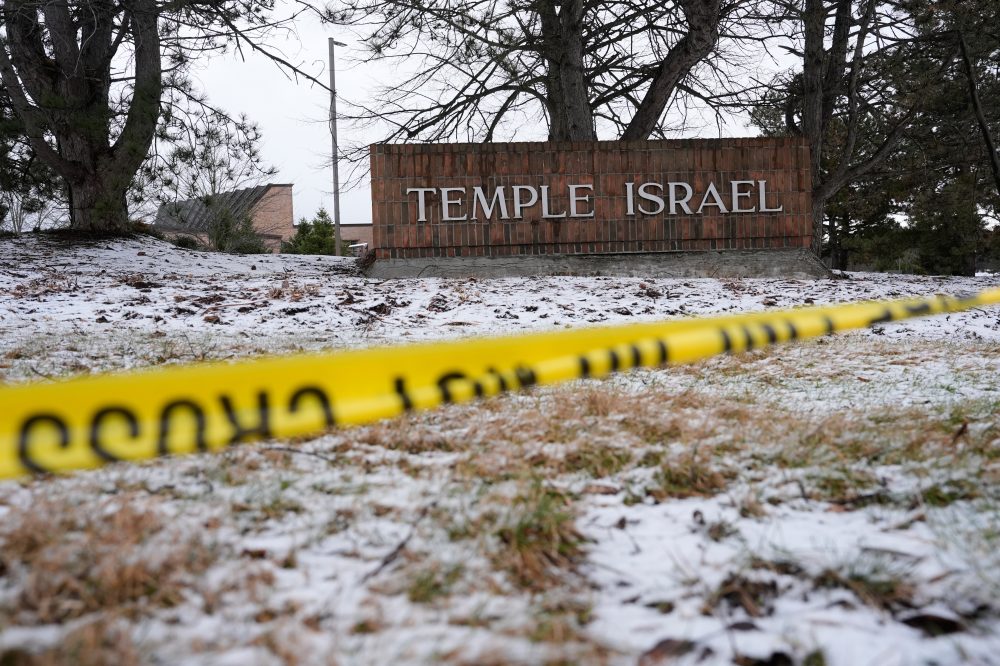

DETROIT — Federal authorities have determined that a deadly assault on a Michigan synagogue last month was carried out by an individual motivated by the Iran-supported militant organization Hezbollah, following the loss of relatives in overseas conflict.
During a Monday press briefing, Detroit FBI Special Agent in Charge Jennifer Runyan revealed that 41-year-old Ayman Ghazali of Dearborn Heights had recorded footage prior to his March 12 assault on Temple Israel in West Bloomfield Township, declaring his intention to “kill as many of them as I possibly can.”
According to Runyan’s account, Ghazali spent several hours waiting in the synagogue’s parking area before ramming his truck through the facility’s entrance doors into a corridor near the early childhood education section, where he struck a security officer.
The incident escalated into a shootout with a second security guard, after which Ghazali took his own life, federal officials reported. His Ford F150 vehicle, loaded with industrial fireworks and containers of fuel, ignited during the violent encounter.
Emergency personnel successfully evacuated the building, ensuring that none of the 150 children and employees present sustained injuries, authorities confirmed.
Emergency call recordings indicate that Ghazali’s former spouse contacted Dearborn Heights police around the time of the incident, expressing concern that he appeared emotionally unstable and potentially suicidal following the recent deaths of multiple family members in Israeli military strikes in Lebanon, his country of origin. These strikes occurred shortly after the Iran-Israel-U.S. conflict that commenced February 28.
Israeli military officials confirmed that Ibrahim Ghazali, Ayman’s brother who perished in the airstrike, held a command position within Hezbollah in Lebanon. National Intelligence Director Tulsi Gabbard informed a Senate panel that Ayman Ghazali maintained familial connections “to a Hezbollah leader.”
Runyan referenced social media content and recordings found on Ghazali’s accounts that demonstrated his adoption of revenge-focused thinking and Hezbollah’s extremist beliefs. She explained that he had researched Jewish religious facilities and cultural centers throughout Michigan in the days preceding his attack, ultimately selecting Temple Israel and even investigating their meal schedule.
Federal Prosecutor Jerome Gorgon drew parallels to Hezbollah’s 1983 bombing of U.S. Marine facilities in Beirut, Lebanon using an explosive-laden truck.
“That is exactly what this terrorist did a few weeks ago in our backyard,” Gorgon stated to media representatives Monday.
Established in 1982 amid Lebanon’s internal conflict, Hezbollah originally focused on expelling Israeli forces from southern Lebanon. Though Israel completed its withdrawal by 2000, Hezbollah has maintained its campaign and continues pursuing Israel’s elimination. The United States has classified Hezbollah as a terrorist organization since 1997.
Beyond its militant activities, Hezbollah functions as a political entity with elected officials in Lebanon’s parliament and has participated in numerous Lebanese administrations over the past several decades.
The targeted Michigan religious institution belongs to Reform Judaism, North America’s most populous Jewish movement, known for championing progressive principles including social justice and gender equality. The Union for Reform Judaism reports that Temple Israel maintains the denomination’s second-largest membership.
Originally established in Detroit in 1941, the synagogue moved to West Bloomfield’s suburbs during the 1980s and currently serves more than 12,000 congregants, based on the temple’s official information.
This incident represents another example in a series of recent assaults on religious facilities, heightening security concerns among faith leaders and worshippers globally.