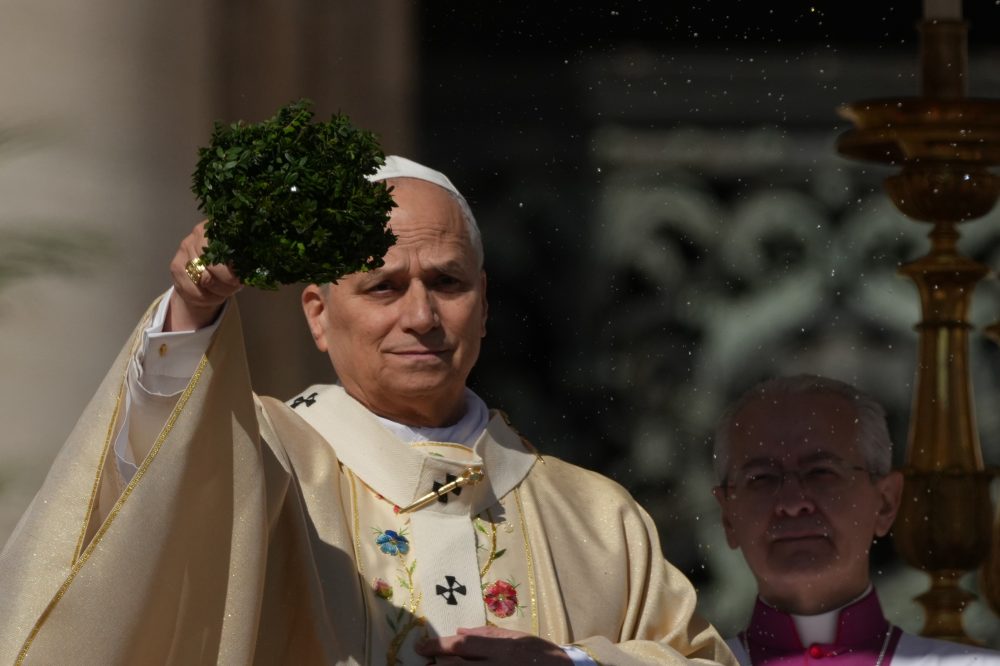

VATICAN CITY — During his inaugural Easter celebration as the leader of the Catholic Church, Pope Leo urged worshippers Sunday to embrace hope while confronting “the brutality of warfare that murders and devastates,” declaring that “this message of optimism is needed in our world today” as battles continue across multiple nations.
As the U.S.-Israeli conflict with Iran enters its second month alongside Russia’s continuing assault on Ukraine, Leo has consistently demanded an end to military actions. During his Easter sermon, the pontiff specifically condemned those who pursue warfare, exploit vulnerable populations, and place financial gain above human welfare.
Leo, who holds the distinction of being America’s first pope, spoke to congregants from an outdoor platform in St. Peter’s Square decorated with white roses, while spring flowers adorned the stairs where worshippers assembled, creating a visual representation of the pope’s hopeful message.
The religious leader urged believers to maintain optimism despite the presence of death, which exists “in wrongdoing, in political selfishness, in the suppression of impoverished people, in the neglect shown to society’s most defenseless members.
“We witness it in brutality, in global suffering, in the anguished voices emerging from all regions due to the mistreatment that crushes our most vulnerable citizens, due to the worship of money that exploits natural resources, due to the brutality of warfare that murders and devastates,” he stated.
He referenced his predecessor Pope Francis while cautioning against becoming apathetic when facing “ongoing wrongdoing, wickedness, indifference and harshness,” noting that “it remains accurate that within periods of despair, renewal constantly emerges and eventually bears results.”
The pope will subsequently present the customary “Urbi et Orbi” address — meaning “to the city and the world” in Latin.
Customary religious observances at the Church of the Holy Sepulchre, honored by Christians as the historic location of Jesus’ death and resurrection, were reduced following coordination with Israeli law enforcement. Officials have imposed restrictions on public gathering sizes due to continued rocket strikes.
These limitations also affected the recent Islamic holy period of Ramadan and Eid al-Fitr celebration, along with the ongoing seven-day Jewish observance of Passover. Sunday’s Jewish priestly ceremony at the Western Wall — typically drawing tens of thousands — was restricted to only 50 attendees.
These constraints have created tension between Israeli officials and Christian leadership. Law enforcement recently blocked two senior church officials, including Latin Patriarch Pierbattista Pizzaballa, from conducting Palm Sunday services at the Church of the Holy Sepulchre.
Earlier this week, the pope had voiced optimism that the conflict might conclude before Easter.