
BEIRUT — In an unexpected gesture of support, Pope Leo XIV made a surprise appearance during a virtual meeting with 13 Catholic and Maronite priests from Lebanon’s volatile southern border region on Wednesday, offering them prayers and words of encouragement.
The clergy members had been invited to participate in an online morning session with Archbishop Paolo Borgia, the Vatican’s diplomatic representative to Lebanon. During the call, Borgia revealed that the Pope was also participating and wished to address them directly.
The priests, who serve communities in southern villages and towns such as Rmeich, Ain Ebel, Debel, and Marjayoun, were caught off guard by the papal appearance.
Father Najib al-Amil, who leads the parish in Rmeich and participated in the virtual gathering, shared his reaction with The Associated Press. “(The pope) gave us peace and his blessings,” al-Amil explained. “His words were reassuring, particularly as we live in constant worry over here.”
While Christian communities near the Israeli border have largely avoided the heavy bombardment that has devastated other areas of southern Lebanon, where Shiite populations predominate, tensions persist despite a ceasefire implemented on April 17. Both Israeli forces and Hezbollah militants have continued hostile actions even after the truce took effect.
According to al-Amil, the Pope addressed the group in French during the brief exchange, which lasted approximately one minute, and encouraged the priests to remain in their communities.
“Pray with me so that peace prevails. God willing, peace is near,” al-Amil recalled the Pope saying.
Vatican officials did not immediately provide confirmation or additional details about the call when contacted. While the Holy See confirmed that Pope Leo XIV had scheduled a meeting with Lebanon’s ambassador on Wednesday, the Vatican typically does not release specifics about such encounters.
This approach mirrors the Vatican’s handling of Pope Francis’s regular evening calls to Gaza’s parish priest during Israeli military operations against the Palestinian territory. Officials consistently declined to elaborate on those conversations, characterizing them as personal pastoral outreach by the pontiff.
The papal outreach occurred just days after Israeli forces destroyed a Catholic convent in the border community of Yaroun, according to local authorities.
Israeli military officials maintain they do not deliberately target religious facilities. In a Saturday statement, they acknowledged damaging a structure without religious markings while eliminating Hezbollah infrastructure in Yaroun, claiming they were unaware the building served religious purposes.
The Israeli military described the Yaroun structure as part of a facility previously used by Hezbollah fighters to launch rocket attacks against Israel, and provided photographs showing an undamaged building at the location.
However, two Yaroun officials and a nun familiar with the convent disputed this account, telling the AP that the Israeli photographs depicted a separate structure housing a clinic and archbishopric, while the actual convent had been bulldozed by Israeli forces.
Lebanon’s official news service also confirmed the convent’s destruction.
The demolition followed closely after images surfaced showing an Israeli soldier using an ax against a fallen crucifix statue in Debel village, prompting widespread criticism.
Christians comprise approximately one-third of Lebanon’s 5 million residents, making the small Mediterranean nation home to the Middle East’s highest concentration of Christians.
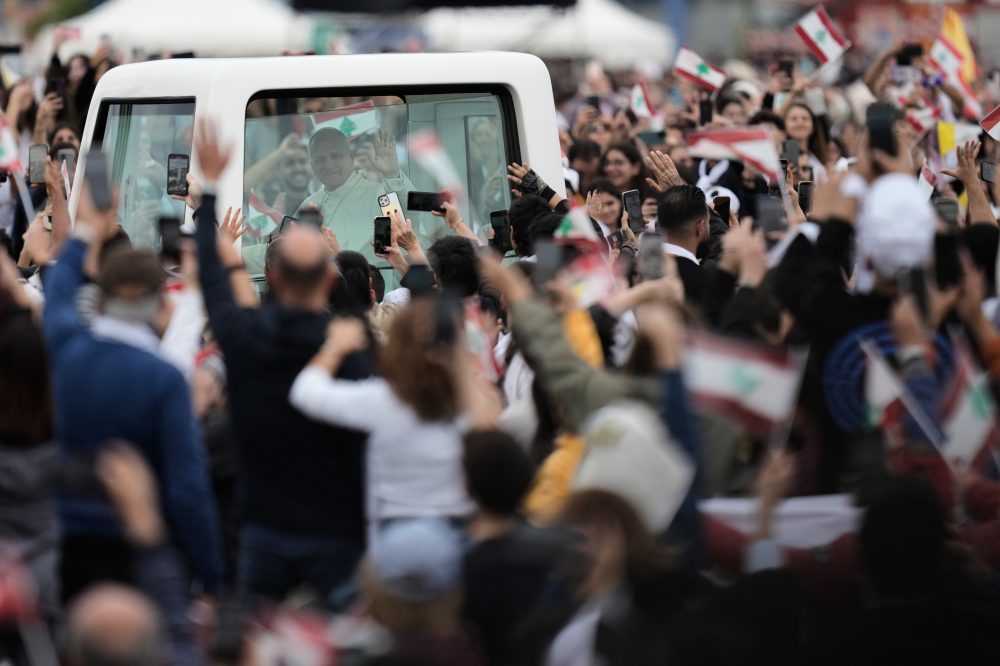
Pope Leo XIV visited Lebanon in November during his inaugural international trip since his election in May of the previous year, traveling there from Turkey. The pontiff recently disclosed that he keeps a photograph of a young Lebanese Muslim boy who had displayed a welcome sign during the papal visit. The child was later killed during the recent conflict between Israel and Hezbollah.
Maronite Catholics represent Lebanon’s largest Christian denomination, and the nation’s power-sharing arrangement ensures the presidency is always held by a Maronite.
The current conflict between Israel and Hezbollah erupted on March 2, when the militant group launched rockets into northern Israel, occurring two days after the United States and Israel initiated military action against Hezbollah’s primary supporter, Iran.
Since then, Israel has conducted numerous aerial bombardments and begun a ground offensive in southern Lebanon, seizing control of multiple border towns and villages.