
WASHINGTON — Congressional Republicans are pushing forward with a partisan approach to restore full funding for the Department of Homeland Security, which has remained shuttered for nearly two months while Democrats insist on immigration enforcement reforms under President Donald Trump’s administration.
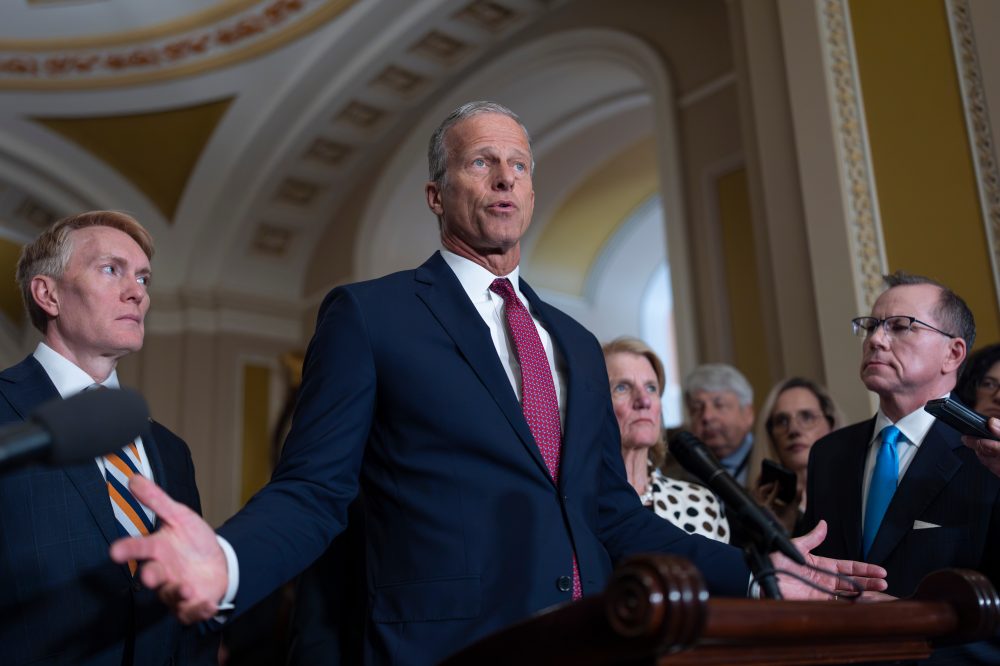
Senate Majority Leader John Thune announced Tuesday that the GOP will attempt to secure funding for Immigration and Customs Enforcement along with Customs and Border Protection through what he called “the hard way.” This approach would sidestep Democratic lawmakers who insist any funding legislation must include restrictions on federal immigration agencies, such as improved officer identification requirements and expanded use of court-issued warrants.
Following the breakdown of bipartisan discussions, Democrats will receive “none of that,” according to Thune’s statement. Instead, Republicans are crafting a partisan measure they plan to advance through budget reconciliation, a complex and lengthy procedure requiring only a simple majority in the 53-47 Senate.
The South Dakota Republican is advocating for a focused bill covering only ICE and CBP funding to quickly reopen the department. However, the process may become complicated as some GOP members will likely attempt to attach additional unrelated priorities.
Democratic opposition remains firm on agency reforms. “Americans want ICE and Border Patrol reined in,” stated Senate Democratic Leader Chuck Schumer of New York.
Thune and Republican leadership emphasize their desire to expedite the legislation through Congress with solely Homeland Security funding to enable the fastest possible department reopening.
During a White House meeting Friday, Wyoming Senator John Barrasso, the second-ranking Republican, and Senate Budget Committee Chairman Lindsey Graham of South Carolina discussed this approach with Trump. Barrasso later shared that “President Trump set a deadline of June 1 to get to his desk a focused reconciliation bill that funds ICE and Border Patrol.”
Trump expressed support on his social media platform, writing that “we are moving FAST and FOCUSED in keeping our Border SECURE!”
However, preventing senators and House members from adding other provisions to the bill will prove challenging.
Trump has been advocating for his strict proof-of-citizenship legislation, the SAVE Act, while the White House may soon request billions for Iran war funding. Agricultural state senators hope to advance comprehensive farm legislation to strengthen the rural economy. Some Republicans argue for offsetting program cuts to cover the estimated $75 billion cost.
Republican leaders indicate they would pursue a second partisan budget reconciliation bill for these additional issues. Many conference members doubt this could occur this year, given narrow GOP majorities in both chambers and the approaching election.
“We’re looking at the narrow vision,” said North Dakota GOP Senator John Hoeven following Tuesday’s Republican lunch meeting about the bill. “Now, do people have other ideas? Of course.”
The Homeland Security Department shutdown began in mid-February.
After federal agents shot two protesters in Minneapolis during January, Trump accepted a Democratic request to separate the Homeland Security bill from broader spending legislation that became law while negotiations continued. However, DHS funding expired without agreement on modifications to the administration’s immigration enforcement methods.
In March, the Senate approved legislation by voice vote that would separate ICE and Customs and Border Protection funding while supporting the remainder of the department, including the Transportation Security Administration as airport security lines lengthened. House Republicans rejected the measure, stating they wouldn’t support any bill excluding immigration enforcement funding.
Congress then departed for a two-week recess, leaving the matter unresolved. Trump has utilized executive orders to cover some department salaries temporarily, though this isn’t a lasting solution.
During the recess, Thune and House Speaker Mike Johnson announced a dual approach — passing the Senate bill covering most department funding through regular procedures while using the party-line bill for ICE and CBP funding. Whether Johnson can convince his members to support this strategy remains uncertain.
Upon returning to Washington this week, Thune said Republicans will attempt to fund the agencies for three years through the budget bill, avoiding annual spending measures to prevent another shutdown during Trump’s presidency.
The agencies would receive funding “not only today but well into the future,” Thune explained.