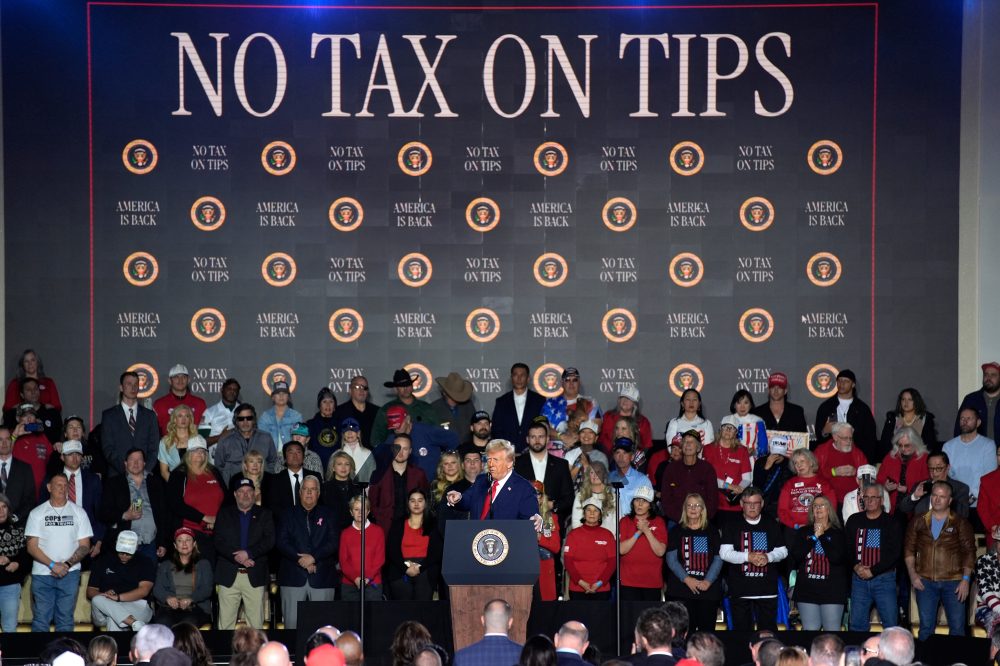

With Wednesday’s tax filing deadline approaching, Delaware residents and millions of other Americans are preparing to take advantage of new federal deductions for tip income and overtime pay that became available under President Trump’s comprehensive tax legislation.
However, taxpayers shouldn’t expect these same savings when completing their state tax forms. Individual states have the authority to determine whether they’ll adopt federal tax modifications, and the majority have chosen not to implement these particular changes.
Workers in states that haven’t aligned with federal tax policy will still face state tax obligations on tip and overtime income, even when receiving federal deductions for the same earnings.
Wednesday marks the filing deadline for both federal returns and most state tax submissions. Understanding how state income tax policies differ from federal rules is crucial for accurate filing.
Taxpayers in most states must complete two distinct forms – beginning with their federal return, then proceeding to state documentation. This sequence is important since state tax calculations typically begin with information from federal forms.
Nine states impose no income tax on wages and salaries: Alaska, Florida, New Hampshire, Nevada, South Dakota, Tennessee, Texas, Washington, and Wyoming. Missouri exempts capital gains from taxation but taxes regular income, while Washington state does the opposite.
Roughly six states have chosen to mirror the federal tax breaks for tips, overtime wages, and interest on loans for domestically-assembled vehicles.
Idaho, Iowa, Montana, North Dakota, and Oregon provide all three deductions to state taxpayers. Colorado adopted the tip and auto loan breaks while excluding overtime deductions. Alabama only offers the vehicle loan deduction.
Some states automatically incorporate federal tax changes unless officials actively reject them – as Colorado did with overtime deductions. Most states, however, require legislative action to implement these breaks, as occurred in Idaho.
Arizona presents a unique situation where Democratic Governor Katie Hobbs issued an executive order in November allowing deductions for tips, overtime, auto loans, and senior citizens on state forms. She anticipated the Republican-controlled Legislature would subsequently codify these breaks into law.
However, Arizona’s statutes remain unchanged. Hobbs rejected two legislative proposals because they included corporate tax provisions she opposed, and a third attempt hasn’t gained passage.
“It’s an extraordinarily unusual situation,” said Adam Chodorow, an Arizona State University law professor specializing in tax policy.
“We will likely have lots of people deducting tips” and overtime wages “who aren’t legally entitled to do so,” he explained. “But they are being instructed by the state government to take those deductions.”
Arizona could still pass legislation officially authorizing these deductions, potentially with retroactive application beyond the filing deadline.
Several other states nearly extended these tax benefits to workers this year.
South Carolina postponed its refund filing deadline to October 15, giving the Republican Legislature time to adopt federal deductions. While the House approved such legislation, the Senate voted it down.
Wisconsin’s Republican lawmakers passed bills enabling tip and overtime deductions, but Democratic Governor Tony Evers vetoed the measures on April 3.
Georgia, Indiana, and Michigan have enacted legislation providing tip and overtime deductions beginning with 2026 tax filings, making them unavailable for current 2025 returns.
Oregon may reverse course, with pending legislation before Democratic Governor Tina Kotek that would eliminate auto loan deductions and certain corporate breaks starting in 2026.
Additional states may still choose to adopt or reject these tax deductions for their 2026 tax years.