
NEW YORK (AP) — While President Donald Trump has been eliminating diversity programs across the federal government, the acronym “DEI” has largely disappeared from corporate communications and Democratic campaign messaging.
However, this week’s National Action Network conference in New York told a different story, as Democratic leaders and prospective White House hopefuls forcefully defended diversity, equity and inclusion programs that have recently lost political support.
House Minority Leader Hakeem Jeffries addressed a crowded room of Black activists, asserting: “We have the high ground on this issue.” He labeled Republicans as “extremists” conducting “an all-out assault on civil rights, on voting rights, certainly on diversity, equity and inclusion.”
Jeffries further argued: “They’re not trying to celebrate merit, they’re trying to elevate mediocrity. They want to suggest that diversity, equity and inclusion are foreign values. They’re not foreign values, they’re American values.”
These diversity programs expanded rapidly across businesses, universities and government offices following the 2020 Black Lives Matter demonstrations sparked by George Floyd’s killing.
However, GOP officials, particularly Trump, have characterized DEI efforts as divisive and discriminatory toward white Americans.
Trump issued executive orders on his inauguration day prohibiting “illegal DEI” across federal agencies. A subsequent March directive required any companies contracting with the government to follow the administration’s anti-DEI stance.
During his February State of the Union speech, Trump declared: “We ended DEI in America.”
Democratic responses to the administration’s anti-DEI campaign have been inconsistent and sometimes subdued throughout the past year, with certain party members attributing electoral losses to an overemphasis on diversity and identity issues that supposedly alienated voters from various backgrounds.
Nevertheless, several Democrats being discussed as potential presidential candidates are now actively promoting DEI initiatives.
This messaging change also demonstrates the party’s strategy to attract and motivate Black voters, who frequently see DEI attacks as connected to broader resistance against civil rights and economic fairness.
Pennsylvania Governor Josh Shapiro embraced this approach during his opening day appearance at the National Action Network.
“We believe diversity is our strength in the Commonwealth,” Shapiro stated. “We continue to have an Office of Diversity and Equity and Inclusion when other states have shuttered them.”
Maryland Governor Wes Moore, currently the only Black governor in office, emphasized that his state had “unapologetically” countered Washington’s DEI rollback by establishing state departments dedicated to supporting minority-owned businesses and social advancement while fighting racial disparities. He presented his state as an example of fair policymaking.
“We are seeing what the policies and the position are when it comes to belief in diversity from this federal administration,” Moore told The Associated Press afterward. “I actually think the future of how we should think about it should be seen in the present, of how places like Maryland are actually moving in this moment.”
Illinois Governor JB Pritzker spoke about directing his state to “set aside a whole bunch of that money to address inequities that have plagued the Black community over so many years” and supported Illinois’ measures designed to reduce economic and racial disparities.
Kentucky Governor Andy Beshear, scheduled to speak Saturday, plans to emphasize his dedication to diversity despite facing political opposition, according to political consultant Eric Hyers.
Beshear governs a state that Trump won by over 30 percentage points in the last election, yet he rejected what he called a discriminatory bill from his Republican-dominated legislature last year that would have eliminated diversity programs from state universities. Lawmakers later overturned his veto.
“He never wavered even when there was a post-2024 backlash,” Hyers commented about Beshear. “He believes in his core that diversity is a strength, not a weakness.”
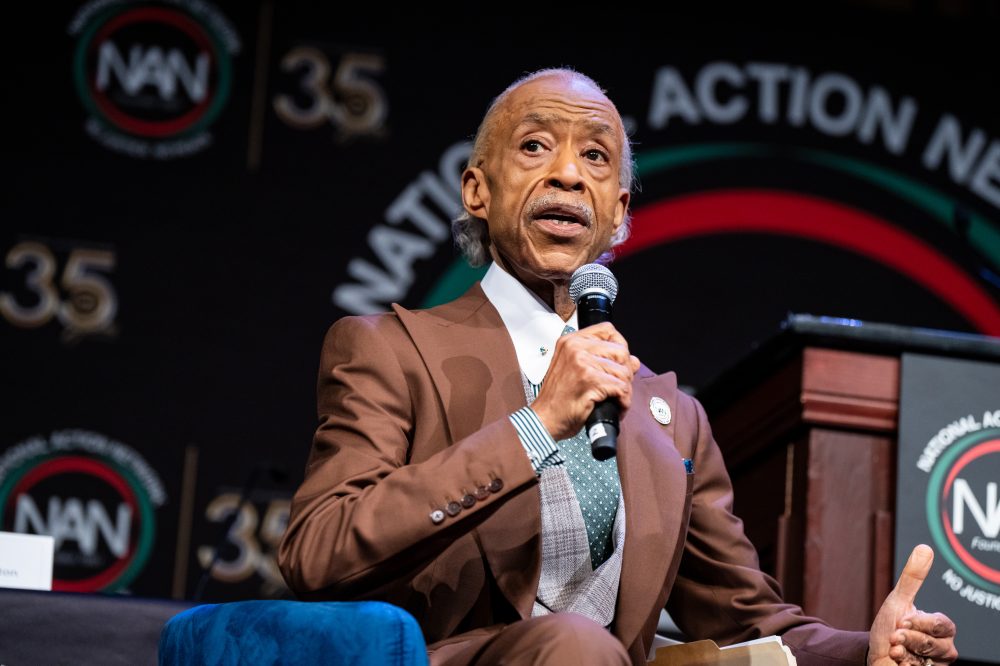
Reverend Al Sharpton, who established and organizes the conference, told The Associated Press he wanted 2028 candidates to demonstrate “that what they’re campaigning on is something that addresses the race gap in the country, specifically, not just generalizations.”
Representative James Clyburn, a South Carolina Democrat and former Congressional Black Caucus chair with significant influence, cautioned that leaders from both parties who oppose DEI might be rejecting fundamental American principles.
“DEI stands for ‘diversity, equity and inclusion.’ Who, in search for a more perfect union, would shy away from diversity equity and inclusion? If you’re against those things, you are against democracy,” he explained to the AP.