
FORT COLLINS, Colo. — The Trump administration has maintained its rejection of Colorado’s appeal for federal disaster assistance, following devastating wildfires and flooding that impacted communities throughout the state last year.
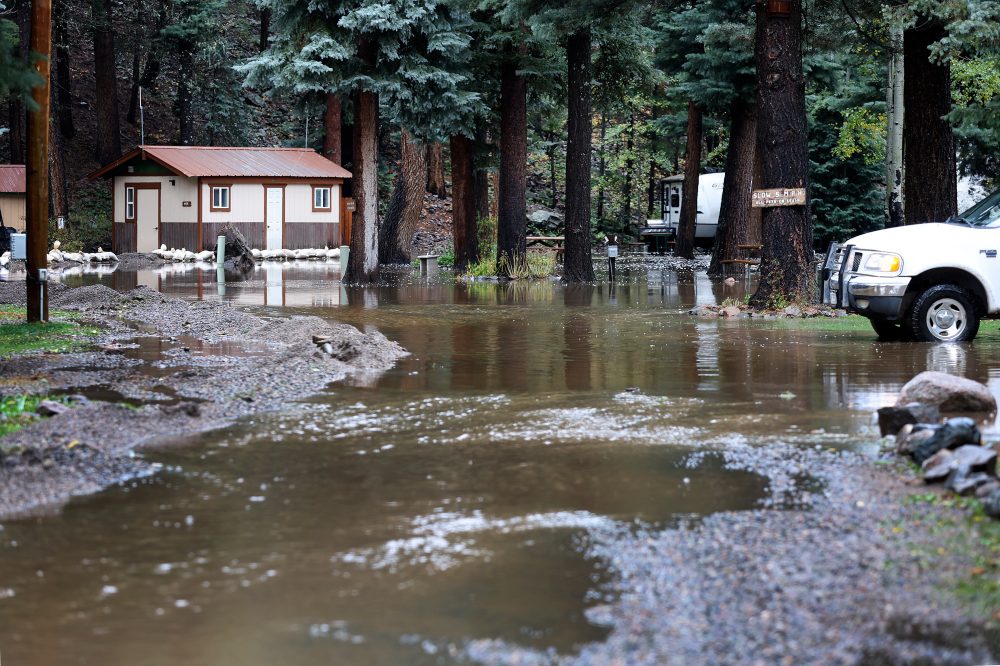
Democratic Governor Jared Polis had requested federal major disaster declarations for blazes that burned across 240 square miles in western Colorado, as well as flooding that devastated mountain towns in the southern region of the state.
The governor’s request included FEMA public assistance funding, which would allow local communities to receive reimbursement for debris removal and infrastructure reconstruction. He also sought hazard-mitigation money to help the state rebuild with improved disaster resilience.
After initially turning down Colorado’s requests in late 2023, Trump maintained that rejection on appeal this Monday following what FEMA acting administrator Karen S. Evans described as a “thorough review” in correspondence sent to Polis.
The rejection letters provided limited explanation for the decisions. Polis expressed frustration in his response, describing the outcome as “incredibly disappointing” given Colorado communities’ swift disaster response, thorough damage documentation, and cooperative efforts with federal officials.
“These disasters caused real damage to homes, infrastructure, and local economies, and Coloradans should not be left to shoulder these costs alone,” Polis stated.
Although FEMA conducts damage assessments and applies established formulas to evaluate potential impacts on state and local governments, presidential discretion ultimately determines disaster declaration approvals.
When Trump initially rejected Colorado’s request in December, Polis criticized the president for engaging in “political games” regarding disaster declarations.
White House spokesperson Abigail Jackson disputed claims that political considerations influenced the decisions. She told The Associated Press that the administration evaluates each request with “great care and consideration” to ensure federal funds are used appropriately and efficiently to supplement, rather than replace, state disaster response responsibilities.
“President Trump provides a more thorough review of disaster declaration requests than any administration has before him,” Jackson stated.
Multiple Democratic-controlled states have voiced complaints about disaster declaration denials despite demonstrating clear need.
Data analysis by Andrew Rumbach, a senior fellow at the nonpartisan Urban Institute, reveals that nearly 84% of disaster requests from Trump-supporting states received approval during his second term, compared to approximately 42% approval for states that supported 2024 Democratic presidential candidate Kamala Harris.
Rumbach expressed uncertainty about whether political motivations clearly influenced these decisions. He noted the relatively small sample size of about 60 state requests and acknowledged that some states may have presented inadequate justification for federal assistance.
“These are definitely questions worth asking, but I haven’t reached a conclusion that there’s clear political bias going on here,” Rumbach explained. “That’s why it’s really important that FEMA and DHS be as transparent as possible about how they’re making these decisions.”
These rejections have drawn criticism from Democratic governors including Maryland’s Wes Moore and Illinois’ JB Pritzker, who characterized Trump’s February denial of his state’s flood recovery appeal as “a politically motivated decision that punishes thousands of Illinois families in a critical moment of need.”
Colorado Attorney General Phil Weiser has been challenging several recent federal actions affecting Colorado, including the elimination of a climate research facility, threats to reduce transportation funding, withholding assistance for low-income families, and relocating the U.S. Space Command to Alabama.
Some communities nationwide have faced unusually extended delays for disaster request responses during Trump’s second administration, which critics argue hampers emergency response efforts and creates particular hardship for rural areas with limited financial resources.
Homeland Security Secretary Markwayne Mullin pledged last week to address the accumulated backlog of pending requests before the Atlantic hurricane season begins June 1st. Following Mullin’s briefing, Trump approved major disaster declarations for at least seven states last week.