
WASHINGTON — A weekend election outcome in Hungary is creating major political waves across the United States, as the electoral defeat of Prime Minister Viktor Orbán delivers a significant blow to Donald Trump and his conservative allies.
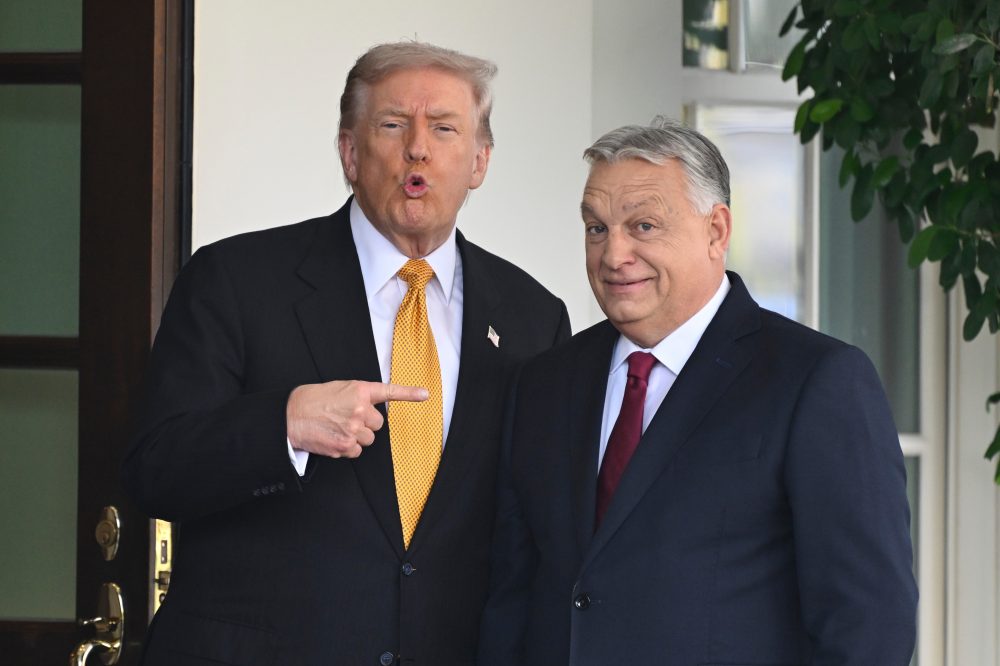
Trump and numerous American right-wing figures have long championed Orbán, viewing him as a leading figure in the global conservative movement due to his hardline immigration policies. Trump’s political approach mirrors many of Orbán’s tactics for manipulating government institutions, including the press, courts, and voting systems, to maintain his party’s 16-year grip on power.
The former president actively endorsed Orbán’s campaign for reelection and sent Vice President JD Vance to the Hungarian capital just last week to rally support for the embattled leader during the ongoing Iran conflict.
The Hungarian leader’s electoral loss highlights how the current war has weakened Trump’s influence in supporting international political allies, while also demonstrating the challenges leaders face when trying to manipulate democratic processes amid global anti-incumbent sentiment.
“Oppositions can win despite a tilted playing field,” stated Steven Levitsky, a Harvard political science professor who co-wrote “How Democracies Die.” “Democracies are facing many challenges in many parts of the world, but so are autocracies.”
Orbán’s downfall carries immediate worldwide consequences, given his position as Europe’s leader most aligned with Russian President Vladimir Putin and his role in obstructing European Union assistance to Ukraine following Russia’s 2022 military invasion.
Both Democratic and Republican politicians celebrated his defeat on Sunday, with some GOP members criticizing their own party’s administration for so openly backing the Hungarian politician.
“Don’t fiddle-paddle in other democracies’ elections,” Nebraska Republican Representative Don Bacon wrote on social media platform X.
Mississippi Republican Senator Roger Wicker posted: “The freedom-loving people of Hungary have voted decisively in favor of democracy and the rule of law.”
Matt Schlapp, who leads the American Conservative Union, represents the segment of the American right that has embraced Orbán’s leadership style. His organization’s Conservative Political Action Conference hosted its inaugural European gathering in Budapest and regularly features Hungary as a destination.
Orbán delivered a keynote address at the group’s 2022 Dallas conference.
Schlapp offered a straightforward analysis of Orbán’s electoral defeat.
“Eventually, democracies just want change,” he explained. “In democracies, you don’t have kings, and the people in the end speak.”
“The people of Hungary were saying, ‘We’re having a difficult time with inflation, the economy and the war. Let’s try the new guy,’” Schlapp added, while noting his support for Trump’s Iran war policies despite the chaos it has generated, particularly affecting European energy markets and hurting Orbán politically.
Diana Sosoaca, a far-right European Parliament member from Romania, criticized Vance’s Budapest trip on Sunday as “a big mistake” due to widespread European opposition to the Iran conflict.
“You invite a representative of the United States of America, who created the big disorder in this world?” Sosoaca questioned during an interview broadcast on RT, the Kremlin-controlled media outlet. “It was the biggest mistake he could do before the elections.”
Originally an anti-communist activist, Orbán first won the prime minister’s office in 1998 but shifted toward right-wing politics after losing power in 2002. When he regained control in 2010, Orbán and his Fidesz party implemented a comprehensive legal strategy to consolidate power that they had developed during their time in opposition.
Orbán promoted what he called “illiberal democracy,” constructing a wall along Hungary’s southern frontier to prevent African and Asian migrants from traveling through Europe. His administration restricted LGBTQ+ rights, suppressed press freedoms, and weakened judicial independence.
Orbán solidified his control when Fidesz secured enough parliamentary seats during the 2010 economic crisis to completely rewrite Hungary’s constitution. The party restructured the court system to channel judicial appointments through party supporters, redrew voting districts to protect Fidesz candidates from electoral challenges, and facilitated the sale of Hungarian media outlets to business leaders loyal to Orbán.
The European Union has officially classified Hungary as an “electoral autocracy.”
Orbán’s supporters have dismissed claims that the Hungarian leader threatens democratic institutions, and he promptly acknowledged his electoral loss on Sunday. Democrats express concern that Trump may attempt to use presidential powers to influence November’s midterm elections or the 2028 presidential race, similar to his efforts to reverse Democrat Joe Biden’s 2020 presidential victory.
“Most importantly for American voters, even a guy who rigs the system can be defeated when the people unite and turn out against him,” commented Ian Bassin from Protect Democracy, a nonpartisan organization focused on combating authoritarian threats.
California Democratic Representative Ro Khanna used the opportunity to challenge Vance directly: “Your ally Orban conceded. In 2028, will you @JDVance follow suit if you lose?” he posted on X.
Levitsky cautioned that democracy advocates shouldn’t draw excessive encouragement from Orbán’s defeat, pointing out that Trump has employed more severe authoritarian tactics. He referenced Trump’s use of the Justice Department to target political enemies and the fatal shootings of demonstrators by immigration enforcement — actions that Orbán’s administration never pursued, according to Levitsky.
However, Maryland Democratic Senator Chris Van Hollen identified similarities between Trump’s and Orbán’s political strategies, as well as their potential electoral consequences.
“He was essentially doing what Donald Trump is trying to do here in the United States,” Van Hollen said regarding Orbán. “My read of the election is that the people of Hungary rejected that, just like people in the United States are rejecting that here at home.”
Trump remained silent about the Hungarian election results on Sunday.