
WASHINGTON — A federal appeals court has directed a district court judge to take a fresh look at potential national security risks tied to stopping construction on President Donald Trump’s proposed $400 million White House ballroom project.
The three-member panel from the U.S. Court of Appeals for the District of Columbia Circuit determined Saturday that insufficient information was available to assess how much of the construction could be halted without compromising the safety of the president, his family, and White House personnel.
The matter has been sent back to the trial court judge who issued a March 31 decision blocking the project from moving forward without congressional authorization, though enforcement was delayed for two weeks. The appeals panel has now extended that delay through April 17, giving the Trump administration time to petition the Supreme Court.
The appellate judges directed U.S. District Judge Richard Leon to determine more clearly if his court order would disrupt the administration’s security and safety preparations.
Administration attorneys contended the construction encompasses vital security elements designed to protect against various potential dangers, including drones, ballistic missiles, and biological hazards. They maintained that delaying the work “would imperil the President and others who live and work in the White House.”
When Leon issued his temporary suspension, he determined the preservationist organization challenging the project would likely prevail since the president doesn’t have authority to construct the ballroom without congressional consent.
Leon carved out exceptions for any construction work essential to White House safety and security, stating he had examined confidential government materials before concluding that stopping the project wouldn’t compromise national security.
The Republican administration’s appeal referenced materials planned for installation to create a “heavily fortified” space, noting the construction involved bomb shelters, military facilities, and medical infrastructure beneath the ballroom.
The appeals panel observed that many government concerns centered on underground security work, which the White House claimed was “distinct from construction of the ballroom itself and could proceed independently.”
However, the White House now appears to indicate these security improvements are “inseparable” from the overall project, the appeals court noted, creating uncertainty about “whether and to what extent” proceeding with certain ballroom elements is essential for the security upgrades’ safety.
Carol Quillen, president and CEO of the National Trust for Historic Preservation, issued a statement saying the organization was waiting for additional clarification from the district court. She emphasized the group’s dedication “to honoring the historic significance of the White House, advocating for our collective role as stewards, and demonstrating how broad consultation, including with the American people, results in a better overall outcome.”
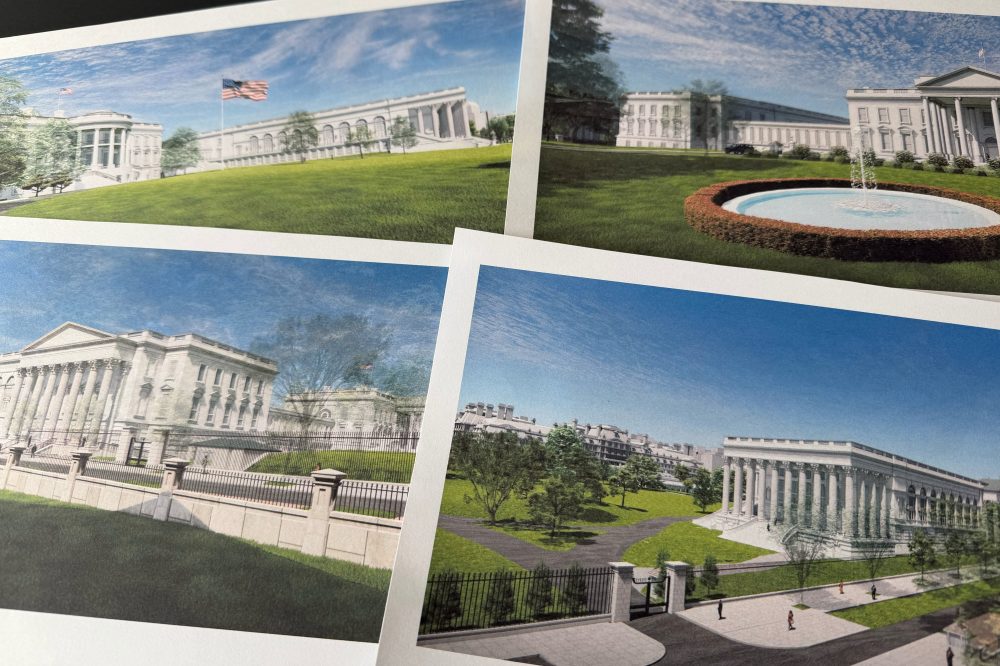
The preservation group filed suit in December, one week after the White House completed demolition of the East Wing to make way for a 90,000-square-foot ballroom designed to accommodate 999 people, according to Trump. The administration indicated above-ground ballroom construction would commence in April.
Leon determined last month the lawsuit would likely succeed because “no statute comes close to giving the President the authority he claims to have.”
“The President of the United States is the steward of the White House for future generations of First Families. He is not, however, the owner!” Leon wrote. The judge was appointed by President George W. Bush, a Republican.
Two days following Leon’s decision, the ballroom project received final approval from a key agency that Trump had filled with supporters. Another oversight body packed with Trump allies had greenlit the project earlier this year. However, the president had moved ahead with the most significant structural modification to the White House in over seven decades before consulting these commissions.
Trump maintains the project receives funding through private donations, though taxpayer money is covering construction of underground bunkers and security enhancements.
The three-judge appeals panel included Patricia Millett, Neomi Rao, and Bradley Garcia. Obama nominated Millett, Trump appointed Rao, and Biden selected Garcia.
Rao authored a dissenting opinion referencing a law that permits the president to make White House improvements.
“Importantly, the government has presented credible evidence of ongoing security vulnerabilities at the White House that would be prolonged by halting construction,” Rao stated, arguing such concerns outweigh the “generalized aesthetic harms” cited in the lawsuit.