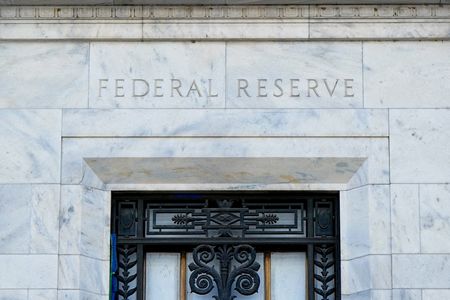

The 12 regional presidents of Federal Reserve banks across the nation find themselves at the center of an unprecedented battle over central banking independence, as political and legal challenges mount against the institution’s traditional structure.
San Francisco Fed President Mary Daly, who reached her position through a selection process that bypassed public elections and political appointments, maintains that regional bank leaders serve as cornerstones of the Federal Reserve’s democratic credibility.
This perspective now confronts significant challenges from multiple directions: a Supreme Court case examining whether presidents can dismiss Fed governors, ongoing transition difficulties between current Fed Chair Jerome Powell and President Trump’s nominee Kevin Warsh, and potential reforms from Treasury Secretary Scott Bessent, who has voiced criticism of Fed operations.
“Look back to the original act … You create these regional Feds and you make the selection of those policymakers different than the selection of the ones in D.C.,” Daly explained in a recent interview, referencing how the Federal Reserve Act sought to balance centralized authority in Washington with regional representation across 12 districts.
The regional presidents hold substantial influence, with five participating in monetary policy votes on a rotating schedule, representing crucial support that Fed leadership must secure when establishing policy directions.
These officials frequently emphasize their extensive interactions with local business leaders and workers as fundamental to the Fed’s mission, arguing that their independence from political appointment processes enables objective decision-making.
Daly noted that Senate-confirmed Fed governors must approve regional bank appointments, creating “the checks and balances that I think are part of a democratic institution. Other people can disagree, but this has stood the test of time.”
However, the current system faces mounting pressure from both the legal challenge regarding Trump’s attempt to remove Fed Governor Lisa Cook and Powell’s decision about remaining on the board through 2028, even if Warsh assumes the chairmanship after Powell’s term concludes May 15.
Warsh’s confirmation process has stalled due to at least one Republican senator’s opposition, stemming from concerns about a Trump administration investigation into Powell that the senator views as undermining Fed independence.
Powell has criticized this investigation and stated he will determine his future “based on what I think is best for the institution and for the people we serve,” potentially setting up continued resistance to changes he considers excessive.
While regional Fed presidents are selected through local processes with minimal Washington involvement, they remain vulnerable to dismissal by a board majority. The current board includes three Biden appointees and three Trump appointees, with Powell originally appointed by Obama, promoted by Trump, and reappointed by Biden.
Trump has not publicly addressed regional bank composition, and his administration has not formally proposed changes to increase White House influence over these institutions.
Nevertheless, discussions about their role have become entangled in broader debates about balancing Federal Reserve independence in monetary policy with democratic accountability and constitutional governance principles.
Columbia Law School Professor Kathryn Judge, speaking at a recent Shadow Open Market Committee gathering, predicted that Trump administration challenges, regardless of their success, would create a period of “disruption” that “is likely to dramatically weaken the ground upon which Fed independence has stood, and that independence is going to remain fragile.”
Future directions remain uncertain. Warsh has called for significant Fed changes without providing specifics, while Bessent has published detailed criticism of what he considers excessive Fed economic influence and suggested residency requirements for regional bank president appointments.
Stephen Miran, before joining the Fed board, co-authored research arguing that presidents should have authority to dismiss both Fed board members and regional bank leaders, claiming the current arrangement creates “some degree of tension” with constitutional principles.
Former Fed Vice Chair for Supervision Randall Quarles echoed similar sentiments, telling the Shadow Open Market Committee that Supreme Court protection of Fed officials from presidential dismissal would be “both wrong and unnecessary.”
“The right answer is to say … the president can, in fact, dismiss anyone on the Federal Reserve Board because he disagrees with their views on policy,” Quarles argued, while expressing confidence that Senate confirmation processes and regional bank leadership would prevent political hijacking of monetary policy.
Former St. Louis Fed President James Bullard quickly challenged this position, warning: “You’re absolutely playing with fire. Do you not think that if you fire all the governors at will, they will just turn around and fire all the (Fed bank) presidents? … One party or another has swept into power and what do they want? They want low interest rates because they don’t want to have to pay a lot for their deficit spending.”