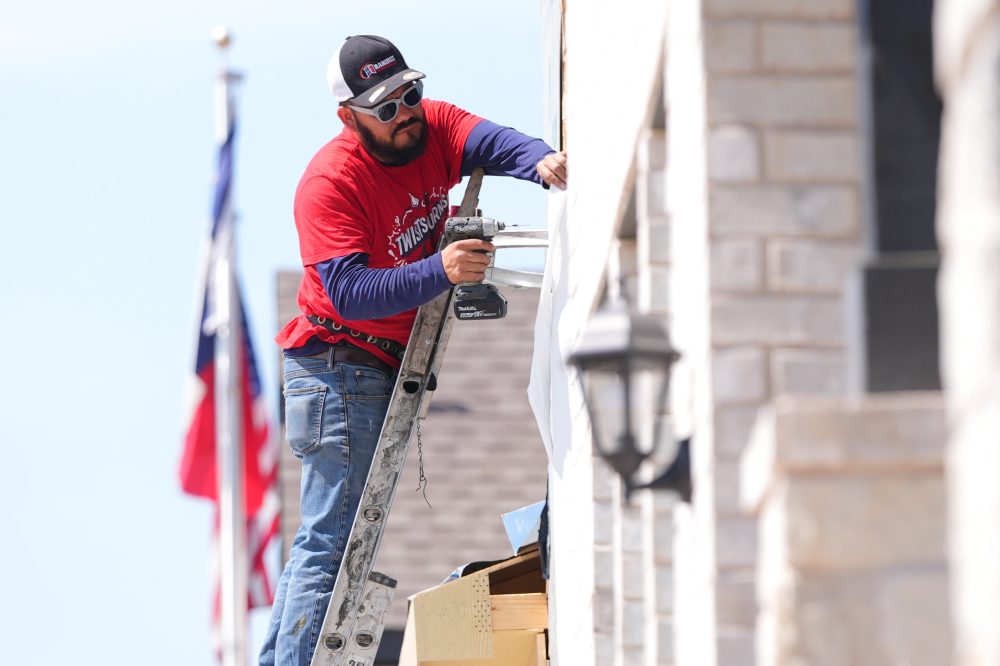

WASHINGTON — A newly released White House economic analysis reveals America faces a deficit of 10 million homes, with economists proposing regulatory reductions as a pathway to increase construction and address affordability concerns affecting families nationwide.
Released Monday as part of the Economic Report of the President, the study presents both challenges and opportunities for President Donald Trump’s administration as it grapples with public concerns over economic policies and housing costs.
In March, Trump issued two executive directives aimed at reducing federal housing regulations and expanding mortgage access through smaller financial institutions, though critics say additional action is needed to demonstrate the administration’s commitment to tackling housing affordability.
The administration has attempted to prioritize housing and cost-of-living issues in preparation for upcoming midterm elections, but international crises have repeatedly diverted attention. A January housing-focused address at the World Economic Forum in Switzerland was overshadowed by Trump’s Greenland acquisition discussions.
Additionally, ongoing conflict with Iran has pushed mortgage rates higher, with 30-year loan rates climbing from below 6% to 6.37%, further straining homebuyers.
Trump has previously expressed reluctance to lower home values, stating to his Cabinet: “I don’t want to drive housing prices down. I want to drive housing prices up for people that own their homes, and they can be assured that’s what’s going to happen.”
The housing analysis, compiled by White House Council of Economic Advisers staff and obtained by The Associated Press, establishes a framework for how increased construction could benefit middle-class Americans and strengthen economic growth.
Researchers determined the housing shortage exists because “homebuilding and the growth of the single-family housing stock had continued at their historical pace instead of falling dramatically” following the 2008 financial crisis. That economic collapse stemmed largely from housing market failures and risky lending practices.
The report highlights a stark economic reality: home values have surged 82% since 2000 while household incomes grew only 12%. This disparity was temporarily offset by record-low interest rates, but post-pandemic inflation drove borrowing costs higher, making homeownership increasingly difficult for Americans under 40.
According to the White House, March’s executive orders and plans to purchase mortgage-backed securities demonstrate presidential focus on housing challenges.
The analysis identifies what it terms “the bureaucrat tax” — regulatory expenses adding over $100,000 to construction costs through updated building codes, compliance requirements, and zoning approval processes.
Reducing these regulatory barriers could potentially generate 13.2 million new homes, boost annual economic growth by 1.3 percentage points over ten years, and create 2 million manufacturing and construction positions, according to administration projections.
One administration official, speaking anonymously about the unreleased report, suggested Trump might tie federal funding for state and local governments to regulatory reform requirements.
The document also criticizes energy efficiency standards implemented under the Biden administration, arguing these requirements for improved air conditioning, water heating systems, and related infrastructure increase building expenses.
However, eliminating such standards could raise long-term homeowner costs through higher utility expenses.
Citing a 2021 National Association of Home Builders study, the report claims these efficiency standards add up to $31,000 to new home prices, requiring up to 90 years for buyers “to realize a payback on the added cost of the home.”
The potential savings from reversing Biden-era housing standards remains uncertain due to ongoing legal disputes and varying state implementation practices. In March, a Texas federal judge sided with 15 Republican-led states challenging the legality of federally-backed housing standards.